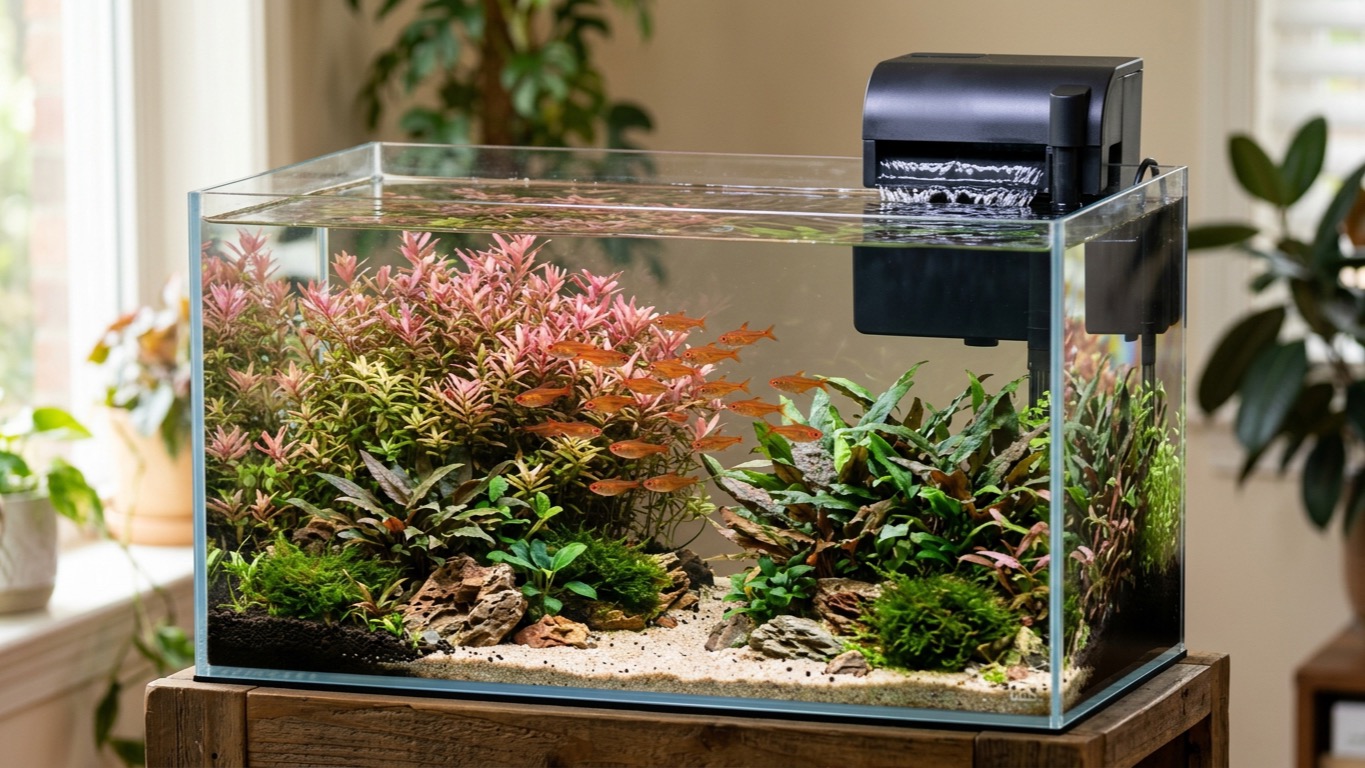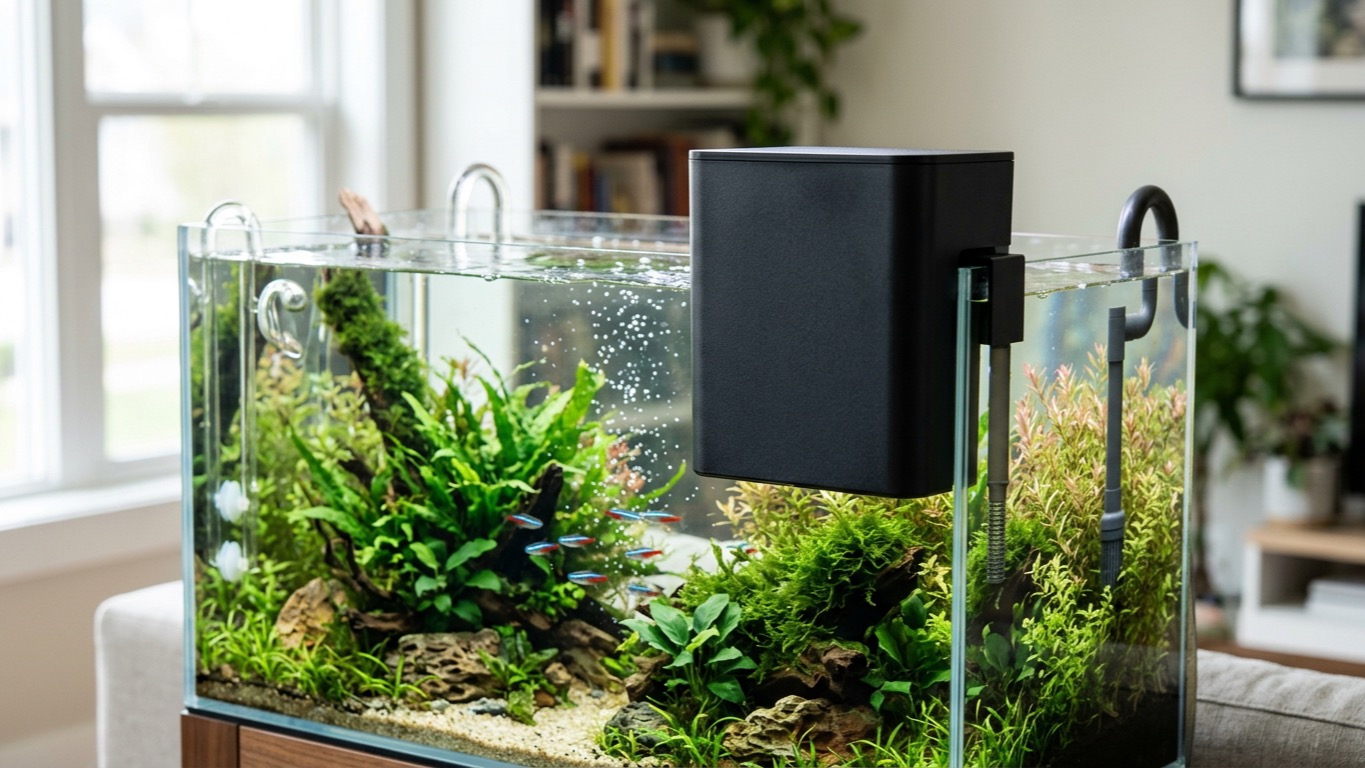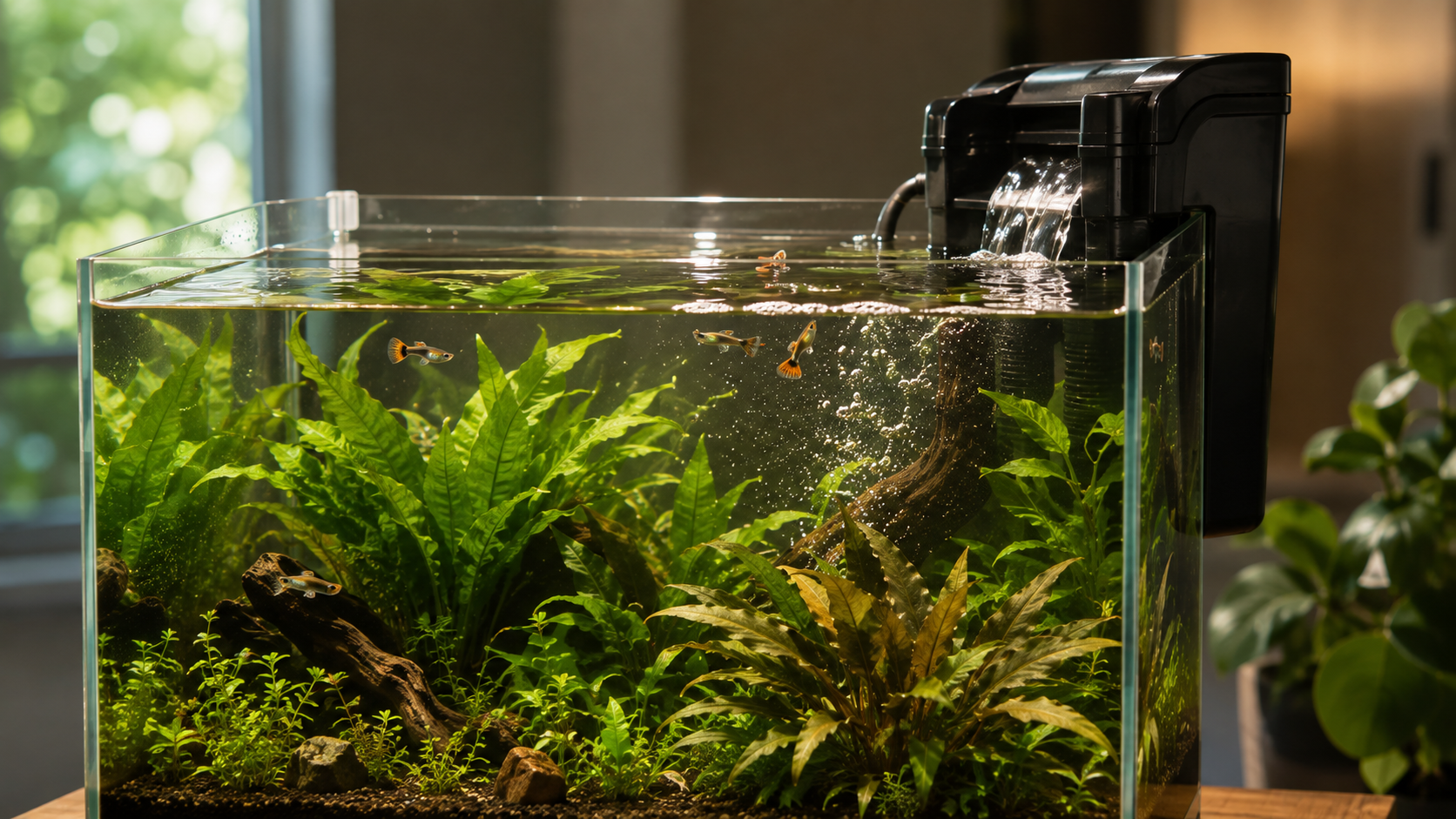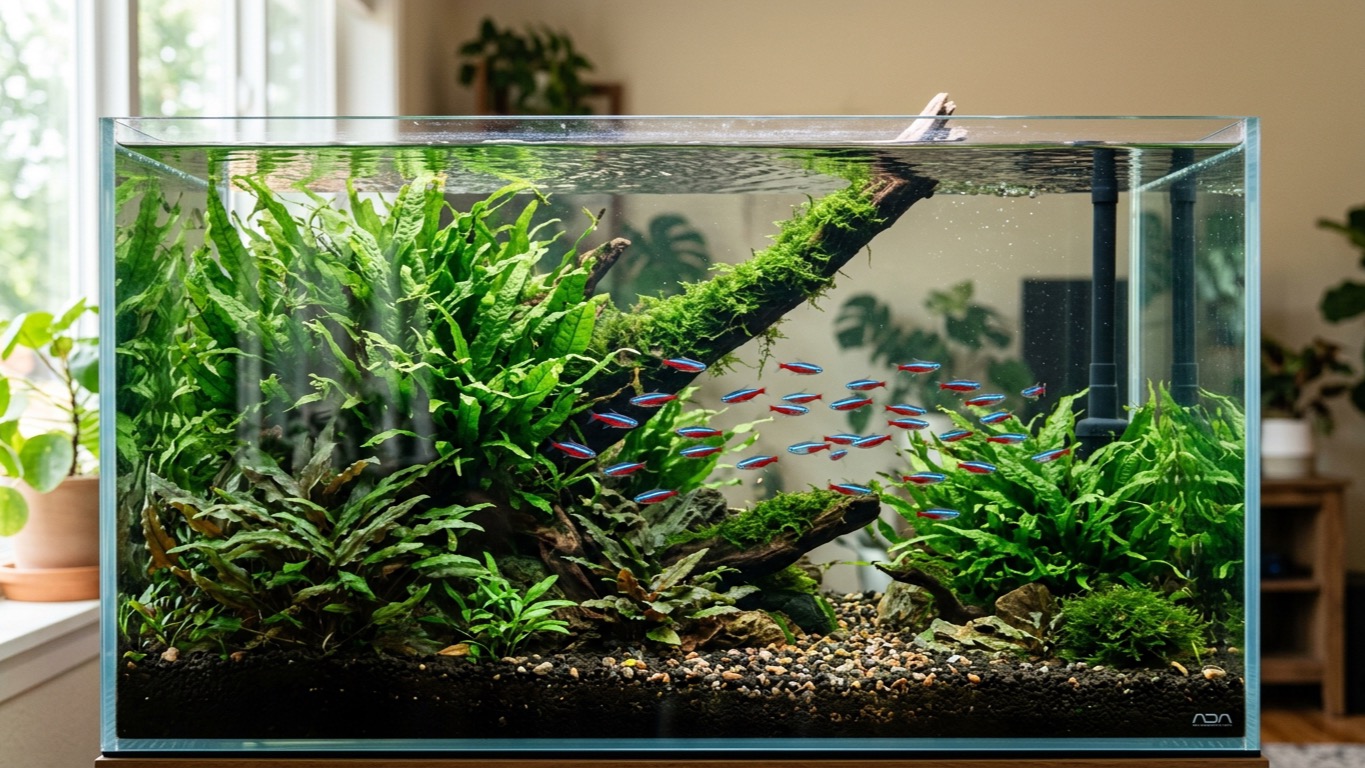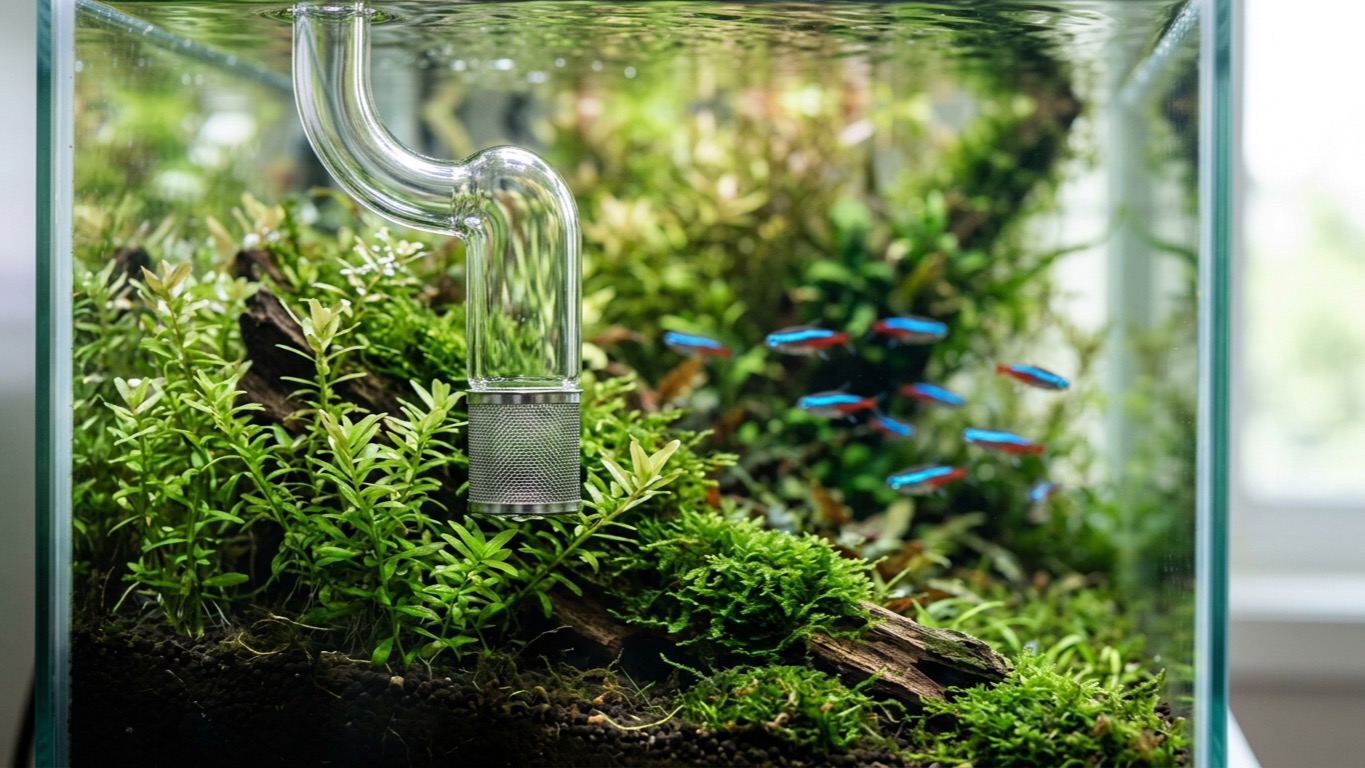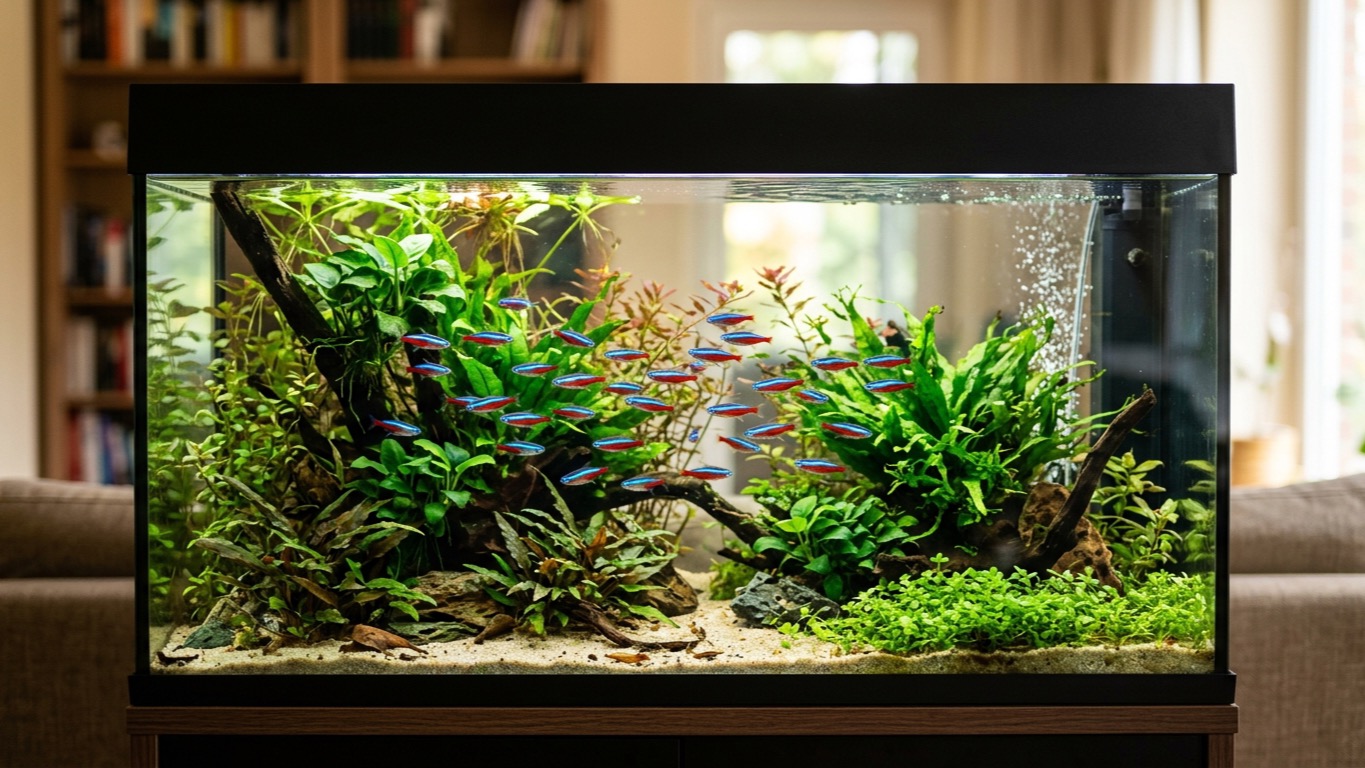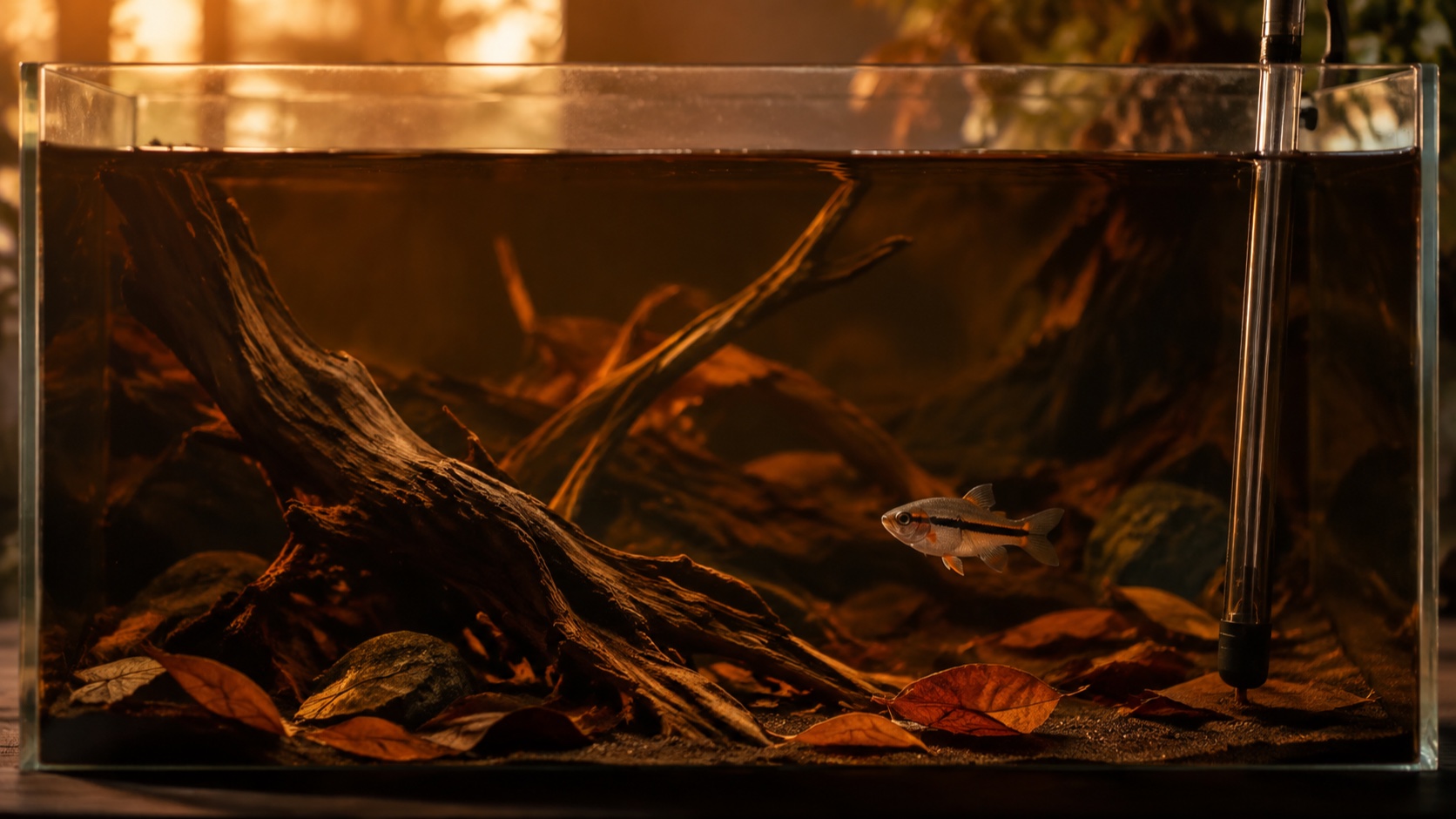
Quick answer: Start with soft, low-mineral water and skip carbon in the filter. Add wood and dried leaves so the water turns tea-colored and stays acidic.
A blackwater tank is not dirty water but clear water stained brown by plant acids.
A blackwater aquarium is tannin-stained freshwater held between pH 3.89 and 6.07.
This page is a research-desk comparison of published maker specs and one river-chemistry paper.
The Soft-Water SKU Rule
Takeaway: We only cover named products a U.S. shopper can buy today, plus one published river data set.
A product or scenario enters this article only if a U.S. shopper can buy that exact SKU and the maker lists a size, dose, or pH effect on the product page.
We leave out wild-picked leaves, pond peat, livestock medicines, and marine kits. We also leave out cichlid sands that makers design to raise pH.
Our research team compared those published spec sheets side by side and did not rank the brands.
What blackwater is, in published numbers
Takeaway: Published Negro Basin water is stained, acidic, and low in sediment, not merely brown tap water.
Blackwater is stained, acidic, low-salt freshwater, and the stain comes from tannins and other plant acids. The Journal of the Brazilian Chemical Society paper on SciELO measured 25 river samples in 1995 and 1997.
That paper reports Negro Basin pH from 3.89 to 6.07, with the low of 3.89 at Rio Tea. It also puts mean dissolved organic carbon in that basin at 11.4 mg per liter.
Mean sediment load for the 1997 set is 47 mg per liter, which is a thin particle load. Rio Solimões, a whitewater neighbor, sat at pH 6.93 to 6.99 in the same paper.
You will not copy a 715,000 square kilometer basin inside a glass box. You can still copy the direction: soft water, plant stain, and low pH.
Color alone is not the whole job, because tea-colored water with high hardness is just stained hard water.
Set the water first, then add the stain
Takeaway: Build low-mineral water first, then add tannins, because leaves rarely beat a strong tap buffer.
Tannins are weak acids that tint water and can nudge pH down. They do not erase a high carbonate buffer on their own.
Seachem’s Acid Buffer page lists a working pH band of 5.0 to 8.0. The listed dose is 1/4 teaspoon, or 2 g, per 20 U.S. gallons daily until the target pH is reached.
That same Seachem page says this dose lowers alkalinity by about 0.2 meq/L, or 0.6 dKH. Very hard tap water may need a larger dose than that listed start.
Seachem’s ratio chart pairs Acid Buffer with Alkaline Buffer in RO water. It lists 1 part Acid Buffer to 1.3 parts Alkaline Buffer for pH 6.5.
Use this order when you mix water:
- Test tap pH, GH, and KH before you buy soil or leaves.
- Blend in RO or distilled water if KH stays high.
- Treat new water with a dechlorinator before it touches fish.
- Add botanicals only after the mineral level is already low.
- Keep carbon out of the filter if you want the stain to stay.
A normal fish tank setup still applies, because you still need a cycle, a heater, and a filter. The extra rule is chemical: match the water to the stain, not the other way around.
Substrate, wood, and leaves we compared
Takeaway: Use inert sand if you want full pH control, or a listed acidic soil if you want the soil to help.
Our research team lined up six currently sold products and used only attributes the makers print. The table is an attribute sheet, not a ranking.
| Product | Role | Listed size or dose | Maker-stated water note |
|---|---|---|---|
| Fluval Stratum | Plant soil | 3–5 mm granules | Supports a neutral to slightly acidic pH |
| CaribSea PYROFLORA | Plant soil | About 1–3 mm; 6 lb bag | Supports soft and mildly acidic water |
| CaribSea Super Naturals Crystal River | Inert sand | 0.5–1.0 mm; 95 lb per cubic foot | Fine river-look sand in 5, 10, 20, and 40 lb bags |
| Seachem Acid Buffer | pH adjuster | 2 g per 20 U.S. gallons | Adjusts pH 5.0–8.0; about 0.6 dKH drop per listed dose |
| Zoo Med Mopani Wood Aquarium | Hardscape wood | Small 6–8 in through Jumbo 20–24 in | Leaches tannins and can reduce pH |
| JBL Catappa XL | Dried leaves | 10 leaves, about 23 cm; 1 leaf per 50–100 L | Actives release in 1–3 weeks |
Fluval’s Stratum series page lists 3–5 mm granules for the standard soil. It also states support for a neutral to slightly acidic pH.
CaribSea’s freshwater substrate page lists PYROFLORA at about 1–3 mm in a 6 lb bag. That page says the soil supports soft and mildly acidic water.
The same CaribSea page lists Super Naturals Crystal River at 0.5–1.0 mm, with an average density of 95 pounds per cubic foot. Bag sizes on that page are 5, 10, 20, and 40 lb.
Those grain sizes are not the same job, because Crystal River is a fine sand bed while Stratum is a larger plant soil.
Zoo Med’s Mopani Wood Aquarium page lists four lengths:
- Small: 6–8 inches
- Medium: 10–12 inches
- Large: 16–18 inches
- Jumbo: 20–24 inches
Zoo Med says the wood sinks at once and will not rot like typical driftwood. It also says natural wood leaches tannins, discolors water, and can reduce pH.
JBL’s Catappa XL page lists 10 leaves, each about 23 cm long. The listed dose is 1 leaf per 50–100 liters.
JBL says the active substances are fully released after 1–3 weeks, so replace a leaf when it is only a skeleton.
Put that JBL dose in gallons if liters are awkward:
- 50 liters is about 13 gallons.
- 100 liters is about 26 gallons.
- One large JBL leaf covers that band.
Do not chase a dark look with a huge first dump of leaves. Add one listed dose, wait through the release window, and then test pH.
How to set the tank, in order
Takeaway: Hardscape and mixed water come before fish, and botanicals go in after the filter is running.
Use this order:
- Place the tank on a stand that can hold water, soil, and wood.
- Rinse inert sand until the water runs clearer. Do not rinse plant soil unless the maker says to.
- Set wood first. Zoo Med says mopani sinks. Other woods may float until soaked.
- Add water that you already treated and mixed for low minerals.
- Start the filter with sponge or ceramic media, and leave carbon out.
- Add the first JBL leaf dose after the tank is full.
- Cycle the tank, and add fish only after ammonia and nitrite read zero.
Zoo Med’s mopani page says you can soak wood in a separate tub and change that water daily if you want less stain. Stop when the soak water goes from dark brown to very light.
That soak is optional in a blackwater tank, because many keepers want the stain. Soak only if the first tint is stronger than you want.
Plant choices stay simple if you pick plants that handle low light and soft water. Java fern, Anubias, and floating plants fit that brief.
Bright sand plus dark water is a common look, and CaribSea’s Crystal River sand is the fine, light bed in our table. A shrimp tank setup can share this leaf litter, because shrimp graze the film that grows on leaves.
A turtle tank setup is a different project. That water stays harder, clearer, and easier to clean.
Fish that fit this water
Takeaway: Stock only animals sold for soft, acidic, stained water, and skip fish sold for hard, alkaline tanks.
Shop labels that fit this style often include:
- Small tetras sold as Amazon or Rio Negro fish
- Apistogramma dwarf cichlids
- Corydoras that shops list for soft water
- Pencilfish and hatchetfish
- A betta in a heated, filtered tank of this type
Skip goldfish, livebearers that want hard water, and African rift-lake cichlids, because those animals need the opposite chemistry. Do not mix a blackwater community with a turtle, because turtles shred leaf litter and need a different clean-up plan.
Keep the first stocking light, since soft, acidic water has little buffer. A waste spike can move pH faster here than it would in hard tap water, so feed only what the fish will finish quickly.
Care that keeps the stain, and failures that dump it
Takeaway: Small, matched water changes beat big tap dumps, and carbon or limestone will undo the look.
Weekly work stays short if you keep a simple list:
- Test pH and KH on a fixed day.
- Change a modest share of the water with the same soft mix.
- Add a fresh leaf when the old one is a skeleton.
- Rinse filter sponges in old tank water, not tap water.
- Top off evaporation with RO or distilled water, not tap.
JBL’s Catappa XL page says actives finish in 1–3 weeks, so plan leaf adds on that clock. Seachem’s Acid Buffer page is for pH work, not for stain, and belongs on new water in a bucket if KH keeps climbing.
Common failures look like this:
- Filter carbon strips tannins and clears the tea color.
- Limestone or crushed coral raises KH and fights the pH drop.
- A large tap-water change can swing pH in a low-buffer tank.
- Too many leaves at once can drop pH faster than fish can handle.
- Skipping the cycle still kills fish, stained water or not.
Zoo Med notes that mopani pieces vary because the wood is a natural product, so listed sizes are approximate. CaribSea’s Crystal River density figure is 95 pounds per cubic foot, which means the sand is heavy, so confirm the stand rating before you fill.
FAQ
Is tea-colored water the same as dirty water?
No, dirty water is cloudy from waste, algae, or a bacterial bloom, while blackwater is clear and stained. You should still see the far glass. If you cannot, you have a cloud problem, not a tannin problem.
Do I need RO water?
You need low minerals, and RO is the cleanest way to get there if your tap KH is high. If your tap is already very soft, you may blend less RO. Test first, and do not guess from color alone.
How many leaves do I add to a 20-gallon tank?
JBL’s Catappa XL page lists 1 leaf per 50–100 liters, and a 20-gallon tank holds about 76 liters. That puts you near one large leaf to start. Wait through the 1–3 week release window, then add another leaf if the tint is still pale.
Will mopani wood rot?
Zoo Med’s aquarium mopani page says the wood is dense, sinks at once, and will not rot like typical driftwood. It will still leach tannins, and that leach is the point in this setup.
Can I keep shrimp in a blackwater tank?
Yes, if the shrimp species is sold for soft, acidic water, because the same leaves become grazing cover. Follow the stocking and cycle steps in our shrimp tank setup guide, and do not add shrimp to an uncycled tank.
Why did my water go clear again?
Carbon in the filter is the usual cause, and a large water change with untreated tap is next. Leaves also finish their release, and JBL lists 1–3 weeks for a full release, so add a new leaf on that schedule.
Can I use this setup for a turtle?
No, a turtle needs stronger filtration, harder water, and a dry basking spot. Use the turtle tank setup guide for that animal, and keep blackwater for small fish and shrimp.