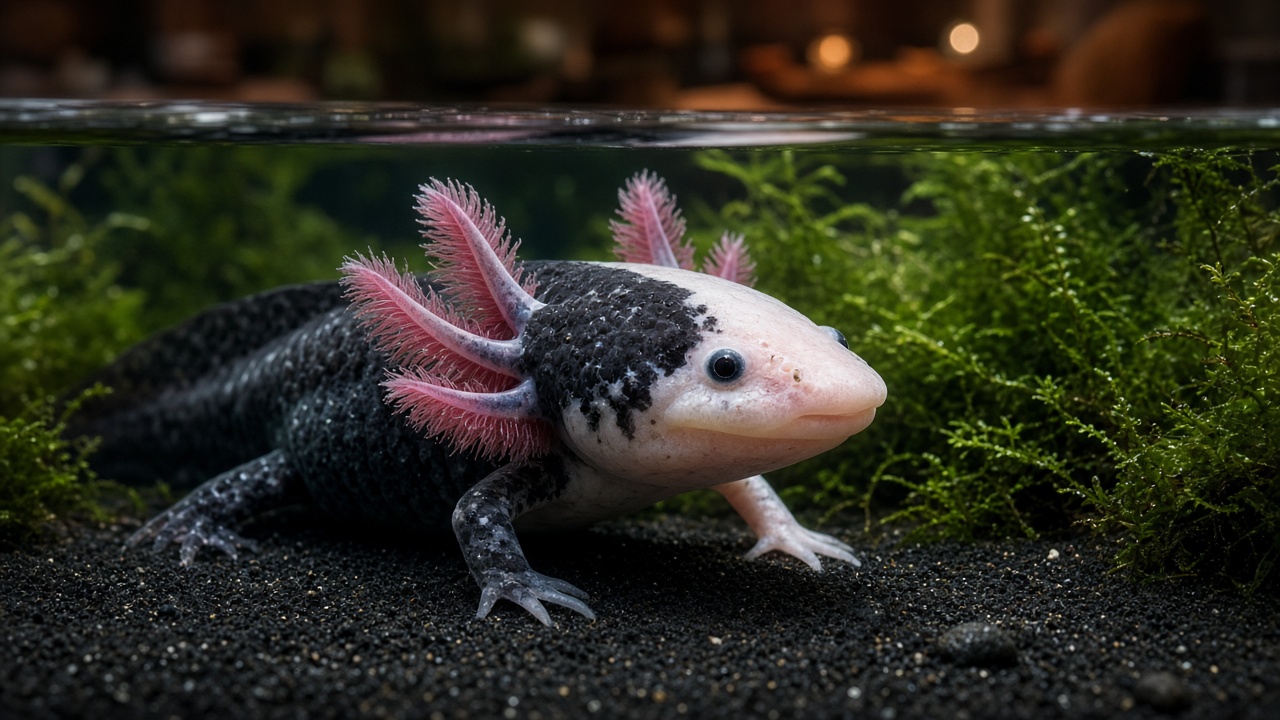
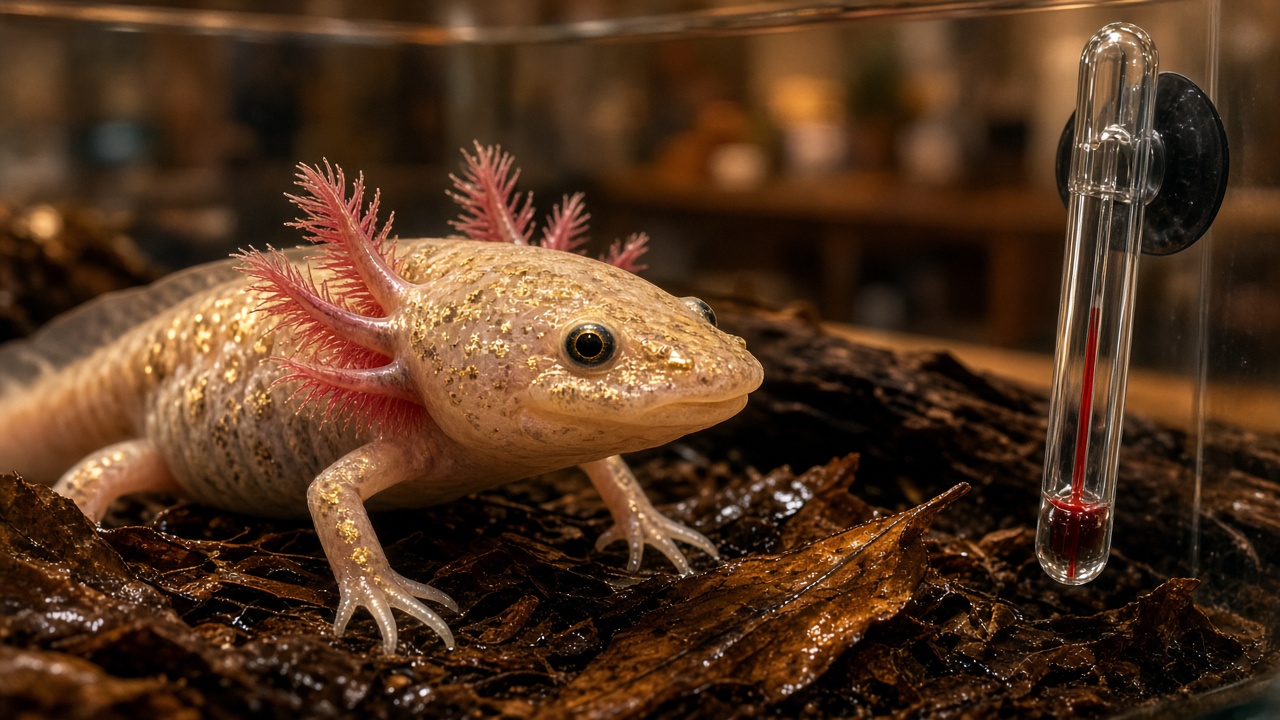
Quick answer: A golden axolotl is a golden albino morph needing cool, clean water like any Ambystoma mexicanum. Plan a wide tank, dim light, earthworm staples, and a 10–15 year commitment. Skip warm tropical fish setups.
Keep golden axolotls cool, dim, and on earthworm-based diets.
We compared published care data and morph notes to write this page. Our research team analyzed temperature bands, tank footprint, color genetics, light sensitivity, diet, and lifespan for golden albino axolotls. Owners consistently report richer gold tones as juveniles mature under steady cool care.
Comparing published specs shows golden axolotls are not a separate species. They are albino animals with active yellow pigment cells and red or pink eyes. Care matches other morphs: cool water, cycled filtration, safe substrate, and hides. This page covers color, tank size, temperature, lighting, food, lifespan, and common mistakes.
Include cool-water husbandry, dim lighting for albino eyes, and long-term space. Leave out wild-collection travel and advanced genetics lab work. Skip medication protocols that belong with a veterinarian.
Know why golden color is an albino morph, not a different animal
Gold comes from missing melanin plus active xanthophores.
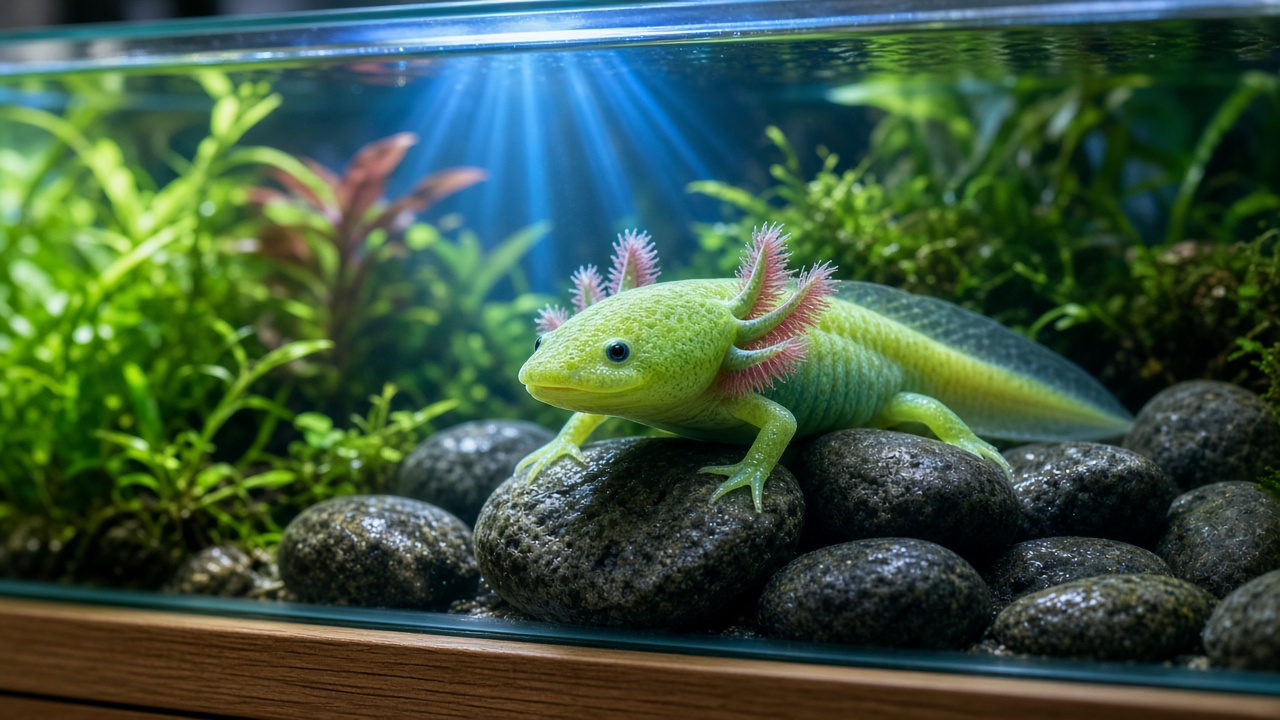
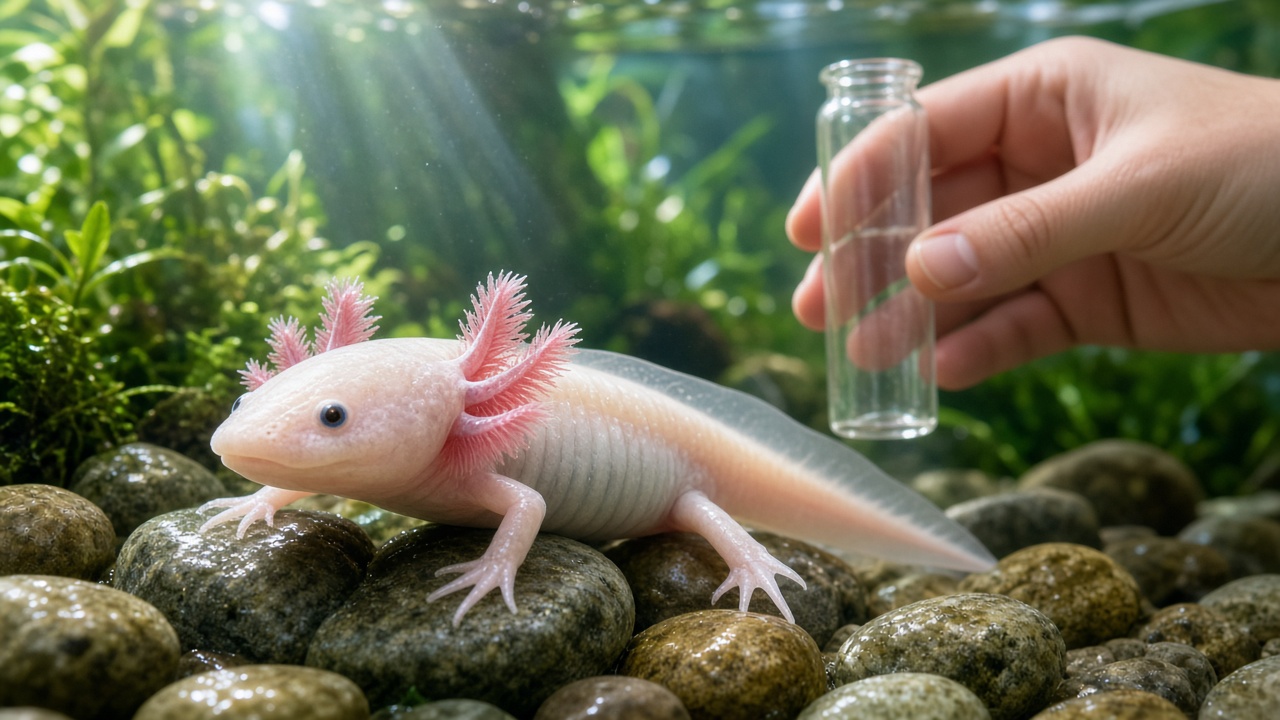
Golden axolotls lack black and brown melanin, including in the iris, so eyes read red or pink. Active xanthophores flood the skin with yellow to orange-gold pigment. White albinos share the eye trait but show less yellow. Leucistic animals look pale pink-white with dark eyes and are not the same morph. Hatchlings may look nearly white before gold deepens with age.
Color cues:
- Body: pale butter yellow to deep orange-gold
- Eyes: red or pink albino eyes
- Gills: pink-red, sometimes gold-tinted at the base
- Dark melanin spots: absent on true goldens
- Iridophores: may add metallic sparkle on some animals
Owners consistently report stronger gold after the first year. Our research team analyzed morph notes that treat diet carotenoids as a mild enhancer, not a paint job. Comparing published specs keeps “golden” and “golden albino” as the same hobby label.
Give floor space first: 29 gallons minimum, 40 better
Axolotls walk the bottom more than they cruise midwater.
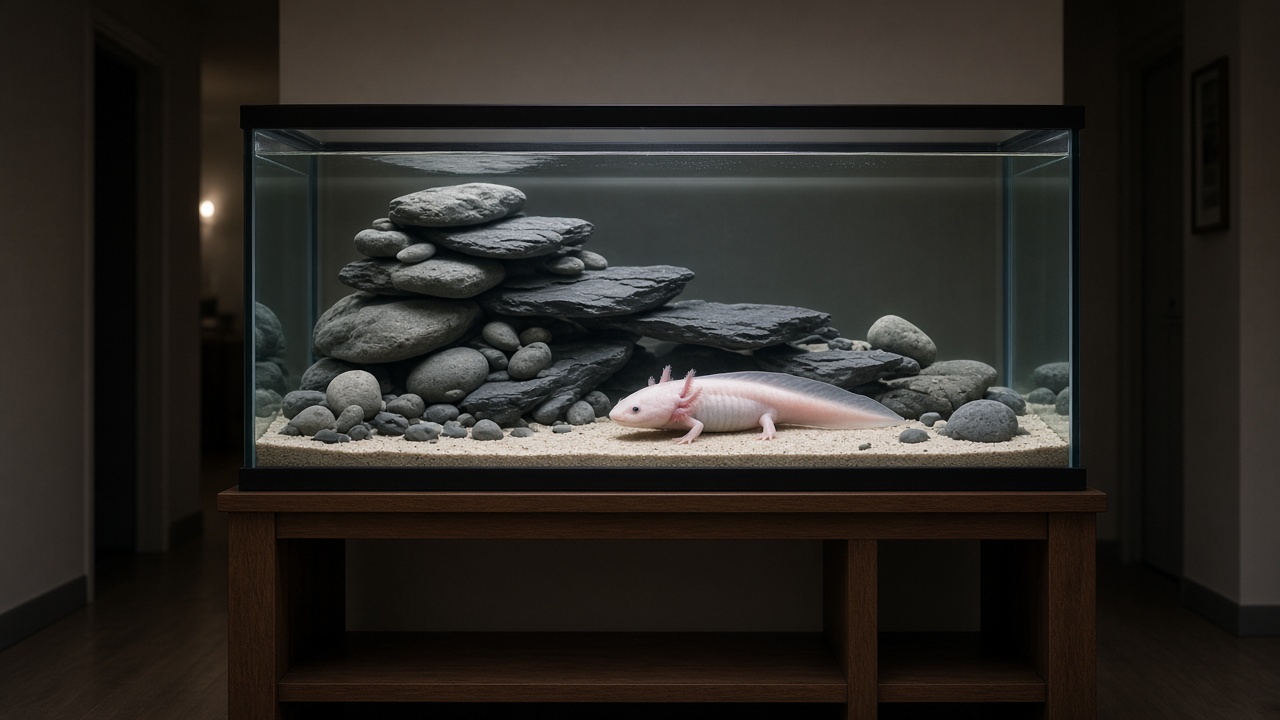
Care guides commonly cite about 110 liters, or 29 gallons, as a bare minimum per animal. Many keepers prefer about 180 liters, or a 40 gallon breeder-style footprint, for stability. Adults often reach about 9–12 inches, or about 23–30+ cm, by roughly 12–18 months. Wide, low tanks beat tall nano cubes. Plan the adult floor, not a temporary grow-out that ages out in weeks.
Tank cues:
- About 29 gallons as a cited floor per axolotl
- About 40 gallon breeder class as a stronger home
- Length and width over height
- Fully cycled filter before the animal arrives
- Lid or lower water line to reduce jump risk
Owners consistently report cleaner parameters in larger volumes. Our research team analyzed bioload notes that treat axolotls as heavy waste producers. Comparing published specs rejects desk bowls and unfiltered tubs for long-term pets.
Hold cool water: comfort near 54–68°F, stress above 68°F
Temperature is the make-or-break rule for every morph.
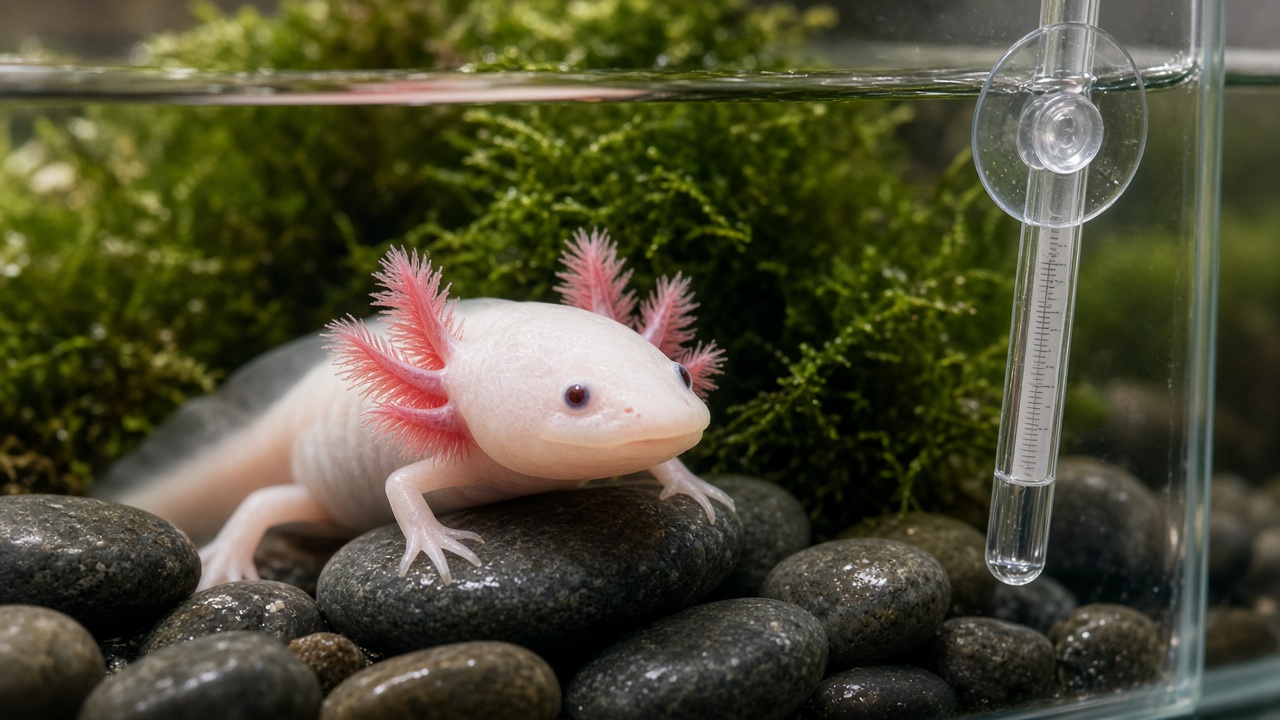
Published comfort bands often sit about 12–20°C, or about 54–68°F. Many keepers aim near 16–18°C for everyday stability. Extended time above about 22°C raises stress and immune risk. Prolonged exposure near or above about 24°C can be fatal. Very cold water below about 10°C slows digestion for long stretches. Fans or chillers beat emergency frozen bottles for daily control.
Temp checklist:
- Everyday target inside the cool comfort band
- Watch summer room heat before symptoms appear
- Baffle strong filter flow so gills are not blasted
- Test ammonia and nitrite at 0 ppm always
- Keep nitrate commonly under about 20 ppm with changes
Owners consistently report forward-curled gills when tanks run warm. Our research team analyzed ectotherm notes linking heat to low oxygen and fast metabolism. Comparing published specs puts cool water ahead of décor shopping.
Dim the lights for albino eyes and richer-looking gold
Golden albinos are more light-sensitive than dark-eyed morphs.
Missing iris pigment means bright overhead LEDs can stress them. Use low, indirect light on a timer of about 8–10 hours. Provide caves, PVC, and floating plants for shade. Dim setups also help you see gold color without washout glare. Live plants must tolerate cool, low light; skip heavy fertilizer dosing into amphibian water.
Lighting and hide list:
- Low LED or ambient room light
- Multiple opaque hides
- Floating cover for shade
- Avoid blasting white light all day
- Rearrange décor occasionally for enrichment
Owners consistently report more daytime resting in open when shade exists. Our research team analyzed photophobia notes for albino eyes. Comparing published specs treats dim care as welfare, not optional mood lighting.
Feed earthworms as the staple; keep treats occasional
Nutrition drives growth, stool quality, and color support.
Earthworms and nightcrawlers are repeatedly named as the complete staple, with high protein and a favorable calcium-to-phosphorus balance. Axolotl or sinking carnivore pellets can supplement. Occasional bloodworms, blackworms, or gel treats add variety. Avoid feeder goldfish and minnows because of thiaminase and disease risk. Skip most insects with indigestible chitin as regular meals.
Diet cues:
- Earthworms as the daily foundation
- Pellets as backup or training food
- Carotenoid-leaning treats only in moderation
- Tong-feed shy animals so food is eaten
- Remove uneaten pieces before they foul cool water
Owners consistently report steadier growth on worm-based menus. Our research team analyzed nutrition notes that reject “fish flake only” shortcuts. Comparing published specs keeps treats rare so staples stay staples.
Expect a 10–15 year lifespan with heavy weekly maintenance
Golden color doesn’t shorten or extend care effort.
Well-kept axolotls commonly live about 10–15 years, with some reports past 20. That timeline means years of water changes, filter service, and summer cooling plans. Perform partial changes as needed to hold nitrate down, often weekly or more in smaller tanks. Use a dechlorinator without aloe or iodine. Soft fine sand under about 1 mm suits animals about 6 inches or longer. Younger animals do better bare-bottom or on very large tile.
Lifespan and upkeep list:
- Plan a decade-plus commitment
- Cycle fully before purchase
- Weekly or as-needed water changes
- Safe substrate timing by body length
- Quarantine any shrimp cleaners for weeks
Owners consistently report that neglect shows first in water tests, not in gold fade alone. Our research team analyzed husbandry notes tying longevity to cool, clean routines. Comparing published specs treats lifespan as a care promise, not a marketing number.
Avoid warm community myths, gravel, and rushed cohabitation
Most “cute tank mate” ideas fail axolotls.
Tropical community fish need warmer water than axolotls tolerate. Fish may nip gills. Axolotls may eat smaller animals whole. Same-species roommates can bite limbs, breed accidentally, and spike nitrate faster. If you cohabit, match size closely, feed apart, and accept injury risk. Shrimp may work as temporary snacks more than permanent janitors. Gravel near head size is an impaction hazard.
Mistake filters:
- No warm tetra community shares
- No gravel beds for foraging mouths
- No un-cycled “just for a week” tanks
- No bright basking lamps meant for reptiles
- No skipping tests because the animal “looks fine”
Owners consistently report emergencies after heat waves and gravel ingestion. Our research team analyzed substrate and cohabitation cautions across morphs. Comparing published specs keeps golden care identical to standard cool-water axolotl care.
Watch color stages and stress signs on the same checklist
Juveniles often look pale before adult gold settles.
Hatchlings may appear nearly white for weeks. Juveniles near two to six months usually show light yellow. Sub-adults near six to twelve months deepen toward moderate gold with clear red eyes. Adults past about twelve months often show richer gold or orange. Carotenoid-leaning foods may support tone, yet genetics still set the ceiling. Don’t blast light hoping to “force” color.
Color timeline cues:
- Pale hatchling phase is normal
- Light yellow in early juveniles
- Clearer gold by sub-adult months
- Deepest tones in many adults
- Individual variation remains wide
Owners consistently report patience beats panic shopping for “brighter” animals. Our research team analyzed age-color notes for golden albinos. Comparing published specs treats gold as a developing trait, not a day-one stamp.
Gold doesn’t hide poor water or heat.
Watch for forward-curled gills, appetite loss, frantic swimming, or a curled tail tip. Test ammonia, nitrite, nitrate, and temperature first. Floating can be gas, constipation, or stress, so judge with water data. Golden skin makes pink gills easy to see, which helps early checks. Call a qualified veterinarian for illness decisions rather than dosing from memory.
Stress watch list:
- Curled gills pointing forward
- Refusing worms for multiple days
- Frantic glass surfing without cause
- Rapid gill paling after a heat spike
- New gravel or décor small enough to swallow
Owners consistently report faster recoveries when they cool and change water early. Our research team analyzed behavior notes shared across morphs. Comparing published specs keeps golden animals under the same emergency rules as wild-type pets.
FAQ
Is a golden axolotl the same as a golden albino?
Yes. Hobby language uses both names for albino animals with active yellow pigment cells. Eyes stay red or pink because melanin is missing from the iris entirely. Care needs match other axolotl morphs in cool water. Color intensity still varies by genetics, age, and diet support.
How big of a tank does one golden axolotl need?
Plan at least about 29 gallons of footprint-rich volume, with about 40 gallons preferred for long-term stability. Adults near 9–12 inches need walking space more than tall water columns. Bigger volumes dilute waste and buffer temperature swings. Skip temporary nano grow-outs that age out quickly.
What temperature should I keep a golden axolotl at?
Aim inside about 54–68°F, often near 60–64°F for everyday comfort in most home rooms. Stress rises as water stays above about 68–72°F for long periods without relief. Near 75°F for prolonged stretches is dangerous for this morph. Use fans or a chiller for summer, not hope alone.
Do golden axolotls need special lighting?
They need dimmer light than many fish tanks because albino eyes lack iris pigment. Provide hides and avoid harsh overhead glare on open sand. A simple timer near 8–10 hours is enough for most rooms. Bright light doesn’t “make them gold”; it can stress them.
What should I feed a golden axolotl daily?
Use earthworms or nightcrawlers as the staple food every week for best nutrition overall. Add quality sinking pellets when needed, and keep bloodworms or similar foods as occasional treats only. Remove leftovers promptly in cool water. Don’t rely on feeder fish as a regular diet plan.
How long do golden axolotls live?
Common captive lifespans land near 10–15 years with steady cool, clean care routines year after year. Some individuals are reported older when husbandry stays excellent for decades. Treat that span as a real commitment to testing and water changes. Color morph doesn’t replace those basic routines.
Can golden axolotls live with other morphs?
Size-matched morphs share the same water needs, yet cohabitation still risks bites, breeding, and faster nitrate climb. Many keepers prefer one animal per tank for safety reasons. If you house multiples, feed separately and watch limbs after every meal. Quarantine newcomers before any introductions begin.
This guide is informational only and doesn’t replace advice from a qualified veterinarian.