Quick answer: Koi bettas are marble Betta splendens whose colors can shift for life. Give one fish a heated, filtered five-gallon-plus tank, soft flow, plants, and a protein-rich diet.
Expect lifelong color shifts from marble genetics, not a fixed paint job.
We compared published care data on koi and marble betta husbandry, tank size, and water ranges. Our research team analyzed marble-gene notes, heater and filter guidance, and diet timing used in betta care sheets. Owners consistently report surprise when store colors fade, bloom, or rearrange months after purchase.
Comparing published specs treats koi bettas as Betta splendens with marble patterning, not a carp hybrid. Jumping genetic elements called transposons can turn pigment on or off as the fish ages. Care still matches other fancy bettas in heated, filtered tanks. Many setups start near five gallons for one fish. Warm water near seventy-eight to eighty-two degrees Fahrenheit is common in setup guides, with a gentle filter plus lid. Adult length often sits near two and a half to three inches. Typical pet betta lifespan notes run about three to four years with solid care. This page covers genetics, tanks, water, décor, diet, health watches, and housing rules.
Include marble color-change expectations, solo tank setup, water targets, plants, feeding, and stress signs. Leave out long-term male-plus-female housing plans. Skip drug dosing charts that belong with a veterinarian.
Marble genes make color a moving target
Koi looks come from marble genetics, not painted scales.
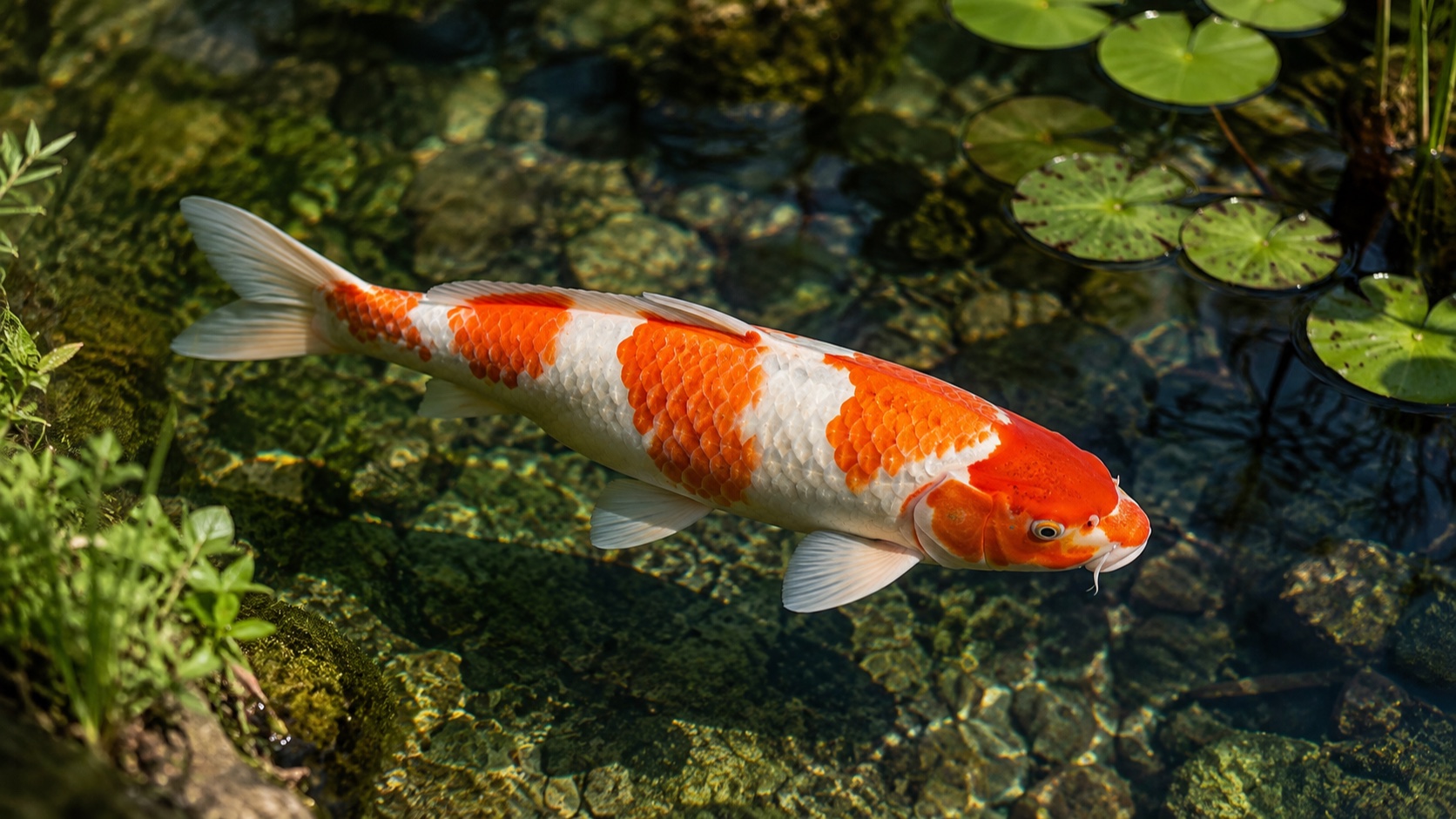
Koi bettas carry marble patterning that can rearrange over months. Transposons, often called jumping genes, can shift which pigment shows as the fish matures. A mostly white fish with orange patches may gain black marbling later. Sharp color blocks that recall show koi are the visual goal, not a fixed photo match. Galaxy, candy, and plakat koi strains still share the same basic care. Buy for personality and husbandry; it isn’t a forever palette. Photograph your fish monthly if you want a color diary you’ll trust.
Color change cues:
- Patterns may gain, lose, or move pigment over time
- Store looks are a starting snapshot only
- Transposons can switch color genes on or off
- Plakat koi need the same heat and filtration
- Stress and poor water can dull color even with marble genes
Owners consistently report different fish after six months of good care. Our research team analyzed marble-gene explanations in koi betta guides. Comparing published specs separates genetics from tank neglect as causes of fade.
Start with a heated five-gallon solo tank
Space and stability beat tiny bowls every time.
Many care setups list about five gallons as a solid solo start for one betta. Larger footprints hold heat and chemistry more steadily. Use a fitted lid because bettas jump. Choose a sponge filter or a nano hang-on-back with soft return flow. Long fins fight strong current, so baffle outlets with plants if needed. Cycle the tank before the fish arrives and dechlorinate every fill. Float the bag about twenty minutes for temperature match, then net the fish without dumping store water.
Starter kit board:
| Item | Role |
|---|---|
| 5+ gallon tank | Stable volume for one fish |
| Lid or hood | Stops jumps |
| Heater with thermometer | Holds tropical heat |
| Gentle filter | Clean water, soft flow |
| Conditioner | Removes chlorine and chloramine |
Owners consistently report calmer fish after leaving cups behind for filtered tanks. Our research team analyzed betta setup checklists for beginners. Comparing published specs puts cycling and soft flow ahead of décor shopping.
Hold warm, calm, tested water
Heat and chemistry protect appetite and fins.
Setup notes often place bettas near seventy-eight to eighty-two degrees Fahrenheit. Broader care sheets may list about seventy-six to eighty-five degrees as an acceptable band. Calm water with a mid-range pH near about six point eight to seven point five appears in common care sheets. Keep ammonia and nitrite at zero after cycling. Many keepers change water when nitrates climb; one widely cited setup note treats nitrates above about forty ppm as a change cue. Filtered tanks often use about ten percent weekly or about twenty-five percent every two weeks. Don’t swap one hundred percent of the water at once.
Water targets:
- Temperature steady in the tropical band
- Ammonia and nitrite at zero
- Gentle surface ripple, not a jet
- Partial changes on a calendar
- Test before you guess
Owners consistently report fin issues after cold rooms without heaters. Our research team analyzed heater and change schedules in betta care sheets. Comparing published specs treats a thermometer as non-negotiable gear.
Soft plants and smooth décor protect fins
Enrichment should not shred silk-like fins.
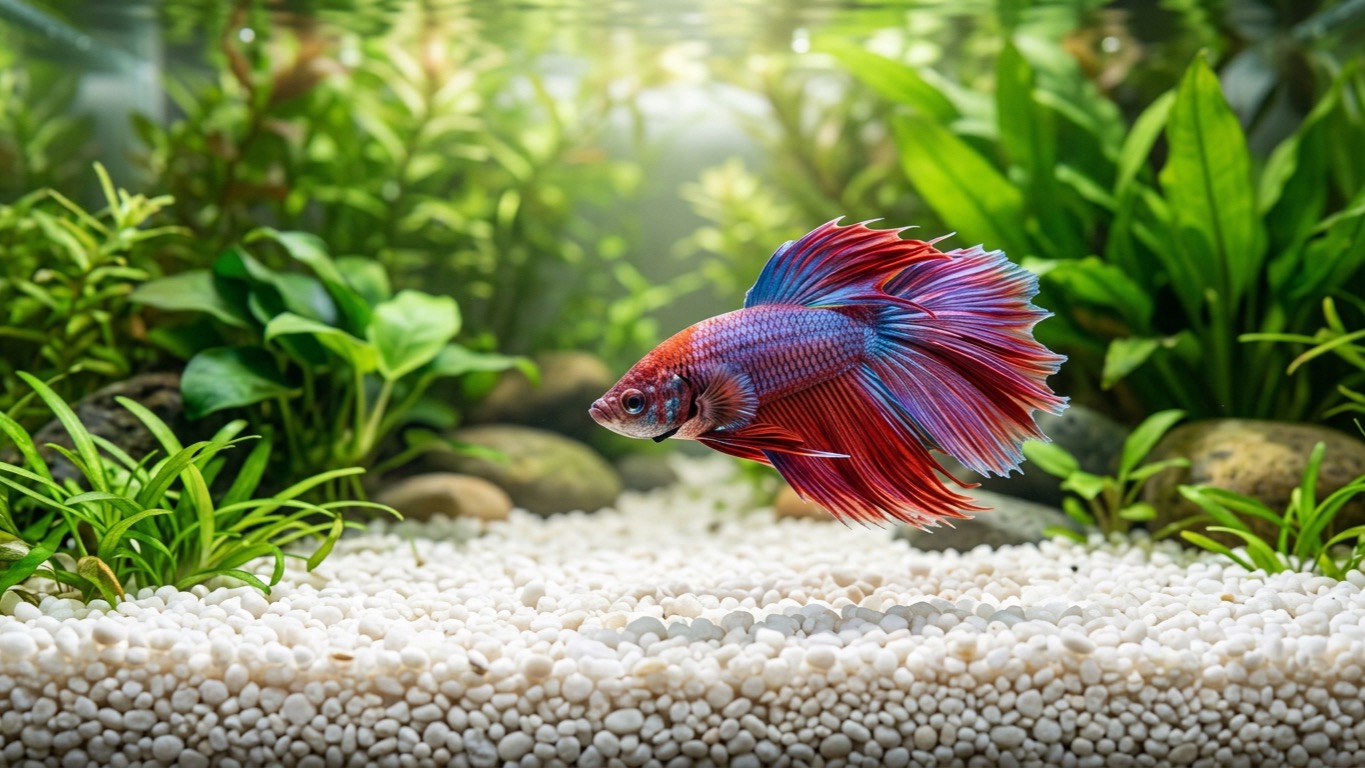
Sand or smooth gravel supports plants and easy siphoning. Live beginner plants such as anubias, java fern, and marimo help water quality and rest spots. Silk plants work when edges stay soft. Avoid sharp plastic leaves that tear long fins. Floating cover mimics shaded wild pools and gives resting pads near air. Smooth caves and driftwood add territory without jagged edges. Lighting on a day-night cycle shows color without leaving lamps on all night.
Décor checklist:
- Soft live or silk plants only
- No sharp ornaments or rough plastic edges
- Floating leaves for rest and shade
- Open swim lanes through plant thickets
- Secure lid after every maintenance session
Owners consistently report fewer torn fins after swapping sharp plastic plants. Our research team analyzed décor notes in planted betta setups. Comparing published specs pairs beauty with fin safety.
Feed protein snacks in tiny timed meals
Bettas are micro-predators, not scrap grazers.
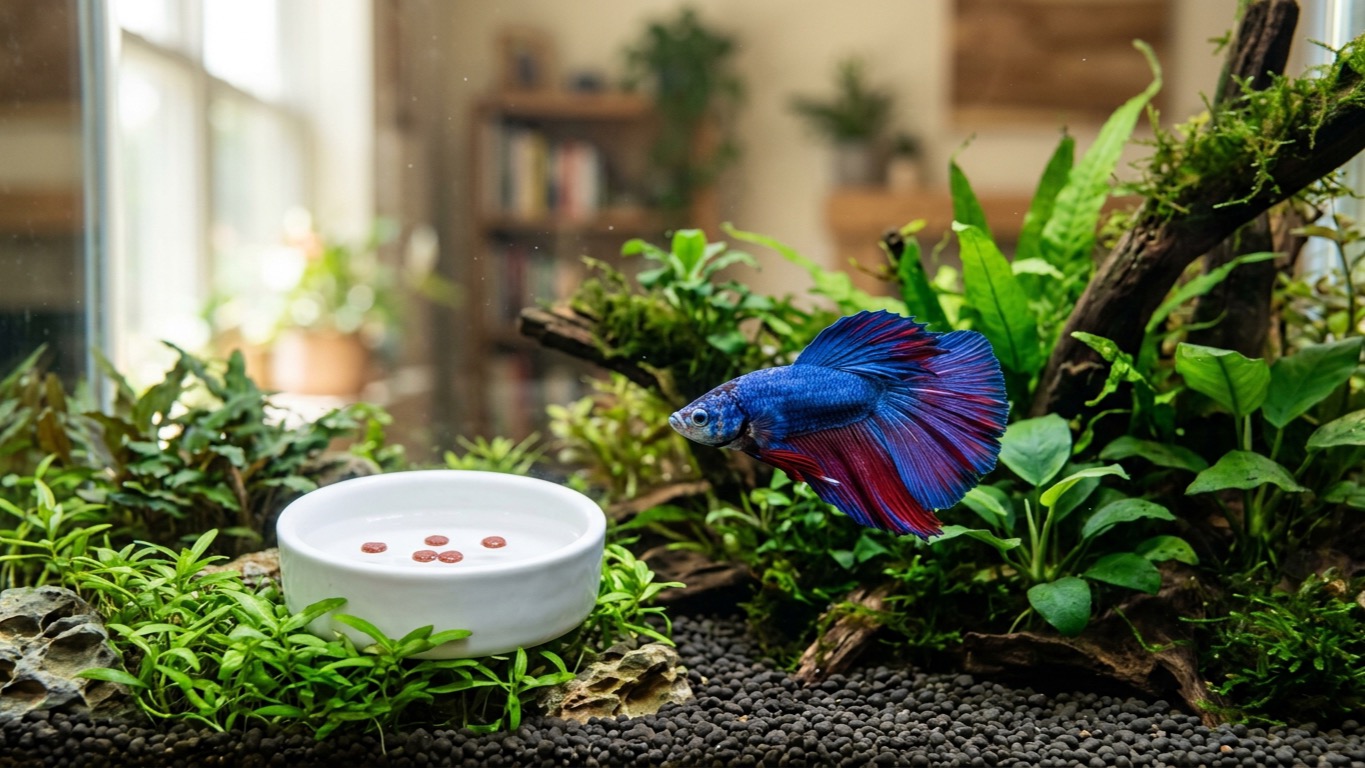
Quality betta pellets or formulas designed for insectivores form the daily base. Frozen or freeze-dried bloodworms and brine shrimp work as occasional treats. Care sheets often advise feeding once or twice daily. Offer only what the fish finishes in about two minutes, then remove leftovers. Overfeeding fouls small tanks faster than underfeeding. Fast one day weekly if your keeper notes recommend it for digestion. Match portions to activity and water tests, not boredom.
Feeding board:
| Food | Use |
|---|---|
| Betta pellets | Daily staple |
| Frozen bloodworms | Occasional treat |
| Brine shrimp | Occasional treat |
| Leftovers | Siphon after two minutes |
| Schedule | Once or twice daily |
Owners consistently report clearer water after strict two-minute meals. Our research team analyzed diet timing in betta care guides. Comparing published specs keeps protein high and portions small.
Watch stress, white spots, and frayed fins early
Color change is genetics; illness is a different story.
White salt-like spots can signal ich after temperature swings or shipping stress. Frayed, grayish fins can point toward fin rot when water sits cold or dirty. Lethargy, clamped fins, and refused food need water tests the same day. Marble color shifts should not come with gasping, flashing, or open sores. Quarantine new livestock when you keep community tanks. Call a veterinarian for aquatic patients when a fish’s condition declines despite clean, warm water.
Health watch list:
- Test ammonia, nitrite, nitrate, and temperature first
- Note appetite, gill rate, and resting spots
- Separate genetics-based color change from disease marks
- Improve heat and cleanliness before panic shopping
- Seek veterinary help for worsening lesions or breathing trouble
Owners consistently report early saves after they tested water instead of dosing blind. Our research team analyzed common betta disease cues in care articles. Comparing published specs puts water fixes ahead of random remedies.
Keep koi bettas alone or with careful non-betta mates
Same-species fights define Siamese fighting fish.
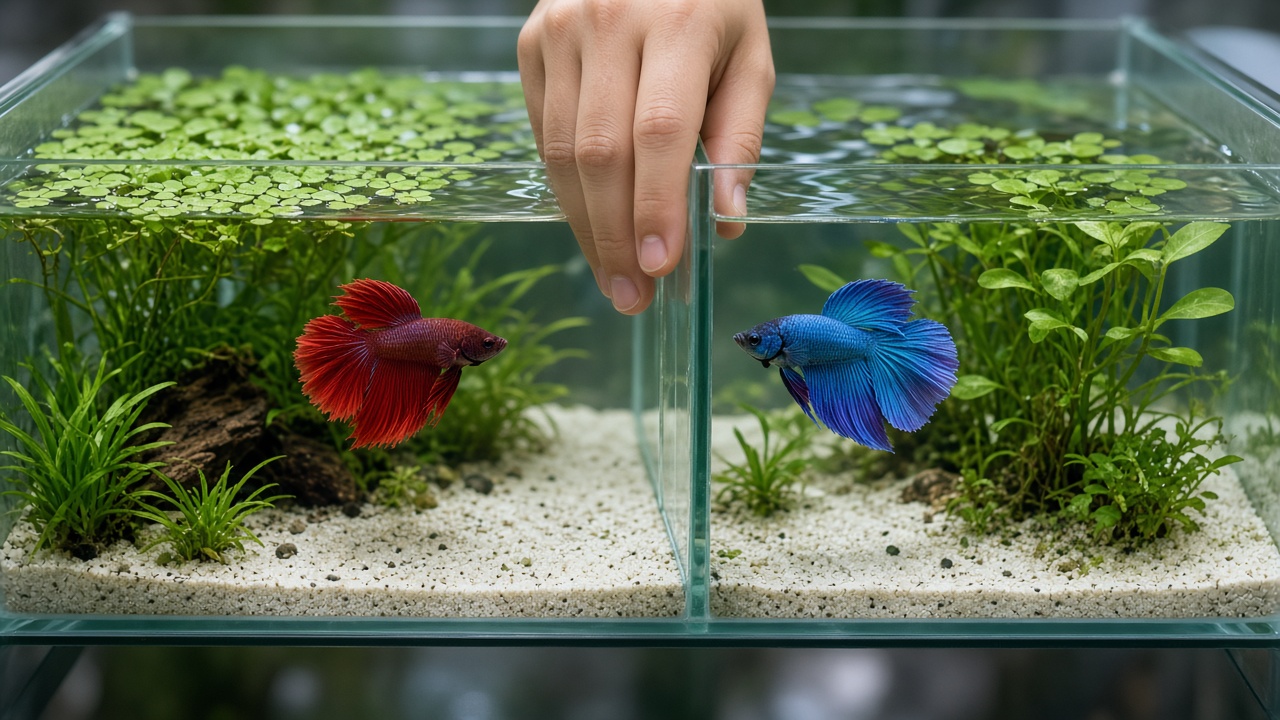
Male bettas must never share a tank with other males. Long-term male-plus-female housing is a breeding project, not a décor choice. Solo display tanks remain the simplest path for koi show fish. In larger community tanks, peaceful midwater fish and bottom dwellers may work when the male ignores them. Avoid fin-nippers and long-finned lookalikes that trigger flares. Watch introductions for a full week before calling the mix safe. Have a backup tank ready if chasing starts.
Housing rules:
- One male per undivided tank
- No permanent male-female pairs
- Soft-flow community mates only after monitoring
- Skip tiger barbs and known fin-nippers
- Upgrade volume before adding companions
Owners consistently report injuries when pairs stayed together past spawning. Our research team analyzed compatibility notes for Betta splendens. Comparing published specs keeps solitude as the default for males.
Koi bettas reward patience more than impulse décor buys. Marble genetics keep the show changing while the care list stays familiar. Heat, soft filtration, plants, and timed protein meals protect both color and lifespan. Photograph the changes, test the water, and treat the fish as Betta splendens first.
FAQ
Do koi betta fish change color for life?
Yes. Marble genetics involve transposons that can rearrange pigment expression as the fish ages. Store colors are a snapshot, not a warranty of the adult look. Document monthly photos if you want a personal record of shifts. Poor water can also dull color, so test chemistry when fade arrives with stress signs such as clamped fins or lethargy.
What tank size does a koi betta need?
Many setup guides treat about five gallons as a solid solo starting size for one betta. Larger tanks hold heat and waste better and allow richer planting for rest. Use a lid, heater, and gentle filter in every plan you build. Bowls without heat or filtration make maintenance harder and raise chronic stress for long-finned fish.
What temperature should koi betta water stay at?
Many betta setup articles target about seventy-eight to eighty-two degrees Fahrenheit for daily comfort. Broader care sheets may list about seventy-six to eighty-five degrees as an acceptable wider band. Keep a heater and thermometer in place year-round indoors. Cold rooms raise disease risk even when the fish still gulps air at the surface with its labyrinth organ.
Are koi bettas harder to keep than other bettas?
Basic care matches other Betta splendens needs: warm water, soft flow, protein food, and clean partial changes. The unique work is expecting color shifts and avoiding sharp décor that shreds silk-like fins. Genetics do not replace cycling or heaters in any setup. Husbandry quality still sets lifespan more than fancy pattern names on the bag.
What should I feed a koi betta?
Use a quality betta pellet as the staple and add occasional frozen treats such as bloodworms or brine shrimp. Feed once or twice daily with portions finished in about two minutes at most. Remove leftovers promptly to protect ammonia and nitrate levels in small tanks. Match feeding to appetite and nitrate trends, not to boredom or entertainment.
Can two koi bettas live together?
Two males should never share an undivided tank because fighting is expected and often severe. A male and female belong together only for short, supervised breeding, then they must separate again. Female-only groups need advanced planning and are not beginner projects for most homes. Solo housing remains the safest default for show koi males with long fins.
How long do koi bettas live?
Common pet betta care sheets list about three to four years with solid husbandry and stable water. Poor water, cold temps, and chronic stress shorten that span quickly for fancy lines. Selective breeding can carry extra health risks, so watch appetite and swimming early each week. Stable heat and clean water remain the best longevity tools you control.
This guide is informational only and does not replace advice from a qualified veterinarian.