Quick answer: Not as roommates. House a male and female betta together only for brief, supervised breeding, then separate them before injuries start.
Permanent male-female betta housing is unsafe; breeding contact stays short and watched.
We compared published care data on Betta splendens aggression, breeding timelines, and housing rules. Our research team analyzed solo-tank guidance, spawning sequences, and female-removal timing used in breeding checklists. Owners consistently report torn fins and deaths when pairs stayed together after the spawn.
Comparing published specs treats domestic male bettas as highly territorial toward their own species. Setup guides often house males and females separately outside breeding. Breeding plans use a dedicated tank, visual introduction, bubble-nest readiness, and immediate female removal after eggs. Solo display tanks near five gallons or larger with heat and soft filtration remain the default. Female-only groups need heavy planting and experience; they are not a casual substitute for a pair. This page covers risks, breeding exceptions, readiness signs, tank setup, separation timing, and safer alternatives.
Include why pairs fail long-term, supervised breeding steps, readiness cues, and separation rules. Leave out permanent “couple tank” marketing. Skip medication protocols that belong with a veterinarian.
Permanent pairs turn courtship into chronic chasing
Biology, not bad luck, drives the conflict.
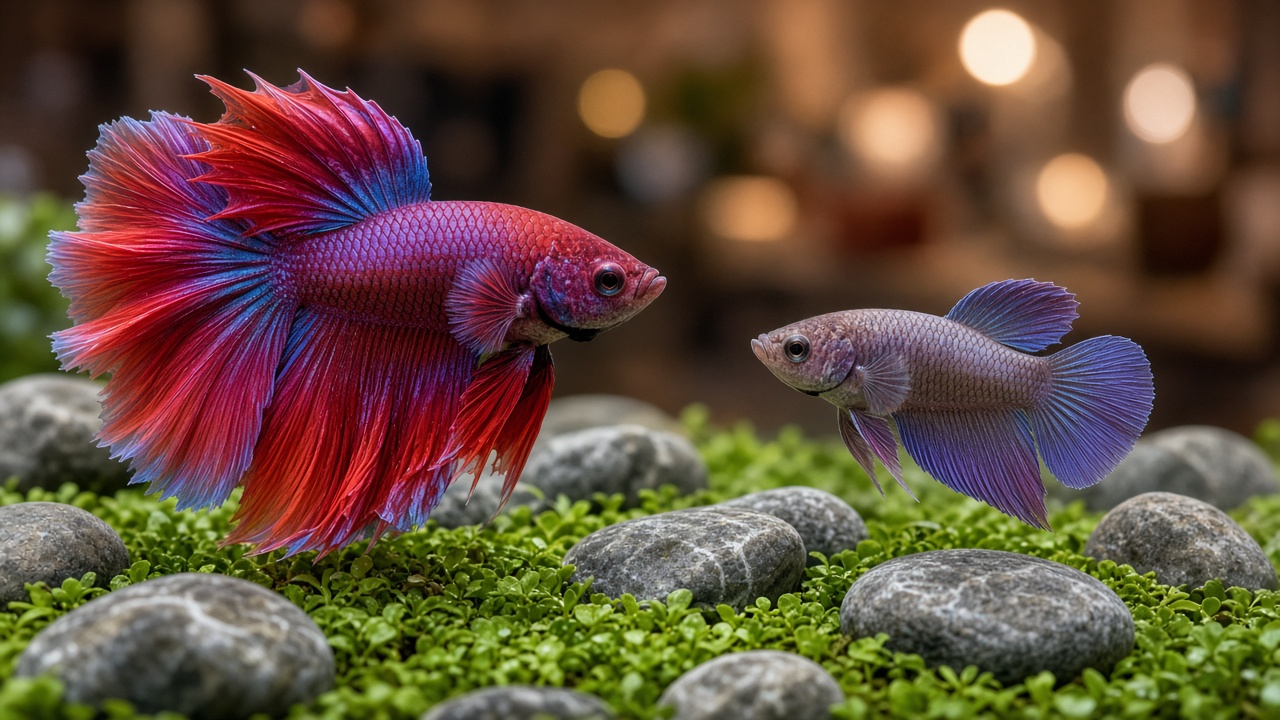
Male bettas pursue females when breeding drive rises. Unreceptive females get chased, nipped, and cornered. Even a calm first night can turn violent days later. Domestic lines carry generations of fighting selection that intensifies same-species conflict. Tank size alone doesn’t cancel that drive. Dividers still allow chemical and visual stress in many setups. Separate heated tanks remain the kind default for pets, not shared apartments.
Risk board:
| Setup | Likely outcome |
|---|---|
| Male + female long-term | Harassment, injury, death risk |
| Two males undivided | Immediate serious fighting |
| Solo male display | Lowest same-species risk |
| Supervised spawn then split | Breeding possible with oversight |
| Opaque divider only | Stress may continue |
Owners consistently report sudden attacks after weeks of “peaceful” pairing. Our research team analyzed compatibility warnings for Betta splendens. Comparing published specs rejects roommate marketing for mixed-sex pairs.
Breeding is the only planned exception
Spawning contact is a timed project, not décor.
Condition male and female separately on high-protein foods for about one to two weeks in many breeding checklists. Use a dedicated breeding tank, often near ten gallons in home guides, with a heater and sponge filter. Keep surface agitation low so bubble nests hold. Introduce the female in a clear breeder box or chimney first so both fish see each other safely. Release her only when the male tends a nest and she shows readiness. Stay at the tank during the spawn window.
Breeding gate list:
- Separate conditioning tanks first
- Dedicated shallow, warm breeding setup
- Visual introduction before free contact
- Male bubble nest present
- Human supervision during the meet
Owners consistently report safer spawns after boxed introductions. Our research team analyzed breeding-tank checklists for home keepers. Comparing published specs treats the free-swim meet as temporary and watched.
Read readiness before you lift the divider
Wrong timing is how females get hurt.
Males ready to breed build and repair a surface bubble nest and flare toward the female. Females often darken with vertical breeding bars and look rounder with eggs. A white ovipositor tip may show near the vent. Interest means swimming toward the male, not hiding in terror. If she cowers, extend visual contact and keep protein conditioning. Don’t force a meet because you want fry on a calendar. Wait for mutual signals near lights-out periods many breeders prefer.
Readiness cues:
- Male nest stable under a leaf or cup
- Male displays without constant ramming of the box
- Female shows vertical bars and thicker belly
- Female approaches rather than freezes
- Water warm and chemistry clean before release
Owners consistently report better outcomes when they waited for bars and nests. Our research team analyzed readiness markers in breeding guides. Comparing published specs puts signals ahead of the clock.
Build a soft, shallow breeding stage
Fry and nests need calm water and cover.
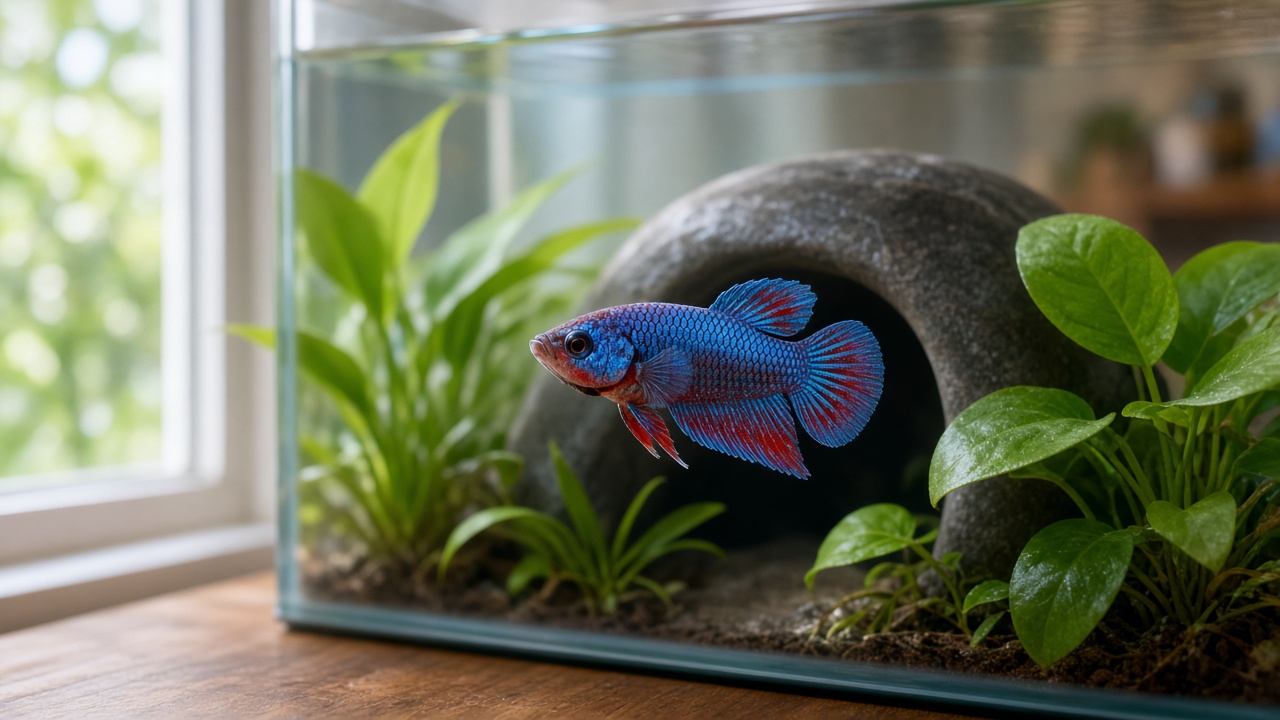
Many breeding notes keep water relatively shallow so fry reach air easily after hatch. Floating plants or a small nest anchor help the male place bubbles. A sponge filter provides biology without shredding the nest. Soft plants give the female escape routes during courtship wraps. Bare bottoms make egg and waste spotting easier. Match temperature to tropical betta bands near about seventy-eight to eighty-two degrees Fahrenheit in common setup notes. Dechlorinate every water addition.
Breeding tank board:
| Element | Why it matters |
|---|---|
| Heater | Steady tropical heat |
| Sponge filter | Gentle flow, bio media |
| Floating plants | Nest anchors and cover |
| Clear chimney | Safe visual intro |
| Escape plants | Female shelter during spawn |
Owners consistently report nest collapse under strong hang-on-back returns. Our research team analyzed filter choices for betta breeding tanks. Comparing published specs favors air-driven sponges during the spawn.
Remove the female the moment spawning ends
Egg care belongs to the male next.
After the nuptial wraps and egg placement, males guard the nest and often attack the female. Remove her to a recovery tank with heat, cover, and clean water immediately. Watch her for torn fins and stress for several days. The male tends eggs until hatch, often within about one to two days in many notes, then guards wrigglers briefly. Remove him when fry become free-swimming so he does not eat them. Plan fry foods before the spawn, not after panic.
Separation order:
- Net female right after eggs are nested
- Rest her in a quiet, warm recovery tank
- Leave male on nest duty only
- Remove male when fry free-swim
- Never return the pair as roommates
Owners consistently report female injuries when removal waited overnight. Our research team analyzed post-spawn timelines in breeding care pages. Comparing published specs makes immediate female removal non-optional.
Safer ways to enjoy more than one betta
You can keep multiple fish without a mixed-sex cage.
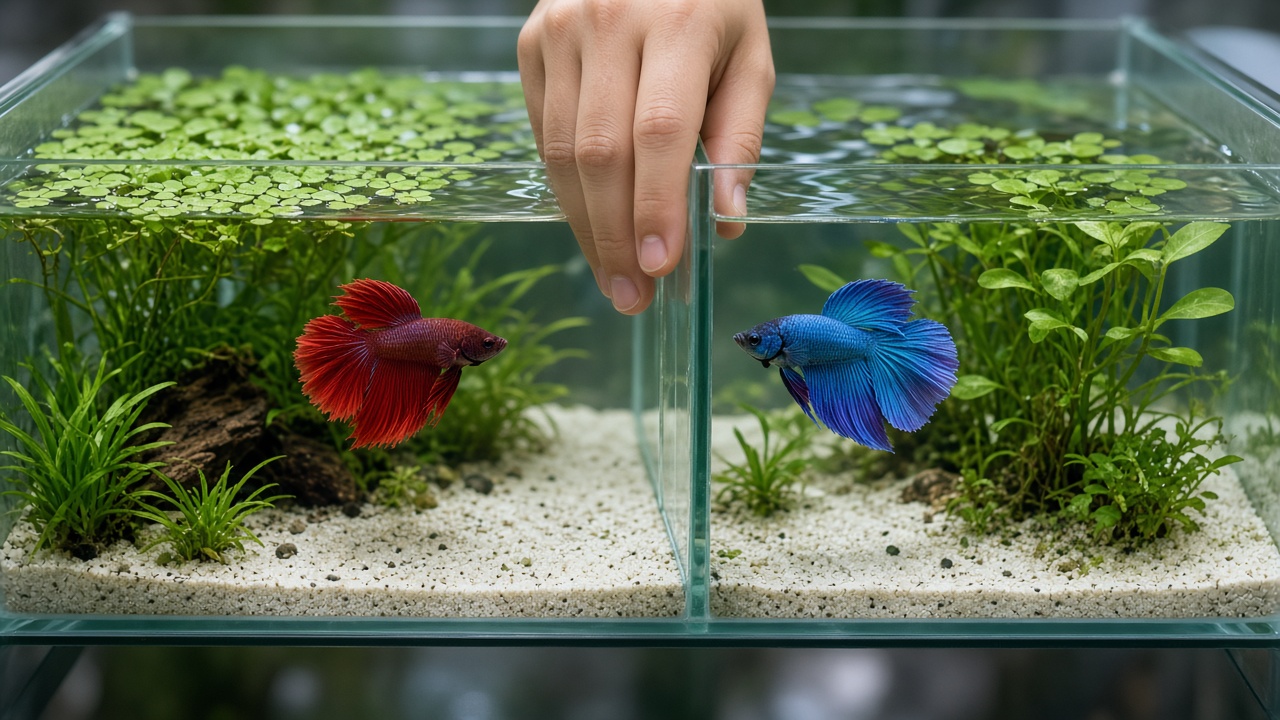
Give each male his own heated, filtered tank. Female-only sororities need large, heavily planted aquariums and close monitoring; many setup guides reserve them for experienced keepers. Opaque dividers can house fish in one footprint if each side has heat, flow, and hiding space. Community tanks may host one betta with carefully chosen non-betta mates when chasing stays absent. Always keep a hospital or backup tank ready. Don’t invent a “breeding colony” in a display tank.
Alternatives checklist:
- Separate solo tanks for each male
- Experienced-only female groups with heavy cover
- Divided aquariums with independent microhabitats
- One betta in a peaceful community after long watch
- Backup tank staged before any experiment
Owners consistently report calmer homes after they stopped forcing pairs. Our research team analyzed housing alternatives in betta setup articles. Comparing published specs favors solitude over wishful cohabitation.
Watch for emergency injury signs
Intervene early when chasing turns bloody.
Torn fins, missing scales, clamped posture, and hiding without eating mean separation now. Cloudy eyes or fungal patches can follow wounds in dirty water. Test ammonia and nitrite while you isolate the injured fish. Raise water quality with partial changes of temperature-matched, treated water. Soft plants and dim lighting reduce further panic in recovery. Contact a veterinarian experienced with fish when wounds worsen or breathing labors. Don’t return fighters to the same undivided tank.
Injury response:
- Separate immediately into heated recovery water
- Test and correct chemistry
- Offer easy foods once the fish rests
- Document wounds daily with photos
- Call a veterinarian if decline continues
Owners consistently report better healing after same-day isolation. Our research team analyzed injury responses in betta aggression notes. Comparing published specs treats bleeding fins as an emergency, not a phase.
Male and female bettas meet for spawning, not for shared décor life. Plan two tanks before you plan fry. Watch readiness, supervise contact, and remove the female the same session eggs hit the nest. Kind keeping means separate homes and honest breeding timelines.
FAQ
Can a male and female betta live together forever?
No. Long-term housing leads to harassment and injury for most domestic pairs kept as pets. Males keep breeding drive even when the female is not ready to spawn. Keep them in separate heated tanks as everyday companions instead. Use brief supervised contact only if you are intentionally breeding and ready to separate them the same day.
How long can they stay together for breeding?
Only for the spawning session after proper conditioning and a calm visual introduction first. Many keepers stay at the tank until eggs are nested, then remove the female immediately afterward. Leaving her overnight raises injury risk while the male guards the nest. Plan a warm recovery space before you lift any divider or chimney.
Do I need a special breeding tank?
Yes for safer control of flow, nests, and escapes during the meet. Dedicated tanks let you keep soft flow, nest anchors, and plant cover without disrupting a display aquarium. Common home notes often use about a ten-gallon footprint with a sponge filter and heater. Cycle and heat that tank fully before any introductions begin.
What if they seem peaceful for weeks?
Peace can end suddenly when breeding drive rises after a water change or temperature swing. Delayed attacks are common in mixed-sex roommate stories shared by keepers online and offline. Do not treat quiet days as proof of lasting compatibility for Betta splendens. Separate pets now if they share a tank without a breeding plan and live supervision.
Can female bettas live together instead?
Sometimes in large, heavily planted groups managed by experienced keepers who watch daily. Many setup guides still advise beginners to house all bettas separately for safety. Sororities need monitoring and a backup tank for any bullied fish. They are not a casual substitute for keeping a male and female as a pair.
How do I know the female is ready?
Look for vertical breeding bars, a fuller belly, and an approach toward the male rather than panic hiding. Males should already tend a stable bubble nest under a leaf or cup. Extend boxed viewing time if her signals stay weak or fearful. Forced release before readiness causes most breeding injuries that keepers later regret.
What tank mates are safer than another betta?
Peaceful species that ignore long fins may work with one betta in a larger community after careful watching. Avoid fin-nippers and other bettas in the same undivided space at all times. Keep a spare tank ready if the betta starts hunting companions during the first weeks. Individual temperament still decides success more than species lists alone.
This guide is informational only and does not replace advice from a qualified veterinarian.