Quick answer: Buy a captive-bred leucistic axolotl and keep it alone in cool, slow water. Skip heaters, gravel, and fish tank mates. Pink color is a morph, not a different species.
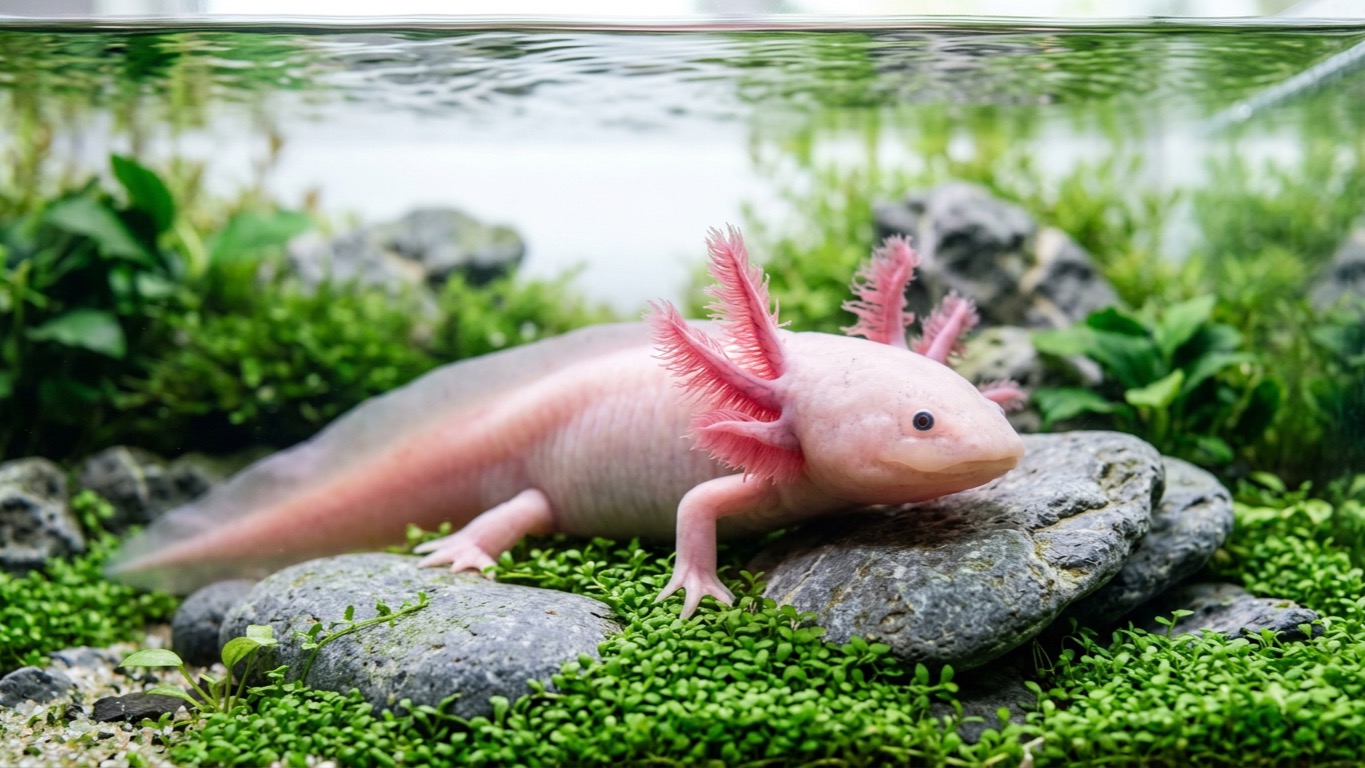
Pink pet axolotls are leucistic Ambystoma mexicanum with dark eyes, not albinos.
This page is a research-desk brief on color, published care numbers, and one current U.S. listing.
Our research team analyzed maker pages and published colony notes, then used one rule to pick every topic below.
What this desk included, and what it left out
The Cool-Water Single-Animal Rule is the only gate for this page.
We cover one pink, leucistic animal in still, cool home water, and we include only products whose maker page lists a size, dose, or analysis.
We left these items out on purpose:
- Heaters and tropical community kits
- Gravel-bottom layouts and live-fish feeders
- Wild-caught animals and rare morphs beyond leucistic
- Ranked buyer lists and price-band charts
That rule is why a heater never appears here, and why we name four products instead of a ranked set.
What pink means on an axolotl
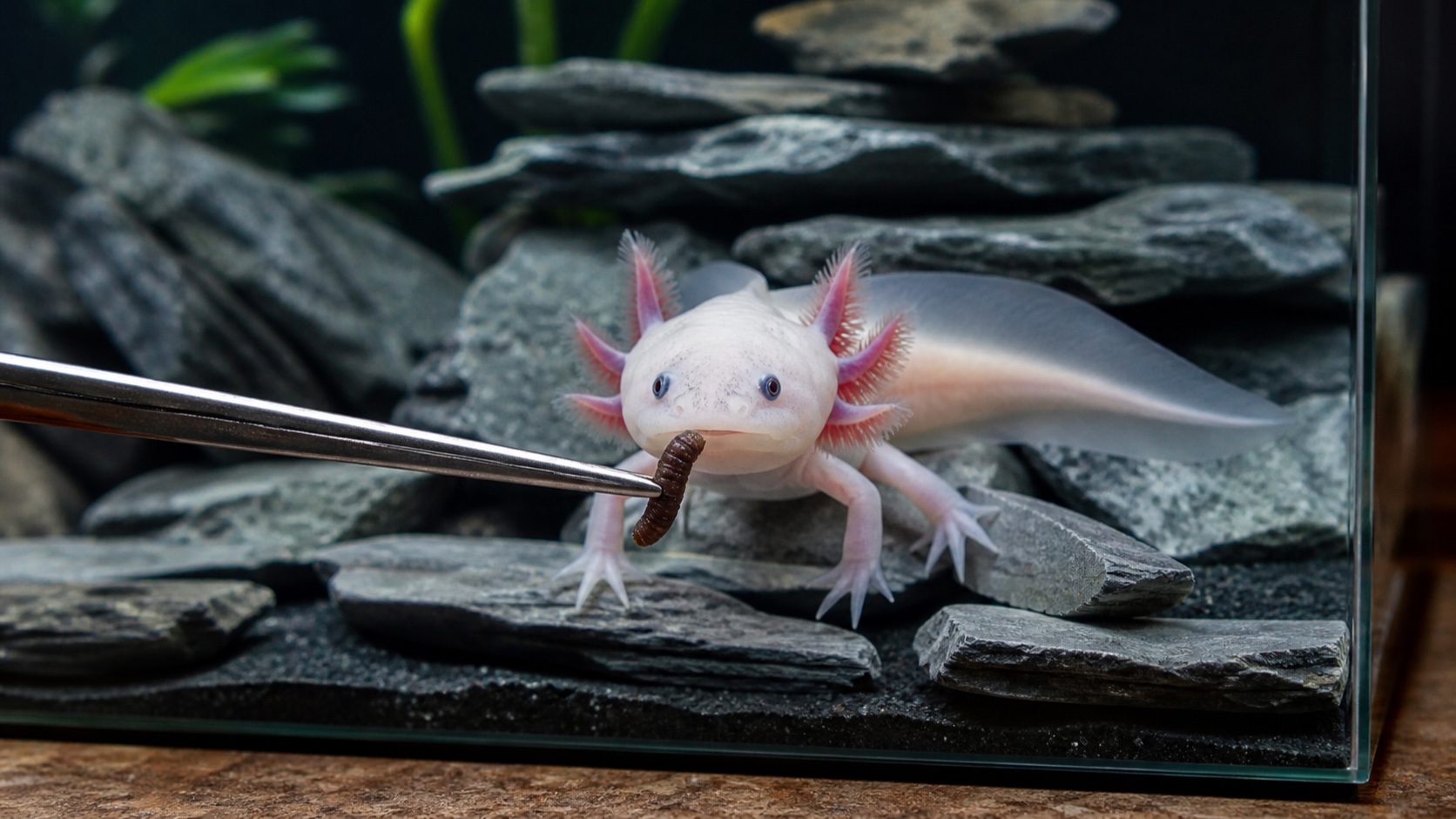
A pink axolotl is a color morph of one salamander species, not a second species.
Axolotl Planet’s leucistic product page describes a pale white body with bright pink or red gills. It also notes dark-colored eyes and, on some animals, freckles.
That dark-eye point is the tell, because an albino animal has light eyes and a leucistic pink animal does not.
The same page states that looks vary, so your animal may not match the photos. That is a listing fact, not a flaw in the morph.
Pink gills are blood-rich filaments, not painted pigment, and they can look brighter in cool, clean water. They can look dull if the animal is stressed or the water is warm.
Do not buy on color alone; ask the seller for captive-bred stock and a current size class before you pay.
Published water and housing numbers
Colony notes set cool, hard, slow water as the core home target.
The Guide to Axolotl Husbandry on the University of Kentucky Ambystoma site keeps animals at 15–18°C (60–65°F). The same guide says they should never be kept above about 22°C (72°F).
Put those numbers on a thermometer you can read daily:
- Aim for 60–65°F water
- Treat 72°F as the upper line in that guide
- Keep the tank out of direct sun
The same guide keeps pH between about 6.5 and 8, and it warns that ammonia is more toxic at the high end of that range.
Housing numbers from that guide are small by pet-store standards. A rule of thumb there is two adults in a ten-gallon aquarium.
Lab bowls use about a half gallon (2 liters) per animal if water is changed often. Those bowl volumes are colony practice, not a home display plan.
Axolotls still spend most of their time on the floor, so floor length matters more than tall glass. A bare bottom or very fine sand is easier to siphon than rock.
The guide says pea-sized gravel gets eaten, so skip that substrate. A first tank should be cycled before the animal arrives.
Our fish tank setup page covers that sequence in plain steps.
Food, conditioner, and test kit attributes
We compared published specs for one sinking diet, one conditioner, and one test kit.
The University of Kentucky Ambystoma guide feeds pelleted food to juveniles and adults, and young larvae there start on brine shrimp. Adults about one year old get three or four feedings per week, and no more than five pellets at a time.
Hikari UK’s page for Sinking Carnivore Pellets lists a minimum 47% protein and a 74 g pack. It tells keepers to feed two to three times daily, only what is eaten in a few minutes.
That maker page lists the food for carnivorous fish, not for axolotls. We included it because it is a sinking, high-protein pellet with a printed analysis.
Seachem’s Prime page sets the standard dose at 1 capful (5 mL) for each 50 U.S. gallons of new water. Each cap thread is about 1 mL.
API’s Freshwater Master Test Kit page says the kit measures six listed levels. It ships with four test tubes and a laminated color card, and API tells keepers to test weekly.
| Product | Maker-listed role | Numeric attribute from the maker page | Home-tank note |
|---|---|---|---|
| Axolotl Planet Leucistic Axolotl | Live leucistic salamander | Juvenile size listed as 3–5 in. | Dark eyes and pink or red gills |
| Hikari Sinking Carnivore Pellets | Sinking carnivore diet | Minimum 47% protein; 74 g pack | Maker page says feed 2–3 times daily |
| Seachem Prime | Fresh and saltwater conditioner | 5 mL treats 50 U.S. gallons | Dose new water before a change |
| API Freshwater Master Test Kit | Liquid freshwater test kit | Four tubes; six listed parameters | API says test weekly |
Dose and feed by the printed numbers, not by guesswork:
- Seachem Prime: 5 mL per 50 gallons of new water
- Hikari UK: two to three short feedings a day
- University of Kentucky Ambystoma guide: three to four adult feedings a week, five pellets max
- API: weekly tests of the six listed levels
Match pellet size to the animal as that colony guide prints it. The University of Kentucky Ambystoma guide starts 1/8 inch (3 mm) pellets at about 1 1/2 inches of length. It moves to 3/16 inch (5 mm) pellets at about 6 inches (15 cm).
What one U.S. seller lists for a leucistic animal
Price talk on this page uses one shop’s current tags, not a made-up market average.
Axolotl Planet’s leucistic product page lists $84.99 next to a $124.99 figure, with a $40.00 savings line. That is a seller tag, not a national price snapshot.
The same page sells four size classes:
- Juvenile, 3–5 in.
- Sub-adult, 5–8 in.
- Adult male, 8+ in.
- Adult female, 8+ in.
A longer animal costs more time and more food, but it does not need a different species plan. It still needs cool, slow water and a cycled tank.
Ask the seller three plain questions before you pay:
- Is the animal captive-bred?
- What size class is on the invoice?
- Will it eat sinking pellets or worms on arrival?
Skip any seller who cannot answer those items in writing.
Filters, flow, and weekly cleaning
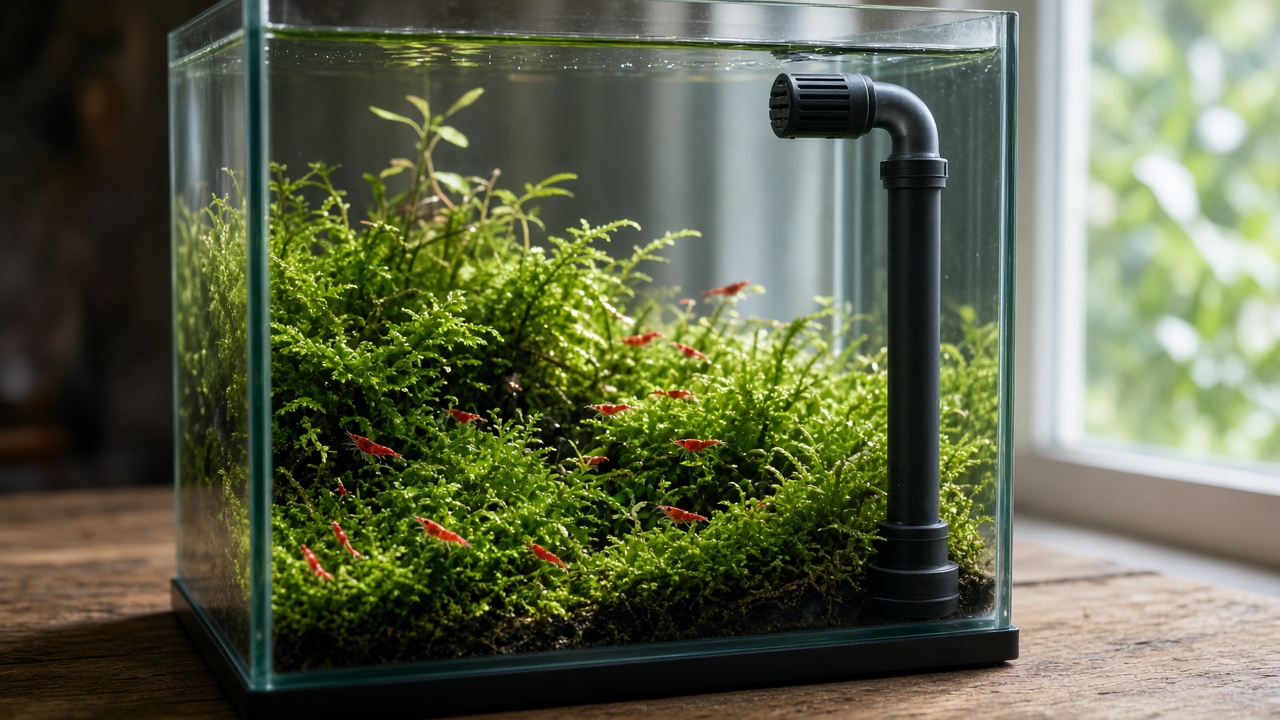
A pink axolotl needs filtration that cleans water without a strong current.
The University of Kentucky Ambystoma guide says rapidly circulating water is stressful. If you use a power filter, keep circulation as slow as you can.
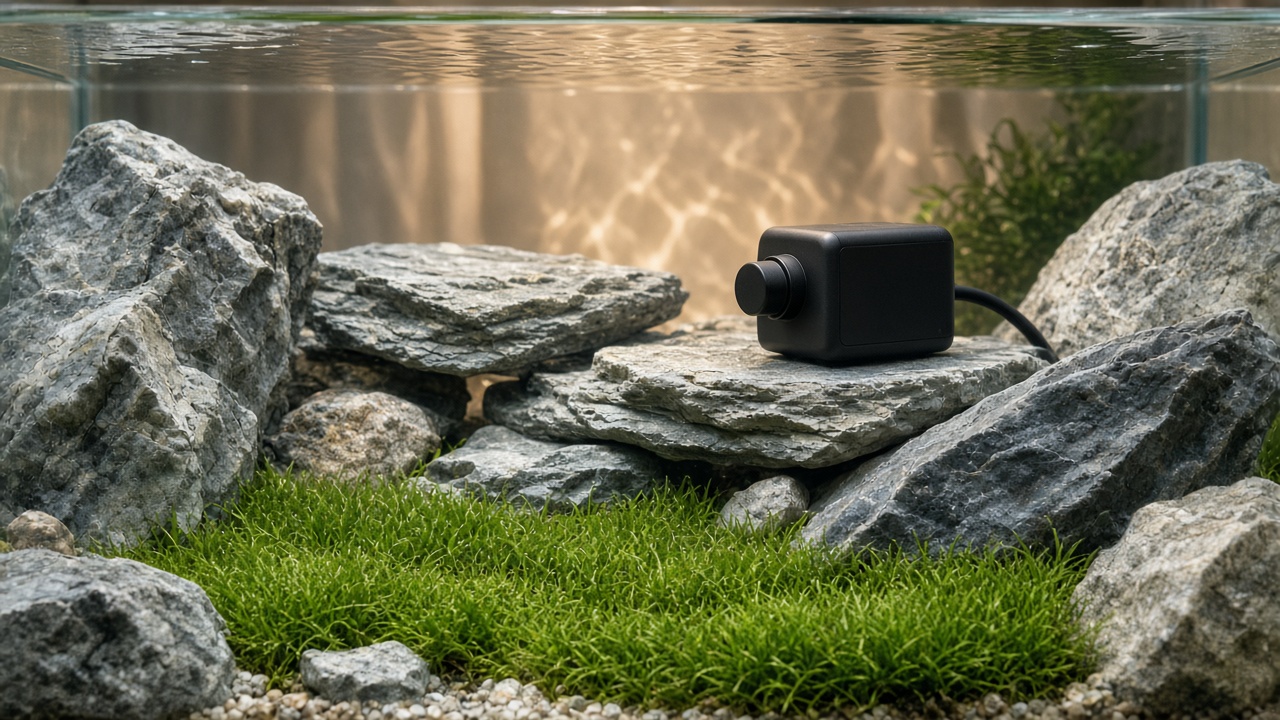
A hang-on motor can still work if you baffle the outflow. Our aquarium top filter motor price guide explains how those motors are listed.
Do not pick a motor by the loudest gallon-per-hour claim. Pick the smallest unit that can hold a biological sponge, then block the blast with a plant pot or spray bar.
Waste sits on the glass, and uneaten pellets rot fast. The University of Kentucky Ambystoma guide changes young animals’ water daily, and adult bowl water at least every other day.
A filtered home tank can stretch that interval, but it cannot skip siphon work.
Use this weekly loop:
- Test with the API kit on the same day each week
- Dose Seachem Prime into the new water, not after the tank is already dirty
- Siphon feces and leftover food from the floor
- Keep the filter intake screened so gills cannot enter it
Our how to clean a fish tank guide walks through siphon work without tearing down a healthy filter. Do not scrub every surface each week, because the film on filter media is the part you want to keep.
Wild canals versus pet tanks
The pink animal in a home tank is not a stand-in for the wild population.
Conservation International’s August 2025 report describes Xochimilco, Mexico City, as the only wild home of the species. The survey covered 115 monitoring sites across a 2,500-hectare (6,180-acre) protected area.
That report states an estimated 6,000 axolotls per square kilometer in 1998. By 2014 the figure was 36 per square kilometer, a 99 percent decrease.
Nets in the new survey caught no animals, yet genetic traces in the water still showed axolotls in the canals.
Luis Zambrano, director of the UNAM lab in that report, said, “Habitat degradation is pushing axolotls to the brink of extinction.” The same report counts 21 farm-island refuges already built with local farmers.
A pet leucistic animal does not restore those canals, and buying one is not a conservation act. Buy captive-bred stock, and do not seek a wild-caught pink animal.
The color you want is a farm morph. The University of Kentucky Ambystoma guide calls the species endangered and stresses careful captive care.
That is a husbandry warning, not a permit.
FAQ
Are pink axolotls a different species from wild-type axolotls?
No, they are the same species, Ambystoma mexicanum. Pink pet animals are a leucistic morph with little body pigment, and Axolotl Planet’s page still files them as axolotls.
How can I tell a pink leucistic axolotl from an albino?
Look at the eyes first. Axolotl Planet’s leucistic page says these animals have dark-colored eyes, while albinos have light eyes. Both can show pink gills, so eye color is the plain split.
What water temperature do published colony notes use?
The University of Kentucky Ambystoma guide keeps axolotls at 15–18°C (60–65°F). It says they should never be kept above about 22°C (72°F). Use a heater-free tank in a cool room, and add cooling only if the water climbs toward that 72°F line.
How much does a leucistic axolotl cost on Axolotl Planet’s page?
Axolotl Planet’s leucistic product page lists $84.99 beside a $124.99 figure. That tag is for the listed juvenile class of 3–5 inches unless you pick another size. Other shops will differ, and
Can I keep fish with a pink axolotl?
This page does not cover fish tank mates. The Cool-Water Single-Animal Rule keeps one axolotl and no fish. Fish nibble gills, and an axolotl will also try to eat small fish, so keep the tank to one animal.
How often should I test the water?
API’s Freshwater Master Test Kit page says to test weekly. The kit covers six listed levels, including ammonia, nitrite, nitrate, and pH. The University of Kentucky Ambystoma guide wants pH between about 6.5 and 8, so log the numbers and do not guess.
Do pink axolotls need a heater?
No, the University of Kentucky Ambystoma guide is written for cool water, not tropical heat. A heater pushes the tank toward the 72°F line that guide treats as too warm. Skip the heater unless the room itself stays near freezing.