Quick answer: Rainbow cichlids (Herotilapia multispinosa) need roughly a thirty-gallon footprint or larger for pairs, omnivore meals with plant matter, and peaceful similar-sized mates. They dig, spawn on substrate, and guard fry as attentive parents.
Size the tank for territory, then feed plants plus protein.
We compared published care data on rainbow cichlid tank size, water chemistry, diet, mates, and breeding. Our research team analyzed species profiles listing Central American ranges, aquarium temperatures near seventy-two to eighty-two degrees Fahrenheit, and pH near seven to eight. Owners consistently report easy color and parenting shows when footprints stay wide and breeding aggression is planned for.
Comparing published specs treats this fish as one of the calmer Central American cichlids for community keepers. Adults often reach about four to five inches in aquariums, with larger wild maxima listed in species databases. They graze algae and detritus yet accept pellets and frozen foods. Pairs clean flat stones, lay eggs, and shepherd fry. This page covers tank size, water, diet, mates, décor, breeding, and stress color cues.
Include open floor space, vegetable matter, and a breeding plan. Leave out tiny nano tanks and shrimp colonies. Skip drug plans that belong with a veterinarian.
Size the tank for pairs and territory
Footprint beats tall narrow glass.
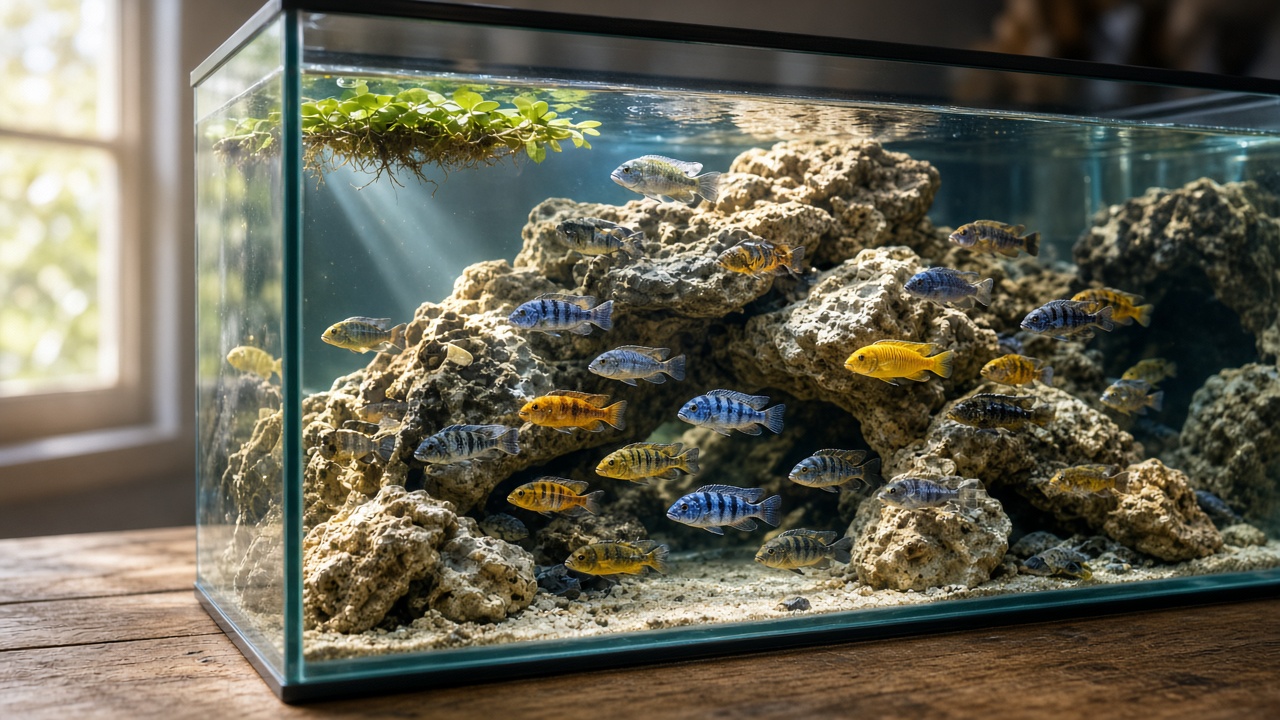
Species profiles often suggest a base near thirty-six by fifteen inches, about twenty-seven US gallons as a bare minimum volume for the footprint. Many keepers prefer about thirty gallons or more for a pair and larger volumes for communities. Groups and mixed cichlid tanks climb toward fifty-five gallons and beyond. Length matters because pairs claim floor territories when spawning. A single fish still needs room to dig and patrol. Upsize early if you want tank mates that share the lower third.
Tank board:
| Stocking | Published direction |
|---|---|
| Minimum footprint | About 36×15 in / ~27 gal class |
| Comfortable pair | Often 30+ gal; many prefer larger |
| Community | Commonly 50–75+ gal themes |
| Multiple pairs | Needs much larger territories |
| Priority | Floor length over tall nano cubes |
Owners consistently report calmer fish after they stopped squeezing pairs into short tanks. Our research team analyzed aquarium-size notes across rainbow cichlid profiles. Comparing published specs favors long tanks for breeding behavior.
Hold stable Central American water
Neutral to alkaline suits most captive stock.
Hobby profiles commonly list pH near seven point zero to eight point zero. Hardness bands often include about nine to twenty degrees in database notes. Aquarium temperature guidance often sits near seventy-two to eighty-two degrees Fahrenheit even though wild waters can run hotter. Keep ammonia and nitrite at zero with steady filtration. Mild to moderate flow matches swampy lake habitats better than blast current. Test before you chase additives; stable tap chemistry often beats constant tinkering.
Water board:
| Parameter | Published theme |
|---|---|
| Temperature | About 72–82°F in aquariums |
| pH | About 7.0–8.0 |
| Hardness | Often moderate; DB notes ~9–20 |
| Ammonia/nitrite | 0 |
| Flow | Slow to moderate |
Owners consistently report richer gold and blue tones in stable warm water. Our research team analyzed chemistry ranges from species summaries. Comparing published specs keeps targets simple and steady.
Feed omnivore meals with plant matter
Algae grazing is part of the design.
Natural notes describe heavy feeding on ooze, detritus, and algal filaments. In captivity, use quality cichlid pellets as a staple and rotate frozen or live foods such as brine shrimp. Spirulina flakes, blanched greens, and other vegetable matter support their grazing teeth and color. Feed small portions twice daily rather than dumping piles. Leftovers foul water and fuel aggression at feeding time. Condition breeding pairs with richer protein while still offering greens.
Diet board:
| Food type | Role |
|---|---|
| Cichlid pellets | Daily staple |
| Spirulina or greens | Plant matter |
| Brine shrimp and similar | Protein variety |
| Detritus grazing | Natural behavior |
| Overfeeding | Avoid water spikes |
Owners consistently report better color after greens join meaty treats. Our research team analyzed diet notes calling them unfussy omnivores with plant leanings. Comparing published specs keeps vegetables on the menu.
Pick tank mates of similar size
Peaceful does not mean shrimp-safe.
Guides call rainbow cichlids relatively peaceful for Central American cichlids, yet breeding pairs defend territory hard. Suitable mates include similarly sized peaceful fish such as larger tetras, barbs, and calmer cichlids in big tanks. Small plecos and armored catfish often work as bottom partners. Tiny nano fish and dwarf shrimp risk becoming food or stress targets. Avoid large hyper-aggressive neighbors that outcompete them. Watch the pair when colors darken for spawning.
Mate board:
| Mate type | Fit |
|---|---|
| Similar-sized peaceful fish | Usually better |
| Small plecos / doradid themes | Bottom options |
| Other mild cichlids | Needs space |
| Nano fish and shrimp | Risky |
| Big aggressive CA cichlids | Often too harsh |
Owners consistently report losses when they mixed shrimp or micro tetras with adults. Our research team analyzed compatibility notes in rainbow cichlid care sheets. Comparing published specs sizes mates to adult mouths and moods.
Decorate for digging and cover
Sand and secure hardscape beat fragile carpets.
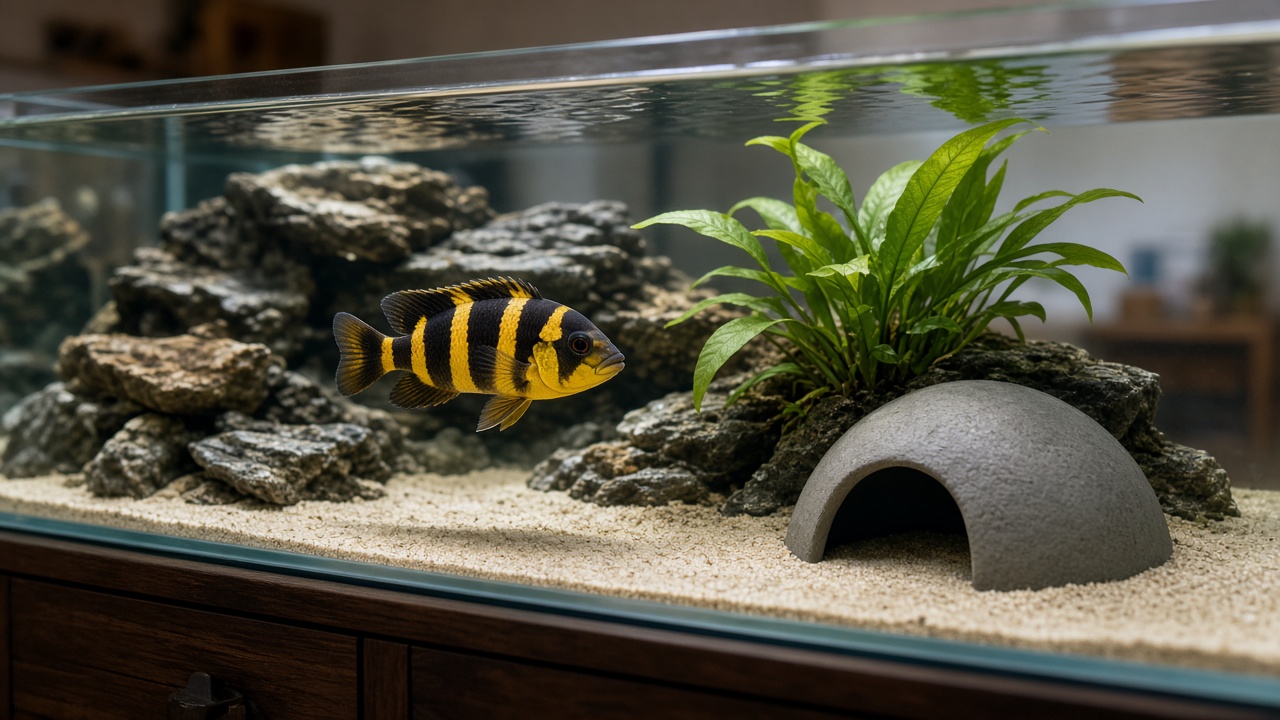
Profiles describe soft muddy wild bottoms and recommend sand substrates in aquariums. Provide caves, driftwood, and flat stones as spawning sites. Plants help for cover, yet diggers may uproot soft stems; use potted or hardy plants. Dimmer light and turbid-looking aquascapes match their comfort more than bare bright tanks. Secure décor so rearranging fish cannot topple towers. Leave open swimming lanes through the middle.
Decor checklist:
- Sand or soft substrate for sifting
- Flat stones or slate for eggs
- Wood and rock caves for cover
- Hardy or potted plants only
- Secured hardscape against digging
Owners consistently report less stress when caves break lines of sight. Our research team analyzed habitat notes for lakes and swampy margins. Comparing published specs builds for diggers, not glue-only scapes.
Breed as substrate spawners with care
Parents guard eggs and fry together.
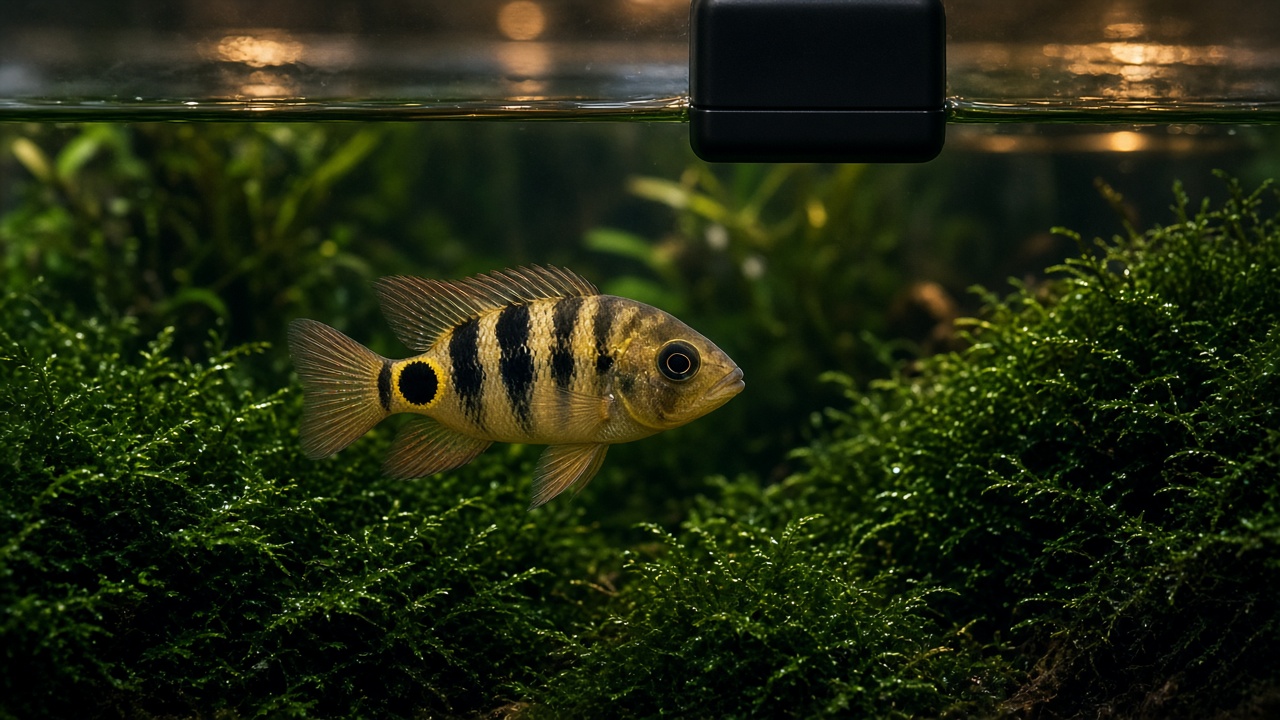
Rainbow cichlids form pairs and clean a flat site for eggs. Both sexes become territorial; colors may darken toward near-black moods during spawning. Eggs hatch and fry become free-swimming under biparental care that fascinates new cichlid keepers. A separate breeding tank near thirty gallons with a sponge filter reduces community casualties. Condition with varied foods beforehand. Remove other fish if the display pair turns too aggressive to share space.
Breeding board:
| Stage | What to expect |
|---|---|
| Pair bond | Joint territory defense |
| Site cleaning | Flat rock or slate |
| Color shift | Often darker breeding dress |
| Parental care | Both guard eggs and fry |
| Community risk | Tank mates may be chased |
Owners consistently report easiest first cichlid spawns with this species in dedicated space. Our research team analyzed breeding outlines for open substrate spawners. Comparing published specs plans aggression before the first clutch.
Watch color shifts and stress cues
Mood color is normal; chronic hiding is not.
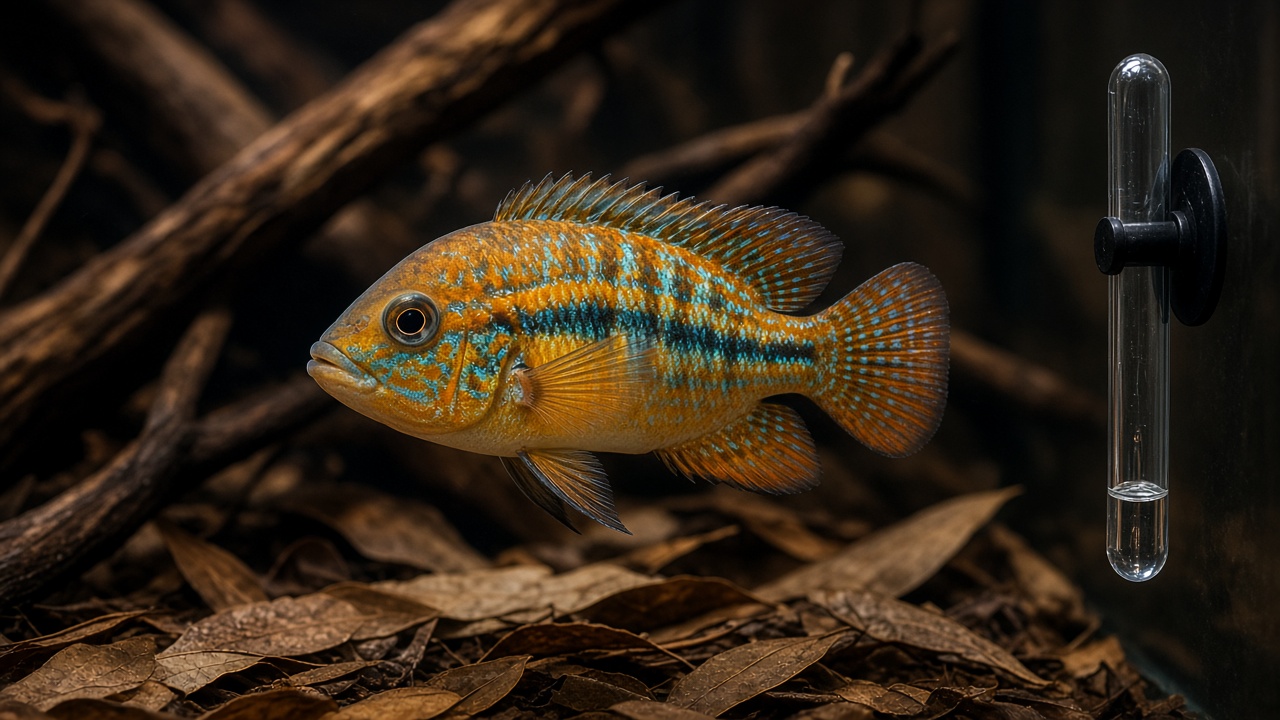
Rainbow cichlids change color with mood, health, and breeding status, which is part of their appeal. Sudden pale, clamped, or gasping fish need water tests first. Persistent aggression outside spawning, weight loss, or wounds deserve quarantine thinking. Keep lids secure if tank mates are jump-prone during fights. Lifespan notes in care guides often cluster near seven to ten years with good husbandry. Ask a veterinarian when disease signs outlast water corrections.
Health list:
- Test water when color collapses
- Quarantine new arrivals when possible
- Watch fins for tears after territory fights
- Maintain filtration for a digging bioload
- Call a vet for ulcers, bloating, or gasping
Owners consistently report fewer emergencies after they treated dark breeding dress as normal. Our research team analyzed behavior notes on mood coloration. Comparing published specs separates show color from illness flags.
Rainbow cichlids reward wide tanks, plant-inclusive diets, and planned breeding space. Match mates carefully, expect digging, and enjoy biparental fry care when you are ready. Ask a veterinarian when illness signs persist after water and husbandry fixes.
FAQ
How big of a tank do rainbow cichlids need?
Species profiles often cite a footprint near thirty-six by fifteen inches, roughly a twenty-seven-gallon class minimum by volume. Many keepers use thirty gallons or more for a pair and larger tanks for communities. Length for territory matters as much as gallons. Upsize when you add mates or hope to keep fry with parents.
What do rainbow cichlids eat?
They are omnivores that lean on algae, detritus, and plant matter in nature. Offer quality cichlid pellets, spirulina or greens, and varied frozen foods such as brine shrimp. Small meals beat heavy dumping that fouls water. Breeding condition still benefits from protein without dropping vegetable foods.
Are rainbow cichlids aggressive?
They rank among the calmer Central American cichlids in published notes, yet pairs defend spawning sites strongly. Community success depends on tank size and mate choice. Tiny fish and shrimp are poor partners. Expect darker colors and chasing when eggs appear, and plan a backup tank for stressed neighbors.
What water parameters suit them?
Aquarium guidance commonly lists about seventy-two to eighty-two degrees Fahrenheit and pH near seven to eight. Hardness is often moderate, with database bands that include about nine to twenty degrees. Keep ammonia and nitrite at zero. Stable chemistry beats constant additive chasing for captive-bred stock.
How do you breed rainbow cichlids?
Provide a bonded pair, flat stones, and stable warm water in adequate space. They are substrate spawners with both parents guarding eggs and fry. A dedicated breeding tank reduces community losses. Condition with varied foods, then watch for site cleaning and darker breeding colors before the spawn.
What tank mates work best?
Choose similarly sized peaceful fish that share warm, neutral-to-alkaline water. Larger tetras, barbs, mild cichlids in big tanks, and suitable catfish appear in compatibility notes. Avoid nano fish, shrimp, and highly aggressive giants. Rearrange décor and add caves so territories break up sight lines during spawning peaks.
How long do rainbow cichlids live?
Care guides often list roughly seven to ten years with solid husbandry, and some notes mention longer outliers. Lifespan depends on water quality, diet, and stress from overcrowding or bullying. Stable tanks and sensible stocking support the best odds. Track appetite and color as early health signals.
This guide is informational only and does not replace advice from a qualified veterinarian.