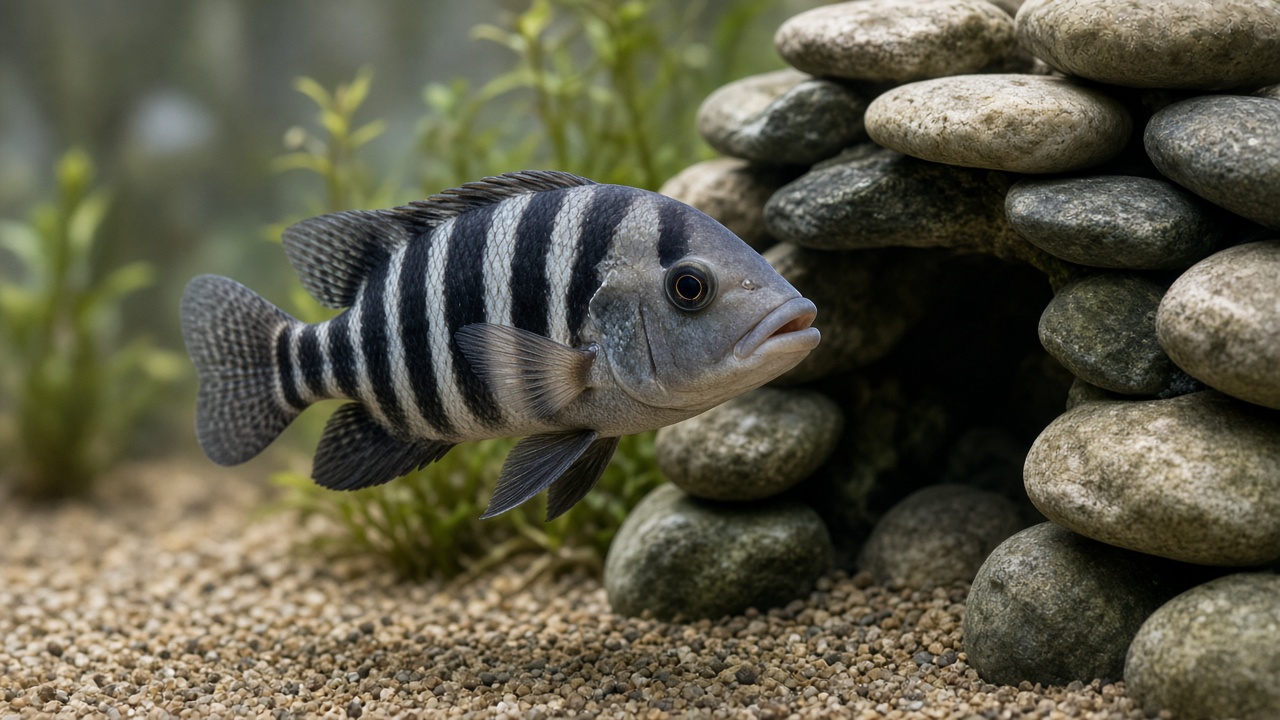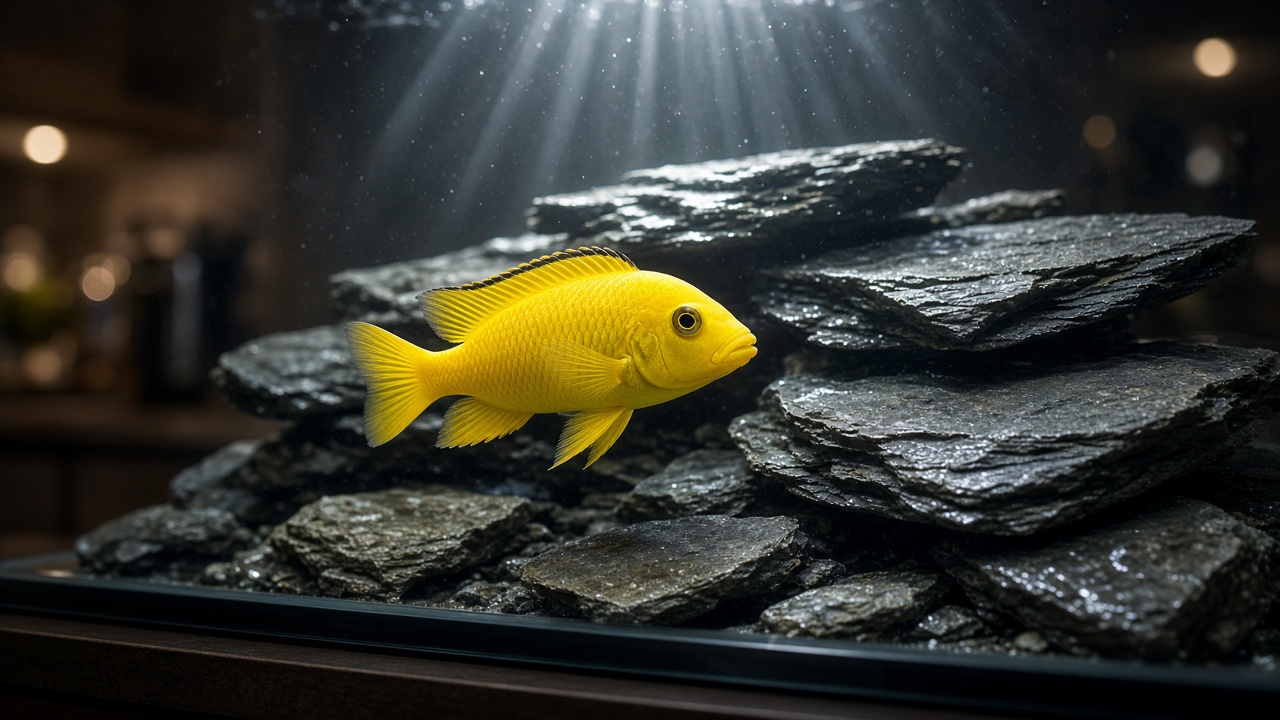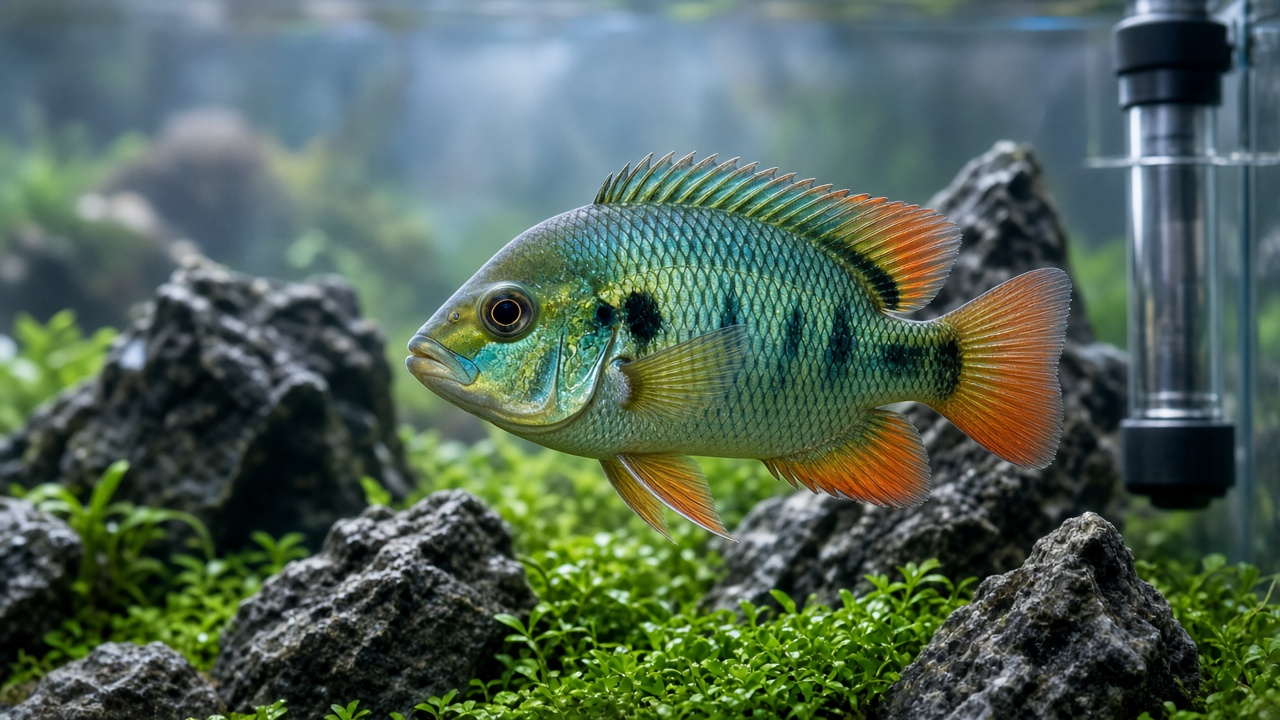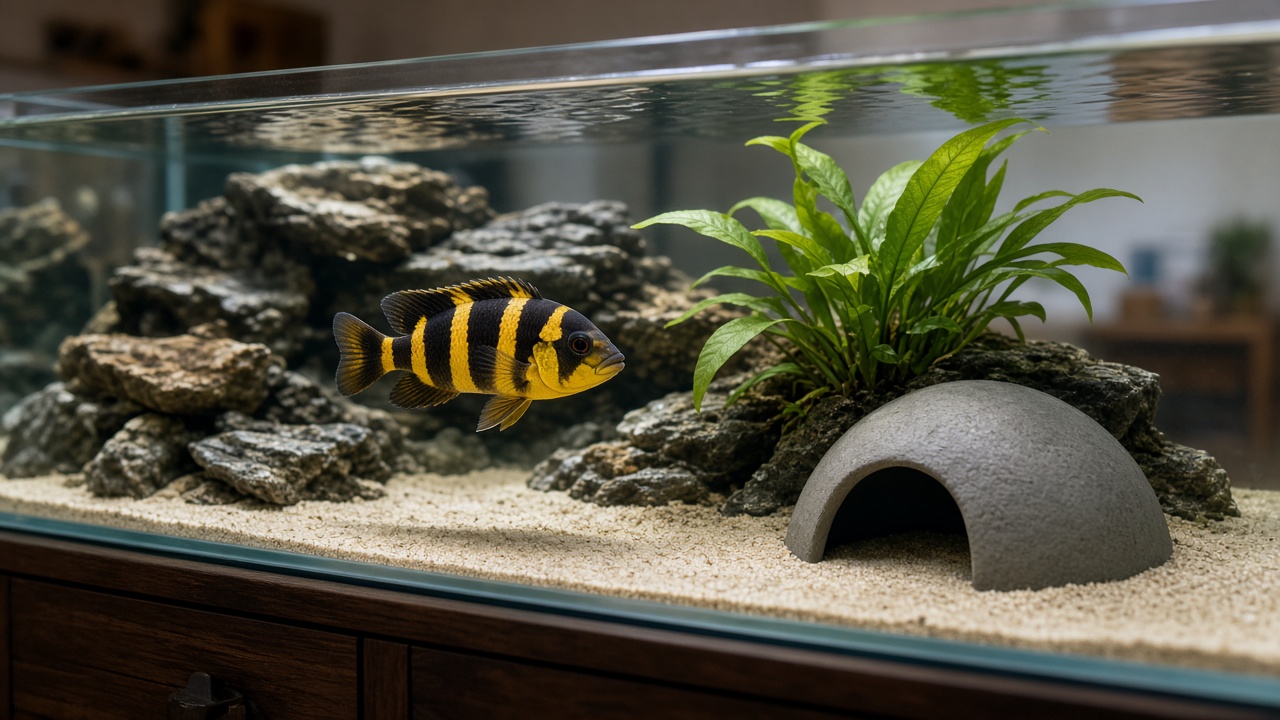
Quick answer: Bumblebee cichlid care needs a long rock-filled Malawi tank, hard alkaline water, and careful tank mates. Plan one male with several females. Skip small community fish that cannot handle mbuna aggression.
Give bumblebee cichlids a long rocky tank, alkaline water, and one-male harems.
We compared published care data and maker specifications to write this page. Our research team analyzed tank footprint, water chemistry, and aggression patterns for Pseudotropheus crabro, the Lake Malawi bumblebee or hornet cichlid. Owners consistently report fewer injuries when rock caves break sight lines and females outnumber males.
Comparing published specs shows this is not a nano pet. Standard length in database records reaches about 9.4 cm SL, while hobby adults often look larger in total length near about 5 to 6 inches. IUCN lists the species as Least Concern. Treat it as a robust mbuna that claims caves and pushes rivals.
Include husbandry that matches Lake Malawi rock-dwelling mbuna needs: hard water, warm temperatures, heavy rockwork, and compatible mbuna companions. Leave out soft-water community stocking plans, planted low-pH setups, and “peaceful dwarf cichlid” marketing that mislabels this fish. Skip medication protocols that belong with a veterinarian.
Tank size and footprint matter more than a pretty label
Bumblebee cichlids need swimming length and cave territory, not a tall cube.
Plan on roughly 50 to 75+ gallons for a small harem. Many keepers prefer about 120 cm (about 48 inches) or more of length for rockscape. Volume near 200 liters is a common floor for one male and several females. Mixed mbuna communities often need still more space so territories do not overlap into constant war. Stack rocks on the glass bottom so digging cannot topple a pile onto fish.
Tank setup list:
- Long footprint first, tall second
- Sand or fine gravel for digging
- Many caves with broken sight lines
- Strong filtration for a heavy bioload
- Secure lid; mbuna jump when startled
A short 20 gallon “cichlid starter” is the wrong class. Aggression concentrates when every fish sees every rival all day. Owners consistently report calmer groups once subordinate fish can leave a dominant male’s line of sight.
Add open swimming lanes between rock piles so fish can pass without squeezing through a kill chute. Leave some open sand in front for feeding and for you to spot injuries early.
Water chemistry for a Lake Malawi rock fish
Hard, alkaline, warm water keeps this species on script.
Keep temperature near about 75°F to 82°F (about 24°C to 28°C), with tropical notes often clustering near 24°C to 26°C. Aim pH roughly 7.5 to 8.5, and hardness in a firm African range such as about 10 to 25 °dGH. Wild fish are recorded around pH 7.5 to 8.2. Stable chemistry beats chasing a perfect single number every day.
Water checklist:
- Heater plus thermometer in view
- Test kits for pH, ammonia, nitrite, and nitrate
- Partial water changes on a weekly rhythm
- Avoid soft, acidic remineralization meant for Amazon fish
- Rinse new rock dust before it clouds the tank
Wild depth notes place the species around about 15 to 18 m in surveyed habitats among caves and boulders. Your home tank cannot copy depth, but it can copy rock shelter and alkaline water. Do not soften the tank to help plants if that collapses mbuna chemistry.
Live plants are optional and often get dug up. If you want green, try tough Anubias tied to rock, knowing mbuna may still shred leaves. Hardscape and water come first.
Aggression patterns and how to stock sexes
This fish is territorial, especially around caves and spawning.
Keep one male with three or more females when space allows. A lone female under a single male often takes endless harassment. Multiple males need a very large rockscape or they fight for the same cave. Dominant males can darken toward near-black, while barred yellow-and-black bumblebee patterns show on other fish. Color shifts confuse new keepers into thinking the fish was swapped.
Aggression controls:
- Overstock slightly with robust mbuna so no single fish owns the whole tank
- Provide more caves than fish
- Avoid mixing look-alike barred mbuna that hybridize
- Watch for ripped fins at lights-on
- Be ready to rehome a hyper-dominant male
Comparing published specs on Malawi mbuna shows overcrowding is a tool, not cruelty, when filtration and water changes keep up. Empty display tanks invite bullying. Edge case: a male that never stops chasing needs more females, more rock, or a larger tank—not another soft dither fish.
Tank mates that survive a pushy mbuna
Choose other tough Lake Malawi rock dwellers, not tetras.
Good candidates are similarly sized mbuna that hold territory without melting. Skip peacocks and utaka if your bumblebee claims mid-rock aggressively. Skip angelfish, guppies, shrimp, and fancy goldfish entirely. Male gouramis and slow fancy fins lose every chase. Soft community stocking lists do not apply here.
Tank-mate rules:
- Match adult size and toughness
- Prefer other mbuna over open-water Malawi species
- Avoid species with nearly identical bar patterns
- Quarantine new fish before they enter the rock zoo
- Feed in multiple spots so subordinates still eat
Do not add a cleaner crew of otocinclus or shrimp. They become snacks or stress casualties. If you want algae control, use diet and maintenance, not fragile helpers.
Diet, bioload, and daily maintenance
Feed for omnivore mbuna, then remove leftovers fast.
Offer quality cichlid pellets with vegetable content, plus occasional meaty frozen foods. Wild fish take varied foods and even clean parasites from large catfish in Lake Malawi. In the aquarium, overfeeding protein without greens can push Malawi bloat risk. Feed small amounts once or twice daily and siphon waste from sand pockets between rocks.
Maintenance list:
- Spot-feed so every fish gets a share
- Vacuum sand weekly without wrecking rock bases
- Change about 20% to 40% water weekly in heavy stock
- Clean filter media in tank water only
- Retest after big rock rearrangements
A heavy bioload is normal. Strong flow and frequent changes are part of bumblebee cichlid care, not optional extras. If nitrate climbs week after week, reduce food or fish count before buying another bottle of chemical fix.
Log aggression events with time of day. Many fights cluster at feeding or at lights-on, which tells you whether food or territory is the trigger.
Parameter table for home bumblebee cichlid care
Use these targets as a working map, then stabilize.
| Parameter | Target cue | Care note |
|---|---|---|
| Temperature | About 75–82°F (24–28°C) | Many wild notes cluster near 24–26°C |
| pH | About 7.5–8.5 | Database range near 7.5–8.2 |
| Hardness | About 10–25 °dGH | Soft water is the wrong class |
| Adult size | About 9.4 cm SL recorded; hobby fish often near 5–6 in TL | Plan territory for adults, not juveniles |
| Min. practical volume | About 50–75+ gal / ~200 L class for a harem | Longer footprint beats a tall cube |
| Sex ratio | 1 male to 3+ females | Spreads harassment |
Hold ammonia and nitrite at 0 ppm. Nitrate control comes from water changes, not hope. Re-check temperature after heater failures before you blame aggression alone.
Breeding notes without turning the tank into a war zone
Mouthbrooding females need caves and escape routes.
Males claim spawning sites in rock cavities. Females mouthbrood and need quiet corners away from relentless chasing. Do not strip-breed unless you know the risks. Raise fry in a separate grow-out if the display is packed with hungry mbuna. Hybridization with look-alike rock cichlids is a real hobby problem—keep species groups deliberate.
Breeding checklist:
- Confirm sex ratios before a male colors up hard
- Add rock caves before you expect spawns
- Watch females for full mouths and hiding
- Avoid mixing similar barred mbuna species
- Separate fry if adults hunt them
Our research team analyzed care notes that treat breeding as a side effect of good husbandry. If aggression spikes during spawning, add rock or reduce males before medicating healthy fish.
FAQ
How big of a tank does a bumblebee cichlid need?
Plan a long aquarium in the roughly 50 to 75+ gallon class for a small harem, with about 120 cm of length when possible. Mixed mbuna communities usually need more space than a single-species harem. A short nano tank concentrates fights. Measure footprint before you buy the fish.
Are bumblebee cichlids too aggressive for beginners?
They are pushy rock mbuna, not community centerpieces. Beginners who already keep Malawi tanks can succeed with rock, filtration, and sex ratios. Soft-water community keepers should choose a calmer species first. Aggression is normal mbuna behavior here, not a rare glitch you can train away with toys.
What water temperature do they need?
Keep them tropical near about 75°F to 82°F. Many references cluster closer to 24°C to 26°C. Cold rooms without heaters slow them and raise disease risk. Use a glass thermometer each morning and evening, not a quick fingertip guess after the lights go on.
Can I keep two males together?
Only in a very large rockscape with many territories. In average tanks, one male with several females is safer. Two males often lock onto the same premium cave. Be ready to rehome that second male quickly if torn fins or nonstop cave chasing starts again after lights-on.
What tank mates work with bumblebee cichlids?
Other robust Lake Malawi mbuna of similar size are the usual match. Skip tetras, shrimp, angelfish, and delicate peacocks if your male patrols hard. Match temperament first and color second, every single time you shop. Quarantine every new arrival before it enters the rock pile.
Do they need a sandy bottom?
Sand or fine gravel supports natural digging and is easier to clean around rock bases. Sharp coarse gravel can scrape mbuna as they forage along the bottom. Stack rocks on the bottom glass so tunnels cannot collapse a mountain. Rinse sand well before it clouds the water.
What should I feed them daily?
Use Malawi-ready cichlid pellets with plant content as the staple. Add small frozen foods a few times a week for variety. Keep portions small so waste does not spike ammonia overnight in the rock voids. Multiple feeding spots help subordinate fish eat without entering a male’s cave mouth.
This guide is informational only and does not replace advice from a qualified veterinarian.