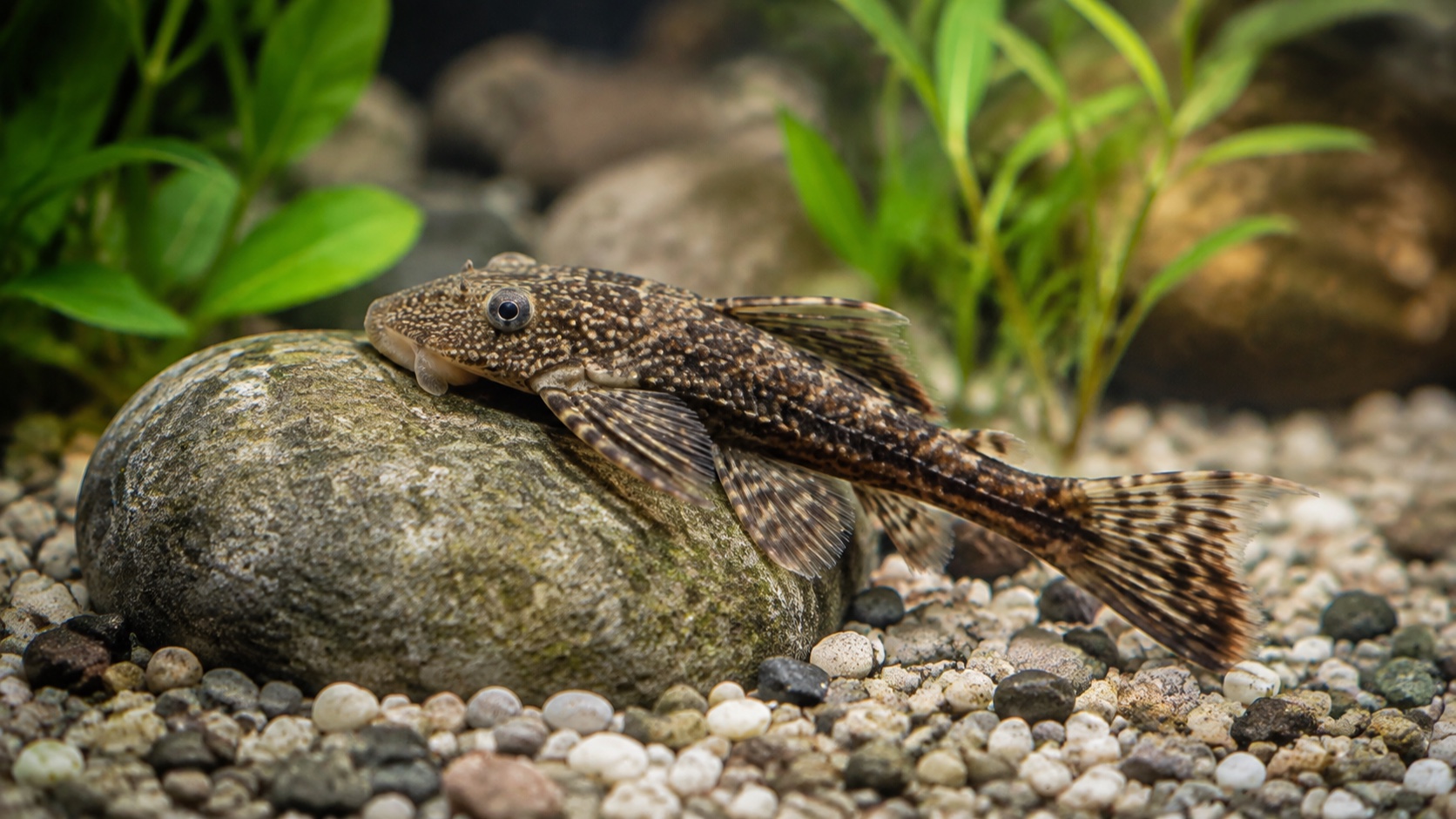
Quick answer: Keep one rubber lip in a long, high-oxygen tank with smooth rocks and a sinking green food. Do not rely on tank algae. Confirm the shop fish is a small Chaetostoma, not a common pleco.
FishBase lists the rubber lip Chaetostoma milesi at 14.6 cm standard length and 98.90 g. This page is a size-tank-diet brief, and
We used one selection rule. A setup had to hold a line of smooth, fist-sized rocks on fine sand. A food had to be a sinking disc, crisp, wafer, or gel whose maker page names plecos or algae-eating bottom feeders.
We left out flakes, floating pellets, common plecos, pond tanks, and sick-fish cases. We call that filter the Rock-Line-and-Disc Rule.
What the shop bag often is not
The takeaway is that “rubber lip pleco” on a bag is a trade name, not a proof of species.
Our research team analyzed two catalogs, not store photos. FishBase treats Chaetostoma milesi as a Magdalena and Apuré basin fish described by Fowler in 1941.
PlanetCatfish’s L445 sheet says that frequent import is often labeled incorrectly as Chaetostoma milesi. That sheet lists L445 at 120 mm, or 4.7 inches, standard length.
- FishBase max length for Chaetostoma milesi: 14.6 cm standard length
- FishBase max published weight: 98.90 g
- PlanetCatfish L445 size: 120 mm (4.7 inches) standard length
- PlanetCatfish note: often labeled incorrectly as Chaetostoma milesi
Those two lengths sit in the same small range and do not match a common pleco.
PlanetCatfish’s ID notes are plain on this genus. It has spines behind the gill cover, no plates on the belly, and no fleshy snout tentacles like Ancistrus.
If the fish in the bag has a bristled snout, it is not a rubber lip. Put it back and pick a true bristlenose from a best algae eaters list instead.
FishBase lists the IUCN Red List status as Least Concern, and the date assessed on that FishBase line is 15 January 2021.
How large the adult gets
The takeaway is that this is a short armored catfish, not a pond pleco.
FishBase’s length and weight pair is the number set we use for the named species. That 14.6 cm figure is standard length, so it ignores the tail.
PlanetCatfish’s L445 figure is 4.7 inches standard length, and shop fish sold as rubber lips often sit nearer that sheet.
FishBase’s model line lists fishing vulnerability at 34 of 100, and that is a wild-stock score rather than a home-tank score. The same FishBase block lists resilience as medium, with a doubling-time band of 1.4 to 4.4 years.
We do not turn that band into a lifespan promise, because
Use the length, not a hope that the fish “stays tiny.” A 14.6 cm body still needs a long floor, not a cube.
Tank, rocks, and current
The takeaway is that the floor plan is a rock line on sand, with strong, well-aired water.
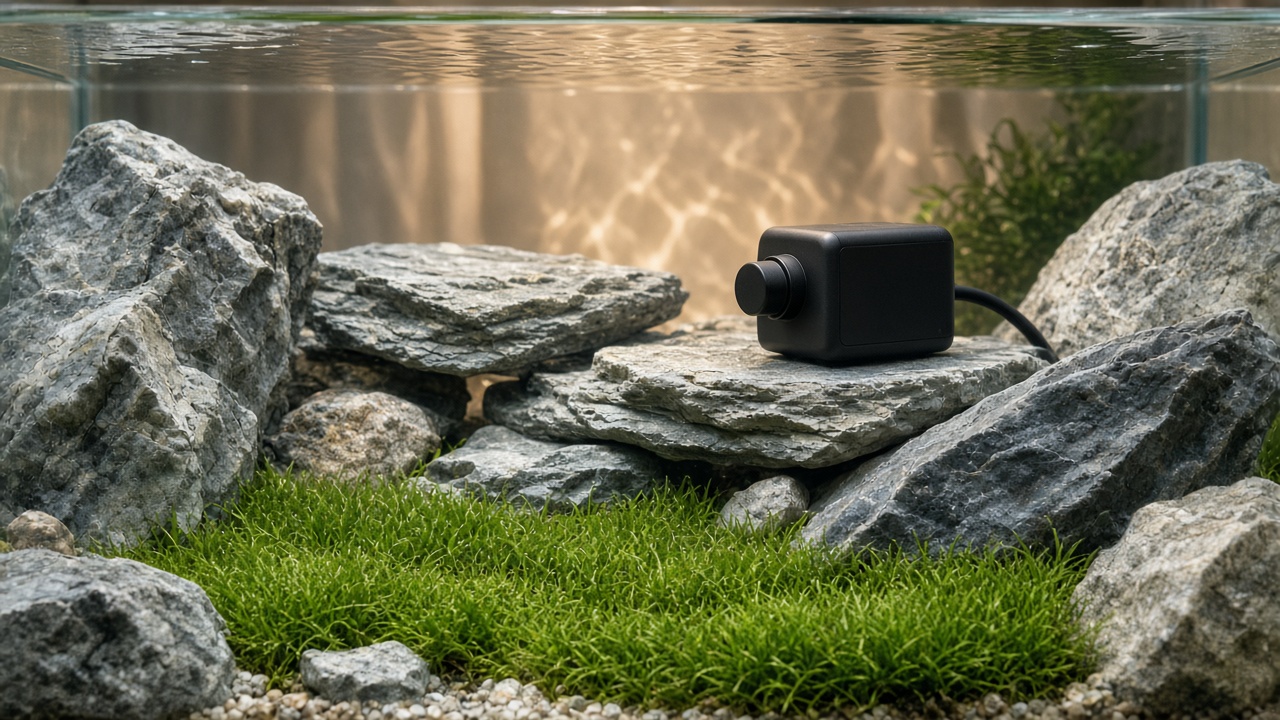
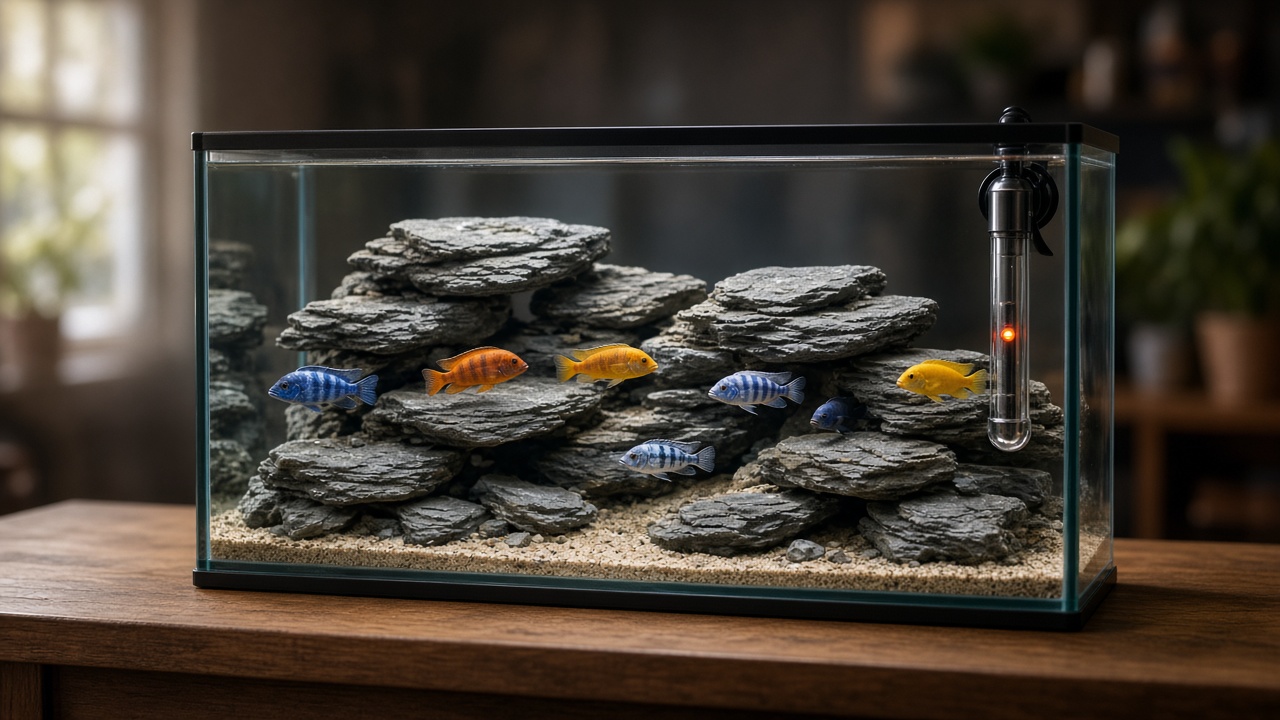
PlanetCatfish’s furniture line is worn smooth, rounded or slightly flat, fist-sized rocks on fine sand, and that is the hardscape we cover.
Our research team used that line as a yes-or-no test. If you cannot lay a row of those rocks and still leave open sand, the tank is too short for this brief.
We do not publish a gallon minimum from hobby blogs, and we do not name a tank brand
PlanetCatfish lists pH as 6.8 to 7.8 for L445. It lists temperature as 20.0 to 23.0°C, or 68 to 73.4°F. That band is cooler than many community heaters, so treat this as a fast-water fish on that sheet.
PlanetCatfish’s other-parameters line asks for highly oxygenated water and says medium-hard water is beneficial.
- Hardscape: smooth fist-sized rocks
- Substrate: fine sand
- pH on the L445 sheet: 6.8 to 7.8
- Temperature on the L445 sheet: 68 to 73.4°F
- Extra note: high oxygen, medium-hard water
Add a filter outlet or powerhead that ruffles the surface, because still dead corners fail the oxygen note.
PlanetCatfish calls L445 peaceful, and a little territorial with its own kind. One fish per rock line is the case we cover.
Suggested tankmates on that sheet are other fast-water fish, so skip slow, long-finned fish that hate current.
PlanetCatfish lists 128 registered keepers for L445, and that catalog count is not a proof that the fish is easy.
Algae diet versus the film on your glass
The takeaway is that a rubber lip rasps film, but tank algae is not a complete diet.
PlanetCatfish’s feeding line calls L445 an omnivore that will eat algae and small live or frozen food. The same line says some fish wean onto pellets only with effort, which is a catalog caution rather than a schedule we timed.
A clean, new tank often has little film, and a starving rubber lip will still sit on glass and look “helpful.”
Brown wipe-off dust is a silica problem, not a missing-pleco problem. See our brown algae in a fish tank brief before you add more grazers.
Comparing published specs, none of the maker pages below say “tank algae only.” Each page sells a sinking or gel food for bottom feeders.
Feed after the room lights drop if the fish hides by day, and leave the food on the sand rather than in the current jet. Remove uneaten pieces on the maker’s time window, because leftover wafers become waste and then more film.
Prepared foods we compared
The takeaway is that we compared four sinking or gel foods whose maker pages name plecos or algae eaters.
Our research team compared published specs and did not rank taste, growth, or water cloud. The Disc half of our rule dropped flakes and floating pellets, which can be a veggie treat but fail the sink test.
| Product | Form | Crude protein (min) | Maker feeding note | Listed pack sizes |
|---|---|---|---|---|
| Hikari Tropical Algae Wafers | Sinking disc | Not listed on the opened page | Raised disc that does not dissolve readily | 20 g, 40 g, 82 g, 250 g, 1 kg |
| Fluval Bug Bites Algae Crisps | Sinking crisp | 43.5% | Eat in 2 minutes, 2 to 3 times daily | 40 g (1.41 oz) |
| Repashy Soilent Green | Gel premix | 40% | Mix 1 part powder to 2–3 parts water | 85 g, 170 g, 340 g, 2 kg |
| API ALGAE EATER WAFERS | Wafer | Not listed on the opened page | Eat in 3 minutes, twice a day | Multiple sizes on maker page |
Hikari Sales USA’s Algae Wafers page names plecostomus and other algae-eating bottom feeders. The opened page lists packs from 20 g to 1 kg.
The same Hikari page calls the disc a daily diet and says the texture does not dissolve readily.
Fluval’s Bug Bites Algae Crisps page lists crude protein at a 43.5% minimum and crude fat at a 4% minimum. That Fluval page lists crude fiber at a 3% maximum, ash at a 5% maximum, and moisture at a 7.5% maximum.
- Fluval vitamin A: 25,000 IU/kg minimum
- Fluval ascorbic acid: 440 mg/kg minimum
- Fluval calcium: 1.5% minimum
- Fluval phosphorus: 0.6% minimum
- Fluval feed window: 2 minutes, two or three times daily
The Fluval page names plecos, ancistrus, loaches, and corydoras.
Repashy’s Soilent Green page lists crude protein at a 40% minimum and crude fat at an 8% minimum. Fiber, moisture, and ash sit at 8%, 8%, and 12% maximum. The mix ratio is 1 part powder to 2 to 3 parts water.
- Repashy gel in the fridge: up to two weeks
- Repashy gel in the freezer: up to six months
- Repashy jerky dry heat: 150°F (65°C)
- Repashy jerky time: 8 to 12 hours typical
- Repashy tubs listed: 3 oz (85 g), 6 oz (170 g), 12 oz (340 g), 4.4 lb (2 kg)
API’s ALGAE EATER WAFERS page names Plecostomus, Ancistrus, and Otocinclus. The feed line is twice a day, only as much as fish will consume within 3 minutes.
That API page claims fish release up to 30% less ammonia, and that is the maker’s claim rather than a number we measured.
Start with one Fluval crisp or one Hikari disc after lights-out. If you use Repashy gel, cut a small square and pull what is left the next morning.
Do not stack all four foods in one night. Pick one staple and rotate a second food later in the week.
What this fish will not clean
The takeaway is that a rubber lip is a grazer, not a filter, and it will not replace water changes.
It will not eat every algae type, and hair algae or green water need a different plan.
It will not stay small like an oto. Use our best algae-eating fish for 2026 page if you want a tiny glass-cleaner group, and pick a small species there.
It will not thrive in warm, still water if you follow the L445 sheet. The printed band on that page is 68 to 73.4°F.
It will not share a short rock line with a second male in peace, and PlanetCatfish flags some same-species territorial behavior.
It will not live on brown diatom dust alone, so wipe the glass, cut silica, and then feed a disc or gel.
FishBase lists the species as harmless to humans, and that line is about people rather than a tank that is too small.
FAQ
How big does a rubber lip plecostomus get?
FishBase lists Chaetostoma milesi at 14.6 cm standard length and 98.90 g. PlanetCatfish lists the look-alike L445 at 4.7 inches standard length.
Those are catalog maxima, not promises for every shop juvenile, so plan the tank for the longer FishBase figure.
Can a rubber lip pleco live on tank algae alone?
No, tank algae is not enough. PlanetCatfish lists algae plus small live or frozen food and warns that pellets can take work.
Maker pages for Hikari, Fluval, Repashy, and API all sell a prepared staple, so use one of those sinking or gel foods.
What temperature should I keep?
PlanetCatfish lists 20.0 to 23.0°C, or 68 to 73.4°F, on the L445 sheet. FishBase calls Chaetostoma milesi tropical but does not print a degree band on the summary we read.
We cover the printed L445 band and do not invent a warmer community range.
What pH does it need?
PlanetCatfish lists pH 6.8 to 7.8 for L445, so stay inside that printed band if your bag fish matches that form.
If the label is only “rubber lip,” treat the L445 band as the sheet we actually read.
Is a rubber lip the same as a common pleco?
No, they are different fish. FishBase’s 14.6 cm standard length is a small catfish, while a common pleco is a much larger fish.
PlanetCatfish also separates this genus from Ancistrus by the lack of snout tentacles, so check the snout before you buy.
Do rubber lip plecos eat brown algae?
They may rasp a soft film, but they do not remove dissolved silica. Brown wipe-off dust needs the source-water steps on our brown algae in a fish tank page.
Feed a sinking staple so the fish does not fade when the glass looks clean.
How often should I feed wafers or gel?
API’s page says twice a day in a 3-minute window, and Fluval’s page says two or three times daily in a 2-minute window. Hikari’s opened page does not print a minute count.
Repashy says to offer the gel freely and treat leftovers as fresh food, then pull uneaten gel before it sours.