Quick answer: Feed adult axolotls earthworms or soft sinking meat pellets three or four times a week. Feed growing juveniles every day, and skip plants, flakes, and bait-shop fish.
Adult axolotls eat earthworms or sinking meat pellets three or four times a week, not plants. This page is a desk comparison of four maker-listed foods and Ambystoma Genetic Stock Center feeding rules.
We used one selection rule: the 38-and-sink rule. A prepared food is in this article only if the maker’s own page lists crude protein at 38 percent or higher.
The food must also sink, or set as a gel you can cut. Floating flakes, plant wafers, and top-floating fish diets stay out.
Our research team analyzed those four maker pages side by side. Listed minimum crude protein ran from 38 percent to 48 percent. Listed minimum crude fat ran from 7 percent to 18 percent.
What an axolotl actually eats
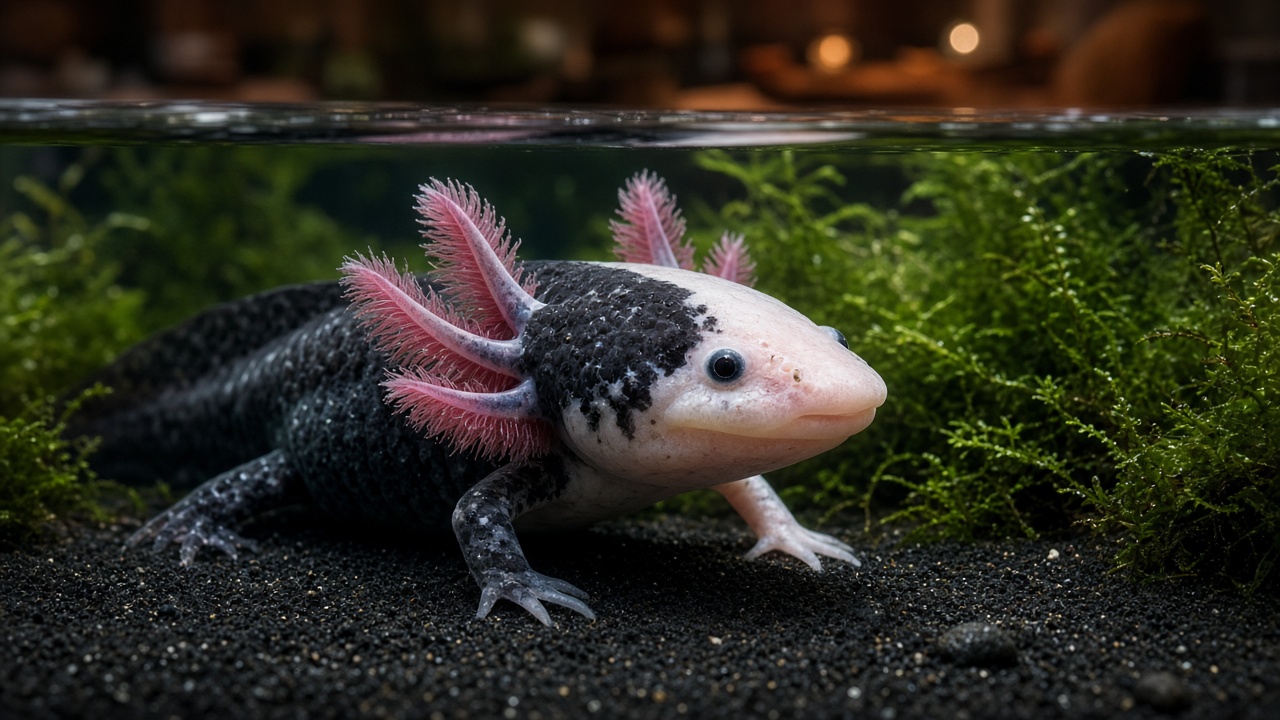
Axolotls eat only meat, and they gulp every meal whole without chewing.
They are suction feeders that inhale worms, pellets, and small prey in one pull. They do not graze plants or chew food the way a mammal would.
The Ambystoma Genetic Stock Center’s husbandry guide describes the wild menu as snails, worms, crustaceans, Daphnia, small fish, and other amphibians. That list is all animal prey, and nothing on it is a leaf or a flake.
A young animal and an adult do not eat the same size pieces, so match the bite to the mouth for one gulp.
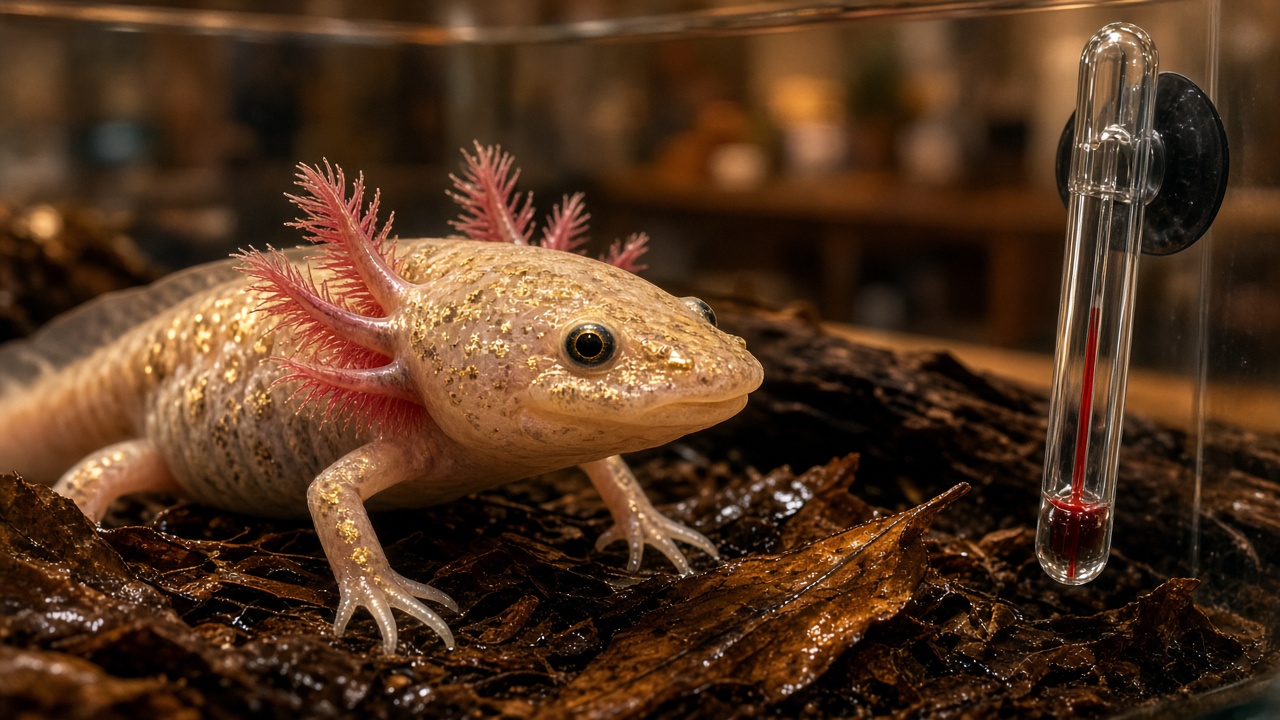
Cool water also changes appetite, and the Stock Center’s husbandry guide keeps animals at 15 to 18°C, which is 60 to 65°F. It says they should never be kept above about 22°C, or 72°F.
Warm water speeds waste, so keep this menu in a cool axolotl tank setup.
How often to feed at each size
Feed often while they grow, then slow down after the first year.
The Ambystoma Genetic Stock Center’s husbandry guide gives a size-based schedule. Use it as the default, then adjust if the belly stays wide after rest days.
- Newly hatched larvae: live baby brine shrimp every day
- About 4 cm (1.5 inches): keep shrimp, and start 3 mm (1/8 inch) soft-moist pellets
- About 5 to 8 cm (2 to 3 inches): shift off shrimp and raise the pellet count
- About 15 cm (6 inches): switch to 5 mm (3/16 inch) pellets
- About one year old: three or four meals a week, and no more than five pellets per meal
The Stock Center’s food page uses a slightly earlier pellet-size step. It starts 3 mm pellets at 4 cm and moves to 5 mm pellets at 8 cm. Both pages agree on two sizes, and they disagree on the exact length for the larger pellet.
Hikari’s page for Tropical Sinking Carnivore Pellets tells fish keepers to feed two to three times daily. That line is written for fish, so do not copy it onto an adult axolotl.
Watch the body as well as the calendar when you set portions.
- A healthy adult is about as wide as its head.
- A rounder belly than the head means you should skip the next meal.
- A thin body and a hollow belly means you should add one extra meal that week.
Remove uneaten food the same day, because leftovers rot in cool water and drive ammonia up.
Earthworms and other live meat
Earthworms are the staple live food the Stock Center still names first.
The husbandry guide lists earthworms as a favorite among accepted adult foods. It also lists Daphnia, mosquito larvae, aquarium-bred feeder fish, trout pellets, and beef liver or heart.
This article keeps earthworms as the home staple and leaves liver, heart, and feeder fish off the weekly plan.
Use worms you can name, store cleanly, and identify before they go in the tank.
- Nightcrawlers and other earthworms for juveniles and adults
- Chop large worms so each piece is a single gulp
- Blackworms or brine shrimp for larvae that cannot handle a worm
The husbandry guide is blunt about wild bait and forbids freshwater minnows from bait shops, because those fish often carry parasites. If you ever use a live fish, the same guide says it should be aquarium bred.
Bloodworms and brine shrimp work as small-animal food or as a rare extra, but adults need a larger, meatier staple.
Rinse worms in dechlorinated water, and do not add dirt, compost, or hook-bait chemicals to the tank.
Prepared foods that meet the 38-and-sink rule
These four foods meet the 38-and-sink rule on their maker pages.
Our research team compared published specs only and did not score taste, growth, or water clouding.
The table has no rank and no price, and it lists attributes the makers published.
| Product | Form | Crude protein (min) | Crude fat (min) | Moisture (max) | Maker-listed size or pack |
|---|---|---|---|---|---|
| Hikari Tropical Sinking Carnivore Pellets | Sinking pellet that softens in water | 47% | 8.0% | 10% | 74 g (2.61 oz), item 21915 |
| NorthFin Carnivore Formula | Slow-sinking pellet | 48% | 7% | 9% | 10 mm; 250 g or 500 g bags |
| Invert Aquatics Axolotl Soft Pellets | Moist soft pellet | 45% | 18% | 12% | 1.5 oz, 3 oz, or 9 oz |
| Repashy Grub Pie | Insect gel premix | 38% | 10% | 8% | Mix 1 part powder with 2 to 3 parts water |
Hikari’s Tropical Sinking Carnivore Pellets page lists these values.
- Crude protein: 47 percent minimum
- Crude fat: 8.0 percent minimum
- Crude fiber: 3.0 percent maximum
- Moisture: 10 percent maximum
- Ash: 17 percent maximum
- Phosphorus: 1.0 percent minimum
- Pack: 74 g (2.61 oz), item 21915
Hikari wrote the food for bottom-feeding carnivorous fish, and the pellets absorb water and go soft while they keep their shape.
NorthFin’s Carnivore Formula page lists these values.
- Crude protein: 48 percent minimum
- Crude fat: 7 percent minimum
- Crude fiber: 3 percent maximum
- Moisture: 9 percent maximum
- Ash: 9 percent maximum
- Pellet size: 10 mm
- First ingredients: whole herring meal, whole sardine meal, and whole Antarctic krill meal
Ten millimeters is a large bite, so hold this food for adults that already take 5 mm pellets.
Invert Aquatics’ Axolotl Soft Pellets page lists these values.
- Crude protein: 45.0 percent minimum
- Crude fat: 18.0 percent minimum
- Crude fiber: 0 percent maximum
- Moisture: 12.0 percent maximum
- Ash: 8 percent
- Packs: 1.5 oz (42.5 g), 3 oz (85 g), and 9 oz (255 g)
The maker describes a moist, quick-sinking pellet that you can break for small animals. The 18.0 percent fat figure is more than double NorthFin’s 7 percent listing, and that is a label gap, not a ranking.
Repashy’s Grub Pie page calls the mix an insect-based (75 percent) gel for insect-eating reptiles and amphibians, and it names salamanders.
Repashy’s guaranteed analysis is listed as follows.
- Crude protein: 38 percent minimum
- Crude fat: 10 percent minimum
- Crude fiber: 1.2 percent maximum
- Moisture: 8 percent maximum
- Ash: 12 percent maximum
- Calcium: 1.4 percent minimum
Mix 1 part powder with 2 to 3 parts boiling water, then cut the set gel. The page says sealed gel keeps in a refrigerator for up to two weeks.
Pick one prepared food and keep earthworms as the other staple.
- Hikari Tropical Sinking Carnivore Pellets: widely sold sinking pellet with 47 percent listed protein
- NorthFin Carnivore Formula: 10 mm pellet for adults that already swallow 5 mm food
- Invert Aquatics Axolotl Soft Pellets: moist pellet the maker wrote for axolotls
- Repashy Grub Pie: cuttable gel with 1.4 percent minimum calcium
Do not mix all four in one week just to cover bases.
Foods this page leaves out
If a food floats, is a plant wafer, or comes from a bait shop, it is out.
The 38-and-sink rule drops common store items that hobby pages still mention. Floating flakes never reach the bottom cleanly, and plant wafers target algae eaters.
The Stock Center’s husbandry guide still names beef liver, beef heart, and feeder guppies or goldfish as foods some labs have used. This article does not put those on the weekly home list. Liver and heart foul water fast, and feeder goldfish add parasite risk unless they are aquarium bred.
Skip these as staples:
- Floating flakes and floating sticks
- Algae wafers and plant pellets
- Mealworms, crickets, and other hard-shelled insects
- Bait-shop minnows and wild-caught pond life
- Raw grocery meat seasoned for people
- Tubifex cubes sold as a sole diet
Bloodworm cubes can be a juvenile extra, but they should not replace earthworms or a 38-and-sink pellet for an adult.
If a food is not on the in-list and not on this out-list, treat it as unreviewed. Do not assume it is safe because a fish aisle stocked it.
How to offer a meal without fouling the water
Offer food with tongs, then take leftovers out the same day.
The Stock Center’s husbandry guide says to change bowl water before feeding. Home tanks cannot dump the whole volume that often, but you can still copy the clean-before-food habit.
- Turn the filter flow down so pellets do not blow past the mouth.
- Hold one worm piece or one pellet in tongs in front of the snout.
- Wait for a gulp, then offer the next piece.
- Stop when the animal ignores the food or the belly matches the head.
- Net out leftovers before they sit overnight.
For Repashy Grub Pie, cut gel into strips the width of the space between the eyes. For Invert Aquatics Axolotl Soft Pellets, break a pellet for a juvenile. For NorthFin Carnivore Formula, use the 10 mm pellet only if the animal already swallows 5 mm food with ease.
After a brine-shrimp meal, the husbandry guide says to change water again within 24 hours. Shrimp leftover spoils fast, so the same 24-hour idea applies to any uneaten soft food in a home tank.
The Stock Center’s food page says its Rangen soft-moist pellets sink and hang together in water for 24 hours or more. That long hold time is a lab convenience, not a reason to leave food in a display tank all day.
Store dry pellets as the makers describe on each pack. Invert Aquatics and Hikari sell ready pellets, and NorthFin’s page lists 250 g and 500 g bags. Repashy’s page says treat mixed gel as fresh food, so keep opened dry food dry and sealed.
FAQ
How many pellets should an adult axolotl get?
The Ambystoma Genetic Stock Center’s husbandry guide caps a year-old animal at five pellets per meal and three or four meals a week. Start at the low end, and add a pellet only if the belly is still slim the next day.
Can axolotls live on bloodworms alone?
Not on this page’s rule, because bloodworms are small and watery, so use them for larvae or as a rare extra. Adults need earthworms or a 38-and-sink pellet as the staple.
Do axolotls need vegetables or algae wafers?
No, because the Stock Center’s wild-diet list is animal prey only. Plant wafers fail the 38-and-sink rule and miss the meat-only menu.
Are nightcrawlers better than pellets?
The husbandry guide calls earthworms a favorite, while the food page still uses Rangen soft-moist pellets as the colony staple. The food page also treats pellets as backup when live food runs out. A home plan that uses worms most days and one listed pellet on busy days follows both pages.
Can I feed feeder goldfish?
The husbandry guide allows aquarium-bred feeder fish and forbids bait-shop minnows. This article still leaves goldfish off the weekly list, because the parasite risk is not worth a convenience meal.
What do baby axolotls eat on day one?
The husbandry guide feeds newly hatched, live baby brine shrimp every day. Feed until bellies look orange and little shrimp remain, then start 3 mm pellets at about 4 cm.
Should I soak pellets before feeding?
Hikari’s Sinking Carnivore Pellets page says each pellet absorbs water and softens while it keeps its shape. Invert Aquatics already sells a moist pellet, so you do not need a long soak. Drop the food, watch the gulp, and remove what sits.