Quick answer: Full, feathery gills that flick now and then are the healthy look. Shrinking or dull gills usually track dirty or warm water. Cool, clean water is the first fix; gills can grow back after a cut.
Adult axolotls keep three pairs of external gills, and those gills can regenerate after a cut. This page is a published-spec desk on gill look, shrink, and regrowth.
Our research team analyzed one 2019 Developmental Biology paper and the University of Kentucky stock-center husbandry guide. We then compared maker pages for tools that measure or bind the toxins those pages tie to gill damage.
How many gills an axolotl has
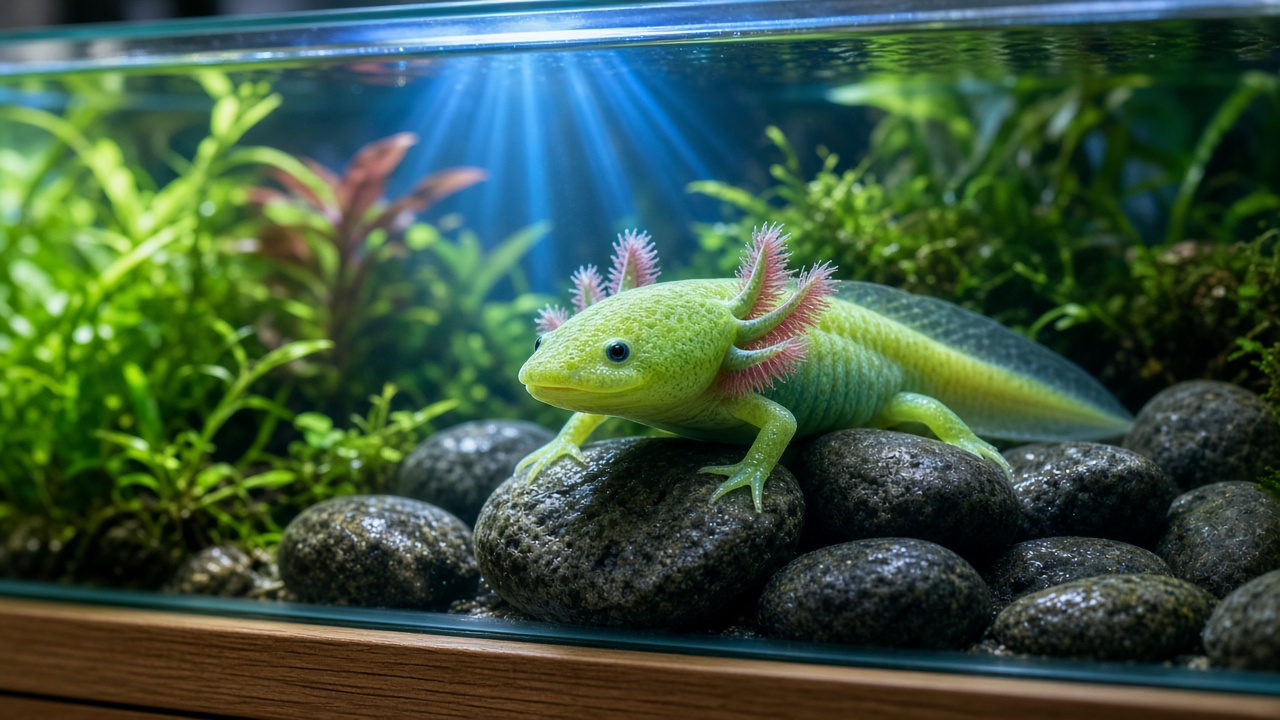
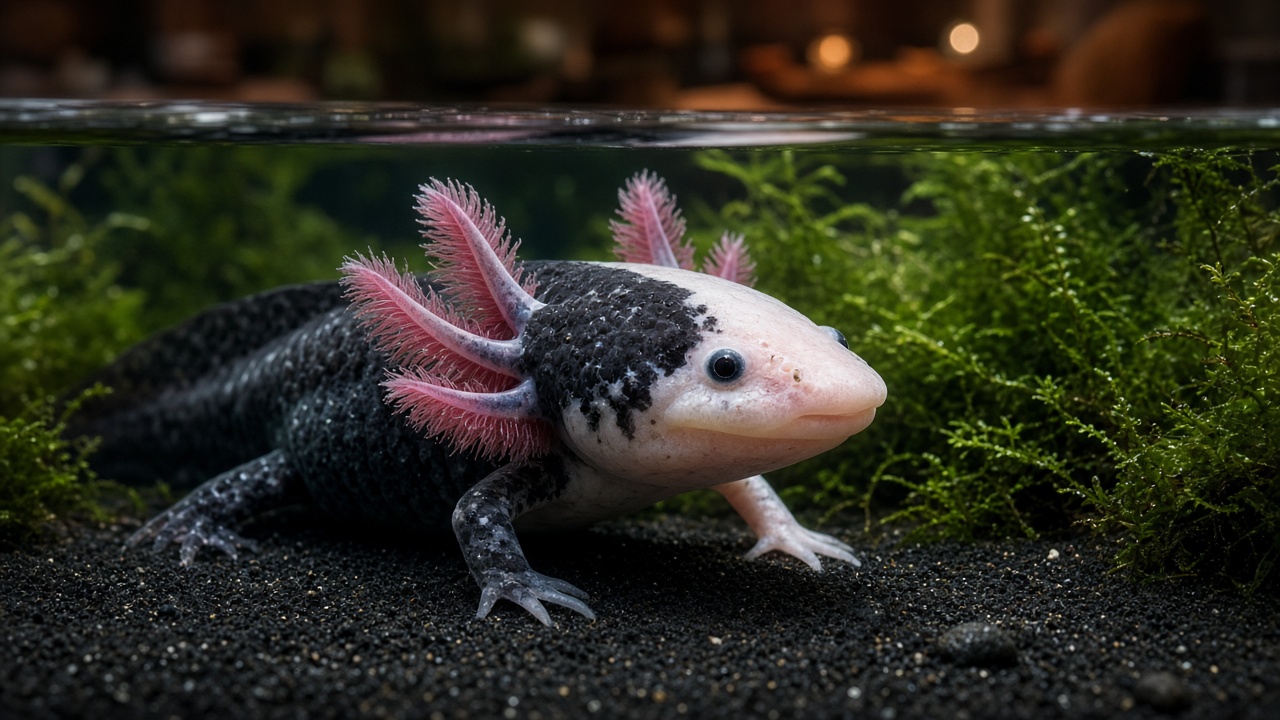
An axolotl has three pairs of external gill stalks, not one fluffy collar.
The 2019 Developmental Biology paper by Saito and colleagues states that an axolotl possesses three gill ramus pairs. Each ramus grows many filaments packed with blood capillaries. That is six stalks in all, with three on each side of the head.
The same paper says the base of each ramus holds muscle. That muscle lets the animal swing the stalk and move fresh water across the filaments.
The University of Kentucky Ambystoma Genetic Stock Center guide describes the same motion in colony notes. If you watch for several minutes, the animal flicks its gills and stirs stale water away from the fronds.
The Kentucky guide also says the animal may swim up and gulp air, because the adult still develops lungs. Skin and lungs share gas exchange, so the gills are not the only breathing surface.
What healthy gills look like
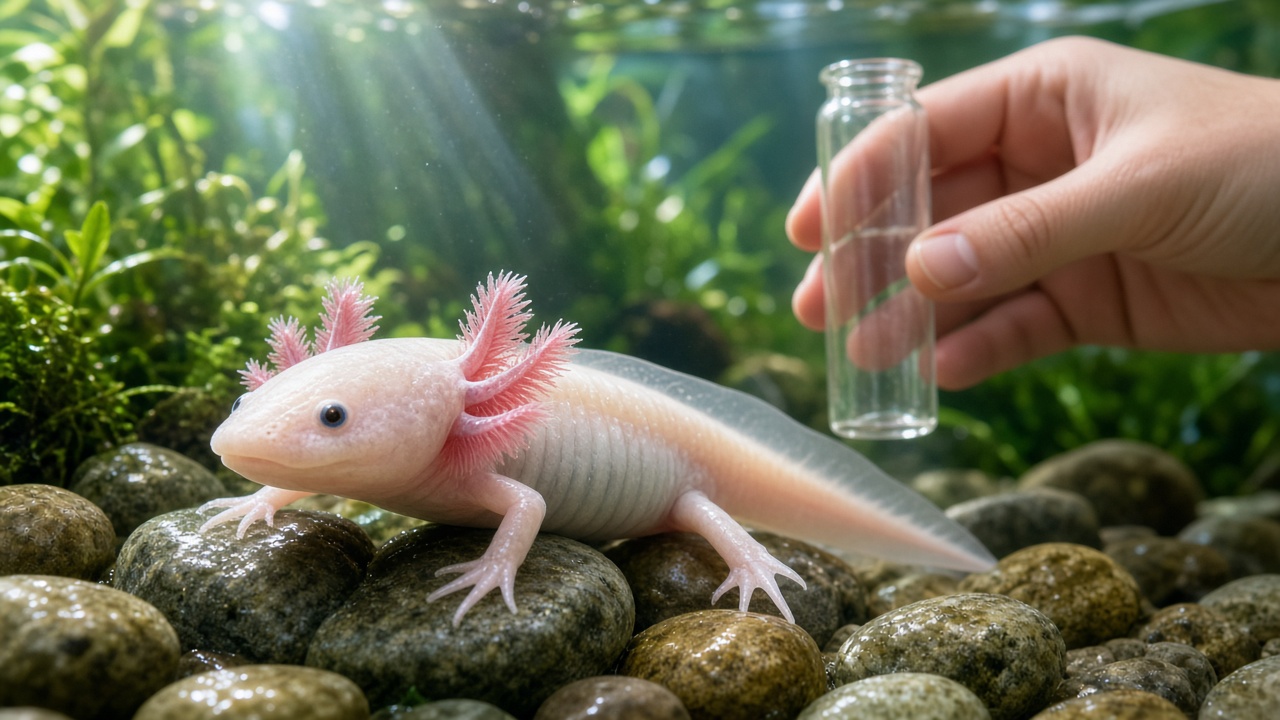
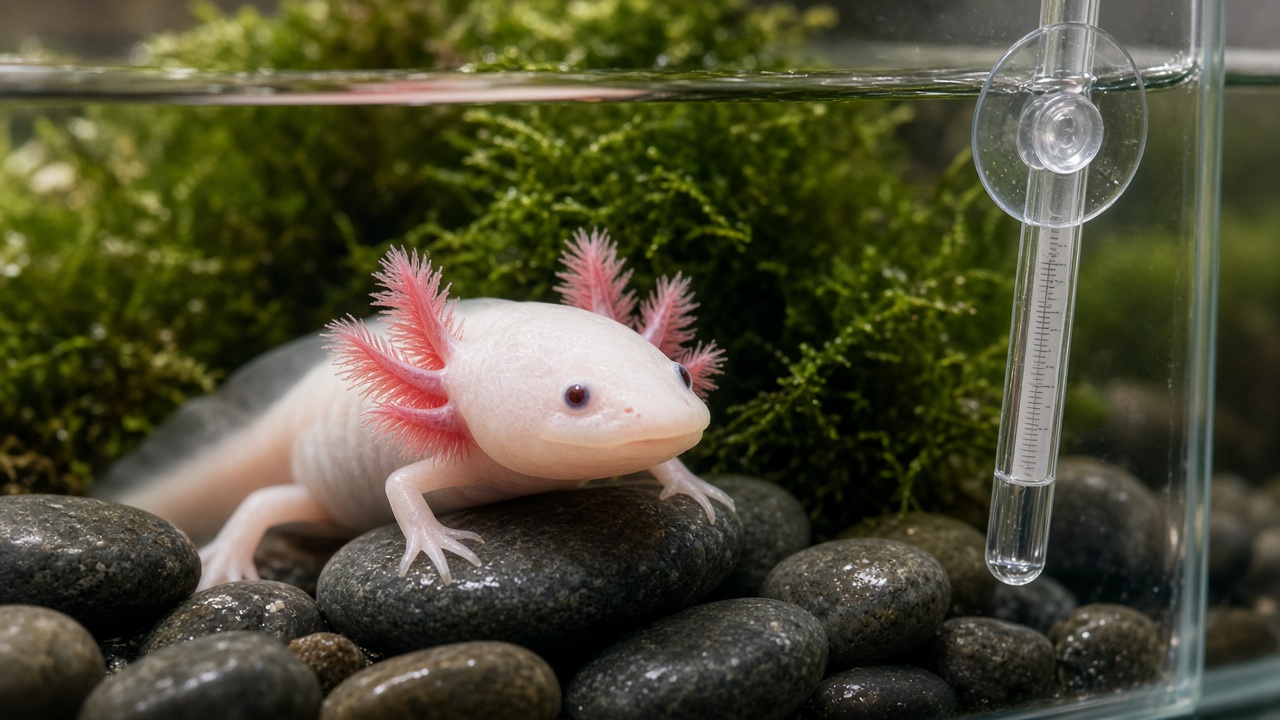
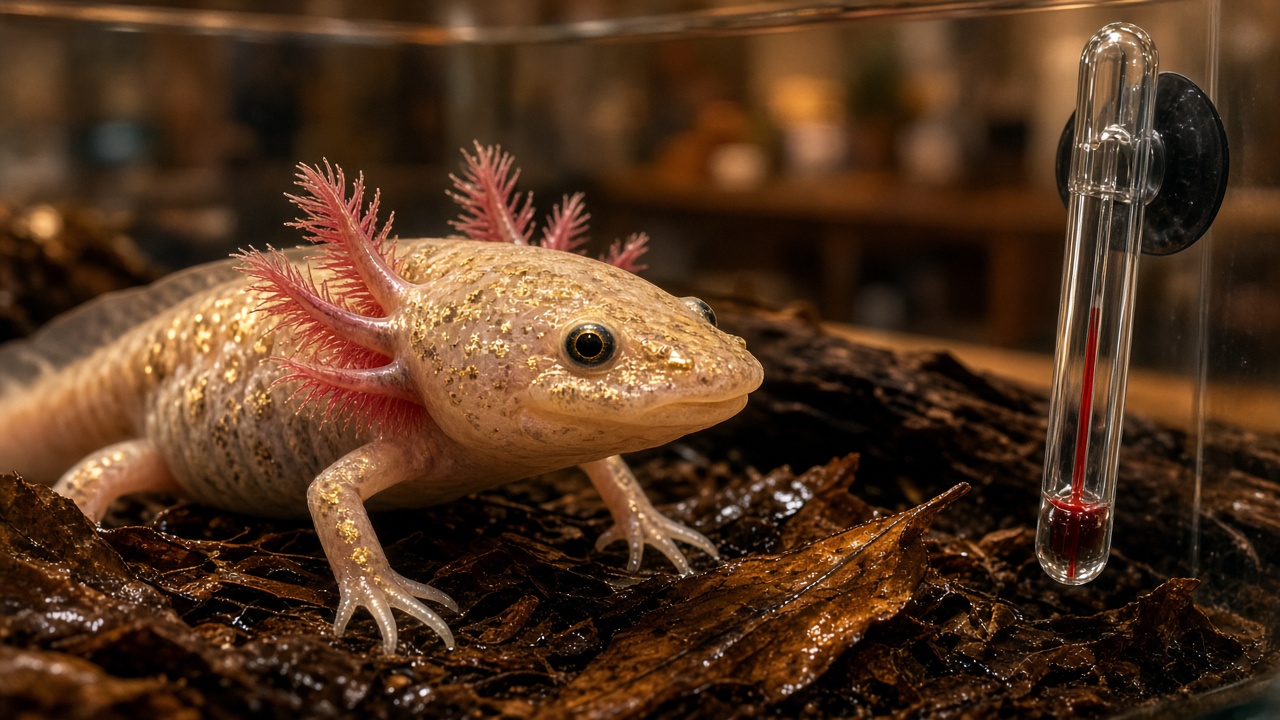
Healthy gills look full for that animal, with long side feathers and a color that shows blood in the filaments.
Do not hunt for one “correct” red. Pale animals often show paler gills than dark ones, so compare the animal to its own last clear photo.
The Kentucky stock-center guide names two early illness signs together: loss of appetite and deterioration of the gills. Use both signs, because gills alone can mislead you after a meal or a short rest.
A short check that matches those pages:
- Count six stalks, three per side.
- Look for side feathers, not bare sticks.
- Watch for an occasional flick, not a clamped, still fan.
- Note whether the animal still eats on its usual day.
White cotton fuzz is not a normal color change. Fuzzy patches belong with a sick-animal visit, not with this desk’s spec list. A week of shorter feathers is a trend, and trends matter more than one snapshot.
Why gills shrink
Gills shrink when water or heat stays wrong long enough for the tissue to pull back.
The 2019 Developmental Biology paper is blunt on this point. The authors write that axolotls easily resorb their gills in bad water, and those resorbed gills usually do not regenerate while conditions last. The paper used well-housed animals for the cut tests for that reason.
The Kentucky guide puts a hard heat cap on housing. The colony is kept at 15–18°C (60–65°F). The same guide says they should never be kept above about 22°C (72°F).
Here is a split our research team did not average away. Saito’s group housed the 8–12 cm cut animals at 22°C, on the Kentucky ceiling rather than in the 15–18°C band. Read both numbers as published.
The Kentucky guide also flags fast current. Rapidly circulating water is stressful, so keep the rate as slow as possible if a filter must run.
The same guide says remove chlorine, chloramines, or ammonia added by municipal treatment. It also says keep pH between about 6.5 and 8, and notes that ammonia toxicity is greater at the high end of that band.
API’s Freshwater Master Test Kit page defines neutral pH as 7.0.
A shrink check, in order:
- Read temperature against the Kentucky 15–18°C band and the 22°C cap.
- Test ammonia and nitrite with a liquid kit, not a guess.
- Slow the outflow if the animal leans into current or clamps its fans.
- Confirm tap water was treated before it entered the tank.
Nipping from a tank mate can also take a stalk. The Developmental Biology paper notes reflexive eating of gills when animals share a tank. Split sizes if one animal is missing a stalk and the other is not.
What a 2019 lab cut showed about regrowth
A cut gill can grow back on a healthy animal, and the lab clock is counted in days.
Saito and colleagues cut each ramus at the distal one-third. They used animals 8–12 cm from nose to tail for most of those cuts.
Their published timeline:
- A regeneration bud was visible within 10 days after the cut.
- Blood flow returned in the new tissue within 15 days.
- Signs of new filaments were visible by 20 days.
- At 1 month, a cut gill and an intact gill could not be told apart.
That 1-month line is a lab result on well-housed animals. It is not a promise for a warm, dirty home tank.
The same paper says nerves matter. After a 1 mm gap was cut in the axons to the two dorsal gills, no clear bud had formed by 20 days. A small growth appeared at 25 days, which the authors thought might be nerve recovery.
Simple side wounds also grew extra gills in 8 of 10 samples. Those extra gills had filaments, vessels, and nerves. Denervated gills did not grow the extra structure.
None of that is a home procedure. It is published proof that gill tissue can rebuild when the animal is otherwise sound.
The checks that match published limits
The useful home checks are temperature, ammonia, and flow, in that order.
This is the Three-Check Gill Rule we used to decide what belongs on this page. If a reading does not sit on those three published limits, it did not go in the table below.
Temperature comes from the Kentucky guide:
- Colony band: 15–18°C (60–65°F).
- Stated cap: never above about 22°C (72°F).
Ammonia and nitrite come from two places we actually read. The Kentucky guide tells keepers to convert ammonia and nitrites with a biological filter, and to strip ammonia from treated tap water.
Seachem’s Ammonia Alert page prints free-ammonia colors as:
- Safe: under 0.02 mg/L.
- Alert: 0.05 mg/L, listed as tolerated for 3–5 days.
- Alarm: 0.2 mg/L, listed as tolerated for 1–3 days.
- Toxic: 0.5 mg/L, listed as rapidly harmful.
The same Seachem page says the card detects less than 0.05 mg/L free ammonia. It lists a rise time of about 15 minutes and a fall from Toxic back to Safe of about 4 hours.
Seachem’s MultiTest Ammonia page says that kit also reads total and free ammonia down to less than 0.05 mg/L. The maker states it performs over 75 tests.
API’s Freshwater Master Test Kit page says the kit measures six aquarium levels and names ammonia, pH, high range pH, nitrite, and nitrate. The kit includes four test tubes, and the maker’s use line is weekly testing.
Flow comes back to the Kentucky line: keep circulation as slow as possible. A strong return aimed at the head is the wrong setup, so baffle the outlet.
Chlorine and chloramine are tap-water problems, not tank-cycle problems. Seachem’s Prime page states one capful (5 mL) treats 200 L (50 US gallons) of new water, and each cap thread is about 1 mL.
Prime doses from that published ratio:
- 10 gallons of new water: 1 mL.
- 20 gallons of new water: 2 mL.
- 50 gallons of new water: 5 mL (1 capful).
Seachem’s page also says Prime can be dosed every 24–48 hours and binds ammonia, nitrite, and nitrate for up to 48 hours. If those readings are above 2 ppm, the same page allows up to 5 times the normal dose.
Prime is a binder, not a filter, so the biofilter still has to finish the job.
For the tank itself — volume, sand, and the cycle — use this site’s axolotl tank setup guide. This page stays on the gills.
Products that measure or bind those toxins
We included only currently sold tools whose maker pages list a way to measure or bind ammonia, nitrite, chlorine, chloramine, or pH. We left out filters, chillers, heaters, foods, and medications, and we left out strip kits that skip a liquid ammonia test.
| Product | Maker-listed job | Listed numeric spec | Form | Water type on the maker page |
|---|---|---|---|---|
| API Freshwater Master Test Kit | Measures ammonia, pH, high range pH, nitrite, and nitrate | Six levels named on the maker page; four test tubes; weekly use | Liquid reagent kit | Freshwater |
| Seachem Prime | Removes chlorine and chloramine; detoxifies ammonia, nitrite, and nitrate | 5 mL per 200 L (50 US gal); up to 5× dose above 2 ppm | Liquid conditioner | Fresh and saltwater |
| Seachem Ammonia Alert | Continuous free-ammonia sensor | Detects less than 0.05 mg/L; about 15 minute rise time; lasts over a year | Card sensor | Marine or freshwater |
| Seachem MultiTest Ammonia | Measures total and free ammonia | Less than 0.05 mg/L; over 75 tests; up to 6 tests at once | Sensor kit with color chart | Marine or freshwater |
API’s kit is the weekly snapshot. It is the only box in this set that also reads nitrite and nitrate on the same card.
Seachem Ammonia Alert is the between-tests watch. The maker says it is not recommended at acid pH. Do not treat a yellow card as proof of safety if your pH sits near the Kentucky low end of about 6.5.
Seachem MultiTest Ammonia is the check when Prime is in the water. Seachem’s page says this kit can still read free ammonia while Prime is in use. Regular salicylate or Nessler kits can misread after a binder.
None of these products cool a hot room. If the water sits above the Kentucky 22°C cap, a test kit will not fix the gills.
FAQ
How many gills does an axolotl have?
Six external stalks. The 2019 Developmental Biology paper states three gill ramus pairs, with many filaments on each ramus. Count three stalks on the left and three on the right.
Why are my axolotl’s gills shrinking?
The Developmental Biology paper says axolotls resorb gills in bad water, and those gills usually do not regenerate while conditions stay bad. The Kentucky guide adds heat above about 22°C and fast current as stress. Test ammonia and nitrite, read temperature, and slow the outflow before you shop for a tonic.
Can axolotl gills grow back?
Yes, on a healthy animal in clean water. Saito’s group found a bud by day 10, blood by day 15, and filaments by day 20. At 1 month after a one-third cut, the new gill matched the intact one on 8–12 cm lab animals housed at 22°C.
What temperature keeps gills healthier?
The Kentucky stock-center guide keeps the colony at 15–18°C (60–65°F) and says never above about 22°C (72°F). Saito’s cut study housed animals at 22°C. Our research team left both figures in place and did not pick a midpoint.
Should gills be bright red?
Not always. Filament color tracks blood flow and the animal’s pigment. The Kentucky guide pairs gill deterioration with appetite loss as an early illness sign. A pale eater with full feathers is less urgent than a dark animal with short, still gills.
Do I need a liquid kit if I already have Seachem Ammonia Alert?
Yes, if you want nitrite and nitrate. API’s Freshwater Master Test Kit page lists those readings plus pH. Seachem’s Alert card reads free ammonia only, and Seachem’s own page says most other kits read total ammonia, which includes the less harmful ionized form.
When should I stop using this page and get help?
Stop here if gills keep shortening after water and heat match the published limits. Stop here for cotton fuzz, open sores, or a long refusal to eat. The Kentucky guide lists those as illness signs, and that is a clinician’s case, not a spec comparison.