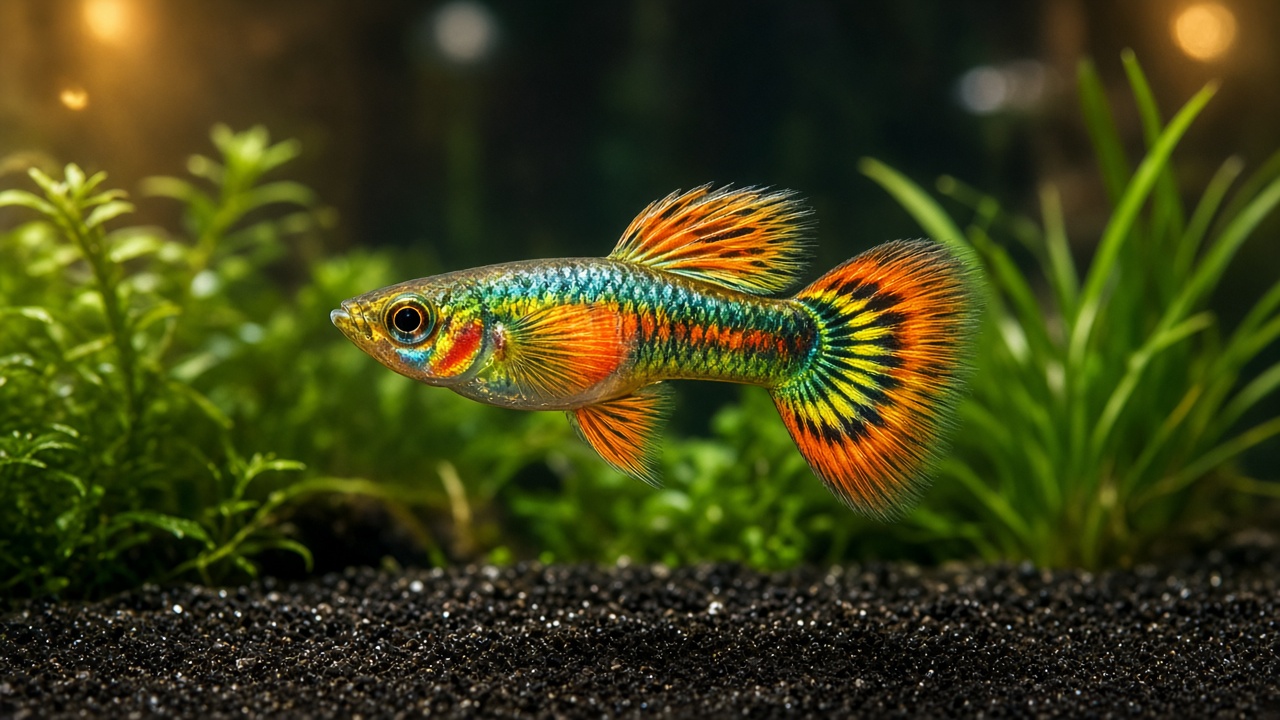
Quick answer: Keep Endler guppies in a cycled tank with a 45 × 30 cm base. Hold water at 75–86°F and pH 7.0–8.5. Mix sexes only if you want live young, and keep them off common guppies if you want a pure line.
An Endler guppy is Poecilia wingei, a livebearer that needs a 45 × 30 cm tank base and 75–86°F water.
This page is a research-desk brief on tank size, water, breeding, and the guppy split. We did not keep a colony, run water trials, or treat sick fish.
We included only staple foods with published protein and fat numbers. We also used species facts from FishBase and Seriously Fish. We left out medicines, show-strain rules, and unlabeled foods.
How we chose what to cover
One rule decided every section: a fact stayed only if Seriously Fish, FishBase, or a maker page published the number.
Our research team analyzed four currently sold staple foods and compared their protein, fat, and fiber figures. We did not rank the foods or sort them by price.
We skipped disease charts and medication lists because those topics sit outside a research desk. We also skipped five-gallon slogans, since Seriously Fish publishes a tank base instead.
What an Endler guppy is
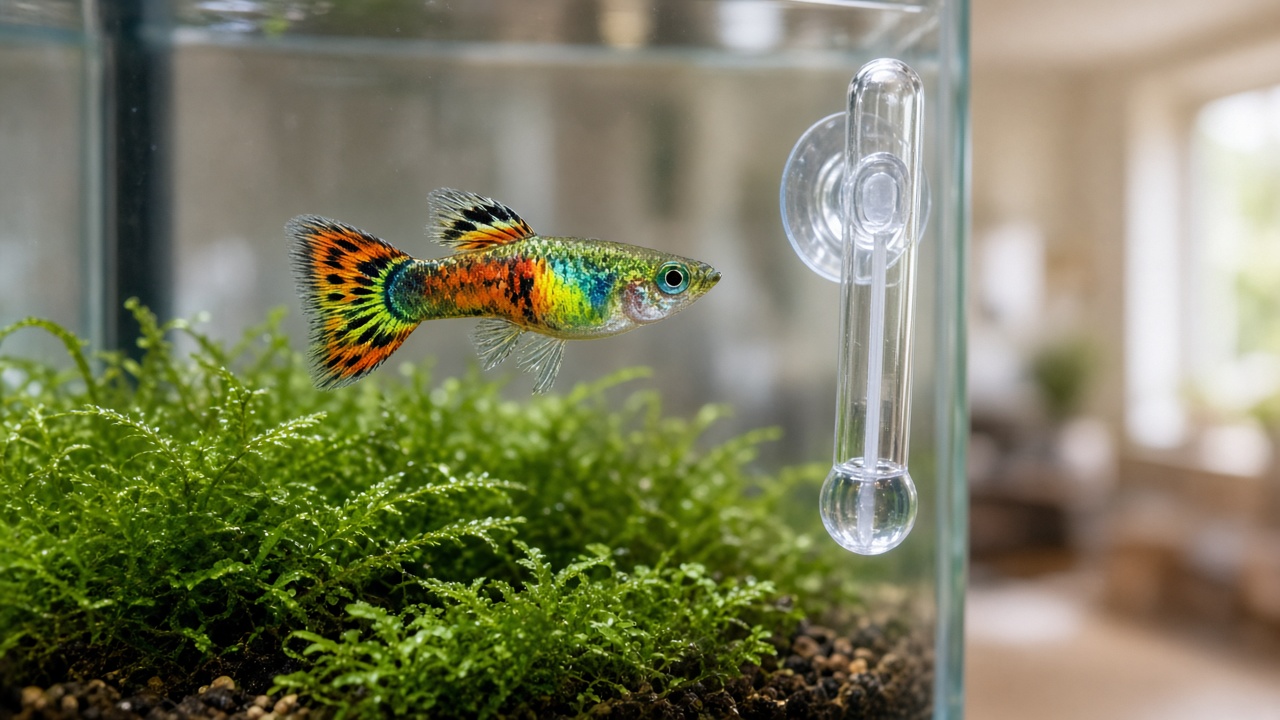
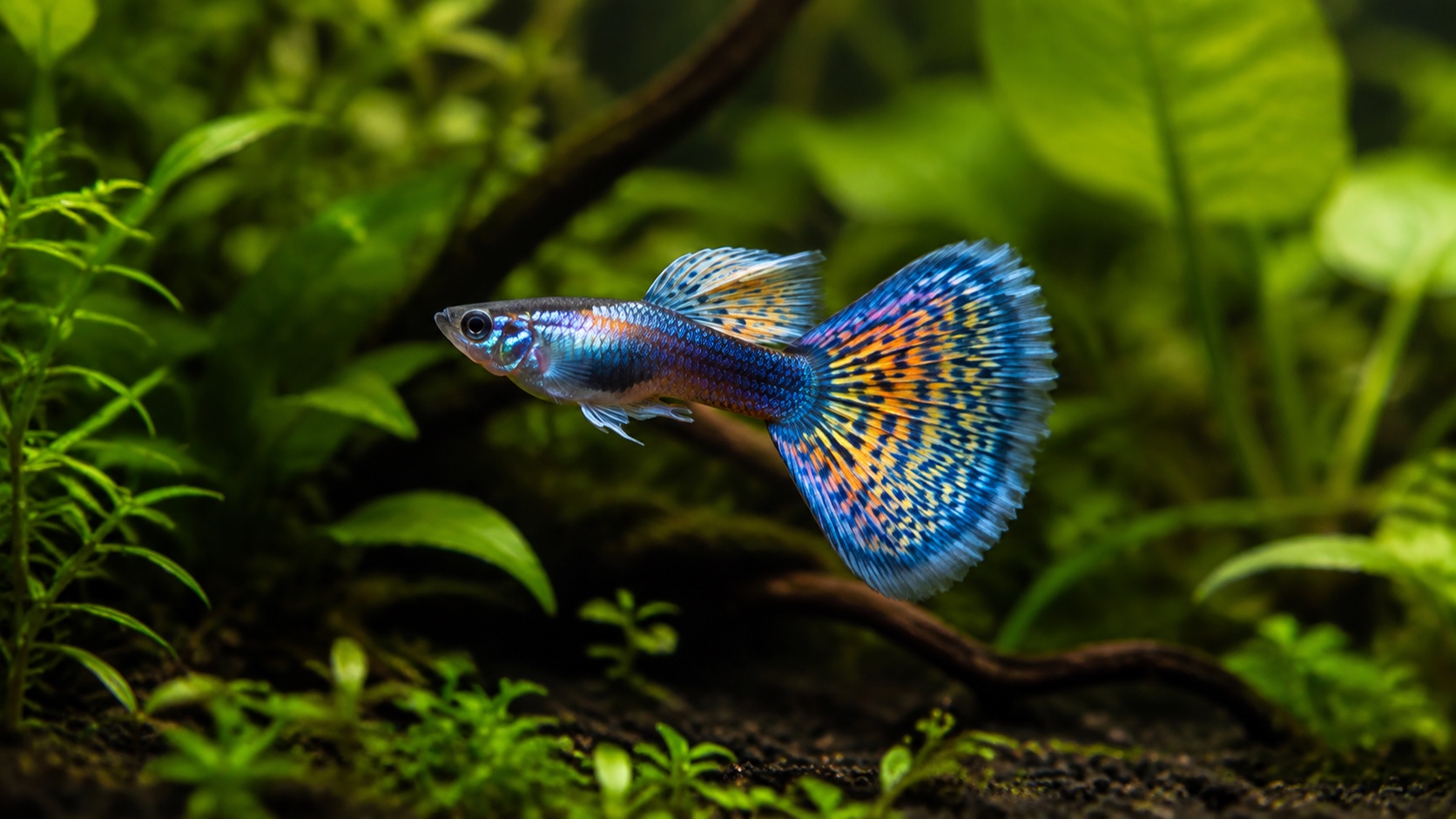
An Endler guppy is a small livebearing freshwater fish with a large gap between male and female looks.
FishBase names the fish Poecilia wingei and credits Poeser, Kempkes, and Isbrücker, 2005.
FishBase places the native range in the Campoma and Buena Vista Lagoons in Venezuela. Seriously Fish adds that John Endler rediscovered the fish in 1975 in Laguna de Patos, Cumaná.
Seriously Fish says Franklyn F. Bond first found the fish in 1937. FishBase says the species name honors Dr. Øjvind Winge (1886–1964).
FishBase lists adult females to 2.0 cm SL. Seriously Fish lists length as 25 mm SL.
Those two length numbers do not match, so do not collapse them into one size. Treat the FishBase 2.0 cm SL figure and the Seriously Fish 25 mm SL figure as a published clash.
FishBase lists this ray count for identification:
- Dorsal soft rays: 6 to 7
- Anal soft rays: 9
FishBase also notes colorful males and plain females. Seriously Fish says males are smaller and far more colorful, and that females stay plump.
FishBase lists the IUCN Red List status as Endangered and gives the assessment date as 08 March 2021. The same page lists CITES as Not Evaluated.
Tank size that matches the published base
Seriously Fish, not a gallon slogan, sets the tank size we use on this page.
Seriously Fish lists an aquarium base of 45 × 30 cm, or 18 × 12 in. It also lists a box of 45 × 30 × 30 cm, about 41 liters, or about 11 US gal.
That is a length-and-base rule, not a ten-gallon slogan. A short, tall jar can hold 11 gallons and still fail the 45 cm base.
Seriously Fish says that base is big enough for a substantial colony. It also says these fish are very active and should not be kept in smaller aquaria.
Build the box around that base and around live young. Seriously Fish says a brood can add 5 to 25 fry, and a new brood can arrive every 23 to 24 days.
A mixed-sex group will keep adding those births unless you separate the sexes, so keep one sex only if you cannot add length.
Use this setup list:
- Pick a tank at least 45 cm long and 30 cm wide, per Seriously Fish.
- Cycle the tank before the first fish go in.
- Add a heater, a gentle filter, and a tight lid.
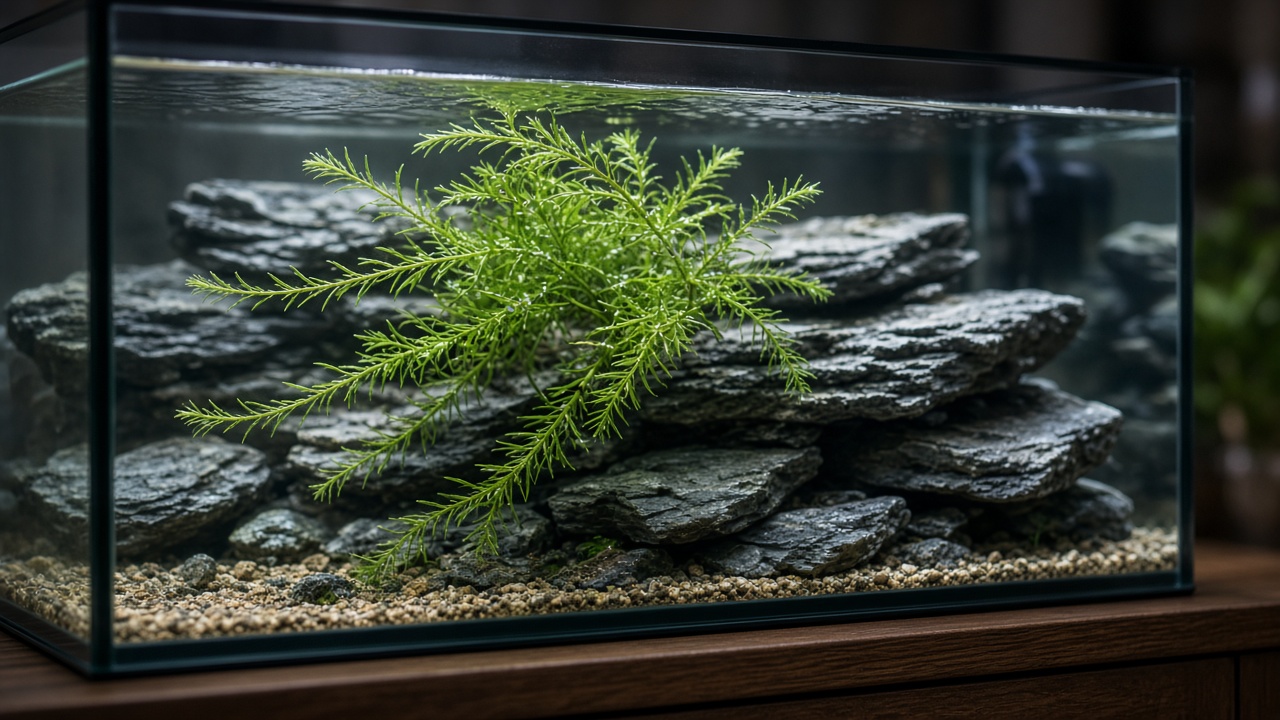
- Add plants or other cover so fry can hide.
- Do not mix them with common guppies if you want a pure line.
Seriously Fish recommends a planted setup and floating plants. It also says powerful filtration is not required in a species tank, because these fish produce little waste.
Water numbers from Seriously Fish
Hold temperature inside the published tropical band and keep pH inside the published range.
Seriously Fish lists these water figures on the species profile:
- Temperature: 24–30°C (75–86°F)
- pH: 7.0 to 8.5
- Hardness: 15 to 35 dGH
FishBase labels the species freshwater, benthopelagic, and tropical. It does not publish a tank pH or hardness band on the summary we used.
Test source water before you buy fish, and leave tap water alone if it already sits in that pH and hardness band.
If your tap sits far outside pH 7.0 to 8.5, change the plan instead of forcing a fast swing. Seriously Fish calls this a moderately hard-water fish.
It says long-term care should stay in moderately hard or harder water. Keep ammonia and nitrite at zero after the cycle.
Those two toxins are not given as Endler-specific limits on the pages we used. Still treat any reading above zero as a reason to stop adding fish.
Do a regular water change and remove leftover food, because dirty water, not a missing gadget, is the usual failure.
Feeding from maker labels
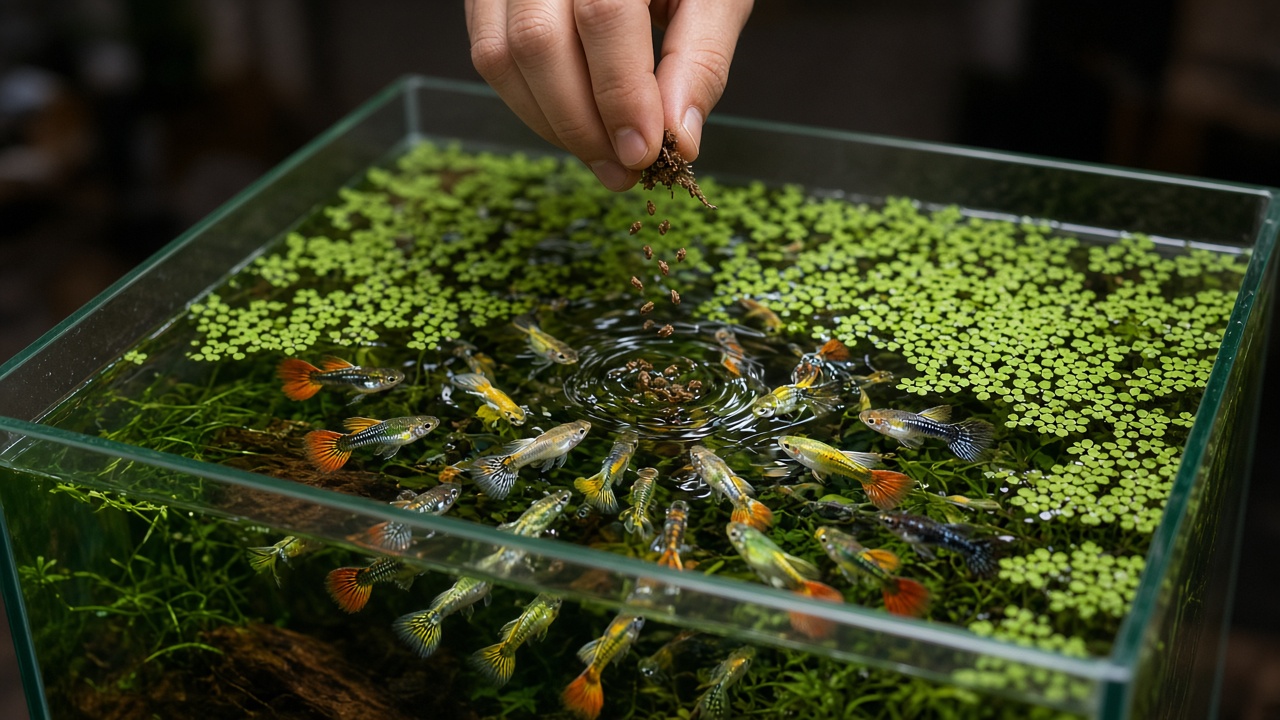
Compare staple labels by protein, fat, fiber, and form, then feed only what fish finish in about a minute.
Seriously Fish says the wild diet is zoobenthos and detritus, and that the fish should get some vegetation. A complete small flake or pellet can be the daily staple.
Hikari Sales USA’s Fancy Guppy page says to feed two to three times daily. It also says to use only the amount fish will finish in about a minute.
Our research team analyzed four currently sold staples and built the WaterPuppy Endler Staple Label Sheet from those maker pages.
Listed minimum crude protein ran from 39% to 50%, an 11-point spread. Listed minimum crude fat ran from 5% to 11%, and listed maximum crude fiber ran from 2% to 7%.
Only Hikari Tropical Fancy Guppy names guppies and livebearers on the maker page. The other three foods are general tropical or community staples.
Hikari Sales USA’s Fancy Guppy page says the pellet becomes soft and sponge-like yet will not dissolve. Omega Sea’s Freshwater Flakes page lists Alaskan salmon and whole herring first.
NorthFin’s Community Flake page lists whole Antarctic krill meal first and says the food is made in Canada. Hikari Sales USA’s Micro Pellets page describes a smaller granule for smaller-mouth fishes.
| Product | Form | Min. crude protein | Min. crude fat | Max. crude fiber | Maker-listed use |
|---|---|---|---|---|---|
| Hikari Tropical Fancy Guppy | Slow-sinking pellet | 50% | 8.0% | 2.0% | Guppies, livebearers, and other small tropical fishes |
| Hikari Micro Pellets | Semi-floating pellet | 43% | 7.0% | 7.0% | Smaller-mouth tropical fishes |
| Omega One Freshwater Flakes | Flake | 39% | 11% | 2% | All freshwater fish |
| NorthFin Community Flake | Flake | 40% | 5% | 5% | Freshwater herbivores and omnivores |
Hikari Sales USA’s Fancy Guppy page lists a 0.77 oz (22 g) pack and a 2.2 lb (1 kg) pack. It lists moisture at a 10% maximum, ash at an 18% maximum, and phosphorus at a 1.0% minimum.
Hikari Sales USA’s Micro Pellets page lists phosphorus at a 1.1% minimum. Omega Sea’s Freshwater Flakes page lists moisture at an 8.5% maximum and ash at an 8% maximum.
Omega Sea’s pack sizes run from 0.42 oz to 5 lbs. NorthFin’s Community Flake page lists 65 g and 350 g packs and does not name Endlers.
Use one staple as the daily food, and if you add a second form, still follow the Hikari time rule.
Breeding and fry
Mixed sexes produce live young on a weeks-long cycle, and plants matter more than gadgets.
Seriously Fish says breeding is a “when,” not a “how.” If you do not want fry, buy only males.
Seriously Fish lists these brood figures:
- New broods every 23 to 24 days
- 5 to 25 young per brood
- Males show adult color in 3 to 5 weeks
- Females can produce young at 2 months of age
FishBase lists high resilience and a minimum population doubling time of less than 15 months. That model note matches a short brood cycle, but it is not a tank calendar.
Seriously Fish says adults rarely eat their young. It still says to move the gravid female to a separate tank, then return her after birth.
Seriously Fish does not recommend breeding nets or traps, because those tools are too small for raising fry. The fry are large enough to take powdered flake or brine shrimp nauplii from birth.
If you want fry to survive, use this list:
- Keep several females for each male, per Seriously Fish.
- Keep dense plants so females can leave the males.
- Feed fry two to three times per day, per Seriously Fish.
- Move the female before birth only if you can do it without rough handling.
- Expect another brood about 23 to 24 days later if a male is present.
If you do not want fry, keep only males or only females, because one leftover male can restart the cycle.
Endlers versus common guppies
Endlers and common guppies are close enough to hybridize, so a mixed tank is a new fish, not a pure line.
Seriously Fish says Poecilia wingei should not be kept with guppies because they will crossbreed. It also says the two species produce fertile offspring.
That is the whole split that matters in a home tank. If you want Endler color and shape to stay Endler, keep guppies out.
Seriously Fish says the two fish were found together in Laguna de Patos and were not interbreeding there. It also says common guppies were usually in colder, running water.
For common guppy tank length, group size, and brood counts, use our guppy care guide. Do not copy those guppy numbers onto Endlers.
FishBase lists Endler females at 2.0 cm SL. Use the guppy page for that species’ own published sizes.
FishBase lists Endlers as Endangered as of 08 March 2021. Do not treat a store hybrid as a wild-strain stand-in.
FAQ
Each answer uses a published number from the pages above.
How big does an Endler guppy get?
FishBase lists females to 2.0 cm SL. Seriously Fish lists length as 25 mm SL. Plan space for the larger of those two published figures.
What tank size does an Endler guppy need?
Seriously Fish lists a minimum aquarium base of 45 × 30 cm and a box of about 41 liters, or about 11 US gal. That is a base rule, not a gallon slogan. A shorter box can crowd an active colony and leave no room for fry.
What water does an Endler guppy need?
Seriously Fish lists pH 7.0 to 8.5, hardness 15 to 35 dGH, and 75–86°F. FishBase only labels the species tropical freshwater. Keep the reading steady inside that Seriously Fish band.
What should I feed an Endler guppy?
Seriously Fish says the wild diet is zoobenthos and detritus, plus some vegetation. On the WaterPuppy Endler Staple Label Sheet, maker pages list 39% to 50% minimum crude protein. Hikari Tropical Fancy Guppy is the only one of the four foods that names guppies and livebearers. Hikari Sales USA’s Fancy Guppy page says to feed two to three times daily, only what fish finish in about a minute.
How many young does an Endler have?
Seriously Fish lists 5 to 25 live young and a new brood every 23 to 24 days. It says females can produce young at 2 months. Males may show adult color in 3 to 5 weeks.
Can I keep Endlers with common guppies?
No, not if you want a pure Endler line. Seriously Fish says the two species will crossbreed and can produce fertile young. Use our guppy care guide for the common guppy, and keep the two species in separate tanks.
Can I keep one Endler?
Seriously Fish writes about a substantial colony in the 45 × 30 cm tank and says to keep several females for each male. A single fish falls below that published social plan. If you keep one sex only, you still need more than one fish.