Quick answer: Fancy guppies often live about two to three years in stable home tanks. Heat, soft water, crowding, and weak stock shorten that span. Cooler, hard, clean water and calmer breeding extend it.
Most home guppies live about two to three years with solid care.
We compared published care data on Poecilia reticulata lifespan, temperature, and tank setup. Our research team analyzed care ranges used for fancy lines versus wild-type notes. Owners consistently report short lives when heat, soft water, or crowded shipping stock stack together.
Comparing published specs places a common home average near two to three years when water stays warm and hard. One widely cited care band ties about seventy-six to seventy-eight degrees Fahrenheit to that two-to-three-year average. Raising heat near eighty-two degrees can cut life toward about eighteen months while speeding growth and fry. Cooling near seventy-two degrees may stretch life toward about three and a half years or longer, with slower maturity. Wild notes often place typical outdoor lives near about two years under predation. Database life-history summaries can estimate shorter population maxima near about one and a half years. This page covers lifespan bands, heat, water, stocking, diet, genetics, and aging signs.
Include lifespan ranges, temperature tradeoffs, hardness, sex ratio, and sourcing checks. Leave out medication protocols that belong with a veterinarian. Skip claims that every pet-store guppy will reach five years.
Typical home lifespan sits near two to three years
Expect years, not decades, from fancy stock.
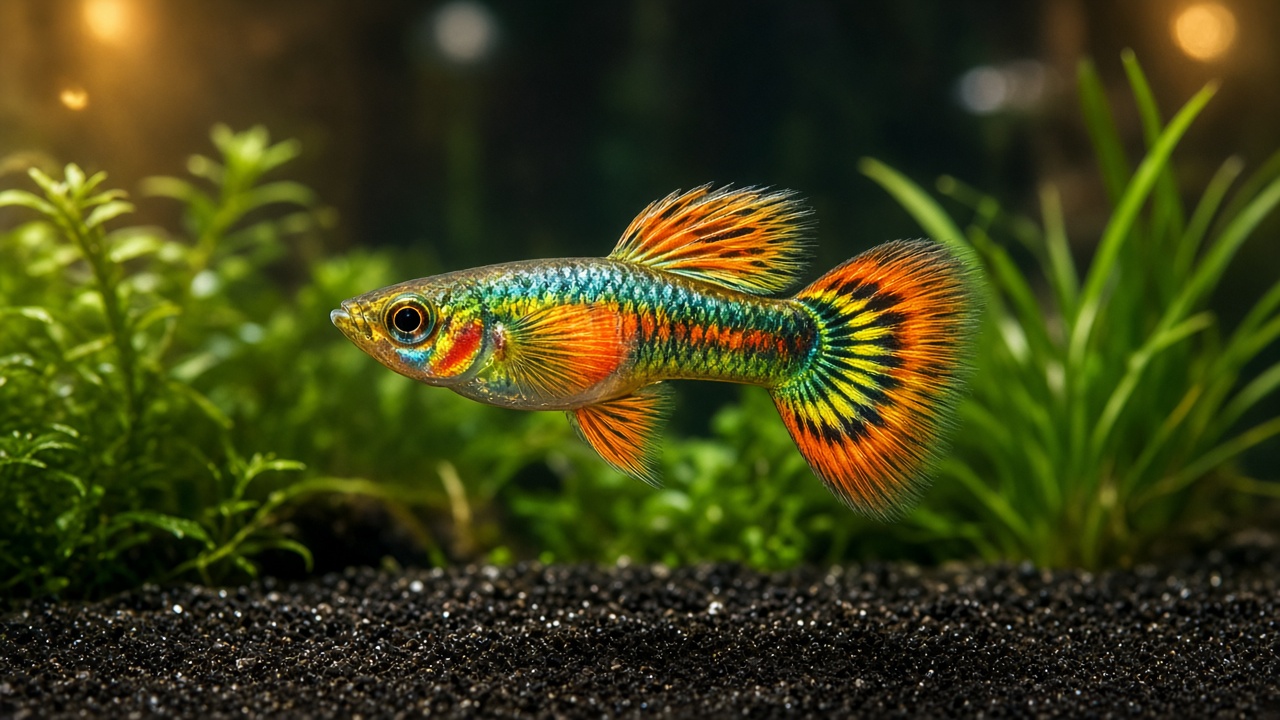
Published home-care notes commonly cite about two to three years for well-kept aquarium guppies. Pet care sheets often repeat that same band with proper husbandry. Adults sold in shops are often already past early weeks, so clock time at home can feel shorter than the full biological span. Females often look larger and may live longer when not bred without pause. Males show brighter color and a stick-like gonopodium. Plan for a colorful, active fish that finishes life within a few seasons when care is average to good.
Lifespan snapshot:
- Common home average: about 2–3 years
- Hotter tanks near 82°F: often nearer 18 months
- Cooler tanks near 72°F: often toward 3.5+ years
- Wild typical notes: often near about 2 years
- Population model maxima: sometimes near about 1.5 years
- Adult size cue: about 2 inches on average
Owners consistently report surprise when a “young” shop fish was already months old. Our research team analyzed sale-age notes against full lifespan bands. Comparing published specs treats two to three years as a realistic home target, not a failure.
Temperature choices stretch or shorten adult life
Heat trades babies for years.
A common heater target sits near seventy-six to seventy-eight degrees Fahrenheit for fancy lines. At that band, care notes often pair growth with a two-to-three-year average life. Pushing toward about eighty-two degrees can speed maturity and broods, yet shorten life toward about eighteen months in the same guidance. Dropping toward about seventy-two degrees may lengthen life toward about three and a half years or more, while slowing adulthood and spacing litters. Broader tropical bands near seventy-two to eighty-two degrees appear on many sheets. Stability matters as much as the setpoint. Daily swings stress immune systems and cut the useful years you hoped to buy.
Heat checklist:
- Fancy target often about 76–78°F
- Hotter near 82°F: faster growth, shorter life band
- Cooler near 72°F: slower growth, longer life band
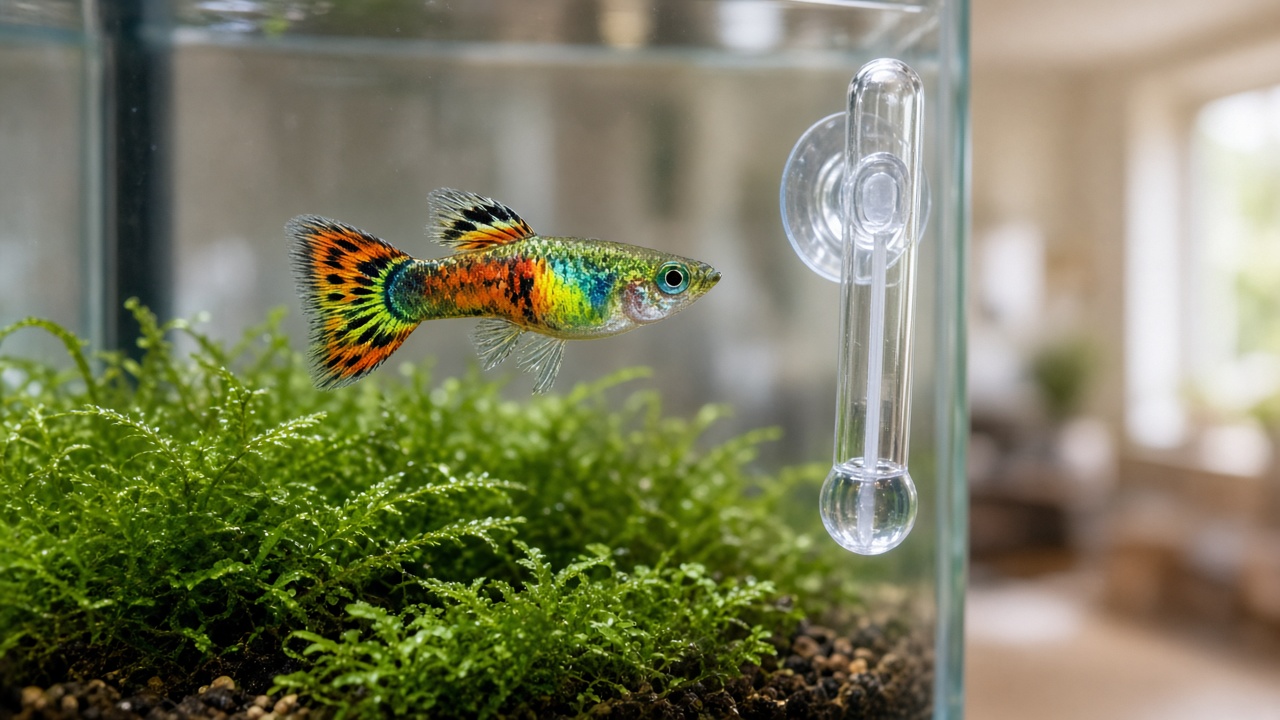
- Keep a reliable heater and thermometer
- Avoid sudden multi-degree swings after water changes
Owners consistently report more fry and earlier fade when tanks run hot for months. Our research team analyzed temperature bands tied to lifespan notes. Comparing published specs makes heat a lifespan dial, not only a comfort dial.
Hard, alkaline water protects bones, color, and years
Soft, acidic tanks quietly shorten lives.
Livebearer care notes favor pH at about seven point zero or higher. Hard water with calcium and magnesium supports muscle, bone, and steady chemistry. Soft tap without remineralizing often leaves guppies dull, stressed, and short-lived. Aim for stable readings rather than chasing tiny decimal shifts each day. Crushed coral or other mineral helpers can raise hardness when tap starts soft. Test GH, KH, pH, ammonia, nitrite, and nitrate on a schedule. Ammonia or nitrite spikes erase lifespan gains from perfect temperature.
Water cues:
- Prefer pH about 7.0 or greater
- Favor moderately hard to hard mineral content
- Keep ammonia and nitrite at zero after cycling
- Remineralize soft tap before stocking
- Change water on a fixed weekly rhythm
Owners consistently report chronic losses in soft, uncycled nano tanks. Our research team analyzed hardness and pH preferences for livebearers. Comparing published specs puts mineral-rich stability ahead of colorful décor.
Crowding, sex ratio, and endless breeding burn years
Pregnancy without rest ages females fast.
A small trio may start in about five gallons, yet care notes push toward about ten or twenty gallons as fry appear. Six fish with about two males and four females often fit a ten-gallon plan in stocking examples. A common breeding ratio is about one male for every two to three females. Constant male chasing and back-to-back litters every about thirty days drain females. All-male or all-female groups can reduce reproductive stress when longevity matters more than fry. Plants and gentle sponge filtration protect fry and cut chase stress. Overstocking raises waste, disease risk, and oxygen demand.
Stocking rules:
- Floor often about 5 gallons for a trio
- Long-term comfort nearer 10–20 gallons
- Ratio cue: 1 male to 2–3 females when mixed
- Litters often about every 30 days
- Use plants and calm flow for cover
Owners consistently report skinny females in male-heavy tanks. Our research team analyzed sex-ratio and volume notes for livebearers. Comparing published specs treats breeding load as a lifespan factor.
Feeding pace and diet quality support longer color years
Overfeeding shortens life through foul water.
Adults often eat once or twice daily, only what finishes in about one minute. Fry may need three to five smaller meals, not huge dumps. Varied flakes, tiny pellets, and frozen foods such as brine shrimp or bloodworms support condition. Algae grazing helps but does not replace prepared food. Leftover food drives ammonia and bacterial blooms that steal oxygen and years. Lean, clean fish outlive chubby fish in cloudy tanks. Match portion size to the count you see, not to begging at the glass.
Feeding board:
| Stage | Meals per day | Portion cue |
|---|---|---|
| Adults | 1–2 | Finish in about 1 minute |
| Fry | 3–5 | Tiny amounts each time |
| Mix | Daily staple + variety | Flake, pellet, frozen |
| Skip | Constant grazing piles | Leftovers foul water |
Owners consistently report clearer water and steadier color after they cut portions. Our research team analyzed feeding intervals used in care guides. Comparing published specs links short meals to longer useful life.
Genetics and shipping stress explain many early deaths
Weak mass-market lines fail before husbandry can help.
Fancy colors come from intense selection that can weaken resilience. Crowded farm and shop systems add disease risk before purchase. Locally bred or carefully quarantined fish often outlast grab-bag stock in the same tank. Quarantine new arrivals in a separate cycled setup when you can. Watch for clamped fins, flashing, white spots, or gasping after moves. Early death in the first weeks often traces to shipping stress more than your décor. Buy active fish with clear eyes and intact fins, then match hard, warm, clean water at home.
Sourcing checks:
- Prefer known local breeders when possible
- Quarantine before the display tank
- Inspect breathing rate and fin edges
- Match hardness and temperature on arrival
- Avoid stacking new fish into an uncycled box
Owners consistently report better odds after they changed suppliers, not after they bought more gadgets. Our research team analyzed notes on commercial livebearer weakness. Comparing published specs puts genetics and quarantine beside heaters and food.
Aging signs and when veterinary care matters
Slow decline differs from sudden water crashes.
Older guppies may fade color, rest more, and eat less over months. Sudden mass gasping, flashing, or pile-ups at the surface point to oxygen or toxin problems first. Test water before assuming age alone. Isolate a sick fish if contagious signs appear. A veterinarian who sees fish can guide diagnostics beyond home guesswork. Do not dose random mixes into a community tank without a clear plan. Record temperature, last water change, and test results before the visit.
When to act:
- Test water at the first odd behavior
- Separate fish with spreading lesions
- Seek veterinary help for unexplained group losses
- Keep notes on heat, food, and new additions
- Treat age as one factor, not the only story
Owners consistently report saved tanks after they tested before medicating. Our research team analyzed crisis notes that start with chemistry. Comparing published specs keeps lifespan talk honest: care extends years, yet it cannot erase every weak gene.
Plan the years you want, then set heat, hardness, volume, and breeding load to match. A cooler, hard, roomy tank with calm ratios often beats a hot nano packed with males. Source stronger fish, feed lean, and test often. That is how two to three years becomes a realistic home average instead of a lucky outlier.
FAQ
How long do guppies live in a home aquarium?
Most care notes place well-kept fancy guppies near about two to three years. Hotter setups near eighty-two degrees can shorten that toward about eighteen months. Cooler setups near seventy-two degrees may stretch life toward about three and a half years or longer. Shop age and genetics still shift the result you see at home.
Do male or female guppies live longer?
Females often look larger and may outlive males when not bred without rest. Continuous pregnancy every about thirty days ages females visibly and drains body condition. All-male or all-female groups reduce reproductive stress when longevity is the goal. Mixed tanks need dense plant cover and sensible male counts so chasing stays limited.
What temperature helps guppies live longer?
A common fancy target sits near seventy-six to seventy-eight degrees Fahrenheit for a two-to-three-year average. Cooler water near seventy-two degrees may extend life while slowing growth and breeding. Hotter water near eighty-two degrees speeds fry and can cut life toward about eighteen months. Keep the chosen band stable day to day.
Does tank size affect guppy lifespan?
Yes. About five gallons can hold a small trio, yet ten to twenty gallons buffer waste as numbers rise. Crowding raises ammonia risk and chasing stress that shorten lives quickly. Larger, planted footprints support calmer fish, stable hardness, and cleaner chemistry over years of color.
Why do my guppies keep dying young?
Common drivers include soft water, uncycled tanks, heat spikes, overcrowding, and weak mass-market stock. Test ammonia, nitrite, nitrate, pH, and hardness before blaming age alone. Quarantine new fish and match mineral-rich water on arrival. Ask a veterinarian if losses continue after chemistry looks clean and stable.
Can guppies live five years?
Some longer-life claims appear for exceptional stock and cool, excellent husbandry over many seasons. Most home fancy fish finish nearer two to three years in typical tanks. Treat five years as an uncommon ceiling, not the shopping expectation. Focus on hard water, stable heat, quarantine, and calm stocking first.
How often should I feed guppies for longevity?
Feed adults once or twice daily only what they finish in about one minute at the glass. Raise fry on three to five tiny meals without leaving leftovers to rot. Varied quality flakes, pellets, and frozen foods beat constant overfeeding. Clean water from lean feeding supports longer color years.
This guide is informational only and does not replace advice from a qualified veterinarian.