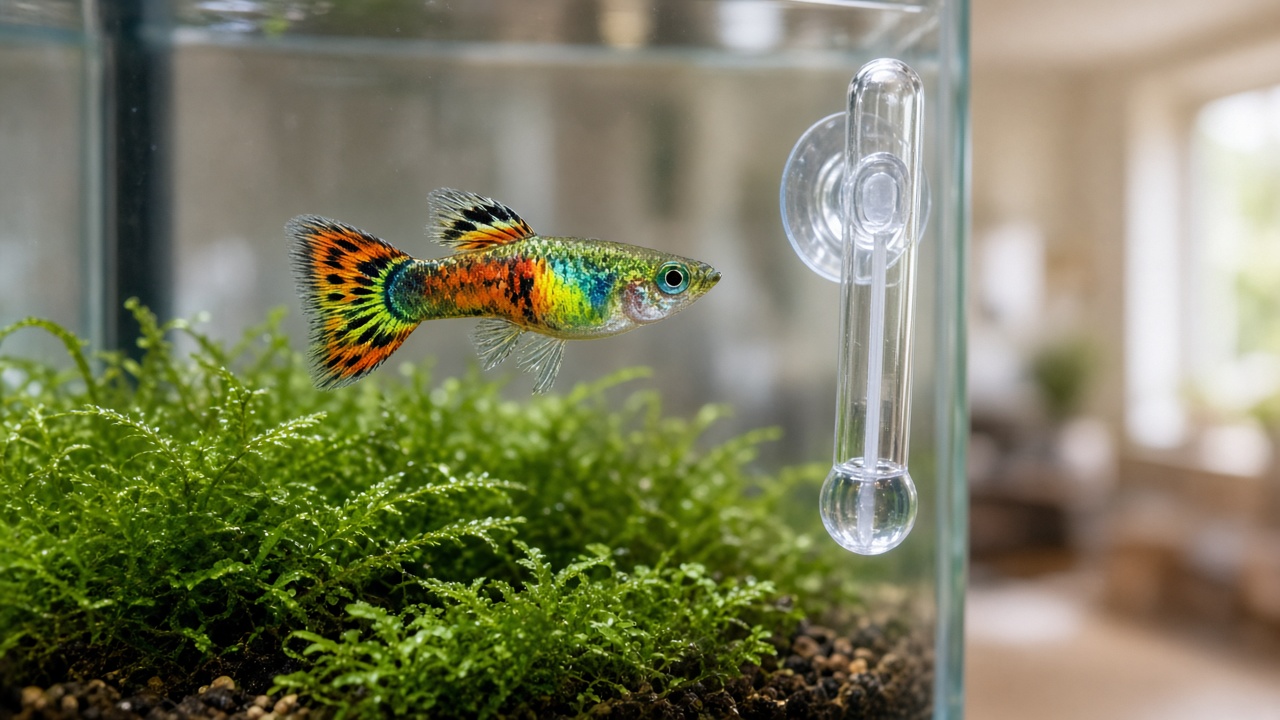
Quick answer: Endler’s livebearers (Poecilia wingei) are hardy nano fish near about 1 inch SL for males. Start a trio in about 10 gallons, skew females, feed varied micro foods, and plant densely if you want fry to survive.
Keep Endlers in female-heavy groups with hardish water and fine foods.
We compared published care data and database size notes to write this page. Our research team analyzed tank footprints, temperature bands, sex ratios, diet cues, and community mates for Poecilia wingei. Owners consistently report constant color displays when males are outnumbered and cover breaks pursuit lines.
Comparing published specs shows males near about 25 mm SL, or about 1.0 inch, with females larger and plainer. Species profiles list tank bases near 45 × 30 cm, about 41 liters or roughly 11 gallons. Temperature often sits about 75–86°F with pH about 7.0–8.5. This page covers tank size, water, diet, breeding, mates, and fry cover.
Include volume and footprint cues, chemistry bands, omnivore feeding, female-skewed ratios, peaceful nano mates, and planting for fry. Leave out advanced line-breeding genetics charts and wild-collection travel notes. Skip veterinary treatment protocols for sick fish.
Choose tank size for a colony, not a lonely pair
Small bodies still need stable water and swimming length.
Hobby care notes often list about 5–10 gallons as a floor, then urge more space for fry. A 10 gallon starter trio of one male and two females is a common launch. A 20 gallon group of about six to nine adults handles growth better. Species profiles describe about 41 liters on a 45 × 30 cm base for a substantial colony. Longer footprints beat tall nano cubes for active top-water fish.
Tank cues:
- About 10 gallons for a starter trio
- About 20 gallons for six to nine adults
- Roughly 41 liters as a published colony footprint cue
- Secure lid; lively fish may jump
- Sponge filtration or a prefilter to protect fry
Owners consistently report population surprises within months in planted tanks. Our research team analyzed volume notes that treat fry production as normal, not rare. Comparing published specs puts length and stability ahead of tiny desk bowls. Plan the adult census you can rehome later.
Match hardish, warm water and keep chemistry steady
Endlers tolerate range, yet stable alkaline lean water looks best long term.
Published bands often list about 24–30°C, or about 75–86°F. pH near 7.0–8.5 and hardness near about 15–35 dGH appear in species profiles. Broader hobby notes sometimes allow pH from about 6.5 upward and room-temperature tanks, yet warmth still supports activity. Soft acidic swings over long periods are a poor plan. Test ammonia and nitrite to 0 ppm and keep nitrate controlled with changes.
Water cues:
- About 75–86°F as a working tropical band
- Neutral to alkaline pH targets
- Moderately hard to hard GH when possible
- Weekly conditioned water changes
- Avoid chronic soft, acidic neglect
Owners consistently report hardier fish than fancy guppies in typical tap water. Our research team analyzed hardness notes that favor mineral-rich maintenance. Comparing published specs still rewards heaters when rooms run cool. Stability beats chasing a single perfect number daily.
Feed an omnivore rotation that fits tiny mouths
Crush flakes and rotate micro proteins for color and health.
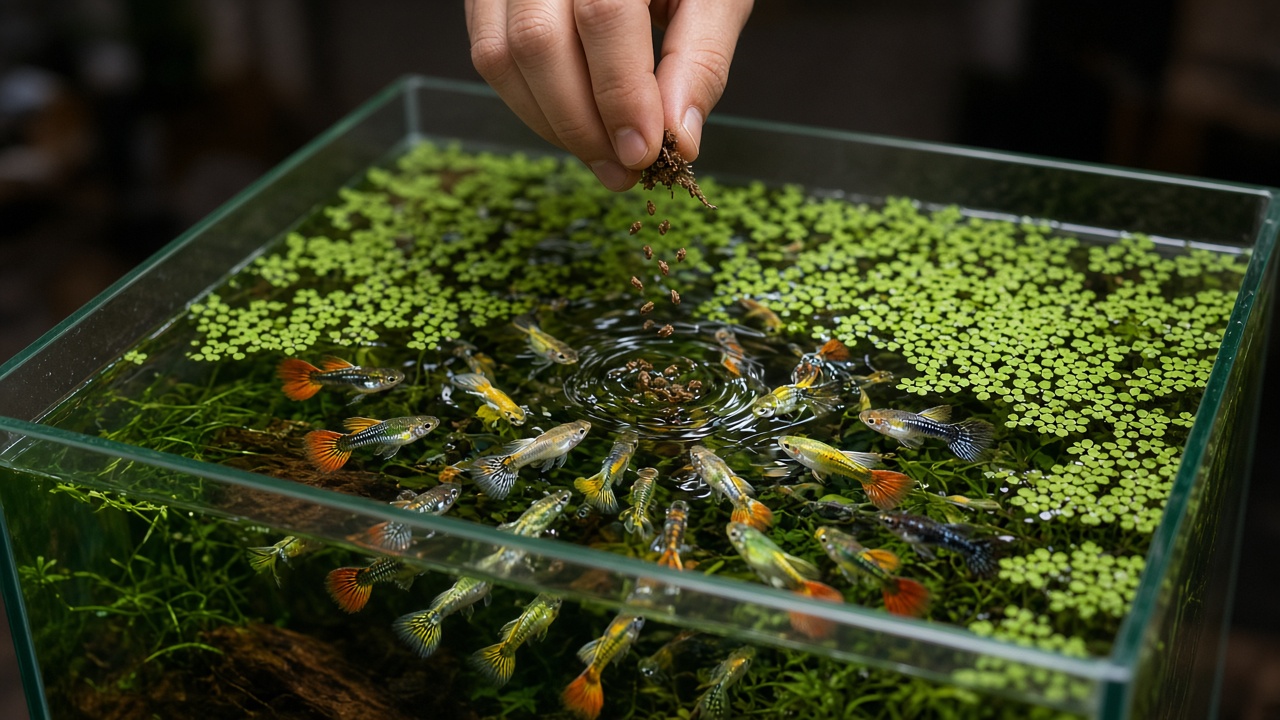
Wild notes describe zoobenthos and detritus feeding. Aquarium menus use crushed flakes, micro pellets, gel foods, and baby brine shrimp or daphnia. Include some plant-based flakes or blanched greens. Feed small portions one to three times daily so scraps do not foul the bed. Hungry Endlers also graze biofilm and soft algae between meals.
Diet cues:
- Crushed flake or micro pellet staple
- Frozen or live micro foods several times weekly
- Occasional vegetable or spirulina content
- Portions cleared in about two minutes
- Skip oversized pellets meant for large cichlids
Owners consistently report richer male color on varied menus. Our research team analyzed omnivore guidance that rejects single-food boredom. Comparing published specs keeps mouths and portions matched. Watch dominant males so shy fish still eat.
Skew sexes and expect easy livebearer breeding
More females means less constant harassment and steadier colonies.
Keep about one male for every two or three females. Males display and chase tirelessly. Broods often arrive about every 23–30 days depending on temperature. Brood size may range about 5–25 fry with female age and size. Adults may eat some young, so dense plants matter if you want survivors. Do not house Endlers with guppies if you need pure lines; they hybridize readily.
Breeding cues:
- Female-heavy ratios from day one
- Gestation cues near three to four weeks
- Dense moss and floaters for fry cover
- Sponge filter or intake sponge
- Males-only tanks when you want zero fry
Owners consistently report babies without any special trigger foods. Our research team analyzed livebearer notes that treat breeding as “when,” not “if.” Comparing published specs keeps guppy hybridization off the pure-strain list. Separate species if lineage matters to you.
Pick peaceful nano mates that share manners and water
Calm neighbors leave adults alone; predators thin fry on purpose.
Good mates include small tetras, rasboras, danios, dwarf Corydoras, Otocinclus in mature tanks, and nerite snails. Cherry shrimp adults may coexist, though shrimplets can become snacks. African dwarf frogs or similar fry eaters can limit population if you want fewer babies. Avoid large mouths, fin-nippers, and aggressive cichlids. Match hardish water across the community.
Mate filters:
- Peaceful similar-sized schooling fish
- Dwarf Corydoras on soft sand
- Snails for algae without breeding explosions in freshwater
- No guppies when purity matters
- No big predators unless fry control is the goal
Owners consistently report lively, peaceful displays in planted community nanos. Our research team analyzed compatibility lists for small livebearers. Comparing published specs keeps intimidation and hybridization off the cart. Quarantine new fish when you can.
Build planted cover that shelters fry and calms females
Green thickets turn nonstop chasing into manageable courtship.
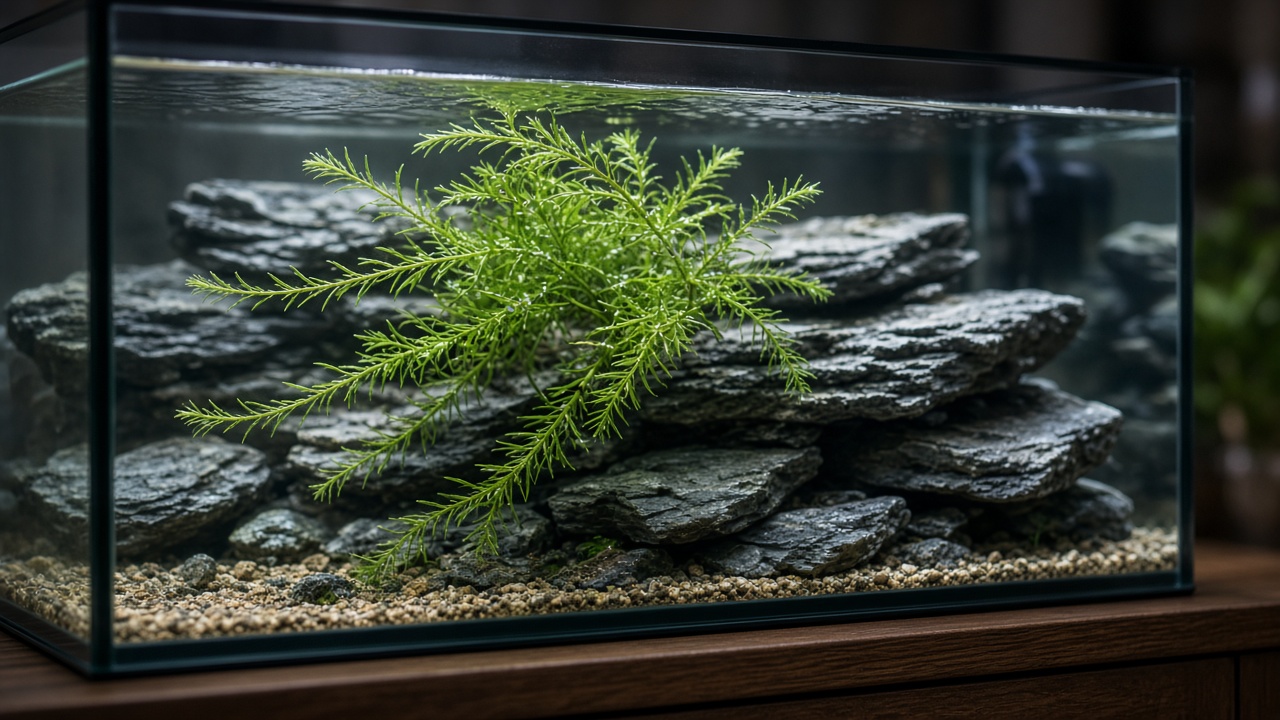
Use guppy grass, water sprite, wisteria, Pogostemon, and moss to break sight lines. Floating plants dim light and give fry hideouts near the surface. Leave open midwater lanes so males can display. Gentle flow matches lagoon-like habitats better than a powerhead blast. Darker substrate can make male colors pop without harsh glare.
Layout cues:
- Dense side and rear planting
- Floating cover with open breathing gaps
- Soft sand or fine gravel for bottom mates
- Mild filter current
- Décor caves optional; plants do more for fry
Owners consistently report higher fry counts after moss mats mature. Our research team analyzed cover lists used in beginner livebearer guides. Comparing published specs still starts with sex ratio and volume. Plant for the babies you may not plan to keep.
Know Endler versus guppy traits before you buy
Related fish share care, yet size, hardiness, and labels differ.
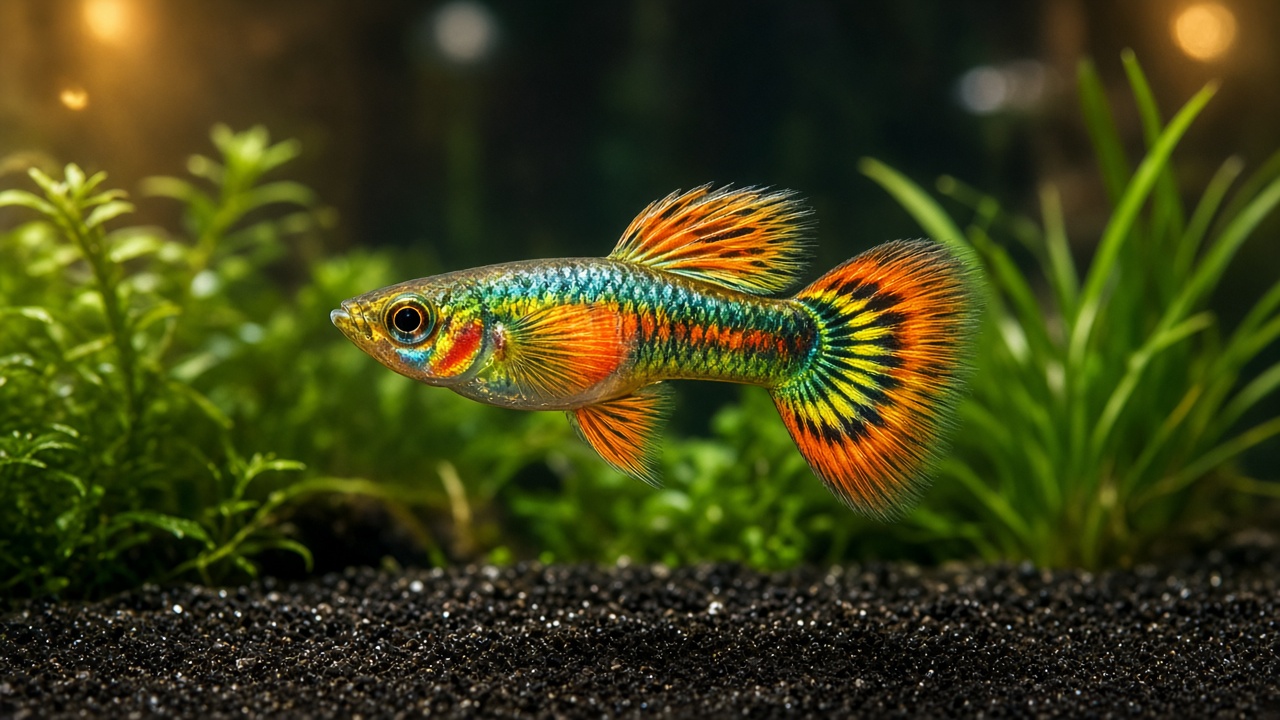
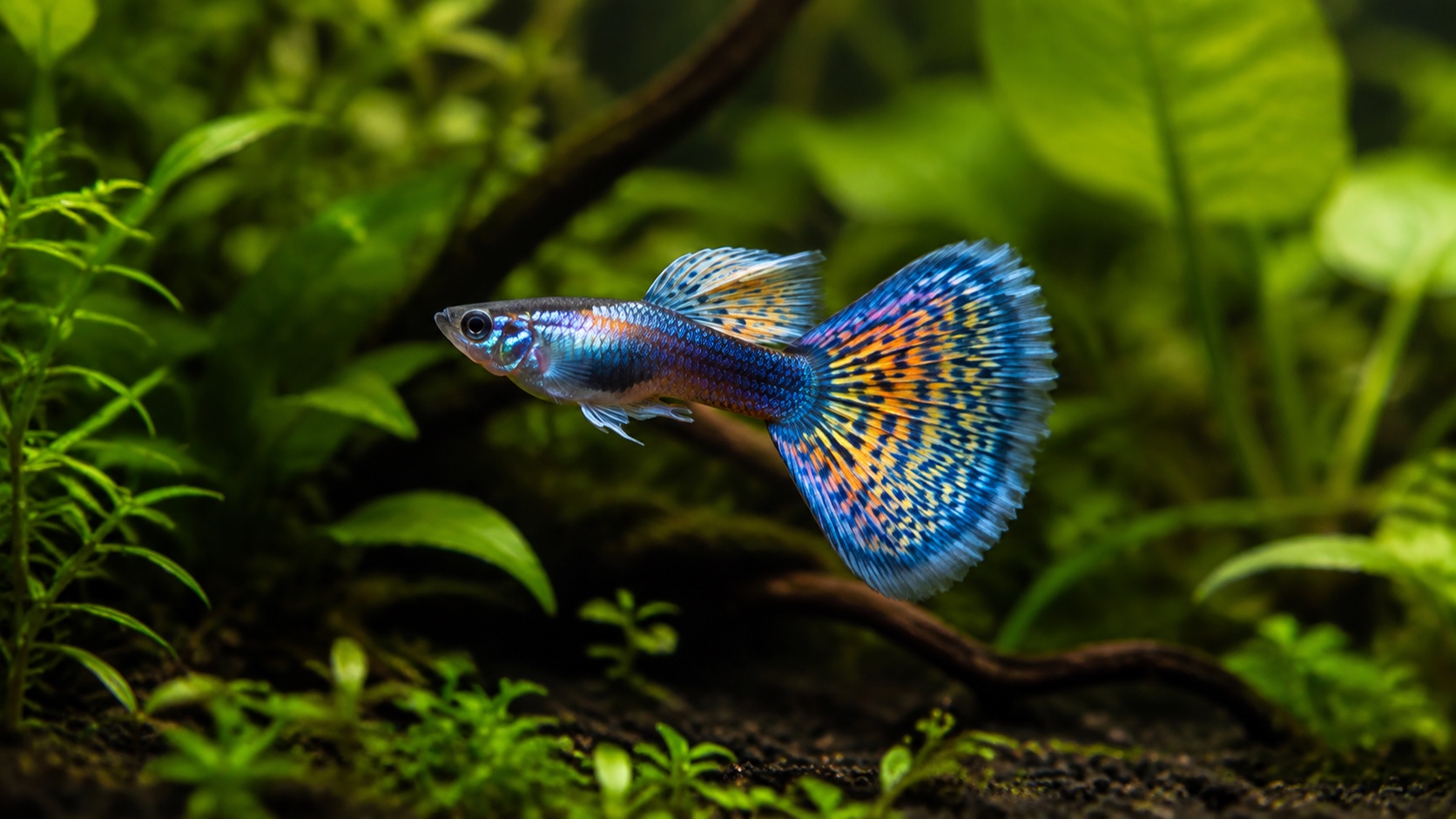
Poecilia wingei males stay smaller and often show intense metallic color on shorter fins than many fancy guppies. Poecilia reticulata is the common guppy; hybrids are often sold as Endler guppies. Pure class lines need careful sourcing. Wild-type Endlers needed less extreme fin breeding, which many keepers link to hardiness. Read bag labels and ask whether stock is pure, hybrid, or mixed.
Identity cues:
- Males near about 1 inch SL; females larger
- Shorter fins than many fancy guppies
- Hybrid fertility with guppies is real
- Strain names do not guarantee purity
- Captive-bred stock dominates shops
Owners consistently report confusion when store tags say “Endler guppy” loosely. Our research team analyzed species notes that separate P. wingei from P. reticulata. Comparing published specs keeps shopping language honest. Buy for the genetics goal you actually want.
Maintain lightly and watch for overpopulation stress
Easy fish still need clean water and exit plans for extras.
Change about 10% weekly or about 25% every two weeks in filtered tanks when bioload allows. Rinse sponge media in tank water only. Count fish monthly because silent breeding adds load fast. Rehome juveniles to friends or stores once they reach about 0.5–1 inch. Watch for clamped fins, flashing, or females pinned without rest as stress flags.
Routine cues:
- Scheduled conditioned water changes
- Population logs on the stand
- Rehoming plan before the tank densifies
- Stable heater and thermometer checks
- Quarantine for new arrivals when possible
Owners consistently report the “easy” label failing only after neglect or overcrowding. Our research team analyzed maintenance ranges beside prolific breeding notes. Comparing published specs puts colony management beside basic husbandry. Write feeding and change rules for anyone who helps.
FAQ
What tank size do Endlers need?
Many guides start at about 5–10 gallons and prefer more space for fry. A 10 gallon trio of one male and two females is a common start, while about 20 gallons suits six to nine adults. Species profiles cite roughly 41 liters on a 45 × 30 cm base for colonies. Choose length and a lid over a tall nano cube.
What temperature and pH suit Endler’s livebearers?
Target about 75–86°F with pH near 7.0–8.5 when following species profiles for Poecilia wingei. Hardness near about 15–35 dGH supports long-term care, though hobby notes also describe wider tolerance. Keep ammonia and nitrite at 0 ppm always. Stable chemistry matters more than tiny daily number tweaks.
How many males and females should I keep?
Aim for one male per two or three females so girls get breaks from constant chasing and displays. A lone female under one male often looks stressed and pinned. Groups feel more natural than solitary fish in open tanks. Buy matching sizes when you can so the colony settles together.
What do Endlers eat?
They are omnivores that take crushed flakes, micro pellets, gel foods, and tiny live or frozen foods such as baby brine shrimp. Add plant-based flakes or greens for balance. Feed only what they clear quickly, one to three small meals daily. Varied menus support immune health and male color.
Will Endlers breed in a community tank?
Yes. Broods often appear about every 23–30 days when sexes share clean, warm water. Dense plants raise fry survival; adults and mates may eat some babies. Keep Endlers away from guppies if you need pure lines. Use a sponge filter so fry are not sucked into intakes.
What tank mates work with Endlers?
Peaceful nano fish such as small tetras, rasboras, danios, and dwarf Corydoras are common community fits. Nerite snails help with algae without freshwater breeding storms. Adult cherry shrimp may work, though shrimplets can be eaten. Avoid large predators and skip guppies when hybrid prevention matters to you.
Are Endlers good beginner fish?
Yes for keepers who can offer a cycled tank, stable water, and a clear plan for babies. They are often hardier than heavily line-bred fancy guppies in home aquariums. Female-skewed groups and planted cover prevent the main behavioral stress. Overpopulation, not setup complexity, is the usual surprise for new keepers.
This guide is informational only and does not replace advice from a qualified veterinarian.