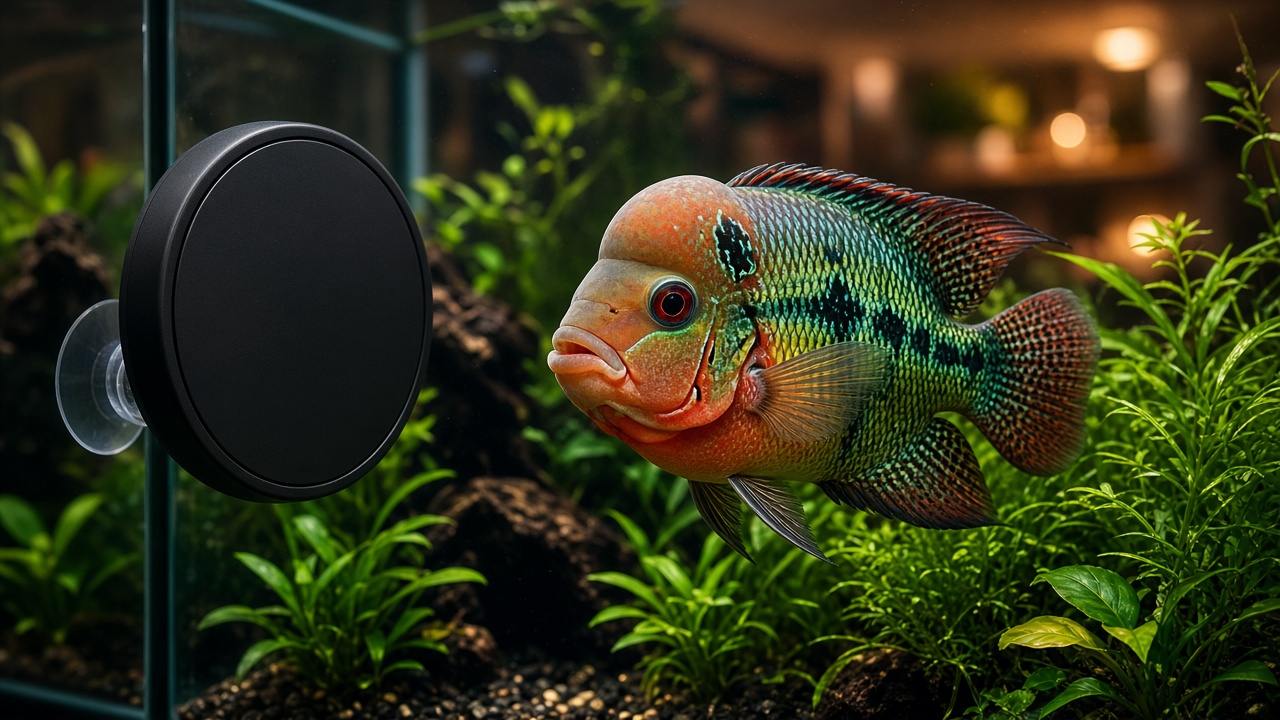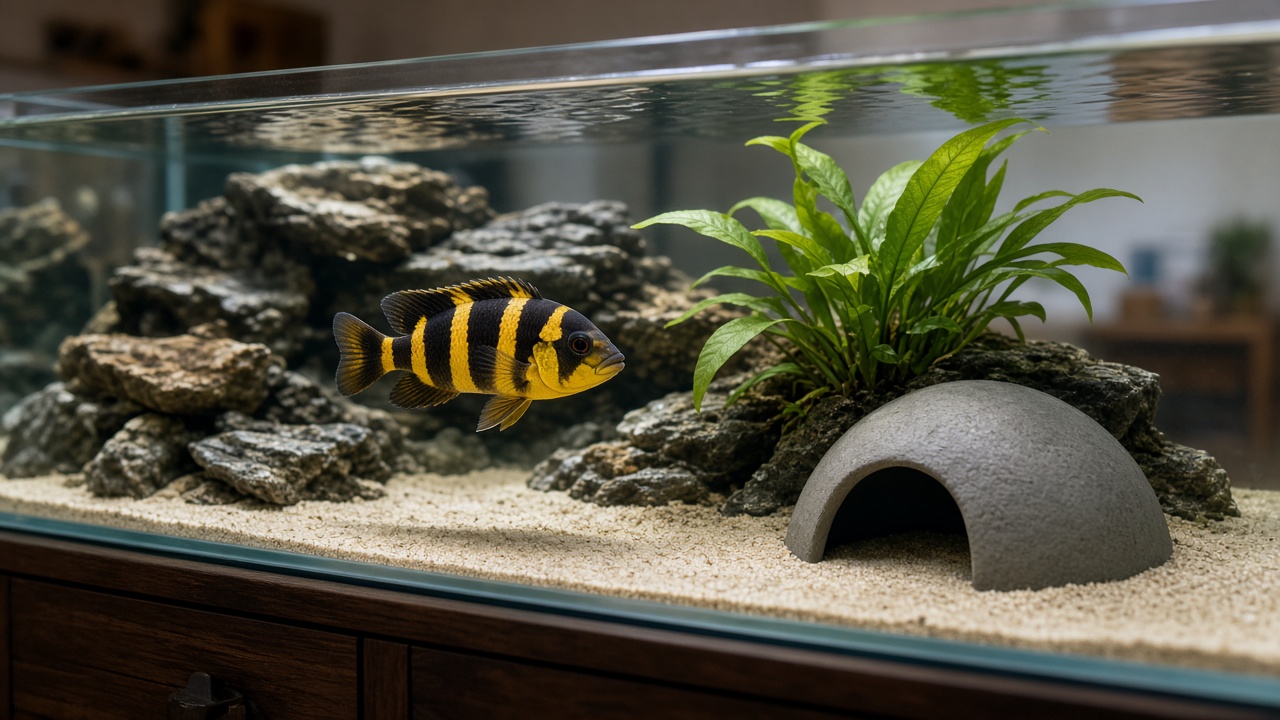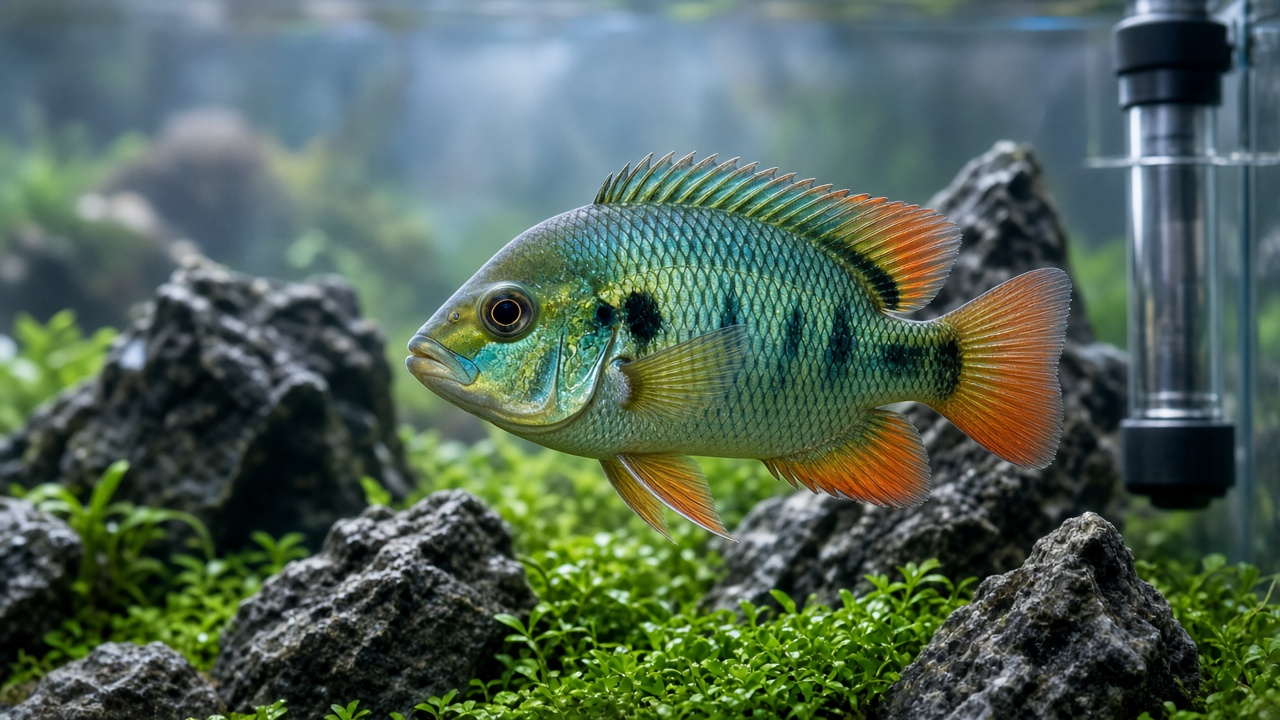
Quick answer: Green terrors need large tanks, strong filtration, and plans for territorial aggression. Adults often reach near eight to twelve inches. Start near seventy-five to eighty gallons for one fish and stock tank mates only with caution.
Plan a big, filtered tank before you buy a green terror.
We compared published care data on Andinoacara rivulatus, the green terror cichlid. Our research team analyzed adult size, aquarium footprint, temperature, diet, and aggression notes. Owners consistently report that cute juveniles outgrow community tanks and rewrite the room layout within two years.
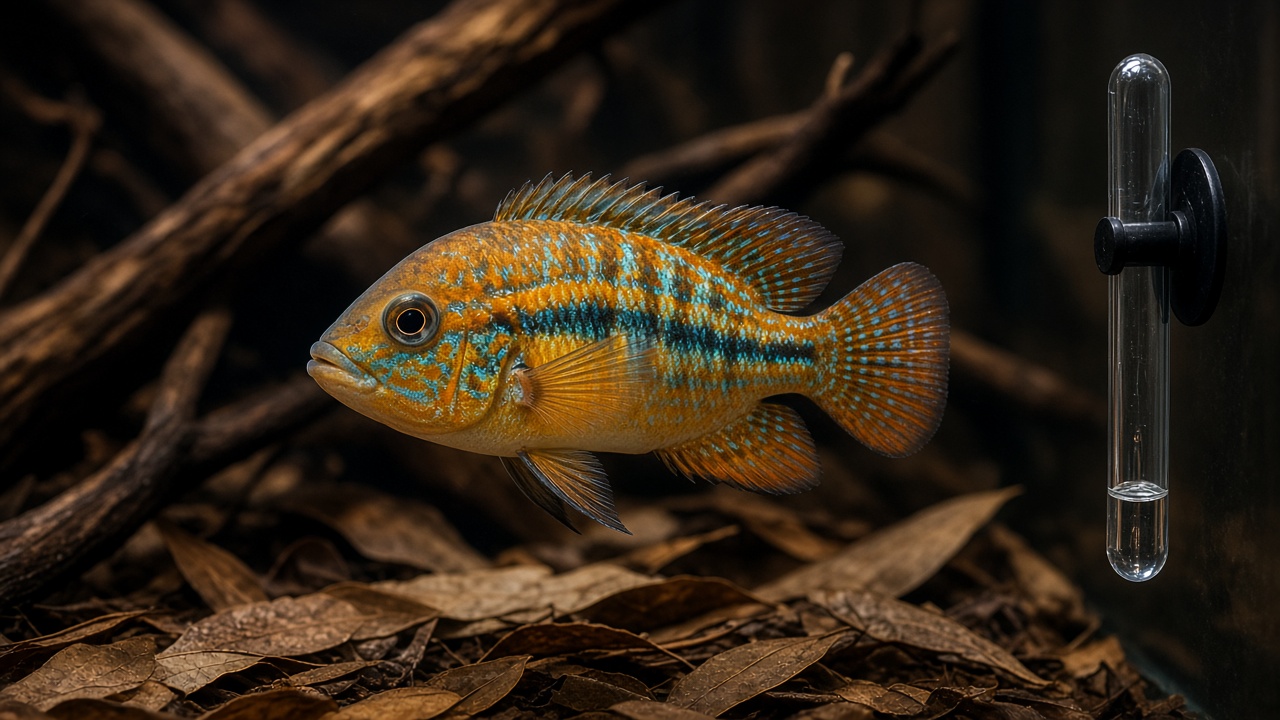
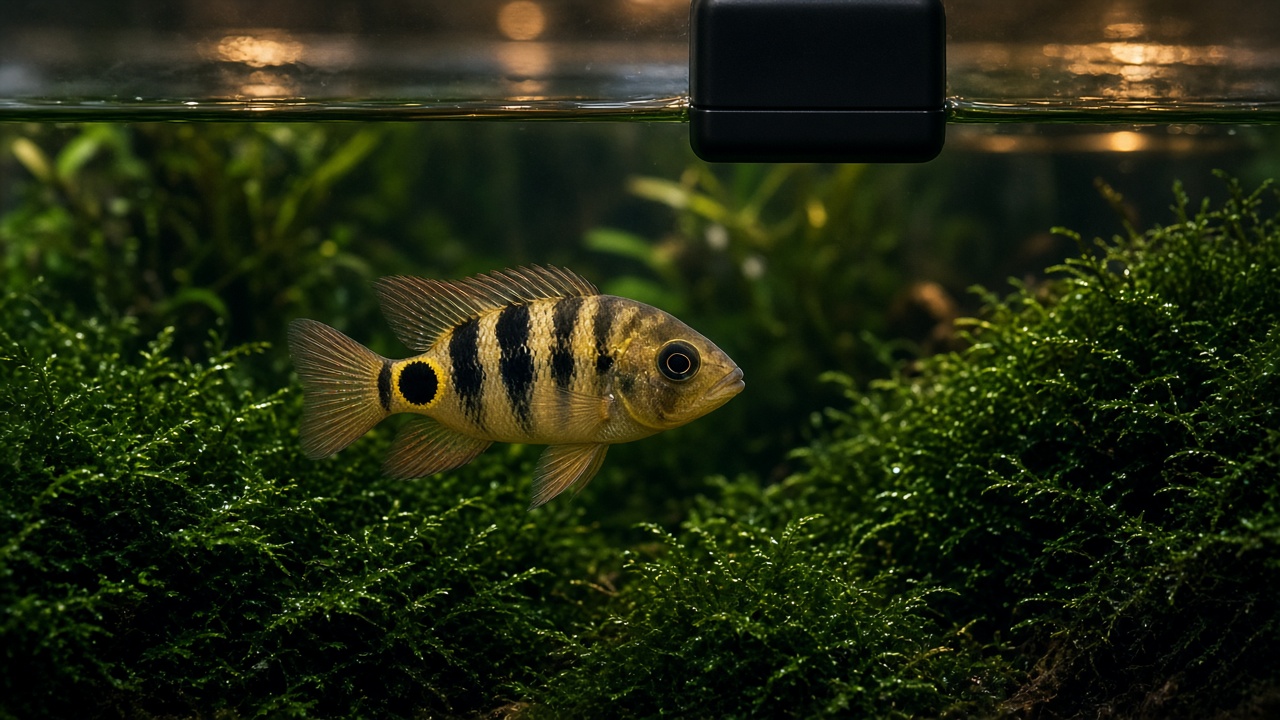
Comparing published specs shows a South American cichlid from Pacific-slope waters of Ecuador and Peru. Adult standard length notes often reach about twelve inches in aquarium profiles, while some length summaries list smaller totals. Temperature bands commonly sit near sixty-eight to seventy-five degrees Fahrenheit. pH often spans about six point five to eight point zero. This page covers tank size, setup, water, diet, aggression, tank mates, and breeding cautions.
Include oversized tanks, visual barriers, and omnivore diets. Leave out tiny community starter kits. Skip medication protocols without a veterinarian.
Size and temperament set the true minimum tank
Adult mass drives everything else.
Aquarium profiles commonly describe adults near eight to twelve inches, with some standard-length notes near twelve inches. Males grow larger and may develop a nuchal hump and longer unpaired fins. Juveniles look manageable in a forty-gallon starter, then claim the whole footprint. Published volume notes often cite about seventy-five to eighty US gallons for one adult. A long base near sixty by eighteen inches is a common footprint target. Pairs and communities need far more water.
Size cues:
- Adult length: often about 8–12 inches
- Single adult volume: often about 75–80+ gallons
- Base footprint: long tanks beat tall columns
- Males: larger, often with nuchal hump
- Lifespan notes: often about 7–10 years
Owners consistently report rehoming crises at twelve to eighteen months. Our research team analyzed footprint rules that favor length over height. Comparing published specs treats seventy-five gallons as a floor, not a luxury.
Build rockwork and sand that survive digging
Decor must match a digger and a claimer.
Use soft sand or fine gravel that will not cut digging mouths. Add driftwood and large rocks to break sightlines. Flat stones can become spawning sites. Rooted stem plants usually fail; attach Anubias or java fern to hardscape if you want greenery. Floating plants can soften light. Strong biological filtration with high turnover matters because these fish eat heavily and foul water quickly.
Setup checklist:
- Soft sand substrate for digging
- Driftwood and rock visual barriers
- Flat stones for possible spawning
- Attached plants only, if any
- Canister or other high-capacity filtration
Owners consistently report shredded planted tanks after the first nest dig. Our research team analyzed maintenance notes that prioritize barriers over carpets. Comparing published specs favors durable hardscape over delicate aquascapes.
Keep water cool-tropical, clean, and steady
Stability beats chasing exotic chemistry.
Temperature notes commonly land near sixty-eight to seventy-five degrees Fahrenheit, or about twenty to twenty-four degrees Celsius. That is cooler than many Amazon community targets. pH often spans about six point five to eight point zero. Hardness notes may reach about five to twenty-five degrees general hardness. Green terrors are sensitive to neglect; test ammonia and nitrite at zero, and keep nitrates controlled with large water changes. Cycle fully before stocking.
Water board:
| Parameter | Common published band |
|---|---|
| Temperature | About 68–75°F (20–24°C) |
| pH | About 6.5–8.0 |
| Hardness | About 5–25 dGH |
| Ammonia / nitrite | 0 ppm |
| Maintenance | Frequent sizable water changes |
Owners consistently report clearer behavior when nitrate stays low. Our research team analyzed parameter bands from species profiles. Comparing published specs prioritizes clean water over constant gadget chasing.
Feed an omnivore diet without mammal meats
Pellets first, then smart variety.
Build meals around quality cichlid sticks or pellets sized for the mouth. Add frozen or live earthworms, prawns, mussels, krill, and similar items on a rotation. Include vegetable matter such as peas, spinach, or blanched greens as a regular share. Avoid beefheart and other mammalian red meats that can harm digestion. Feed what the fish finish in a few minutes, once or twice daily for adults. Skip feeder fish that import disease.
Diet rules:
- Staple: quality cichlid pellets or sticks
- Protein rotation: worms, krill, shellfish items
- Plants: peas, spinach, similar greens
- Avoid: mammalian red meats as staples
- Fast lightly if waste spikes after big meals
Owners consistently report better water when portions shrink. Our research team analyzed omnivore notes that warn against red meat staples. Comparing published specs keeps vegetables on the weekly list.
Respect aggression instead of hoping it softens
Territory defines the fish’s reputation.
Green terrors are territorial and can be highly aggressive, especially when paired and spawning. They are not mindless killers in every tank, yet they punish weak or small neighbors. Two males often fight hard in anything but huge systems. A bonded pair may shred a community once eggs appear. Break sightlines, give escape routes, and be ready to rehome. “Terror” in the name is a warning about presence, not a cartoon.
Aggression filters:
- Expect strong claims of caves and floors
- Spawning multiplies hostility fast
- Two males need exceptional space
- Small fish become targets or meals
- Barriers help but do not erase drive
Owners consistently report overnight tank wipeouts after a quiet courtship week. Our research team analyzed compatibility notes that favor singles or proven pairs. Comparing published specs treats aggression as planning data, not a surprise.
Choose tank mates only in oversized systems
Most homes do better with a single specimen.
Published notes often keep green terrors alone or as a mated pair. In very large tanks, sometimes near six hundred fifty liters or more, robust neighbors may work. Large plecos, tough cichlids, and silver dollars are common examples. Avoid anything under about four inches. Never drop a lone female in with an adult male without a careful introduction plan. Watch daily for torn fins and cornered fish.
Mate rules:
- Default: single adult or bonded pair
- Large community only in huge footprints
- Similar size and toughness required
- Remove others when spawning starts
- Have a backup tank ready
Owners consistently report success stories that still needed emergency dividers. Our research team analyzed community notes with high failure rates in midsize tanks. Comparing published specs favors solitude over wishful stocking lists.
Breed only if you can separate victims
Spawning is straightforward and dangerous to neighbors.
Fish may mature near four to six inches. Pairs clean a flat rock or dig a pit, then guard eggs. Egg counts in profiles may reach several hundred, with hatch notes near three to four days and free-swimming stages about a week later. Parents may guard for weeks. Males can kill unmatched females. Raising a group of juveniles and letting pairs form is safer than forcing adults together. Remove other species before the first spawn.
Breeding caution list:
- Prefer juvenile groups that self-pair
- Use dividers when testing adult matches
- Expect up to several hundred eggs
- Hatch often in about 3–4 days in notes
- Clear tank mates before eggs appear
Owners consistently report lost females after impatient introductions. Our research team analyzed breeding sequences in species profiles. Comparing published specs puts safety gear ahead of egg photos.
A green terror rewards keepers who buy the tank first and the fish second. Measure adult length on the box before you fall for juvenile color. Build sand, rock barriers, and filtration that survive digging and heavy feeding. Keep water in the cooler tropical band and test weekly. Treat aggression as normal biology. When space is limited, choose a smaller cichlid species instead of hoping this one stays polite.
Weekly habits keep big cichlids honest. Test water before it smells wrong. Vacuum sand lightly without wrecking every cave. Rinse filter media in tank water so bacteria survive. Watch for clamped fins, heavy breathing, or sudden color washout after fights. Move injured fish to a hospital tank with matching temperature and chemistry.
Routine checklist:
- Test ammonia, nitrite, and nitrate weekly
- Schedule large water changes after heavy feeding
- Inspect barriers after digging sprees
- Log aggression spikes around spawning cues
- Quarantine new fish before they meet a terror
Owners consistently report fewer emergencies when they treat filtration service as non-negotiable. Our research team analyzed upkeep notes for large New World cichlids. Comparing published specs ties longevity to boring maintenance, not rare foods.
A calm purchase plan beats impulse color shopping. Measure your stand and filter rating before you fall for juvenile neon edges. Read adult aggression notes twice. If your room only holds a fifty-five gallon tank, pick another species. Green terrors deserve honest space from day one.
FAQ
How big of a tank does a green terror need?
Plan about seventy-five to eighty gallons as a working minimum for one adult, with a long footprint near sixty inches when possible. Pairs often need about ninety gallons or more, and mixed large-cichlid tanks climb higher still. Height matters less than floor length for patrols. Buy the adult tank before the juvenile fish.
How aggressive are green terror cichlids?
They are territorial and can be very aggressive, especially when spawning. Many keepers succeed with a single specimen or a bonded pair in a large tank. Community success needs huge volume, tough neighbors, and fast exits for victims. Never assume a calm juvenile will stay gentle at adult size.
What do green terrors eat?
They are omnivores. Use quality cichlid pellets as the staple, then rotate worms, krill, shellfish items, and vegetable matter such as peas or spinach. Avoid mammalian red meats as regular food. Feed only what they finish quickly to protect water quality and reduce waste spikes.
What water temperature do they prefer?
Published bands commonly sit near sixty-eight to seventy-five degrees Fahrenheit, or about twenty to twenty-four degrees Celsius. That runs cooler than many soft-water Amazon community targets. Keep temperature steady and pair it with zero ammonia and nitrite. Large water changes help after heavy feeding days when waste climbs fast.
Can green terrors live with oscars or other big cichlids?
Sometimes, in very large aquariums with broken sightlines and similar-sized, robust fish. Midsize tanks usually fail once territories form or spawning starts. Have an isolation plan ready before the first chase. Many keepers still prefer a species tank for long-term peace and simpler filtration loads.
How long do green terror cichlids live?
Care summaries often cite about seven to ten years with strong husbandry and clean water. Sensible stocking and a complete omnivore diet support that span better than constant treats alone. Poor water quality and chronic fighting shorten lives quickly. Plan a multi-year commitment before you bring a juvenile home.
How can I tell males from females?
Males usually grow larger, may show a nuchal hump, and often carry longer dorsal and anal fin extensions than females. Females stay smaller and lack the dramatic forehead hump in most cases. Sexing small juveniles at the store is unreliable. Watching pair behavior in a grow-out group beats guessing from one photo.
This guide is informational only and does not replace advice from a qualified veterinarian.