Quick answer: Hillstream loach types differ mainly by size, cool-water tolerance, and how well they handle home tanks. Sewellia suits most keepers. Beaufortia and Gastromyzon need stronger flow and cooler water.
Pick Sewellia first unless you can hold cool, high-flow water.
We compared published care data across the main hillstream loach types sold for home tanks. Our research team analyzed adult sizes, temperature bands, flow needs, and group behavior for Sewellia, Beaufortia, Gastromyzon, and Pseudogastromyzon. Owners consistently report healthier fish when oxygen and current come before décor beauty.
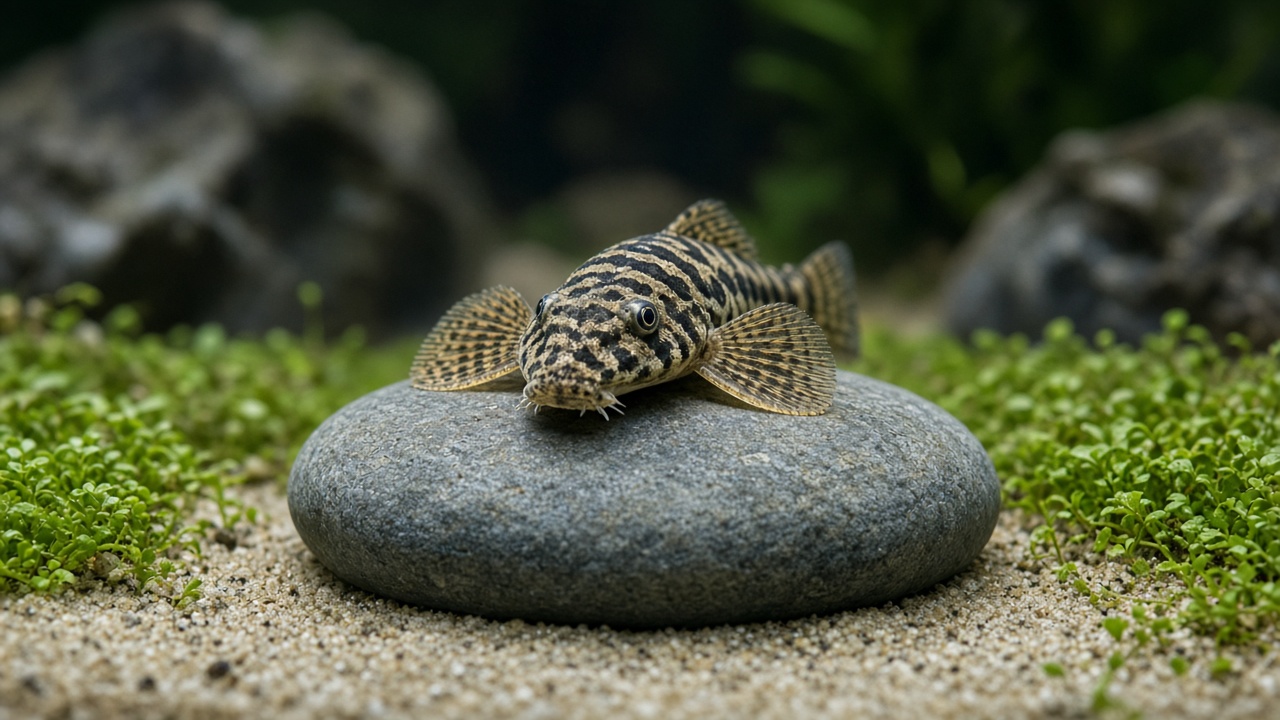
Comparing published specs shows these are flattened rheophilic grazers, not tropical community scrapers. Database maxima place Sewellia lineolata near about 5.7 cm SL, with hobby notes often near 6 to 7 cm. Beaufortia kweichowensis reaches about 8.0 cm TL. Gastromyzon punctulatus is recorded near about 6.5 cm SL. All need mature biofilm, strong laminar flow, and cool, oxygen-rich water.
Include species comparison, tank flow design, cool-water planning, and biofilm feeding. Leave out warm planted-community stocking that ignores current. Skip medication protocols that belong with a veterinarian.
Sewellia is the practical starter among hillstream loach types
Sewellia lineolata is the type most home tanks can actually support.
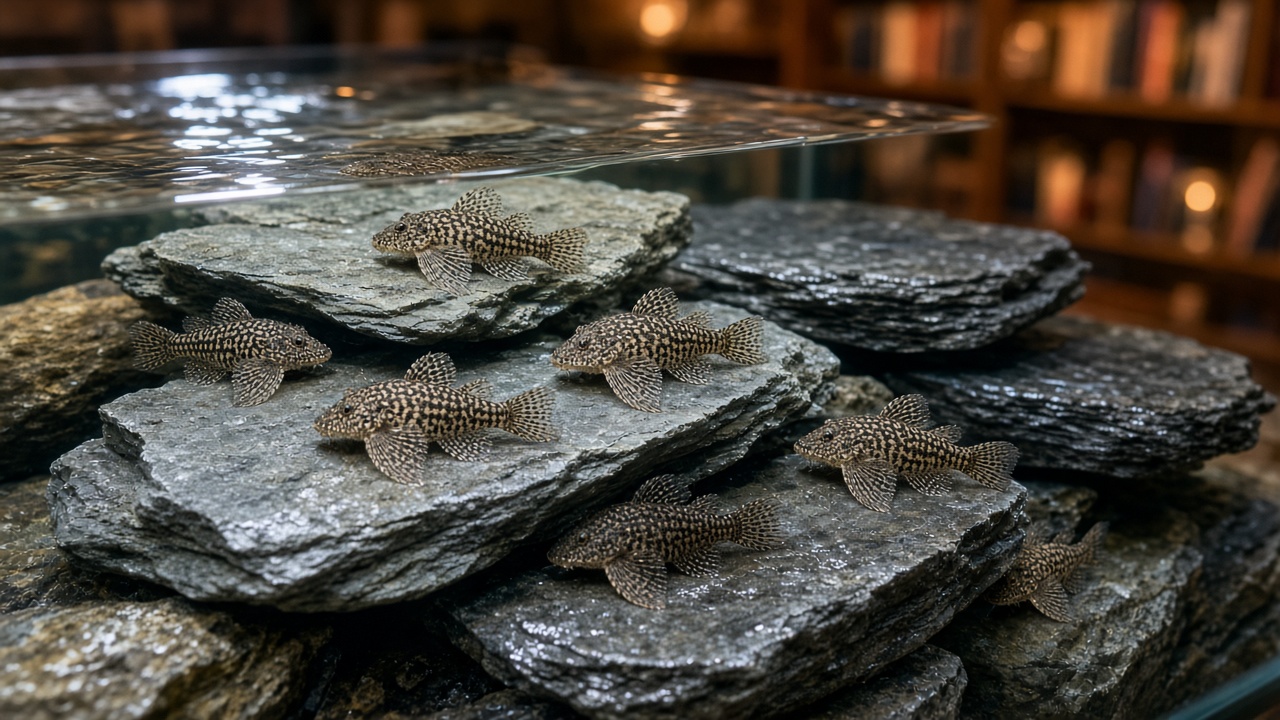
Published notes put adult size near about 5.7 cm SL. Care guides often cite about 55 to 65 mm, or roughly 2.2 to 2.6 inches. Hobby keepers often see fish near 6 to 7 cm total look. Males develop broader pectoral fins and head tubercles with age. Temperature tolerance often stretches toward about 72°F to 79°F when oxygen stays high, with many keepers aiming cooler near 72°F to 75°F.
Sewellia checklist:
- Most common shop label as reticulated or butterfly hillstream loach
- Vietnam streams as the usual wild origin story
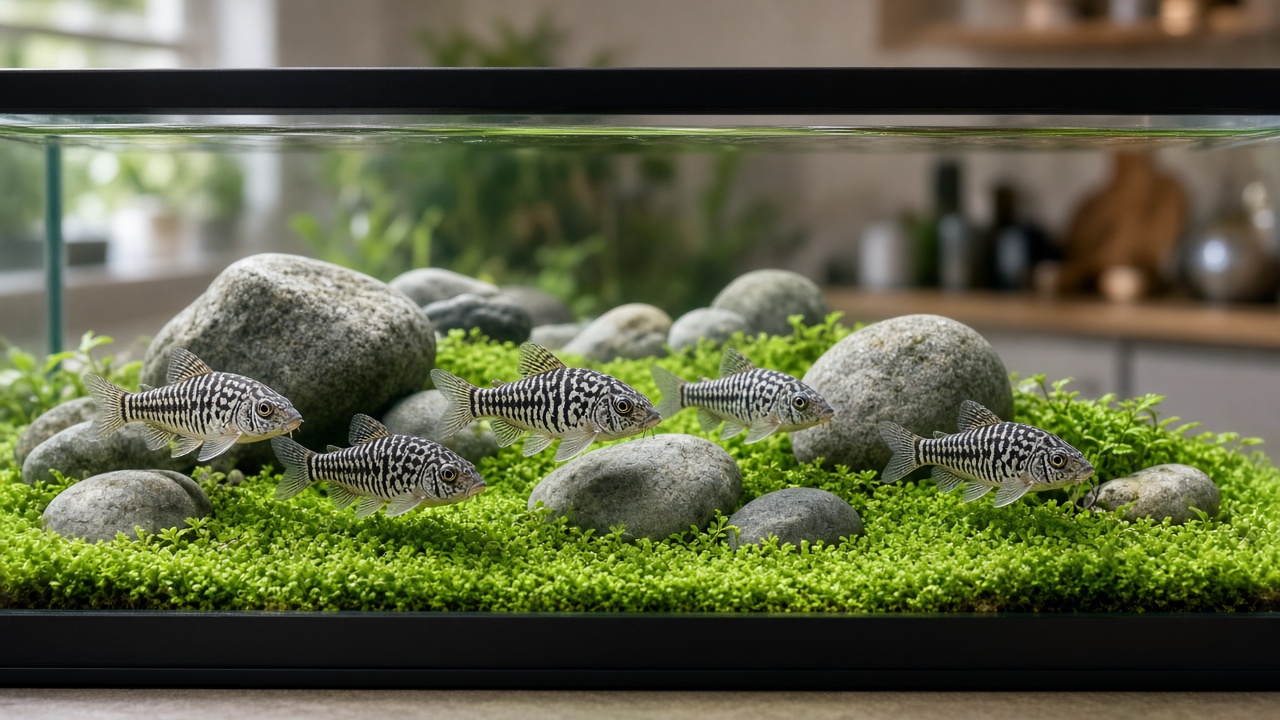
- Group of about 4 to 6 in a long footprint
- Flat rocks for grazing territories
- Better heat buffer than Gastromyzon for many rooms
Owners consistently report Sewellia as the forgiving entry among hillstream loach types. Our research team analyzed size and temperature notes side by side. Comparing published specs favors Sewellia when you lack a chiller but can still keep summer peaks down.
Beaufortia grows larger and claims more rock space
Beaufortia kweichowensis is the broader, more disc-like Chinese type.
Published maxima list about 8.0 cm TL, with a common length near about 5.4 cm SL. Care notes often place adults near about 7 to 8 cm in the tank. The body looks flatter and more rounded from above than Sewellia. Shops may sell it as Hong Kong pleco or Chinese hillstream loach, which confuses new buyers. Males can push rivals off prime grazing stones.
Beaufortia cues:
- Adult look near about 3 inches for many hobby fish
- Prefer about 72°F to 77°F in stable rooms
- Multiple flat stones so males can split territories
- About 15+ gallons of long floor for a small group of 4 to 5
- Stronger territorial edge than Sewellia in tight tanks
Owners consistently report more rock wars when Beaufortia share one slab. Our research team analyzed footprint notes for groups. Comparing published specs means more stones, not more fish, when space is short.
Gastromyzon stays smaller and demands cooler water
Gastromyzon species from Borneo are the cool-flow specialists.
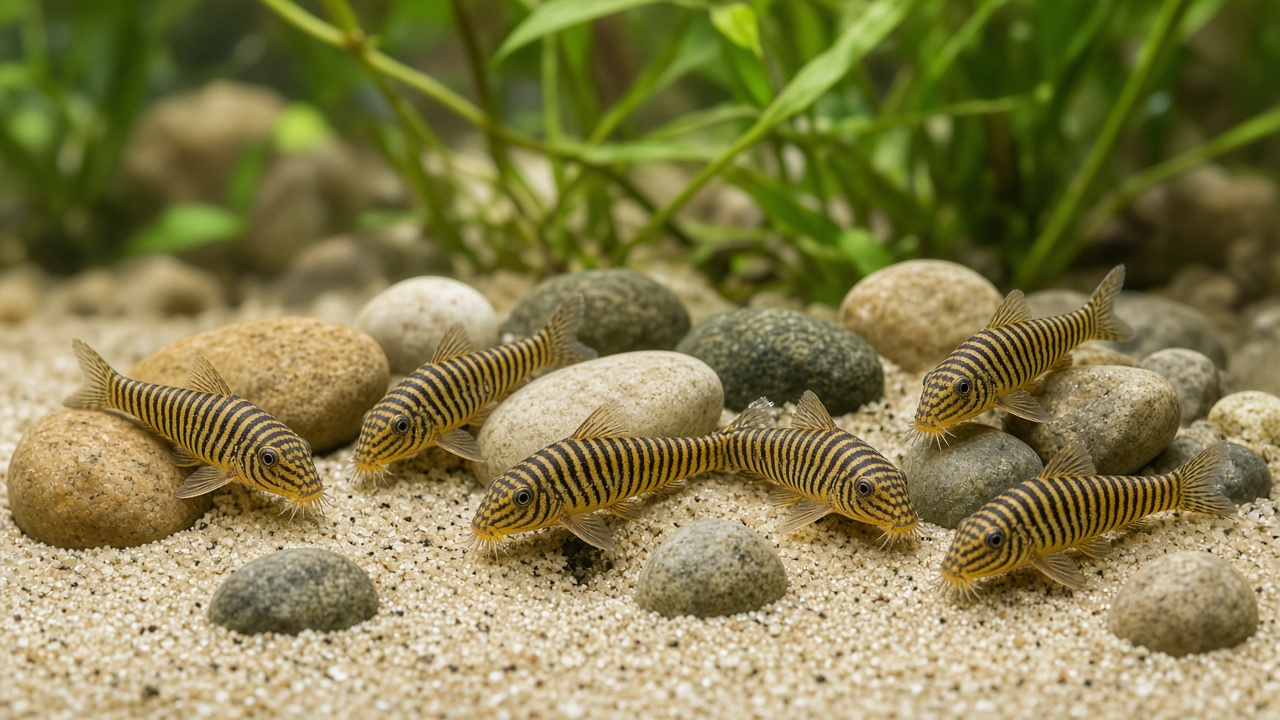
Gastromyzon punctulatus is recorded near about 6.5 cm SL. Many imported Gastromyzon stay near about 5 to 6 cm. Patterns range from fine spots to bands depending on species. Temperature bands in care notes often sit near about 68°F to 75°F, with many keepers targeting about 68°F to 72°F. Warm summer rooms without fans or chillers are a common failure point.
Gastromyzon list:
- Adult size often near about 2 to 2.5 inches
- Cooler target than Sewellia in most guides
- Very high dissolved oxygen with powerheads plus air
- Spotted or banded looks that vary by import lot
- Less forgiving of stagnant warm water
Owners consistently report Gastromyzon fading when tanks sit warm and still. Our research team analyzed cool-water notes across genera. Comparing published specs puts temperature control ahead of fancy hardscape for this type.
Pseudogastromyzon and look-alikes round out shop labels
Chen’s hillstream loach and similar Chinese forms appear under mixed names.
Pseudogastromyzon cheni is often sold beside Beaufortia and may look more elongate. Care still centers on flow, oxygen, and cool water. Adult sizes commonly fall near about 5 to 7 cm in hobby notes. Treat unknown “hillstream loach” bags as cool-flow specialists until you confirm the genus. Mislabeling is common at retail.
ID tips:
- Ask for the Latin name on the bag
- Compare body outline: Sewellia vs disc-like Beaufortia
- Expect wild-caught stock more often than captive-bred
- Quarantine every new group before mixing genera
- Photograph the fish for later ID against published plates
Owners consistently report mixed bags under one common name. Our research team analyzed trade labeling notes. Comparing published specs starts with genus, then tank design.
Flow, oxygen, and temperature decide success more than genus
All hillstream loach types fail in warm, low-flow community cubes.
Aim laminar current across rock faces, not a chaotic tornado. Many keepers target high turnover with powerheads aimed along glass or stone. Temperature often sits near about 68°F to 75°F for Gastromyzon. Beaufortia notes cluster near about 72°F to 77°F. Sewellia can hold about 72°F to 79°F when oxygen stays strong. Soft to moderate hardness near about 4 to 12 °dGH appears in many notes. Hold ammonia and nitrite at 0 ppm.
Hardware map:
- Long tank with high surface area, often about 20 to 30+ gallons for a group
- Powerhead or canister return for laminar flow
- Extra aeration in warm weather
- Fans or a small chiller if room heat climbs
- Flat river stones cycled for biofilm before fish arrive
Owners consistently report summer losses when oxygen drops. Our research team analyzed flow and cooling notes. Comparing published specs treats current as a life-support system, not décor.
Diet and biofilm feeding for every type
Hillstream loaches graze aufwuchs; pellets alone are not a full plan.
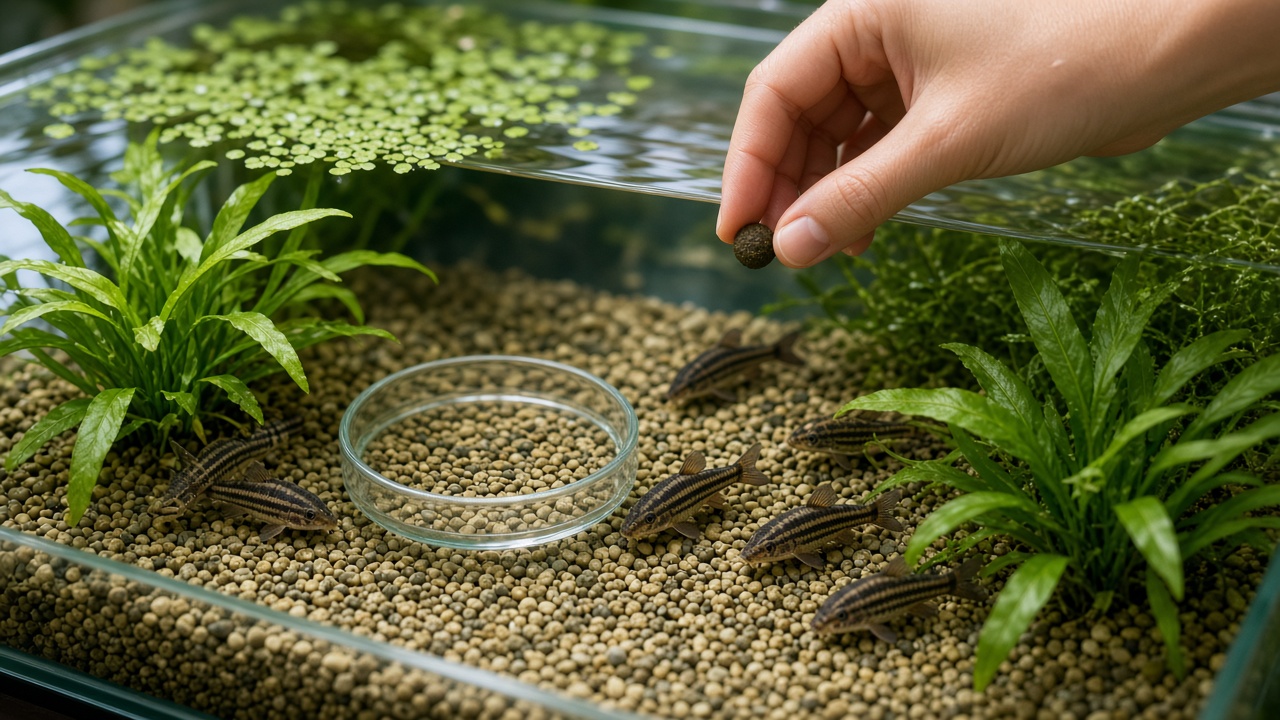
Mature tanks with algae-coated rocks are the real pantry. Supplement with blanched zucchini, spirulina wafers, and gel foods pressed onto stones. Feed small amounts after lights-on and again later so subordinates eat. Rotate “grazing rocks” grown under light in a spare tub when biofilm runs thin. Skip relying on leftover flake from midwater fish.
Feeding board:
- Biofilm first, prepared food second
- Soft vegetable matter a few times weekly
- Protein treats sparingly, not as the staple
- Multiple rock grazing zones for groups
- Watch belly condition, not just activity
Owners consistently report thin fish in sterile new tanks. Our research team analyzed biofilm husbandry notes. Comparing published specs delays stocking until rocks carry a visible film.
Species comparison table for home stocking
Use this board to match type to your room and gear.
| Type | Published size cue | Temp cue | Home-tank fit |
|---|---|---|---|
| Sewellia lineolata | About 5.7 cm SL; hobby often 6–7 cm | About 72–79°F with high O₂ | Best starter among common types |
| Beaufortia kweichowensis | About 8.0 cm TL; common ~5.4 cm SL | About 72–77°F | Needs more rock territory |
| Gastromyzon punctulatus | About 6.5 cm SL | About 68–75°F | Cool-flow specialist |
| Pseudogastromyzon cheni | Hobby often ~5–7 cm | Cool, high flow | Confirm ID; same flow rules |
Tank mates should share cool, oxygen-rich water. White Cloud Mountain minnows, danios, and other current-tolerant small fish appear often in notes. Skip warm discus, bettas, and slow fancy fins. Shrimp may work in large, settled systems but are not required.
Mate rules:
- Match temperature and flow first
- Avoid warm Amazon community lists
- Keep groups of the same genus when possible
- Provide more stones than fish
- Quarantine before mixing wild imports
Secure lids matter because these fish can climb wet glass near overflows. Check for gaps around filter rims after every water change. A small gap at the top becomes an escape path overnight. Owners consistently report lost fish more often than lost fights when lids are loose.
Owners consistently report calm tanks when mates share cool, moving water. Our research team analyzed compatibility notes for rheophilic setups. Comparing published specs rejects “any peaceful fish” marketing.
Shop labels rarely tell the whole genus story.
Look for alert fish that cling to glass or rock and show full bellies. Avoid listless fish resting on bare sand with clamped fins. Ask whether the holding tank is cool and well aerated. Wild imports need quarantine and careful acclimation to your chemistry. Do not drop cool-water fish into a 82°F community overnight.
Buying checklist:
- Confirm Latin name when the shop can provide it
- Prefer active grazers on rock, not floating weak fish
- Match your summer room heat to the genus you choose
- Quarantine for about 2 to 4 weeks when possible
- Acclimate slowly to temperature and hardness
Owners consistently report better outcomes after cool quarantine. Our research team analyzed import stress notes. Comparing published specs favors patience over impulse buys from warm display tanks.
FAQ
Which hillstream loach type is best for beginners?
Sewellia lineolata is usually the most practical home choice among common types. It tolerates slightly warmer water than Gastromyzon when oxygen stays high and flow is strong. You still need mature biofilm and cool summer management. Skip buying any hillstream loach for a warm, still nano cube without current.
How big do hillstream loaches get?
Sewellia lineolata is recorded near about 5.7 cm SL, with hobby fish often near 6 to 7 cm. Beaufortia kweichowensis reaches about 8.0 cm TL in database notes. Gastromyzon punctulatus sits near about 6.5 cm SL. Plan rock space and group size for adults, not the small bag size at the shop.
What temperature do they need?
Many keepers hold about 68°F to 75°F for Gastromyzon and about 72°F to 77°F for Beaufortia. Sewellia often manages about 72°F to 79°F if oxygen is excellent and current is steady. Sustained heat above the mid-70s with low flow is a common stressor. Use fans or chillers in hot rooms before fish decline.
How many should I keep together?
Plan a group of about 4 to 6 when the footprint allows healthy territories. Lone fish often hide and graze less boldly than a small school. Provide more flat stones than fish so males can claim separate patches without constant chasing. Crowding without current raises stress, not enrichment, for these types.
Can they live in a planted community tank?
Only if flow, oxygen, and temperature match their cool-stream needs. Soft stem plants often shred in strong current and become mess rather than cover. Tie Anubias or Java fern to rock instead of soft stems. Warm, still planted displays are the wrong class for hillstream loach types.
Do they eat all the algae in a tank?
They graze biofilm and soft algae but are not a cure for tank neglect or excess light. You must still feed them prepared foods and control nutrients with water changes. Sterile glass tanks starve them over months. Grow biofilm on rocks before and after they arrive for steady grazing.
What tank size works for a small group?
A long aquarium near about 20 to 30 gallons is a common floor for a small group of grazers. Floor area and laminar current matter more than tall empty water columns. Short cubes concentrate territory fights on one rock. Upsize when mixing Beaufortia males that claim large stones and push rivals.
This guide is informational only and does not replace advice from a qualified veterinarian.