Quick answer: Keep yoyo loaches in a group of five or more. Use a long tank of at least 55 gallons with sand, caves, and sinking food. Do not keep them with shrimp or with snails you want to keep.
Yoyo loaches need a group of five or more in a tank at least 55 gallons.
This page is a home-aquarium research briefing on tank size, group size, diet, and tank mates. We did not keep a lab colony, run feeding trials, or treat sick fish.
Selection rule: We only cover group-kept yoyo loaches in tanks that meet a 120 by 45 centimeter footprint. We skip solitary fish, nano cubes, shrimp-only tanks, and hormone breeding.
Our research team analyzed published species profiles and compared maker spec sheets for sinking foods. We call the overlap the Footprint-and-Five Rule, and every number below comes from those named pages.
What a yoyo loach is
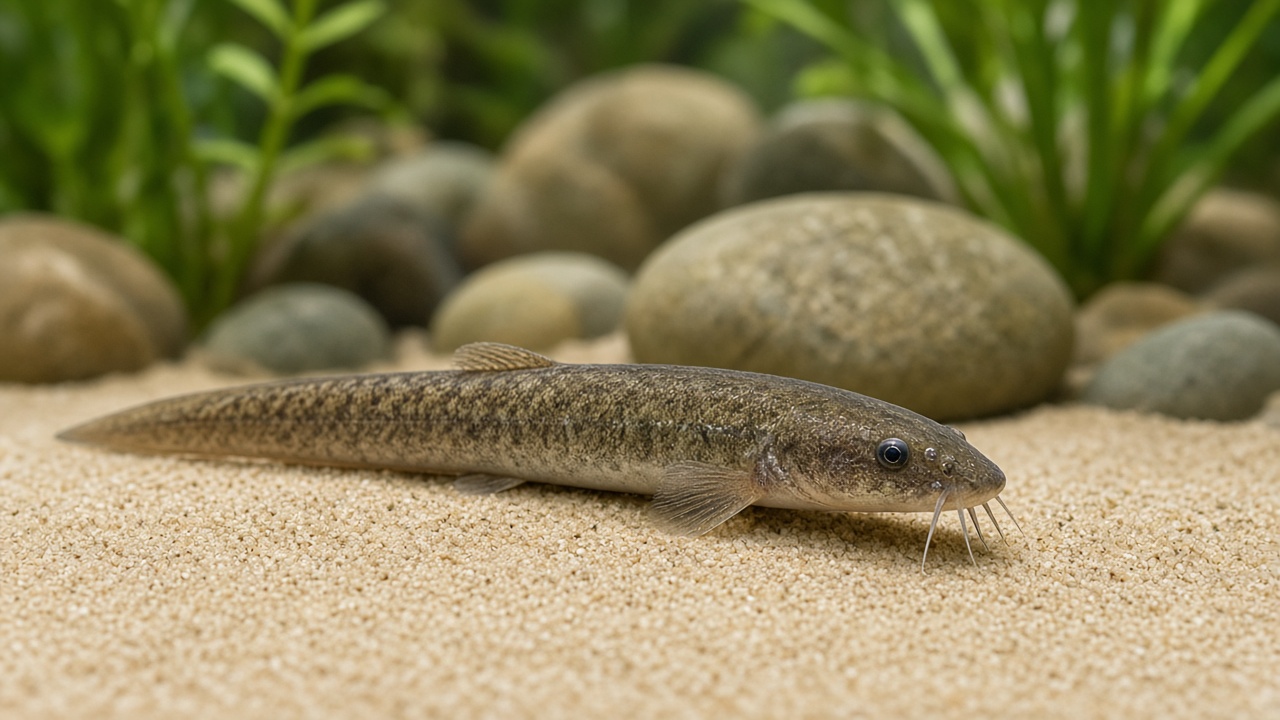
A yoyo loach is a bottom-dwelling botiid sold for home aquariums, not a tiny cleanup crew.
Seriously Fish lists the scientific name as Botia almorhae and says the “Pakistani loach” label is a misnomer. Aquatic Arts says the fish is native to the Ganges system in northern India, not Pakistan.
Adult size is easy to underestimate at the store. Seriously Fish lists a maximum standard length of 140 to 160 millimeters. Aquatic Arts lists the same range as 5.5 to 6.3 inches.
Aquatic Arts lists a typical purchase size of 1 to 2 inches. Plan the tank for the adult length, not the shop bag.
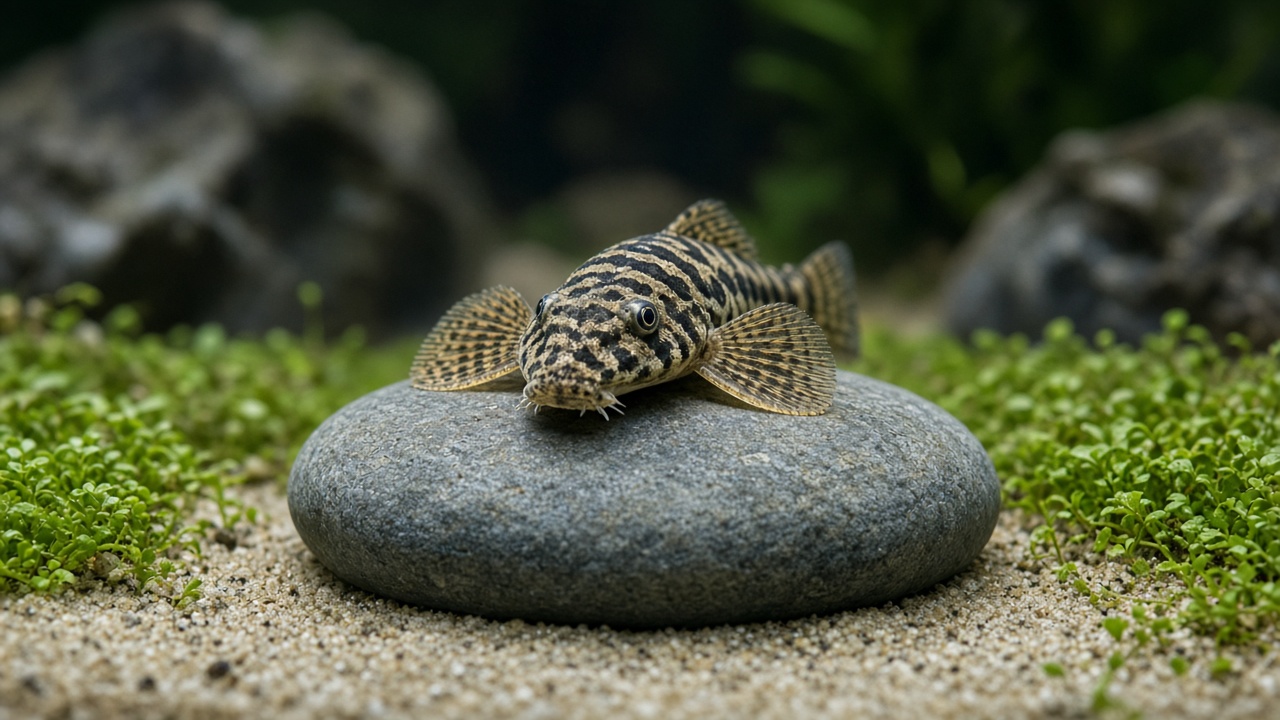
Young fish often show dark bars that look like the letters Y and O. Seriously Fish says juveniles usually have 4 to 5 “i” bars and 3 “y” bars, and those bars break apart as the fish age.
These loaches click, chase, and rest at odd angles, and that is normal group behavior.
Tank size and footprint
Length and width matter more than a tall, skinny tank.
Seriously Fish sets the minimum base at 120 by 45 centimeters, which is about 47 inches long. Aquatic Arts lists a minimum of 55 gallons or more for a small group.
Seriously Fish also gives a worked example of 243 liters. Our research team converted that figure to about 64 U.S. gallons, and the 243-liter box matches a 120 by 45 by 45 centimeter tank.
A 55-gallon tank can meet the gallon number from Aquatic Arts. It may still fall short of the 45-centimeter width from Seriously Fish, so choose the longer and wider box when the two specs conflict.
Seriously Fish advises a filter that turns the tank volume 4 to 5 times per hour. Our research team applied that range to the 243-liter example, which implies about 972 to 1,215 liters per hour.
Plan the tank before you buy the fish. Five adults will not stay at the 1 to 2 inch size listed by Aquatic Arts.
Group size
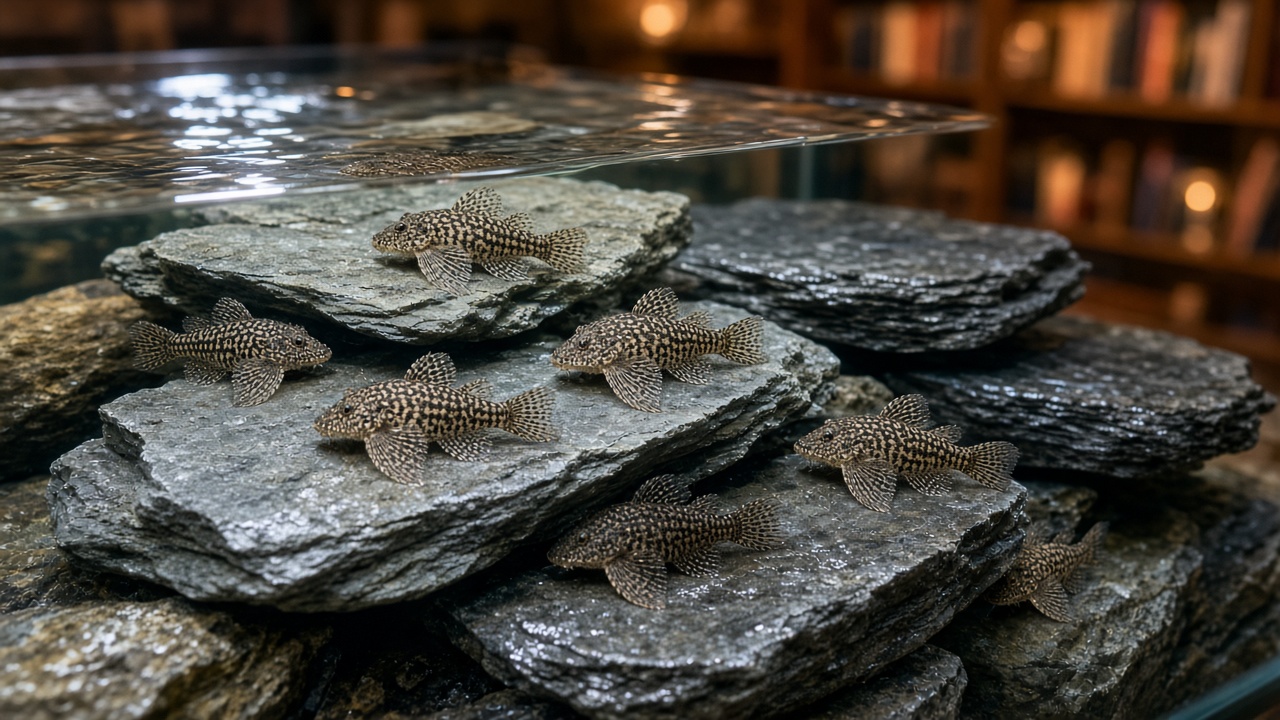
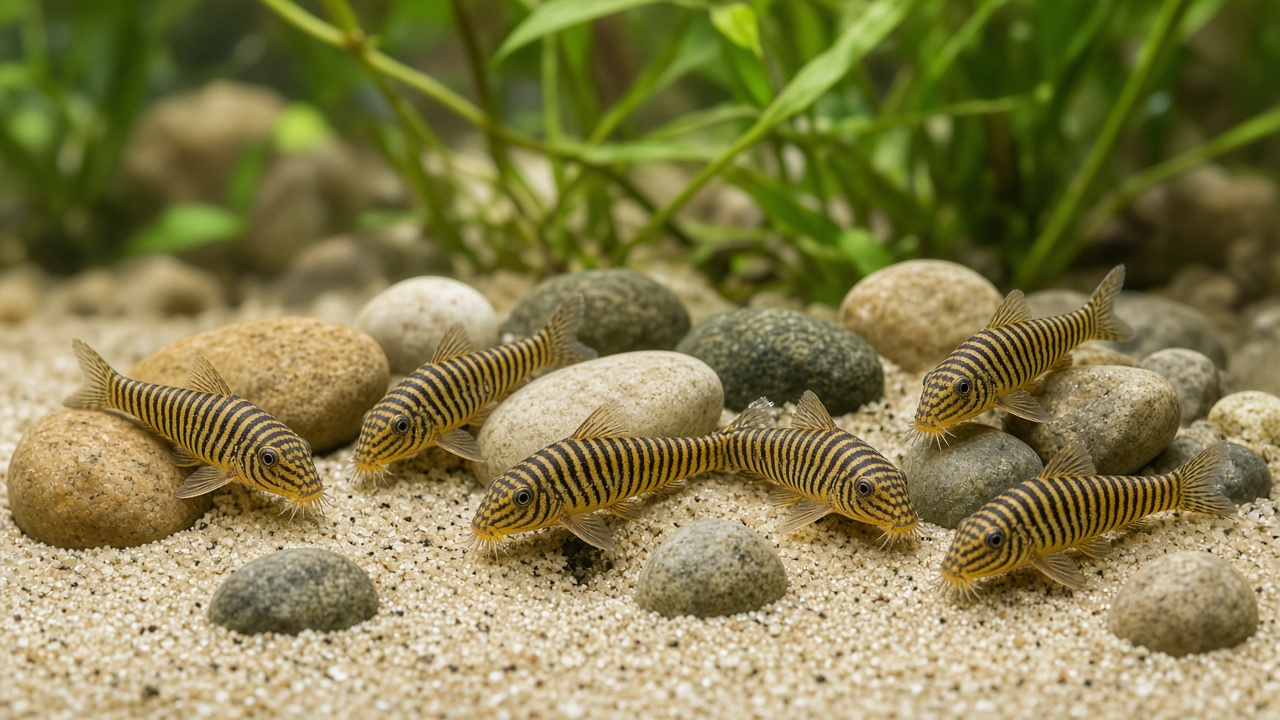
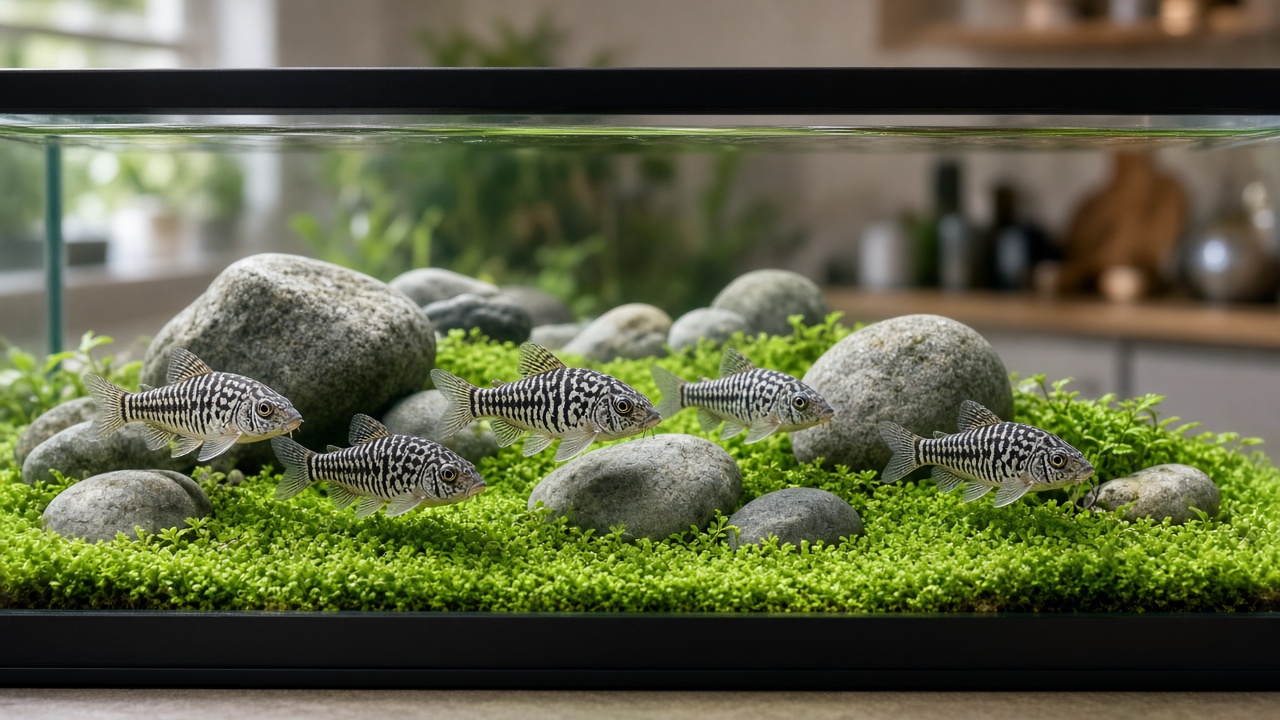
Keep five or more yoyo loaches, and do not buy one “cleaner” fish.
Seriously Fish says botia species should be kept in groups of at least 5 or 6 fish. The same page prefers 10 or more when space allows. Aquatic Arts says the school must include 6 to 8 or more specimens.
Our research team used the overlap as the floor of the Footprint-and-Five Rule. Five is the Seriously Fish minimum, and six better matches both pages.
Seriously Fish warns that a single fish can become withdrawn or aggressive. A pair or trio can let one fish stop the others from feeding. Aquatic Arts says a too-small group can become withdrawn or aggressive.
A larger group spreads chasing across many fish, but the tank must still meet the 120 by 45 centimeter footprint from Seriously Fish.
Buy the group in one trip if you can, because adding one new fish later can restart rank fights.
Water conditions and weekly care
Stable, clean, well-oxygenated water matters more than chasing one perfect number.
Seriously Fish lists these ranges:
- Temperature: 19 to 27.5°C
- pH: 6.0 to 7.5
- Hardness: 36 to 215 ppm
Aquatic Arts lists a matching temperature band of 66 to 81.5°F. That page also lists pH 5.5 to 7.5 and KH of 8 to 12 dKH. It warns that the high end of the temperature range needs high dissolved oxygen.
Use the overlapping band when the two pages differ, and stay near the middle of the temperature range from Seriously Fish.
Seriously Fish says weekly water changes of 30 to 50 percent should be routine. Our research team applied that range to the 243-liter example, which is about 73 to 122 liters each week.
Seriously Fish also says these loaches should not go into a biologically immature tank. Do not add them until ammonia and nitrite stay at zero on your test kit.
Diet and sinking foods
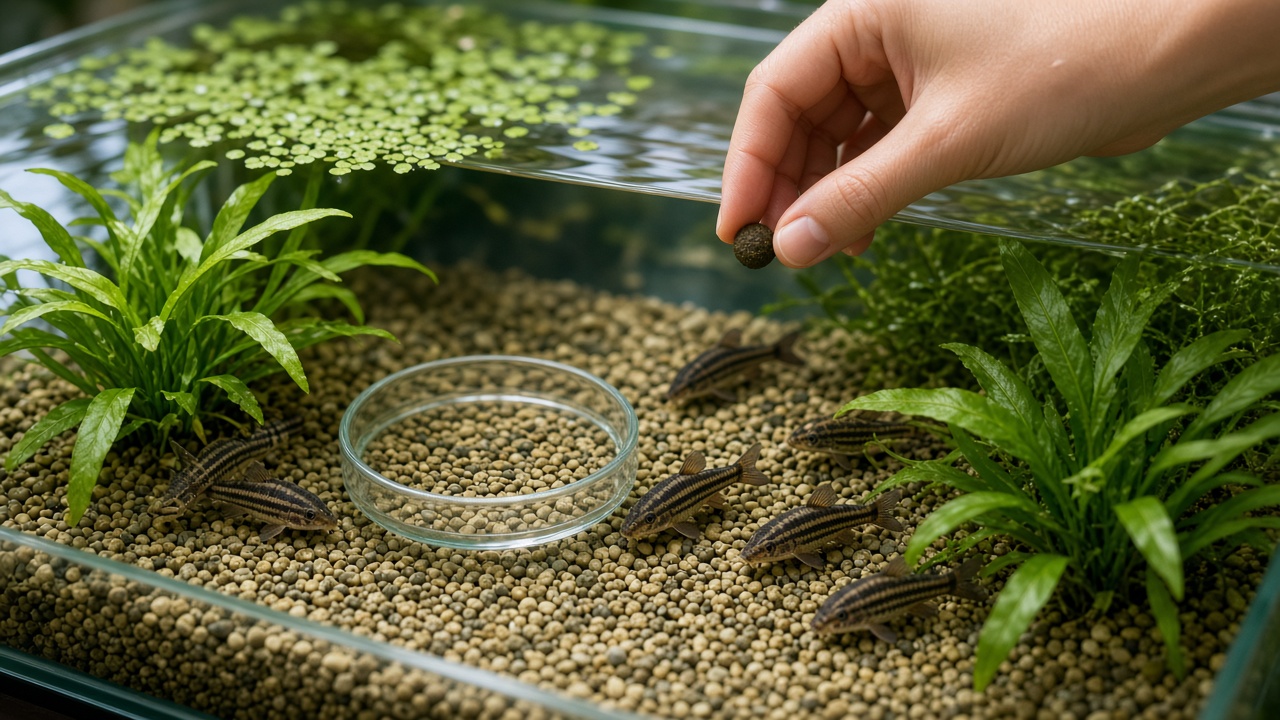
Yoyo loaches are omnivores that need sinking food plus some plant matter.
Seriously Fish says the wild diet includes mollusks, insects, worms, and other invertebrates, and that they will eat vegetative matter, including some soft plants. Aquatic Arts also calls the species an omnivore and lists frozen meaty foods plus cucumber, zucchini, spinach, and melon.
Our research team compared four currently sold sinking foods from maker pages and ranked nothing.
| Product | Form | Maker-listed spec | Maker-stated use |
|---|---|---|---|
| Hikari Sinking Wafers | Soft sinking disc | Min. 36.0% crude protein; min. 9.0% crude fat; max. 4.0% crude fiber | Corydoras, loaches, and other bottom feeders |
| Hikari Algae Wafers | Raised sinking disc | Min. 33.0% crude protein; min. 4.0% crude fat; max. 3.0% crude fiber | Plecos and other algae-eating bottom feeders |
| Hikari Micro Wafers | Slow-sinking disc | Min. 44.0% crude protein; min. 8.0% crude fat; max. 2.0% crude fiber | Community tropicals from small tetras to angels |
| Aqueon Bottom Feeder Tablets | Sinking tablet | About 11 mm diameter | Loaches, catfish, plecos, and other bottom dwellers |
Hikari Sales USA’s Sinking Wafers page lists those protein, fat, and fiber values. It also lists package sizes of 0.88 ounce, 1.76 ounce, 3.88 ounce, and 2.2 pound.
Hikari Sales USA’s Algae Wafers page lists 0.70 ounce, 1.41 ounce, 2.89 ounce, 8.8 ounce, and 2.2 pound packs. Hikari Sales USA’s Micro Wafers page lists 0.70 ounce, 1.58 ounce, and 2.2 pound packs.
Aqueon’s Bottom Feeder Tablets page says the tablets are about 11 millimeters across. That page also lists a package of 4.7 by 1 by 6.3 inches.
Feed a mix rather than one bag forever. Use this rotation:
- Daily staple: Hikari Sinking Wafers or Aqueon Bottom Feeder Tablets
- Plant matter days: Hikari Algae Wafers plus a slice of zucchini or cucumber
- Midwater days: Hikari Micro Wafers so tank mates eat too
- Frozen days: bloodworm, Artemia, or Tubifex, as listed by Seriously Fish
Drop wafers in more than one spot so fast midwater fish do not take every piece. Seriously Fish says they often rise into midwater at meal times once settled.
Seriously Fish says snail eating is common but is not a full pest-control plan, so feed the loaches even if snails are present.
Tank mates
Pick active, midwater fish, and skip shrimp, treasured snails, and slow long-finned fish.
Seriously Fish says much smaller fishes may be intimidated. It also says to avoid slow, long-finned species such as ornamental bettas and guppies. Better matches on that page include peaceful open-water cyprinids.
Aquatic Arts lists rasboras, tetras, danios, and livebearers as typical tank mates. The same page says the loach preys on tiny shrimp and snails and may nibble soft-leaf plants.
Use this split when you shop:
- Better match: active barbs, danios, rasboras, and robust tetras
- Poor match: bettas, fancy guppies, dwarf shrimp, and ornamental snails
- Case-by-case: other bottom fish that will not lose every meal
A kuhli loach is a different animal. Kuhlis stay smaller, hide more, and use a finer sand bed, so a yoyo group can out-compete them at feeding time.
Do not use yoyo loaches as a “snail fix” in a shrimp tank, because Aquatic Arts calls them predators of many invertebrates.
Setup details that prevent injuries
Give them sand or fine gravel, many caves, and a tight lid.
Seriously Fish recommends sand or fine gravel, smooth rocks, and driftwood. It names Java fern, Java moss, and Anubias as plants that tolerate lower light.
Aquatic Arts also asks for plants, rockwork, driftwood, and open swimming room. Leave a clear lane so the group can patrol the floor.
Build the hardscape with these checks:
- Fill gaps that could trap a fish, as Seriously Fish advises
- Skip sharp edges
- Give more than one cave per loach
- Use a tight lid, because both Seriously Fish and Aquatic Arts say they jump
Botiids have a spine under each eye. Seriously Fish says the spine can catch in nets and can break human skin, so net slowly and do not squeeze a thrashing fish.
These loaches rest on their sides or wedge into decor. Seriously Fish calls that a normal rest pose, so watch for weight loss or a refusal to eat instead.
FAQ
Can I keep just one yoyo loach?
No, a single yoyo loach is a poor plan. Seriously Fish says a single botia can become withdrawn or aggressive. Aquatic Arts says a solitary fish or a too-small group can show the same problems.
What size tank does a yoyo loach need?
Seriously Fish lists a minimum footprint of 120 by 45 centimeters. Aquatic Arts lists 55 gallons or more for a small group. Our research team treats both as a paired rule: enough gallons and enough floor.
How big do yoyo loaches get?
Seriously Fish lists 140 to 160 millimeters in standard length. Aquatic Arts lists 5.5 to 6.3 inches for adults, and store fish are often 1 to 2 inches on that page.
Do yoyo loaches eat snails and shrimp?
Yes, they will eat both. Aquatic Arts says they prey on tiny shrimp and snails. Seriously Fish says most botiids eat snails but are not a complete cure for an infestation.
What should I feed yoyo loaches?
Use a sinking staple such as Hikari Sinking Wafers or Aqueon Bottom Feeder Tablets. Add Hikari Algae Wafers and blanched vegetables on some days. Seriously Fish also lists frozen bloodworm, Tubifex, and Artemia.
Are yoyo loaches peaceful community fish?
They are active rather than gentle. Seriously Fish says they are not especially aggressive, but they can nip trailing fins. Aquatic Arts calls them generally peaceful with other species, yet boisterous.
Will they breed in a home tank?
Seriously Fish reports no breeding in private aquaria and says some related fish are mass-produced with hormones. This briefing does not cover breeding methods.