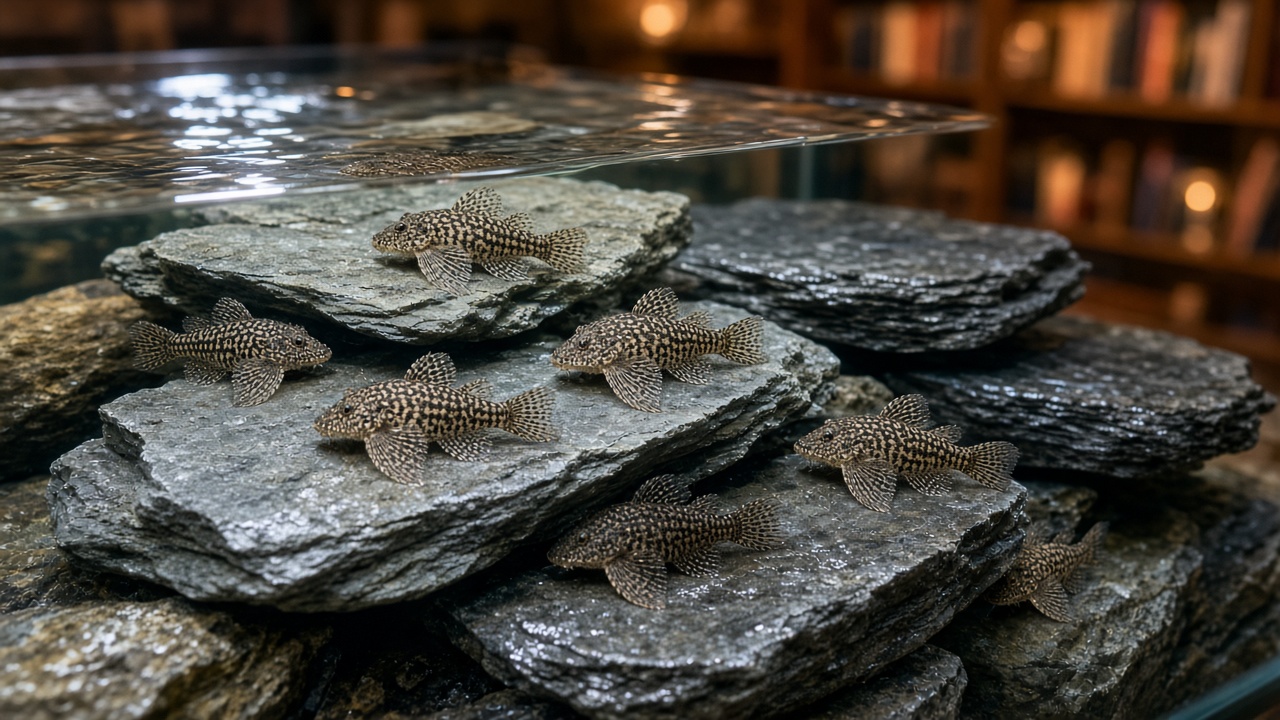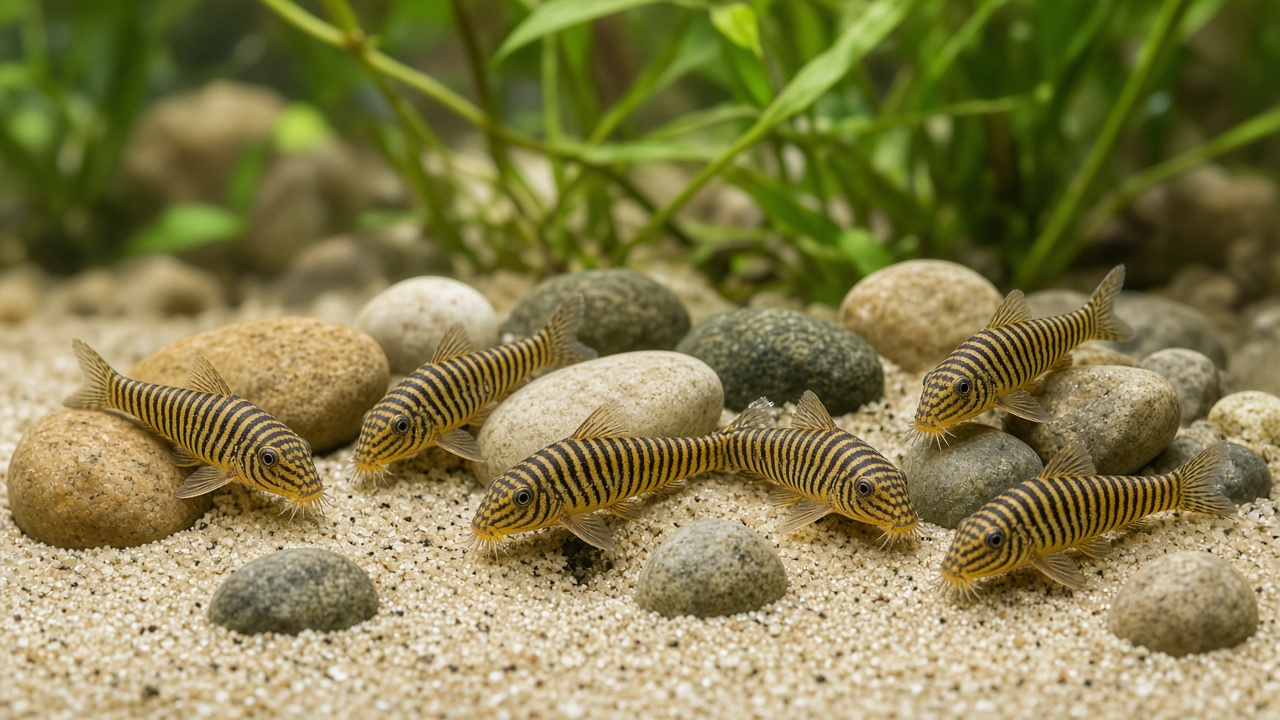
Quick answer: Keep zebra loaches as a group of six or more in a 29-gallon tank. Feed a sinking wafer plus one insect-based granule. Skip 10-gallon kits and single-fish setups.
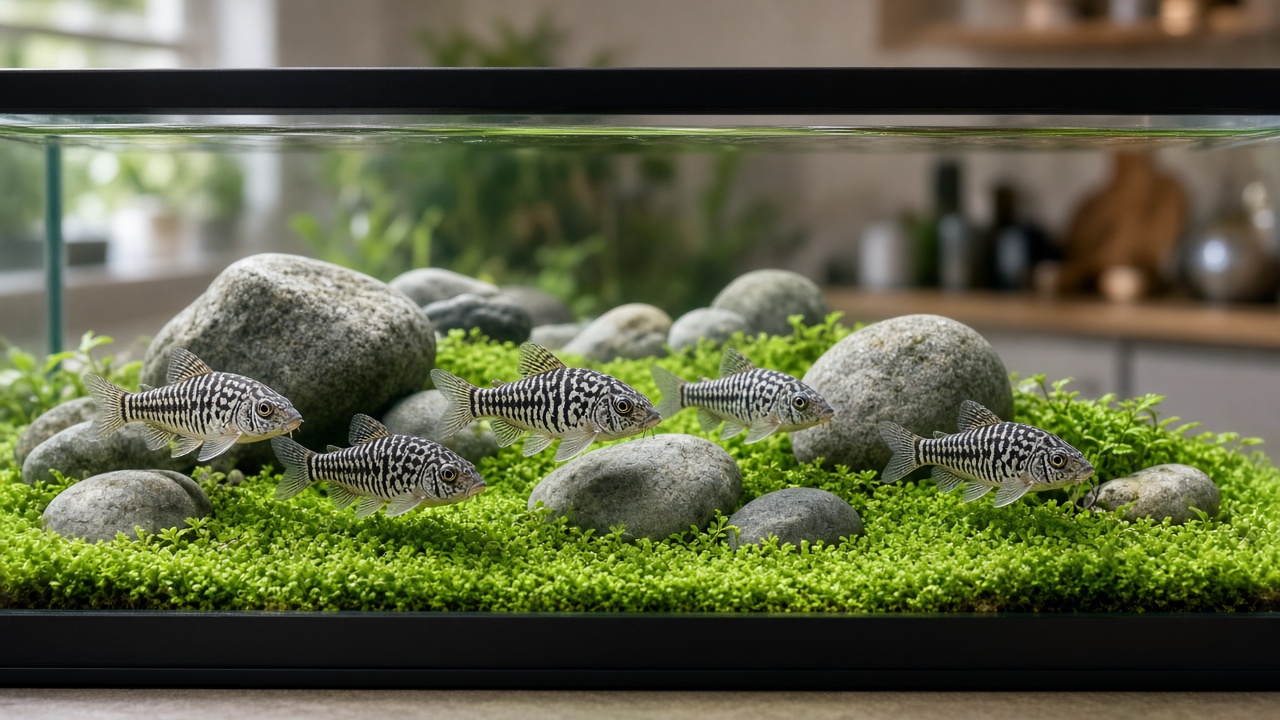
Keep six or more zebra loaches, Botia striata, in a 29-gallon tank, not a 10-gallon kit.
This page is a desk comparison of published species records and current maker labels. We did not keep a colony, run in-house water tests, or collect fish in India.
Our research team analyzed FishBase and current product pages, and we quote only the numbers those pages print.
The 29-and-Six Rule
A setup belongs on this page only if it can hold six adults in a 29-gallon or larger kit.
That is our own rule, because FishBase does not publish a tank-gallon number.
We used this gate for every scenario and product:
- The tank must be a 29-gallon or 55-gallon kit, not a 10-gallon or 20 High kit.
- The group must be six or more zebra loaches, not one or two.
- Food must list a crude-protein minimum on the maker page.
- Sand must list a grain size of 0.75 mm or finer.
We left out clown loach tanks, 10-gallon starter kits, foods with no protein number, and sharp gravel over 2 mm.
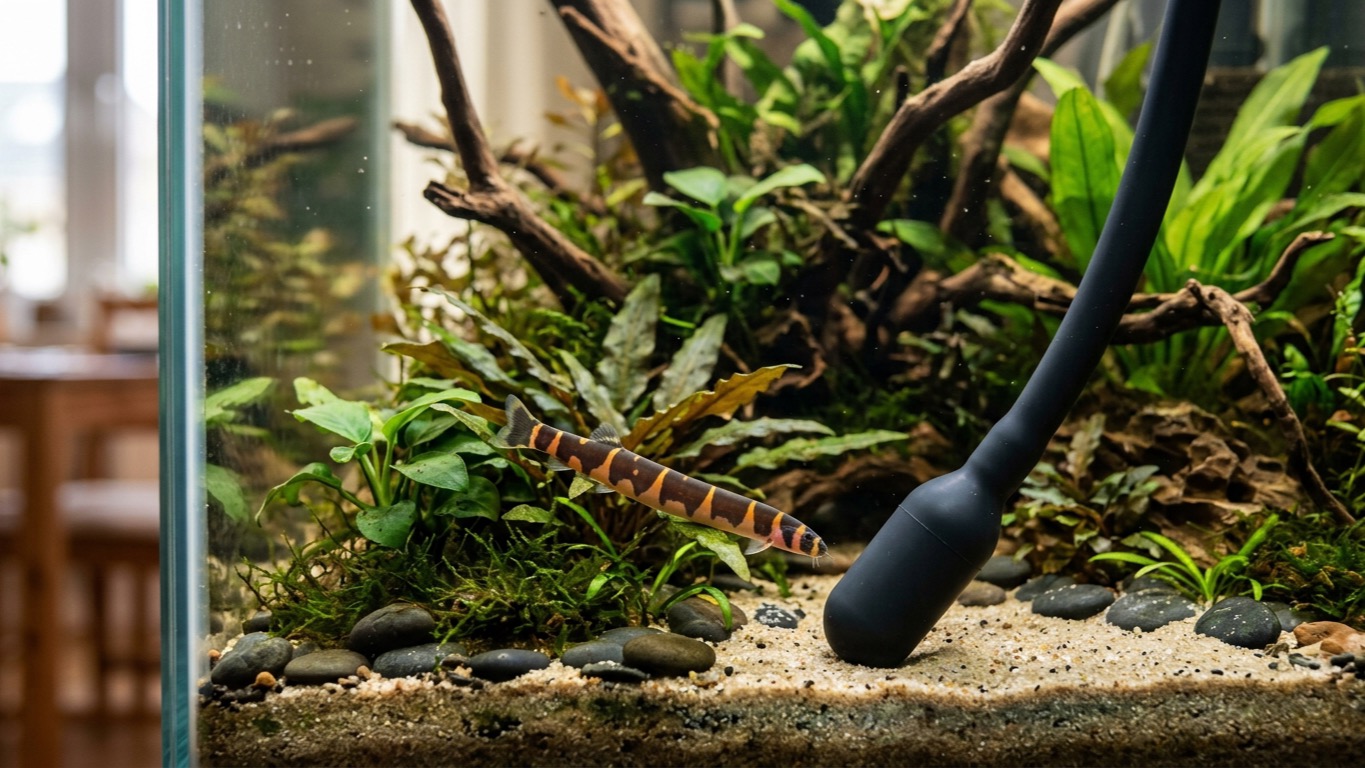
If you want a thinner, more secretive loach, read our kuhli loach care guide. That species uses a different group rule and a different tank plan.
What a zebra loach is
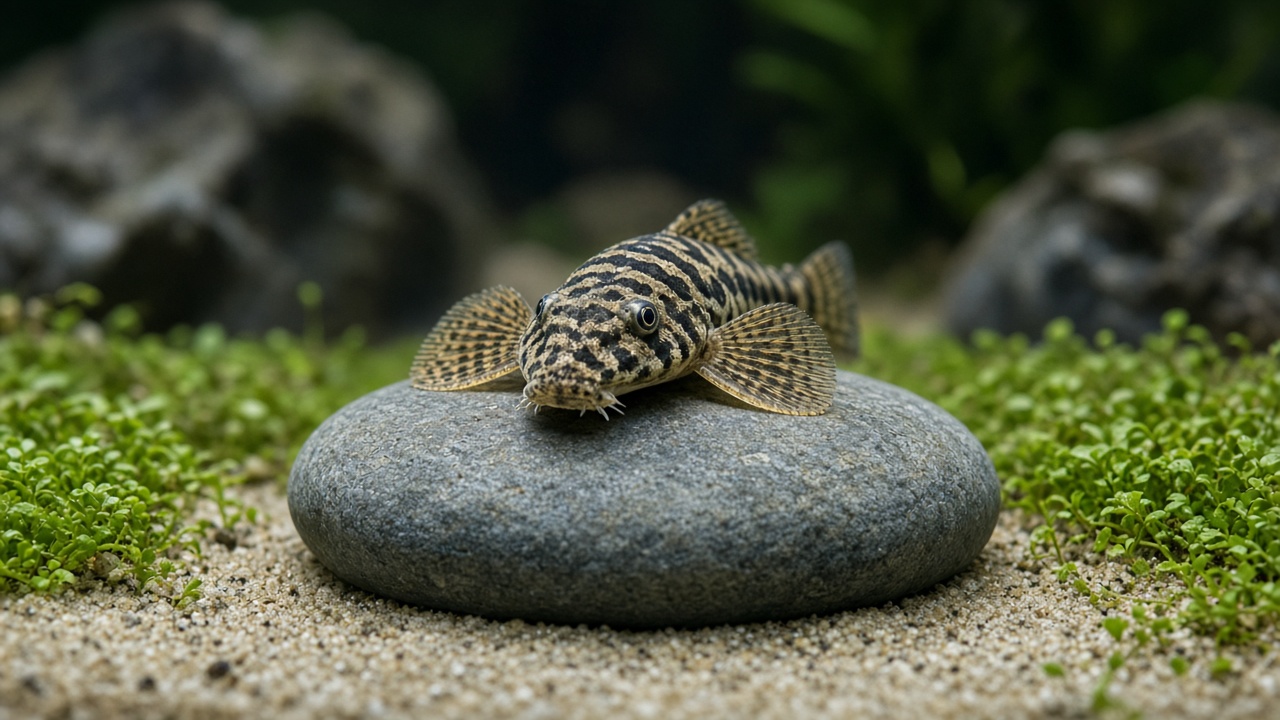
A zebra loach is Botia striata, a small striped loach from India, not a clown loach.
FishBase lists the species as Botia striata Narayan Rao, 1920, in the family Botiidae.
FishBase gives a maximum size of 7.8 cm standard length for males or unsexed fish. Standard length stops at the tail base and does not include the tail fin.
FishBase places the range in the Western Ghats and Maharashtra in India, and it says the fish lives in clear mountain streams.
FishBase reports the IUCN Red List status as Endangered, dated 19 March 2011, under criterion B2ab(iii). Ask the seller whether the fish are tank-raised before you buy.
FishBase also prints a trophic level of 3.2, a model estimate rather than a feeding recipe.
FishBase lists the species as a commercial aquarium fish and marks it harmless to people. The same summary lists CITES as Not Evaluated.
Tank size we cover
The smallest tank we cover for six zebra loaches is a 29-gallon boxed kit.
Aqueon’s Rectangle LED Kits page lists four sizes: 10, 20 High, 29, and 55 gallons. We keep the 29 and the 55, and we drop the 10 and the 20 High.
The 29-gallon kit is the first size that matches the 29-and-Six Rule. The 55-gallon kit is the step up when you add more midwater fish.
Aqueon’s kit page states that the preset heater holds 78°F. That sits at the top of the FishBase range of 23°C to 26°C, about 73°F to 79°F.
Aqueon’s kit page also lists five-stage filtration on the QuietFlow LED PRO filter. The same page says a red LED flashes when the cartridge needs a change.
The boxed kit includes these parts, per Aqueon:
- glass aquarium and low-profile LED hood
- QuietFlow power filter and cartridge
- submersible preset heater
- food sample, water conditioner sample, net, thermometer, and setup guide
Fish, gravel, and decor are sold separately, per that same Aqueon page.
A 7.8 cm bottom fish still needs floor length, not just water height. Six adults share one sand bed and a set of hides.
Use this floor plan:
- one 29-gallon kit for six zebra loaches and small midwater fish
- one 55-gallon kit for six zebra loaches plus a larger community
- no 10-gallon kit for this species
Do not add height to create extra gallons, because a tall 20 High kit still fails our length rule.
Group size and tank mates
Six is the smallest group we cover, and one or two fish do not make this page.
Zebra loaches are sold as social bottom fish, but FishBase does not print a head-count. The six-fish floor is our rule, not a lab result.
A group of six spreads minor chasing, while a pair often pins one fish in a corner.
Add fish in this order:
- Buy six zebra loaches on the same day.
- Add them only after the tank has cycled.
- Add midwater fish after the loaches are eating in the open.
Good tank mates are small, peaceful, midwater fish. Poor tank mates are large cichlids, fin-nippers, and other bottom fish that claim the same caves.
Do not mix them with clown loaches in a 29-gallon kit, because clown loaches grow far past the 7.8 cm FishBase maximum.
A kuhli loach group is a different plan. Kuhlis stay slimmer and hide more, so do not swap those group rules.
Watch for these group problems:
- one fish locked out of every cave
- food gone before the shy fish reach it
- a single loach kept only to eat snails
Snail eating is extra food, not their main diet, and FishBase does not list them as a snail-control tool.
Buy six fish that already sit together in one store tank, because split groups fight more after a move.
Diet from published labels
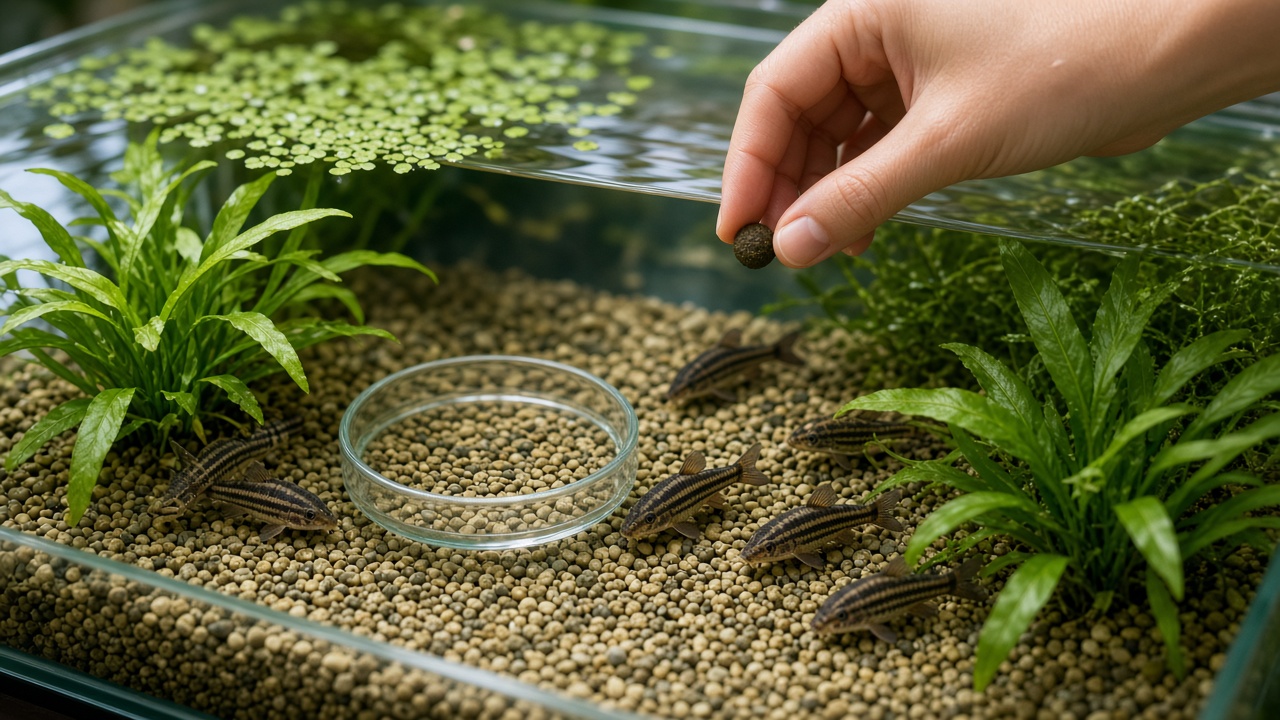
Feed a sinking staple every day, then rotate one insect pellet and one plant item.
FishBase’s trophic level of 3.2 points to a mixed diet, not flakes alone. Our research team compared three current labels that print protein numbers.
Hikari’s Sinking Wafers page lists these guaranteed values:
- crude protein, minimum 36%
- crude fat, minimum 9.0%
- crude fiber, maximum 4.0%
- moisture, maximum 10%
- ash, maximum 16%
- phosphorus, minimum 0.8%
Hikari names the food for corydoras catfish, loaches, and other bottom feeders. Feed only what they finish in 20 minutes, then remove leftovers.
Hikari lists these pack sizes: 0.88 oz (25 g), 1.76 oz (50 g), and 3.88 oz (110 g).
Fluval’s Bug Bites Bottom Feeder Granules page lists these guaranteed values:
- crude protein, minimum 32.0%
- crude fat, minimum 12.0%
- crude fiber, maximum 6.0%
- moisture, maximum 10.0%
- ash, maximum 9.0%
- calcium, minimum 1.50%
- phosphorus, minimum 0.80%
- vitamin A, minimum 2,500 IU/kg
- vitamin D3, minimum 2,400 IU/kg
- vitamin E, minimum 75 IU/kg
Fluval’s page says the formula contains up to 40% black soldier fly larvae as the first ingredient. The granule size is 1.4–2.0 mm, and the pack we compared is 45 g (1.6 oz).
Fluval’s feeding line is two or three meals a day, and only what fish finish in two minutes.
OmegaSea’s Omega One Sinking Catfish Pellets page lists these guaranteed values:
- crude protein, minimum 38%
- crude fat, minimum 10%
- crude fiber, maximum 2.0%
- moisture, maximum 8.5%
- ash, maximum 8%
OmegaSea lists salmon, whole herring, and whole shrimp as the first three ingredients, with pack sizes of 4.5 oz and 15 lb.
Comparing those three labels, protein runs from 32.0% to 38%, a 6-point spread. Fat runs from 9.0% to 12.0% across the same three pages.
Use this weekly split:
- four days: Hikari Tropical Sinking Wafers
- two days: Fluval Bug Bites Bottom Feeder Granules
- one day: Omega One Sinking Catfish Pellets, plus a blanched zucchini slice
Drop the zucchini after two hours, and pull uneaten Hikari wafers after the listed 20 minutes.
Fluval’s page says an open tub is best used within 6 months and stored in a cool, dry place.
Do not use this food list:
- floating flakes as the only meal
- mammal meat
- any diet with no printed protein minimum
Water, sand, and hardware
Match FishBase’s printed water band, then use fine sand and a 78°F kit heater.
FishBase lists these values:
- pH 6.0 to 8.0
- dH 5 to 12
- temperature 23°C to 26°C
Aqueon’s preset heater is listed at 78°F, the warm end of the FishBase band. Check the stick-on thermometer that ships in the same kit.
CaribSea’s freshwater page lists Super Naturals Moonlight Sand at 0.25–0.75 mm, with an average density of 95 pounds per cubic foot.
CaribSea lists Moonlight Sand in 5 lb, 10 lb, 20 lb, and 40 lb bags. That grain is finer than Fluval’s 1.4–2.0 mm granule, so wafers sit on top of the sand.
We excluded CaribSea Super Naturals Peace River from this page. That grade is listed at 1.0–2.0 mm, which fails our 0.75 mm sand cap.
Add hardscape in this order:
- Rinse Moonlight Sand and set a shallow bed.
- Place two caves per loach, then wood.
- Plant tough species on wood or rock, not in the sand path.
Leave open sand in the front so six fish can patrol that strip all day.
Do a weekly water change, because FishBase notes clear-stream habitat, not still, dirty water.
Foods and gear we compared
These five products are currently sold and print the numbers in the table.
Our research team compared maker pages, not store copy, and the table has no rank column and no price column.
| Product | Maker-listed format | Key published number | Role under the 29-and-Six Rule |
|---|---|---|---|
| Hikari Tropical Sinking Wafers | Soft disc; 25 g, 50 g, or 110 g | 36% min protein; finish in 20 minutes | Daily loach wafer |
| Fluval Bug Bites Bottom Feeder Granules (S-M) | 1.4–2.0 mm granule; 45 g | 32.0% min protein; up to 40% black soldier fly larvae | Insect staple on two days |
| Omega One Sinking Catfish Pellets | Sinking pellet; 4.5 oz or 15 lb | 38% min protein; 8% max ash | Higher-protein pellet on one day |
| Aqueon LED Aquarium Kit, 29 gallon | Boxed 29-gallon kit | Preset heater at 78°F; five-stage filter | Smallest kit size we cover |
| CaribSea Super Naturals Moonlight Sand | 0.25–0.75 mm sand | 95 lb per cubic foot; 5–40 lb bags | Soft sand bed |
Hikari is the only food of the three that names loaches on the page we read. Fluval names plecos and ancistrus, and OmegaSea names all bottom feeders.
We still include Fluval and Omega One because both print protein, fat, and a sinking form, which meets the food gate.
We do not call any food complete for life. Rotate the three labels, and add a vegetable slice on the pellet day.
FAQ
How big does a zebra loach get?
FishBase lists a maximum of 7.8 cm standard length, about 3.1 inches without the tail. Plan caves and floor space for that adult size, not for a 2-inch store juvenile.
What tank size do zebra loaches need?
The smallest tank we cover is Aqueon’s 29-gallon LED kit. Aqueon also lists 10, 20 High, and 55 gallon kits, and we reject the two smaller sizes for a group of six.
How many zebra loaches should I keep?
Keep six or more under our 29-and-Six Rule, not a FishBase head-count. One or two fish fall outside this page.
What do zebra loaches eat?
Use Hikari Tropical Sinking Wafers as the daily disc, since Hikari lists 36% minimum protein and a 20-minute feed window. Rotate Fluval Bug Bites Bottom Feeder Granules and Omega One Sinking Catfish Pellets on other days.
What water values do they need?
FishBase lists pH 6.0 to 8.0, dH 5 to 12, and 23°C to 26°C. Aqueon’s kit heater is listed at 78°F, which is the warm end of that band.
Can I keep one zebra loach with kuhli loaches?
No, a single zebra loach fails our group rule. A kuhli loach group is a separate plan with its own count. Do not treat the two species as one mixed loach pack.
What sand should I use?
CaribSea Super Naturals Moonlight Sand is the grade we cover. CaribSea lists it at 0.25–0.75 mm and 95 pounds per cubic foot. We dropped coarser Super Naturals grades over 0.75 mm.