Quick answer: Common freshwater angelfish reach about 6 inches in body length and about 8 inches tall with fins. Altums grow larger. Most reach adult size in about 12 to 18 months with steady feeding.
Plan a tall tank for a 6-inch body and 8-inch fin span.
We compared published care data on Pterophyllum scalare and related angelfish kept in home aquariums. Our research team analyzed adult length, fin height, growth pace, and tank height notes from major care guides. Owners consistently report surprise when dime-sized juveniles fill a short aquarium within a year.
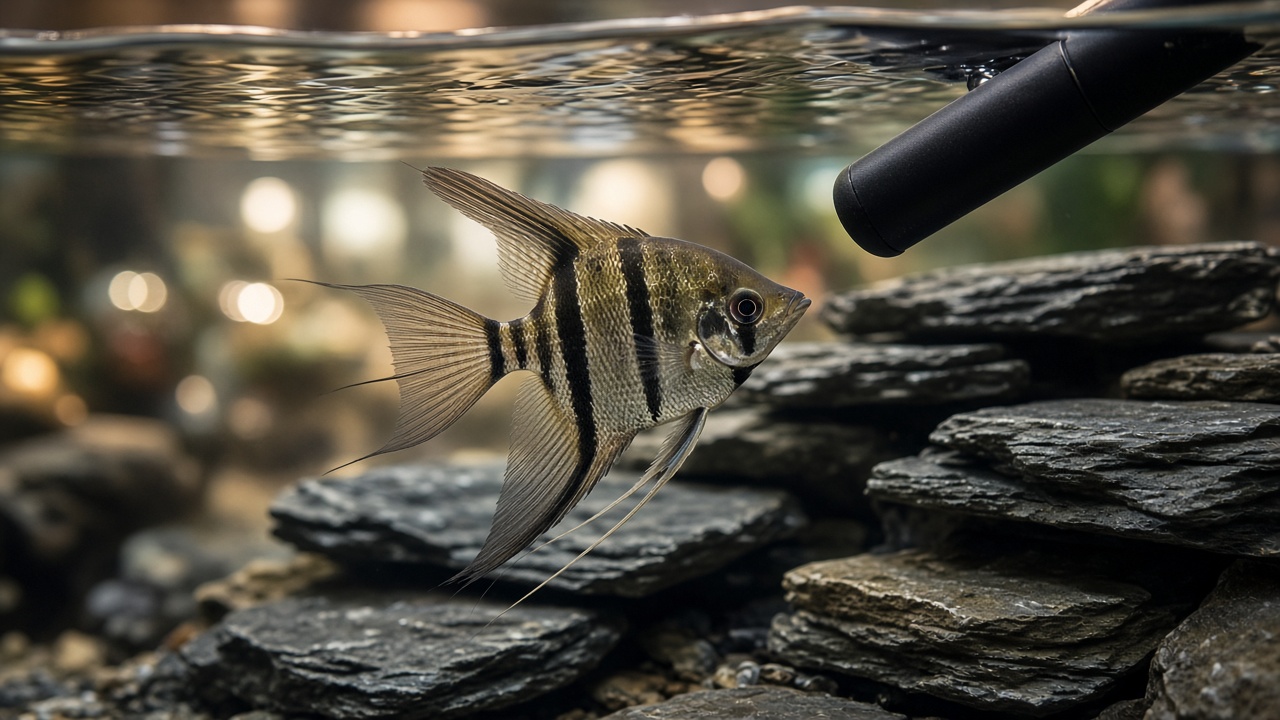
Comparing published specs shows the common pet-store angelfish, P. scalare, reaches about 6 inches (15 cm) in body length and about 8 inches (20 cm) in height including fins. Altum angelfish, P. altum, can reach about 7 inches (18 cm) long and about 10 to 13 inches (25 to 33 cm) high. Maker housing notes call for about 55 gallons or larger for full-grown fish in tall aquariums. Growth from coin-sized juveniles to adults often finishes near 12 to 18 months.
Include adult size, growth rate, tank height, and species differences. Leave out marine angelfish care. Skip medication plans that belong with a veterinarian.
Adult size is a tall disc, not a slim tetra
Freshwater angelfish finish much larger than store juveniles suggest.
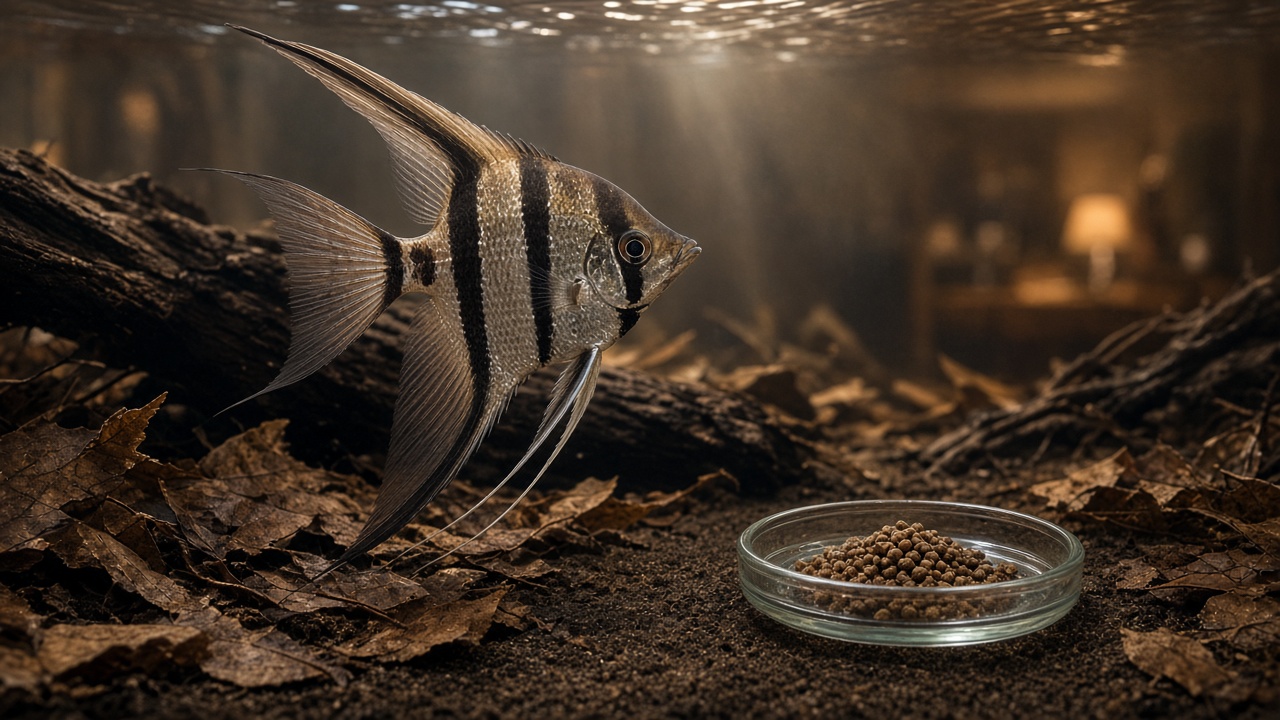
Common P. scalare adults reach about 6 inches of body length. Fin-to-fin height often sits near about 8 inches in widely cited care notes. Some hobby reports describe spans nearer 10 to 12 inches on exceptional fish. Altums push height toward about 10 to 13 inches. Leopold’s angelfish, P. leopoldi, stays rarer in shops and is noted as the smallest of the three named species. Veiltail strains look taller because fins grow longer, not because the body disc is always bigger.
Size snapshot:
- P. scalare body: up to about 6 inches (15 cm)
- P. scalare height with fins: about 8 inches (20 cm)
- P. altum body: up to about 7 inches (18 cm)
- P. altum height: about 10 to 13 inches (25 to 33 cm)
- Store juveniles often start near about 0.8 to 1.2 inches
Owners consistently report tanks that look fine at purchase and cramped at one year. Our research team analyzed adult size notes for home stocking. Comparing published specs means buying height first, then gallons.
Growth rate from dime size to adult
Young angelfish put on length quickly in the first half year.
Care summaries often describe roughly a quarter to half an inch of body length per month for about the first 6 to 8 months. Growth then slows as the fish approach adult proportions. Most reach full adult size somewhere between about 12 and 18 months when food and water stay steady. Coin-sized starters near a U.S. nickel, quarter, or half-dollar are common on shop lists. Thin, pinched fish grow poorly compared with meaty juveniles of the same age.
Growth cues:
- Months 0 to 8: faster length gains under good feeding
- Months 8 to 18: slower approach to adult disc size
- Full size often near 12 to 18 months
- Poor water or sparse food stretches the timeline
- Veil fins may keep lengthening after body size plateaus
Owners consistently report faster growth with varied protein and clean water. Our research team analyzed juvenile growth notes. Comparing published specs favors planning the adult tank from day one.
Tank height and volume for finished fish
Gallons matter, but vertical clearance protects those fins.
Maker guidance places full-grown angelfish in about 55 gallons or larger, with tall aquariums preferred. Community notes often allow about four adults in a 29-gallon tank with mates. A 55-gallon tank may start with five to six juveniles, then need rehoming if pairs form. Height near about 18 to 24 inches helps tall fins extend without dragging gravel. Short 10- or 20-gallon “grow-out forever” plans fail when fish hit adult span. Gentle flow suits their tall profile better than blasting returns.
Housing list:
- About 55+ gallons for adults in many maker notes
- Tall footprint over a long low box of the same gallons
- Vertical wood and broad plants for cover
- Room to remove excess fish when pairs claim space
- Lid security; startled angels can jump
Owners consistently report fin damage in short tanks with low lids. Our research team analyzed housing recommendations for adult size. Comparing published specs treats height as a hard requirement.
Species and strain differences that change final size
Not every “angelfish” finishes the same.
P. scalare is the trade standard and the size profile most keepers mean. P. altum needs still more height and softer, warmer water in many notes. P. leopoldi appears rarely and is described as smaller and more assertive. Color strains such as marble, koi, platinum, and zebra usually share the scalare size class. Veiltails increase fin length and can make the fish look larger in photos without a longer body disc.
Strain notes:
- Standard silver and striped wild-type looks
- Veil and super-veil fin extensions
- Altum as the true height specialist
- Leopoldi as the uncommon small aggressive option
- Captive-bred scalare dominate U.S. shops
Owners consistently report altums as harder and larger projects. Our research team analyzed species size ranges. Comparing published specs keeps scalare as the default answer to how big angelfish get.
What speeds or stalls growth in home tanks
Food quality, temperature, and water quality set the pace.
Warm, stable temperatures near about 78°F to 84°F appear in maker care bands, with many breeders holding nearer the low 80s. Protein-rich juvenile diets support disc growth; sparse flake-only routines stall it. Crowding raises stress and nitrate, which owners link to skinny teens. Stable chemistry beats chasing a perfect single pH number inside the broad 6.0 to 8.0 tolerance many guides cite. Hardness varies by lineage, with many U.S. captive fish adapted to harder water.
Growth helpers:
- Feed varied foods once or twice daily in small portions
- Keep ammonia and nitrite at 0 ppm
- Hold temperature in the upper 70s to low 80s °F
- Avoid chronic overcrowding in short tanks
- Quarantine new fish so disease does not pause growth
Owners consistently report stunted fish after months of dirty water. Our research team analyzed growth factors for juveniles. Comparing published specs puts maintenance ahead of miracle foods.
How size changes tank mates and behavior
Adult mouths eat what juvenile mouths ignored.
Nano fish and dwarf shrimp that were safe beside a quarter-sized angel become snacks at adult size. Larger tetras, peaceful barbs, rainbowfish, gouramis, and corydoras appear often as mates in care notes. Fin nippers ruin veil strains. Pairing and spawning raise aggression even in previously calm adults. A single centerpiece angel can stay calmer in a community than a crowded teen group fighting for partners.
Mate rules tied to size:
- Skip fish that fit in an adult angel’s mouth
- Prefer medium community fish over micros
- Watch pairs that claim vertical spawning sites
- Rehome excess adults when territories lock
- Match tank height before adding more angels
Owners consistently report neon losses after angels mature. Our research team analyzed size-linked predation notes. Comparing published specs plans mates for the finished fish.
Size and growth timeline table
Use this board to set expectations before you buy.
| Stage or type | Size cue | Timing or note |
|---|---|---|
| Shop juvenile | About 0.8–1.2 inches | Nickel to half-dollar look |
| Early growth | About 0.25–0.5 in body gain per month | First ~6–8 months |
| Adult P. scalare | About 6 in body, ~8 in tall | Often by 12–18 months |
| Adult P. altum | About 7 in body, ~10–13 in tall | Needs extra height |
| Practical tank | About 55+ gal, tall | Maker housing floor for adults |
Lifespan notes in care guides often stretch about 8 to 12 years with clean water and good food. Size alone does not guarantee health; a large thin fish still needs diet and water work. Measure height of your aquarium before counting how many angels fit.
Timeline habits:
- Photograph monthly against a ruler on the glass
- Upgrade or rehome before fins drag substrate
- Feed for growth without fouling the water
- Expect slower gains after the first year
- Ask a veterinarian if growth stops with illness signs
Owners consistently report better planning with a simple growth log. Our research team analyzed timeline notes for scalare. Comparing published specs turns “how big” into a calendar, not a guess.
Photograph your fish beside a vertical ruler on the glass each month. That simple habit turns vague growth talk into numbers you can trust. Owners consistently report fewer stocking mistakes after they track height and body length. Our research team analyzed home growth logs as planning tools. Comparing published specs still matters more than any single photo.
FAQ
How big do angelfish get in a home aquarium?
Common P. scalare adults reach about 6 inches in body length and about 8 inches in height with fins. Altums can reach about 7 inches long and about 10 to 13 inches high in published notes. Veiltails look taller because of fin length rather than a longer body disc. Plan tank height for those finished spans from day one.
How fast do angelfish grow?
Young fish often add about a quarter to half an inch of body length per month for roughly 6 to 8 months. Growth then slows as they approach adult disc proportions. Most reach full size near 12 to 18 months with steady food and clean water. Poor conditions stretch that timeline and can leave thin fish.
What size tank do full-grown angelfish need?
Maker notes commonly call for about 55 gallons or larger for adults, with tall aquariums preferred over short boxes. A 29-gallon tank may hold a few adults only with careful stocking and mates. Short tanks fail even when gallons look adequate on paper. Height protects long dorsal and anal fins as fish mature.
Do altum angelfish get bigger than regular angels?
Yes. Published care notes place altums near about 7 inches long and about 10 to 13 inches high. Common scalare usually stop nearer 6 inches of body length and about 8 inches tall. Altums also need more specialized soft, warm water for many keepers. Confirm species before you size the tall tank and filter.
Will a 20-gallon tank work while they grow?
It can hold juveniles briefly, but adults outgrow both the height and the volume. Moving fish repeatedly between tanks adds stress and disease risk. Starting in the adult tall tank is cleaner and cheaper long term for most keepers. Use a temporary tank only if the upgrade is already purchased and cycling.
Does diet change how big angelfish get?
Diet mainly decides whether they reach genetic potential on time and stay filled out. Varied quality foods support full disc growth through the first year. Starvation and dirty water produce thin, slow fish that look younger than their age. Overfeeding fouls water and can stall growth through chronic stress.
How can I tell if my angelfish is still growing?
Compare monthly photos against a fixed mark or ruler on the glass. Body depth and fin length both change through the first year under good care. Gains usually slow after about 12 months as they near adult size. Sudden thinness with a full bone look signals a health or food problem, not normal finishing.
This guide is informational only and does not replace advice from a qualified veterinarian.