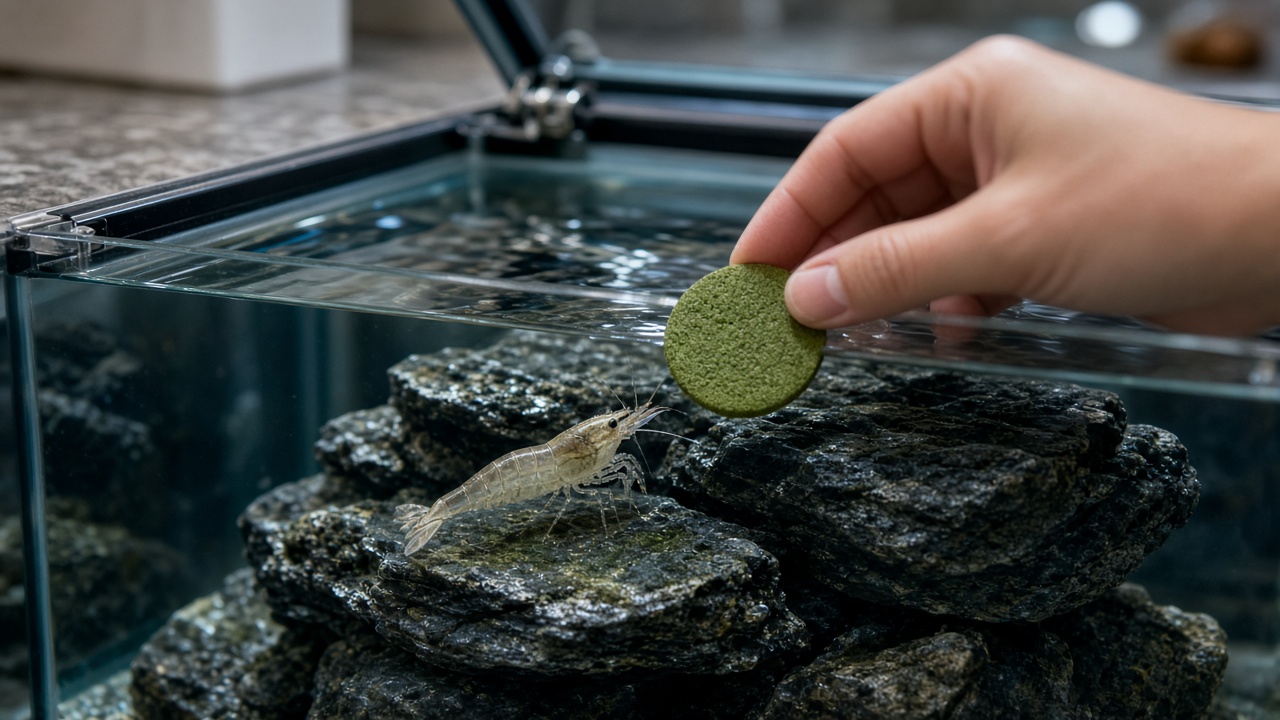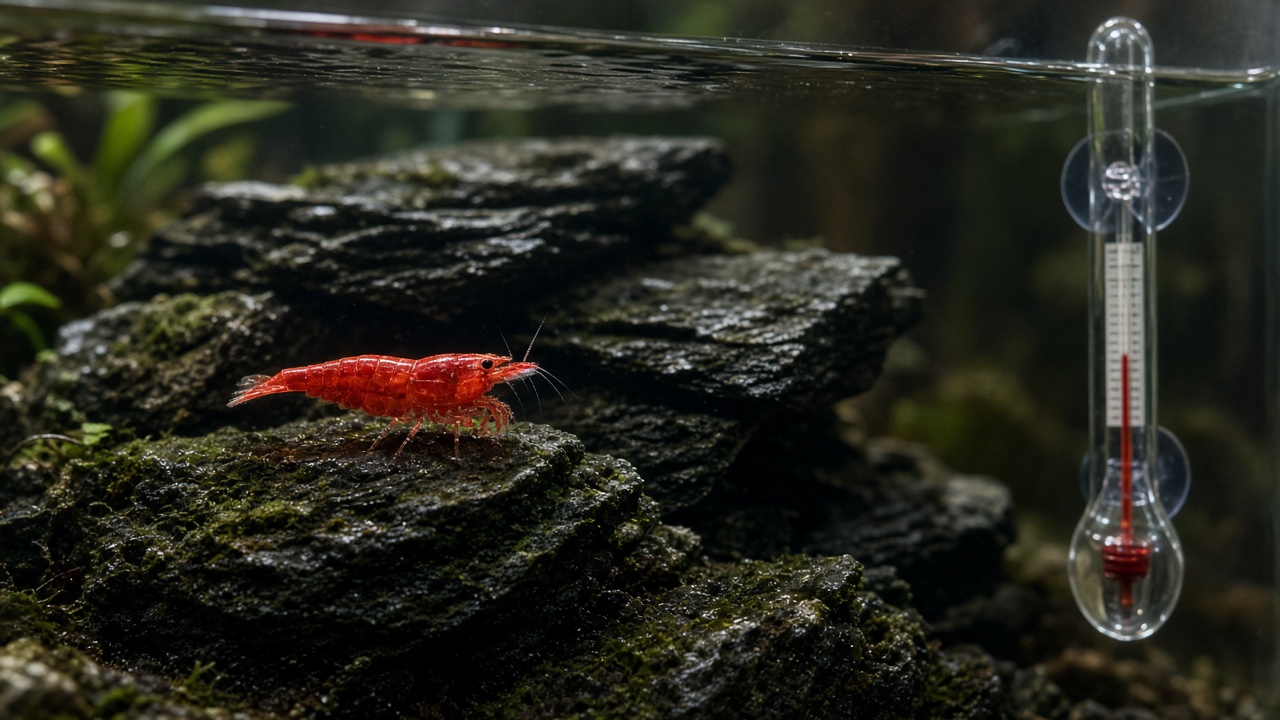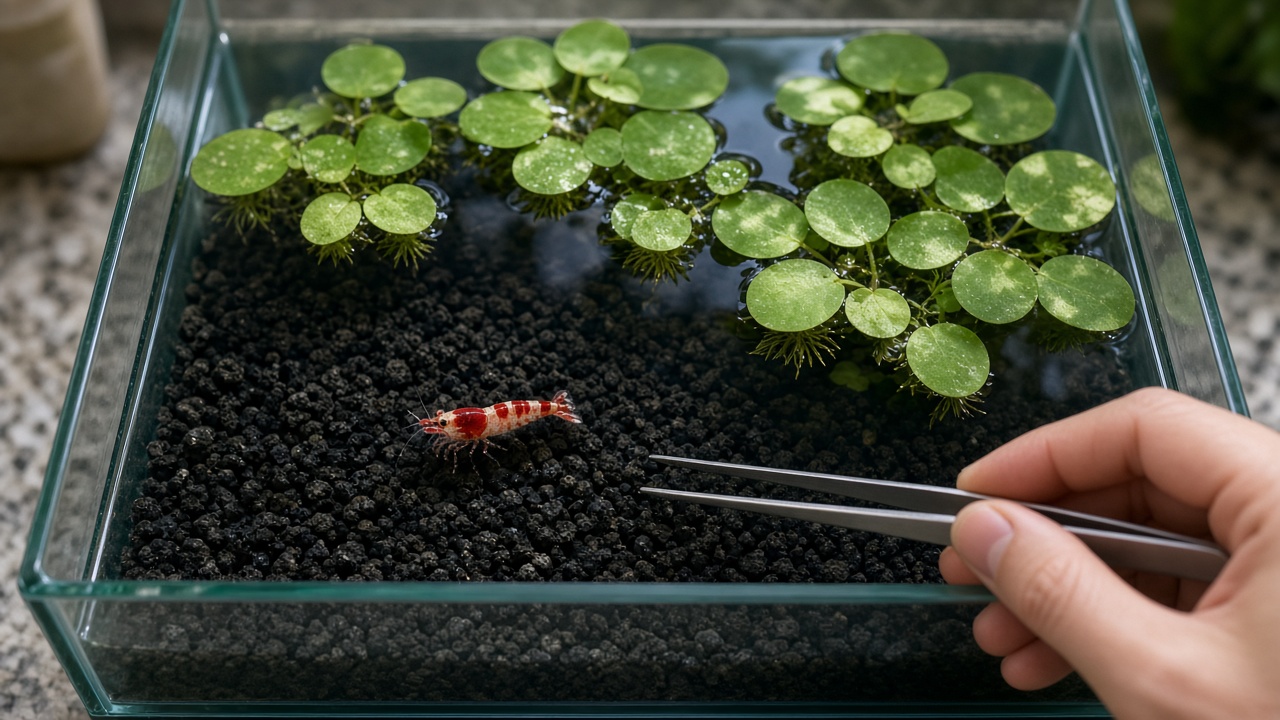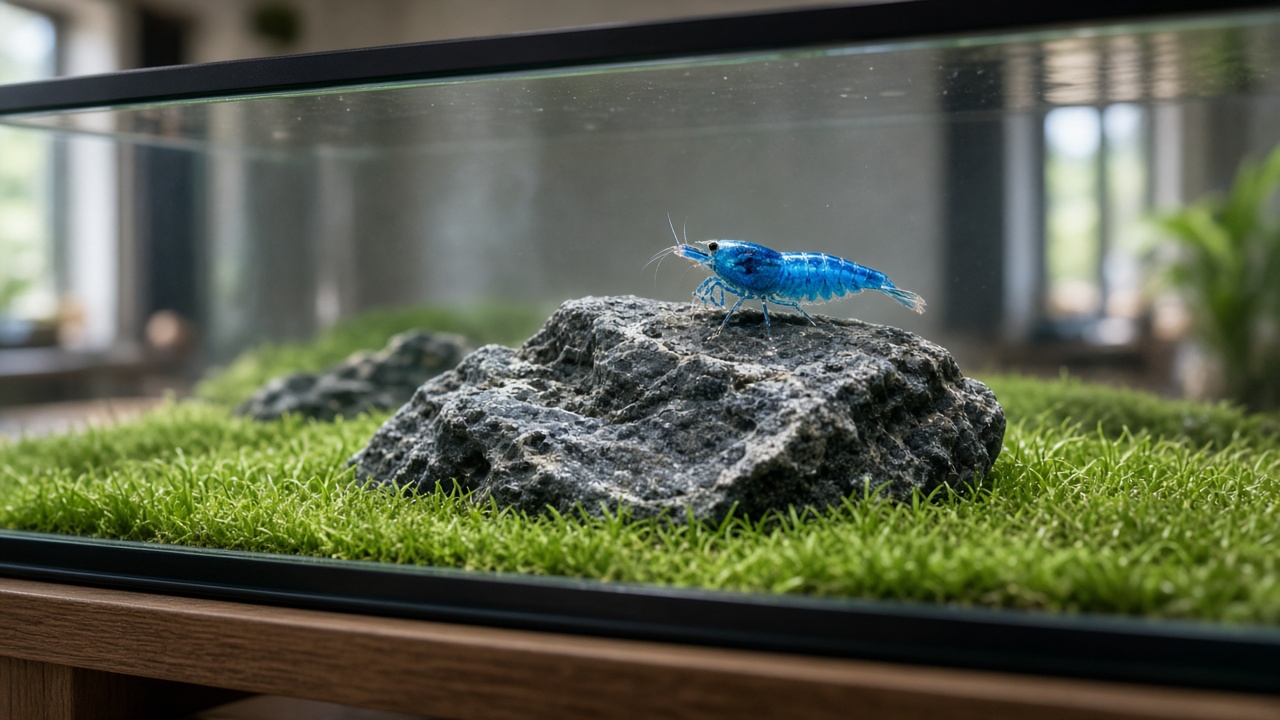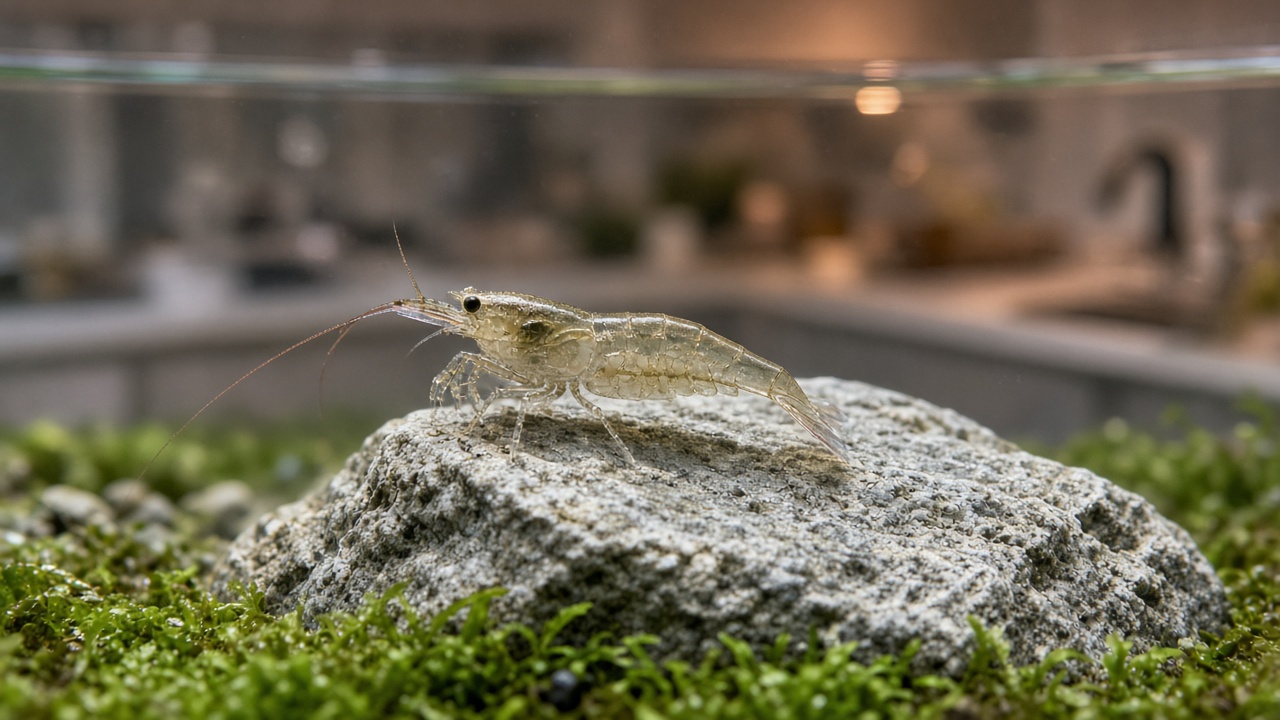
Quick answer: Full-grown Amano shrimp usually reach about 1.5–2 inches. Females run larger than males. Plan a mature tank of about 5–10 gallons or more, with grazing surfaces, a tight lid, and stable water.
Full-grown Amano shrimp usually reach about 1.5–2 inches, with females larger than males.
This page is a home-aquarium size and tank guide for Caridina multidentata, the Amano or Yamato shrimp. Our research team compared published care sheets and trade guidance.
Selection rule: We include adult length, sex size gaps, growth timing, and tank-volume numbers from named maker or trade pages. We exclude wild-collection tips, ranked “best shrimp” lists, and breeding recipes that invent home salinity day plans. We also skip tropical fish-only stocking math that ignores adult shrimp length.
Full-grown length in home tanks
Adult size is the first filter for tank mates and lids.
Aquarium Co-Op’s Amano shrimp care guide states that Caridina multidentata grows to about 1.5–2 inches (4–5 cm). That is slightly larger than typical Neocaridina cherry shrimp on the same page. The Ornamental Aquatic Trade Association (OATA) freshwater shrimp-and-snails care sheet says Amano shrimp grow slightly larger, listing about 5 cm, while smaller shrimp species sit near 3 cm.
Those two figures frame most shop adults. Some keepers report bigger females in long, well-fed tanks. Treat 1.5–2 inches as the working adult band for planning, not a promise every animal will hit the top of the range.
Measure length from the tip of the rostrum toward the tail fan when you can. Casual “two inches” talk usually means total body length, not carapace alone. Shop bags often hold juveniles under that adult band, so buy for future size.
Compare any tank mate by adult mouth size, not by the cute juvenile in the store tank. A fish that cannot swallow a 2-inch shrimp may still nip a soft new molt.
Male vs female size and markings
Sex explains most of the size spread you will see.
AquariumBreeder’s detailed Amano guide states females can grow up to 5–6 cm. It states males are usually 3–4 cm. Aquarium Co-Op notes males are smaller with dots along the side. Females are larger and show a row of dashes instead of dots.
Practical ID tips:
- Females look heavier through the abdomen
- Males stay slimmer and often look shorter at the same age
- Dashes on the flank often mark females; spaced dots often mark males
- A “saddle” of developing eggs can appear in the carapace before eggs move under the tail
Size-match animals when you mix sexes in a small box. Large females can outcompete small males and dwarf shrimp at the food dish. That is hunger politics, not hunting sport.
Do not use color alone to sex them. Diet can tint the body tan, gray-blue, or slightly green. Markings and body shape beat color myths.
Growth rate and time to adult size
Growth is stepwise because shrimp molt.
AquariumBreeder states it takes Amano shrimp about 5 months to reach maturity. That is a useful planning number for “when will they look full size,” not a stopwatch for every tank. Cooler water, sparse food, and frequent stress can stretch the calendar. Warm, stable tanks with steady biofilm often look faster.
Each molt leaves an empty shell that can fool new keepers. Aquarium Co-Op notes an empty exoskeleton can look like a dead shrimp. Leave clear molts in place when water is clean so minerals can return to the food web.
Growth checklist:
- Keep ammonia and nitrite at zero before you chase faster growth
- Offer calcium-aware shrimp foods, not only leftover flakes
- Protect soft post-molt animals with plants and caves
- Avoid copper meds that stall or kill crustaceans
- Log length roughly each month if you care about “full grown” timing
Larvae tell a different growth story. AquariumBreeder notes newly hatched larvae are tiny, about 1.5 mm long. Adults in freshwater do not equal easy freshwater babies. Amphidromous larvae need saline development in nature and in lab work.
Tank size for adult Amano shrimp
Adult length drives footprint more than raw gallon labels.
OATA recommends an aquarium of approximately 20 litres for larger species such as apple snails or Amano shrimp. It also says the tank must be larger when fish share the system. AquariumBreeder advises at least a 10-gallon aquarium and says that size can hold about 5–6 shrimp without overstocking under its stocking note.
Those two numbers are planning screens, not a shrimp-per-gallon law. Longer tanks give more wood, rock, and leaf surface for grazing. Tall columns waste space for surface walkers.
Setup basics for adult size:
- Use a tight lid; Amanos escape through cord gaps
- Guard filter intakes so large adults cannot enter
- Build plant and hardscape lanes for grazing
- Leave open sand or glass for inspection
- Upsize when you add fish that compete for food
OATA’s broad guidance also says social shrimp should usually be kept in groups of at least five. Aquarium Co-Op notes Amanos have a low bioload and do not require groups the way some species do. If you keep a small number, watch shy hiding and feed with care so every animal eats.
Water targets that support steady growth
Stable chemistry protects molts that build length.
Aquarium Co-Op lists a workable band of 65–82°F (18–28°C), pH of 6–8, and moderate to hard GH. OATA’s shrimp-and-snails table lists 17–27°C, pH 6.5–8.0, general hardness 4–18°dH, and carbonate hardness 3–15°dKH. OATA also requires ammonia and nitrite at zero milligrams per litre. Nitrate should not exceed 20 mg per litre above normal tap water levels on that sheet.
Home priorities:
- Cycle fully before shrimp arrive
- Condition out chlorine and chloramine
- Avoid copper fertilizers and “quick cure” fish meds
- Match seller water when you acclimate
- Keep summer peaks inside the published bands
Harder mineral content supports shells. Aquarium Co-Op notes soft water may need mineral support for healthy molts. Soft, acidic swings are a common reason growth stalls after a good start.
Do not chase growth with constant high heat. Warm water can raise activity while shortening the useful life window many keepers see.
Life cycle limits on “growth” myths
Eggs under a female do not mean a tank full of babies.
Caridina multidentata is amphidromous. Adults live in freshwater. Larvae need a saline phase to finish development. Tropical Fish Co’s Amano guide cites peer-reviewed larval work that completed juvenile development across saline treatments of 17–34 ppt under study conditions. OATA describes Amano breeding as needing a specialized brackish setup.
AquariumBreeder lists egg incubation of about 4–5 weeks before hatch. It also notes a rough wild larval period on the order of 40–50 days before juveniles return toward freshwater habitats. Those numbers explain why “easy freshwater breeding” claims fail for this species.
Size implications for keepers:
- Berried females still need adult space and food
- Fry will not appear as free dwarf-shrimp colonies in plain freshwater
- Buy stocked adults or juveniles when you want a working algae team now
- Do not crowd a nano tank hoping babies will “fill in”
Focus growth effort on clean water and steady food for the adults you already own.
Attribute table for size and tank planning
| Cue | Published number or rule | Publisher |
|---|---|---|
| Typical adult length | About 1.5–2 in (4–5 cm) | Aquarium Co-Op |
| OATA adult length note | About 5 cm for Amano | OATA shrimp-and-snails sheet |
| Female vs male length | Females up to 5–6 cm; males often 3–4 cm | AquariumBreeder |
| Time to maturity | About 5 months | AquariumBreeder |
| Larger-shrimp tank screen | About 20 litres | OATA |
| Alternate min volume note | 10 gallons+ for a small group | AquariumBreeder |
| Temperature band | 65–82°F / 18–28°C | Aquarium Co-Op |
| OATA temperature band | 17–27°C | OATA |
| Nitrate caution | ≤20 mg/L above tap baseline | OATA |
FAQ
How big do Amano shrimp get when full grown?
Aquarium Co-Op lists about 1.5–2 inches (4–5 cm). OATA notes about 5 cm for this larger shrimp. Females often sit at the top of the range; males stay shorter and slimmer.
How fast do Amano shrimp grow?
AquariumBreeder cites about 5 months to maturity. Actual calendars move with temperature, food, and molt success. Watch length across months rather than expecting a fixed weekly inch rate.
What tank size do adult Amano shrimp need?
OATA suggests about 20 litres for larger shrimp such as Amanos, and more space with fish. AquariumBreeder suggests 10 gallons or more for a small group. Prioritize footprint and grazing surface over a tall nano cube.
Are females really larger than males?
Yes in most home tanks. AquariumBreeder lists females up to 5–6 cm and males often 3–4 cm. Aquarium Co-Op also describes females as larger, with dash marks instead of side dots.
Do Amano shrimp stay small like cherry shrimp?
No. They outgrow typical cherry shrimp length. That extra size helps with community tanks, but it also means stronger food competition against smaller dwarf shrimp.
Will they breed and fill the tank with more adults?
Adults may carry eggs in freshwater, yet larvae need saline development. Peer-reviewed larval work cited in trade summaries used 17–34 ppt treatments under lab conditions. Expect algae help from the adults you buy, not a self-filling colony.
How long do they live once they reach adult size?
OATA says freshwater shrimp and snails can live for a couple of years in a well-matured setup. AquariumBreeder lists a captive span of about 2–5 years. Cool, stable water and clean molts support the longer end of that window.