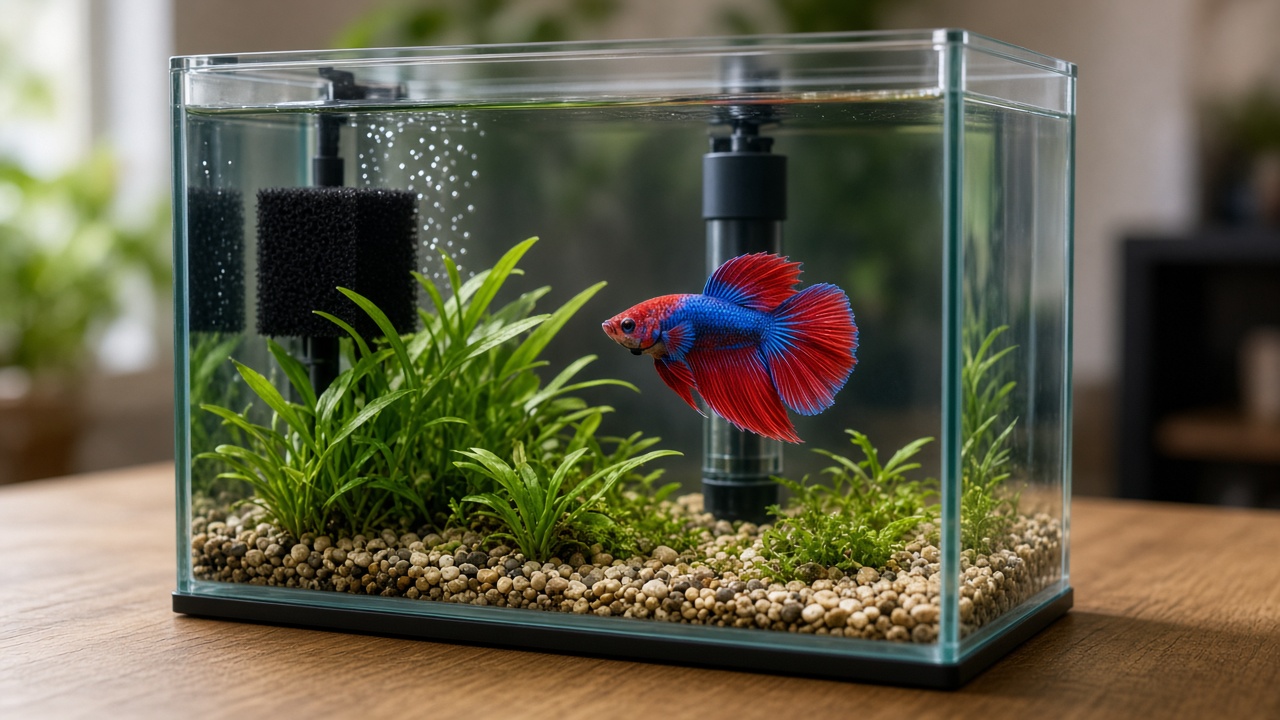
Quick answer: Yes. Bettas rest with open eyes, slower gill beats, and little swimming. A healthy fish startles and moves if you tap the glass or drop food.
Yes. A healthy betta rests with open eyes and still fins, then swims within seconds after a tap on the glass.
This page is a home-aquarium rest desk that compared published care sheets.
Selection rule. We cover only still-water, single-home Betta splendens rest you can see without tools. We leave out breeding pairs, drug doses, and hour-count claims no named agency publishes for bettas.
What betta sleep looks like
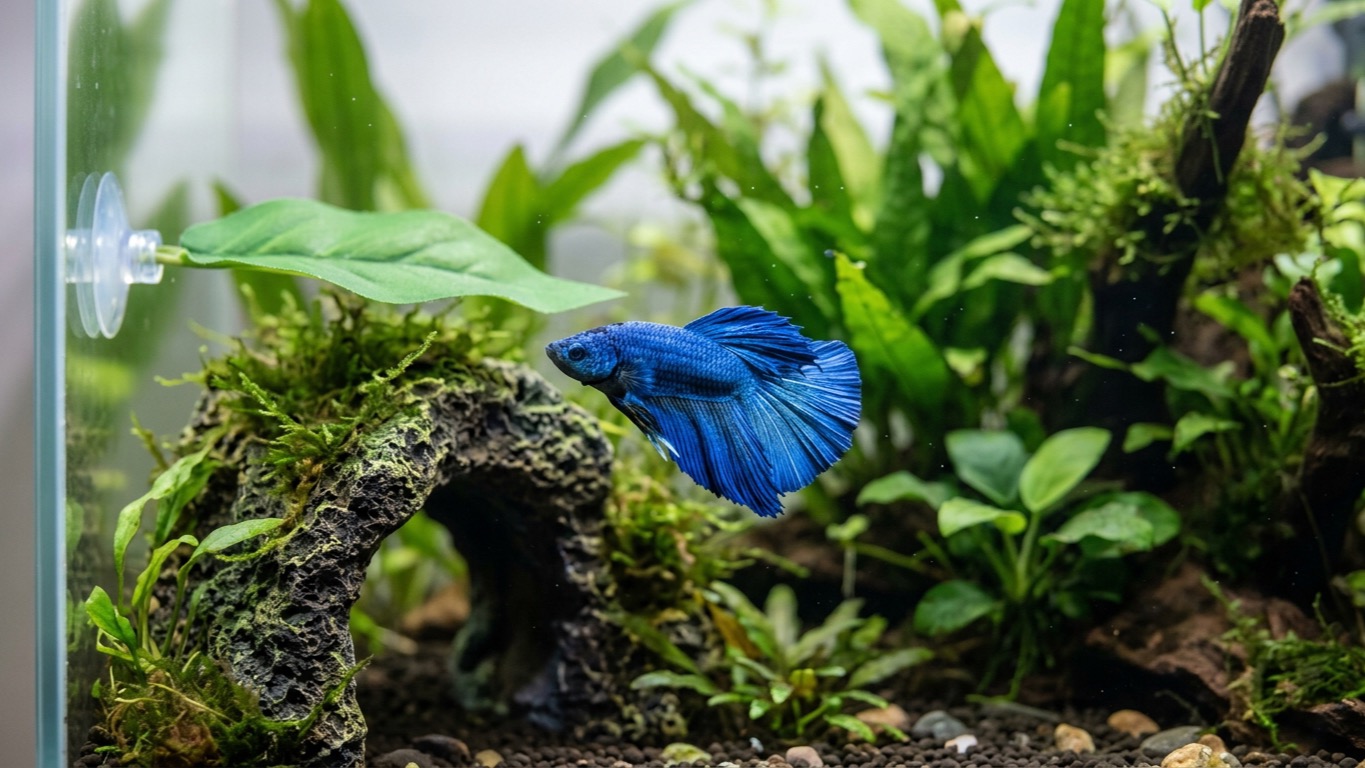
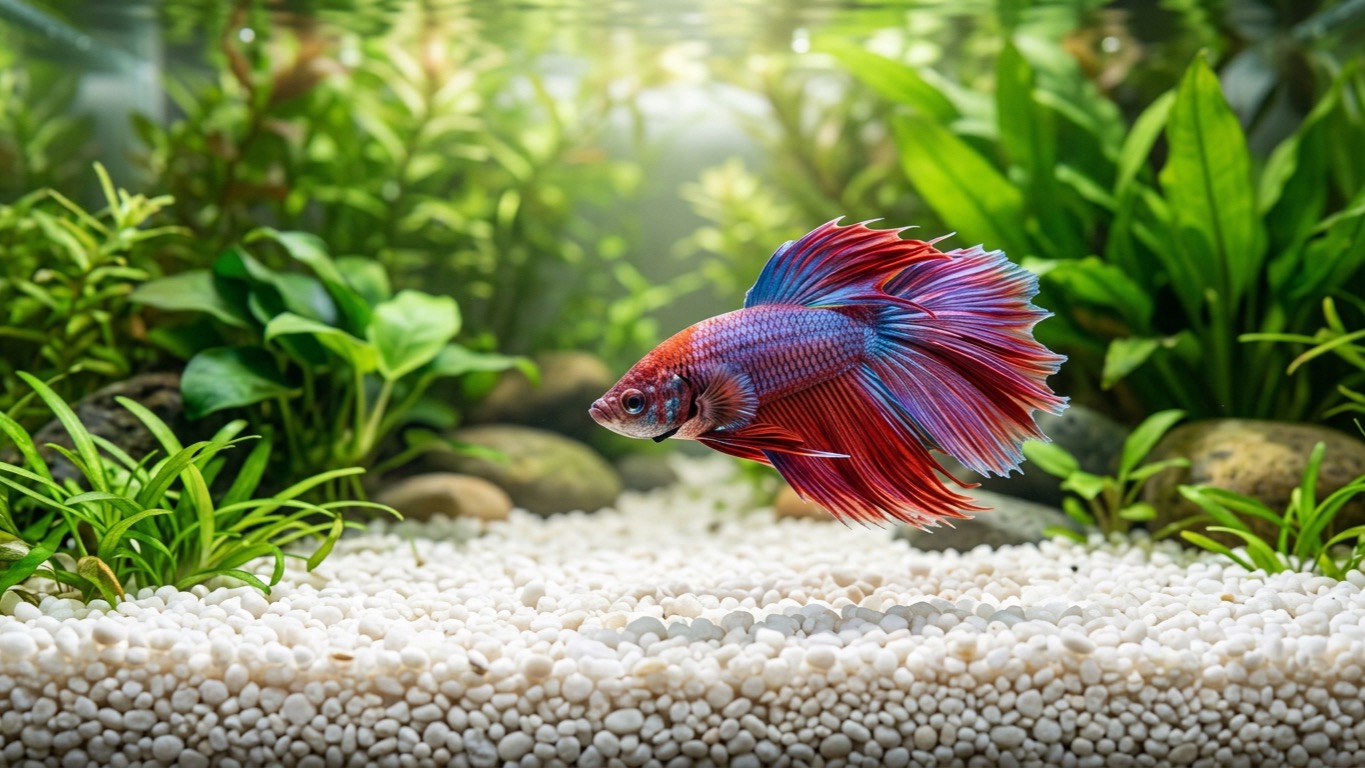
A sleeping betta looks still and open-eyed, not curled up or shut-eyed like a dog.
NOAA’s ocean-facts page says most fish rest by cutting activity and metabolism while staying alert to danger. Aqueon’s fish-sleeping article says that rest includes stillness, slower breathing, and lower brain activity.
The Sleep Foundation’s fish-sleep page says researchers often call this state rest, not sleep. Most fish have no eyelids, so they cannot close their eyes during that rest.
Use the Still-Then-Startle Rule as a three-part check drawn from those published rest cues.
- Still body: the fish hangs in place, sits on a leaf, or lies on the bottom.
- Open eyes: the stare looks blank, which is normal because there are no lids to shut.
- Startle and swim: a tap on the glass, a light change, or food should wake the fish.
Aqueon’s fish-sleeping article lists the same cluster: stillness, a perch on the bottom or on an object, and a slow reaction to nearby motion. That pattern shows up at about the same time each day, often after the light goes off.
The Sleep Foundation’s page adds that a resting fish takes longer to respond to light or to food dropped in the tank. Do not wait for a yawn or closed eyes, because those mammal cues will never appear on a betta.
How to tell rest from trouble
Rest ends with a startle, while trouble keeps the fish still after several cues.
A nap is short and reversible, so the fish should wake, flare a little, or swim to food. betta care sheet lists warning signs that are not nap behavior, including not eating, lethargy, and abnormal swimming. Frayed fins and new spots also sit on that published list.
Use this split when you are unsure what you are seeing.
- Rest: still body, open eyes, slow gills, then a clear wake-up.
- Trouble: no interest in food, odd swimming, or no startle after several cues.
- Water first: ’s sheet says water issues are a very common root of stress.
If those trouble signs appear, run this tank check next.
- Confirm the water temperature with a thermometer instead of guessing from room air.
- Test the water on your usual weekly day and write the readings down.
- Watch one feeding, because Aqueon’s betta care guide says all food should be gone in two minutes or less.
sheet says to contact a local fish store or other expert if the fish will not eat. Contact them if swimming looks wrong or fins keep getting worse, because we do not diagnose illness on this page.
When bettas rest and how light sets the clock
Bettas follow a day-active clock, and darkness is the main cue to park and rest.
Aqueon’s fish-sleeping article says most aquarium fish are diurnal, meaning they move by day and rest at night. Aqueon’s ultimate betta guide says tank lights should mimic a natural day-night cycle so the fish can sleep.
That guide also publishes a concrete light cap of six to eight hours. Our research team used that published range and did not use unsourced “hours of darkness” totals from hobby blogs.
Put the light on a timer, which Aqueon’s fish-sleeping article calls the easiest way to keep a steady day and night routine.
- Turn the light on in the morning and off in the evening on the same clock every day.
- Keep tank light at six to eight hours, per Aqueon’s ultimate betta guide.
- Skip all-night glow, because Aqueon’s fish-sleeping article warns that constant light can block melatonin in zebra danios.
The Sleep Foundation’s page backs the light warning with lab detail. In one zebrafish study, light exposure cut sleep for days, while an electrical or mechanical wake-up did not have the same lasting cut.
The Sleep Foundation’s page also says fish will grab tiny rest scraps if you keep interrupting them. Interrupted fish can fall into microsleeps that equal only 5% to 10% of normal rest.
Room lamps and TVs count as light, so a tank in a bright room still needs a dim-out period. Aqueon’s fish-sleeping article says cover and a regular off-cycle matter as much as the fixture itself.
Daytime still spells can be normal rest breaks rather than a broken clock. Aqueon’s ultimate guide notes that bettas take lots of rest breaks because long fins cost energy. A short midday hang on a leaf can be fine, but all-day stillness plus no appetite is not the same thing.
Where bettas park: plants, leaves, and substrate
A betta parks where it feels hidden and can still reach the air at the surface.
Aqueon’s fish-sleeping article says rest spots vary by species, from the bottom to the surface to plants, driftwood, or other objects. Aqueon’s betta care guide says these fish gulp air with a labyrinth organ, so surface access is not optional.
Aqueon’s ultimate betta guide says soft leaves and “betta hammocks” make welcome rest stops. That same guide names Hornwort, Naja grass, and Anubias as plant options. Broad leaves near the top cut the work of holding long fins.
Live plants give those parking spots without sharp plastic edges. Pick soft leaves and leave an open patch of surface so the fish can breathe.
The bottom of the tank matters for rest as well. A still betta may lie on gravel or sand, so smooth substrate reduces fin snags when the fish settles there.
Give the fish one of each rest zone listed here.
- A broad leaf or hammock near the surface for low-effort parking.
- A cave or plant clump with a wide, smooth opening that will not snag fins.
- A clear bottom patch with no jagged rock where the fish can lie still.
Aqueon’s betta care guide also says bettas jump, so keep a secure lid on.
Do not crowd the whole surface with floating cover. The labyrinth organ needs an open gulp zone, and shade is good, but a full lid of floating plants is not.
Temperature, hunger, and rest
Cool water makes a betta look sleepy, and that look is metabolism, not a longer nap.
Our research team compared two published temperature bands. betta care sheet lists 76–81 F, and Aqueon’s betta care guide lists 76° to 85° F. The overlap is 76–81 F, and the high-end gap is 4 F.
| Publisher | Published temperature | Published pH |
|---|---|---|
| care sheet | 76–81 F | 6.5–7.8 |
| Aqueon betta care guide | 76–85 F | 6.8–7.5 |
Aqueon’s betta care guide says cooler water makes bettas inactive and more open to disease. If the room sits below 76° F, that guide says to use a heater. sheet says even a warm house still needs a heater because swings stress fish more than a single number. sheet also publishes heater sizing of about 3–5 watts per gallon. Use a thermometer and do not guess from the room air.
Hunger and rest sit on the same daily clock. Aqueon’s betta care guide says feed once daily in unfiltered containers, or once or twice a day in filtered tanks. sheet matches that daily rhythm.
Use betta food that the fish can finish fast. Aqueon’s care guide says leftover food should be removed, and a fish that ignores a normal meal after a wake-up cue is not mid-nap.
A rest-friendly tank, step by step
A rest-friendly tank is warm, dim at night, and full of soft parking spots. sheet says bettas do best in at least 2.5 gallons and calls 5–10 gallons ideal because bigger water stays more stable. Aqueon’s care guide says larger habitats are more stable and easier to maintain. Our desk follows the overlap and starts at 5 gallons when you can. sheet says a new tank can take four to six weeks to cycle. Aqueon’s care guide says to set the container up at least 48 hours before you buy the fish. Those are different clocks, and cycling is the longer job.
- Pick a tank of at least 2.5 gallons, or 5–10 gallons if you can, per ’s sheet.
- Add a heater sized at 3–5 watts per gallon, per ’s sheet.
- Hold temperature in the 76–81 F overlap from both publishers.
- Add a low-flow filter, which Aqueon’s care guide says is not required but cuts chores.
- Add plants, a lid, and one open surface gulp zone.
- Put the light on a timer for six to eight hours, per Aqueon’s ultimate guide.
Keep water changes on a published schedule instead of inventing a new one.
- Unfiltered bowls: Aqueon’s care guide says change 1/3 of the water every 3 to 4 days.
- Filtered tanks: that guide says change 10% every week or 25% every 2 weeks.’s sheet says change 15–25% weekly, plus a substrate siphon.
Never change all the water at once, which is a rule Aqueon’s care guide states in plain words.
Aqueon’s care guide lists an average lifespan of 3 to 4 years, while ’s sheet lists 3–5 years with proper care. Adult body length on ’s sheet is 2.5–3 inches, and long fins make the fish look bigger than that body measure.
Aqueon’s care guide says there are over 70 recognized species of Betta, and this article covers only pet Betta splendens in a still home tank.
Aqueon’s fish-sleeping article says to provide plenty of cover so fish feel safe at rest. One hide, one leaf, and one open lane is enough, and a maze of sharp decor is not.
FAQ
Do betta fish sleep with their eyes open?
Yes, because the Sleep Foundation’s fish-sleep page says most fish have no eyelids, so they cannot close their eyes. Aqueon’s fish-sleeping article says the same thing. Open eyes during rest are the default, not a sign the fish is awake.
How many hours do betta fish sleep?
No named agency on our source list publishes a betta-hour quota, and hobby pages often invent one. Aqueon’s ultimate guide publishes a light window of six to eight hours. Hold that clock, then let the fish rest in the dark hours that follow.
Is my betta dead or sleeping?
Use the Still-Then-Startle Rule on what you can see in the tank. A resting fish has open eyes and slow gills, and it should swim after a tap, a light change, or food. If gills stop, or the fish does not move after several cues, ask a local fish store or other expert, as ’s sheet advises.
Why is my betta lying on the bottom?
Aqueon’s fish-sleeping article says many aquarium fish lie on the bottom or on an object when they rest. That pose alone is not proof of illness. Watch for a wake-up, then check temperature and weekly water tests, because bottom-sitting plus no food is the trouble pair.
Can I leave the tank light on all night?
No, because Aqueon’s ultimate guide says lights should mimic day and night so the fish can sleep. Aqueon’s fish-sleeping article says constant light can inhibit melatonin in zebra danios. Use a timer for six to eight hours of tank light, then real darkness.
Do bettas sleep during the day?
They can, and Aqueon’s ultimate guide says bettas take many rest breaks because long fins cost energy. A short daytime hang on a leaf can be normal. All-day stillness with no startle and no appetite is not a nap pattern.
Should I wake a sleeping betta to feed it?
Feed on a clock, not by poking the fish. Aqueon’s care guide says feed once daily in unfiltered tanks, or once or twice in filtered tanks. Drop food at the usual time, and a healthy resting fish should wake for a meal it knows.