Quick answer: Sex adult cherry shrimp by size, color depth, rounded skirt, saddle, and berried eggs. Juveniles stay hard to sex until they fill out.
Combine size, skirt, saddle, and eggs; never trust color alone.
We compared published care data on Neocaridina davidi sex traits, adult sizes, and breeding signs. Our research team analyzed size ranges, abdomen shape, saddle marks, and berried clutches used in sexing guides. Owners consistently report mistaking pale males for sick females and buying only large colorful shrimp that turn out female.
Comparing published specs separates adult markers from juvenile guesswork. Females often reach about 1.5 inches and show brighter color. Males often stay nearer 1–1.25 inches with slimmer tails and more translucent shells. A yellow saddle or eggs under the tail confirm a female. Sexing grows clearer as shrimp mature and color deepens. Care needs match for both sexes; colony planning needs both. This page covers traits, pitfalls, mating clues, buying tips, and colony ratios.
Include multi-trait sexing steps, saddle and skirt checks, and colony starter tips. Leave out guaranteed single-trait shortcuts. Skip drug plans that belong with a veterinarian.
Start with size, then confirm with shape
Adult size is the first screen, not the full verdict.
Females are the larger sex in most care notes and can grow up to about 1.5 inches. Males commonly sit nearer about 1–1.25 inches with a slimmer outline. Size gaps show best when you compare shrimp of similar age in the same tank. Store cups mix ages, so one large shrimp isn’t proof of sex by itself. High-grade opaque lines can hide size clues until you study the abdomen. Photograph a calm side view before you decide.
Size board:
| Feature | Typical female | Typical male |
|---|---|---|
| Adult length | Up to about 1.5 in | About 1–1.25 in |
| Body mass | Broader, heavier look | Slimmer, lighter look |
| Tail outline | Fuller toward the rear | Narrower taper |
| Color depth | Often more vivid | Often more translucent |
| Juvenile overlap | High until maturity | High until maturity |
Owners consistently report clearer calls after side-by-side size checks. Our research team analyzed published adult length ranges for both sexes. Comparing published specs treats size as support evidence, not solo proof.
Read the skirt along the abdomen
The rounded female skirt is the strongest everyday shape clue.
Females carry a curved, fuller belly plate that forms a skirt for egg protection. Males show a straighter line from carapace to tail with less curve. From the side, a female’s first abdominal plates look rounder, almost circular on clear stock. Male plates stay flatter and make the rear body look thinner. Dense color grades can hide the curve, so tilt the light and wait for a pause. Never squeeze a shrimp to force a better angle.
Skirt checklist:
- View the shrimp from a true side profile
- Look for a rounded drop under the rear carapace
- Compare the curve to a straight male taper
- Recheck after a molt when the shell is clean
- Wait if the shrimp is still tiny and slender
Owners consistently report the skirt becoming obvious on mature females. Our research team analyzed abdomen-shape notes in Neocaridina sexing guides. Comparing published specs puts the skirt ahead of color when grades match.
Spot the saddle behind the head
A saddle marks developing eggs still inside the ovaries.
Many adult females show a yellow or greenish saddle-like patch behind the head. That mark is unfertilized eggs stored before they move under the tail. Opaque high-grade shells can hide the saddle until light hits just right. Absence of a saddle never proves a male, because not every female shows one at once. After a successful mating, eggs shift under the abdomen and the shrimp is berried. Calm grazing moments give the best saddle views.
Saddle cues:
- Yellow or greenish oval behind the head
- Strong female signal when present
- Hidden on opaque color grades
- Missing between breeding cycles
- Not a disease mark by itself
Owners consistently report saddles weeks before a berried clutch appears. Our research team analyzed ovarian-saddle descriptions in cherry shrimp care notes. Comparing published specs treats the saddle as confirmation, not a daily requirement.
Berried eggs close the case
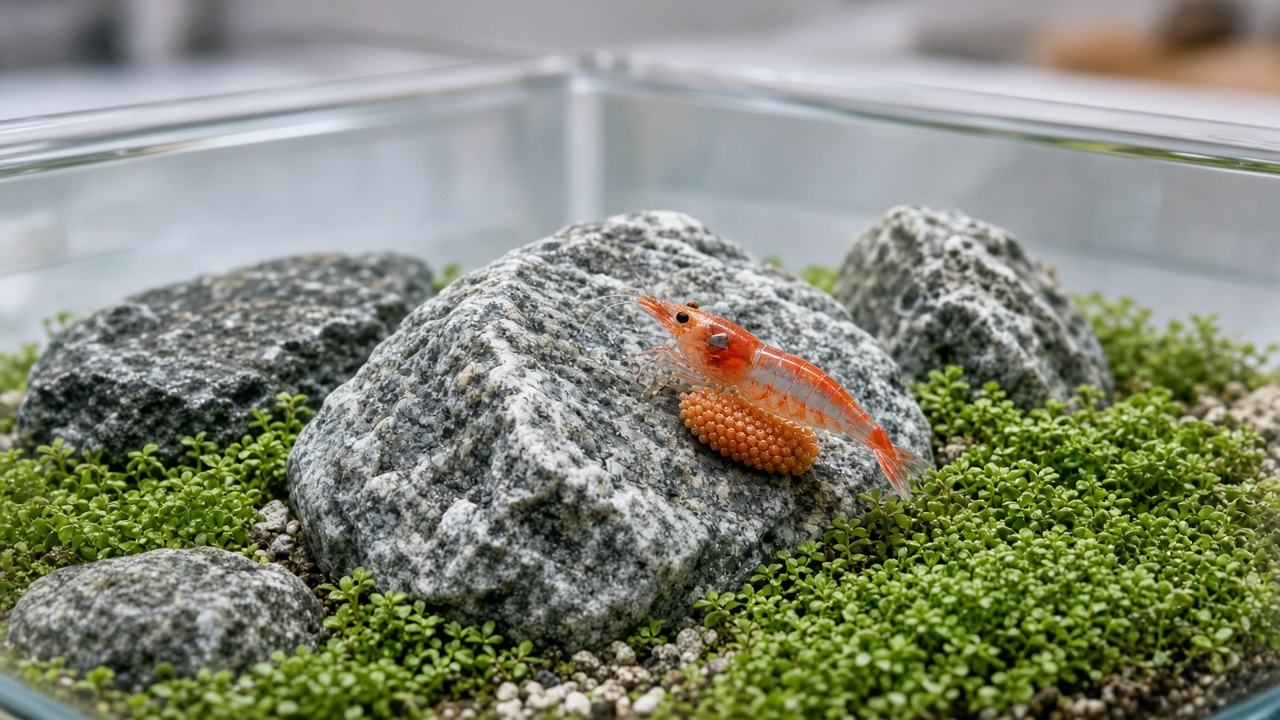
Visible eggs under the swimmerets prove a female beyond doubt.
After mating, females carry about 20–30 eggs tucked under the tail for roughly one month. She fans the clutch with her swimming legs to keep water moving and clean. Egg color often looks yellow, green, or brown depending on diet and strain. Do not confuse healthy eggs with fuzzy fungus growth on a neglected clutch. Males never carry eggs, so a berried shrimp ends the sex debate. Babies hatch as tiny replicas about 1/16 inch long.
Berried board:
| Clue | Meaning |
|---|---|
| Eggs under swimmerets | Confirmed female |
| Fanning motion | Normal egg care |
| Clutch for about one month | Typical carry time |
| About 20–30 eggs | Common clutch size |
| Hatchlings about 1/16 in | Miniature adults |
Owners consistently report easier colony planning once berried females appear. Our research team analyzed clutch-size and carry-time notes in breeding guides. Comparing published specs uses eggs as the clearest female proof.
Color helps on low grades, fails on high grades
Vivid paint often marks females, yet opaque lines blur the rule.
On common red cherry grades, females look brighter and more solid. Males often look paler or more see-through on those same lines. High-grade opaque stock can make both sexes look painted, so color alone fails. Substrate darkness also shifts how red a shrimp appears from day to day. Food quality and stress change color intensity for both sexes. Pair color notes with size, skirt, and saddle every time.
Color caveats:
- Low-grade females often look brighter
- Low-grade males often look translucent
- High-grade opaque stock hides sex by hue
- Dark substrate deepens red display
- Stress fades color in both sexes
Owners consistently report colorful males and pale females in mixed colonies. Our research team analyzed color limitations across Neocaridina grades. Comparing published specs demotes color to supporting evidence.
Behavior clues appear after a female molt
Male frenzy swimming supports the visual call after a molt.
When a receptive female molts, she releases pheromones and males often swim in a frantic search. That chase is a colony clue, not a tool for sexing one shrimp in a cup. Females may hide more when close to spawning and need dense plants for security. Males often roam more while grazing, yet activity alone never proves sex. Watch for several days after a molt instead of one rushed glance. Combine frenzy notes with skirt and saddle before you sort breeders.
Behavior board:
| Clue | Points toward |
|---|---|
| Frenzy after a molt | Active males present |
| Berried clutch | Confirmed female |
| Hiding near spawn time | Possible gravid female |
| Constant roaming alone | Either sex possible |
| Frenzy plus rounded skirt | Strong mixed-sex colony |
Owners consistently report male swarms within hours of a soft molt. Our research team analyzed mating-behavior notes beside anatomy markers. Comparing published specs refuses behavior-only sexing for single shrimp.
Buying mistakes create all-female cups
Skip cherry-picking only the biggest, reddest shrimp at the store.
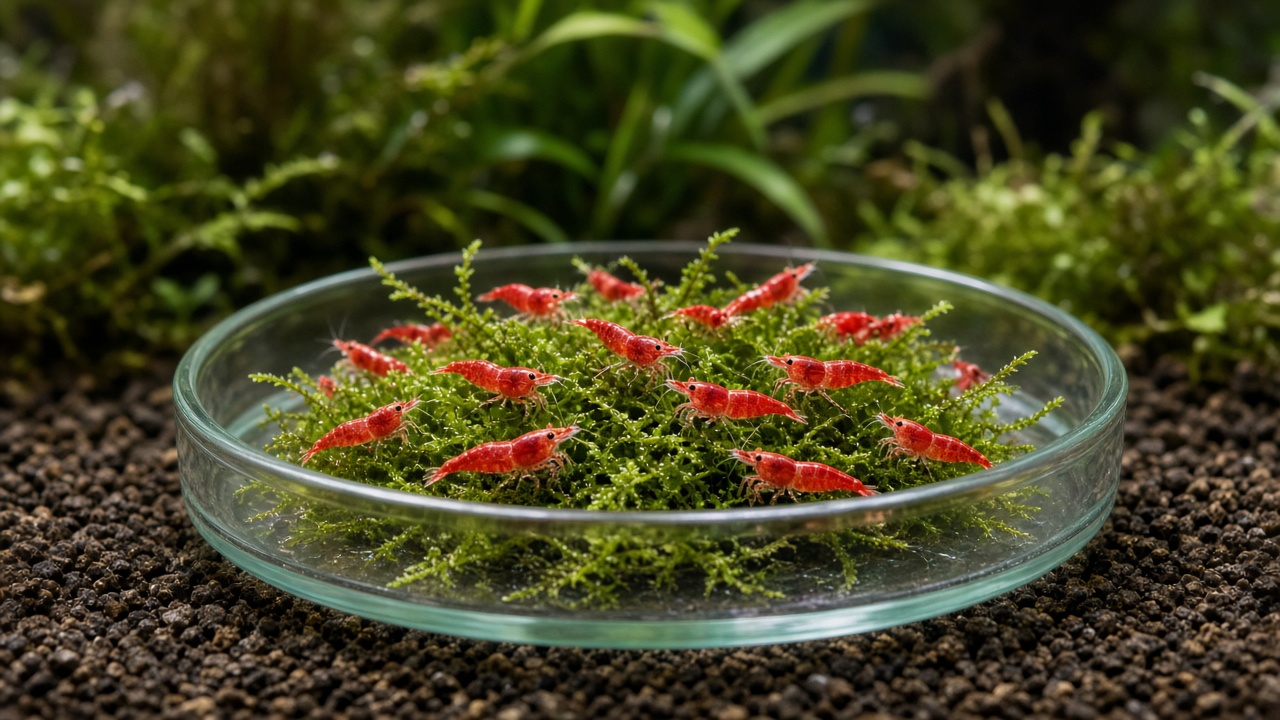
Guides often suggest starting a breeding group with at least about 10 shrimp. That count raises the odds of getting both sexes without perfect sexing skills. Choosing only the largest, most colorful animals can yield mostly females or older stock. Juveniles all look slender and pale, so early sexing invites guesswork. Ask for a mixed group and recheck traits after they settle and grow. Quarantine new shrimp while you confirm sexes before merging colonies.
Mistake traps:
- Sexing week-old shrimplets by hope
- Buying only giant colorful adults
- Trusting color on opaque grades
- Ignoring skirt shape under poor light
- Mixing groups before sexes are clear
Owners consistently report stalled colonies after all-female starter packs. Our research team analyzed starter-group advice in breeding care notes. Comparing published specs favors mixed tens over hand-picked giants.
Sexing cherry shrimp is a checklist, not a glance. Size opens the case, the skirt supports it, and a saddle or berried clutch often closes it. Add frenzy behavior only as colony context. Match confirmed sexes to a planted tank that can hold a growing group safely.
FAQ
What is the most reliable way to sex cherry shrimp?
Find a rounded skirt on a mature shrimp and confirm with size, saddle, or berried eggs. Males usually stay smaller, slimmer, and more translucent on common grades. Use several traits together before you cull or sell breeders. Wait until the shrimp fills out enough for markers to show clearly in good light.
Can you sex baby cherry shrimp?
Usually not with confidence, because juveniles look slender and lightly colored like young males. Traits strengthen as they approach adult size and shell opacity increases. If you buy tiny stock, plan a mixed group of about ten and wait. Rushing sex calls on shrimplets creates false male shortages later.
Do only females have a saddle?
Yes, a true ovarian saddle belongs to females storing eggs before they move under the tail. Opaque shells can hide it, and not every female shows one every week. Missing saddles never prove a shrimp is male on their own. Recheck after molts when the new shell is clean and translucent enough to read.
How many eggs do berried females carry?
Published breeding notes commonly place a clutch near about 20–30 eggs under the swimmerets. Carry time often lasts about one month and shifts with water temperature. She fans the eggs to keep them clean until miniature shrimp hatch. A berried clutch is the clearest single proof you have a female.
Are brighter shrimp always female?
No. Color is a useful clue on lower grades and a weak clue on opaque high grades. Males can look vivid after good food and dark substrate, and females can look pale when stressed. Always pair hue with skirt shape, size, and any saddle. Color-only shopping is a common path to unbalanced colonies.
How many shrimp should I buy to start breeding?
Many care guides suggest at least about 10 Neocaridina to raise the chance of both sexes. Avoid selecting only the largest, brightest adults, which may skew female. Feed mineral-rich foods and keep a mature, planted tank for cover. Once berried females appear, your sex mix is already working.
Do males and females need different tanks?
No. Both sexes share the same temperature, hardness, and diet needs in a colony setup. Separate tanks help only for culling color grades or quarantining new arrivals. Breeding happens in the same planted aquarium when both sexes are present. Focus on sponge filtration, cover, and steady parameters for the whole group.
This guide is informational only and does not replace advice from a qualified veterinarian.