Quick answer: A berried cherry shrimp carries fertilized eggs under her tail for about a month. Keep water stable, cover filter intakes, and feed biofilm plus powdered foods so tiny shrimplets survive after hatch.
Berried females need calm water and safe intakes more than fancy gear.
We compared published care data on Neocaridina “berried” females, egg carry time, and shrimplet care. Our research team analyzed hobby care sheets listing about twenty to thirty eggs, roughly month-long carrying that varies with temperature, and babies near one-sixteenth inch. Owners consistently report success when sponge prefilters, moss, and stable minerals protect hatch day.
Comparing published specs treats pregnancy as egg brooding under the swimmerets, not live birth. Females show a yellow saddle of unfertilized eggs in the ovaries before mating, then move fertilized eggs under the tail. Adults rarely eat their own young, yet fish and open filter intakes erase whole clutches overnight. This page covers spotting berried shrimp, water targets, intake safety, feeding, hatch care, tank mates, and egg troubles.
Include mature planted tanks, sponge-covered intakes, and powdered baby foods. Leave out copper products near shrimp. Skip drug plans that belong with a veterinarian.
Spot berried females and the saddle
Eggs under the tail mean fertilized carrying.
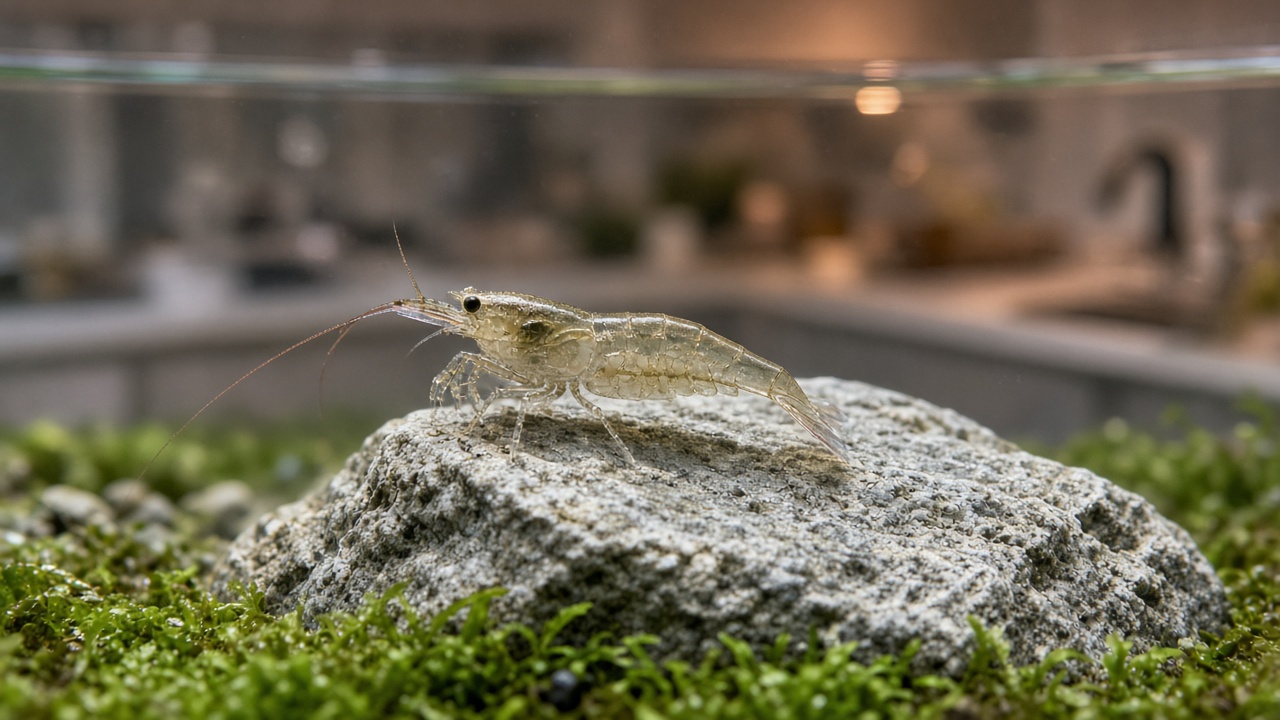
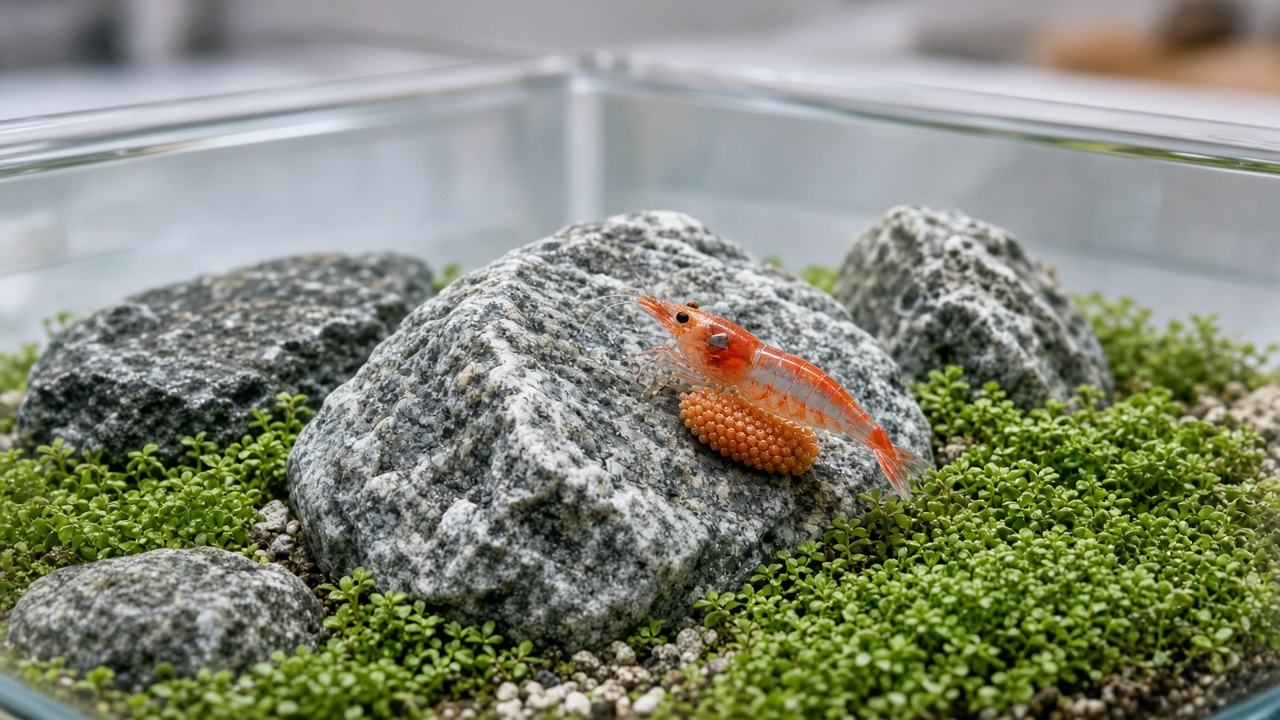
Published guides describe adult females as larger, often up to about one and a half inches, with fuller tails and stronger color. Males stay smaller and slimmer. A yellow saddle on the female’s back holds unfertilized eggs in the ovaries. After a molt and mating frenzy, she becomes berried and fans eggs beneath her swimmerets. Egg color often runs yellow to green and may darken as eyes form near hatch. Do not net a berried female unless you must; stress can make her drop the clutch.
Berried board:
| Cue | Meaning |
|---|---|
| Yellow saddle on back | Unfertilized eggs in ovaries |
| Cluster under tail | Fertilized, berried stage |
| Dark dots in eggs | Eyes forming near hatch |
| Male swim frenzy | Female molted and receptive |
| Opaque limp body | Death, not a clear molt shell |
Owners consistently report clearer plans after they named saddle versus berried. Our research team analyzed sexing notes in cherry shrimp care sheets. Comparing published specs separates ovary eggs from true brooding.
Hold stable water while she carries
Steady parameters protect eggs and molts.
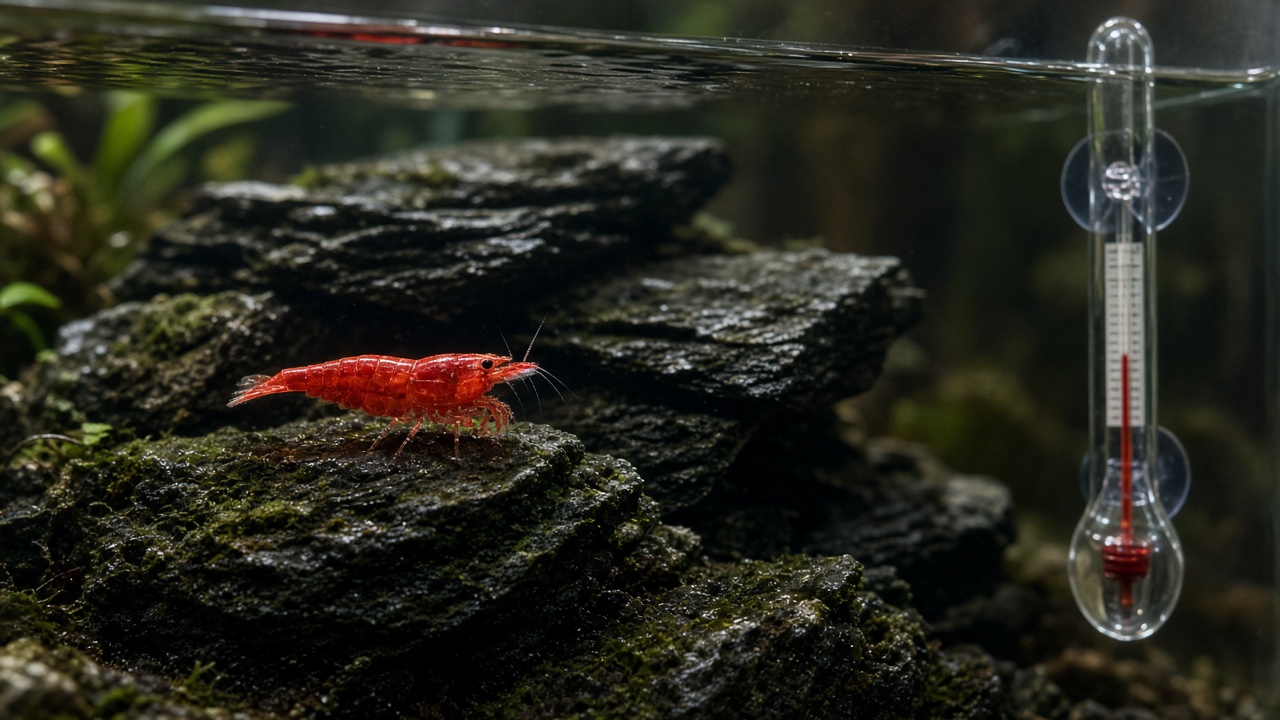
Care sheets list comfortable temperatures near seventy-two to seventy-six degrees Fahrenheit within a wider sixty to eighty-two range. Higher heat speeds metabolism and breeding; cooler water slows both. Target pH about six point five to eight point five for comfort. Keep general hardness at least six degrees and carbonate hardness at least two degrees for healthy molts. Keep ammonia and nitrite at zero. Soft empty water invites failed molts after hatch. Remineralize reverse-osmosis water before it holds a breeding colony. Change water gently so parameters do not swing around berried females.
Water board:
| Parameter | Published comfort |
|---|---|
| Temperature | About 72–76°F preferred |
| Wider range | About 60–82°F |
| pH | About 6.5–8.5 |
| GH | At least ~6° |
| KH | At least ~2° |
| Ammonia/nitrite | 0 |
Owners consistently report fewer dropped eggs after they stopped big chemistry swings. Our research team analyzed mineral notes for Neocaridina molting. Comparing published specs puts stability ahead of chasing one perfect number.
Protect filter intakes before hatch day
Babies vanish into unprotected pumps.
Guides prefer a ten-gallon or larger mature tank for a colony, though adults fit nanos. Use a sponge filter or cover every hang-on or canister intake with a fine prefilter sponge. Dense moss, fine plants, and leaf litter give shrimplets grazing cover. Leave old biofilm alone before hatch; scrubbing the glass right before babies arrive removes their first meals. Skip predator fish if your goal is a rising colony. Adults do not normally eat their own young, so filter safety and tank mates decide survival more than parental care.
Intake checklist:
- Sponge filter or prefilter on every intake
- Mature biofilm and moss beds ready
- Gentle flow near the substrate
- No gravel vacuum panic on hatch week
- Species-only tank when breeding is the goal
Owners consistently report sudden baby counts after they covered intakes. Our research team analyzed filter safety notes in shrimp breeding guides. Comparing published specs treats intake screens as nonnegotiable.
Feed berried females for egg quality
Protein and minerals support eggs and shells.
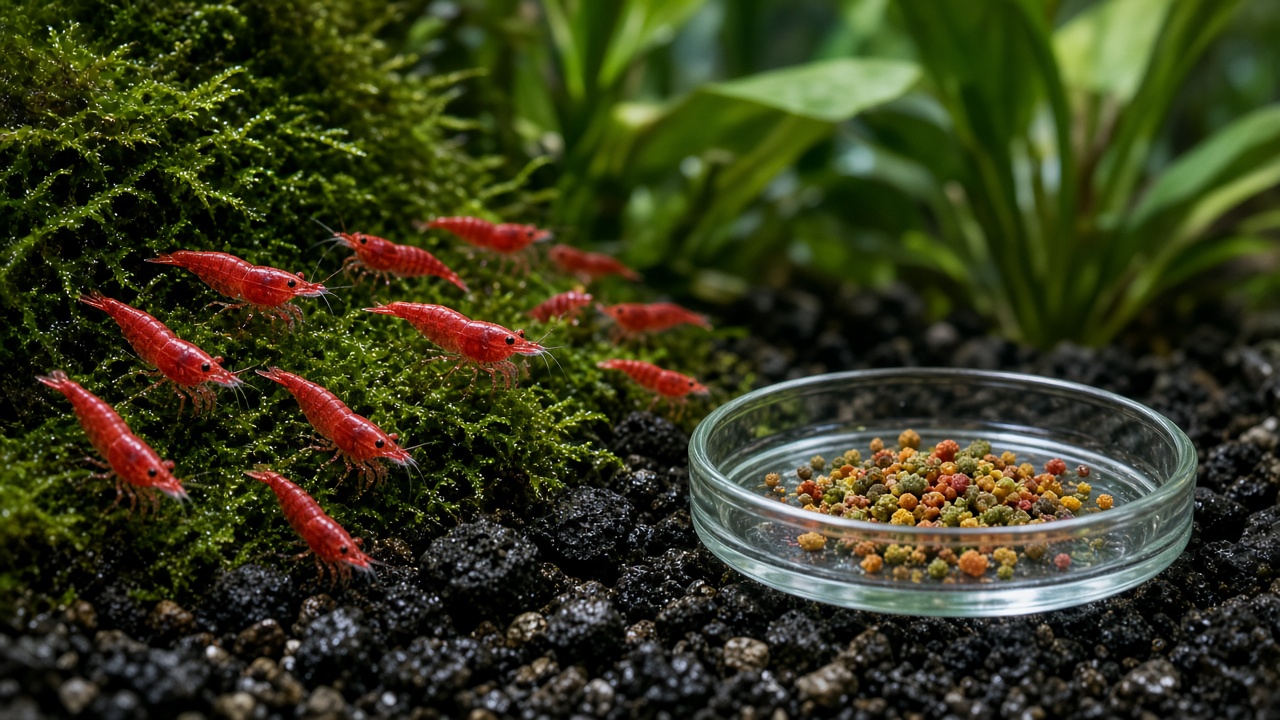
Detritivores graze algae, mulm, and biofilm all day, yet breeding females need extra nutrition. Offer shrimp foods enriched for minerals, blanched vegetables, and enough protein for egg production. Botanicals such as catappa leaves grow biofilm that adults and babies share. Avoid copper-based plant or fish products in shrimp tanks. Remove large uneaten piles so water stays clean without starving grazers. After hatch, powdered fry foods drift to slow-moving shrimplets that lose contests for whole pellets.
Feeding board:
| Stage | Focus |
|---|---|
| Berried female | Protein plus mineral-rich shrimp foods |
| Colony daily | Biofilm, leaves, varied shrimp diet |
| New shrimplets | Powdered foods that drift down |
| Shared snacks | Blanched veg, remove leftovers |
| Never | Copper products near shrimp |
Owners consistently report stronger clutches after varied mineral-rich feeding. Our research team analyzed diet notes for breeding Neocaridina. Comparing published specs balances leftovers cleanup with intentional nutrition.
Care for shrimplets after they hatch
Tiny copies need food that reaches them.
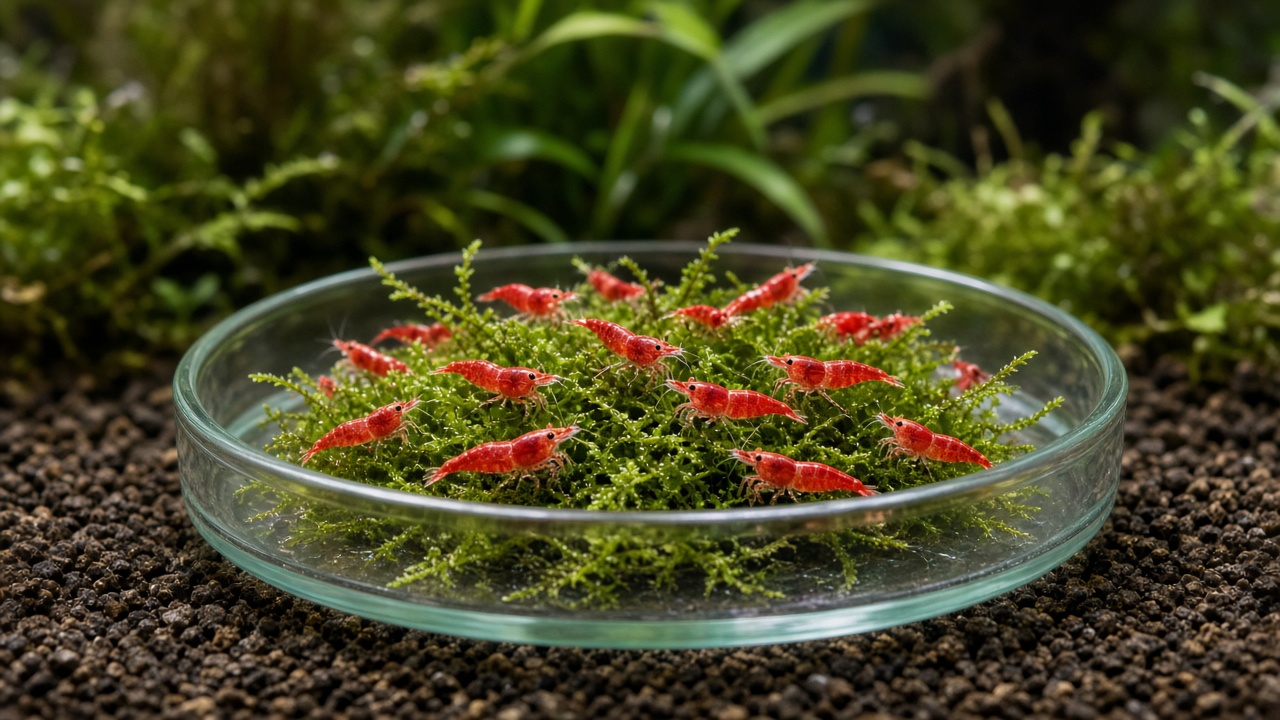
Carry time runs about a month and shifts with temperature; some hobby notes also cite roughly three to five weeks. Each female may hold about twenty to thirty eggs. Hatchlings look like miniature adults near one-sixteenth inch, or about two millimeters, with little color. They forage at once on biofilm and need powdered foods because they move less than adults. Keep covering intakes for weeks while they grow. Color and size improve over later molts; early culling waits until you can judge adults fairly.
Shrimplet list:
- Expect mini adults, not swimming larvae
- Powdered foods plus biofilm surfaces
- Leave leaf litter and moss for grazing
- Wait weeks before grading color
- Maintain zero ammonia through light feeding
Owners consistently report “empty” tanks that later fill with juveniles. Our research team analyzed hatch notes listing size near two millimeters. Comparing published specs favors patience over frantic searching on day one.
Choose tank mates that spare babies
Most fish treat shrimplets as snacks.
Published advice keeps optimal breeding colonies shrimp-only. Peaceful nano fish and otocinclus may share space when adult shrimp matter more than baby counts. Snails and other dwarf shrimp often fit. Almost all fish eat babies, so community tanks hide losses. Never mix with large or aggressive predators. Plan stocking around your goal: display adults versus rising colony numbers.
Mate board:
| Goal | Safer plan |
|---|---|
| Max babies | Species-only shrimp tank |
| Display adults | Peaceful nano fish only |
| Cleanup crew | Snails and dwarf shrimp |
| Risky | Midsize community fish |
| Avoid | Anything that hunts fry |
Owners consistently report colony crashes after adding “peaceful” fish that still ate babies. Our research team analyzed tank-mate warnings in cherry shrimp guides. Comparing published specs matches mates to breeding goals.
Troubleshoot dropped or white eggs
Stress and bad water dump clutches.
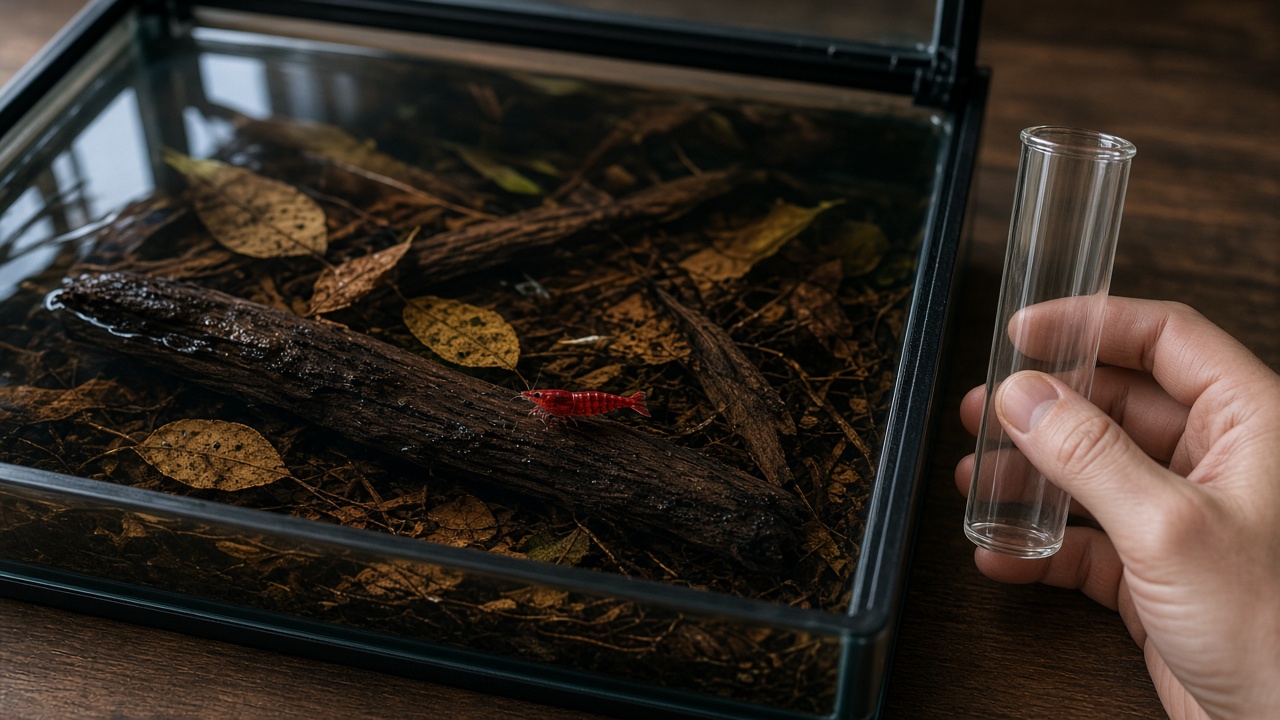
Females fan eggs to keep fungus and low oxygen away. White or fuzzy eggs are often infertile or infected; she may discard them. Sudden egg drops follow netting, big water changes, ammonia spikes, or harassment. Unfertilized clutches may still be carried for a time. Fix water, reduce chasing, and stop relocating berried shrimp mid-term. If breeding stalls in a dense colony, guides note food limits or capacity; feed more carefully or thin the group by selling healthy stock locally.
Trouble board:
| Problem | First check |
|---|---|
| All eggs dropped | Stress, netting, water swing |
| White fuzzy eggs | Infertile or fungus |
| No babies seen | Filter intake or fish predation |
| Breeding stopped | Food load or tank capacity |
| Failed molts | GH/KH too low |
Owners consistently report recovery after they quit moving berried females. Our research team analyzed egg-loss notes in shrimp breeding explainers. Comparing published specs fixes environment before blaming the shrimp.
Berried cherry shrimp succeed in calm, mineral-stable tanks with covered intakes and biofilm-rich food. Spot the saddle, protect the hatch, and feed powders for shrimplets. Skip copper and harsh handling. Ask a veterinarian when disease or mass deaths appear beyond routine water fixes.
FAQ
How long are cherry shrimp pregnant?
Published care notes say females carry fertilized eggs under the tail for about a month, depending on temperature. Some hobby guides also describe roughly three to five weeks of fanning. Warmer water shortens the timeline; cooler water stretches development. Watch for darkening eggs and tiny eye spots near hatch rather than counting calendar days alone. Keep parameters steady through the whole carry window so she does not dump the clutch from stress.
How many babies do berried cherry shrimp have?
Guides commonly list about twenty to thirty eggs per clutch for Neocaridina females. Not every egg always hatches, and predation or open intakes can erase survivors overnight. Adults usually leave their own young alone once they emerge. Colony growth still depends on food, space, moss cover, and filter safety after hatch day. Count juveniles weeks later rather than expecting a visible swarm on day one.
What do newborn cherry shrimp eat?
Shrimplets graze biofilm and microorganisms at once and need powdered foods that drift toward them. Adults outcompete babies for whole pellets and wafers on the substrate. Catappa leaves and moss beds grow useful grazing films for both ages. Keep light, frequent offerings without fouling the water so ammonia stays at zero. Maturity brings stronger color after several molts on that early diet.
Should I move a berried shrimp to a separate tank?
Only if the display tank is unsafe from fish or open intakes that will vacuum babies. Moving itself stresses her and can cause egg loss mid-carry. Many keepers leave her in a stable shrimp-only tank with sponge filtration and dense plants. If you must move her, scoop gently with tank water rather than dry netting when possible. Match temperature and chemistry so the transfer does not shock the eggs.
Why did my shrimp drop her eggs?
Stress, poor water, sudden parameter swings, and rough handling are common published causes of lost clutches. Infertile or fungal eggs may turn white or fuzzy and get discarded as she fans. Test ammonia and nitrite, calm aggressive mates, and avoid chasing her with nets. Stabilize the tank first; healthy females often berried again after later molts. Do not dose random medications without veterinary guidance for invertebrates.
Do cherry shrimp eat their babies?
Care sheets note that adults generally do not predate their own young in Neocaridina colonies. Losses usually come from fish, shrimp-eating invertebrates, or unprotected filter intakes. Species-only setups with sponge filters protect the highest survival rates after hatch. Community tanks can still keep colorful adult shrimp while babies quietly disappear. Match stocking to whether you want a rising colony or display adults only.
What temperature helps eggs hatch well?
Comfortable ranges near seventy-two to seventy-six degrees Fahrenheit support breeding without extreme heat stress. Wider published tolerance spans about sixty to eighty-two degrees for the species. Extreme swings matter more than one perfect reading on the thermometer. Keep heaters and room climate steady through the whole carry period and early juvenile weeks. Higher heat speeds breeding but can shorten overall lifespan in colony notes.
This guide is informational only and does not replace advice from a qualified veterinarian.