Quick answer: Keep pond loaches in a cool indoor tank with soft sand and a lid. Adults can reach the 28.0 cm standard length FishBase lists. Do not treat them as small tropical fish.
A pond loach is a cool-water East Asian bottom fish that FishBase lists at 28.0 cm SL maximum. This page is a desk brief that compares FishBase and USGS records with current maker specs.
Our 28-cm footprint rule decides what is in this guide. We only cover indoor tanks built for a FishBase 28.0 cm SL adult on sand, with weekly water tests. We leave out outdoor koi ponds, bait use, breeding racks, and medicine protocols.
Pond loach size and names
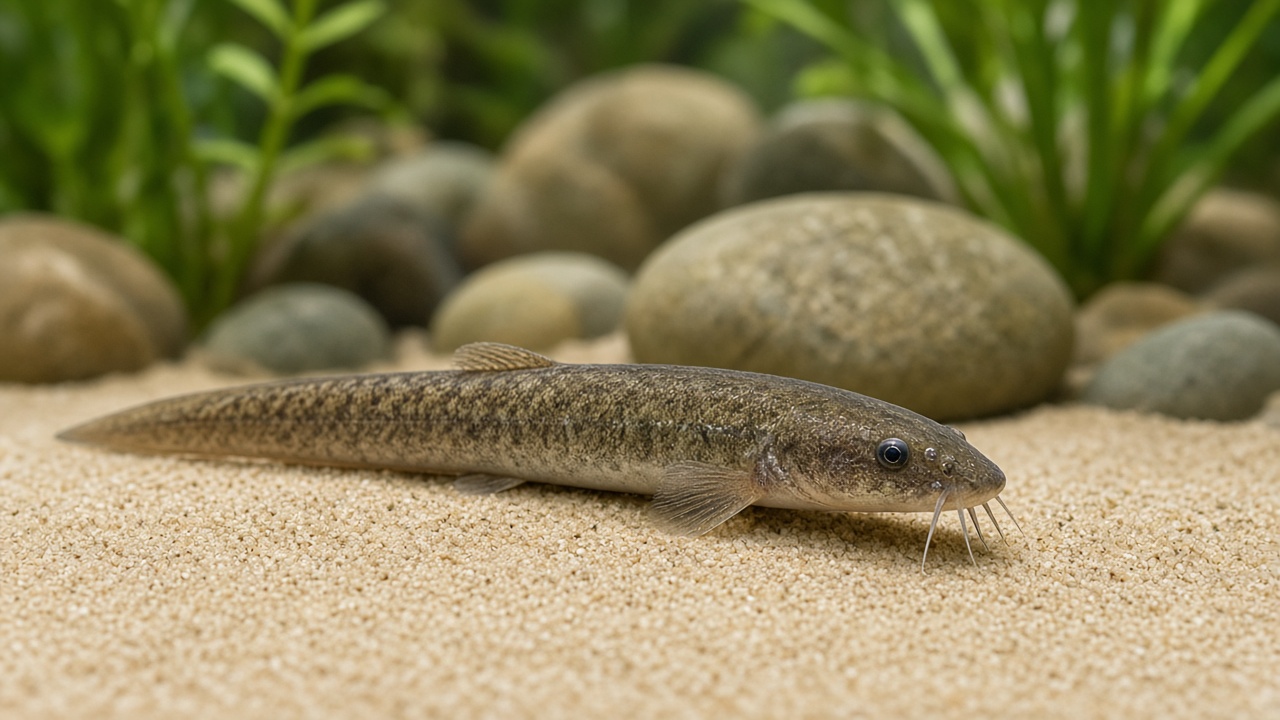
Pond loach, dojo loach, and weather loach are one species with a published 28.0 cm SL cap.
FishBase names the fish Misgurnus anguillicaudatus and uses pond loach as the English common name. The USGS Nonindigenous Aquatic Species profile uses that same scientific name. It also lists Oriental weatherfish, dojo loach, weather loach, and Japanese weatherfish.
- FishBase lists a maximum of 28.0 cm standard length, about 11.0 inches.
- FishBase lists a common length of 15.0 cm total length, about 5.9 inches.
- The USGS profile says size reaches 28 cm SL and averages 10–20 cm, about 4–8 inches.
Shop fish often sit near the common-length figure, so plan the tank for the published maximum, not the juvenile in the bag.
FishBase describes an elongated body with 10 barbels. The USGS profile lists 9 dorsal rays, 6–7 pelvic rays, and 7–8 anal rays.
FishBase places the native range in Siberia, Sakhalin, Korea, Japan, China, and northern Vietnam. It also lists a subtropical climate band of 5°C–25°C and a span from 53°N to 27°S.
FishBase lists the IUCN Red List status as Least Concern, assessed on 20 September 2011.
Temperature: stay inside FishBase’s 5°C–25°C band
FishBase lists 5°C–25°C; that is a cool tank, not a heated tropical tank.
- 5°C is 41°F.
- 25°C is 77°F.
Most heated community tanks sit at or above the top of that band. A pond loach kept there lives at the warm edge of the published range.
The USGS profile cites experimental extremes that are not care targets.
- Critical thermal minimum between −1°C and −2°C
- Survival near about 38°C (100°F)
- Survival at oxygen below 2 mg/L
- Survival through more than 81 days of drying and fasting
Those figures show wild toughness, and they do not make a hot, stale tank a good home.
The USGS profile also treats this species as a cool-water fish that becomes more active when air pressure changes. That habit is why shops still print weather loach on bags.
Skip a tropical heater unless your room drops below the FishBase 5°C floor. If the room already sits inside 5°C–25°C, extra heat is stress, not help.
Indoor tank setup we cover
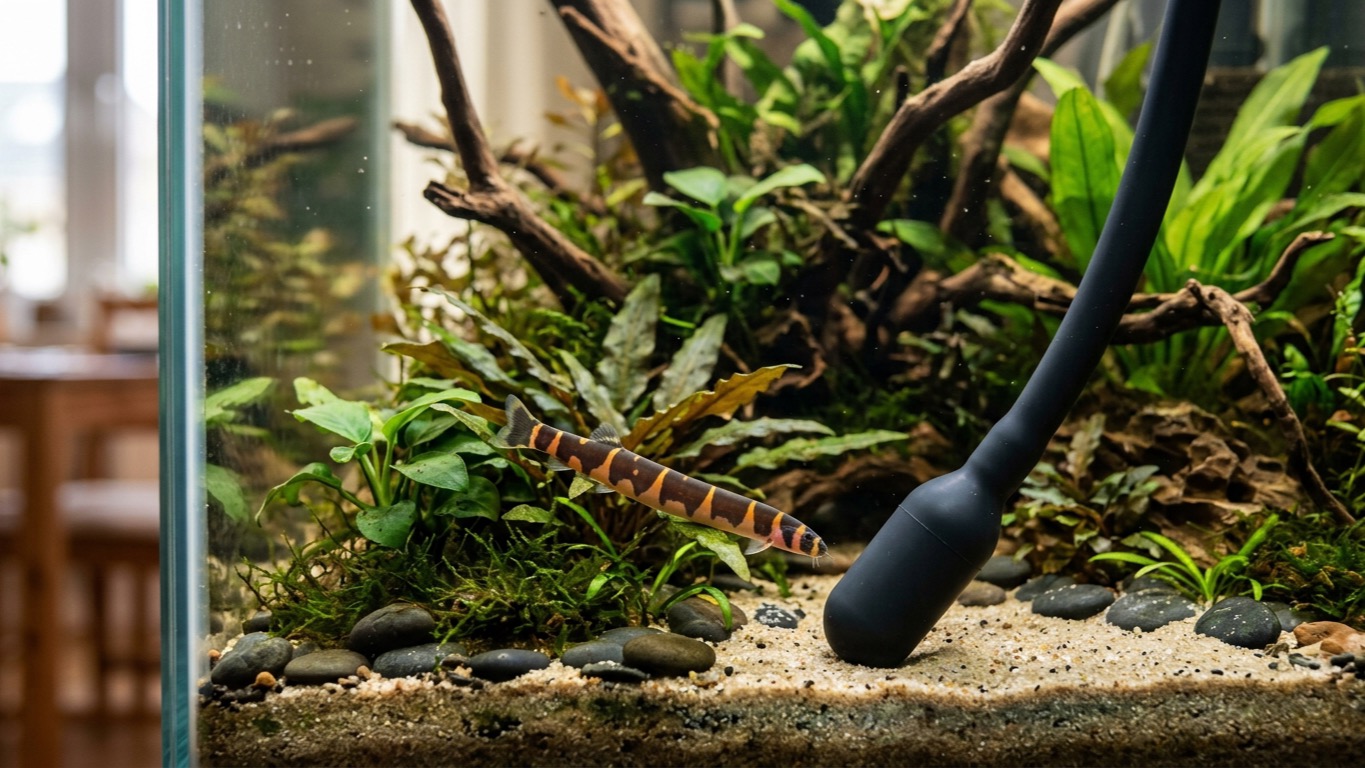
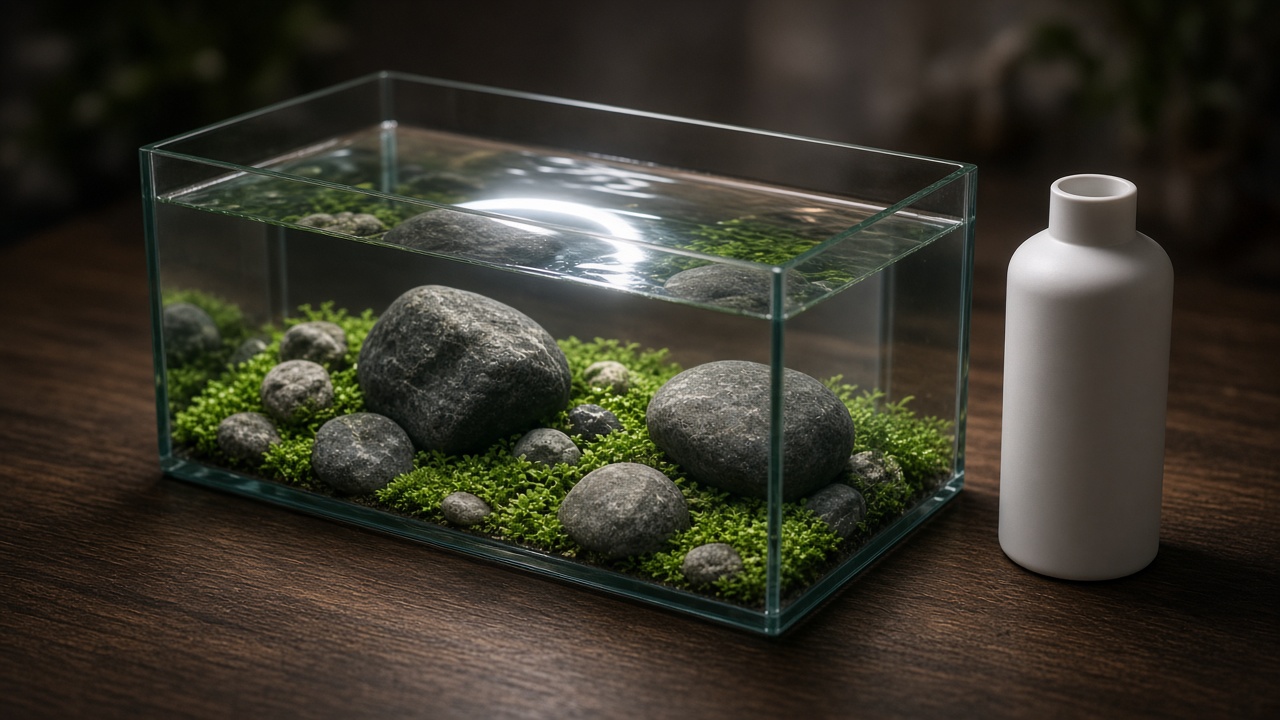
We only cover long indoor tanks with sand, a lid, and weekly tests.
The 28-cm footprint rule is about floor length, not a tall cube. A fish FishBase lists at 28.0 cm SL needs a floor it can patrol. A short tank fails that rule even when the gallon label looks large.
FishBase says adults live in rivers, lakes, ponds, swamps, and rice fields, and that they prefer muddy bottoms and hide with only the head showing. The USGS profile says they use muddy or silty beds in shallow, slow water. That is why this guide allows sand and blocks sharp gravel.
Seachem’s Flourite Black Sand page says the sand is not chemically coated or treated and will not alter pH. It lists 3.5 kg and 7 kg bags, and it says a 7 kg bag occupies about 5,500 cm³ (320 cu. in.).
Rinse it first, because that page says the product may be dusty after shipping. Fill the tank slowly so the bed does not blow apart.
FishBase lists facultative air-breathing, meaning the fish can gulp air when oxygen is low, so leave an open surface and use a tight lid.
The USGS profile says the fish can use its intestine as an extra breathing organ. It can also live through very high ammonia in those studies. That is a wild survival trait, not a license to skip water tests.
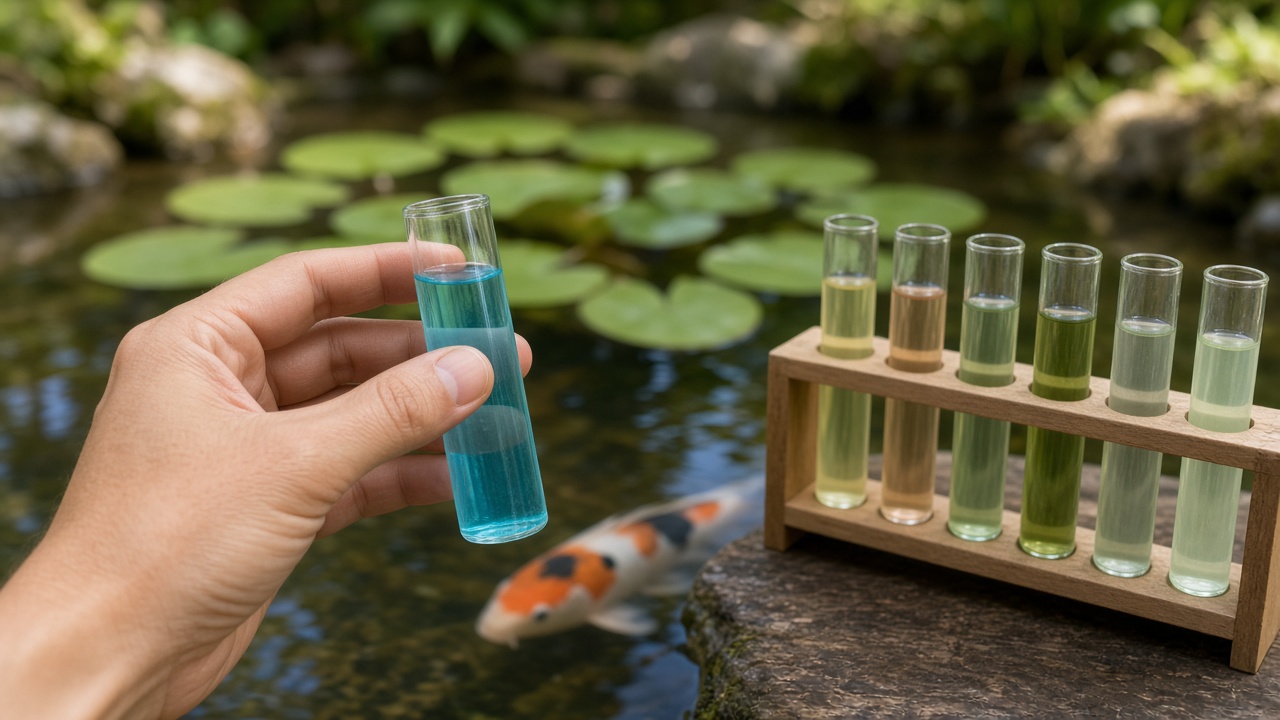
API’s Freshwater Master Test Kit page says to test weekly. It says the kit measures six parameters, including ammonia, pH, high-range pH, nitrite, and nitrate.
A setup that meets our rule looks like this.
- A long tank sized for a 28.0 cm SL adult.
- A rinsed sand bed, such as Seachem Flourite Black Sand.
- A lid with a small air gap at the surface.
- Seachem Prime on every new-water fill.
- Weekly checks with the API Freshwater Master Test Kit.
Gear we compared from maker pages
Our research team compared four current maker pages for sand, food, conditioner, and tests.
We pulled only attributes the maker pages list, and we skipped price, rank, and store stock.
| Product | Maker | Listed sizes | Listed numeric spec | Job in this setup |
|---|---|---|---|---|
| Sinking Wafers | Hikari Sales USA | 0.88 oz (25 g) to 2.2 lb (1 kg) | min. 36.0% crude protein; 6.5–7.5 mm wafer | Sinking staple for loaches |
| Flourite Black Sand | Seachem Laboratories | 3.5 kg and 7 kg bags | 7 kg ≈ 5,500 cm³; iron 4,338 mg/kg | Soft planted-tank sand |
| Prime | Seachem Laboratories | 50 mL to 4 L | 5 mL treats 200 L (50 US gal) | Chlorine and chloramine remover |
| Freshwater Master Test Kit | API Fishcare | 1 CT kit | 4 test tubes; 6 water parameters | Weekly water checks |
Hikari’s Sinking Wafers page says the discs were developed for corydoras, loaches, and other bottom feeders. The guaranteed analysis on that page is:
- Crude protein min. 36.0%; crude fat min. 9.0%
- Crude fiber max. 4.0%; moisture max. 10.0%; ash max. 16.0%
- Phosphorus min. 0.8%; vitamin A min. 8,800 IU/kg
- Vitamin D3 min. 1,300 IU/kg; vitamin E min. 4,900 IU/kg
- Ascorbic acid min. 190 mg/kg; wafer size about 6.5–7.5 mm
Hikari says to feed the amount the fish will finish in 20 minutes, then remove leftovers.
Seachem’s Prime page says to use 1 capful (5 mL) for each 200 L (50 US gallons) of new water. Each cap thread is about 1 mL, and the page says Prime will not change pH. That page also says Prime is up to 5× more concentrated than competing products.
Seachem’s Flourite Black Sand page lists mineral values from a University of Georgia lab using EPA Method 6010.
- Aluminum 33,150 mg/kg
- Calcium 29,950 mg/kg
- Iron 4,338 mg/kg
Our research team’s spec pass found three separate clocks. Hikari publishes a 20-minute feed window, API publishes a weekly test window, and Seachem publishes a 5 mL per 200 L water-change dose.
Tank mates that share the same temperature band
Match the FishBase temperature band; skip tropical-only fish such as kuhli loaches.
Tank-mate choice in this brief is a temperature rule, not a popularity list. If a species is sold only for heated tropical tanks, it fails the rule.
A kuhli loach is a different, warm-water loach. It does not share the 5°C–25°C band FishBase lists for pond loaches, so do not mix the two to fill the bottom.
- The other fish must live inside 5°C–25°C for the long term.
- The other fish must leave barbels and skin unbitten.
- The other fish must not need a year-round tropical heater.
- Very small shrimp or fry may be eaten, because FishBase says the diet is worms, small crustaceans, insects, and insect larvae.
The USGS profile says pond loaches do not hunt by sight and need chemical cues to start feeding. Slow, shy tank mates can lose food if wafers never reach the sand.
FishBase lists a trophic level of 3.1 ± 0.4 from diet studies. That is a mid-level eater of small prey, not a plant-only fish, so do not stock it as a cleanup crew that lives on scraps.
We do not name outdoor koi, wild minnows, or bait-shop fish as tank mates, because those paths sit outside the 28-cm footprint rule.
Food that reaches the sand
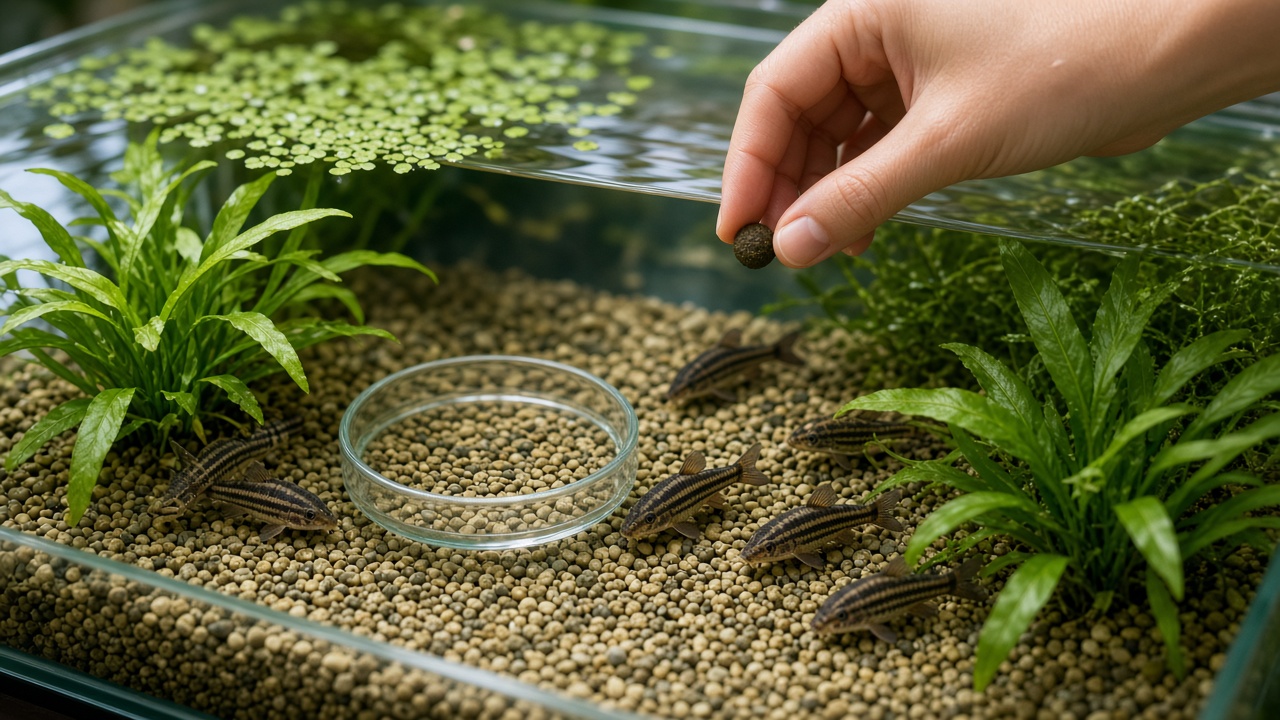
Use a sinking disc the maker lists for loaches, and remove leftovers after 20 minutes.
Hikari’s Sinking Wafers page is the food record we used, and it says the soft disc is for bottom feeders with small, downward mouths.
Feed on this maker schedule.
- Offer only what will be gone in 20 minutes.
- Take out uneaten pieces after that window.
- Do not rely on leftover flakes that never sink.
FishBase says wild fish eat worms, small crustaceans, insects, insect larvae, and other small aquatic animals. Hikari’s 36.0% minimum crude protein and 9.0% minimum crude fat sit in line with that animal-heavy diet.
The USGS profile, citing Tabor and later diet papers, found cladocerans, chironomids, amphipods, gastropods, and small bivalves in wild guts. That is more evidence for meaty sinking food, not floating flake as the only meal.
Why this fish cannot go down the drain
USGS records this species as nonnative in 22 U.S. states; never dump tank water or fish outdoors.
Our research team counted 22 states in the USGS occurrence table, which that page last updated on 7/4/2026. First U.S. records on that page include Hawaii in 1870 and Michigan in 1939.
FishBase says at least one country reports adverse ecological impact after introduction, and it tags the species as a potential pest. The USGS profile says introductions came from farms, bait, and aquarium releases. It cites work that this fish may cut aquatic insect numbers that native fish need.
USGS fecundity notes make dumping worse.
- Ovary weight was 4–19% of wet body weight in a New York sample.
- Unmated females held 150–18,000 oocytes.
- FishBase’s resilience note uses a figure of 2,000 eggs.
Do not release a pond loach, and do not empty tank water into a creek. Rehome the fish or ask a local aquarium club.
FishBase lists commercial use in fisheries, aquaculture, aquariums, and occasional bait. Bait use is one reason the USGS map is so wide, which is why this guide refuses bait-bucket advice.
FAQ
Are pond loach and dojo loach the same fish?
Yes. FishBase’s common name is pond loach for Misgurnus anguillicaudatus. The USGS profile lists dojo loach and weather loach as other names for that same species. Check the scientific name on the bag, not the nickname.
How big does a pond loach get?
FishBase lists a maximum of 28.0 cm standard length and a common length of 15.0 cm total length. The USGS profile gives the same 28 cm SL cap and an average of 10–20 cm. Buy the tank for the 28.0 cm figure.
What temperature should I use?
Stay inside the 5°C–25°C range FishBase lists, which is 41°F–77°F. The USGS survival numbers near −2°C and 38°C are extremes, not targets. A heated tropical tank at the top of the band is a poor default.
Do I need a heater?
Only if your room falls below 5°C (41°F). Many indoor rooms already sit inside the FishBase band, and extra heat pushes the fish toward the 25°C ceiling. Skip tropical community heaters.
Can I keep a pond loach with a kuhli loach?
No. A kuhli loach is a separate tropical species. It does not live in the 5°C–25°C band FishBase lists for pond loaches. Shared “loach” in the name is not a match.
What should I feed?
Use Hikari Sinking Wafers, which the maker page lists for loaches. That page sets a 20-minute feed window and a minimum of 36.0% crude protein. Remove leftovers so waste does not spike the API test readings.
Can I put a pond loach in an outdoor pond?
This brief does not cover outdoor ponds. The USGS profile already maps this species as introduced in 22 U.S. states. Outdoor water connects to wild habitat, so keep the fish indoors under the 28-cm footprint rule.