Quick answer: Keep assassin snails as snail hunters in a cycled freshwater tank with sand and meaty sinking food. Buy a group so both sexes are present. Do not treat them as algae eaters or as a one-snail cleanup crew.
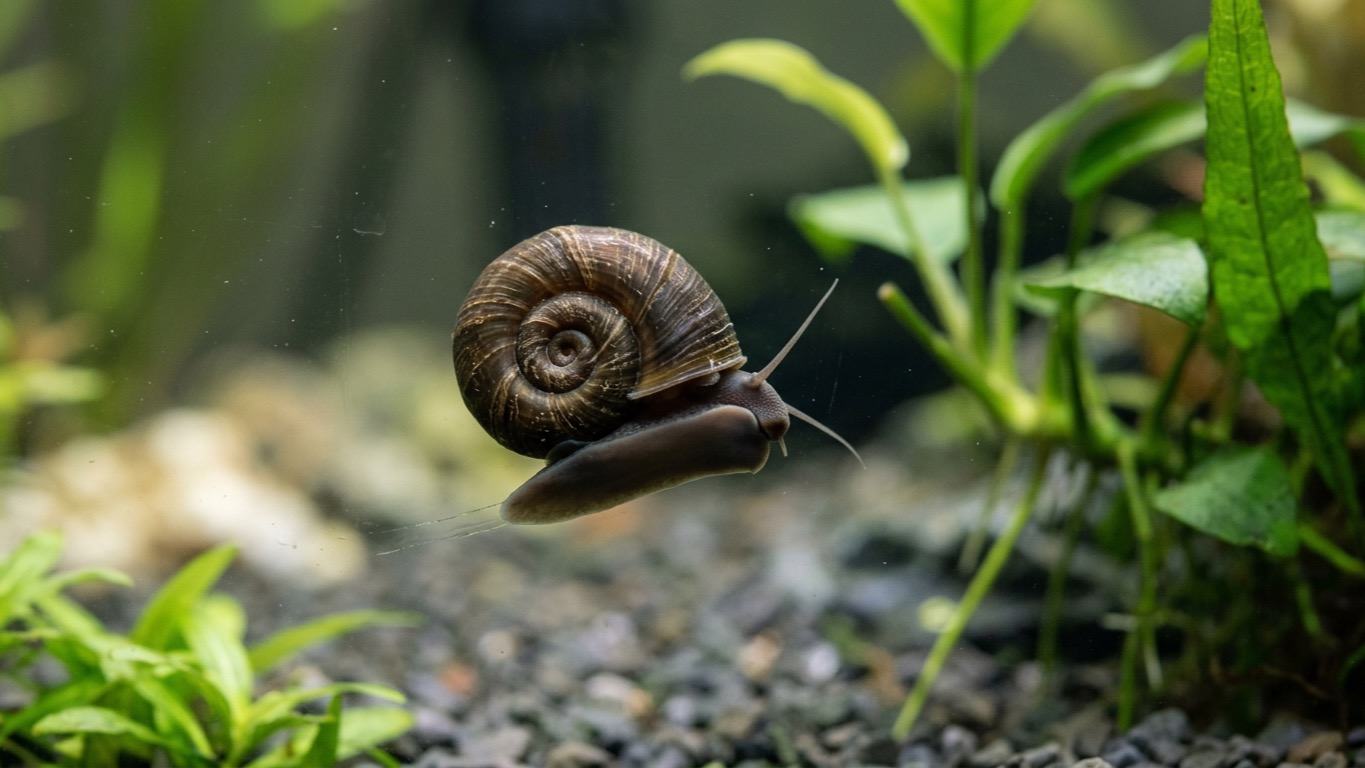
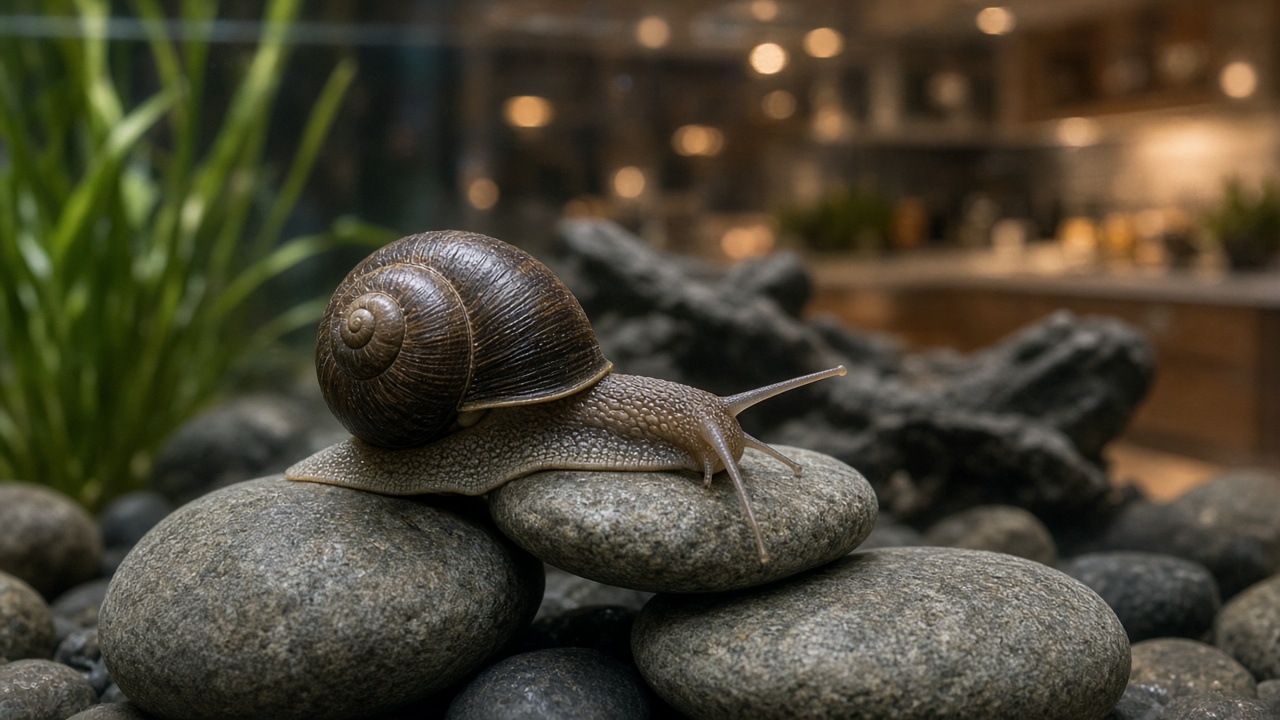
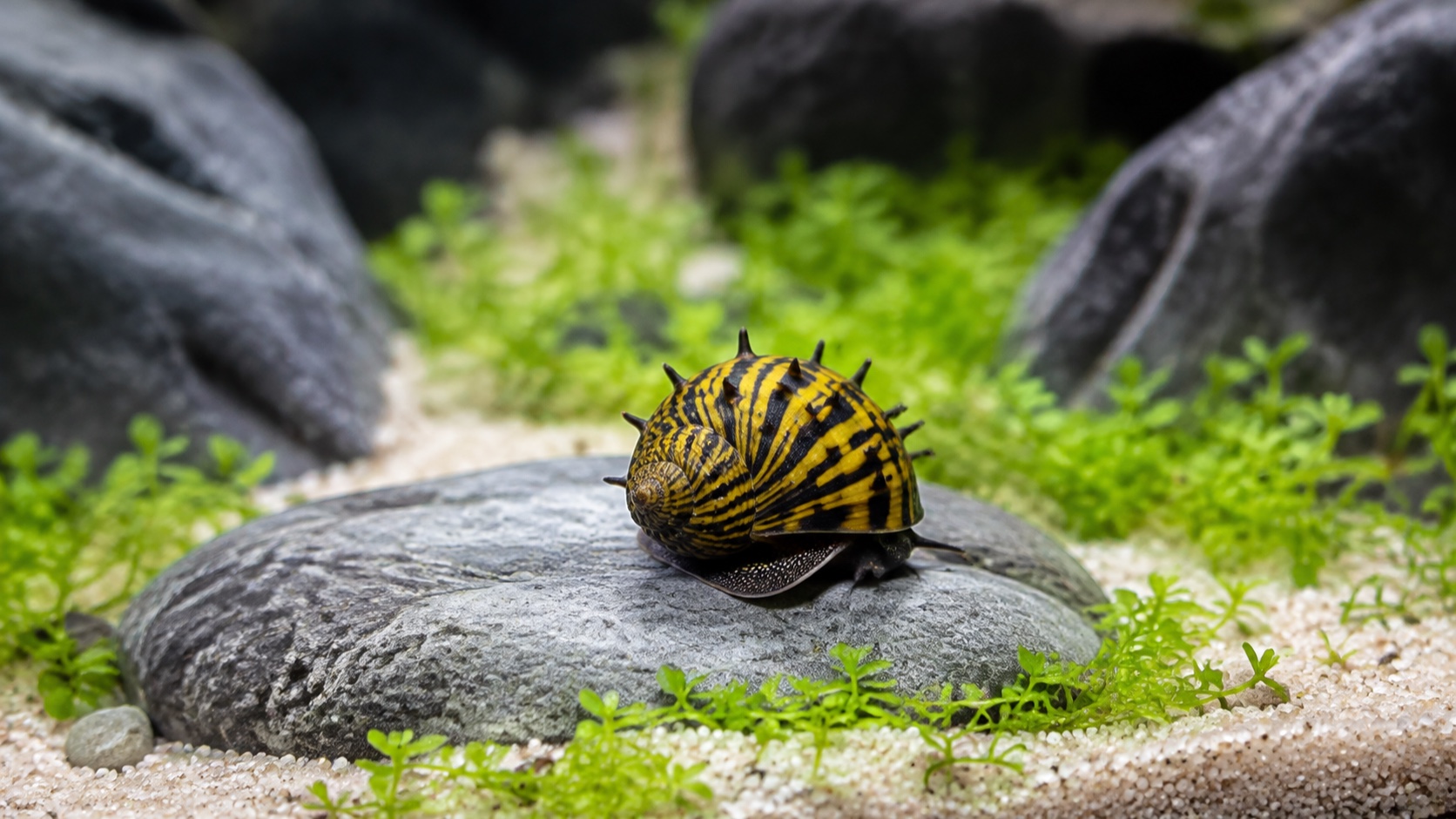
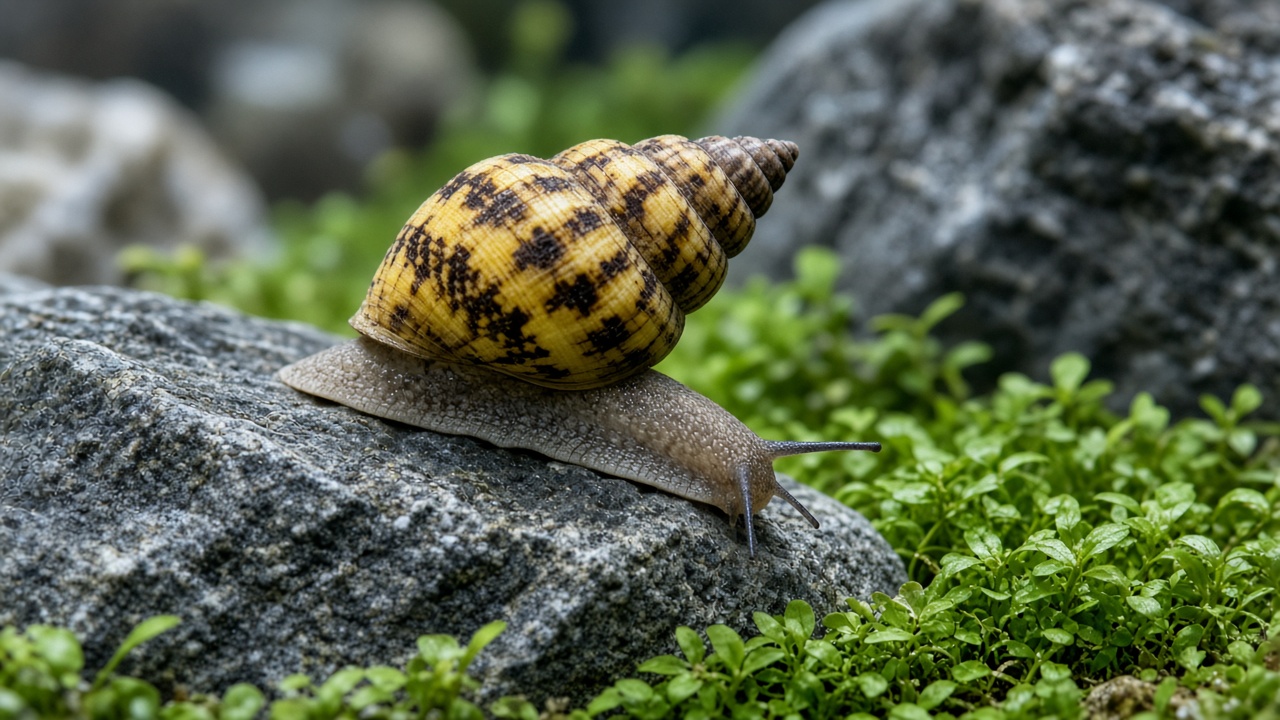
An assassin snail is a meat-eating freshwater snail sold as Anentome helena that hunts other snails.
This page is a home-tank guide built from two published papers and four maker spec sheets. Our research team did not keep a colony, did not open any shells, and did not run water tests.
What this page includes, and what it leaves out
We only cover products a keeper can buy now for water, sand, or backup food in a hunt tank.
Our selection rule is simple and narrow. A product had to be currently sold for one of three jobs: testing water, building a burrowable sand bed, or feeding after live prey drops.
We left out heaters, filters, live livestock listings, and medicines. We also left out gallon-size rules, because the papers we read used lab tanks, not a published home minimum.
What an assassin snail is
The shop label Anentome helena names a meat-eating freshwater snail, and one paper says that label covers more than one species.
Keepers buy these snails to hunt bladder, pond, and ramshorn snails, and shops still print the older name Clea helena on some bags.
Strong, Galindo, and Kantor’s 2017 PeerJ paper split Clea from Anentome, and their five-gene dataset placed Anentome in the family Nassariidae.
The same paper found a complex of at least four species sold or collected under the helena label.
A shop snail bought in Washington, DC, grouped with a Thailand lineage they called species A. The true Melania helena type is from Java, so the animal in your tank may not match that Java name.
The same paper describes separate male and female organs, which means one snail cannot fertilize itself. A pair of the same sex will not breed, and mature animals in that study had about 3.5 whorls.
How assassin snails hunt pest snails
They pin prey with the foot and eat through the aperture, and they pick ramshorn over trumpet snails.
Berkhout and Morozov’s 2022 PLOS ONE paper ran feeding trials at the University of Leicester. Assassin snails subdued prey with the foot and then ate through the prey’s aperture.
The study offered four prey types:
- Ramshorn snails (Planorbella)
- Malaysian trumpet snails (Melanoides tuberculata)
- Pond snails (Lymnaea)
- Quilted melania snails (Tarebia granifera)
They recorded 778 prey eaten over 1,485 experimental days, or about 0.52 prey snails per day per hunter.
Background deaths in control tanks were 0.06 per day, and ramshorn snails were the most eaten prey in every mix.
The paper’s Manly-Chesson α for ramshorn ran from 0.41 to 0.61. Trumpet snails were avoided, with α from 0.01 to 0.14.
That is why we link pest control to ramshorn snail care. If ramshorns are the boom species, these hunters match that prey first.
Individual hunters were picky during the trials, and 94 of 97 snails ate at least 50% of one prey type.
Daily intake topped out at two to three prey items, and prey had to be less than twice the hunter’s wet weight.
Study hunters weighed 350 to 600 mg wet. Prey started at 100 to 250 mg wet, so a large trumpet snail can sit outside that window.
They also ate frozen bloodworms in the holding tanks. The paper notes they scavenge dead fish as well, and they are not algae grazers.
Tank and sand bed
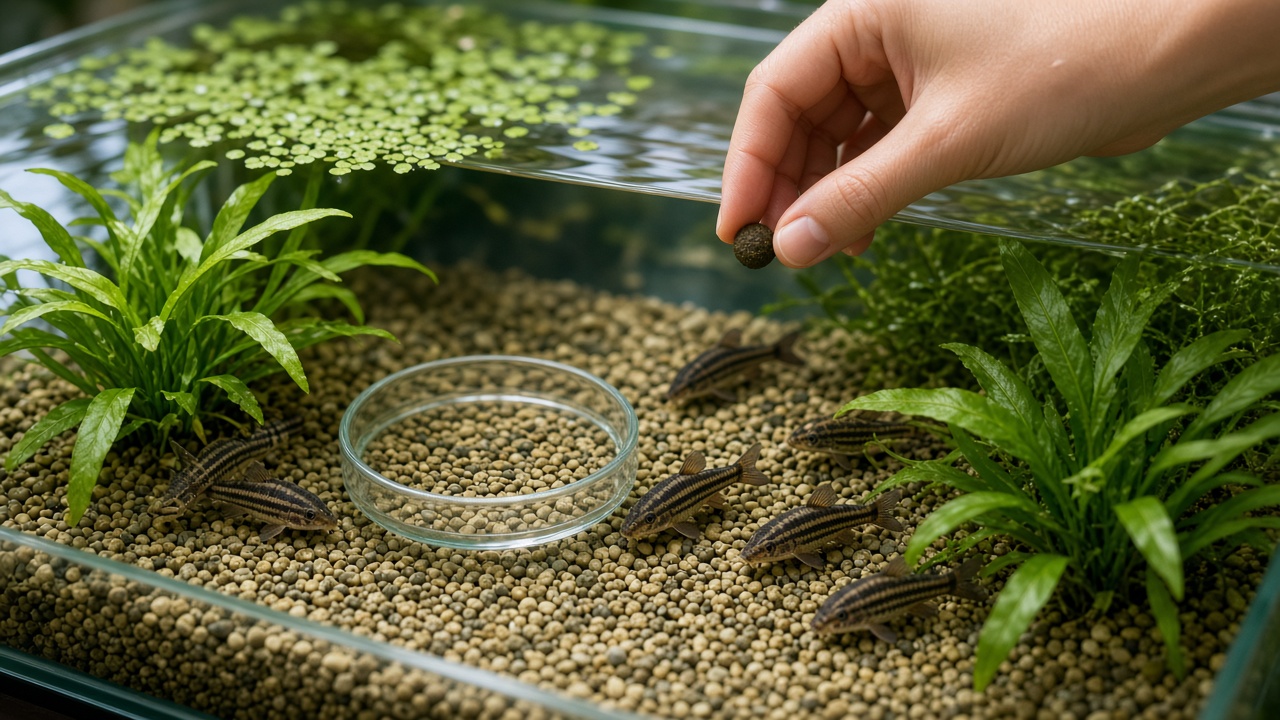
Give them a sand bed they can bury in, matching the 1 to 2 cm layer used in the Leicester stock tanks.
Berkhout and Morozov housed groups of 10 to 20 hunters in stock tanks about 20 by 30 by 20 cm. Each tank had a 1 to 2 cm layer of coarse sand so the snails could bury.
We use that as a bed-depth rule, not a tank-brand rule. If the sand is too shallow they cannot hide, and if the grains are pebble-sized they cannot dig.
CaribSea’s freshwater substrate page lists two sand-sized Super Naturals Aquascapes mixes that fit a burrow bed:
- Super Naturals Crystal River: typical grain size 0.5 to 1.0 mm; average density 95 pounds per cubic foot
- Super Naturals Moonlight Sand: typical grain size 0.25 to 0.75 mm; average density 95 pounds per cubic foot
Both lines list 5 lb, 10 lb, 20 lb, and 40 lb bags, and the maker calls the grains smooth and fish-friendly.
Our research team compared those listed sizes and did not pour bags or score color.
Skip gravel-sized Super Naturals such as Jelly Beans. CaribSea lists those at 13.0 to 26.0 mm, which is rock, not a bury layer.
The Leicester climate room sat at 25°C, plus or minus 1°C, and lights ran 12 hours on and 12 hours off.
Conductivity sat between 2.0 and 2.5 mS/m, and water in stock tanks was changed about every three weeks.
We do not turn those lab notes into a perfect parameter chart. We do treat 25°C (77°F) as the one temperature the feeding study actually used.
Water tests and new-water doses
Test ammonia, nitrite, nitrate, and pH each week, and dose conditioner by the maker’s milliliter rule.
API’s page for the Freshwater Master Test Kit lists pH, high-range pH, ammonia, nitrite, and nitrate, and API says to test weekly.
The kit includes four test tubes, a holding tray, and a computer-calibrated laminated color card. API states a pH of 7.0 is neutral.
Readings above 7.0 are alkaline, and readings below 7.0 are acidic. The card tells you if a reading needs action.
Use this kit to watch the nitrogen cycle, not to guess shell health, because the kit does not read general hardness.
When you add tap water, Seachem’s Prime page is the dose we compared. Seachem states:
- 1 capful (5 mL) treats 200 L (50 US gallons) of new water
- Each cap thread is about 1 mL
- Add it to new water first when you can
- If you dose the tank, base the dose on full tank volume
- Prime can be dosed every 24 to 48 hours
- It binds ammonia, nitrite, and nitrate for up to 48 hours
- If ammonia or nitrite is above 2 ppm, Seachem allows up to five times the normal dose
- If temperature is above 30°C (86°F) and chlorine or ammonia is low, use a half dose
Seachem also says Prime will not change pH. A sulfur smell is normal, and bottle sizes on that page run from 50 mL to 4 L.
The Hunt-Then-Feed Rule
After live prey drops, switch to a sinking high-protein stick so the hunters do not stall.
We call this the Hunt-Then-Feed Rule. Phase one is live pest snails, and phase two is a sinking meaty food on the sand.
Hikari’s Tropical Crab Cuisine page is the backup food we compared, and Hikari lists it as a rapidly sinking stick for scavengers.
The maker’s guaranteed analysis is:
- Crude protein: 31% minimum
- Crude fat: 4.0% minimum
- Crude fiber: 3.0% maximum
- Moisture: 10% maximum
- Ash: 11% maximum
- Phosphorus: 0.7% minimum
The listed can is 1.76 oz (50 g), item 27309. For aquatic scavengers, Hikari says to feed one to four mini sticks twice a day by size.
Remove uneaten food after the feeding period, because that feeding line is written for crabs, shrimp, and crayfish.
Assassin snails are not listed by name, but we still include the stick because it sinks, holds shape, and lists 31% protein.
Do not use floating flakes as the only food. Mid-water fish will take them first, and leftover flakes rot on the sand.
If pest snails are still thick, skip extra sticks. Extra food grows more prey, and that is how a hunt tank turns into a farm.
These five products met the water, sand, or backup-food rule. Our research team compared published specs and did not time hunts or score brands.
| Product | Job on this page | Maker-listed number | Listed format |
|---|---|---|---|
| API Freshwater Master Test Kit | Weekly ammonia, nitrite, nitrate, and pH checks | Four test tubes; pH 7.0 is neutral | Liquid reagent kit with a laminated color card |
| Seachem Prime | Treat new tap water | 5 mL treats 50 US gallons (200 L) | Bottles from 50 mL to 4 L |
| CaribSea Super Naturals Crystal River | Burrowable sand bed | Typical grain size 0.5–1.0 mm | 5, 10, 20, or 40 lb bags |
| CaribSea Super Naturals Moonlight Sand | Finer burrowable sand bed | Typical grain size 0.25–0.75 mm | 5, 10, 20, or 40 lb bags |
| Hikari Tropical Crab Cuisine | Sinking backup food after prey drops | 31% minimum crude protein; 50 g can | Hard mini sticks |
Pick Crystal River if you want a slightly larger sand grain, or pick Moonlight Sand if you want a finer bed.
Both Crystal River and Moonlight Sand list the same 95-pound-per-cubic-foot density on CaribSea’s page.
Breeding and colony size
These snails have two sexes, so a group is the only way to get eggs, and growth is slower than a ramshorn boom.
Strong, Galindo, and Kantor describe a penis in males and a capsule gland in females. That anatomy is the breeding rule, so one snail is a hunter, not a starter colony.
The papers we read do not list hatch days on the pages we used, so we will not invent a hatch clock.
Berkhout and Morozov kept hunters in groups of 10 to 20. That group size was for feeding work, not a store pack size, but it does show they tolerate neighbors.
If you want control only, a small group can work through a ramshorn bloom. Then follow the Hunt-Then-Feed Rule so the hunters stay fed.
If you want offspring, start with more than two so both sexes are likely. Do not expect a ramshorn-style crash from one pair, because separate sexes plus a 0.52-prey daily rate keep growth slow.
FAQ
Will assassin snails eat ramshorn snails?
Berkhout and Morozov found ramshorn snails were the most eaten prey in every trial mix. The paper’s ramshorn electivity index sat between 0.41 and 0.61. If you keep ramshorns as display animals, do not add these hunters.
How fast do they clear a tank?
The Leicester hunters ate about 0.52 prey snails per day. That is one snail every two days, not a wipeout overnight. A heavy bloom takes weeks at that rate, and large trumpet snails were the least eaten prey.
Can I keep a single assassin snail?
You can keep one as a hunter, but not as a breeder. Strong, Galindo, and Kantor describe separate male and female organs. One snail cannot self-fertilize, and two snails of the same sex also will not breed.
What should I feed when pest snails are gone?
Follow the Hunt-Then-Feed Rule and move to a sinking meaty stick. Hikari lists Tropical Crab Cuisine at 31% minimum crude protein and says to feed one to four mini sticks twice a day for scavengers. Remove leftovers, and note that frozen bloodworms were the holding-tank food in the Leicester study.
What water tests should I run?
API’s Freshwater Master Test Kit page lists pH, high-range pH, ammonia, nitrite, and nitrate. API says to test weekly. Use Seachem’s 5 mL per 50 US gallons dose when you add tap water.
Do they need sand?
The Leicester stock tanks used a 1 to 2 cm sand layer so snails could bury. CaribSea lists Crystal River at 0.5 to 1.0 mm and Moonlight Sand at 0.25 to 0.75 mm. Those grain sizes match a bury bed better than pebble gravel.
Will they eat every pest snail in the tank?
They will not clear every pest snail, because the 2022 paper showed 94 of 97 hunters specialized on one prey type. Trumpet snails were avoided, and prey larger than twice the hunter’s wet weight sat outside the size window they used.