Quick answer: Keep mystery snails in hard, copper-free water at or below the mid-70s Fahrenheit. The U.S. Fish and Wildlife Service cites about 3 years near 68–70°F and about 2 years at 77°F or warmer. Soft water, copper meds, and leftover food cut that span.
A mystery snail kept at 68–70°F lives about 3 years; at 77°F or above it lives about 2 years. This page is a lifespan brief, and
Our research team compared published government summaries and maker spec sheets.
What this brief includes, and what it leaves out
This brief uses one selection rule, not a ranked “best of” list.
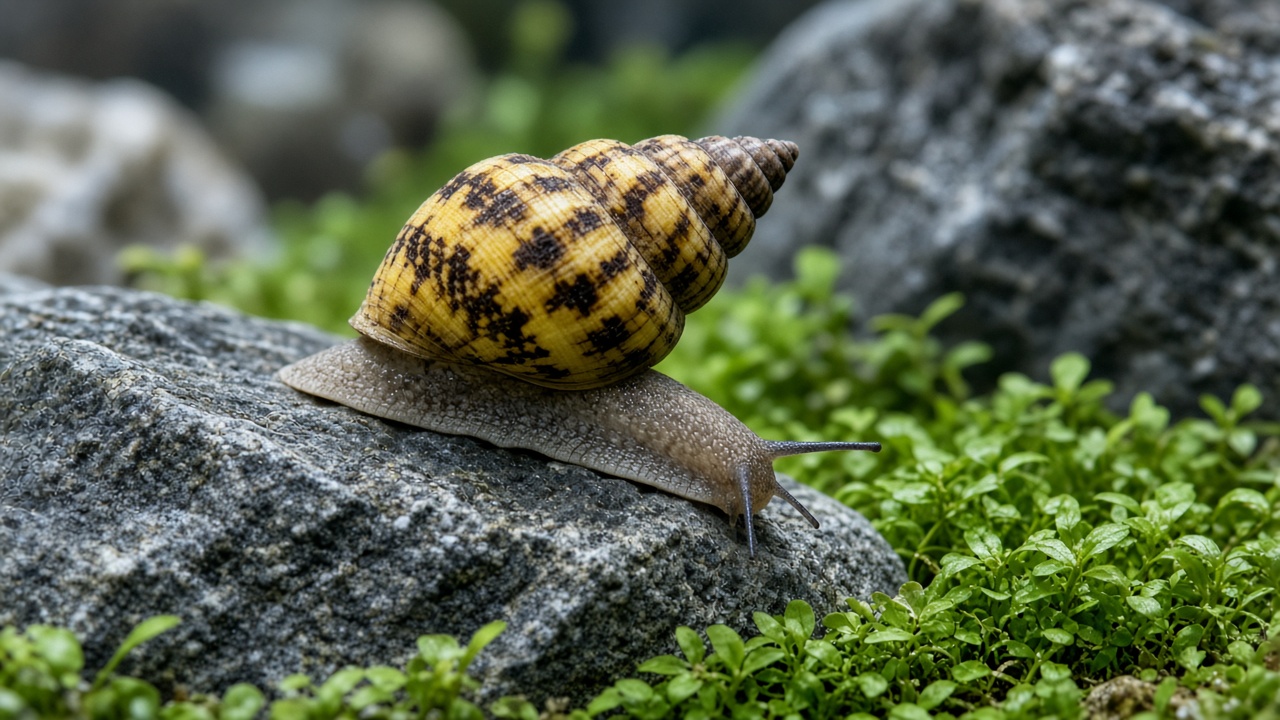
We cover only Pomacea diffusa, the spike-topped apple snail sold as a mystery snail. We leave out island apple snails, nerites, and assassin snails.
On products, we include only items whose maker pages list a numeric dose, a test count, or a waste claim. We leave out copper medications, unlabeled “snail care kits,” and any brand we could not read on its own site.
That is the WaterPuppy inclusion rule, so a claim with no number on a named page stays out.
How long mystery snails live
Temperature sets the clock more than tank decor does.
The U.S. Fish and Wildlife Service summary for Pomacea diffusa quotes aquarium life as temperature dependent. At 20–21°C, which is 68–70°F, they live three years or more.
At 25°C or above, which is 77°F, the life span is about two years, and we call that split the WaterPuppy 70–77 rule.
Cooler water slows the snail, while warmer water speeds growth, breeding, and aging. The U.S. Geological Survey species profile says the life span is several years.
That Survey line matches the three-year cool-water figure, not a one-year shop rumor. A healthy adult is a two-to-three-year animal, not a ten-year pet.
Size helps you guess age, but it is not a clock. The U.S. Geological Survey lists a usual shell of 42 mm high and 33 mm wide.
That Survey profile also lists an average height of 38 mm and a top height of 60 mm. The U.S. Fish and Wildlife Service quotes a wider range of 40–70 mm high and 40–50 mm wide.
A full-size shell does not prove the snail is old. Warm water can grow a large shell in fewer months.
The type locality in that Service summary is Santa Cruz, Bolivia. The species is a South American snail, not a cold-water one.
“Cooler” here still means the high 60s, not a chilly basement tank. If you want the longer end of the range, hold the heater near 70°F.
If you hold the tank at 78–80°F for tropical fish, plan on about two years.
What shortens a mystery snail’s life
Four home-tank events cut the span more often than old age.
- Warm water at 77°F or higher, per the Service summary
- Soft or acidic water that eats the shell
- Copper in fish medications or untreated tap water
- Leftover food that drives ammonia, nitrite, and nitrate
Warm water is the cleanest number we have, and the Service summary says higher temperatures make snails live shorter lives.
Copper is the fastest killer we can name from maker pages. Seachem’s Prime page says the conditioner detoxifies heavy metals found in tap water at typical levels.
That is a tap-water job, not a license to use copper meds. If a fish drug lists copper, take the snails out first.
Do not “half dose” copper in a snail tank, because waste is slower than copper but still common in home tanks.
API’s Freshwater Master Test Kit page says ammonia, nitrite, nitrate, and pH can change fast when waste builds up. That page also says those swings can be fatal to fish, and snails share the same water.
API’s page for that kit tells you to test weekly, and a weekly reading is a lifespan habit.
Leftover wafers are a frequent cause of that waste. API’s Algae Eater Wafers page says to feed twice a day, only as much as fish will eat in 3 minutes.
That same page says leftover food can feed algae, and that waste load shortens snail life even when the wafer is not labeled as toxic.
Do not dump snails outdoors when one dies; keep dead snails in the trash. The U.S. Fish and Wildlife Service lists established Pomacea diffusa in Florida and Alabama, and notes a Mobile, Alabama record from 2003.
Minerals, shells, and why soft water ages them
A mystery snail’s shell is a calcium bill that comes due every day.
Seachem’s Equilibrium page lists calcium at 8.06% and magnesium at 2.41% per gram. The same page says 16 g, or 1 tablespoon, in 80 L (20 U.S. gallons) raises general hardness by 3 dH.
Seachem’s planted-tank guide on that page is about 1–2 meq/L, or 3–6 dH. That is a mineral floor, not a race to dose more.
If you mix reverse-osmosis water and skip minerals, the shell pits, and those pits are wear, not a color morph.
Use a hardness test before you dose, then add only the gap. Seachem’s page says to measure GH first on tap water, then add by need.
API’s Freshwater Master Test Kit page defines pH 7.0 as neutral, and any reading below that is acidic. Acidic water plus low GH eats the shell.
A pitted shell does not always mean the snail will die this week. It does mean the tank is spending the snail’s calcium faster than the snail can replace it.
Do not scrape white film off a live shell; fix the water instead. The U.S. Geological Survey notes that Pomacea snails have both lungs and gills, so they can reach the surface.
A tight lid still matters, because a dry fall onto carpet ends the lifespan in one drop.
Products we compared from maker pages
We compared four current products whose maker pages list a number that ties to minerals, chlorine, waste, or leftover food.
This is not a ranked list, and there is no “winner” column.
| Product | Maker-stated job | Listed numeric spec | Form |
|---|---|---|---|
| Seachem Equilibrium | Restore mineral balance and GH | 16 g per 20 U.S. gal raises GH by 3 dH; calcium 8.06%; magnesium 2.41% | Powder |
| Seachem Prime | Remove chlorine and chloramine; bind ammonia | 5 mL per 50 U.S. gal; binds up to 48 hours | Liquid |
| API Freshwater Master Test Kit | Measure ammonia, pH, high-range pH, nitrite, and nitrate | Six parameters; four test tubes; test weekly | Liquid reagents |
| API Algae Eater Wafers | Complete diet for algae-eating fish | Feed twice a day; eat within 3 minutes; up to 30% less ammonia | Sinking wafer |
Seachem Equilibrium is a GH powder, not a snack, so use it when your tap or RO water is mineral-poor.
Seachem Prime is the water-change bottle, and the maker page says one capful is 5 mL for 50 U.S. gallons of new water.
Each cap thread is about 1 mL.
Prime binds ammonia, nitrite, and nitrate for up to 48 hours, per that page, and it is not a substitute for a water change. If the tank is hotter than 30°C (86°F) and chlorine is low, Seachem says to use a half dose.
API’s Freshwater Master Test Kit is how you see the waste that shortens life. The maker page lists four tubes and a weekly test habit, and it measures six aquarium levels, including high-range pH.
API Algae Eater Wafers are written for plecos and other algae-eating fish. The maker page claims fish release up to 30% less ammonia on that food.
The 3-minute feed window is the lifespan number that matters for snails, so pull what they do not finish. Our research team compared those listed specs and did not run a side-by-side tank trial.
Diet, leftovers, and the waste clock
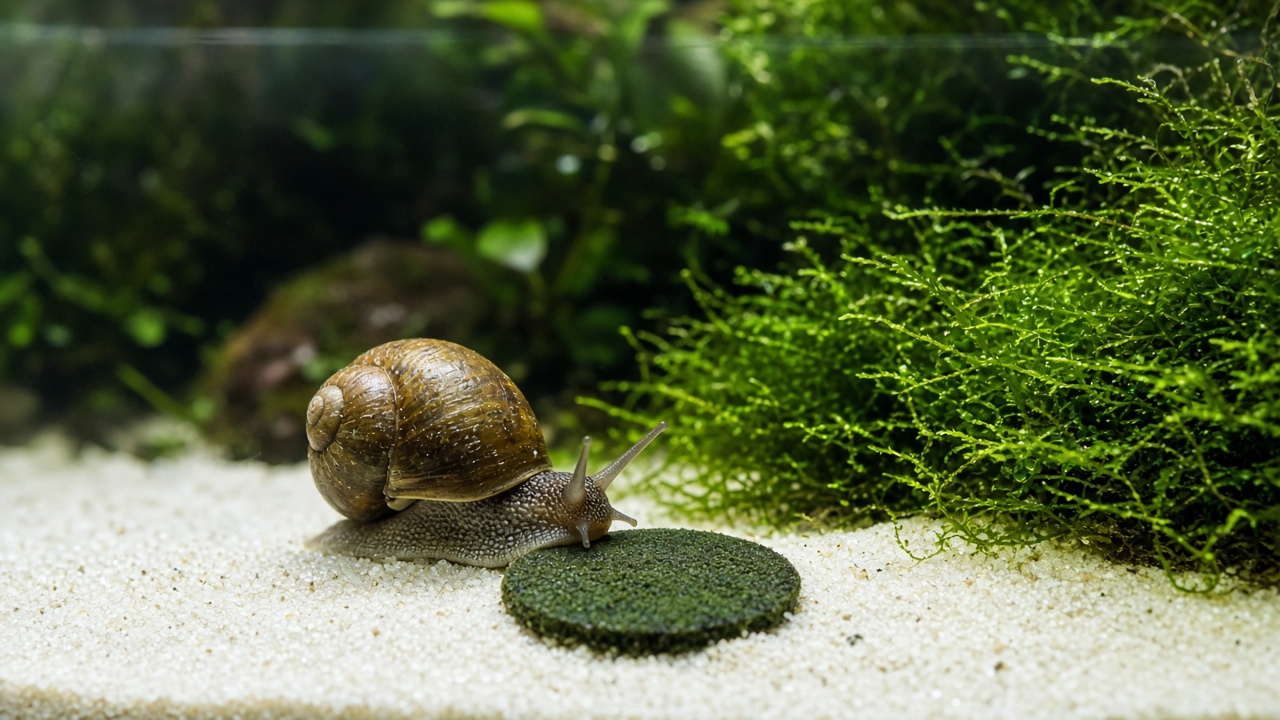
Mystery snails eat more than “the algae on the glass.”
The U.S. Fish and Wildlife Service summary says they feed mostly on decaying vegetation. It also cites studies that add biofilm, dead animals, and other snails’ eggs.
A bare tank with no film still needs a sinking food. Feed a small sinking wafer or blanched veg, then watch.
- Offer food after lights dim, when snails roam
- Match the API wafer rule: they should finish in minutes, not hours
- Lift uneaten pieces the same night
- Test ammonia and nitrite weekly with the API kit
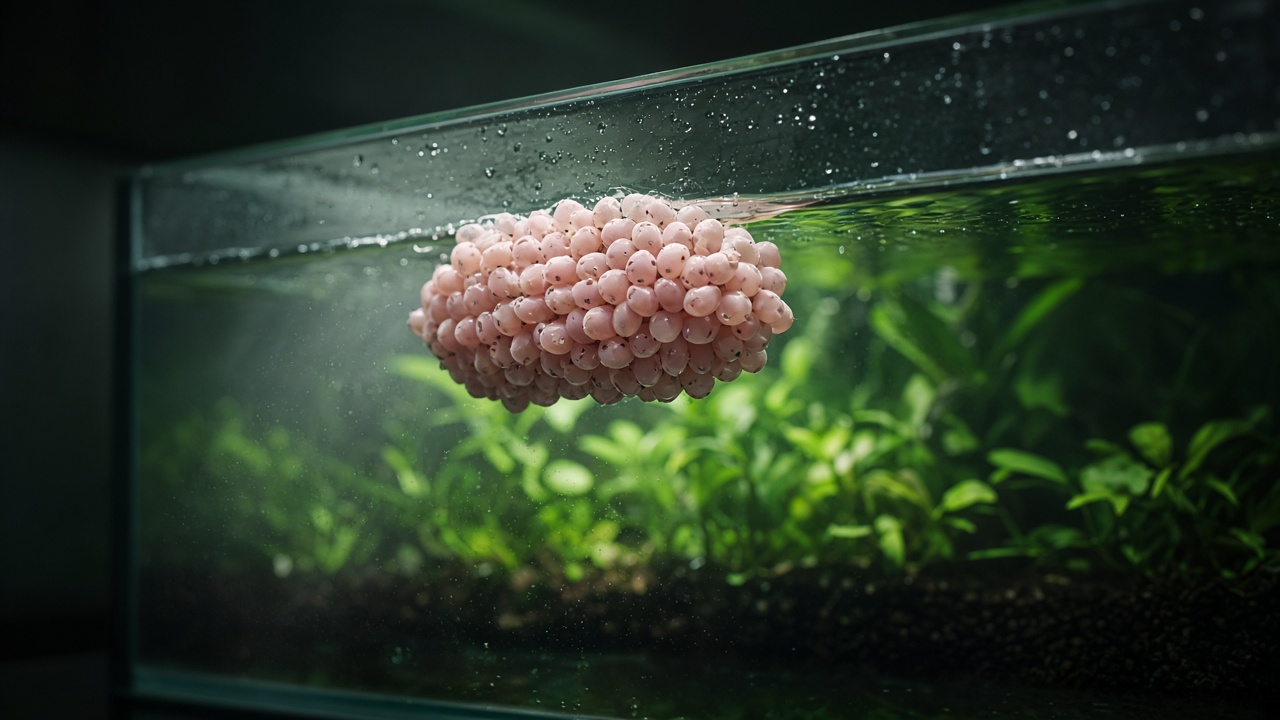
A clutch is a lifespan event for the parent and a waste load for the tank. The Service summary lists 200 to 600 eggs per clutch, each 2.20–3.5 mm across.
A clutch averages 3.8 cm, or 1.5 inches. The U.S. Geological Survey lists the same 200–600 egg count and a 3 mm egg.
Eggs sit above the water and hatch in two to three weeks, per the Service summary, and high heat hatches them sooner.
If you do not want a crowd, peel the pink clutch off the glass. A crowd raises waste, and that waste shortens every adult in the tank.
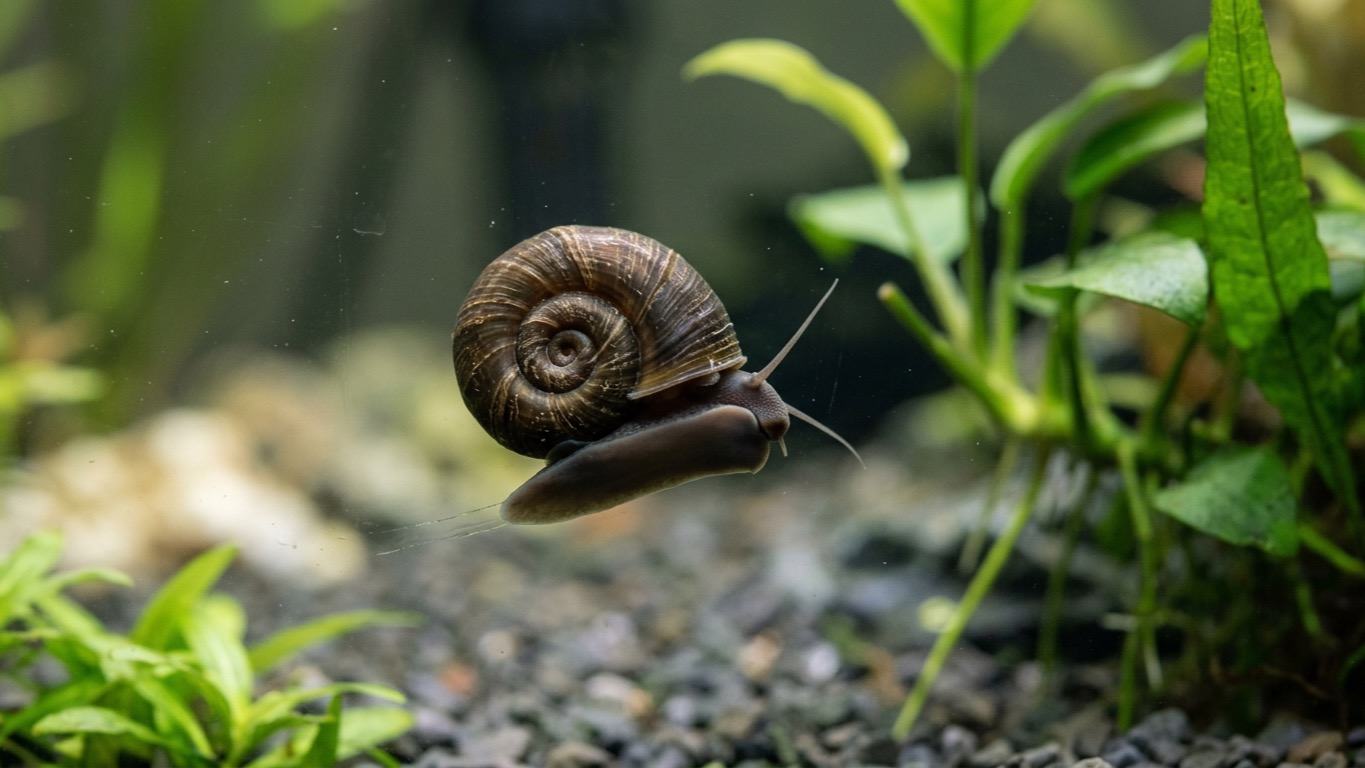
Ramshorns breed in a different way and can flood a tank faster. If you keep both, read our ramshorn snail care brief before you add a second species.
Tank mates, lids, and extra bodies
Peaceful fish do not add years, and rough fish subtract them.
Nippy fish tear antennae, and crayfish crush shells. Assassin snails hunt snails on purpose, and large cichlids treat a mystery snail as food.
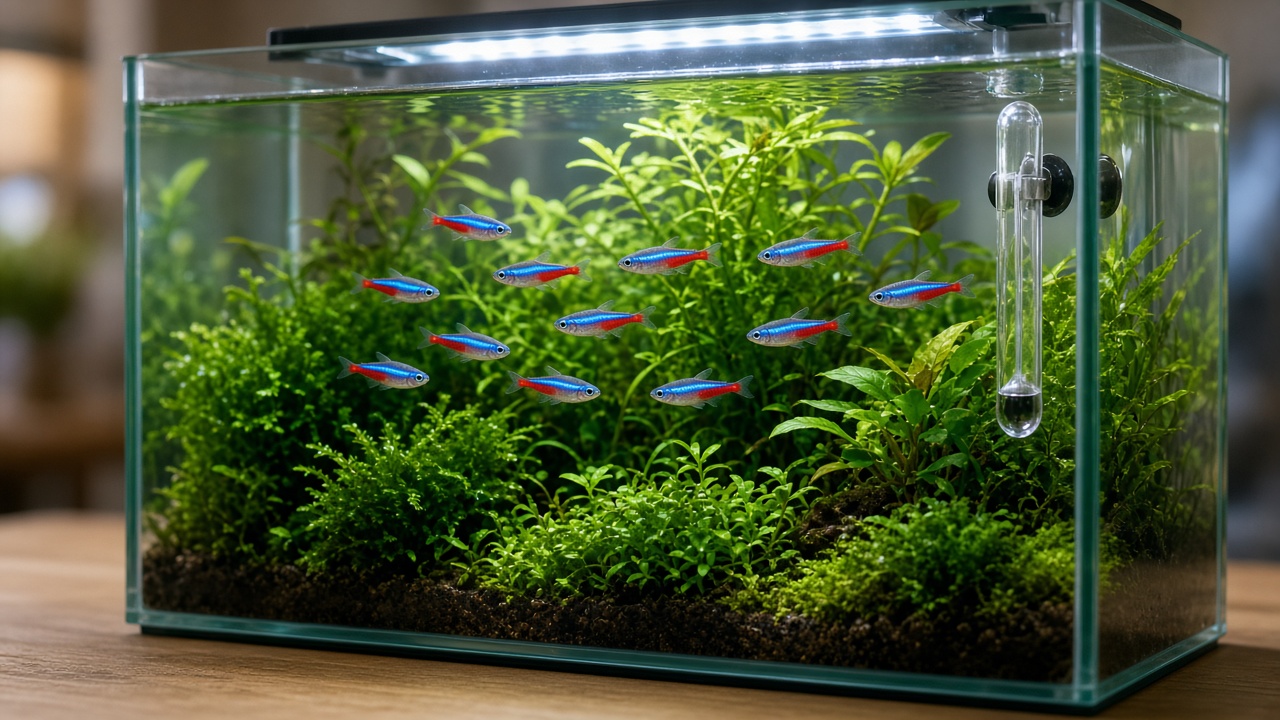
Small community fish are the safer match. Our ember tetra care guide covers a small, calm tetra in that warm-water range.
If the fish need 78–80°F, accept the two-year snail clock. Do not chill a tetra tank to stretch one snail.
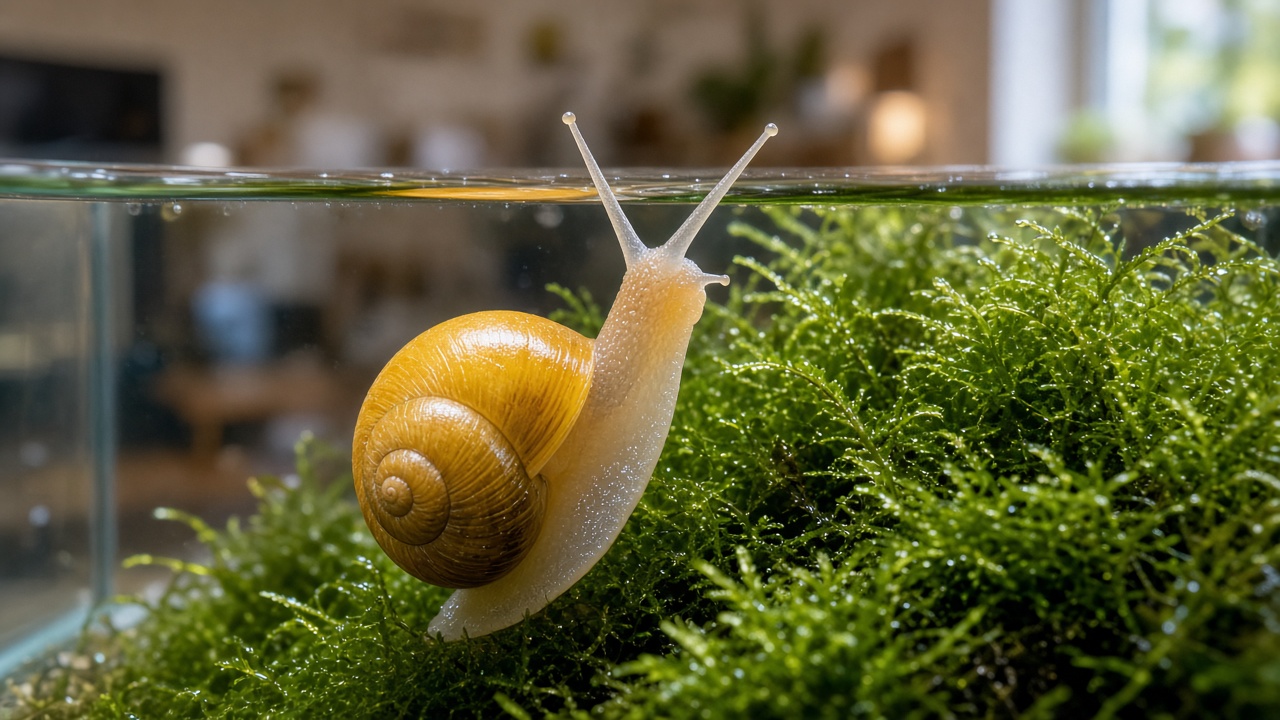
Leave an air gap under the lid, because mystery snails breathe at the surface and also climb, and a missing lid is a one-night death.
Do not add a “cleanup crew” and then stop feeding. The Service summary is clear that this species is not a magic glass scraper alone, and underfed snails stall, then fade.
If one snail dies, bag it and bin it, and do not flush it. The Service climate match for the contiguous United States is 0.116, which that agency calls high.
FAQ
How long do mystery snails live in a home tank?
About two years in a warm tropical tank, and about three years near 68–70°F. The U.S. Fish and Wildlife Service summary is the source for that split. The U.S. Geological Survey says the life span is several years, which matches the cool-water end.
Does a heater on 78°F shorten their life?
Yes. 78°F is above the 77°F line in that Service summary. Snails will be more active and may breed more, and they will not last as long as a tank held near 70°F.
Can I use copper fish meds if I “only dose a little”?
No. Take snails out before any copper drug goes in, because a half dose is still copper. Seachem’s Prime page is about metals in tap water at typical levels, not about leaving copper meds in the display.
How big should an adult mystery snail be?
The U.S. Geological Survey lists about 42 mm high and 33 mm wide as a usual shell. It also lists a 60 mm top height, and the Service summary quotes 40–70 mm high. Size is not a lifespan promise.
How many eggs does one clutch hold?
The Service summary and the Survey profile both list 200 to 600 eggs. Eggs sit above the water and hatch in two to three weeks. Peel the clutch if you do not want more snails and more waste.
Do mystery snails live longer than ramshorn snails?
They are a larger, longer-lived clean-up snail when the water stays hard and cool. Ramshorns stay smaller and breed in the water, so their numbers swing faster. Use the ramshorn snail care page for that species, not this one.
What should I test each week if I care about lifespan?
Use a kit that reads ammonia, nitrite, nitrate, and pH. API’s Freshwater Master Test Kit page lists those levels and a weekly habit, so add a GH reading before you dose Seachem Equilibrium.
If ammonia or nitrite is not zero, skip snacks and change water.