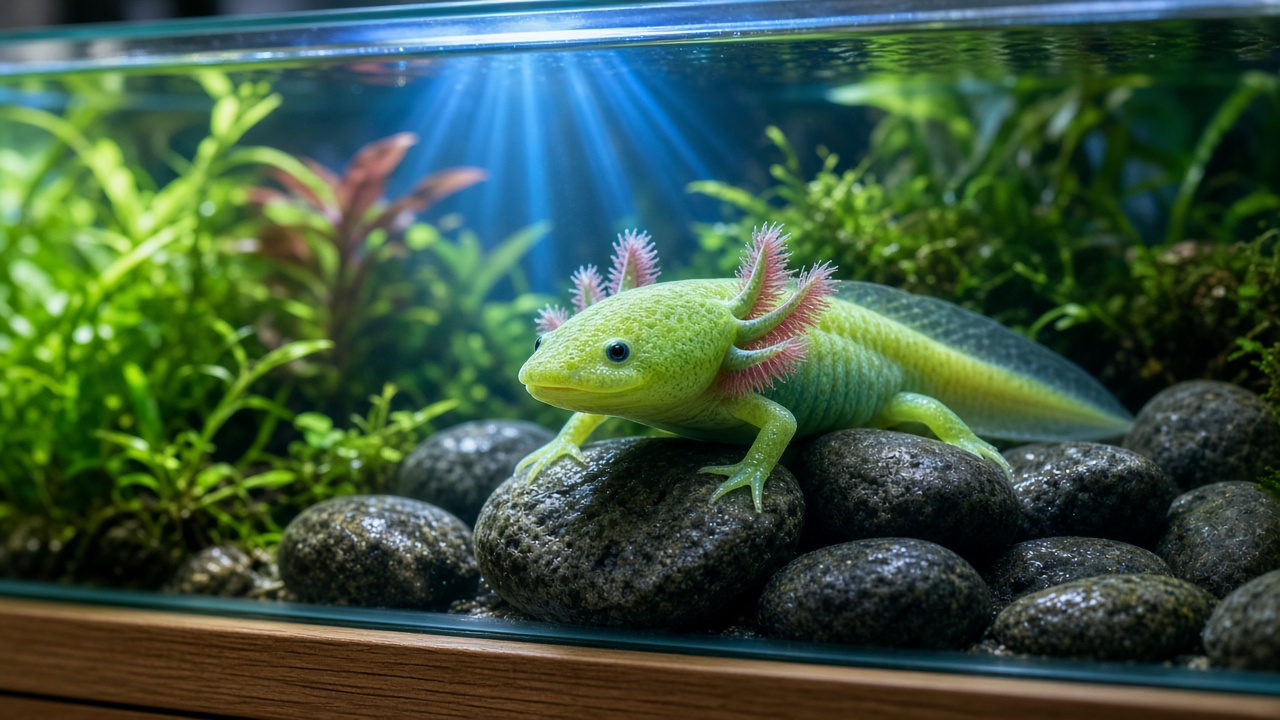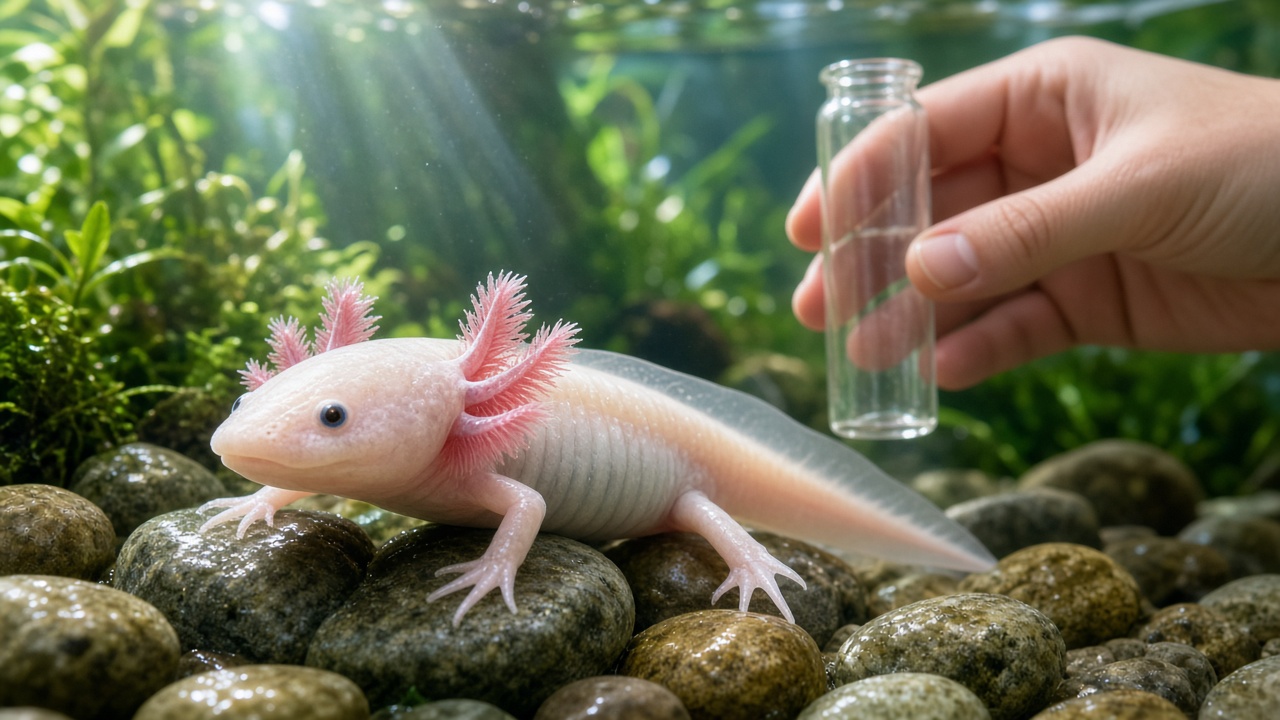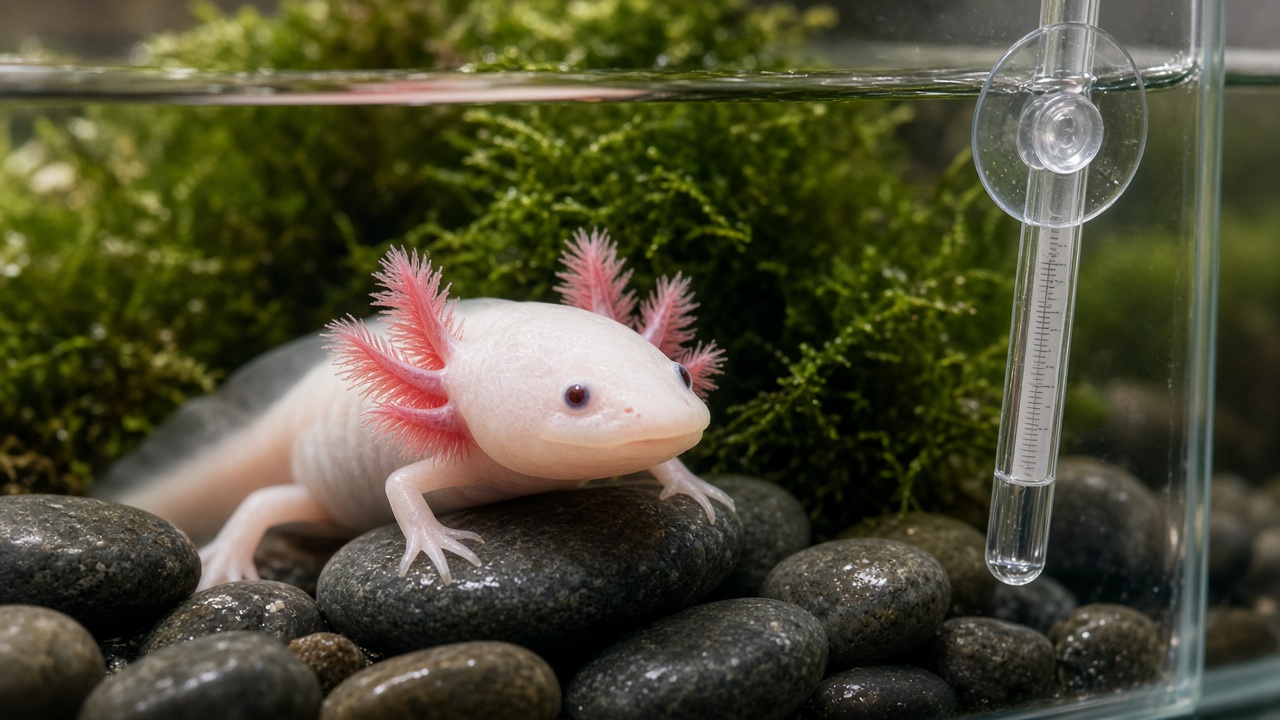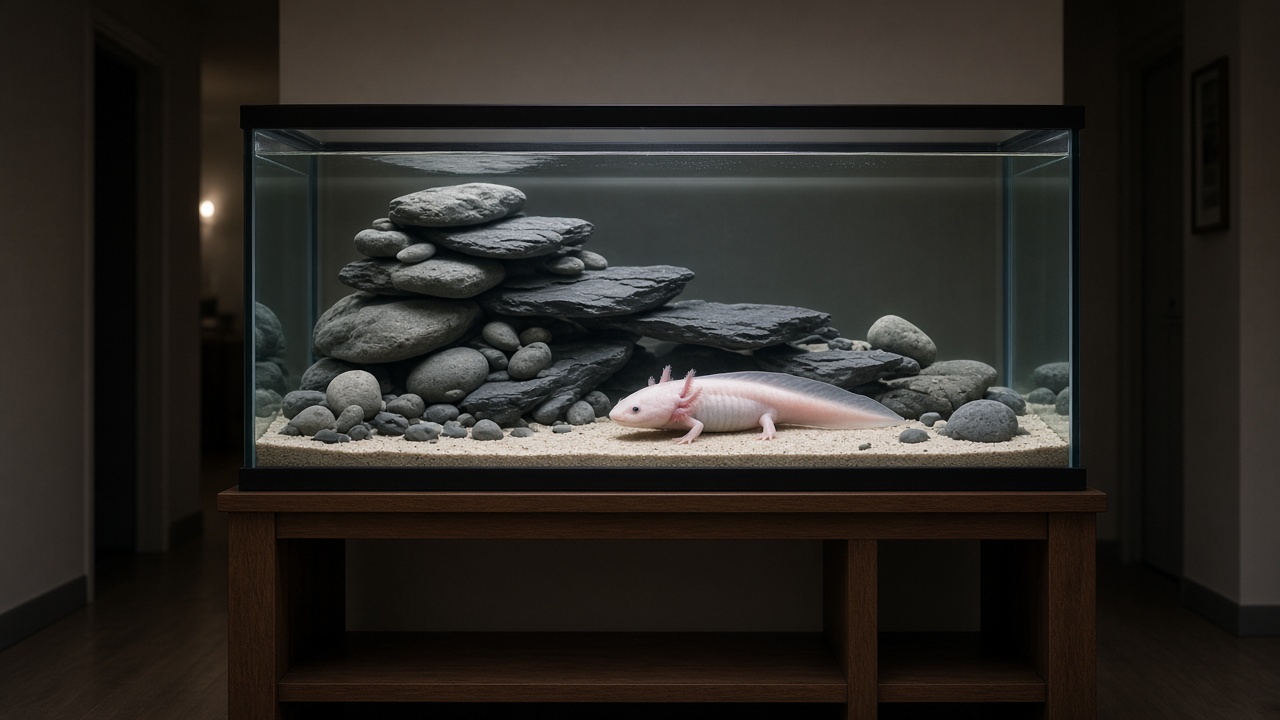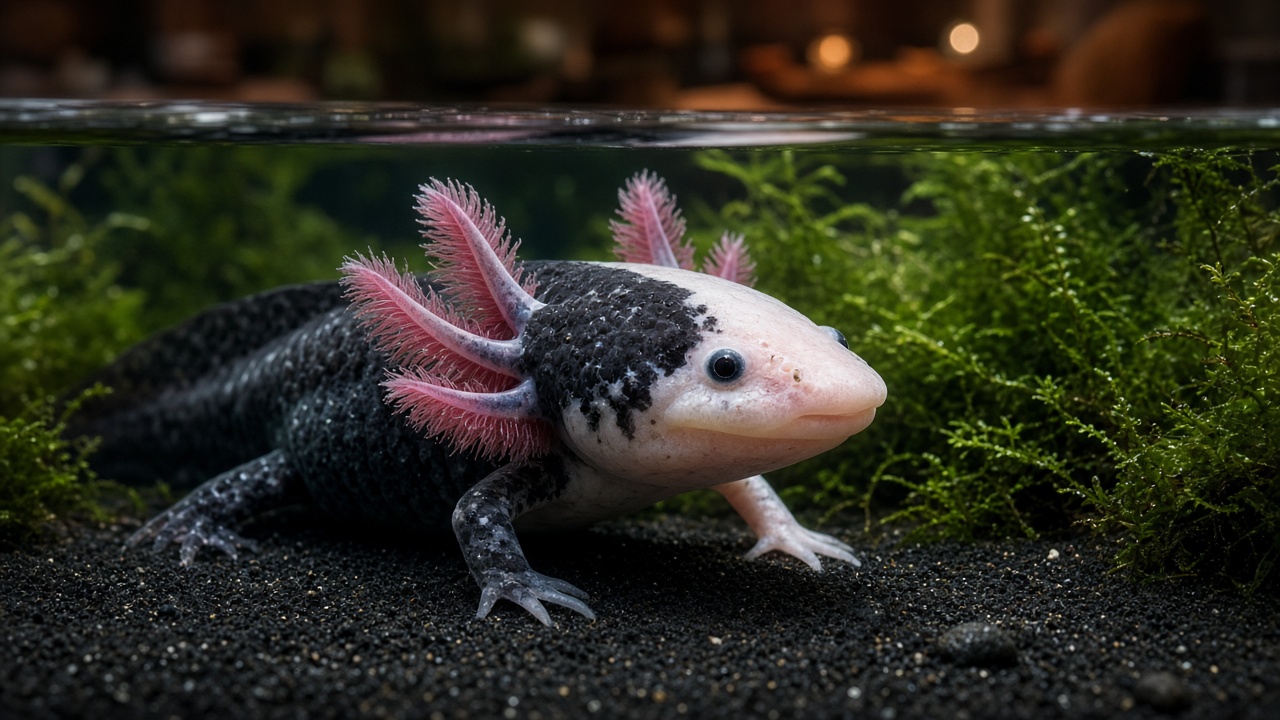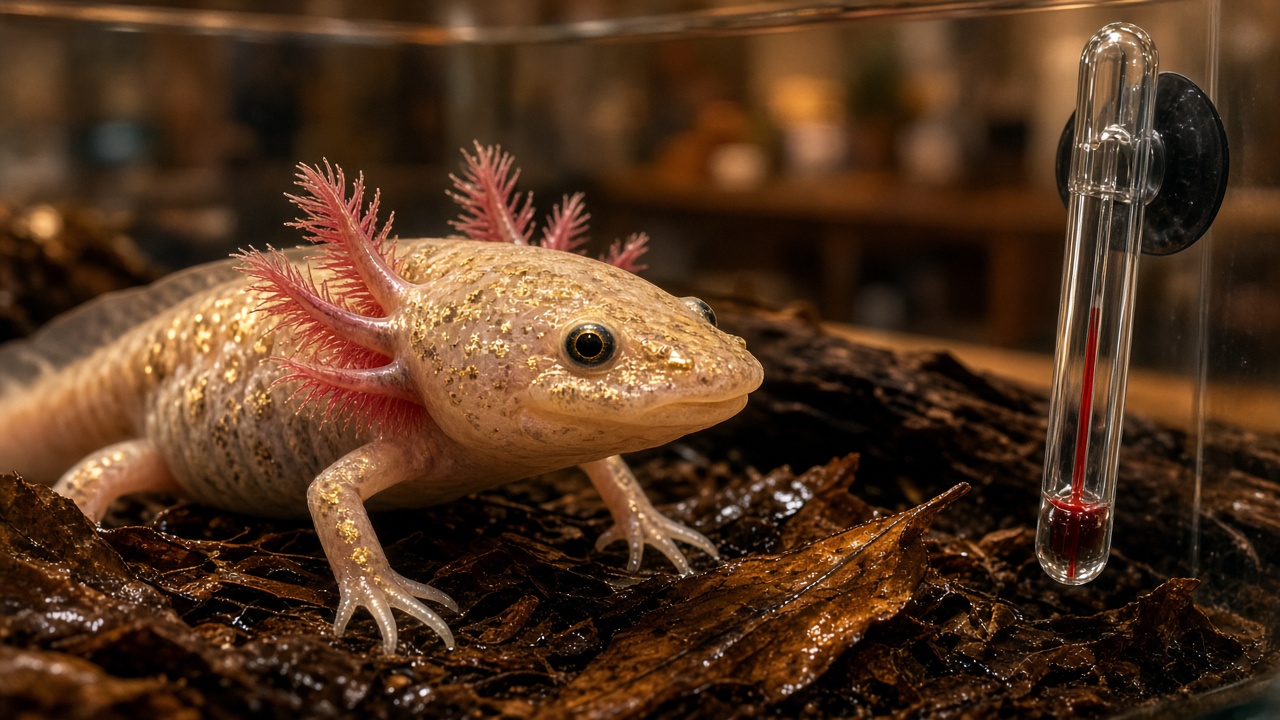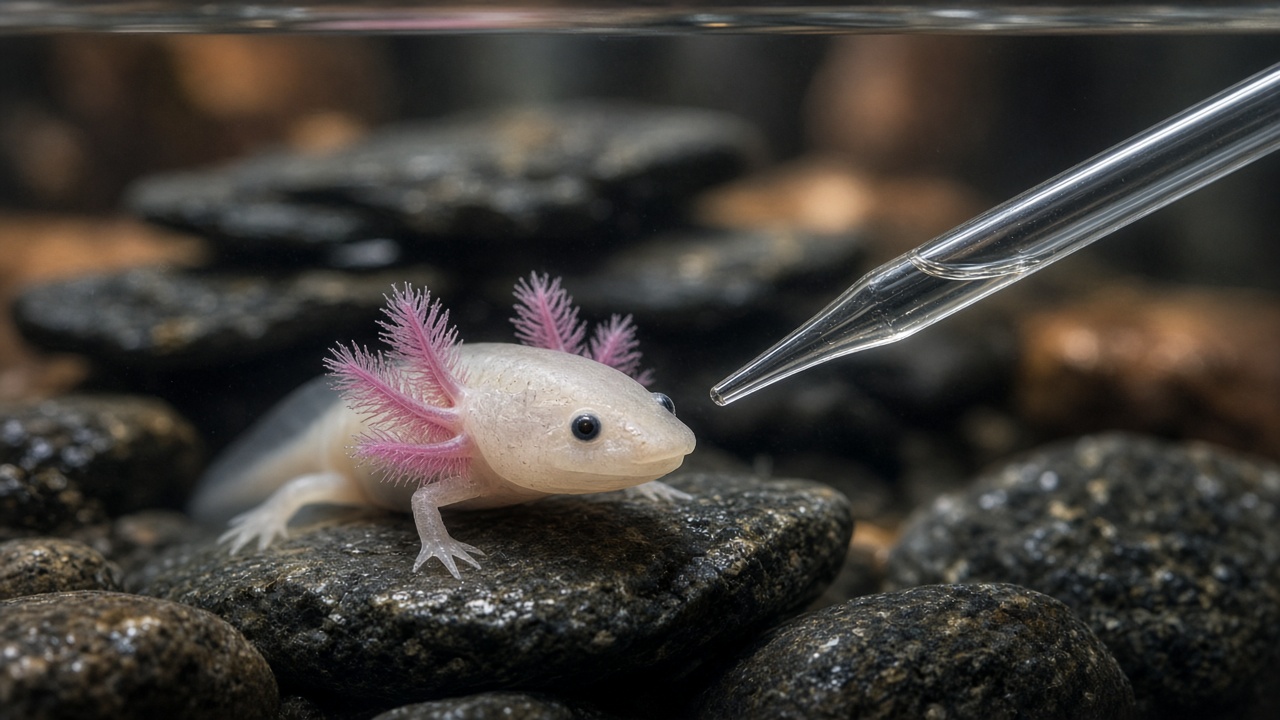
Quick answer: A baby axolotl is a larva that lives on its yolk for 24 to 72 hours, then eats live baby brine shrimp. Keep it in a shallow still bowl until it reaches 3 cm. Then move it toward a 10-gallon grow-out tank with cool, treated water.
A baby axolotl under 20 mm eats only live food and ignores pellets.
This page is a research-desk comparison of published larva notes and shop-gear specs. We did not hatch eggs for this article, and we did not run a grow-out tank.
Inclusion rule: a product entered this article only if the maker page listed a pack size or a dose. We left out heaters, gravel, live plants, and adult-only décor.
On 6 September 2026, our research team compared four maker pages that met that rule. We call that set the Waterpuppy Larva Gear Scan.
What counts as a baby axolotl
A baby axolotl is a larva from hatch until the hind legs finish, after which published notes call it a juvenile.
The axolotl.org rearing page states newly hatched larvae vary from 10–13 mm. The same page says most hatch at about 11 mm, the yolk lasts 24–72 hours, and the larva does not eat in that window.
Use this size map from the axolotl.org rearing page and the Ambystoma Genetic Stock Center 2024 guide:
- Hatch: 10–13 mm, yolk still in the belly
- About 20 mm: front legs start, live food only
- About 25 mm: hind-leg buds show
- About 40 mm: hind legs about half grown
- About 50 mm: four legs on, now a juvenile
- 3 cm: AGSC moves larvae into 2 L bowls
- 8–9 cm: AGSC moves them into 4 L bowls
The axolotl.org rearing page says front legs begin near 20 mm. At about 22°C, that can happen about 9 days after hatch.
The same page says hind legs start near the end of the third week. Larvae never grow at the same rate, so sort by length, not by hatch date.
What to feed from hatch to pellets
Live food is the only diet until about 20 mm, and dead food comes later.
The axolotl.org rearing page states larvae ignore dead food until they grow, because they snap at movement, not at smell.
The Ambystoma Genetic Stock Center 2024 guide feeds newly hatched brine shrimp when larvae gulp air at the surface. That same guide warns that unhatched eggs and shells can block a larva’s gut. Rinse and sort the shrimp before they go in the bowl.
San Francisco Bay Brand’s Hatch Mix page says to pour one packet into 1 liter of water. Keep that hatch water at 80–82°F, and keep pH at 8.0 or above.
That hatch heat is for shrimp, not for the axolotl, so hatch in a separate jug and then rinse the shrimp in fresh water. The Hatch Mix page says eggs hatch in 24–36 hours, then you wait 5–10 minutes so shells float and shrimp sink.
The same maker page lists this guaranteed analysis:
- Crude protein: 55.0% minimum
- Crude fat: 18.0% minimum
- Crude fiber: 5.0% maximum
- Moisture: 9.0% maximum
The axolotl.org rearing page says to feed once or twice daily while larvae are very young. At about 20°C, those larvae should reach about 1.5 cm in a week.
Use this food ladder from those pages:
- Days 0–3: no food, yolk only
- Until about 20 mm: live baby brine shrimp or small live daphnia
- From about 25 mm: thawed frozen bloodworm can start
- From about 2.5–4 cm: labs on that page begin pellets
- From 4–8 cm: the AGSC guide uses 4 mm pellets
- Larger than 8 cm: the AGSC guide uses 5 mm pellets
The AGSC guide feeds 2–3 pellets twice a week once pellets start.
Hikari UK’s page for Sinking Carnivore Pellets lists a 74 g pack and a 47% minimum protein. That page says to feed two to three times daily the amount eaten in a few minutes.
Those pellets are a later food and do not replace live shrimp under 20 mm. At 3 cm, the AGSC guide adds California blackworms to help larvae switch from live prey toward pellets.
Do not dump leftover shrimp into a still bowl. The axolotl.org rearing page says dead brine shrimp foul fresh water in hours.
Bowl size, then tank size
Start small and still, then step up volume as the body grows.
The Ambystoma Genetic Stock Center 2024 guide starts embryos in 1.5 L glass bowls and keeps no more than 75 embryos in one bowl. After hatch, that guide keeps larvae in clean 1.5 L bowls with 100% rearing water. Stir the water once a day so it stays oxygenated.
At 3 cm, the same guide moves each larva into a 2 L bowl with about 1 liter of water. At 8–9 cm, it moves them into 4 L bowls with 2.5 liters of water.
The axolotl.org rearing page uses a 45×20×25 cm aquarium as its count tank. At 25 mm, it keeps a maximum of 25 larvae in that tank.
At 40 mm, that page keeps fewer than 10 larvae in the same tank. Bites on gills and legs mean the group is too tight.
The AGSC guide says bite injuries are common unless each larva lives alone, and most of those bites heal by regeneration. An axolotl tank setup is the later step, not the hatch step.
The AGSC guide says a filtered 10-gallon tank should hold no more than two adults. Use this housing ladder:
- Eggs and new hatchlings: 1.5 L still bowls
- From 3 cm: 2 L bowls with about 1 liter of water
- From 8–9 cm: 4 L bowls with 2.5 liters of water
- Grow-out: a 10-gallon tank for later juveniles, not a crowd of hatchlings
Keep the floor bare, because the AGSC guide discourages substrate after animals swallow small rocks at feeding time. Skip strong filters on hatchlings; the axolotl.org rearing page allows a foam filter later, but only if the intake cannot suck up a larva.
Water, temperature, and tests
Cool, treated water matters more than décor, and warm water is the first thing to rule out.
The Ambystoma Genetic Stock Center 2024 guide holds animals at 15–17°C and uses a 12 hour light and 12 hour dark day. That guide buffers rearing water to a pH of 7.1–7.6.
Its salt mix per liter is 1.38 g NaCl, 80 mg MgSO4, 40 mg CaCl2, and 20 mg KCl. Home tap water is not that mix, and the same guide says municipal chlorine, chloramine, and ammonia must come out first.
Seachem’s Prime page doses 1 capful (5 mL) per 200 L, which is 50 US gallons. Each cap thread is about 1 mL, so treat a larger jug and then pour into the bowls.
Prime’s page says the binder can last up to 48 hours and that you can dose every 24–48 hours. If ammonia or nitrite is above 2 ppm, that page allows up to five times the normal dose.
The AGSC guide uses the same 2.0 ppm ammonia line as a sign a filtered system is out of balance. For filtered tanks, the AGSC guide still wants weekly 10% water changes.
In still bowls, it changes water every 2–3 days once each animal has its own bowl. API Fishcare’s Freshwater Master Test Kit page measures six parameters, including ammonia, pH, high range pH, nitrite, and nitrate.
The kit includes four test tubes. That page says to test weekly and states a pH of 7.0 is neutral.
Match the AGSC pH band of 7.1–7.6 on that card. Do not keep hatched larvae warm to speed growth.
Shop gear we compared
We compared four items that publish a pack size or a dose. This table is an attribute list, not a ranking.
On 6 September 2026, our research team read the four maker pages in the Waterpuppy Larva Gear Scan. Two of the four pages published a protein minimum.
The Hatch Mix page lists 55.0% minimum protein, and Hikari UK’s pellet page lists 47% minimum protein, an 8-point gap. Only the Hatch Mix page published a hatch temperature, only Prime published a mL-per-gallon dose, and only the test kit published a weekly test cadence.
| Product | Maker-listed pack or dose | Maker-listed number | Job on the maker page |
|---|---|---|---|
| San Francisco Bay Brand Hatch Mix | Pack of three 0.74 oz (21 g) pouches | 24–36 hour hatch at 80–82°F | Live baby brine shrimp for fry |
| Hikari Sinking Carnivore Pellets | 74 g pack | 47% minimum protein | Daily diet for carnivores |
| Seachem Prime | 5 mL per 50 US gallons | Cap thread about 1 mL | Removes chlorine and chloramine |
| API Freshwater Master Test Kit | Four test tubes | Six water parameters | Weekly ammonia, pH, nitrite, and nitrate checks |
Mistakes that show up in the published notes
Most early losses in those notes come from dead food, crowding, or warm water.
The axolotl.org rearing page says larvae will starve if you cannot supply tiny live food. They may also eat each other once front legs appear.
Sort by size at about 2 cm. That page says bites then start to remove limbs and gills.
Do not heat the larva bowl to the shrimp hatch range. San Francisco Bay Brand’s Hatch Mix page uses 80–82°F, while the AGSC guide uses 15–17°C for the animals.
Do not skip the shell rinse, because the AGSC guide says shells and unhatched eggs can block the gut. Do not start pellets before the 20 mm cutoff, because the axolotl.org rearing page says dead food is ignored until then.
Do not stock a 10-gallon tank with a hatch-day crowd. The AGSC adult rule is no more than two adults in that volume.
The same guide says animals swallow small rocks with food, so skip gravel.
FAQ
How big is a baby axolotl at hatch?
The axolotl.org rearing page states newly hatched larvae are 10–13 mm long. Most are about 11 mm, still carry a visible yolk, and do not eat for 24–72 hours.
What do baby axolotls eat first?
They eat live baby brine shrimp or small live daphnia after the yolk is gone. The Ambystoma Genetic Stock Center 2024 guide starts brine shrimp when larvae gulp air at the surface. San Francisco Bay Brand’s Hatch Mix page hatches one packet in 1 liter of water in 24–36 hours.
What tank size does a baby axolotl need?
A new hatchling does not start in a display tank. The AGSC guide uses 1.5 L bowls, then 2 L bowls at 3 cm, then 4 L bowls at 8–9 cm. A 10-gallon tank is the later grow-out size, and that same guide says it should hold no more than two adults.
How often should I feed a baby axolotl?
The axolotl.org rearing page says feed very young larvae once or twice daily. After pellets start, the AGSC guide uses 2–3 pellets twice a week. Hikari UK’s pellet page says to offer only what is eaten in a few minutes, then remove leftovers.
Can baby axolotls live together?
Yes at first, because the axolotl.org rearing page says very young larvae have little cannibal risk. Risk rises once front legs appear, near 20 mm. At 25 mm that page caps a 45×20×25 cm tank at 25 larvae. At 40 mm it keeps fewer than 10 in that same tank.
When does a baby axolotl become a juvenile?
The axolotl.org rearing page calls them juveniles once the hind legs are fully grown. That is near 50 mm, when they look like small adults. At that size, the same page says they can take 3 mm pellets and small earthworm pieces.
Do I need a filter for a hatchling?
No, because the AGSC guide rears hatchlings in still bowls and changes water on a short cycle. A foam filter can wait until larvae are large enough not to be sucked in. The axolotl.org rearing page gives the same intake caution for a later biofoam filter.