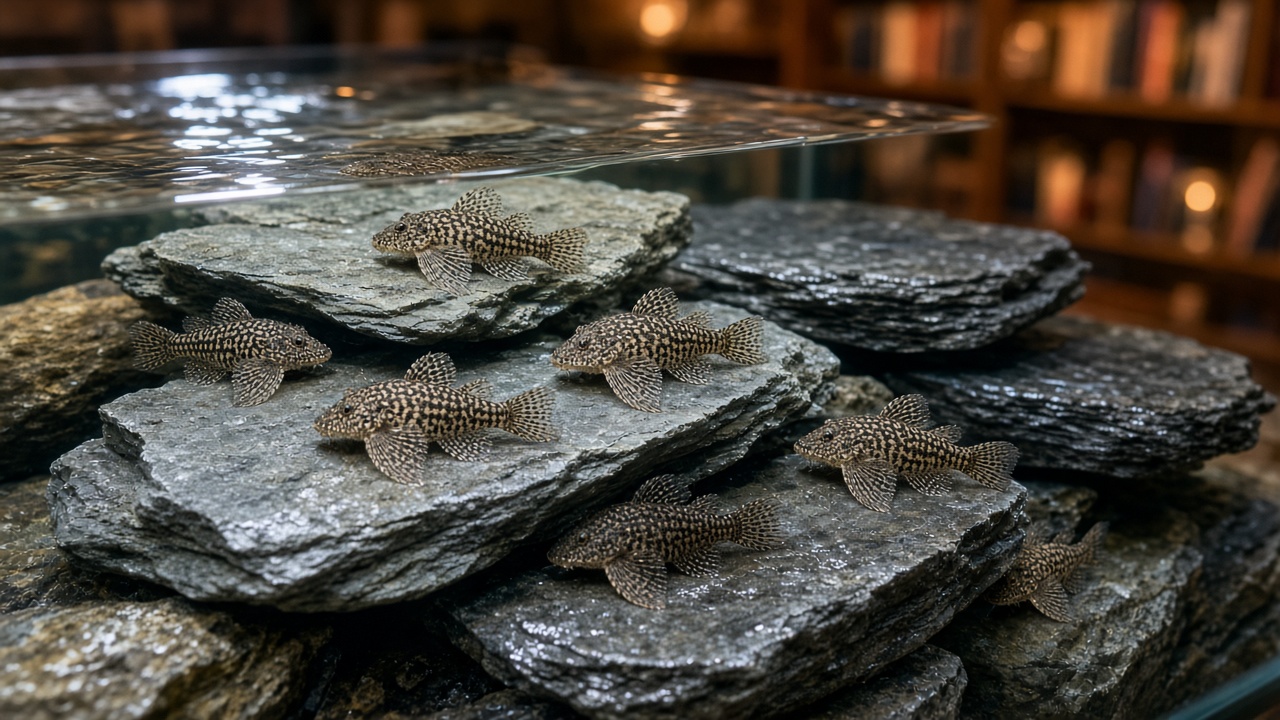
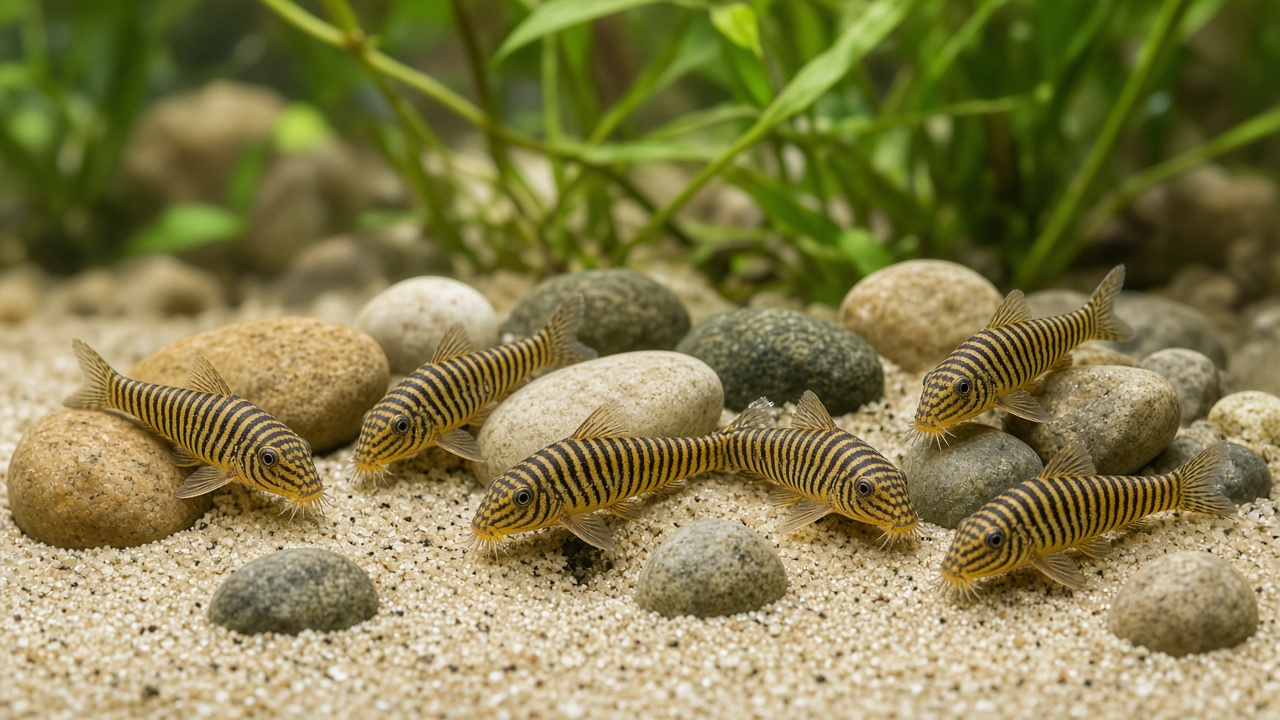
Quick answer: Keep clown loaches only if you can house five or more in a tank at least 150 cm long. Adults reach 30.5 cm. Use sinking food and a large canister filter.
FishBase lists a 150 cm tank and a group of five as the clown loach aquarium minimum.
This page is a desk comparison of published species records and current maker specs.
Our selection rule is narrow. A number enters only if FishBase or the 2012 Aquatic Living Resources paper states it.
A maker page enters only when it lists a spec a 150 cm tank can use. We left out nano kits, 20-gallon starters, live-food culture, and drug-dose recipes.
What a clown loach is
A clown loach is Chromobotia macracanthus, a bottom-living river fish from Indonesia.
FishBase places the species on Sumatra and Borneo only. It is not a small “cleanup crew” fish.
Shops often sell 4 to 5 cm juveniles. Aquatic Living Resources, writing in 2012, called 4 to 5 cm the usual trade size.
The same paper recorded the largest of 2,300 Musi River fish at 305 mm total length and 469 g. FishBase lists the same ceiling: 30.5 cm total length and 469.00 g.
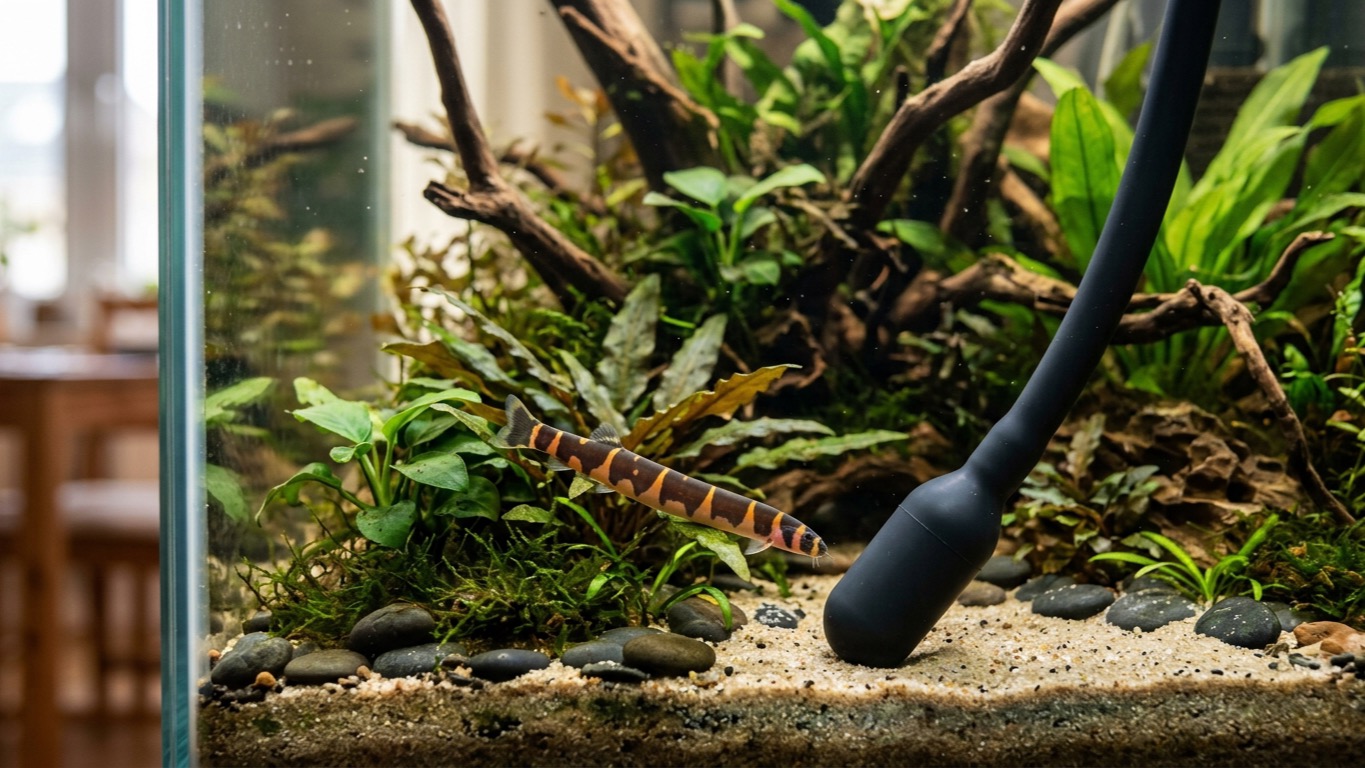
FishBase describes the body as orange with three black bars. Adults sit on the floor of main river channels.
They hide under rocks, wood, or in mud cavities, and juveniles use floodplains.
Adults eat worms, crustaceans, and plant matter, per FishBase. The 2012 paper adds benthic insects and aquatic snails, so this is an omnivore diet with a strong animal bias, not an algae-only menu.
FishBase reports the IUCN Red List status as Least Concern, assessed on November 28, 2019. That listing is a status label, not a reason to buy a tiny tank.
Tank size for a school of adults
The published length rule is 150 cm, and volume slogans that ignore length fail that rule.
FishBase’s aquarium note is a hard length, not a gallon slogan: 150 cm. That is about 59 inches of swimming floor.
A short, tall tank can hold many gallons and still fail, so measure the long side first.
Use this length check before you buy:
- Tank front-to-back length must be at least 150 cm (about 59 inches).
- Plan that length for a group of five or more, not for one fish.
- Treat a shop 4 to 5 cm fish as a future 30.5 cm adult.
The 2012 breeding study held broodfish in 10 m³ indoor tanks on recirculation. That is a lab system, not a living-room target.
The same team also used 200 L quarantine aquaria after transport. Those 200 L boxes were short holding tanks, not adult homes.
Our research team compared those published figures with common “starter tank” claims on hobby pages.
If you want a much smaller loach in a long, low tank, read our kuhli loach care notes. Kuhli loaches stay far below the clown loach’s 30.5 cm mark.
Schooling and tank mates
FishBase’s aquarium note is a group of five or more. One or two fish do not meet that published minimum.
Clown loaches are social bottom fish that rest in piles and move as a group. A pair can hide all day, while a group of five or more matches the FishBase keeping note.
The 2012 paper kept males in groups of three to six during hormone trials. That was a lab holding pattern, not a home stocking chart.
Tank-mate rules we used:
- Skip any fish small enough to fit in an adult clown loach’s mouth.
- Skip slow long-finned fish that share the same bottom food.
- Leave room on the glass for a 30.5 cm body to turn.
- Do not add a second bottom school unless the 150 cm length still holds.
Water, heat, and filtration
Match soft, warm river water, then measure it, and do not guess from the color of the gravel.
FishBase lists a pH range of 5 to 8 and a hardness range of 5 to 12 dH. That is a wide published window, not a single target.
The 2012 paper gives the only captive temperature comparison we kept. After about one year at 30 to 31 °C, the team lowered recirculation tanks to 26 to 27 °C over two months.
More broodfish were in advanced sexual maturity at 26 to 27 °C than at 30 to 31 °C. Use that published pair as a heat check, not as a home-breeding plan.
Hold heat this way:
- Hold display water near 26 to 27 °C if you can do so steadily.
- Do not chase 30 to 31 °C as a “tropical default.”
- Recheck temperature after large water changes.
The same paper logged recirculation water at 6.7 to 8.1 mg L⁻¹ dissolved oxygen, a number home tanks rarely publish.
Strong surface movement and a large filter are the practical stand-ins.
API’s page for the Freshwater Master Test Kit says to test weekly. The kit checks pH, high-range pH, ammonia, nitrite, and nitrate.
It ships with four test tubes, a holding tray, and a laminated color card. API defines pH 7.0 as neutral.
Weekly checks we would log:
- Ammonia
- Nitrite
- Nitrate
- pH (use the high-range test if the first reading sits high)
Fluval’s page for the FX4 Canister Filter rates the unit for aquariums up to 250 US gallons (1,000 L). It lists pump output at 700 US GPH (2,650 LPH).
Filter circulation is listed at 450 US GPH (1,700 LPH). Canister volume is 3.7 US gallons (14 L).
A 150 cm adult school is a heavy waste load, which is why the FX4’s published flow is in this article.
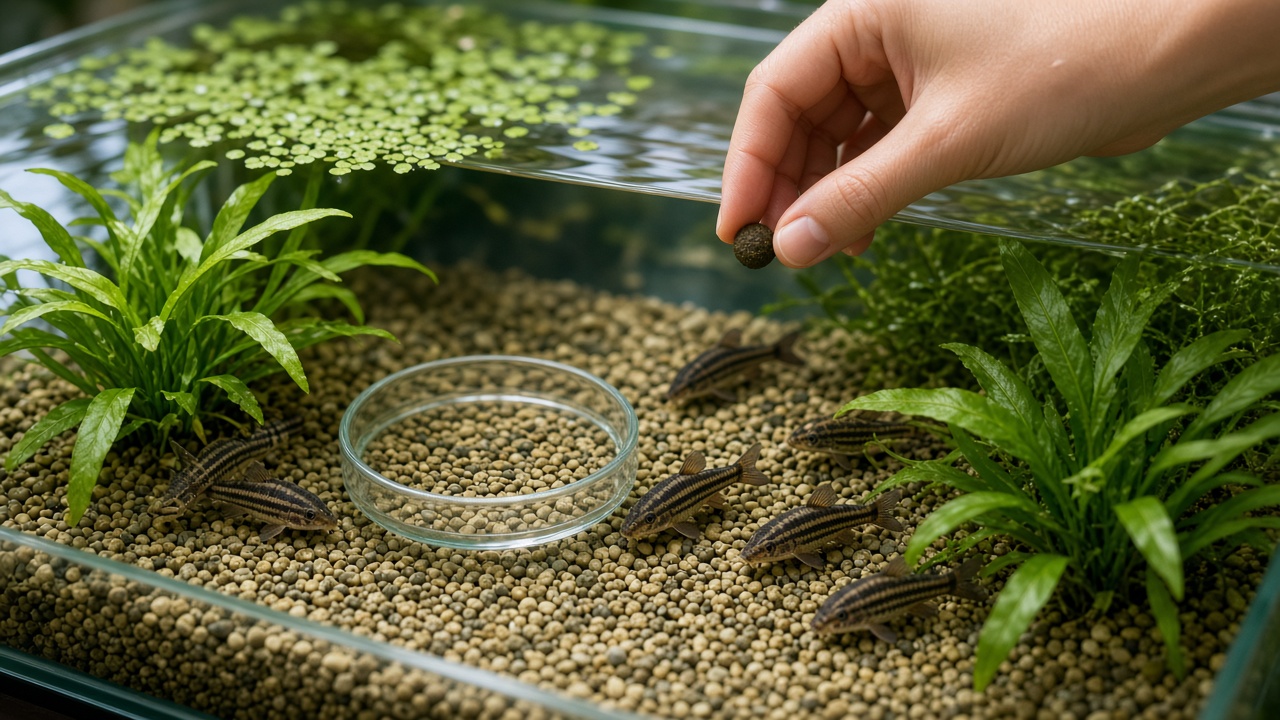
Feed sinking food that lists loaches or other bottom feeders, because floating flakes fail that rule.
FishBase and the 2012 paper both describe animal prey plus plant matter. So we compared two current sinking staples whose maker pages publish protein and fat, and we left live-food culture out of this page.
Hikari Sales USA’s page for Tropical Sinking Wafers says the discs were developed for corydoras catfish, loaches, and other bottom feeders. Pack sizes on that page are:
- 0.88 oz (25 g)
- 1.76 oz (50 g)
- 3.88 oz (110 g)
- 2.2 lb (1 kg)
Hikari’s guaranteed analysis on the same product page lists:
- Crude protein min. 36.0%
- Crude fat min. 9.0%
- Crude fiber max. 4.0%
- Moisture max. 10.0%
- Ash max. 16.0%
- Phosphorus min. 0.8%
Hikari’s feeding line is the amount the fish will finish in 20 minutes, and leftovers should come out after that window.
Omega Sea’s page for Sinking Catfish Pellets lists the pellets as a daily diet for bottom feeders. Pack sizes on that page are 4.5 oz and 15 lb.
The guaranteed analysis is:
- Crude protein min. 38%
- Crude fat min. 10%
- Crude fiber max. 2.0%
- Moisture max. 8.5%
- Ash max. 8%
Our research team compared those two labels. Omega One lists 2 percentage points more crude protein and 1 point more crude fat.
Hikari lists a 20-minute feed window and four retail sizes. Neither maker page claims a clown-loach-only formula.
Feed pattern we would use from those labels:
- Drop a sinking wafer or pellet at the front and back of the tank.
- Watch the school for 20 minutes if you use Hikari Sinking Wafers.
- Lift any disc or pellet that is still intact after that window.
- Rotate the two staples across the week so protein sources vary.
Do not treat snail-eating as a full diet. The paper lists snails as one wild item, not as the only meal.
Lifespan, growth, and breeding
FishBase does not publish a maximum age for this species, and we do not invent one.
The 2012 paper used 196 sexually mature wild-caught fish of unknown age. That includes 112 females from 46 to 404 g and 84 males from 15 to 180 g.
Age was not recorded, so long year-counts on hobby pages sit outside our source set.
Growth is a length gap, not a calendar we can cite. Trade fish start at 4 to 5 cm, and the published adult mark is 30.5 cm, about a six-fold increase. Time-to-size claims need a growth study
Home breeding is not a weekend project, because the 2012 team induced ovulation with hormones.
Captive Sumatra females ovulated at 93%, with 109,277 ova per kg and a 73% fertilization rate. Wild-matured Sumatra females ovulated at 82%, with 103,550 ova per kg and a 61% fertilization rate.
Captive Borneo females were lower still, at 77% ovulation, 76,262 ova per kg, and 50% fertilization.
They selected females with a modal follicle diameter of at least 1.02 mm, and mean ovum weight was about 0.8 mg.
Those hatchery numbers are not a home spawning recipe.
Aquatic Living Resources also estimated about 50 million juveniles exported in 2009. That figure was up from about 20 million reported 15 years earlier.
Most shop fish are still wild-caught juveniles. We cannot verify a “captive-bred” tag from a label alone.
Published gear specs we used
We put a product in this table only if its maker page lists a number a 150 cm tank can use. No rank column. No price column.
| Product | Role | Maker-listed spec | Pack or capacity |
|---|---|---|---|
| Hikari Tropical Sinking Wafers | Sinking staple | min. 36.0% crude protein; 20-minute feed window | 25 g, 50 g, 110 g, 1 kg |
| Omega One Sinking Catfish Pellets | Sinking staple | min. 38% crude protein; min. 10% crude fat | 4.5 oz and 15 lb |
| Fluval FX4 Canister Filter | External filter | 700 US GPH pump output; 250 US gal rating | 3.7 US gal canister; 450 US GPH circulation |
| API Freshwater Master Test Kit | Water checks | pH, high-range pH, ammonia, nitrite, nitrate | 4 test tubes; weekly testing on API’s page |
How we would place that gear:
- Run the Fluval FX4 on the adult tank, not on a grow-out box.
- Keep the API kit on a weekly schedule, not “when the water looks off.”
- Stock one Hikari size and one Omega One size so you can rotate labels.
- Skip any filter whose maker page stops at a 20-gallon kit.
The heater pages in our pass rated a single unit at or below 100 US gallons, and we would not invent a pairing chart.
FAQ
How big do clown loaches get?
FishBase lists a maximum total length of 30.5 cm and a maximum published weight of 469.00 g. The 2012 paper found the same 305 mm and 469 g fish among 2,300 Musi River specimens.
What tank size do clown loaches need?
FishBase’s aquarium note is a minimum length of 150 cm, plus a group of five or more. Measure the tank’s long side first.
A short tank that holds many gallons still fails that length rule.
How many clown loaches should I keep together?
Keep five or more. That is the group size FishBase lists for aquarium keeping.
One or two fish do not meet that published minimum.
What do clown loaches eat?
FishBase says adults eat worms, crustaceans, and plant matter. The 2012 paper adds insects and snails.
Hikari Sinking Wafers list a minimum of 36.0% crude protein. Omega One Sinking Catfish Pellets list a minimum of 38%.
How long do clown loaches live?
FishBase does not list a maximum age. The 2012 breeding paper used mature wild fish of unknown age.
Can clown loaches live in a 20-gallon tank?
No. A 20-gallon kit is far below FishBase’s 150 cm length rule, the group-of-five rule, and the 30.5 cm adult length.
Do clown loaches breed in a home aquarium?
Not as a reliable home event. The 2012 hatchery work used hormones, follicle checks at or above 1.02 mm, and large recirculation tanks.
Those steps are outside normal home care.