Quick answer: Keep one adult fantail in a filtered tank of at least 100 liters, about 26 US gallons. Feed a goldfish diet in short meals, and change 25 percent of the water each week.
A fantail is a fancy goldfish that needs at least 100 liters of filtered tank water as an adult. This page is a home-aquarium research brief, and
We used one selection rule so this page stays on published tank and label numbers. We cover indoor fantails in filtered tanks that meet the Ornamental Aquatic Trade Association’s 100-litre adult floor.
We exclude bowls, pond-only commons, breeding rooms, and disease treatment. For foods, we only list currently sold goldfish diets whose US maker pages name goldfish or fantails. Our research team analyzed those published specs and did not rank foods.
What a fantail goldfish is
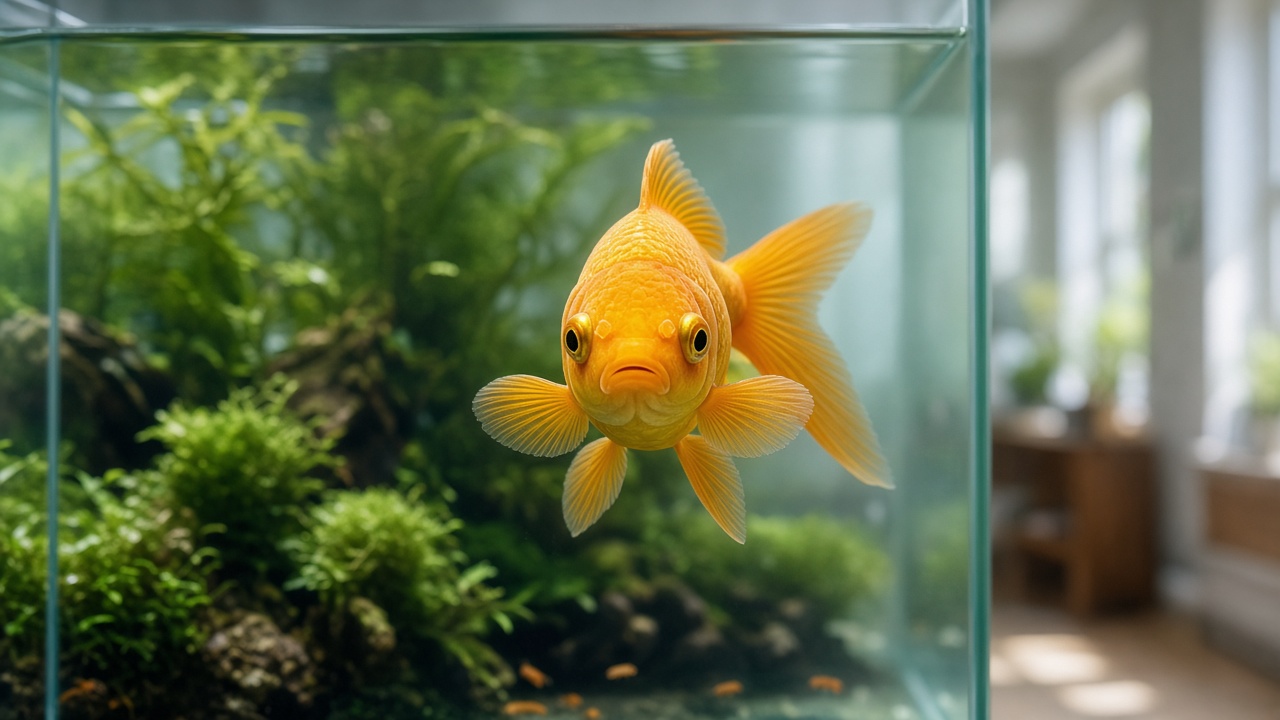
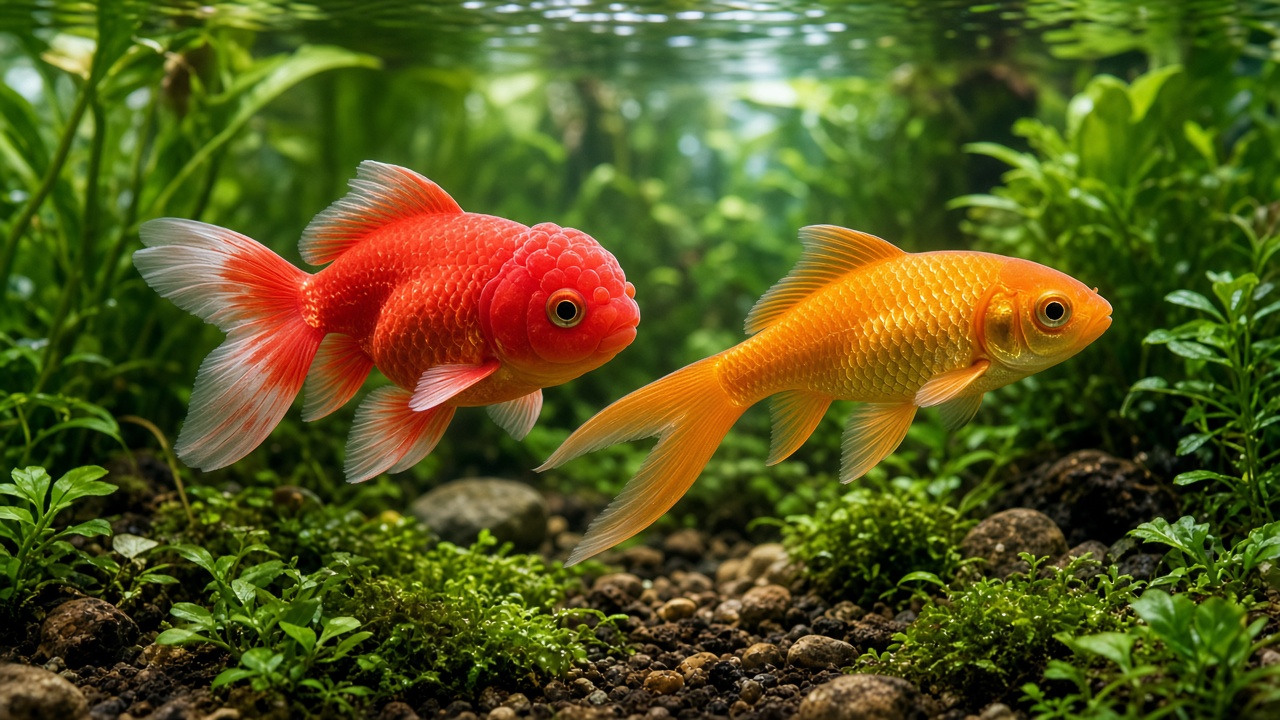
A fantail is a fancy goldfish with a split tail, not a separate species.
OATA’s goldfish care sheet uses Carassius auratus for the group, and a fantail is one body form of that fish.
Aqueon’s goldfish care guide says all goldfish varieties are the same species and lists fantails beside orandas, ryukins, and moors.
The split tail is the trait people mean by “fantail,” and the short, round body is slower than a comet.
OATA’s sheet says aquarium goldfish commonly reach 25 cm, about 10 inches. Some reports on that sheet go past 40 cm, so plan the tank for the published adult.
Tank size and the published floor gap
Plan the tank for an adult, and use the higher published floor.
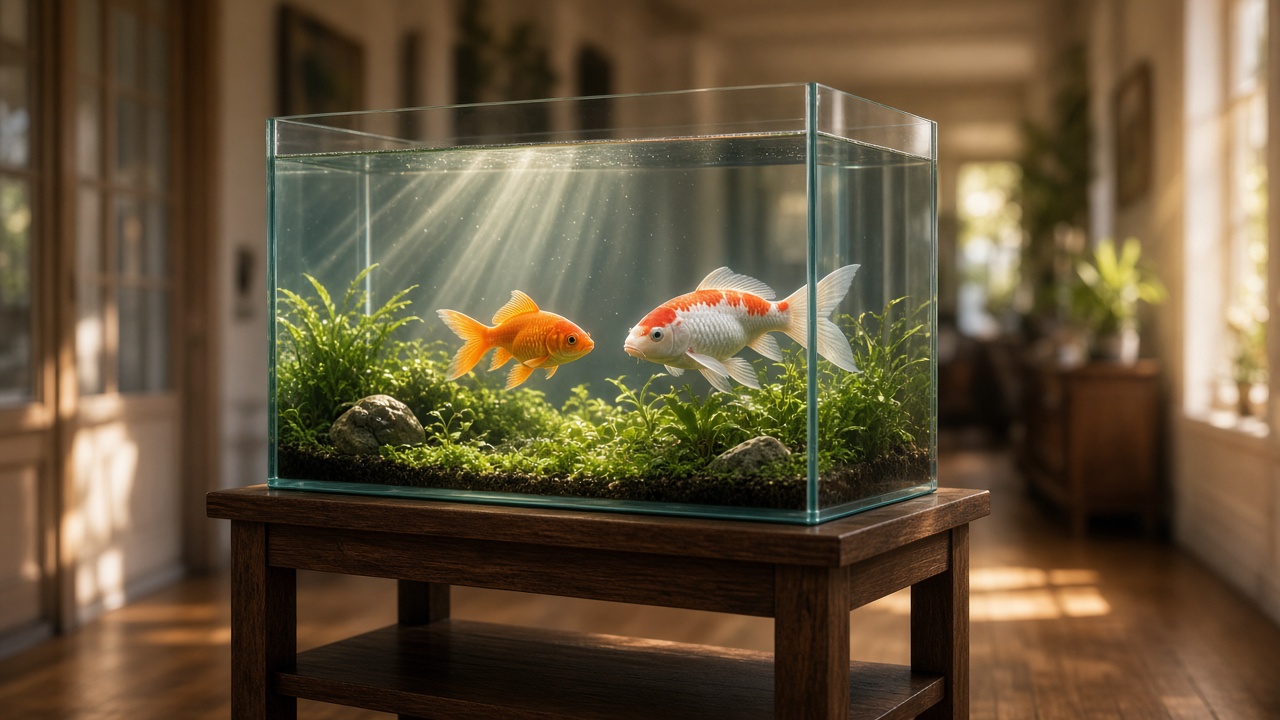
OATA’s sheet says an adult goldfish needs at least a 100 litre aquarium, then 50 litres more for each extra adult. 100 litres is about 26 US gallons, and 50 litres is about 13 US gallons.
A filter is always essential on that same sheet, and a bowl does not meet the floor.
Aqueon’s goldfish care guide lists a lower fancy line of at least 10 gallons per adult fish. That same page gives commons, comets, and shubunkins at least 20 gallons per adult.
Our research team compared those two published floors: Aqueon’s fancy line is 10 gallons, and OATA’s first-adult floor is about 26 gallons.
We call that 16-gallon spread the Fantail Floor Gap and use OATA’s 100-litre floor.
OATA also says to buy as large a tank as you can, within reason, because larger water volume stays more stable. If you start small, that sheet says you must upgrade as the fish grow.
Aqueon’s guide says goldfish should never be kept in bowls, small aquariums, or any unfiltered container.
Water numbers to keep
Test every week, keep ammonia and nitrite at zero, and change 25 percent of the water weekly.
OATA lists these home targets:
- Temperature: 4 to 25°C
- pH: 6.0 to 8.0
- Ammonia: 0 mg per litre
- Nitrite: 0 mg per litre
- Nitrate: no more than 20 mg per litre above normal tap water
- Hardness: 5 to 19°dH
Aqueon’s guide gives a tighter fancy temperature band of 68° to 74°F, which sits inside OATA’s 4 to 25°C range. Aqueon also lists pH from 7.0 to 8.4, so the overlap with OATA is 7.0 to 8.0.
OATA says goldfish are very dirty, so waste can raise ammonia and nitrite fast. That sheet strongly recommends a 25% partial water change at least once every week.
Aqueon’s guide lists a lighter change of 10% weekly or 25% every two weeks, so if waste is up, use OATA’s weekly 25% line.
Treat replacement water to remove chlorine and chloramine before it goes in. Rinse filter media in old tank water, not tap water, because OATA says tap chlorine can kill filter bacteria.
Use a test kit that reads ammonia, nitrite, nitrate, and pH. OATA calls test kits essential and says to check at least once a week.
Aqueon says a tablespoon of aquarium or sea salt per 5 gallons can be used. That option is on Aqueon’s page, not a daily must.
OATA says a heater is not required unless the room is very cold. Keep the tank away from drafts, heat sources, and direct sun.
If the fish hangs at the surface or sits on the bottom, test the water the same day. OATA lists those swimming changes as warning signs.
Diet, meals, and label protein
Use a goldfish food and stay inside a short eating window.
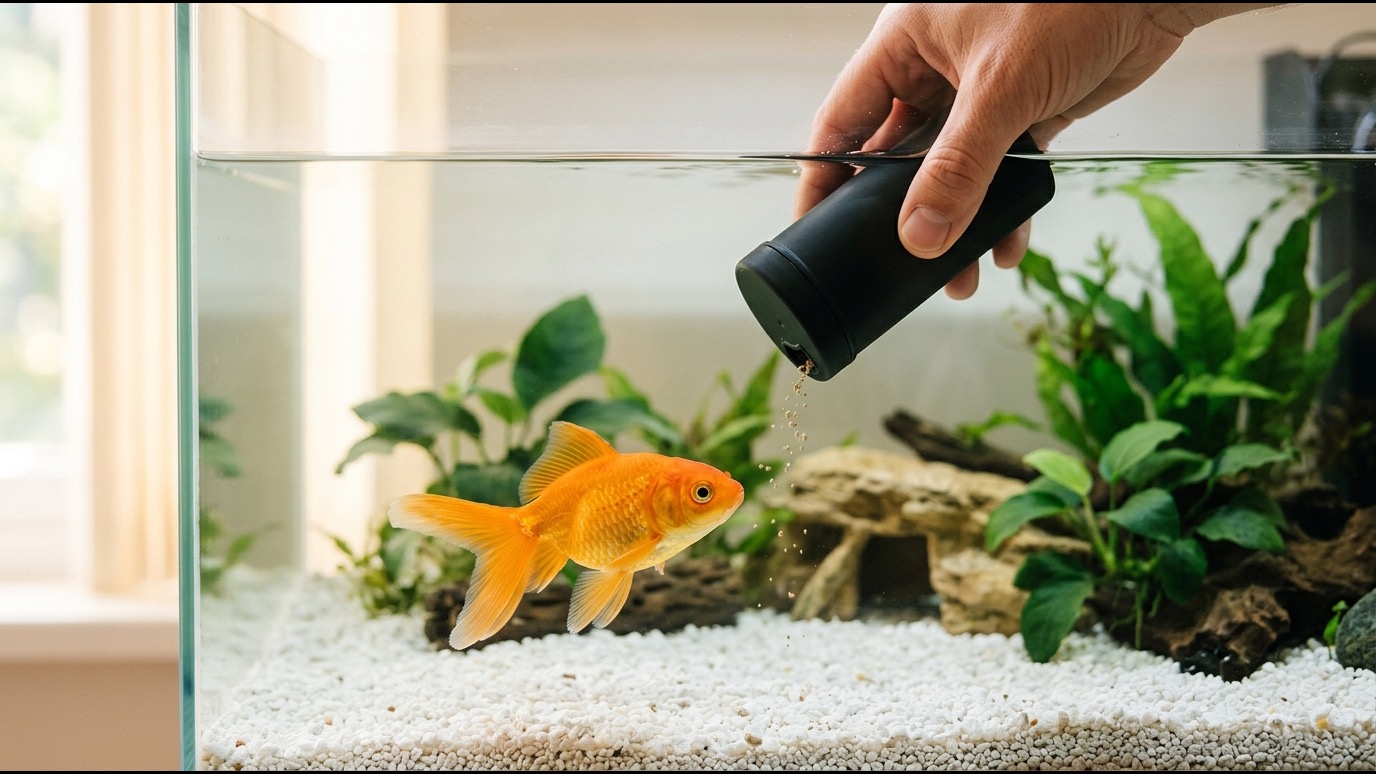
OATA says goldfish need more carbohydrates than many other pet fish, so use a goldfish flake or pellet. Feed once a day, only what they eat in a few minutes, and remove leftovers so waste does not rise.
That same Hikari page says to cut the amount if water stays below 50°F or above 86°F. Tetra’s Select GoldFish Flakes page says two to three times daily, within three minutes.
Aqueon’s care guide says feed what they eat in 2 to 3 minutes, once or twice a day. Those clocks do not match, so if leftover food remains, drop back to OATA’s once-a-day line.
A simple way to stay inside the published windows:
- Use a food made for goldfish.
- Offer a small pinch, then stop when food is gone.
- Stay inside a one- to three-minute eating window.
- Remove uneaten food after that window.
- Skip a second feeding if waste or leftovers are up.
Aqueon’s guide says goldfish may gulp air when they feed at the surface, so soak flake food briefly and avoid floating pellets.
Our research team analyzed three US maker pages that print crude-protein minima, and those minima run from 32.0% to 42.0%.
We call that 10-point gap the Fantail Label Spread. “Crude” is the lab method on the label and does not grade the protein.
Published protein minima:
- Hikari Goldfish Gold: 32.0% minimum
- Omega One Goldfish Pellets Large Sinking: 35% minimum
- Tetra Select GoldFish Flakes: 42.0% minimum
Aqueon Goldfish Granules name fantails on the product page, and that page does not print a crude-protein minimum.
Four current foods, compared by label
These four foods are currently sold, and every number below comes from the maker page.
| Product | Form | Crude protein (min) | Crude fat (min) | Maker feeding note |
|---|---|---|---|---|
| Hikari Goldfish Gold | Floating pellet | 32.0% | 4.0% | About 1 minute, 2 or 4 times daily |
| Omega One Goldfish Pellets Large Sinking | Sinking pellet | 35% | 10% | Not listed on the maker page |
| Tetra Select GoldFish Flakes | Floating flake | 42.0% | 11.0% | 3 minutes, 2 to 3 times daily |
| Aqueon Goldfish Granules | Sinking granule, 1.5 mm | Not listed on the maker page | Not listed on the maker page | Aqueon’s care guide: 2 to 3 minutes, 1 or 2 times daily |
Hikari Goldfish Gold also lists maximum crude fiber at 3.0% and maximum moisture at 10.0%. It lists minimum vitamin A at 20,000 IU/kg.
Tetra Select GoldFish Flakes lists maximum crude fiber at 2.0%, maximum moisture at 6.5%, and minimum vitamin C at 300 mg/kg.
Omega One’s large sinking pellets list maximum crude fiber at 3% and maximum moisture at 8.5%. The first two ingredients on that page are salmon and whole herring.
Aqueon Goldfish Granules list an approximate granule size of 1.5 mm and name fantails among the target forms.
Listed package sizes on those maker pages:
- Hikari Goldfish Gold: 3.5 oz (100 g) and 10.5 oz (300 g)
- Omega One Goldfish Pellets Large Sinking: 3.8 oz and 7.5 oz
- Tetra Select GoldFish Flakes: 1 oz, 2.2 oz, and 7.06 oz
- Aqueon Goldfish Granules: 3 ounces and 5.8 ounces
Setup, tankmates, color, and lifespan
Keep fantails with other fancy goldfish, and treat color fade as a water check first.
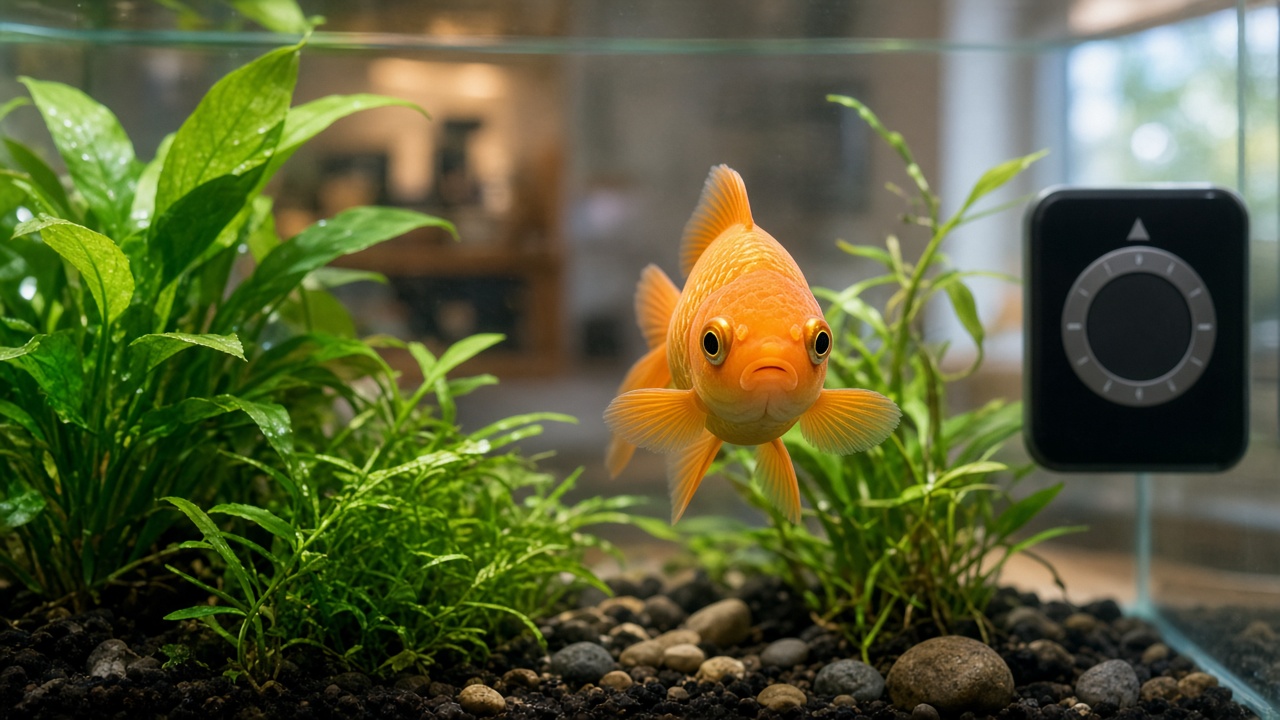
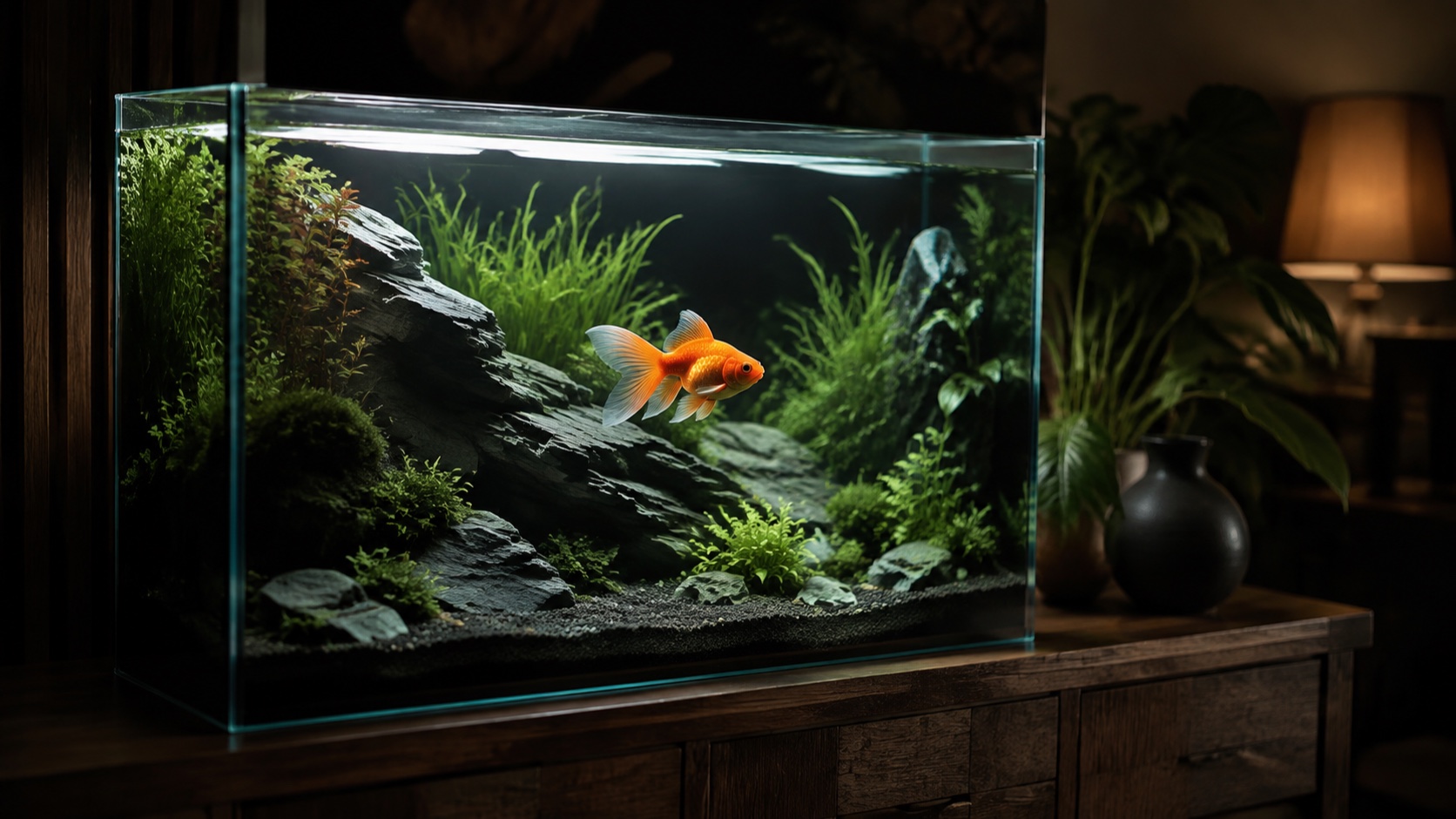
OATA says the tank should have gravel and, if possible, live plants. Goldfish may eat live plants, so ask a retailer which plants hold up.
Aqueon’s guide says to avoid sharp décor and abrasive rocks such as lava and tufa, which can tear fins. The same page says goldfish forage in the substrate, so skip jagged gravel.
OATA warns against housing comet goldfish with fancy goldfish, because comets swim faster and often take the food. The same sheet reports fin-nipping of slower fancy fish, so match swim speed if you add tankmates.
OATA reports many goldfish living 6 to 8 years, and some living 20 years or more. Aqueon’s guide says goldfish can live over 20 years in captivity.
Our page on how long goldfish live compares those clocks with other publishers.
Color change is not a lifespan clock, and a slow fade can mark age or water stress.
If color change is fast, test ammonia and nitrite the same day. Our page on why goldfish turn white separates aging fade from sudden loss.
OATA lists turning darker or paler than normal as a watch point, so test the water before you change the food.
Do not release a fantail outdoors. OATA states that release is illegal in its guidance and can harm wild water.
If you add a new fish, OATA describes a floating-bag settle. Float the bag for 10 minutes, then add tank water for up to 20 minutes.
Add fish slowly after the filter has matured, because OATA says fast stocking can cause new tank syndrome.
FAQ
How big of a tank does one adult fantail need?
OATA says at least 100 litres for one adult goldfish, about 26 US gallons. Add 50 litres, about 13 US gallons, for each extra adult. Aqueon’s fancy line is 10 gallons per adult, which is the low end of the Fantail Floor Gap. This page uses the 100-litre floor.
What water numbers should I keep?
OATA lists ammonia at 0 mg per litre and nitrite at 0 mg per litre. Nitrate should stay no more than 20 mg per litre above tap water. Keep pH from 6.0 to 8.0, hardness from 5 to 19°dH, and test once a week.
How often should I change the water?
OATA strongly recommends a 25% partial change at least once every week. Aqueon’s guide lists 10% weekly or 25% every two weeks, so treat the new water to remove chlorine and chloramine. If waste is up, use the weekly 25% line.
Do fantails need sinking food?
Aqueon’s care guide says to soak flakes and avoid floating pellets, because goldfish may gulp air. Hikari Goldfish Gold is a floating pellet, while Aqueon Goldfish Granules and Omega One’s large goldfish pellets are sinking. This desk did not measure which form is safer. Watch leftover food and air gulping, then pick the form the fish finishes.
How long do fantail goldfish live?
OATA reports many goldfish living 6 to 8 years, and some living 20 years or more. Aqueon’s guide says goldfish can live over 20 years in captivity, and neither page splits the clock by fantail form. Our lifespan page compares those published clocks.
Can I keep a fantail with a comet?
OATA advises against housing comet goldfish with fancy goldfish, because comets swim faster and often take the food. The same sheet reports fin-nipping of slower fancy fish, so keep fantails with other fancy goldfish of similar speed.