Quick answer: Keep one male halfmoon in a heated, filtered tank of at least 20 litres. Use a gentle current, smooth décor, and a staple betta pellet. Never house two males together.
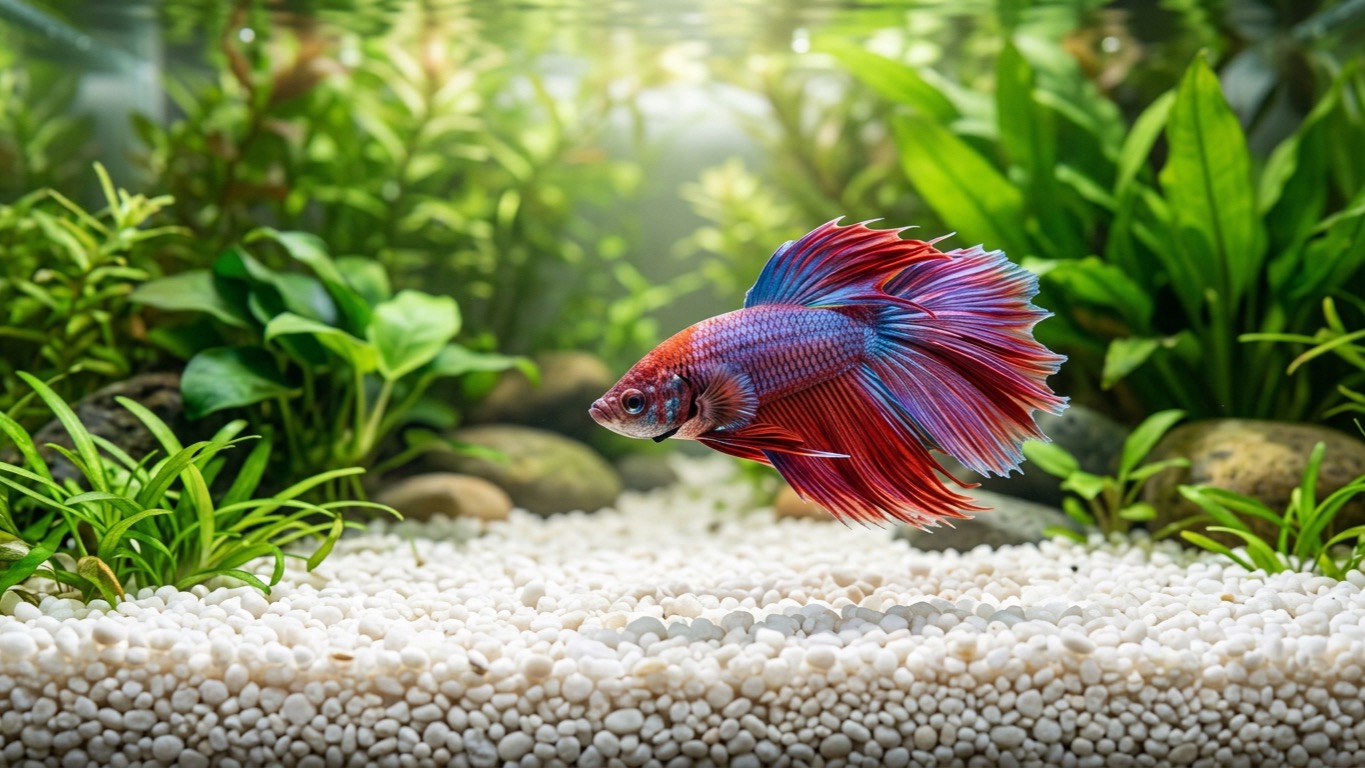
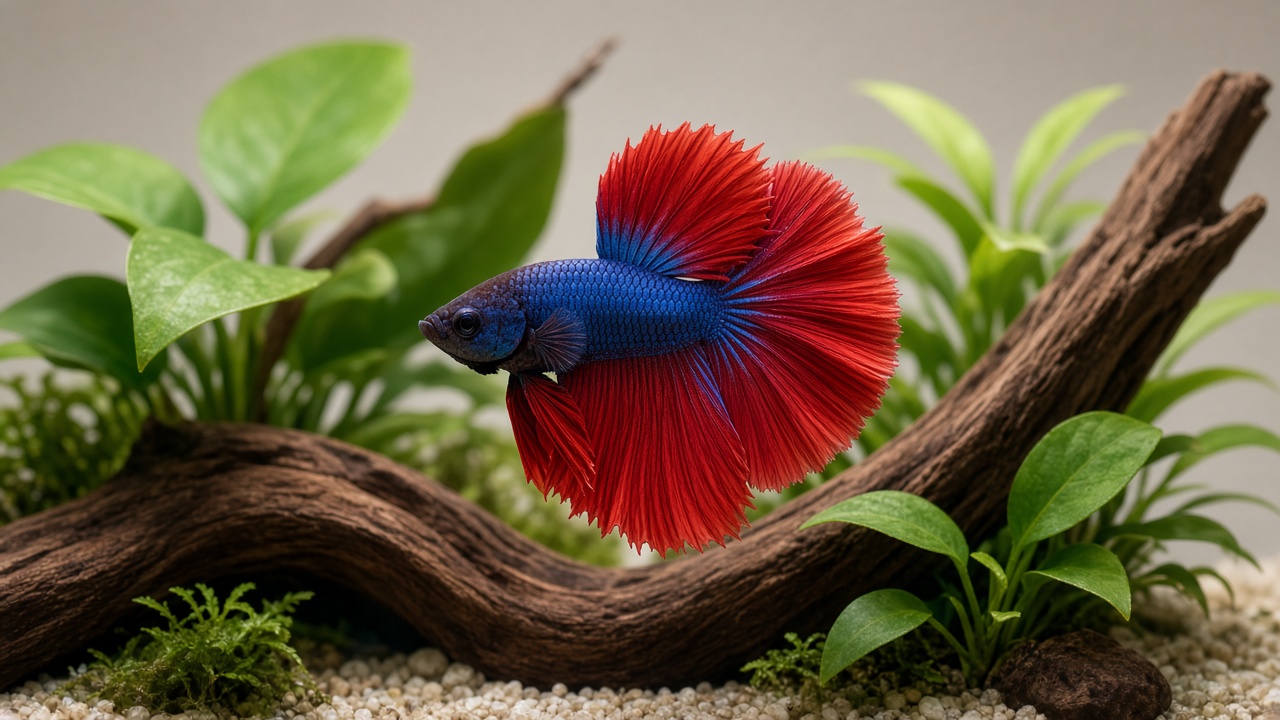
A halfmoon betta is a Betta splendens whose caudal fin opens to 180 degrees.
This page is a home-care desk brief on that show type. We did not house halfmoons for this draft, did not run water tests, and did not treat torn fins.
Our research team compared published show rules and maker labels rather than inventing tank trials.
Selection rule: We covered adult male halfmoon home care using show-body definitions and staple pellet labels we could read. We left out breeding programs, female groups, wild Betta species, bowls under 20 litres, and treat-only diets.
What a halfmoon betta is
A halfmoon is a tail type of Betta splendens, not a second species.
The International Betta Congress About Betta splendens page lists Halfmoons among long-fin types and lists Shortfin Halfmoon as its own form.
The International Betta Congress Exhibition Standards define the type by a 180-degree tail spread. That is a show rule, so a pet-store fish can fall short of it and still be sold as a halfmoon.
The International Betta Congress About Betta splendens page states Tate Regan named Betta splendens in 1909. That page also states the first brightly hued, flowing-finned fish reached the United States in 1927.
OATA’s betta care sheet says tank-bred Betta splendens grow to about 7 cm, with males brighter and carrying longer fins than females.
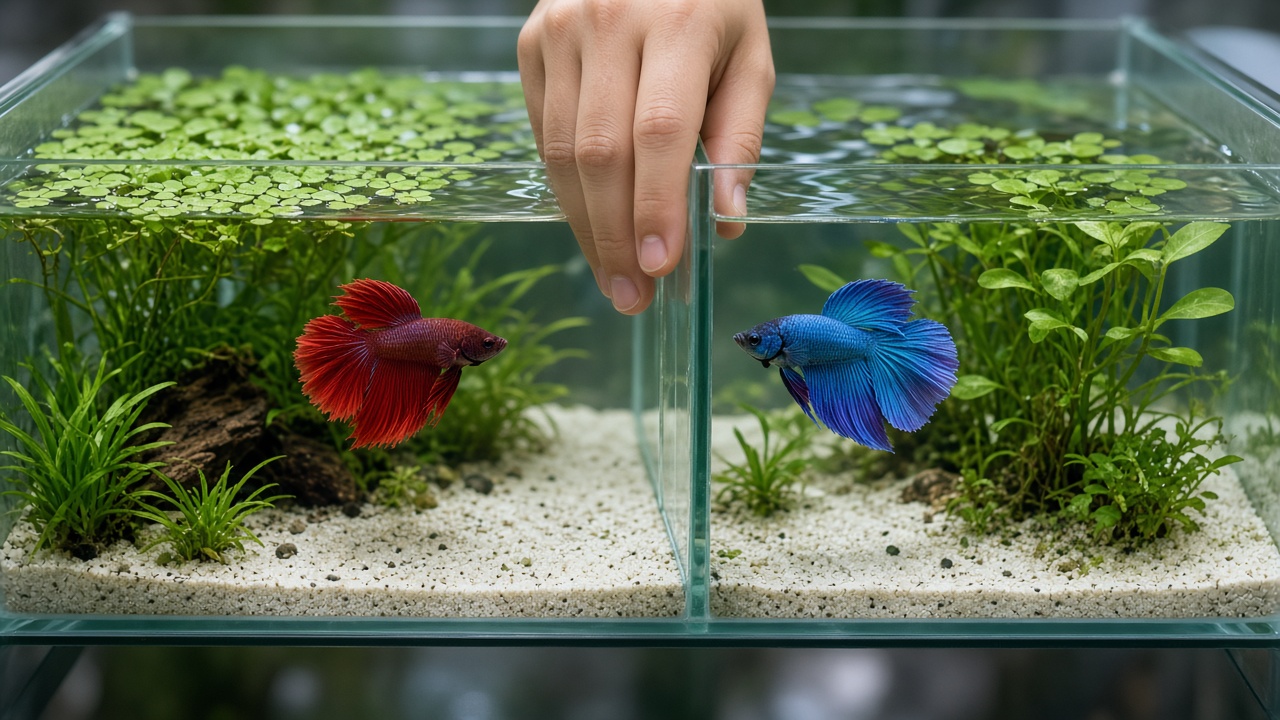
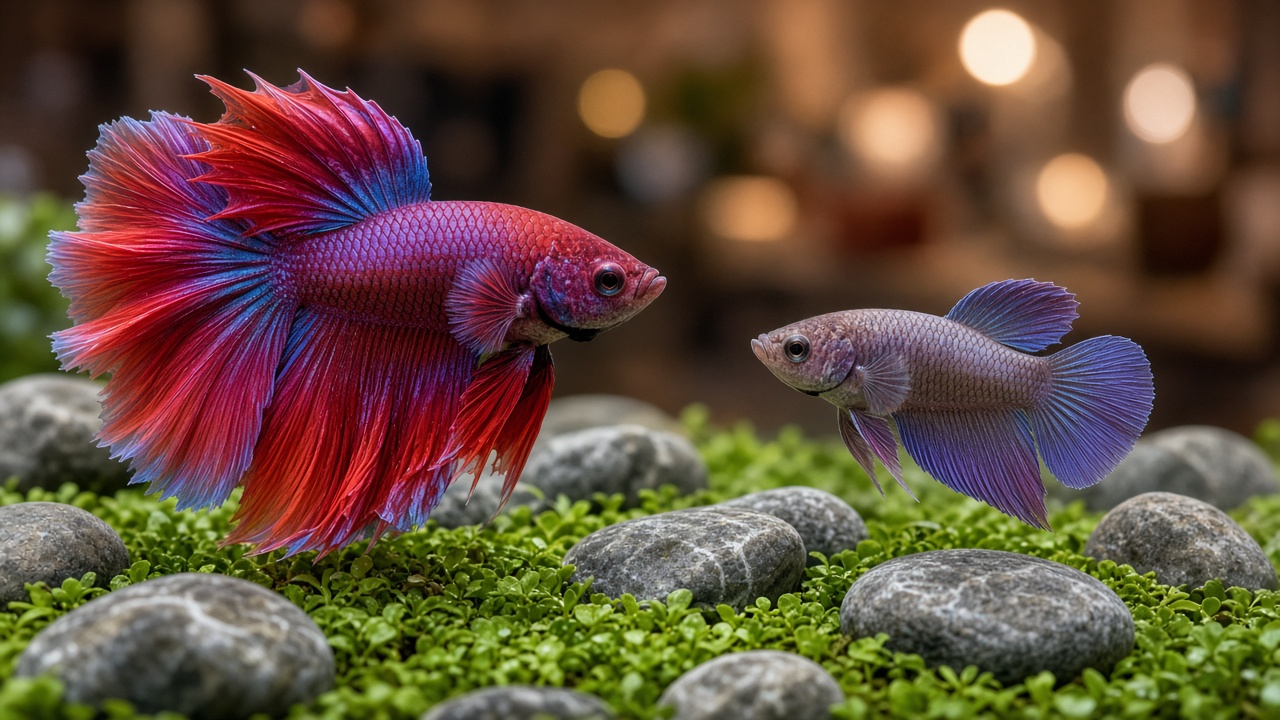
OATA also states males are highly aggressive, so two males should not share a tank. They will fight until one is badly hurt or killed.
Tank setup that protects long fins
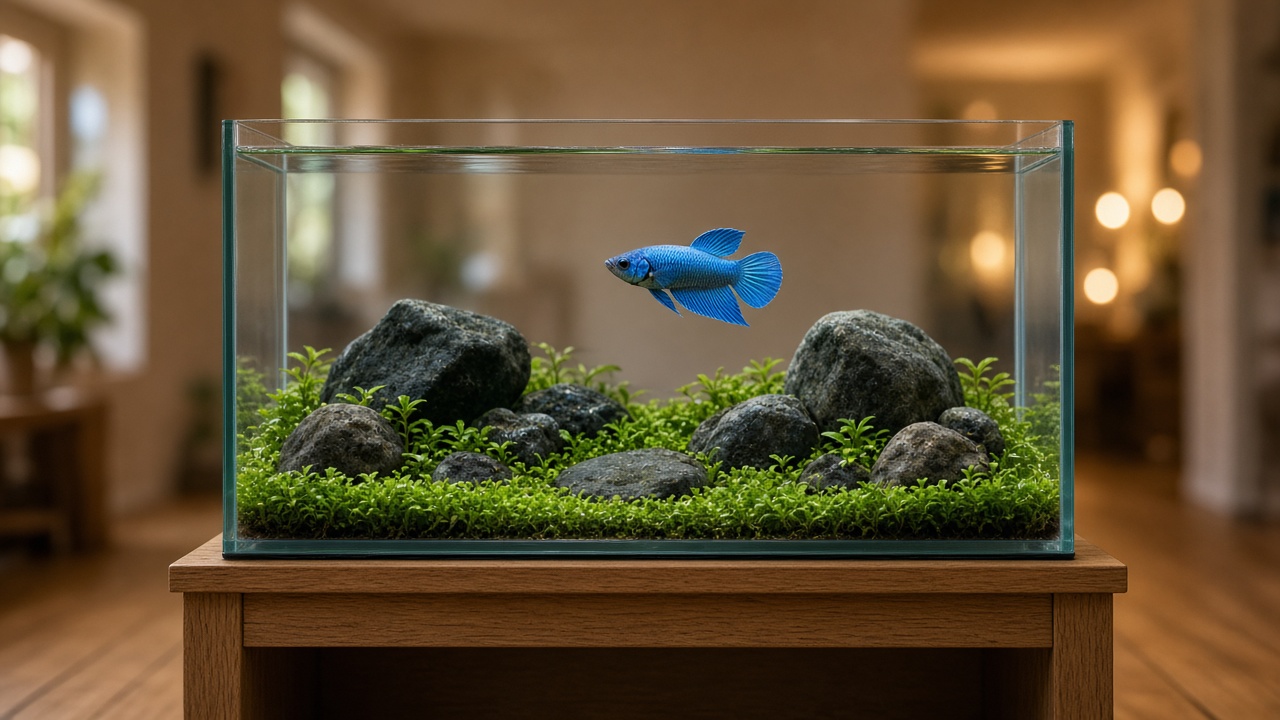
OATA recommends at least 20 litres for one male, which is about 5.3 US gallons.
That 20-Litre Floor is the smallest volume this desk will treat as a home tank. A larger tank holds heat and waste more steadily.
OATA also says a filter is always essential, and a heater is required to hold a stable temperature all year.
Shop cups are temporary housing, and OATA says you should not copy those small, bare cups at home.
Set the tank up in this order:
- Pick a covered glass or acrylic tank of 20 litres or more.
- Add a heater and a filter with a gentle outflow.
- Use smooth gravel or sand, not sharp rock.
- Add live plants or silk plants with soft edges.
- Leave a small air gap under the lid so the fish can gulp air.
- Cycle the tank and confirm ammonia and nitrite read zero before adding the fish.
OATA notes bettas are anabantids with a labyrinth organ, so they can breathe surface air. They still need filtered water, and the organ is not a license for a bowl.
OATA recommends leaving a small gap between the water and any cover glass so the fish can reach air if it wants.
Keep the tank away from drafts, heaters, direct sun, and loud vibration. OATA lists those as sources of temperature swing and stress.
Water numbers to hold
Hold the values OATA publishes, then test every week.
OATA’s suggested ranges are:
- Temperature: 20–28°C (68–82°F)
- pH: 6.0–8.0
- Ammonia: 0 mg per litre
- Nitrite: 0 mg per litre
- Nitrate: no more than 20 mg per litre above tap water
- General hardness: 4–12°dH
- Carbonate hardness: 3–10°dKH
OATA strongly recommends a 25% partial water change at least once every week. Treat new water with a conditioner that removes chlorine and chloramine.
Test on a fixed day and record the numbers, because a sudden jump is easier to spot on paper than in memory.
If the filter needs rinsing, OATA says do not wash it under the tap. Rinse the media in the tank water you just siphoned out, because tap chlorine can kill the bacteria that process waste.
OATA calls test kits essential, not optional, and asks you to check ammonia, nitrite, nitrate, pH, and hardness each week.
Fin health without guesswork
Long halfmoon tails tear when flow is hard or décor is sharp.
OATA says ornaments and plastic plants with sharp or rough edges should not be used, because those edges cut long fins.
OATA also asks for a gentle current so the fish can swim freely. Aim the filter outflow at a wall or sponge so the tail is not blasted.
The International Betta Congress Exhibition Standards treat a tail with folds as a disqualification in the halfmoon class. Folds are a form fault, not a care plan, but at home they still mean the fin is not opening cleanly.
Watch for the signs OATA lists:
- Clamped fins
- Flicking on gravel or décor
- Torn or missing fin tissue
- White spots or fluffy growths
- Hanging at the surface or sitting on the bottom
- Faster or slower gill movement
- A sudden color fade or darkening
- A drop in appetite
If those signs appear, OATA says test the water first, then contact a local fish retailer for next steps. This desk does not diagnose disease.
Fin tips also shred when two males share glass with no barrier, and OATA is plain that you should not mix two males.
Do not add tank mates that nip fins. OATA says males are often the target of fin nipping, so keep a male alone unless you already know a species is calm.
Feeding halfmoons from maker labels
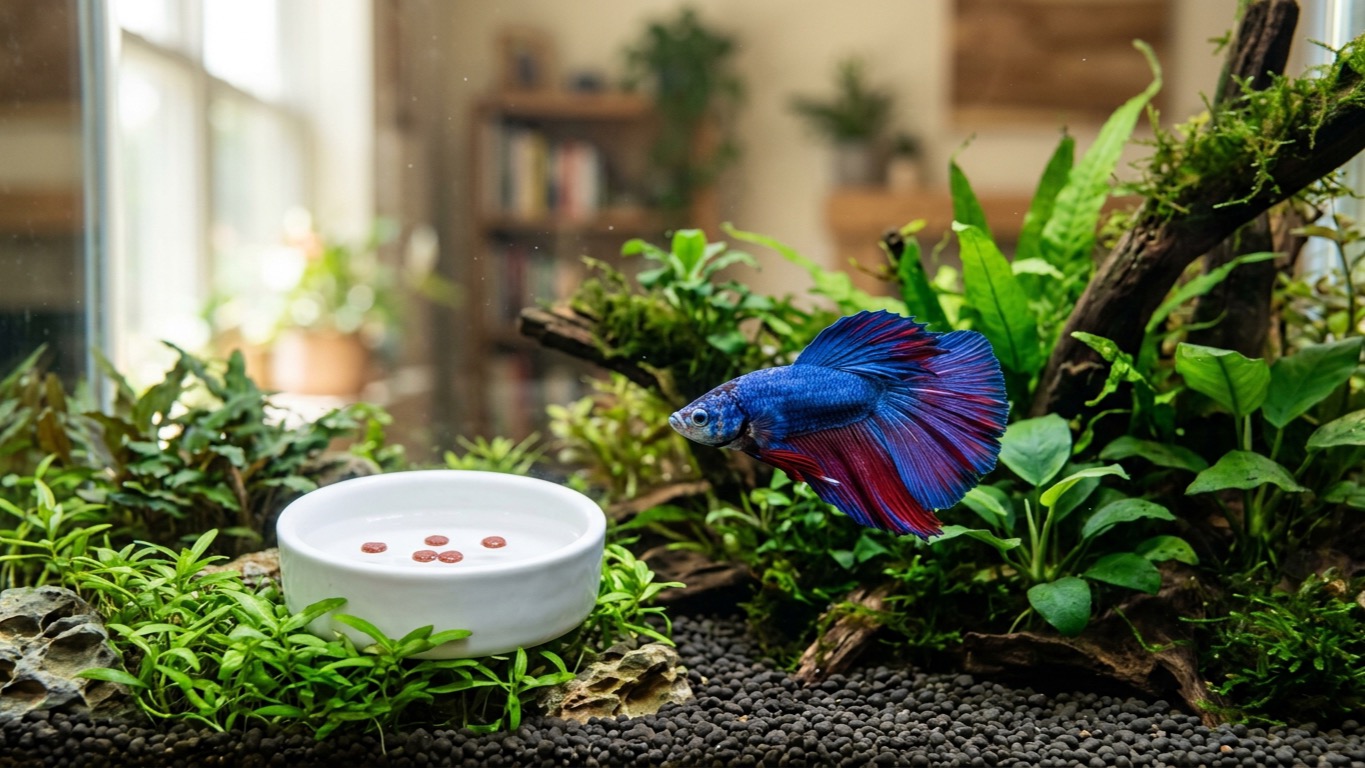
OATA says bettas are omnivores and should eat a good flake or pellet, and specialized betta pellets exist for this fish.
OATA’s own rule is to feed only what the fish can eat in a few minutes, once a day, because leftover food becomes waste.
Maker pages do not all use that same schedule. Compare the printed directions, then pick one plan and stick to it.
The Fluval page for Bug Bites Betta Micro Granules says to feed as much as the fish can eat in two minutes. It says to do that two or three times daily.
The same Fluval page says an opened tub should be used within 6 months and stored in a cool, dry place.
For meal size and weekly rhythm, use our how often to feed a betta guide. That page walks through portions and a rest day.
OATA also allows small live or frozen items and names daphnia, small bloodworm, and tubifex as extras, not the only food.
Skip this feeding pattern:
- Filling the surface because the fish begs
- Vacation blocks that dissolve for days
- Kitchen scraps
- A treat-only diet with no staple pellet
Our research team compared four current staple labels. Minimum crude protein on those labels spans 38.0% to 45.0%.
Minimum crude fat on the same four labels spans 4.0% to 12.5%. That spread is why we compare labels instead of picking a flavor first.
Staple pellets compared by label
These four foods are sold now as betta staples, and we used only attributes printed on the maker pages.
We did not rank them or group them by price.
| Product | Form | Min. crude protein | Min. crude fat | Other maker-listed spec |
|---|---|---|---|---|
| Hikari Betta Bio-Gold | Floating pellet | 38.0% | 4.0% | Bags listed at 0.088 oz (2.5 g) and 0.70 oz (20 g); pellet about 1.1–1.4 mm |
| Omega One Betta Buffet Pellet | Floating pellet | 42% | 8% | Max ash 8%; max moisture 8.5%; first ingredients salmon and whole herring |
| Fluval Bug Bites Betta Micro Granules | Slow-sinking granule | 45.0% | 12.5% | 0.25–1.0 mm; up to 40% black soldier fly larvae; 30 g (1.05 oz) tub |
| NorthFin Super Betta | Slow-sinking pellet | 42% | 5% | 1 mm pellet; 10 g pack; first ingredient listed as 85% whole Antarctic krill meal |
Hikari Sales USA’s Betta Bio-Gold page calls the food a floating daily diet. It lists fish meal first and names astaxanthin and spirulina on that page.
The OmegaSea page for Betta Buffet Pellet says the pellets contain no artificial flavors. It lists Alaskan salmon and whole herring as the fish base.
Fluval’s Bug Bites Betta Micro Granules page says the granules are made in Canada and lists black soldier fly larvae as the first ingredient.
NorthFin’s Super Betta page lists a 1 mm slow-sinking pellet and names whole Antarctic krill meal as 85% of the formula line on that page.
Pick form first, then protein. A halfmoon that only eats at the surface may ignore a sinking crumb, while a fish that waits mid-water may prefer the slow-sinking crumbs.
Substrate, plants, and rest spots
OATA says the tank should have gravel or sand and, ideally, live plants.
Smooth sand or rounded gravel is easier on a trailing tail than jagged stone. For grain size and inert mixes, use our best substrate for betta fish guide.
Live plants give shade and rest leaves near the surface, and a halfmoon will sit on a broad leaf while it gulps air.
Start with soft, low-light plants from our best live plants for betta fish guide, which covers Anubias, Java fern, and other slow growers.
If you use plastic plants, OATA’s rule still applies, so skip sharp or very rough edges.
OATA also recommends cover such as plant pots or caves. Give the fish one hiding spot it can enter without scraping its tail.
Do not pack the tank so tight that the fish cannot turn, because the long tail needs open water as well as cover.
Bettas jump, so a lid matters, and OATA lists a secure lid as optional but recommended.
FAQ
What is a halfmoon betta?
A halfmoon is a Betta splendens bred so the tail opens to 180 degrees. The International Betta Congress Exhibition Standards set that opening as the type definition. Pet-store fish may be sold under the name with a narrower tail. The International Betta Congress About Betta splendens page also lists Shortfin Halfmoon as a separate short-fin form.
How big should a halfmoon tank be?
OATA recommends at least 20 litres for one male, about 5.3 US gallons. It recommends at least 60 litres for a group of females. Bigger water is more stable. This page does not cover female groups.
Can two male halfmoons live together?
No. OATA states that two males should never be mixed, and it says they will fight until one is severely injured or killed. Keep one male per tank. Do not use a thin divider as a long-term home.
How often should I feed a halfmoon betta?
OATA says to feed once a day, only what the fish can finish in a few minutes. Fluval’s Bug Bites Betta Micro Granules page says two or three feedings a day, each lasting two minutes. Choose one printed plan. For portion detail, see our how often to feed a betta guide.
Why are my halfmoon’s fins tearing?
OATA points to sharp décor, rough plastic plants, and strong current as injury risks. Fin nipping from tank mates is another cause it names. Test ammonia and nitrite first, then change the décor or the flow. This desk does not name a disease from a photo.
Do halfmoons need a heater and a filter?
Yes. OATA says a filter is always essential and a heater is required to hold temperature all year. The labyrinth organ lets the fish breathe air, but it does not replace filtration or heat.
What water change routine should I use?
OATA strongly recommends a 25% partial change at least once every week. Test the same week and match the new water’s temperature, then treat tap water before it goes in.