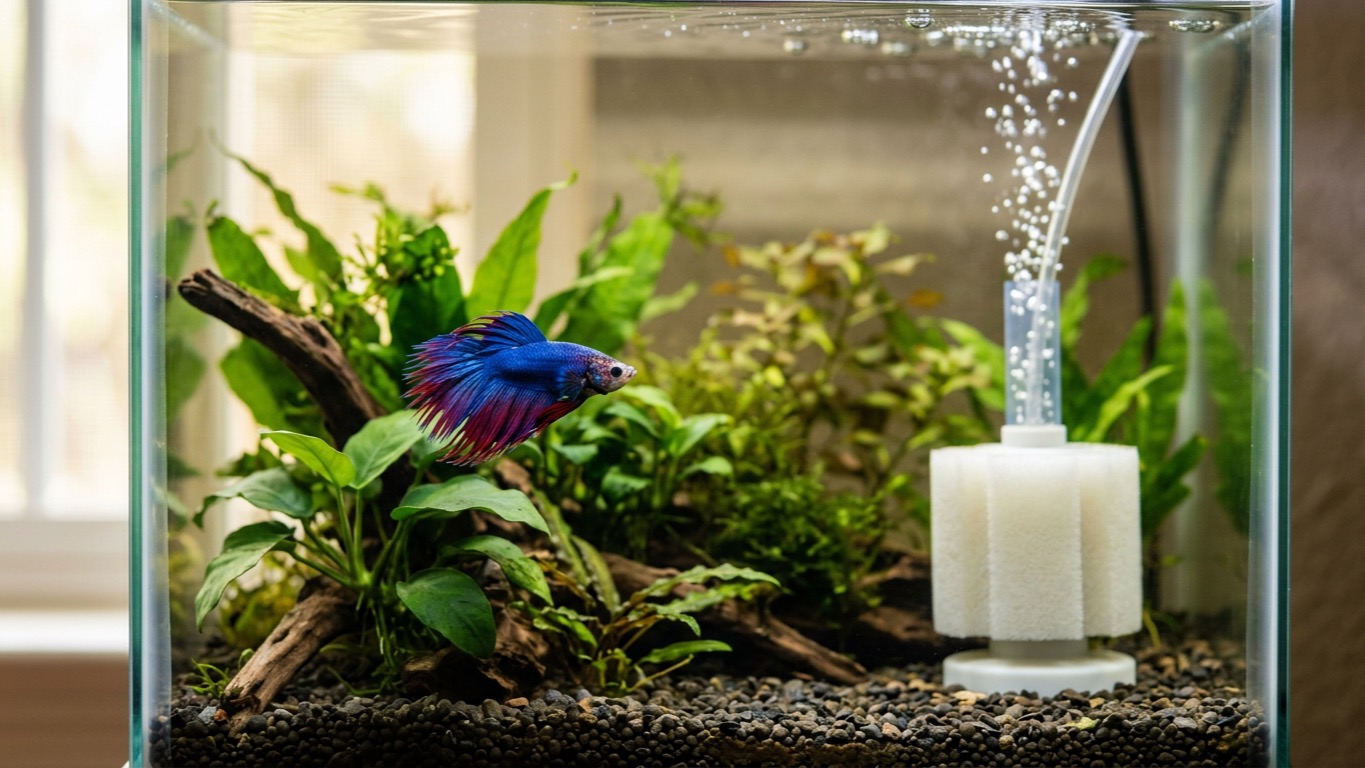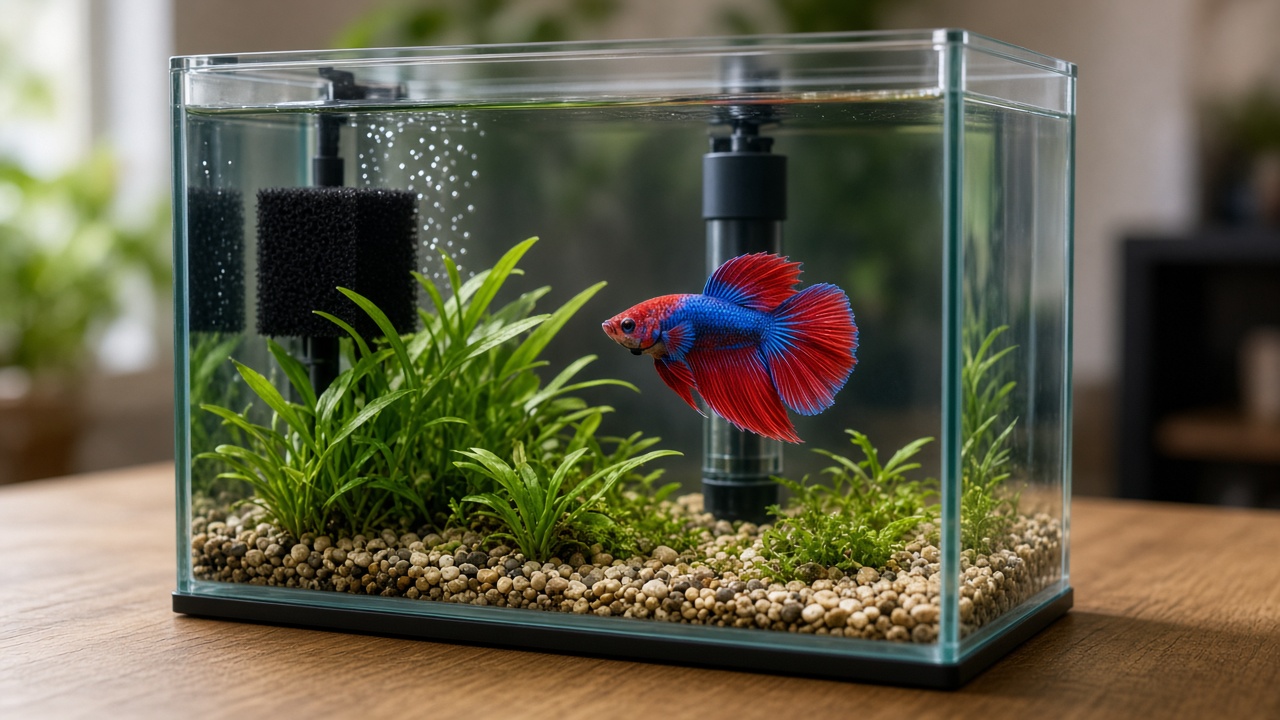
Quick answer: Keep one plakat in a heated, filtered tank of at least 20 liters with a tight lid. Change 25 percent of the water each week, and never add a second male.
This page is a research brief on short-fin traits, tanks, and tank mates. Our research team compared published exhibition rules and maker spec sheets. We did not breed fish, measure live specimens, or run swim trials.
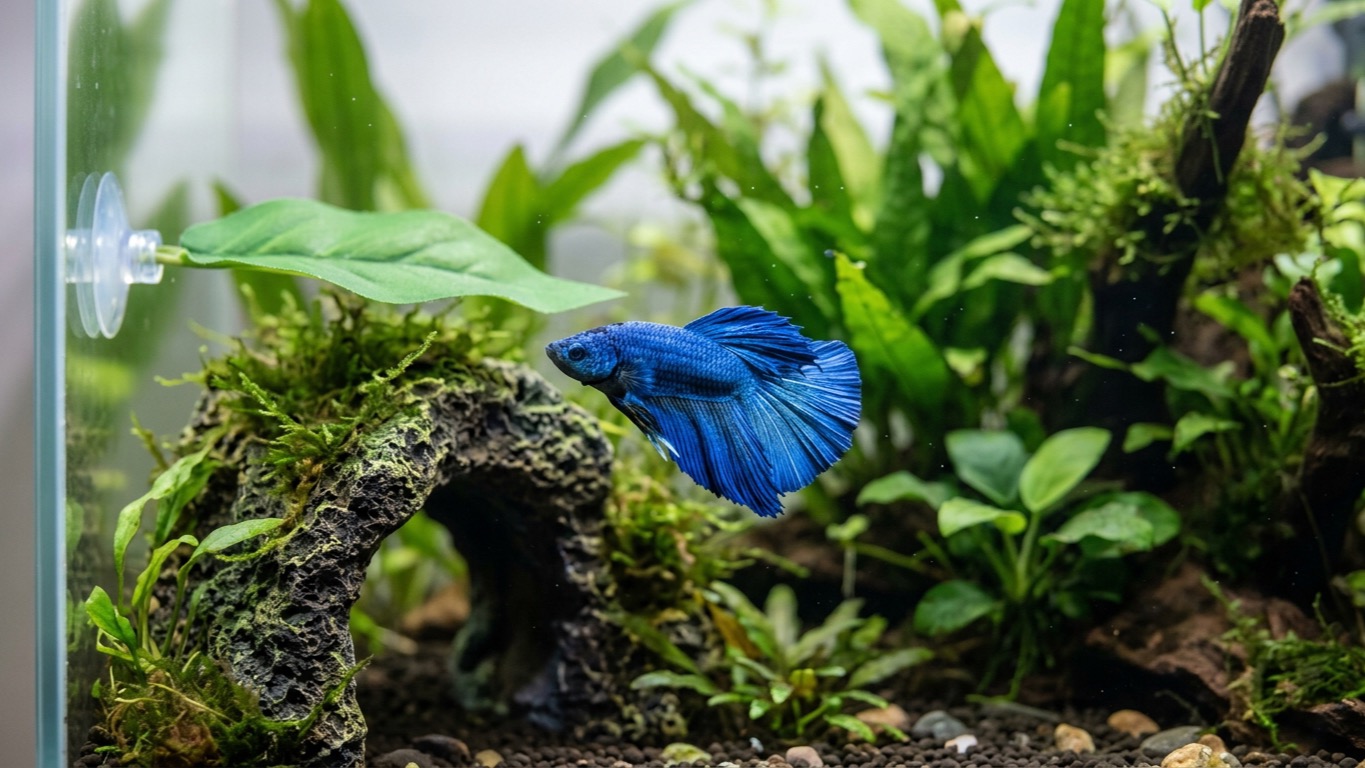
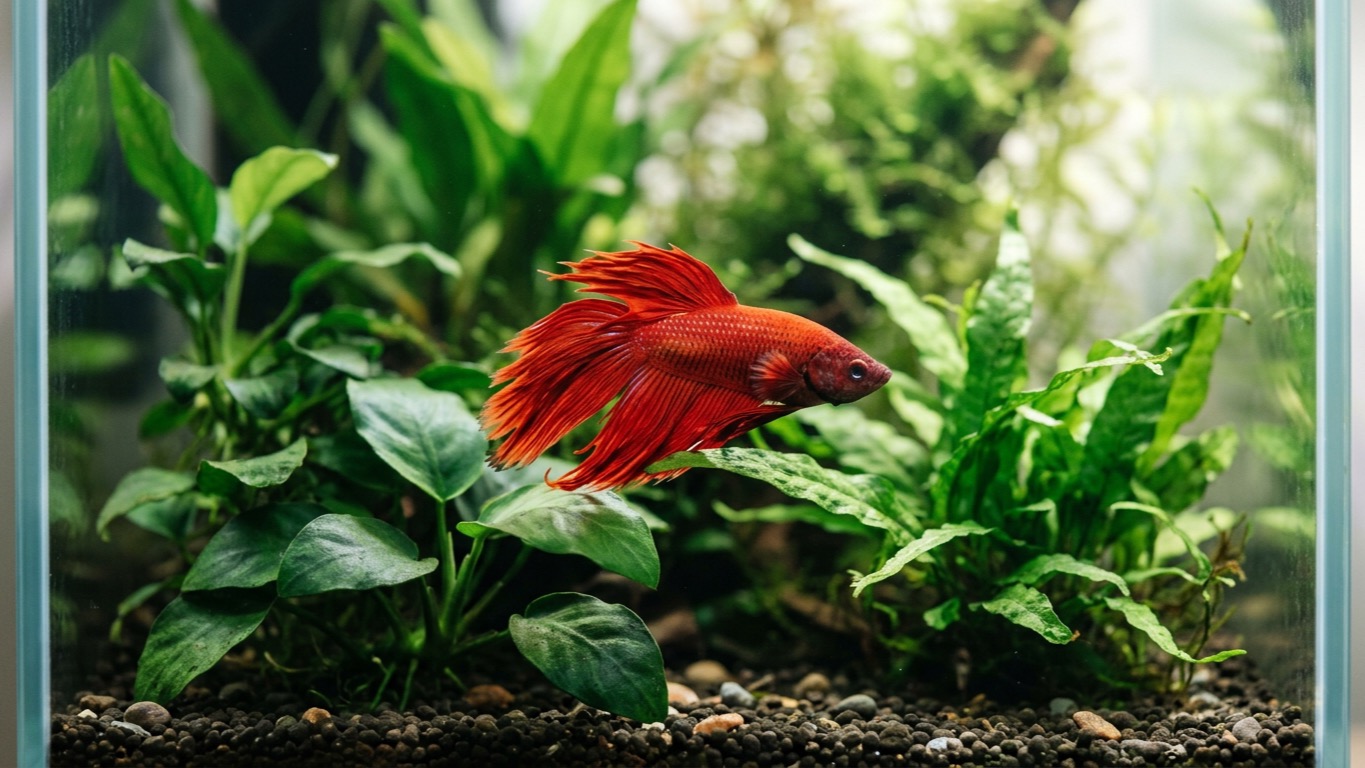
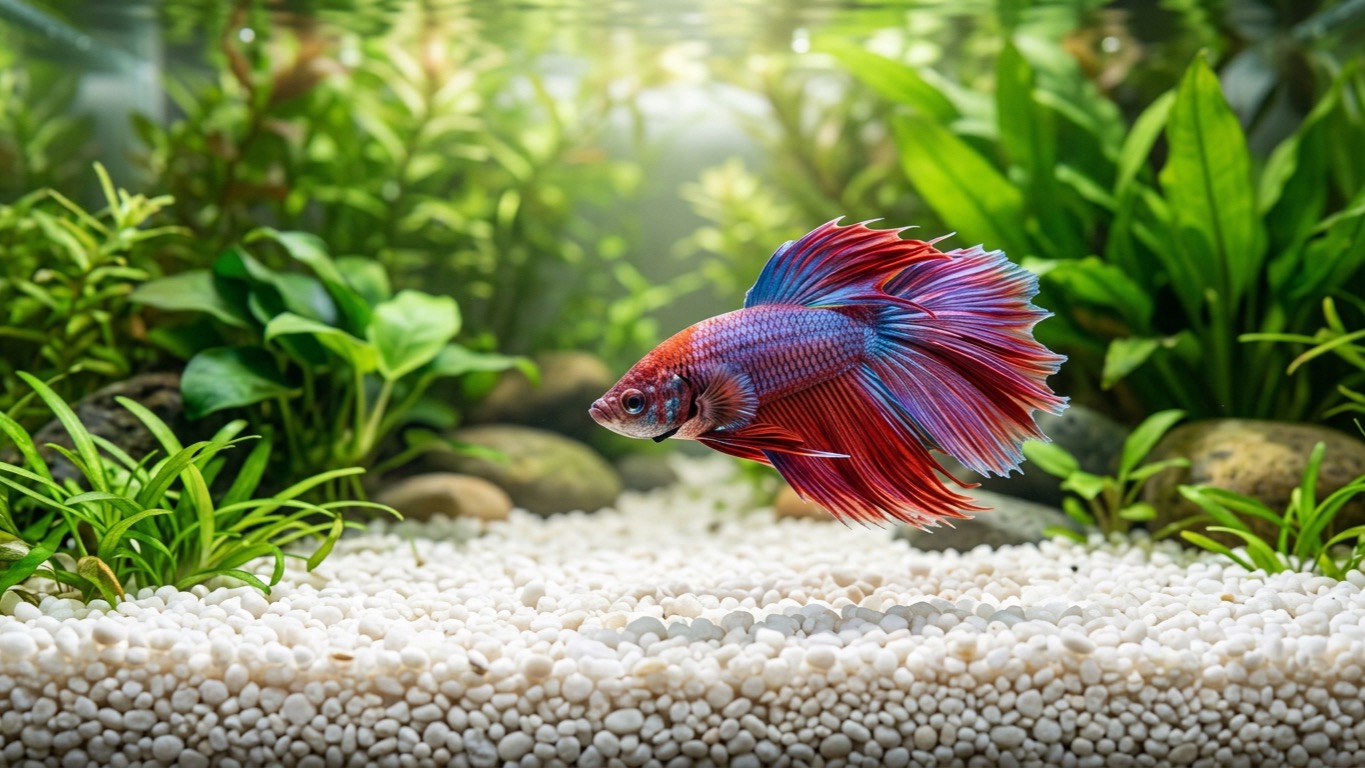
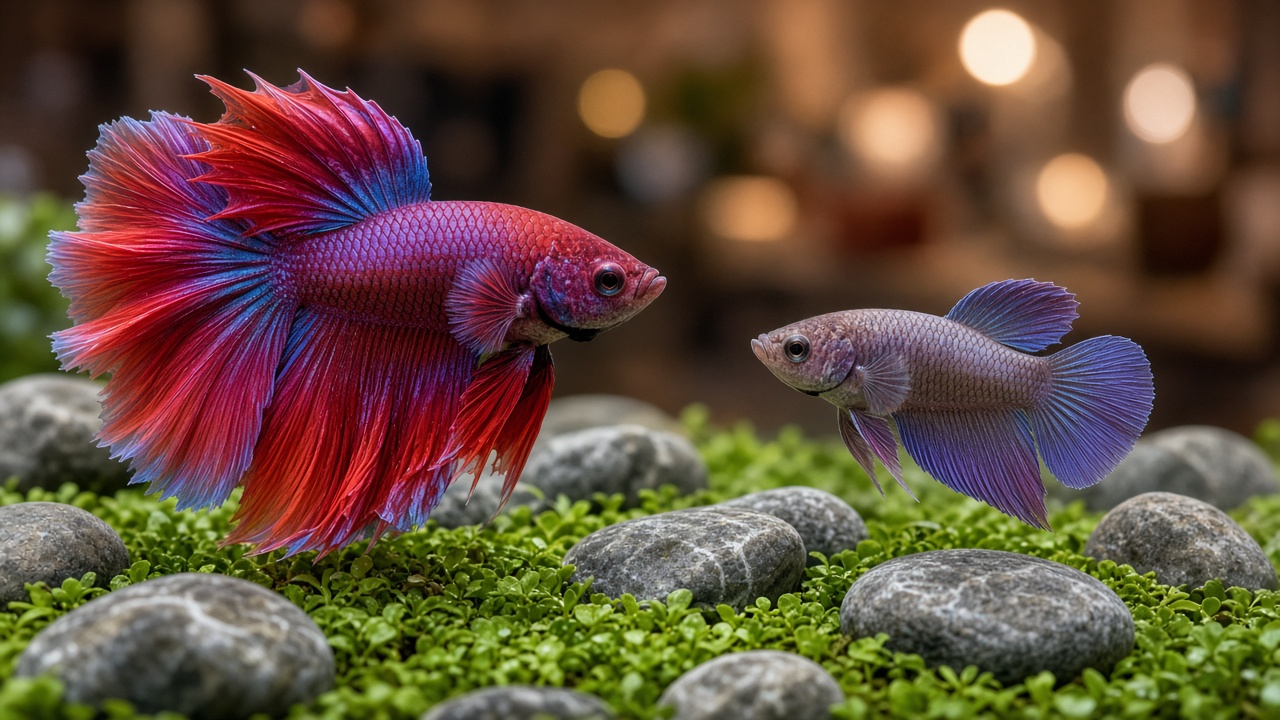
A plakat betta is a short-fin Betta splendens whose tail must stay within one-third of body length.
Short-fin traits the IBC actually writes down
The International Betta Congress treats a plakat as a short, stout, fast swimmer, not a flowing veil.
The 2025-2026 IBC Exhibition Standards say all plakats are short-tailed fish built for rapid swimming. The caudal fin should not exceed one-third of body length, and the body should look stouter than a long-fin show fish.
IBC names two main plakat forms, plus a giant class:
- Traditional plakat: rounded or spade caudal edges. A 180° spread is preferred. A spread under 165° is a major fault.
- Show plakat: a sharp capital-D caudal at 180°. Less than 180° is a major fault.
- Giant plakat: the same short-fin idea on a larger body. A male under 6.0 cm body length is a severe fault. A female under 5.0 cm is a severe fault.
Traditional plakats should carry ventral fins at two-thirds of body length or more. Ventrals at one-half of body length or less are a major fault.
That one-third tail rule is the trait that answers the search. If a fish’s tail is longer than one-third of its body, it is not a plakat under IBC’s written standard.
IBC also says plakats should look more aggressive than other show bettas. OATA’s care sheet says most trade fish are captive-bred Betta splendens that grow to about 7 cm.
Tank size sits on a 20-liter line
OATA’s care sheet is the line we use for home tanks, and it does not bless bowls.
OATA recommends at least 20 litres for a single male, which is about 5.3 US gallons. It recommends at least 60 litres for a group of females, about 15.9 US gallons. Shop cups are temporary housing, so do not copy them at home.
OATA says a filter is always essential, and a heater is required all year. Our research team lined those two OATA volumes against four current kits.
- Fluval’s Spec Aquarium Kit, 5 US Gal, lists 19 L, which is 1 L under OATA’s 20-litre male line.
- Aqueon’s 5.5 LED Aquarium Starter Kit lists 5.5 gal, about 20.8 L, just over the line.
- Fluval’s Flex Aquarium Kit, 9 US Gal, lists 34 L, which is 14 L over the male line.
- Fluval’s Spec Aquarium Kit, 16 US Gal, lists 60 L, matching OATA’s female-group volume.
A giant male is a poor fit for the 19 L kit. IBC faults a giant male body under 6.0 cm, and those fish keep growing.
OATA’s water numbers for tank-reared bettas are:
- Temperature: 20–28°C (68–82°F)
- pH: 6.0–8.0
- Ammonia: 0 mg per litre
- Nitrite: 0 mg per litre
- Nitrate: no more than 20 mg per litre above tap water
- General hardness: 4–12°dH
- Carbonate hardness: 3–10°dkH
Test those values each week. OATA calls a test kit a necessity, not an extra.
Four kits we compared by footprint, not rank
A kit enters this table only if it holds 5 US gallons or more and the maker lists capacity plus exterior size.
Bowls, vases, and 1-gallon cups stay out, and we skip any brand we could not tie to a current maker page. That rule is why this brief names four kits and shows attributes, not a rank column.
| Kit | Listed capacity | Exterior size from the maker page | Shape | Listed extras |
|---|---|---|---|---|
| Fluval Spec Aquarium Kit, 5 US Gal | 5 US gal / 19 L | 20.5 in L × 11.6 in W × 7.5 in H | Long, low desktop | 10 W LED; 3-stage filter |
| Aqueon 5.5 LED Aquarium Starter Kit | 5.5 gal | 16.375 × 8.625 × 10.6875 in | Long, low glass | QuietFlow filter; cool-white LED hood |
| Fluval Flex Aquarium Kit, 9 US Gal | 9 US gal / 34 L | 14 in L × 13 in W × 13 in H | Cube | Rear hidden filter |
| Fluval Spec Aquarium Kit, 16 US Gal | 16 US gal / 60 L | 21.5 in L × 11.5 in W × 17 in H | Tall rectangle | 7000 K LED; 3-stage filter |
None of those four maker pages list a heater in the box, so you still need one. OATA says a heater is required to hold temperature all year.
Fluval’s 5-gallon Spec page lists a 20.5-inch length, while the 9-gallon Flex page lists 14 inches. That is 6.5 extra inches of straight swim on the smaller Spec.
A plakat is built to sprint, and IBC says the short tail is for rapid swimming. A long, low box uses that trait better than a cube of the same gallons.
Fluval’s 16-gallon Spec page lists 21.5 inches of length and 60 L of volume, which also meets OATA’s 60-litre female-group line. Aqueon’s 5.5 kit sits just over the 20-litre male line and lists QuietFlow filtration plus a cool-white LED hood, but no heater.
Heat, flow, and the weekly water change
OATA’s rule is plain: heat the tank, filter the tank, and change 25 percent of the water each week.
Set the heater inside OATA’s 20–28°C band and hold it steady. Keep the tank off drafts, radiators, and direct sun.
A plakat can sprint into flow that a long-fin fish cannot fight, but that does not mean you want a blast. OATA asks for a gentle current so the fish can swim freely, so aim the outlet at glass, not at the fish.
Do the weekly work in this order:
- Test ammonia, nitrite, nitrate, pH, and hardness.
- Siphon 25 percent of the water, plus waste from the sand or gravel.
- Treat the new tap water with a conditioner before it goes in.
- Match the new water’s temperature to the tank.
- Rinse filter media in the old tank water, never under the tap.
OATA warns that tap chlorine can kill filter bacteria, which is why the rinse step uses tank water.
If you buy a fish in a bag, OATA’s acclimate steps are timed:
- Dim the tank lights.
- Float the closed bag for 10 minutes.
- Add small amounts of tank water to the bag for up to 20 minutes.
- Release the fish and keep bag water out of the tank.
Watch the fish for the first week, and test the water first if appetite or color drops.
Substrate, plants, and a tight lid
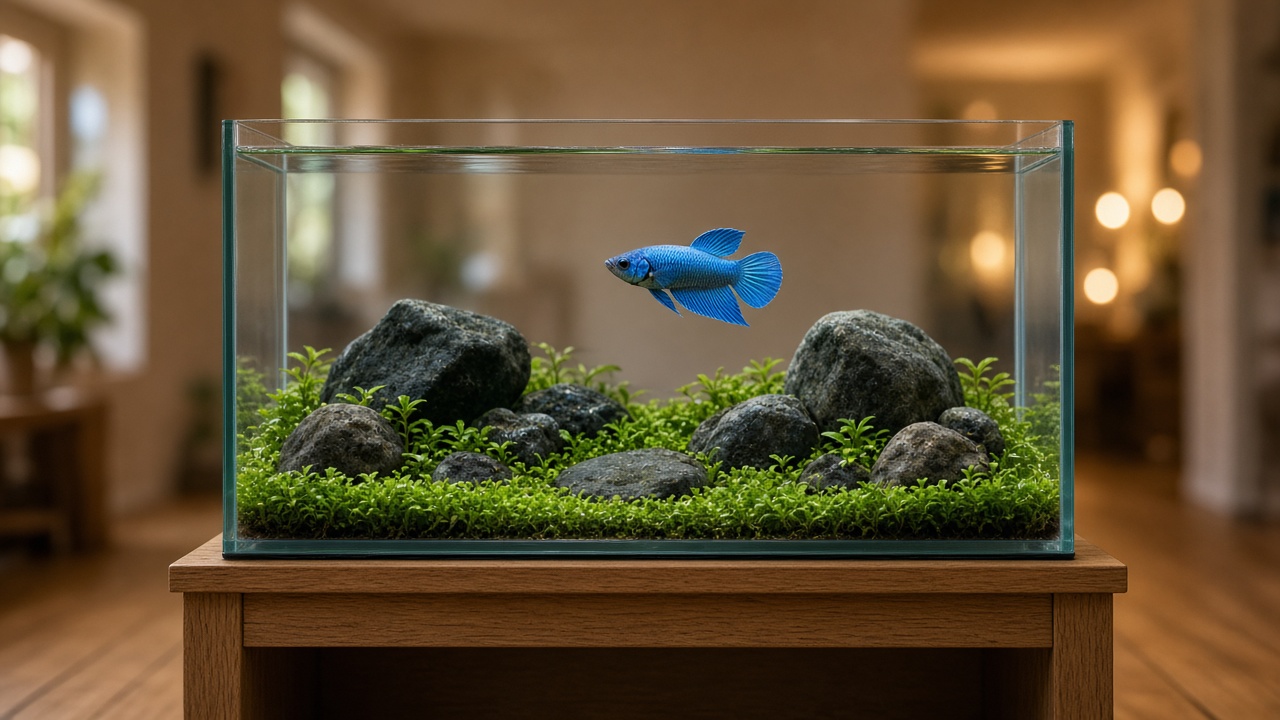
A plakat uses the whole box, including the surface, so give it sand or smooth gravel, live plants, and a lid that latches.
OATA wants gravel or sand on the floor, plus live plants when you can keep them. Plastic plants are fine if the edges are not sharp.
Short fins tear less than veiltails, but sharp décor is still a bad buy. A sprinting plakat will hit what a slow long-fin would dodge.
For grain size and cap depth, use our betta substrate guide. Pick a smooth bed and skip crushed glass.
For plant lists that stay alive in a low-tech box, use our live plant guide. Leave an open lane down the long wall, because a plakat will use that lane.
OATA also wants a small air gap under any cover glass. Bettas have a labyrinth organ and gulp air at the surface, so a sealed lid with no gap is a fault. That same lid must still stop a jump, because a short-fin male can clear the rim.
Keep ornaments dull and smooth, and skip bright red or blue plastic “rival” fish. IBC notes that plakats stay on alert for intruders, so a fake male on the glass will keep one flaring.
Tank mates that do not start a fight
OATA’s first tank-mate rule is a hard no: two males must never share a tank.
Males will fight until one is badly hurt or dead.
OATA’s other rules are almost as plain:
- Keep a male alone, or only with very placid tank mates.
- Females are calmer. Keep them in a group of at least four.
- A female group needs at least 60 litres.
- A male plus at least five females needs a densely planted tank. OATA says that mix is not for new keepers.
Do not stock a 19 L Spec with a sorority, because that kit is 41 L short of OATA’s 60-litre female line. Use Fluval’s 16-gallon Spec, or a larger plain glass box.
OATA does not publish a species list. It only uses the words “very placid.” For named fish and snails that fit that idea, see our betta tank mates guide.
Skip other bettas that look like a second male, and skip anything sold as a fin-nipper. A plakat’s short tail is still flesh, and other fish can shred it.
If you add friends, add them slowly, because extra fish raise waste and the filter bacteria need time. Test ammonia and nitrite after each add, and keep a spare heated box ready.
Food amounts OATA will stand behind
OATA says bettas are omnivores, so feed a good flake or a betta pellet. Add small live or frozen items such as daphnia, small bloodworm, or tubifex.
Feed only what the fish can eat in a few minutes, once a day.
Overfood sits, then rots, and rot raises ammonia. OATA says even a little ammonia can stress a betta.
A simple week looks like this:
- Six days: one short pellet or flake feeding.
- One day: a small frozen or live feeding, still finished in a few minutes.
- Every day: pull uneaten food before it sinks and sours.
Do not skip the weekly 25 percent change because the fish “looks fine.”
FAQ
These answers restate the IBC tail rule, OATA’s 20-litre tank line, and the no-second-male rule.
What is a plakat betta?
A plakat is a short-fin Betta splendens. The 2025-2026 IBC Exhibition Standards say the caudal fin should not exceed one-third of body length. Pet shops may still tag any short tail as a “plakat,” even when the spread does not match IBC’s 180° show target.
How many gallons does one plakat need?
OATA recommends at least 20 litres for a single male, which is about 5.3 US gallons. Our spec check found Fluval’s 5-gallon Spec at 19 L, one liter short of that line. Aqueon’s 5.5-gallon kit sits at about 20.8 L, while a giant plakat needs more than the 19 L desktop.
Can two male plakats live together?
No. OATA says two males should not be mixed, because they will fight until one is badly hurt or killed. Keep one male per tank, and treat a glass divider as a show trick, not a home pair.
Do plakats need a heater and a filter?
Yes. OATA says a filter is always essential and a heater is required to hold temperature all year. None of the four kits lists a heater on the maker page, so buy one and keep the water inside 20–28°C.
What should I feed a plakat?
OATA says to use a good flake or betta pellet, plus small live or frozen foods such as daphnia or small bloodworm. Feed only what the fish finishes in a few minutes, once a day. Extra food becomes ammonia.
Can female plakats live in a group?
Yes, if the group and the tank both meet OATA’s lines. OATA wants at least four females and at least 60 litres for that group. Fluval’s 16-gallon Spec lists 60 L, which matches that volume, and a 19 L kit does not.
Are plakats easier to keep than long-fin bettas?
They are faster swimmers. IBC says the short tail is for rapid swimming, and that plakats should look more aggressive than other show bettas. We did not score disease rates, so the tank, heat, filter, and 25 percent weekly change still apply.