Quick answer: Healthy adult fish in a cycled tank can skip food for a weekend. Do not skip meals for fry or a tank that still shows ammonia. For any trip longer than three days, use a timed feeder or a sitter with measured portions.
Healthy adult aquarium fish can go 2 to 3 days without food. This page is a research-desk brief on published feeding clocks, and
Our selection rule includes only published clocks for healthy adult freshwater fish in tanks that have already finished cycling. We left out marine livestock, newly hatched fry as a main case, pond wintering as a full protocol, and any illness schedule.
Our research team analyzed feeding pages from Aqueon and Hikari Sales USA, plus one University of Florida IFAS label guide. We call that comparison the Waterpuppy Skip Map, with a weekly rest day, a weekend skip, and a week-plus feeder plan.
How long a healthy adult fish can skip a meal
Aqueon’s leftover-food page states that fish are fine unfed for 2 to 3 days.
That clock covers a weekend trip, not a long starve treated as normal care.
Aqueon’s feeding page also says many keepers fast adult fish one or two days a week. That weekly rest is a planned pause at home, and it is not the same as leaving town with no return meal.
The Waterpuppy Skip Map uses those two published clocks only.
- Same-week rest: skip food on 1 or 2 days, per Aqueon’s feeding page.
- Weekend skip: leave adult fish unfed for 2 to 3 days, per Aqueon’s leftover-food page.
- Week-plus trip: do not rely on a starve, and use a 3-day or 7-day Aqueon vacation block or a sitter.
A new tank sits outside this map because uneaten food raises ammonia before bacteria can process it. Read how long to cycle a fish tank before you plan any skip.
Why temperature and age change the clock
Warmer water speeds digestion, and cooler water slows it, so the same missed meal costs more in a hot tank.
Aqueon’s feeding page says water temperature sets how often fish need food. Small, active fish and fry need more frequent meals when the water stays warm.
Hikari Sales USA’s FAQ gives a coldwater clock in numbers you can check on the bag.
- Feed 1 pellet per inch of fish two times daily when water stays above 68°F.
- Feed half that amount when water stays between 60°F and 68°F.
- Cut food further as activity drops once water falls below 60°F.
- Hikari’s FAQ points keepers to Hikari Wheat-Germ and a smaller pellet above 82°F or when temperature swings.
That 68°F line is a koi and pond clock, but it still shows the tank rule. Heat raises the cost of a missed meal, and cold lowers it.
Fry sit outside our selection rule, and Hikari’s FAQ tells keepers to use First Bites for fry, including baby discus. That product is a daily food rather than a skip plan.
Do not apply the 2 to 3 day weekend clock to fry. Their bodies have little stored energy, so a missed day is a bigger gap.
What a weekly fast is, and what it is not
A weekly fast is one skipped day on purpose, and it is not a trip plan.
Aqueon’s feeding page says some keepers fast fish one or two days a week so the gut can empty. The same page says most fish do well on one or two feedings a day.
Use this weekly rest only if all three points are true.
- Use the weekly rest only for healthy adult fish, not for fry.
- Confirm the tank already processes waste without an ammonia spike.
- Keep a full, short meal on every other day of the week.
Aqueon’s feeding page sets that meal in minutes, not handfuls.
- Offer only the amount of food your fish can finish in 2 to 3 minutes.
- If they finish that portion in under 2 minutes, add a little more.
- Remove leftovers after 5 minutes with a siphon hose or a small net.
- If leftover food or cloudy water remains, cut the next portion by 50%.
Those clocks matter more than the calendar day you pick. A meal that still sits after 5 minutes is already too large, even if you feed only once.
Hikari Sales USA’s FAQ adds a freshness clock for the jar you leave at home. It says to use opened pellets within 90 days for best results.
The University of Florida IFAS publication FA159 gives a matching storage number for dry pellets. Those feeds hold about 13% moisture, and IFAS says they can sit at room temperature for at least 90 days from manufacture.
Stale food does not make a skip safer, and it only makes the next meal weaker when you return.
Weekend trips versus week-long trips
A weekend skip and a week-long trip are not the same job, and the maker pages treat them as separate clocks.
Aqueon’s leftover-food page covers the weekend and says fish can go 2 to 3 days with no food. That page also says a sitter should get pre-measured packets every 2 to 3 days if you hire help.
Aqueon’s vacation feeder page covers the longer gap with timed blocks. The 3-day block is sold for up to 3 days away, and one block is listed as enough for 5 to 6 medium fish.
A 7-day block is also sold on that page. The listed pack size is 3.5 inches by 6 inches by 0.5 inches, sold as a 4-pack.
Our research team compared those published durations and did not watch the blocks dissolve. We also did not rank one product over another, so use this trip list when you plan time away.
- Gone 2 to 3 days: skip food, and do not drop a block for a short gap.
- Gone about 3 days with many medium fish: one Aqueon 3-day block is the maker’s listed load for 5 to 6 fish.
- Gone a full week: the same maker page sells a 7-day block. A sitter with packets every 2 to 3 days is the other published path.
- Gone longer than a week: do not invent a starve. Use a sitter or a timed feeder, then check water when you return.
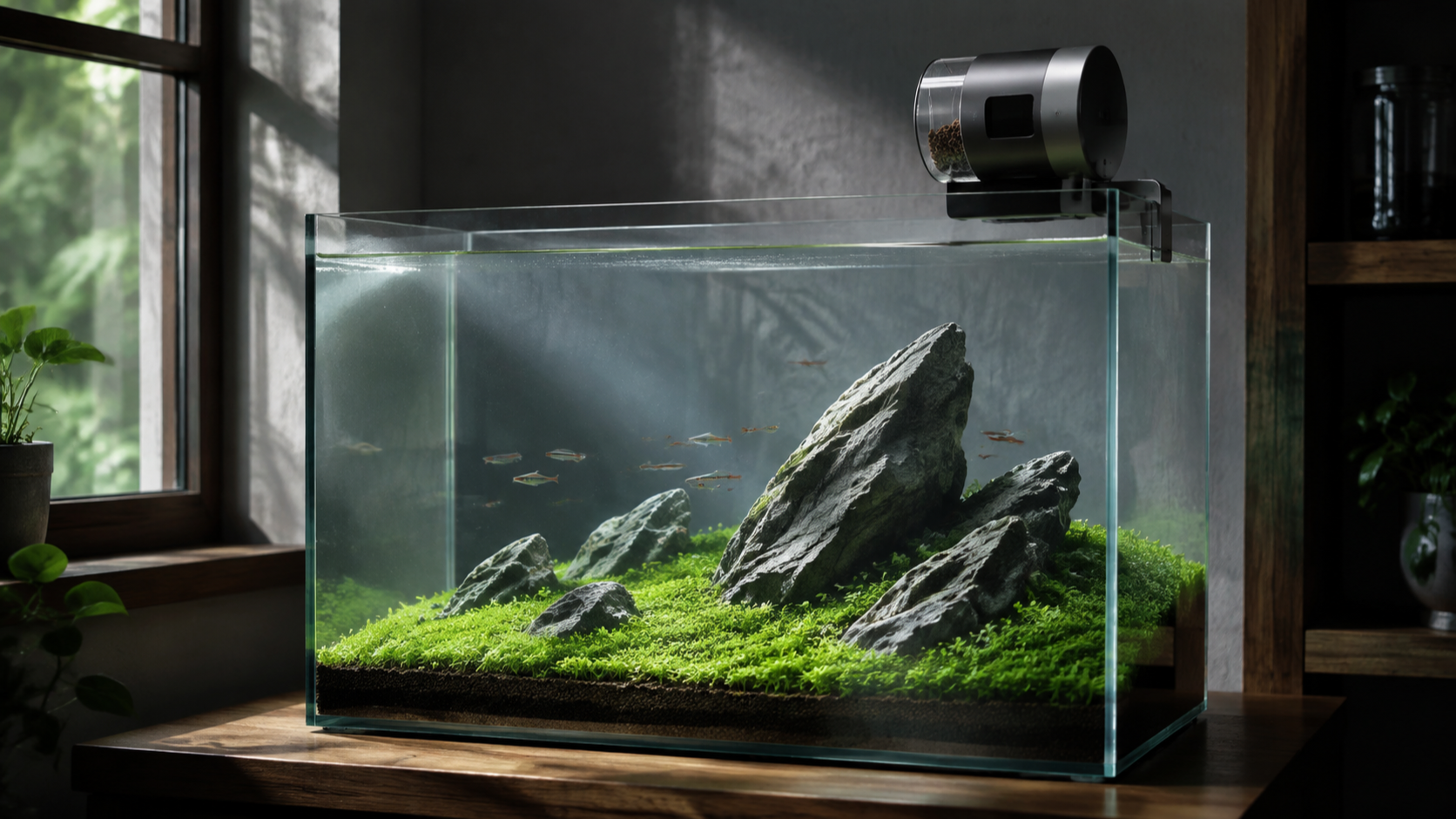
Aqueon’s leftover-food page also says to run an automatic feeder for a few days before you leave. That check is about portion size, not a rank of brands.
Do not leave extra flakes in the tank for later, because food that sits becomes waste.
How much to feed the day you leave and the day you return
The day you leave is a normal short meal, and it is not a double meal.
Aqueon’s feeding page says morning and evening meals match wild timing. Turn lights on at least 30 minutes before the morning meal, and leave lights on at least 30 minutes after the evening meal.
Use this leave-day list before you walk out the door.
- Feed the usual portion that fish can finish in 2 to 3 minutes.
- Remove leftovers at the 5 minute mark with a siphon or net.
- Do not add a second bonus pile on top of that meal.
- Confirm the heater and filter are running before you leave.
Use this return-day list when you get home.
- Look for leftover food, haze, or a bad smell, which are Aqueon’s overfeed signs.
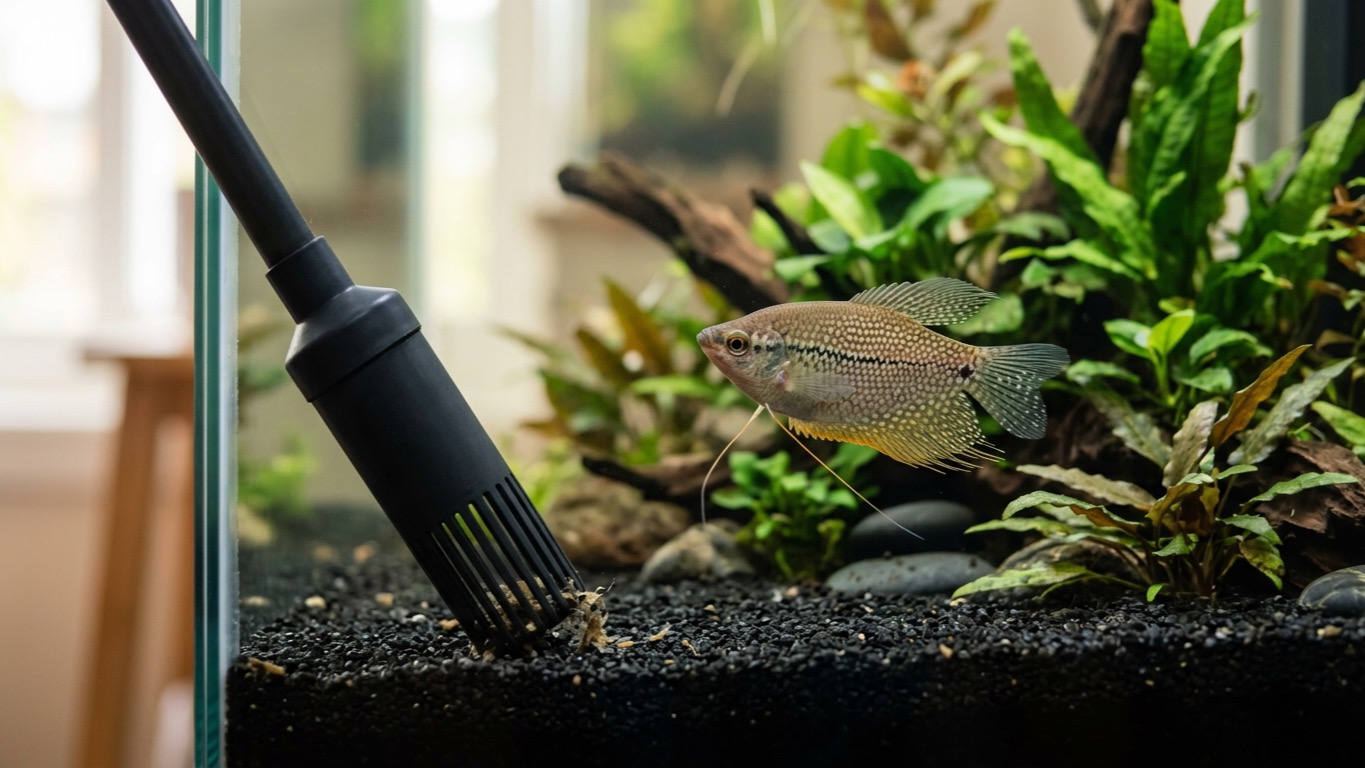
- Siphon waste from the substrate in a betta tank or any gravel bed where flakes settle.
- If the tank looks dirty, cut the first meal by 50%, per Aqueon’s feeding page.
- After an Aqueon vacation block, that maker page says to change water and siphon remnants.
Hikari’s FAQ gives a useful betta gap if you keep one fish. Extra meals must sit at least 3 hours apart, so wait that long after you get home before you add a second pellet round.
Do not try to make up skipped days with a large dump. The missed meals are gone, and extra food only adds waste.
Betta, goldfish, and community tanks
Species share the weekend clock, but portion size does not, so count pellets instead of guessing.
Hikari’s FAQ sets Betta Bio-Gold by body length, measured from nose to tail base.
- For bettas under 1.5 inches, Hikari’s FAQ says to use Micro Pellets and feed 6 pellets twice a day.
- For bettas from 1.5 to 1.75 inches, feed 3 Betta Bio-Gold pellets up to 3 times a day.
- Add 1 pellet per 1/4 inch of growth, and never feed more than 5 pellets in one meal.
- Feed 1 pellet at a time and wait until the fish eats it.
That page also says a betta may take up to 5 days to accept a new food. Do not start a new diet the night before a trip.
For pellet choice and protein math, see best food for betta fish.
Goldfish follow the same weekend skip as other healthy adults. Hikari’s FAQ warns that floating pellets hold air pockets, so soak them a few minutes if a goldfish gulps air.
Community tanks add one extra risk because shy fish eat last. Aqueon’s feeding page says flakes may sit 1 to 2 minutes on the surface before they sink, so target shy fish before a weekend skip.
The University of Florida IFAS publication FA159 puts tropical foods in a protein band of 35% to 50%. It also lists a typical retail band of $14 to $32 per pound. That price band shows why a short skip can beat a rotting pile of food.
IFAS also says farm grow-out feeds often run 36% to 42% protein and 6% to 15% fat. Fiber in those feeds is often 3% to 5%, and fiber above 8% is called low feeding value.
IFAS notes that food can be 30% to 60% of yearly variable costs on a fish farm.
FAQ
Can healthy adult fish go a full week with no food?
Aqueon’s leftover-food page only backs 2 to 3 days as a no-food window. Aqueon’s vacation feeder page sells a 7-day block for a week away, and those are two different plans. A week with no food is not a published care clock on the pages we compared.
Should I drop a vacation block for a two-day trip?
No, because Aqueon’s leftover-food page already covers 2 to 3 days unfed. The same maker’s 3-day block is listed for up to 3 days and for 5 to 6 medium fish. Extra food in a short trip becomes waste.
How long can a betta skip food?
Use the same 2 to 3 day adult clock, then return to Hikari’s pellet counts instead of a catch-up pile. A 1.5 inch betta gets 3 Betta Bio-Gold pellets, up to 3 times a day, with extra meals at least 3 hours apart.
Can I skip food in a tank that is still cycling?
No, that case is outside our selection rule, because uneaten food raises ammonia while bacteria are still growing. Finish the cycle first, then plan a skip.
What should a fish sitter put in the tank?
Aqueon’s leftover-food page says to give a sitter pre-measured packets every 2 to 3 days. Do not leave an open jar on the stand. Aqueon’s feeding page still applies: fish should finish the packet in 2 to 3 minutes.
Does opened fish food go stale during a long trip?
Hikari Sales USA’s FAQ says to use opened pellets within 90 days. The University of Florida IFAS publication FA159 uses the same 90-day span for dry pellets from manufacture. A one-week trip does not ruin a fresh jar, but a jar opened months ago might.
Will plants or leftover flakes feed fish while I am gone?
Do not count on leftover flakes or plants as a meal plan. Aqueon’s feeding page says leftover food should come out at 5 minutes. IFAS says poor feed management is a main reason water quality falls.