Quick answer: Clear pond algae safely by cutting nutrients, netting mats, running a sized UV clarifier for green water, and supporting clarity with barley extract plus beneficial bacteria. Treat chemicals as last steps, never dumps.
Starve algae with light, nutrients, UV, and slow biology first.
We compared published care data on pond algae control methods that protect fish when used as directed. Our research team analyzed green-water UV clarification, string-algae netting, barley straw timing, aeration, plant cover, and fish-safe dosing caution. Owners consistently report clearer ponds when they stop feeding excess and remove debris before chasing bottles.
Comparing published specs separates planktonic green water from string mats that cling to rocks and falls. UV clarifiers commonly clear free-floating green water in about one to two weeks when flow matches the unit. Thicker blooms may need about two to three weeks plus filter capture of clumped cells. Barley straw bales often need about four to six weeks to become active. Liquid barley extracts start sooner as a preventive helper. Partial water changes up to about twenty-five percent of pond volume can aid clarity when dechlorinated. This page covers algae types, nutrient cuts, manual removal, UV sizing, barley and bacteria, careful algaecides, and prevention.
Include aeration, plants, UV for green water, and label-led dosing. Leave out bleach dumps and copper overdoses. Skip drug-style remedies that belong on manufacturer labels alone.
Spot green water versus string algae first
Wrong tools waste weeks and stress fish.
Green water is a soup of free-floating single-celled algae that turns ponds pea-green. String algae forms long filaments on rocks, walls, and waterfalls. UV clarifiers shine for green water because cells pass through the lamp chamber. String mats rarely enter that chamber, so nets and nutrient cuts matter more there. Blue-green blooms that look like paint slicks can be cyanobacteria and may produce toxins; treat those as urgent safety issues for pets and people. Identify the look before you buy gear.
Type board:
| Look | What it usually is | First tools |
|---|---|---|
| Pea-soup green | Planktonic green water | UV + filtration |
| Hair-like strands | String algae | Netting + nutrients |
| Paint-like scum | Possible cyanobacteria | Urgent caution |
| Brown film | Often diatoms early on | Wait + balance |
| Mixed bloom | Both types together | Parallel plan |
Owners consistently report faster wins after they named the bloom correctly. Our research team analyzed method tables across pond guides. Comparing published specs pairs UV with green water and nets with strings.
Cut nutrients and sunlight before you dose
Algae feast on waste, leftover food, and full sun.
Stop overfeeding fish; uneaten pellets become fertilizer. Skim leaves and sludge that release nutrients as they rot. Rinse filter pads in pond water so you keep bacteria while removing gunk. Shade part of the surface with floating plants or a shade sail so light no longer fuels endless blooms. Aim for plant cover that still leaves open water for air exchange and viewing. Test water so you track ammonia, nitrite, and nitrate trends instead of guessing.
Nutrient checklist:
- Feed only what fish finish quickly
- Net leaves and mulm weekly in warm months
- Rinse media in pond water, not chlorinated tap
- Add shade and floating plants where safe
- Avoid lawn fertilizer drift into the pond
Owners consistently report less green soup after they halved snack habits. Our research team analyzed nutrient-first plans used by pond keepers. Comparing published specs treats light and waste cuts as free first steps.
Net mats and debris before chemistry
Manual removal gives fish-safe, instant progress.
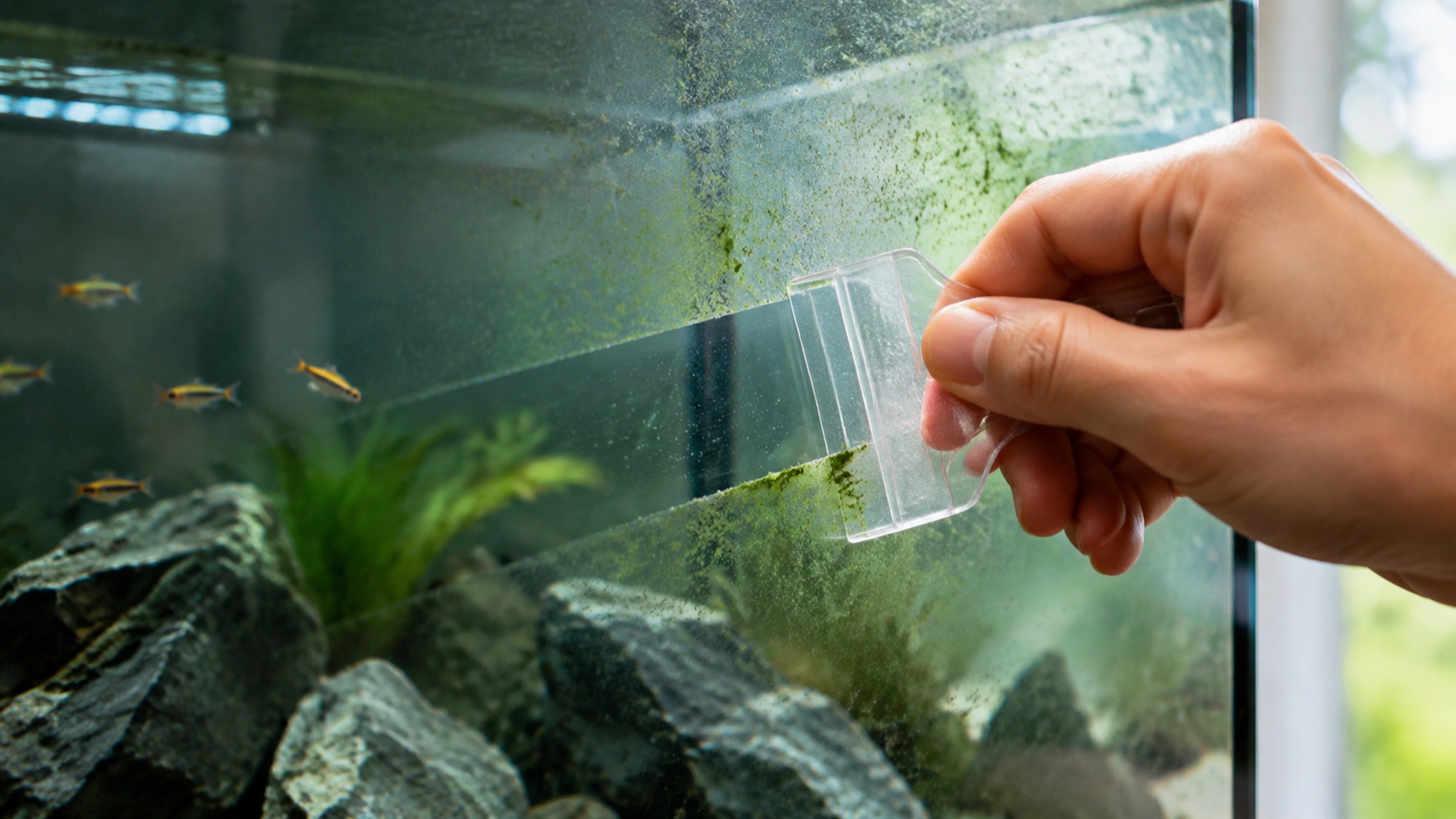
Pull string algae with a pond net or soft brush on falls, then dispose of the mass away from the water. Leaving piles on the bank lets nutrients wash back in. Scoop surface scum gently without stirring the entire bottom into a storm. After UV starts killing planktonic cells, dead clumps may sink; net those so filters are not buried. Work in cool morning hours when oxygen is higher if the bloom is severe. Never dump bleach into a stocked pond.
Removal board:
| Task | Timing cue |
|---|---|
| Net string mats | As often as they rebuild |
| Scoop sunk clumps | After UV begins clearing |
| Skim leaves | After wind events |
| Brush falls | When flow looks choked |
| Dispose offsite | Every session |
Owners consistently report calmer fish when they remove biomass instead of shocking the whole pond. Our research team analyzed mechanical steps in algae guides. Comparing published specs keeps nets ahead of bottles.
Run a sized UV clarifier for green water
Match wattage and flow to pond gallons.
A UV clarifier passes pond water past an ultraviolet lamp that damages free-floating algae cells so they clump for filtration. Aquascape UltraKlear models target about one thousand, twenty-five hundred, and five thousand gallons. Matching watt notes sit near fourteen, twenty-eight, and fifty-five watts. Maker flow notes for those classes sit near about five hundred, one thousand, and fifteen hundred gallons per hour as maxima. Flow that is too fast shortens contact time. Clean the quartz sleeve at least twice a year so light still reaches the water. Replace bulbs on the maker schedule; some pond UV notes cite about eight thousand hours of use.
UV board:
| Theme | Published direction |
|---|---|
| Best target | Green water, not string mats |
| Clear time | Often about 1–2 weeks |
| Thick blooms | About 2–3 weeks possible |
| Sleeve care | Clean at least twice yearly |
| Flow | Stay near maker optima |
| Placement | Outside the pond, dry footing |
Owners consistently report clear water when flow matches the chart and filters catch clumps. Our research team analyzed UV sizing notes from maker materials. Comparing published specs keeps UV as a clarifier, not a string-algae eraser.
Use barley and beneficial bacteria as slow support
Prevention compounds help; they rarely erase a crisis overnight.
Barley straw decomposes and releases compounds that inhibit new algae growth over weeks. Bale guidance often cites roughly one bale per about one thousand square feet of surface when used as a seasonal preventive. Place mesh bags where water moves. Liquid extracts such as Aquascape Barley Straw Extract start faster than raw bales. Maker notes keep them fish-safe when used as directed. Beneficial bacteria products compete for dissolved organics that algae would otherwise use. Start barley before peak algae season when you can plan ahead.
Slow-support cues:
- Apply barley early in spring for prevention
- Prefer extracts when you need simpler dosing
- Keep bacteria products on a label schedule
- Pair with aeration so microbes stay oxygenated
- Expect weeks, not overnight miracles
Owners consistently report fewer midsummer rebounds when barley and bacteria run all season. Our research team analyzed timing notes for straw and extracts. Comparing published specs treats these tools as support layers beside UV and nets.
Dose fish-safe algaecides only with label care
Chemicals can crash oxygen when too much algae dies at once.
If you still need an algaecide, choose a fish-labeled formula and measure pond volume first. Treat in sections on consecutive days rather than killing the entire bloom in one shock. Add aeration before and after dosing because dying algae consume oxygen. Turn UV units off when labels require it during medication-style treatments. Avoid bleach and random peroxide dumps that lack pond dosing charts. Copper-based products can stress sensitive fish and invertebrates when misused.
Algaecide caution list:
- Verify exact gallons before any dose
- Treat sections, not the whole pond at once
- Boost aeration during die-offs
- Follow the manufacturer label exactly
- Watch fish for gasping at the surface
- Stop and seek expert help if fish distress appears
Owners consistently report safer outcomes when they slow the kill and keep air stones running. Our research team analyzed oxygen-crash warnings in pond treatment notes. Comparing published specs puts label math ahead of “more is better.”
Prevent the next bloom with plants, air, and habits
Clear water stays clear when the food source stays low.
Keep a steady aeration plan so oxygen and circulation discourage stagnant green soup. Stock floating and marginal plants that compete for nutrients without sealing the entire surface. Maintain filters so mechanical pads catch clumped algae after UV runs. Retest after heat waves when blooms accelerate. Plan barley and bacteria before the warm season, not only after the pond turns green. Feed fish lightly and remove waste on a weekly rhythm in summer.
Prevention board:
| Habit | Why it helps |
|---|---|
| Aeration | Oxygen and mixing |
| Plant cover | Nutrient competition |
| Filter upkeep | Captures dead algae |
| Light shade | Slows photosynthesis |
| Modest feeding | Less dissolved waste |
| Seasonal barley | Inhibits new growth |
Owners consistently report fewer emergency weekends after prevention became routine. Our research team analyzed long-term clarity habits across pond guides. Comparing published specs ends with maintenance, not a single miracle product.
FAQ
Will a UV clarifier kill string algae?
No. UV clarifiers target free-floating green-water cells that pass through the lamp chamber. String algae attached to rocks and falls rarely enters that path. Net mats by hand, cut nutrients, and shade the pond for string problems. Keep UV for pea-soup water. Pair both tools when your pond shows mixed blooms.
How long does barley straw take to work?
Physical barley straw often needs about four to six weeks to become active as it decomposes. That is why early spring placement works better than last-minute crisis use. Liquid extracts are marketed to begin helping sooner while remaining fish-safe when labeled doses are followed. Barley inhibits new growth more than it erases a heavy existing bloom. Use nets and UV for the current mess while barley supports the season ahead.
Are algaecides safe for pond fish?
Some formulas are labeled fish-safe when you measure volume and dose correctly. Dying algae can still strip oxygen, so treat in sections and add aeration. Never pour bleach into a stocked pond. Read the manufacturer label for every product, including copper cautions. Stop treatment and seek expert help if fish gasp or gather at returns.
How fast can UV clear green water?
Many pond notes describe about one to two weeks for ordinary green water when the unit is sized and flowed correctly. Thicker blooms may need about two to three weeks plus filter capture of clumped cells. Partial water changes up to about twenty-five percent can help when water is dechlorinated. Clean the quartz sleeve so the lamp stays effective. Measure return flow instead of guessing pump stickers alone.
What should I do first in a green pond with fish?
Cut feeding, net debris, and confirm whether you face green water, string algae, or both. Add aeration if fish look stressed. Size a UV clarifier for green water while you keep netting mats. Start barley and beneficial bacteria as support, not as the only rescue. Avoid random chemical dumps that crash oxygen overnight.
Can plants replace a UV clarifier?
Plants help by shading and consuming nutrients, yet they rarely clear a heavy green-water bloom alone. Floating cover plus marginal plants lower the fuel supply over time. UV remains the faster mechanical answer for pea-soup plankton. Best ponds combine plants, aeration, filtration, and UV when green water returns each summer. Keep open water so fish still reach the surface comfortably.
How often should I clean a UV quartz sleeve?
Maker guidance for many pond UV units calls for cleaning at least twice a year, with more frequent wiping in hard water or heavy blooms. Mineral film blocks ultraviolet light and quietly ruins performance. Use the cleaning method the manufacturer lists, often including a vinegar wipe for deposits. Disconnect power before any service. Replace bulbs on the published hour schedule so output stays strong.
This guide is informational only and does not replace the manufacturer’s instructions for UV clarifiers, barley products, bacteria additives, or algaecides.