Quick answer: A betta can live with other fish if you skip a second male and give calm schoolers enough water. Start at a 10-gallon class tank, not a bowl. Keep a spare tank ready if chasing starts.
A male betta can live with other fish; two males in one undivided tank cannot.
This page is a desk review of maker pages;
We used one selection rule, the School-Count Gate. A species enters this guide only if Aqueon’s tank-mate page names a group size for it.
Mystery snails and live plants from that same page also enter. Two male bettas never enter, even in a huge tank.
We leave out guppies, barbs, goldfish, and other fish that page does not name. This is a rule sheet, not a ranked product list.
Our research team analyzed published specs from Aqueon and Hikari. We also read the 2024 Animal Welfare paper by Oldfield and Murphy at Case Western Reserve University.
Why two males fail, even in a large tank
Two male bettas should not share one open tank, because extra space alone does not stop a fight.
Oldfield and Murphy placed pairs of males in tanks from 10 liters up to 378 liters. Some tanks had gravel, rocks, and plants, and some tanks were bare.
They ran 64 pair trials, and aggression reached a bite in 36 of those 64 trials. They stopped three trials early after three bites in a row.
Their largest tanks held about 2.4 males per square meter. That is close to the wild figure they cite of 1.7 males per square meter.
The pairs still did not settle into a peaceful share. Aqueon’s tank-mate page states the same hard line: never put two male bettas in the same tank.
Aqueon does allow a female to visit a male for breeding, and that visit lasts 12 to 24 hours before she leaves. That is a timed breeding step, not a roommate plan.
Aqueon also says female bettas can live in a small school called a sorority. The page gives no head count, so our Gate does not set a sorority number.
The 10-liter swimming floor, and why bowls fail
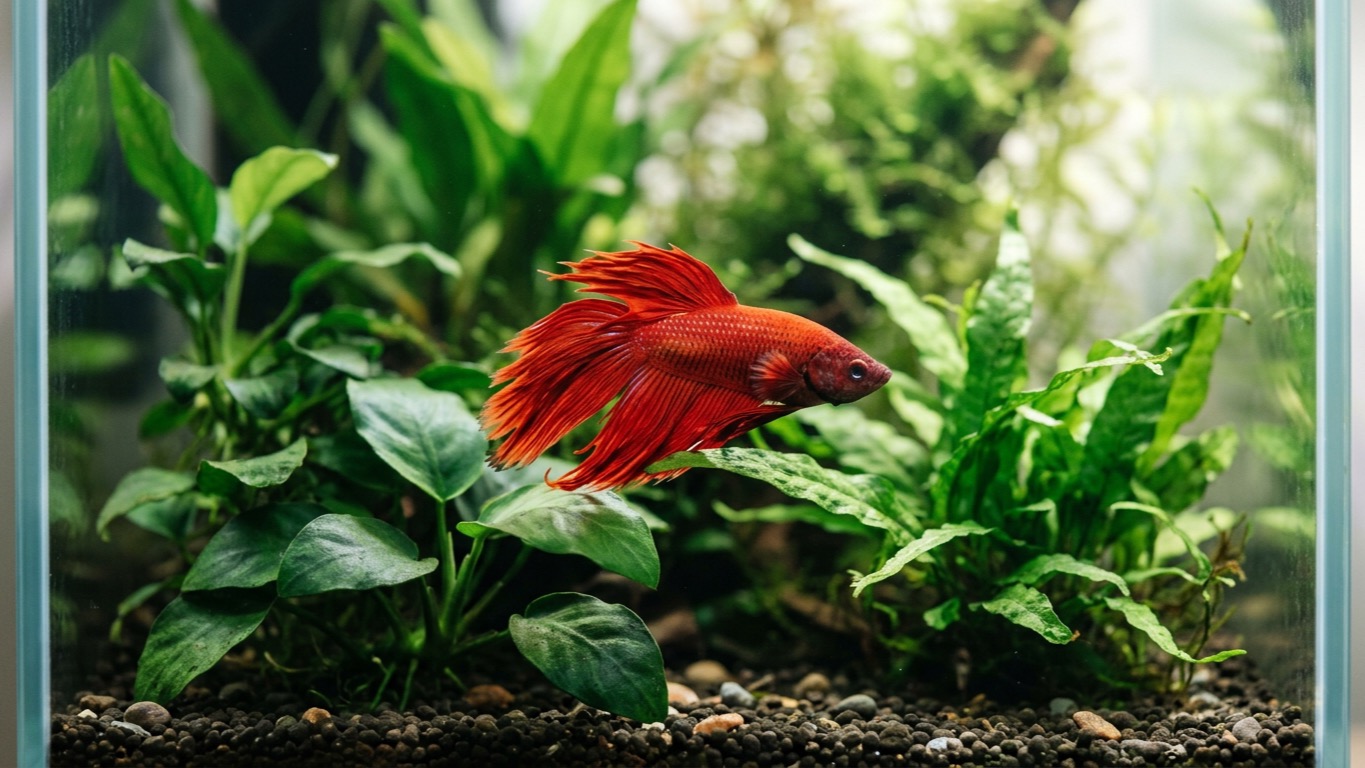
A lone male needs at least 10 liters of water before he swims like a fish with room.
Oldfield and Murphy watched eight males in bowls and tanks. The bowls held 0.5 liters, while the tanks held 10, 38, and 208 liters.
Males in the 0.5-liter bowls spent less time swimming than males in the three larger tanks. Swim time looked similar in the 10-, 38-, and 208-liter tanks, so the authors set 10 liters as the floor for full swimming.
Enriched tanks, with gravel, a rock, and plants, produced more swim bouts than bare tanks. In large tanks, the fish spent more than half their time swimming.
Aqueon’s tank-mate page still lists 1 to 5 gallons for a solo male. One gallon is about 3.8 liters, and that sits below the paper’s 10-liter floor.
A 5-gallon tank is about 19 liters. That clears the swimming floor for one male, but it is still a tight box once you add a school.
Which fish pass the School-Count Gate
Aqueon names three fish groups for a male betta, plus snails and plants, and those named groups are the only fish this page covers.
Use the counts the Aqueon page prints. Do not buy “a few” and hope they school.
- Corydoras catfish: five or more, as bottom feeders
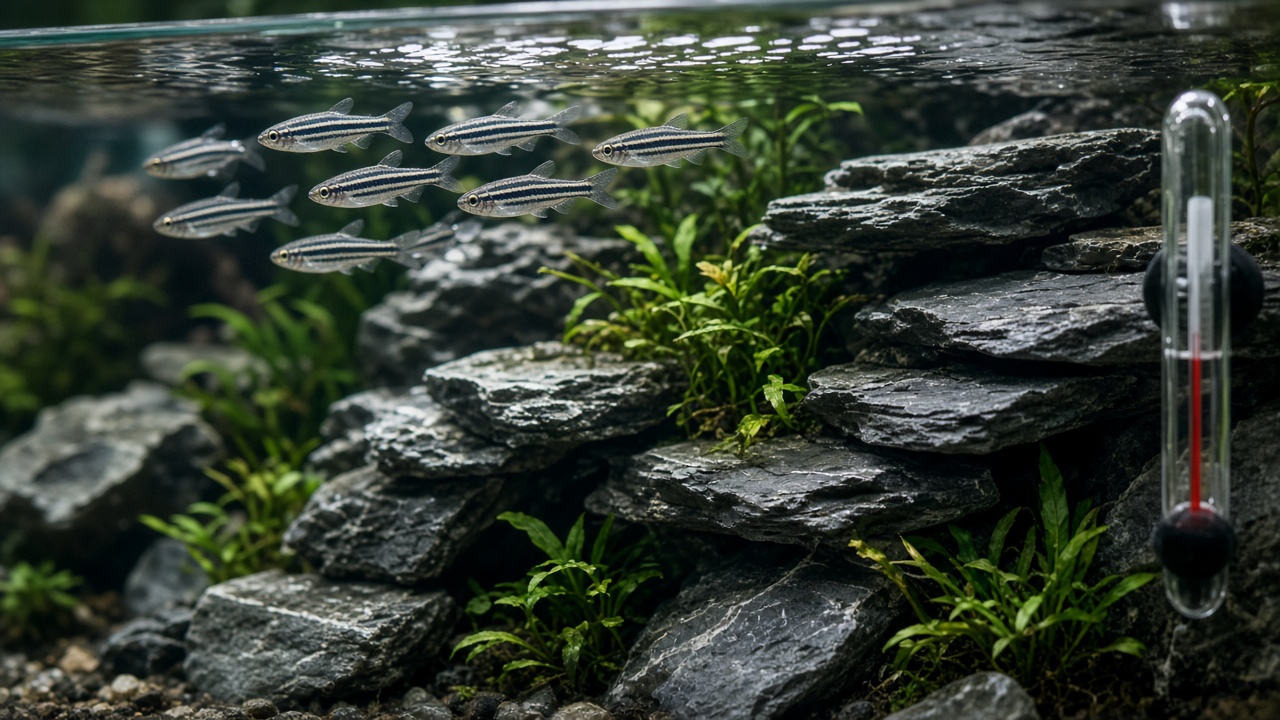
- Tetras with a torpedo shape: six or more
- Rasboras: seven or more, and they stay under 2 to 4 inches
- Mystery snails: allowed as non-fish tank mates
- Live plants: allowed as living cover
Aqueon lists lemon, neon, and glowlight tetras in that tetra group. Pick the slim, fast shapes, and skip diamond-bodied tetras that the same page warns can nip.
Aqueon says rasboras can also share a tank with dwarf freshwater shrimp. The page gives no shrimp count, so treat shrimp as optional extras, not a Gate species.
Corydoras work because they stay low and eat food that falls after the betta feeds. That split in space is the point, and they are not midwater rivals.
If Aqueon did not name the fish, we do not stock it with a betta.
- A second male betta in one open tank
- A male-and-female pair kept together past 24 hours
- Guppies or other long-fin lookalikes Aqueon did not list
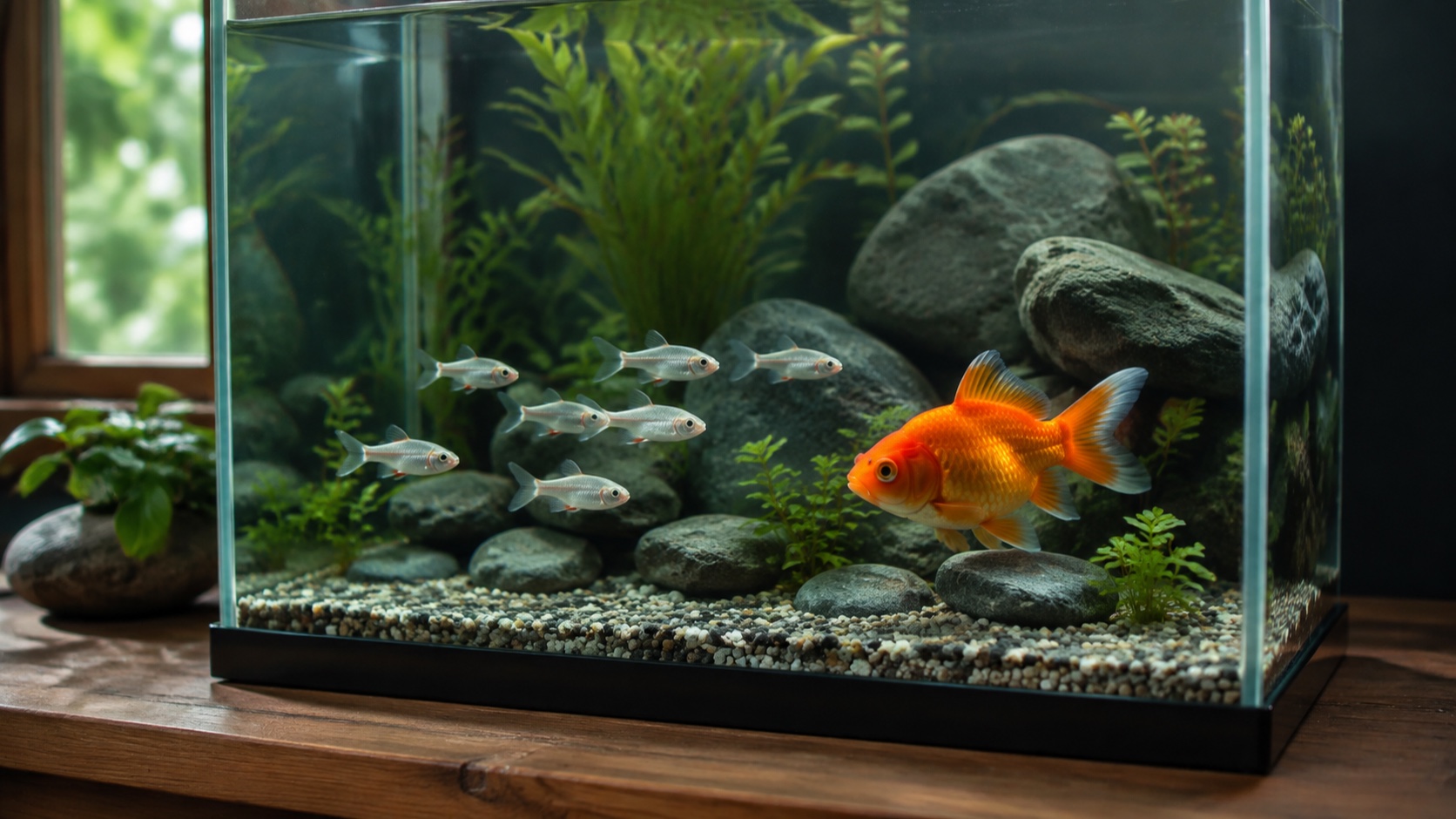
- Goldfish, which need cooler water than bettas
- Barbs, cichlids, and other nipping or bossy fish
Aqueon’s FAQ sets betta water at 76 to 85°F, and the same FAQ sets goldfish at 65 to 72°F. Those bands do not overlap. That is a temperature rule, not a taste call.
The Animal Welfare paper kept its study fish at 21 to 22°C, which is about 70 to 72°F. That is cooler than Aqueon’s home range, so we do not copy the lab temperature for a living room tank.
We only use the paper for space and male-male results. A spare tank is part of the plan, and if the betta flares, chases, or rips fins, the extra fish come out. Solo is a valid end state.
How much water a mixed tank actually needs
A mixed tank needs more water than a solo betta, and the label on the glass overstates the water you have.
Aqueon’s tank-mate page uses one gallon per inch of adult fish. It gives this example: one male betta at about 3 inches, plus eight rasboras at 3 inches each, is 27 inches of fish.
That calls for a tank of 27 gallons or larger. Aqueon’s FAQ adds a second cut: a decorated 10-gallon tank holds about 8 gallons of real water.
Gravel and décor steal the rest. So a “10-gallon” mixed tank is already short of the 27-gallon rasbora example.
Aqueon’s FAQ also says a filled tank weighs about 10 pounds per gallon. A 20-gallon tank weighs about 200 pounds, and most household furniture, the same page says, can hold 5 gallons or less.
A mixed betta tank belongs on a stand built for that load. For a mixed tank, use this order:
- One male betta, already settled
- One Gate school at the Aqueon count, not a mixed sample pack
- A tank at or above the inch-per-gallon math after décor
- A second tank ready if you must split the group
Do not start in a bowl. The 0.5-liter bowls in the Animal Welfare paper cut swimming, and they also cannot hold five corydoras or six tetras.
Plants, substrate, and broken sightlines
Cover is not décor. It is how you keep fish from staring at each other all day.
Oldfield and Murphy saw more swimming bouts when tanks had gravel, a tall rock, and live plants. Aqueon also names live plants as tank mates that are not fish.
Use live plants that suit a betta to break the view across the tank. Soft leaves beat hard plastic edges.
Corydoras feed on the floor, so they need a bed they can search without scraping themselves. Pick a substrate that suits a betta and still lets those catfish work the bottom.
Aqueon’s FAQ sets light time by what you grow:
- Live plants: 10 to 12 hours of light each day
- Fake décor only: 5 to 8 hours each day
- Same hours every day, on a timer
- Never leave the light on all night
Keep a clear patch of surface, because bettas gulp air there. Dense plants can still leave a gap at the top.
Feeding more mouths without fouling the water
More fish means more waste, so feed by the printed amounts and then stop.
Hikari’s page for Betta Bio-Gold lists at least 38% crude protein and 4.0% crude fat. It also lists at most 3.0% crude fiber, 10% moisture, and 12% ash, plus at least 0.7% phosphorus.
That page says to feed 5 to 10 pellets, up to 3 times a day, by the size of the betta. It also says a betta may take up to 5 days to accept a new food.
Packs listed there are 2.5 grams, 5 grams, and 20 grams. Aqueon’s FAQ uses a time cap for most community fish: feed only what they eat in 2 minutes or less, once or twice a day.
Leftover food pollutes the water. Compare those two printed rules like this:
- Betta pellets: 5 to 10 pieces, up to 3 times a day, per Hikari
- Other fish: a 2-minute meal, once or twice a day, per Aqueon
- Skip a feed one or two days a week if you follow Aqueon’s community tip
- Do not dump extra flakes “for the school” after the betta is full
Corydoras will take food that sinks, which is why Aqueon mentions leftover betta food on the floor. It is not a reason to overfeed.
For pellet types and protein math, see our page on food for betta fish. Aqueon’s FAQ water-change bands for a stocked tank are:
- 10% of the water each week, or
- About 25% once or twice a month
- Never more than 50% in one change
- Filter cartridge: about once a month
A bigger mixed tank still needs those changes. More mouths do not buy you a free pass.
How to add tankmates, step by step
Add the betta first, and add the school only after the tank is running and the water is warm.
Aqueon’s FAQ says most experts wait 48 to 72 hours after setup before the first fish. Check temperature, pH, and ammonia before you add anyone, and keep betta water at 76 to 85°F as that FAQ states.
When you bring the school home, use Aqueon’s bag steps:
- Turn the tank light off.
- Float the closed bag for 15 minutes.
- Open the bag and roll the rim to make a float ring.
- Add a little tank water every 5 minutes.
- After 20 to 30 minutes, net the fish into the tank.
- Throw away the bag water. Do not pour it in.
- Leave the light off for 1 to 2 hours.
Watch the betta for the rest of that day. Flaring at glass is not the same as a chase, but a chase that does not stop is your cue to net the school out.
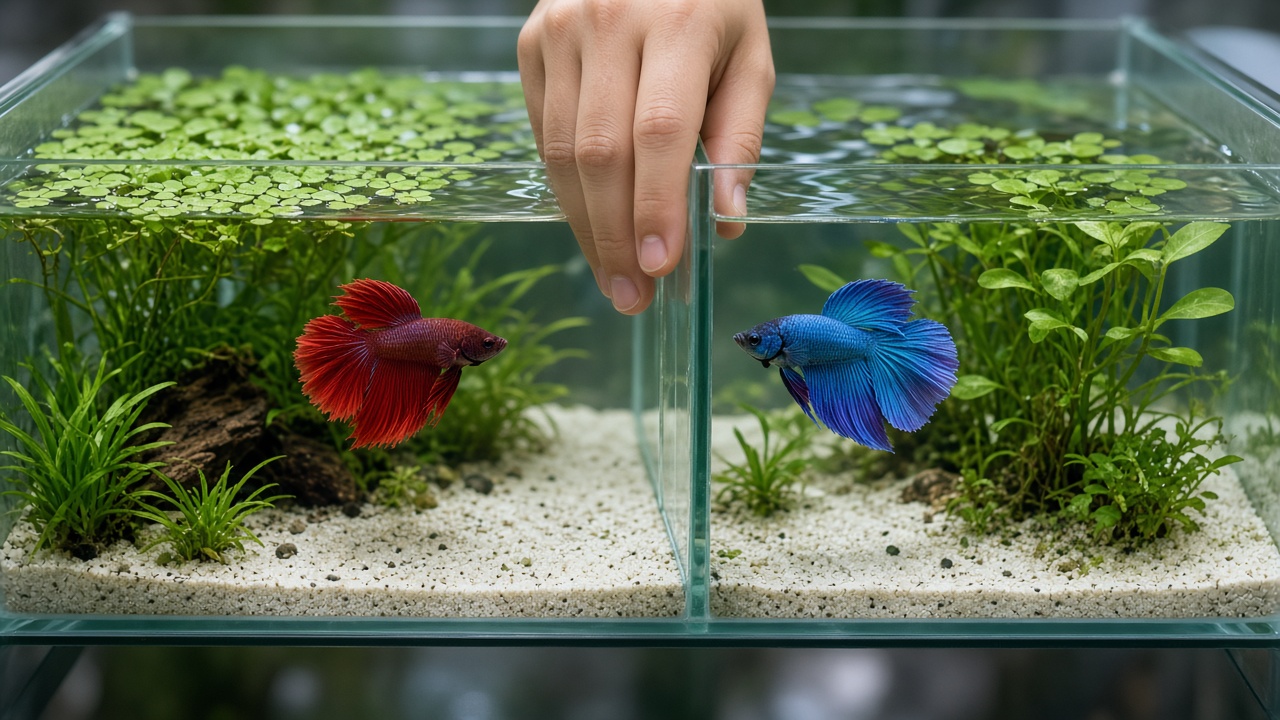
If you must house two males in one box, use a solid divider. An open tank is the case the Animal Welfare paper and Aqueon both reject.
FAQ
Can betta fish live with other fish?
Yes, if you keep one male and add only calm fish that already live in a named group. Aqueon names corydoras, slim tetras, and rasboras at set counts. Two males in one open tank fail that test.
Can two male bettas live in the same tank?
No. Aqueon says they will fight until one fish remains. Oldfield and Murphy still saw bites in 36 of 64 pair trials, including in tanks as large as 378 liters.
How big should a community betta tank be?
Aqueon’s example with one 3-inch betta and eight 3-inch rasboras needs 27 gallons or more. A decorated 10-gallon tank, per Aqueon’s FAQ, holds about 8 gallons of water. That is too small for that rasbora math.
Can I keep neon tetras with a betta?
Aqueon includes neon tetras in its tetra group. Plan on six or more, and pick the slim, torpedo shape. If your betta hunts them, remove the school.
Can a betta live with goldfish?
No. Aqueon’s FAQ puts bettas at 76 to 85°F and goldfish at 65 to 72°F. Those ranges do not meet, and goldfish also fall outside the School-Count Gate.
Do I have to keep a betta alone?
No. Solo is the simple setup, and it is a sound backup. A mixed tank is optional, but it needs the Gate counts, extra water, and a plan to split the tank if chasing starts.
How long should a female stay with a male?
Aqueon limits a breeding visit to 12 to 24 hours. After the female releases eggs, she leaves. A long-term pair is not on that page.