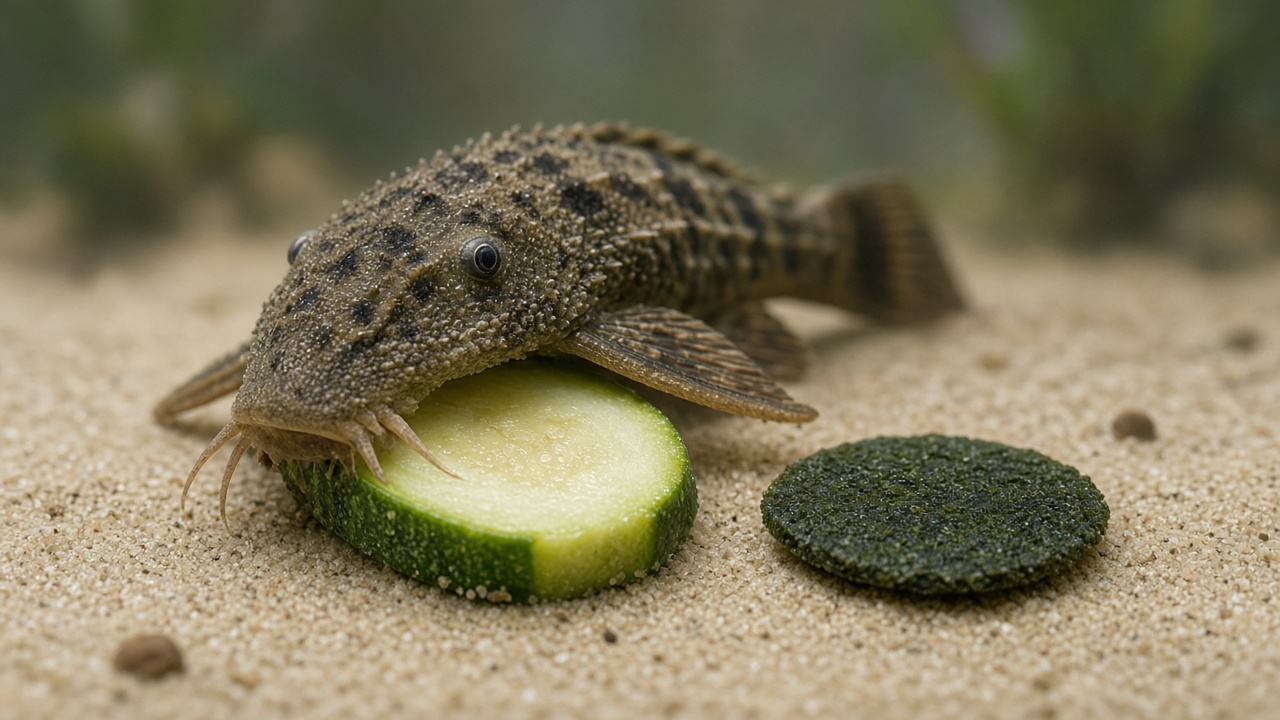
Quick answer: Feed sinking algae wafers after lights-out. Add blanched greens several nights a week. Do not rely on tank algae alone.
Most home-tank plecos eat sinking wafers and vegetables, not tank algae alone. This page is a five-food label comparison;
Our research team analyzed maker pages only. We used one rule, the Label-First Rule. A prepared food enters this page only if its maker still publishes a live product page with a guaranteed analysis, a feeding clock, or both.
Kitchen vegetables enter as produce, not as brands. We left out meat-first Hypancistrus menus and any food we could not match to a maker page.
The Label-First Rule, in plain words
This guide covers sinking wafers sold for algae-eating catfish, plus simple produce you can slice at home.
We compared published specs from five makers that still list a product page. Those makers are Hikari, API Fishcare, Fluval, New Life Spectrum, and NorthFin. Hikari UK’s Algae Wafers history page sits beside those labels.
What stayed out:
- No Hypancistrus (zebra pleco) meat-first menus
- No gel-food recipes we could not source to a maker page
- No wild-caught insect lists
- No price tiers and no rank column
If you keep Ancistrus, tank setup lives on our bristlenose pleco care page.
Tank algae is a snack, not a ration
A clean glass tank does not grow enough film to replace a nightly wafer.
Plecos rasp biofilm, but that habit does not mean the tank feeds them. Hikari UK’s Algae Wafers page says the disc was built because Royal Pleco in the Panaque group often refused early artificial foods. The same page says the team spent two years on the first formula and launched it in 1991.
That is a maker saying the fish needed a food you put in, not a claim that glass algae is a ration.
API Fishcare’s page for API ALGAE EATER WAFERS names Plecostomus, Ancistrus, and Otocinclus. Fluval’s Bug Bites Algae Crisps page names plecos, ancistrus, loaches, and corydoras. Those lists are maker meal claims, not wild-diet papers.
Watch the belly from below. A healthy fish looks gently rounded, and a hollow belly is a cue to add a wafer.
Algae wafers and other sinking foods
Sinking discs are the nightly staple because they stay on the floor where a pleco feeds.
Our research team analyzed five current labels side by side. Crude protein on the pages that publish it runs from 33 percent to 43.5 percent. That 10.5-point spread is a label gap you can read, not a ranking.
Hikari’s Tropical Algae Wafers page lists minimum 33 percent crude protein, minimum 4.0 percent crude fat, and maximum 3.0 percent crude fiber. The feeding line says to give no more than the fish will finish within 2 hours, then pull what remains. Feed that wafer late in the day or at night; listed packs run from 20 g to 250 g.
Hikari UK’s Algae Wafers page adds history, not a second analysis. The food launched in 1991 after two years of work, and the team tried more than 10 vegetables. Cucumber scored well for palatability but was judged too high in water to use as an ingredient.
In 2010 the formula gained chlorella and Mini Algae Wafers launched. Hikari UK states that more than 100 tons, about 170 million discs, sell each year.
API Fishcare’s ALGAE EATER WAFERS page does not publish protein, fat, or fiber on the product page we read. It does publish a feeding clock: twice a day, only as much as fish will eat within 3 minutes. It also states fish release up to 30 percent less ammonia on this formula, and it names alfalfa as the fiber source.
Fluval’s Bug Bites Algae Crisps page lists minimum 43.5 percent crude protein and minimum 25,000 IU/kg vitamin A. Feeding is as much as fish can eat in two minutes, two or three times daily. The page we read lists a 40 g (1.41 oz) pack.
New Life Spectrum’s AlgaeMAX page lists minimum 34 percent crude protein and a basket of nine aquatic veggies. Wafers measure 12 mm to 12.5 mm, and mini-wafers measure 7.25 mm to 7.75 mm. Listed packs run from a 150 g jar to a 2,200 g bag.
NorthFin’s Kelp Wafers page lists 33 percent protein minimum and a 14 mm disc. Organic kelp (Laminariales) is the first ingredient, and NorthFin’s note is to drop the wafer after lights-out.
| Product | Protein minimum | Fat minimum | Fiber maximum | Maker feeding clock | Listed size note |
|---|---|---|---|---|---|
| Hikari Tropical Algae Wafers | 33% | 4.0% | 3.0% | Finish within 2 hours; feed at night | Packs 20 g, 40 g, 82 g, 250 g |
| API ALGAE EATER WAFERS | Not listed on API’s page | Not listed | Not listed | Twice a day; finish within 3 minutes | Packs 1.3 oz, 3.7 oz, 6.4 oz |
| Fluval Bug Bites Algae Crisps | 43.5% | 4% | 3% | Finish within 2 minutes; 2–3 times daily | 40 g (1.41 oz) pack listed |
| New Life Spectrum AlgaeMAX Wafers | 34% | 8% | 8% | Not timed on the product page | Wafers 12–12.5 mm; jars 150 g–2,200 g |
| NorthFin Kelp Wafers | 33% | 4% | 5% | After lights-out (maker note) | 14 mm disc; packs 100 g–2.5 kg |
The feeding clocks do not agree. Hikari allows 2 hours, API allows 3 minutes, and Fluval allows 2 minutes. Use the clock printed on the food you poured.
A practical starting portion for one adult bristlenose-sized fish is one disc after lights-out. Cut that portion if any piece remains at the maker’s cutoff, and raise it if the belly looks hollow.
Match disc size to the mouth:
- NorthFin’s 14 mm Kelp Wafers suit a larger rasping mouth
- New Life Spectrum AlgaeMAX wafers at 12–12.5 mm sit in the middle
- New Life Spectrum mini-wafers at 7.25–7.75 mm suit a smaller fish
- Hikari’s Mini Algae Wafers, launched in 2010 per Hikari UK, target smaller plecos
Vegetables that belong on the night plate
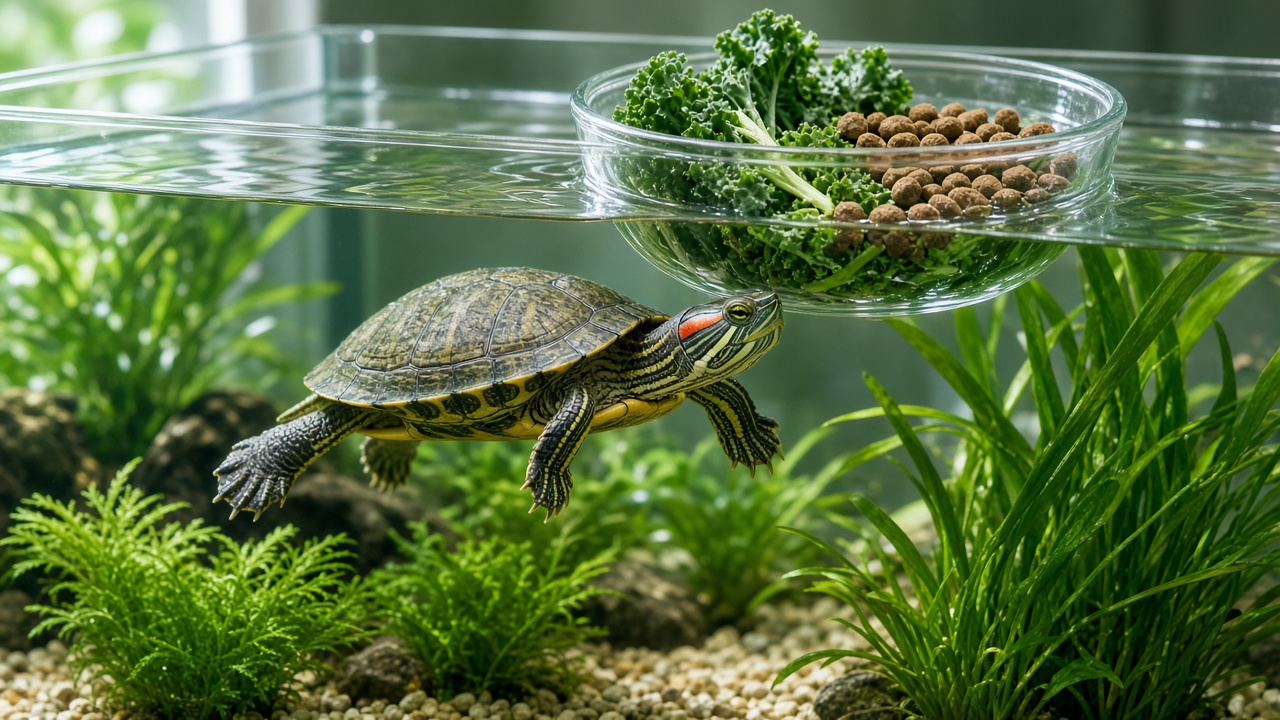
Blanched greens fill the gap wafers leave, but they are a side, not the only meal.
Hikari UK’s development list is the only vegetable roster we treat as a maker document. The team offered more than 10 vegetables while building Algae Wafers, and cucumber was liked but rejected as an ingredient because of water content. That is a formula note, not a ban on a cucumber slice in the tank.
Keep the home plate short and repeatable:
- Spinach or pumpkin, because Hikari UK named both
- Cucumber slices, knowing they are mostly water
- Zucchini or green beans as plain produce, with no nutrient claim from us
- Skip onion and orange in the tank; Hikari UK used those in kitchen trials, not as tank food
Do not invent a soak time we cannot source. Soften a slice in hot water until it sinks, then cool it. Clip it or weight it on the glass, and pull what is left before lights-on.
One night of vegetables does not replace the wafer. New Life Spectrum’s AlgaeMAX page says even herbivore formulas include marine proteins, and a zucchini slice does not copy that label.
A weeknight feeding schedule
Feed after lights-out, then pull leftovers on the clock printed on the tub.
Makers disagree on minutes, but they agree on one point: do not leave extra food to rot. Hikari, API, and Fluval all tell you to pull what the fish did not finish.
Here is a seven-night desk schedule for one adult community-tank pleco. Adjust the disc count to the maker’s clock, not to this grid.
- Night 1: one sinking wafer after lights-out
- Night 2: one wafer plus one cooled spinach or pumpkin piece
- Night 3: one wafer only
- Night 4: one wafer plus one cucumber or zucchini slice
- Night 5: one wafer only
- Night 6: one wafer plus greens
- Night 7: greens only if the belly still looks full; otherwise one wafer
Use the leftover rule that matches the tub:
- Hikari Tropical Algae Wafers: pull remnants after 2 hours
- API ALGAE EATER WAFERS: gone in 3 minutes; twice a day if you follow that page
- Fluval Bug Bites Algae Crisps: pull remnants after 2 minutes; 2 or 3 feedings a day
- NorthFin Kelp Wafers: drop after lights-out; no morning leftover
- New Life Spectrum AlgaeMAX: no minute count; pull remnants before lights-on
API’s twice-a-day line does not match a nocturnal-only plan. If you follow API’s page, offer a small morning wafer and a night wafer, and keep each offering inside 3 minutes. If you follow Hikari or NorthFin, stay on a night feeding.
API’s page says the wafers will not harm shrimp or snails, but those animals still need their own food. A shared disc disappears faster, and that is a portion cue, not a second diet.
Species this page does not feed
The Label-First Rule stops at algae-leaning community plecos and does not write a menu for every loricariid.
Hikari UK named Royal Pleco in the Panaque group as the original target for Algae Wafers, which is why that food is on this page. It is not a wood-diet paper, and
Leave these fish off this menu:
- Hypancistrus (zebra and other L-number meat-leaning species)
- Any pleco sold as a strict insect or shrimp eater
- Fry too small for a 12 mm or 14 mm disc unless you use a mini wafer
New Life Spectrum’s mini-wafers at 7.25–7.75 mm and Hikari’s Mini Algae Wafers are the size step-down we can name from maker pages. Fluval’s page does not list a disc diameter, so do not guess one.
If a seller lists the fish as a wood specialist, buy the wafer and still plan wood. This page will not size that wood. If a seller lists the fish as a meat specialist, do not use this schedule.
FAQ
Can a pleco live on the algae that grows in my tank?
No: tank film is a snack. Hikari UK built Algae Wafers because target plecos needed a food you add. A spotless tank is a cue to feed more, not less.
How many wafers should I drop at night?
Start with one disc per adult bristlenose-sized fish after lights-out, then obey the maker’s clock. Hikari allows 2 hours, API allows 3 minutes, and Fluval allows 2 minutes. If food remains at that cutoff, feed less the next night.
Do I have to blanch vegetables?
Soften them until they sink, then cool them. We do not publish a second count, because none of the five maker pages time a vegetable soak. Use spinach, pumpkin, cucumber, or plain zucchini, and pull leftovers before morning.
Is a higher protein wafer always better?
Not from the labels alone. Fluval lists 43.5 percent minimum protein, while Hikari and NorthFin list 33 percent and New Life Spectrum lists 34 percent. API does not list protein on the page we read, so treat a higher number as a spec, not a score.
Will shrimp and snails steal the wafer?
They can, and a shared disc will vanish faster. API’s page says API ALGAE EATER WAFERS will not harm shrimp or snails, but those animals still need their own food. Drop the disc after lights-out, and add a second disc or feed the shrimp elsewhere if it is gone in seconds.
What if I miss a night?
One missed night is not a crisis if the tank still has biofilm and a vegetable clip. Two or three missed nights is a hollow-belly risk. Resume the wafer on the next lights-out, and do not dump extra discs to “catch up.”
Which of these five foods should I buy first?
Buy the disc your fish can finish on that maker’s clock. Hikari publishes a 2-hour night window, API publishes a 3-minute twice-a-day window, and Fluval publishes a 2-minute window. NorthFin and New Life Spectrum publish disc sizes of 14 mm and 12–12.5 mm.