Quick answer: Yes, wild axolotls are critically endangered in Mexico City’s remaining canals. Pet axolotls are captive-bred and do not replace that wild stock. Habitat loss, dirty water, and invasive fish drive the decline.
Wild axolotls are Critically Endangered; a pet-store animal is not a recovered wild count.
This page is a status brief that compares published wild-census figures with captive-trade facts.
Selection rule: We included only published wild-status numbers and currently sold husbandry products. Each maker page had to list a size, dose, or function that maps to captive care. We left out novelty merch, wild-collection gear, and any product with no measurable spec on the maker page.
Our research team analyzed AmphibiaWeb’s species account and Conservation International’s 2025 field report. We then compared those figures with maker-listed tank, food, and water-care specs.
The first number that matters is simple and easy to check. Conservation International reports wild density fell from 6,000 axolotls per square kilometer in 1998 to 36 in 2014. That published drop is 99 percent, and pet shops still sell the species because captive lines are a different stock.
Wild status is not the same as pet supply
Endangered describes the wild Xochimilco stock, not the number of animals sitting in home tanks.
AmphibiaWeb’s status table lists Ambystoma mexicanum as Critically Endangered and notes a CITES Appendix II listing. The same table lists Mexico’s NOM-059-SEMARNAT-2001 Special Protection category for the wild animal.
Those labels apply to wild animals in a tiny remnant range. They do not mean the pet trade has run out of captive-bred stock.
AmphibiaWeb states current trade is likely captive-bred animals or close relatives. Wild harvest for food, medicine, and pets has largely stopped because wild numbers can no longer support it.
This is the Waterpuppy Two-Stock Rule: count the canals and the tanks as separate ledgers. A sale in a U.S. shop does not add one animal to a UNAM net survey.
How far the wild count has fallen
Published surveys show a collapse from thousands per square kilometer to tens, then to nets that caught none.
Conservation International describes a UNAM-led survey across 115 monitoring sites in the 2,500-hectare (6,180-acre) Xochimilco Protected Area. Crews used fishing nets plus environmental DNA to look for a species that hides well.
The nets caught no axolotls, but eDNA still found traces in canal water. The animals are not proven gone, and they are also not present at a countable density.
Compare the older published densities Conservation International repeats from prior censuses:
- 6,000 axolotls per square kilometer in 1998
- 36 axolotls per square kilometer in 2014
- a 99 percent decrease between those two surveys
AmphibiaWeb adds a still-lower density figure and says surveys may show only 0.001 individuals per square meter. The same account cites an 80 percent decline since 2003.
AmphibiaWeb also lists a recent extent of occurrence of 468 square kilometers. Lopez-Lopez and colleagues, as summarized there, estimate the lakes’ area is now 2.83 percent of the historic area.
An ecological niche model cited on that AmphibiaWeb page found only 11 suitable sites. Density, total range, and catch rates measure different things, and none of them describe a stable wild stock.
What destroyed the Xochimilco habitat
The wild crash is a habitat and predator problem, not a shortage of animals on pet-shop shelves.
Wild axolotls live only in remnant canals of Xochimilco and nearby Chalco. AmphibiaWeb places that habitat at 2,240 meters elevation on the southern edge of Mexico City.
The lakes were once a deepwater system with wetlands, and most of that water is now gone or shallow. Conservation International names habitat loss, farm pollution, and invasive carp and tilapia as the current pressures.
AmphibiaWeb traces the fish introductions to the 1970s and 1980s, when tilapia (Oreochromis niloticus) and carp (Cyprinus carpio) were added as a protein source. Adult tilapia eat eggs and larvae and stir up mud that clouds the water.
Larval tilapia also outcompete axolotl larvae for food in that cloudy water. AmphibiaWeb describes the historic wild animal as a top predator that ate small fish, snails, crayfish, and other salamanders.
After the introductions, that top predator became prey, and the species is also picky about water chemistry and heat.
AmphibiaWeb reports wild animals in the 1980s in water from 16 to 20°C, with pH between 7.4 and 8.2. A later paper cited there gives an optimal temperature of 18 to 20°C and an optimal hatching pH between 7 and 8.
Conservation International notes the same sensitivity to temperature, salinity, and food. Dirty water and hard swings hit this species fast.
Local farmers and UNAM built chinampa-refuges to push back, and Conservation International counts 21 of these farm-island refuges today. Biofilters of wood, gravel, and native plants clean water and block invasive fish, which is canal work rather than living-room work.
Why pet and lab axolotls are a different stock
Most pet and lab animals descend from a tiny 1864 export, not from today’s wild canals.
AmphibiaWeb traces lab-reared animals to 34 stock animals brought from Mexico City to Paris, France, in 1864. Later colonies were selected for color and crossed with tiger salamanders (Ambystoma tigrinum tigrinum).
That history has three practical results:
- Genetics of lab and wild animals now differ
- Many pets show colors that wild animals do not
- Behavior notes from labs may not match wild animals
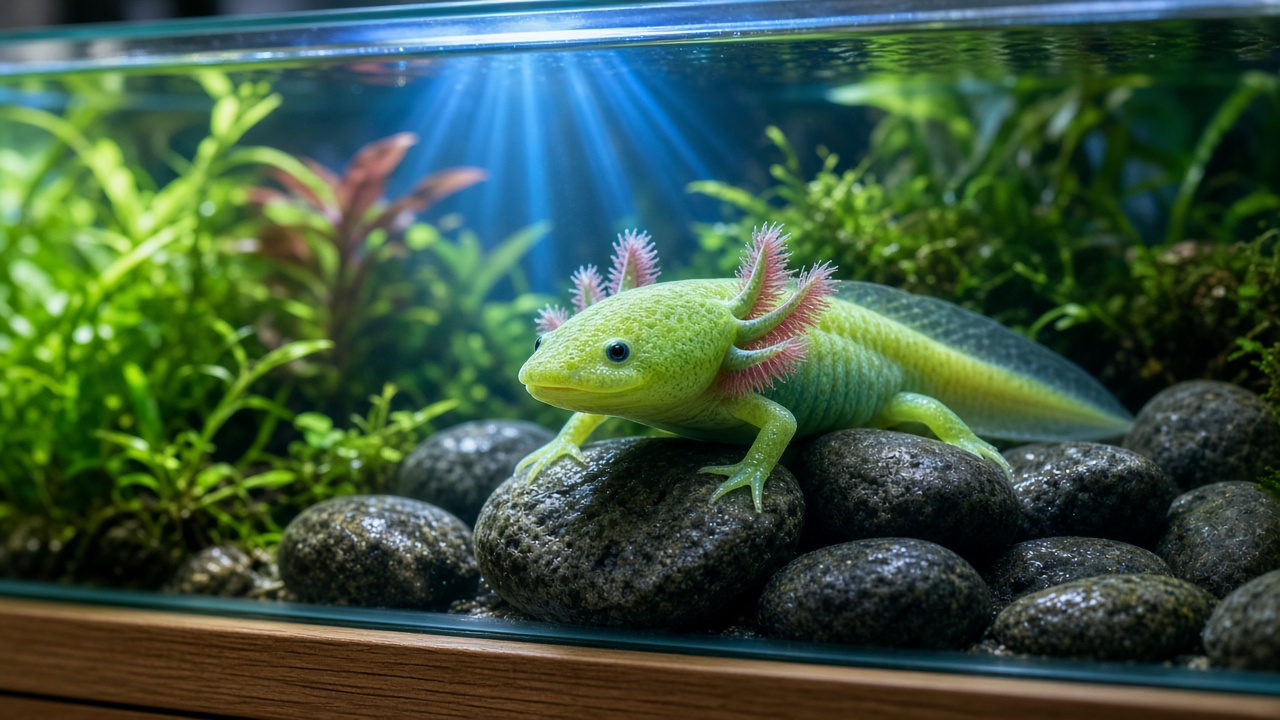
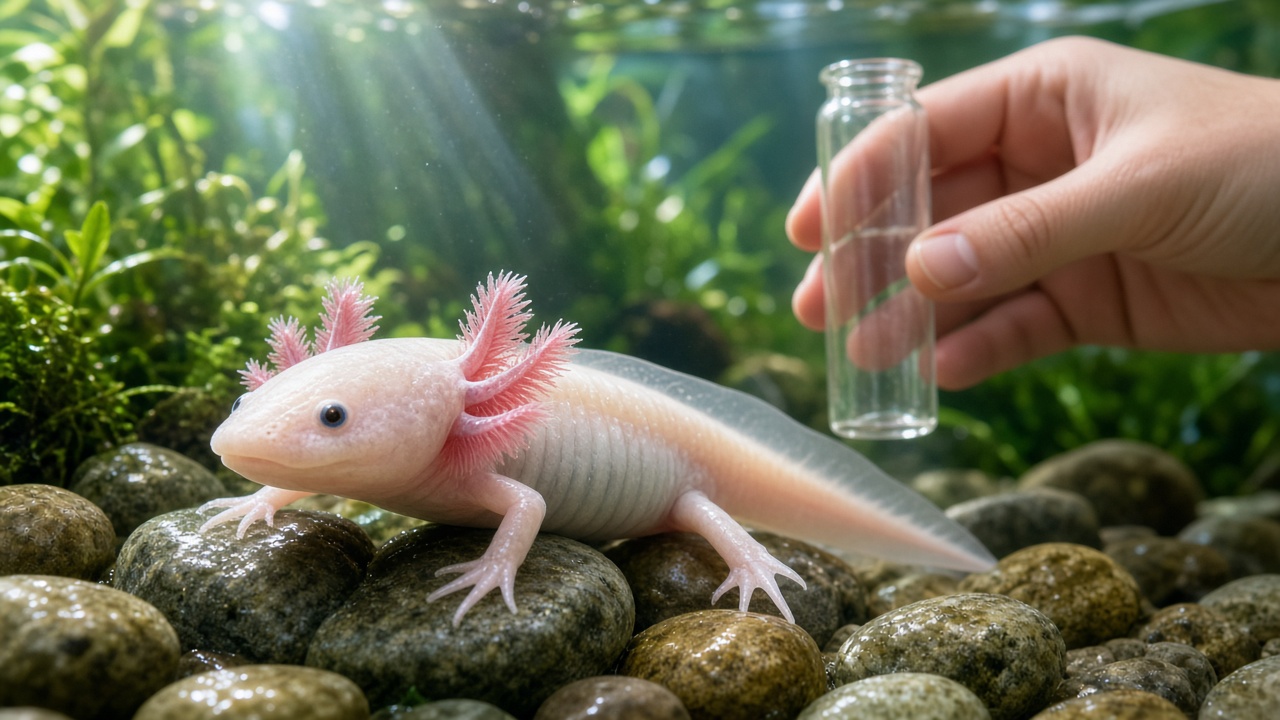
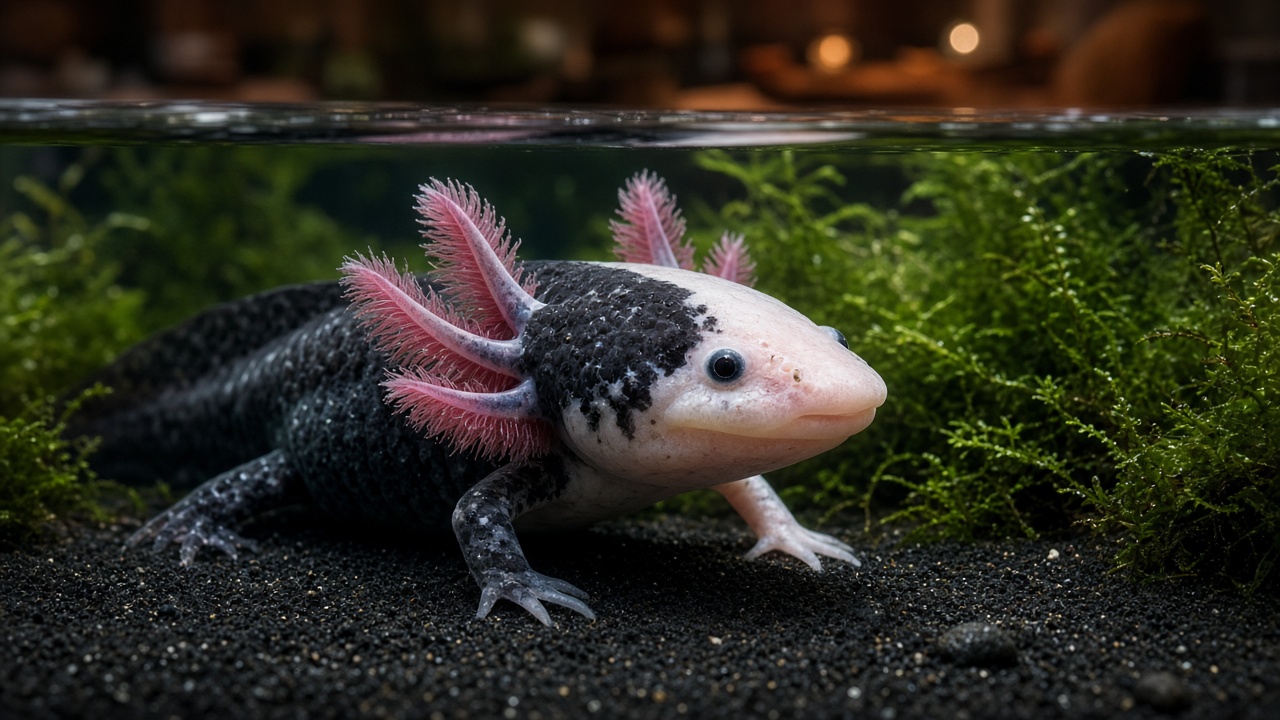
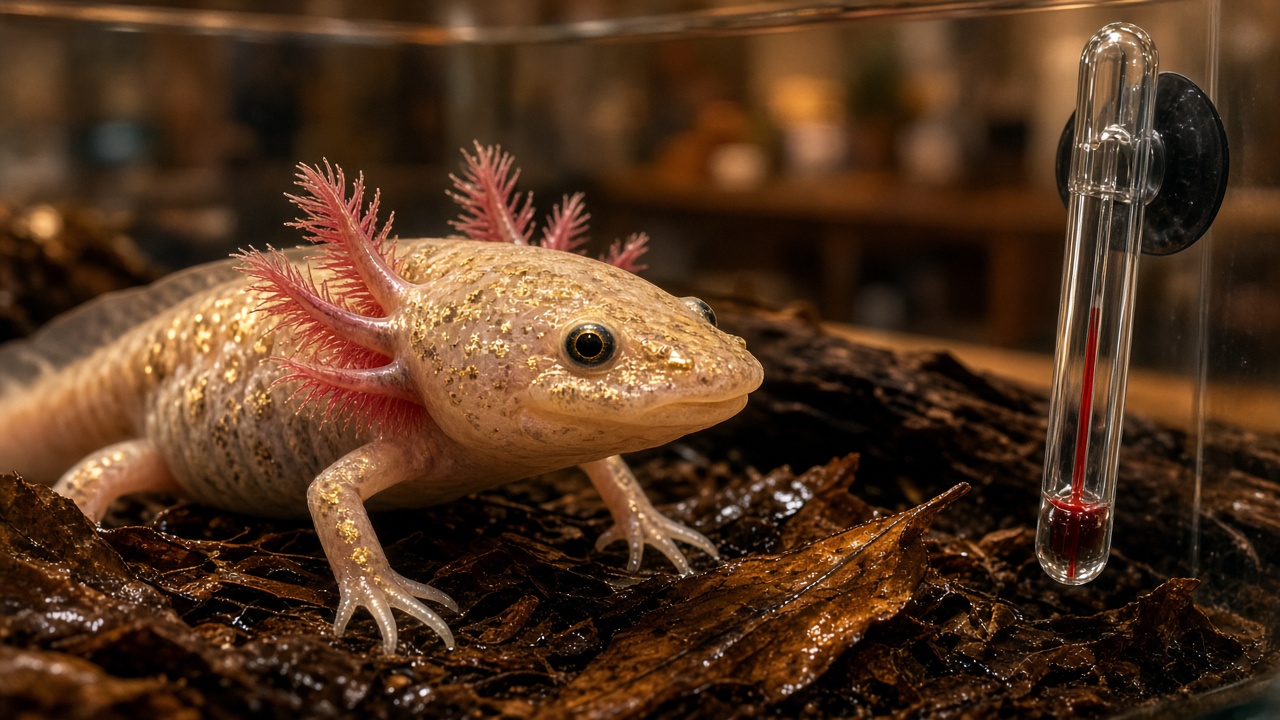
Wild animals are dark, with white flecks and black spots, while captive lines include white, gold, and other morphs. Those colors are a breeding story, not proof that wild animals recovered.
AmphibiaWeb also records a 2012 release of 10,000 individuals. Reintroductions often fail when water is poor or predators remain.
A 2017 UNAM pond trial, summarized on that page, showed captive-reared wild stock can spawn if water stays in range. Site choice still decides survival after the eggs hatch.
Pet owners sometimes ask if they should return an animal to Mexico, but published work does not support dumping a pet into Xochimilco. Pet lines are the wrong genetics and can also carry disease into a canal that already has a water problem.
Captive gear we compared from maker pages
Comparing published specs shows home gear can copy cool, clean water, but it cannot copy a restored wetland.
A home tank is a closed box, not Xochimilco, and the keeper’s job is water quality and space if the animal is captive-bred.
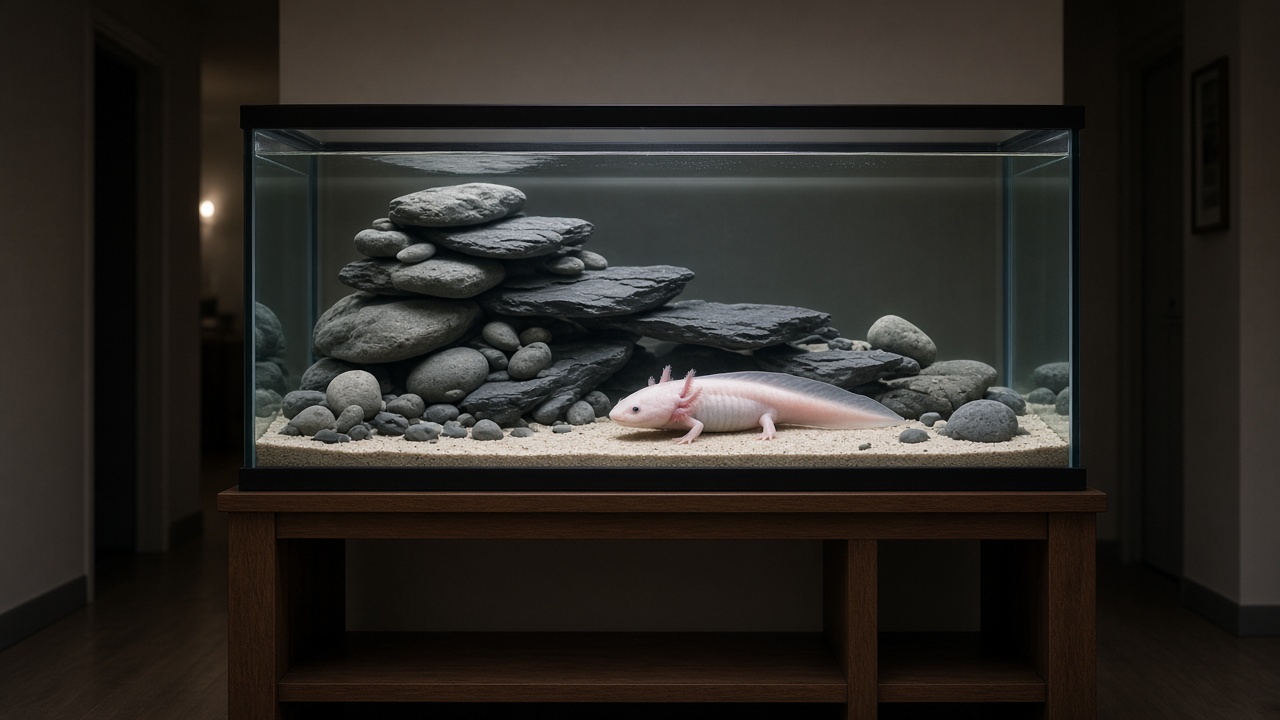
Our axolotl tank setup guide covers footprint, flow, and cooling in more detail. AmphibiaWeb states adults can reach about 40 centimeters, so a short, tall kit fights that body plan.
First-year wild animals can reach 20 centimeters and may add about 10 centimeters in year two. We compared four currently sold products whose maker pages list a size, dose, or function.
| Product | Maker | Category | Listed size, dose, or output | Maker-stated function |
|---|---|---|---|---|
| Flex Aquarium Kit, 32.5 US Gal | Fluval | Freshwater aquarium kit | 32.5 US gal / 123 L; 32.5 in × 15.35 in × 15.75 in; pump 214 US GPH | 3-stage built-in filter with two media chambers |
| Sinking Carnivore Pellets | Hikari Sales USA | Sinking carnivore diet | 2.61 oz (74 g) and 2.2 lb (1 kg) bags | Rapidly sinking pellet that absorbs water |
| Prime | Seachem | Water conditioner | 5 mL per 200 L (50 US gal) of new water | Removes chlorine and chloramine; binds ammonia, nitrite, and nitrate |
| Freshwater Master Test Kit | API | Liquid test kit | Four test tubes; weekly testing | Measures pH, high-range pH, ammonia, nitrite, and nitrate |
Fluval’s Flex page lists a 32.5-inch length and a 214 US GPH pump with twin nozzles that can be adjusted. AmphibiaWeb describes a sit-and-wait hunter that stays near the bottom, so high, unbaffled flow fights that habit.
If this kit is used, the listed adjustable nozzles are the relevant spec. Hikari’s Sinking Carnivore Pellets page lists 2.61 oz (74 g) and 2.2 lb (1 kg) bags.
The pellets sink and then take on a softer texture. AmphibiaWeb says the species has only rudimentary teeth that grip prey and do not chew. A sinking item matches that feeding style better than a floating flake.
Seachem’s Prime page states one capful (5 mL) treats 200 L (50 US gallons) of new water, and each cap thread is about 1 mL. In an emergency, the maker allows up to five times that dose for nitrite, and the bind lasts up to 48 hours.
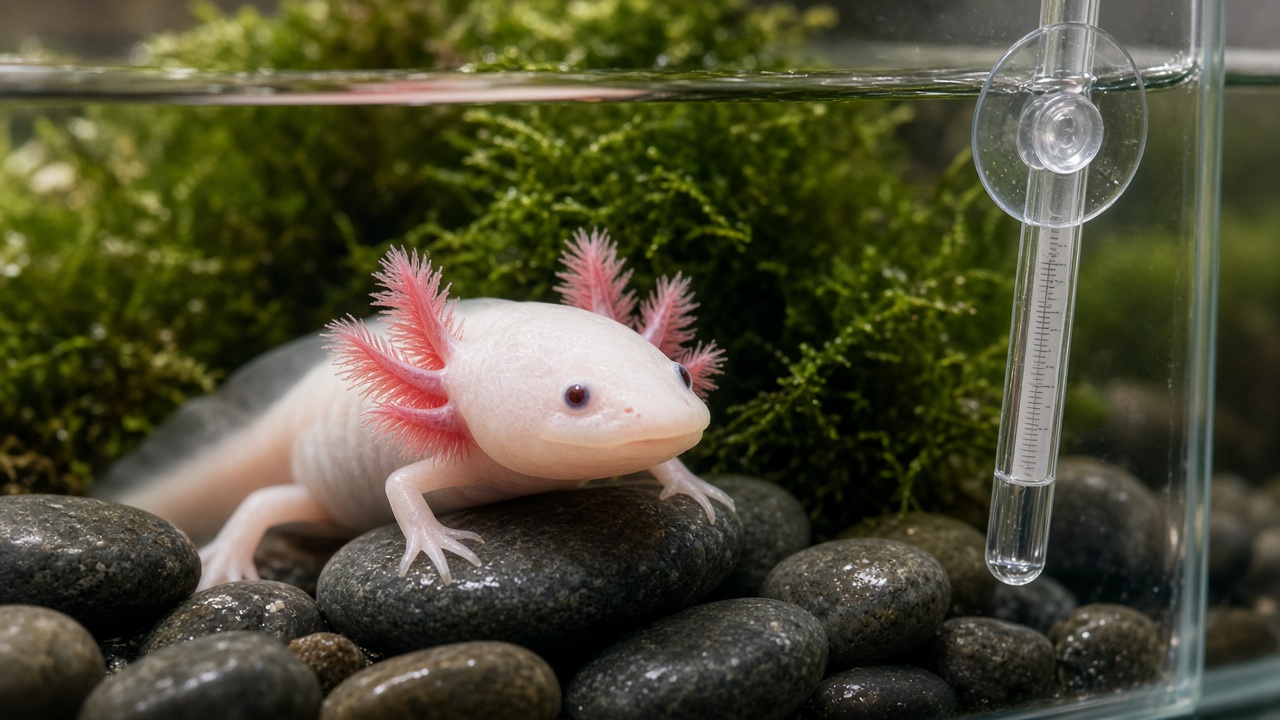
Tap chlorine is a captive problem, not the wild canal problem. API’s Freshwater Master Test Kit page lists pH, high-range pH, ammonia, nitrite, and nitrate, plus four tubes and a color card.
API tells users to test weekly, which tracks a closed tank and does not replace a wetland survey. None of these products restore Xochimilco; they only show what captive care is actually built from.
What a keeper can change and what they cannot
A careful captive setup protects one animal, and it does not rewrite the wild listing.
A keeper can do a short list of concrete things:
- Buy only documented captive-bred animals
- Keep water in the 16 to 20°C band AmphibiaWeb reports for wild animals
- Treat new tap water at the Seachem-listed 5 mL per 50 US gallons
- Test pH and nitrogen waste on the weekly API schedule
- Keep flow low enough that a bottom-sitter can rest
- Never release a pet into a creek, pond, or canal
A keeper cannot do these things by shopping:
- Raise the 2014 density of 36 animals per square kilometer
- Add a 22nd chinampa-refuge by buying a tank
- Reverse the cut to 2.83 percent of historic lake area
- Change the Critically Endangered label on AmphibiaWeb’s table
If you want the wild stock to persist, the published path is canal restoration. Conservation International ties that work to chinampa farming, biofilters, and fewer invasive fish.
Donations and policy sit on that side of the Two-Stock Rule, and the tank sits on the other.
FAQ
Are axolotls endangered if pet stores still sell them?
Yes. AmphibiaWeb lists the wild species as Critically Endangered, and that label is about canals, not shop tanks. Pet animals are a separate captive stock. Store shelves do not update a canal census.
How many wild axolotls are left?
No public page we read gives a single head count for 2026. Conservation International reports 36 animals per square kilometer in 2014, and the later UNAM survey caught none in nets. eDNA still detected the species. AmphibiaWeb also cites a possible density of 0.001 individuals per square meter.
Does buying a pet axolotl help the wild population?
No. A purchase moves a captive-bred animal into a tank and does not add an animal to Xochimilco. Habitat repair is the published conservation path. Shopping and canal restoration stay on different sides of the Two-Stock Rule.
Are pet axolotls the same as wild ones?
No. AmphibiaWeb traces most lab and hobby lines to 34 animals exported in 1864. Many lines were later selected for color or crossed with tiger salamanders. Wild animals stay dark with flecks and spots.
What is the main threat to wild axolotls?
Lost lakes, dirty water, and invasive carp and tilapia. Conservation International and AmphibiaWeb both name those three pressures. Historic collecting is no longer the main driver because wild numbers are too low to support it.
Can I release my pet into the wild to help?
No. Pet genetics do not match the wild stock, and released animals can fail, suffer, or spread disease. AmphibiaWeb notes that even planned releases need the right water and site. A home tank is not a restocking program.
How big do wild axolotls get, and why does that matter for a tank?
AmphibiaWeb states adults can reach about 40 centimeters. A 32.5-inch Flex kit is long enough on paper for that body, while a short, tall kit is a poor match. Length matters more than height for this species.