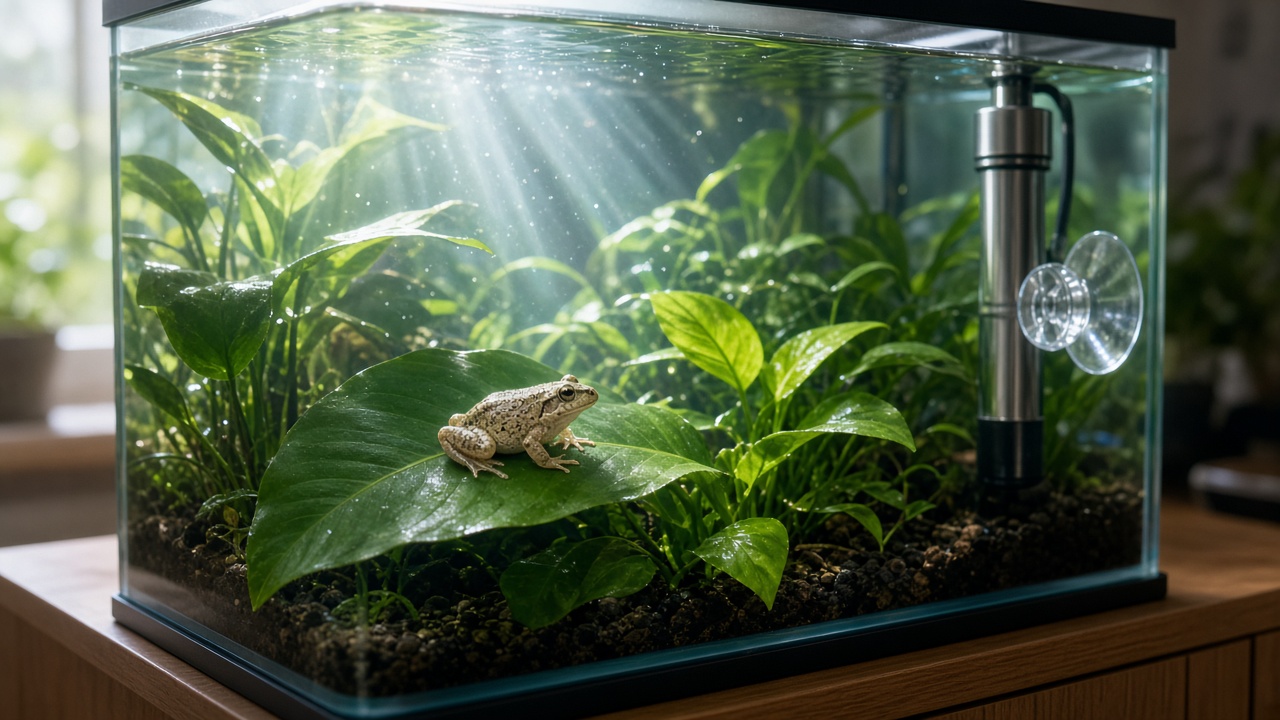
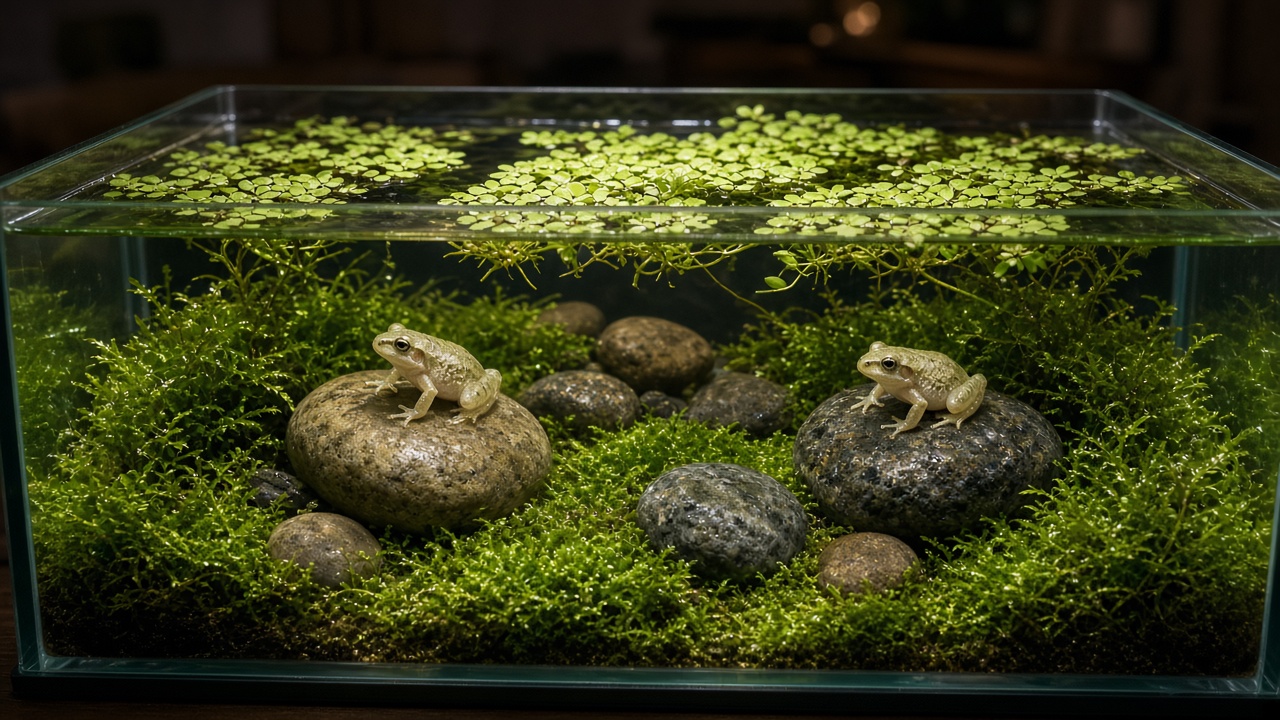
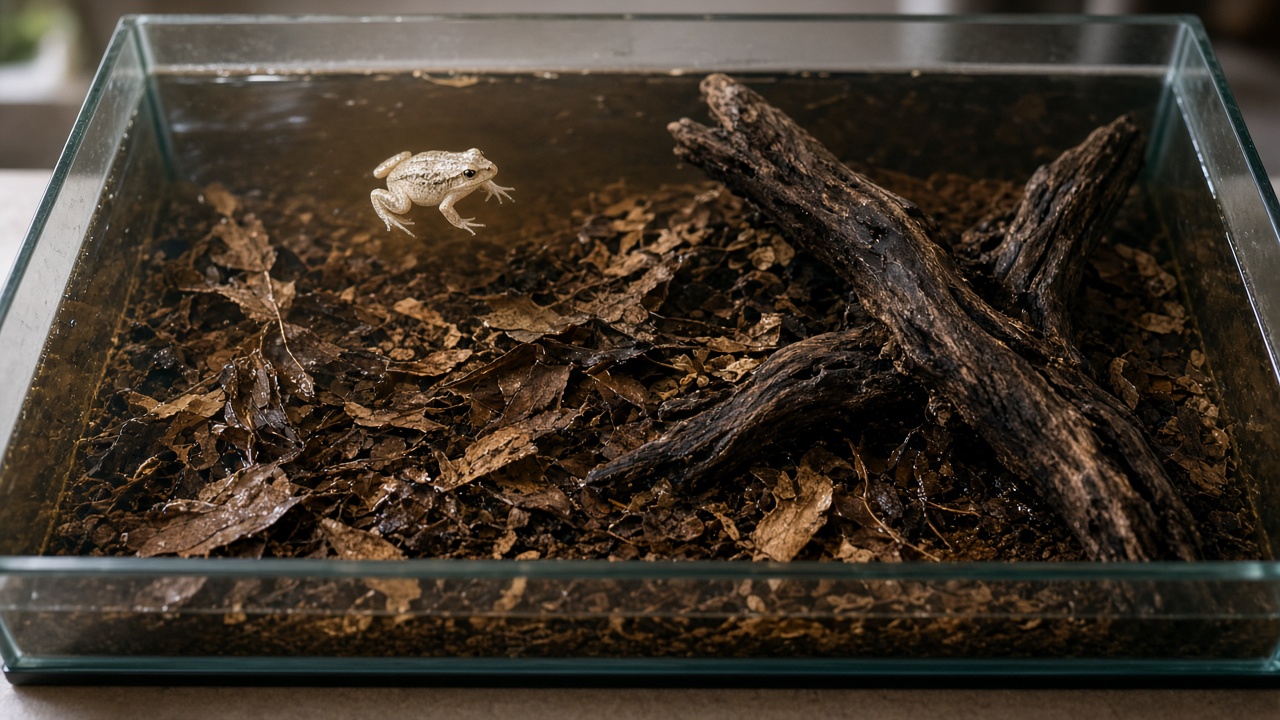
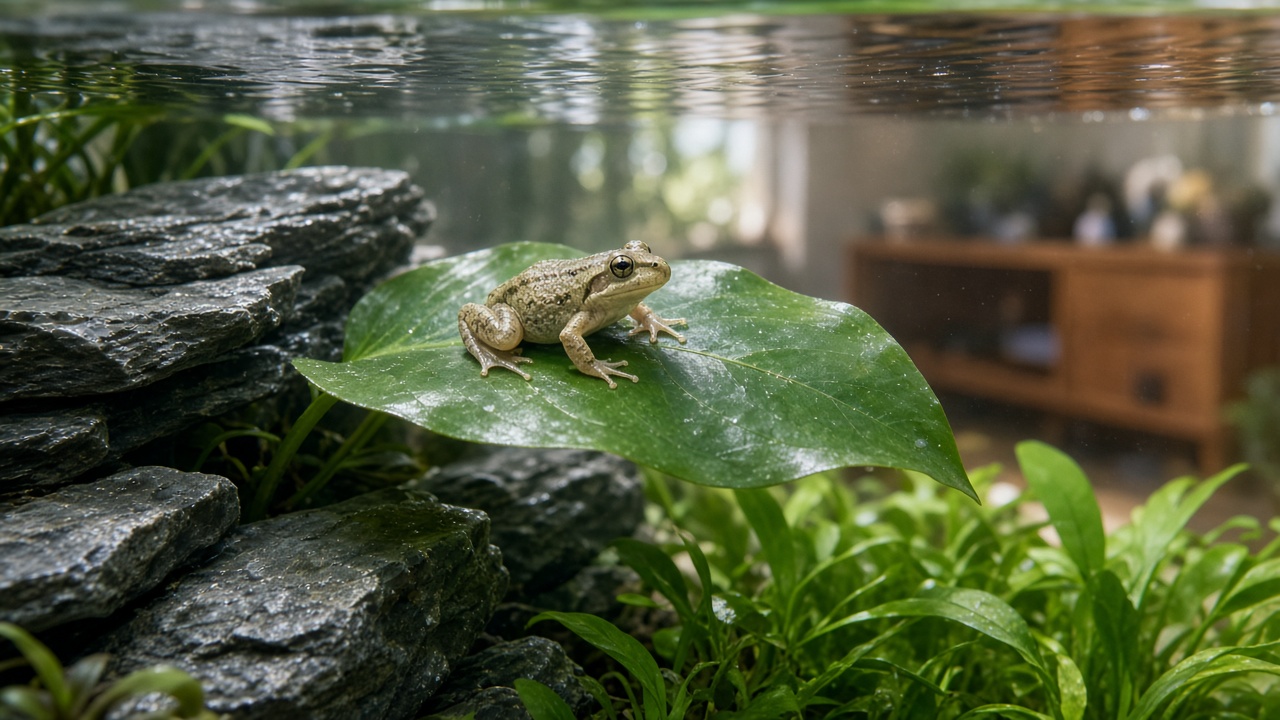
Quick answer: African dwarf frog eggs are tiny jelly spheres that usually float at the surface. Isolate them from adults if you want tadpoles. Expect a hatch in about two days in warm water.
African dwarf frog eggs are about 1.5-millimeter jelly spheres that float at the surface and hatch in about two days.
This page is a home-aquarium identification and next-steps guide for Hymenochirus eggs. Our research team compared published breeding descriptions and lab husbandry notes. We did not spawn frogs for this article. We did not raise a tadpole cohort. We did not film wild clutches in Africa.
Selection rule: We include facts from published Hymenochirus boettgeri breeding papers and open lab protocols that report egg size, hatch timing, or nursery counts. We exclude unlabeled social-media photos and care advice written for African clawed frogs (Xenopus) unless we mark it as a contrast. We also skip “miracle cure” chemical tips with no maker label.
What the eggs look like
African dwarf frog eggs are small, round, and wrapped in clear jelly.
Rabb and Rabb’s 1963 breeding study reports the greatest egg diameter at about 1.5 millimeters. The diameter across the inner jelly layer is about 0.90 millimeters. Yolk diameter seldom exceeds 0.75 millimeters.
The same paper describes a dark brown animal pole and a cream-colored vegetal pole. The outer jelly is sticky. Eggs may cling to plants, glass, frogs, or debris.
Many eggs hang at the surface. Rabb and Rabb write that surface eggs appear held by surface tension. Sokol’s 1960 Nature note on aquarium breeding of Hymenochirus likewise says eggs float and do not stick together. That note lists egg diameter at about 0.9 millimeters, or about 1.5 millimeters with jelly.
Fresh eggs can look almost clear with a dark center. As embryos develop, color becomes more even and gray. Eye spots appear before hatch.
How spawning happens in the tank
Pairs lay eggs during amplexus at the water surface.
Sokol’s Nature note describes the female turning upside down with the male still clasped. She deposits about 2 to 10 eggs at a time near the surface. The pair returns to the bottom, then repeats. Surfacing may happen about every second minute for roughly fifty cycles until the female is spent.
Rabb and Rabb describe the same upside-down surface laying. Sticky jelly means some eggs sink or stick soon after. Imperfect turnovers can leave infertile eggs on the bottom.
A University of Michigan husbandry report in Virulence (2023) used 10 days of richer feeding before pairing. Pairs then went into bare 8-liter tanks without a filter so eggs were easy to see and collect.
Home tanks often spawn after warm days, brighter light, or a big water change. You may find eggs in the morning with no overnight watch.
Male calling can tip you off before eggs appear. Rabb and Rabb saw calling bouts lasting 2 to 7 days, with quiet gaps of 4 to 6 days in peak seasons. Sunlight and daily temperature swings helped trigger breeding in their colony.
Egg or not? A quick comparison
Not every white speck is a frog egg. Use location, size, and hardness.
| Clutch clue | African dwarf frog eggs | Many nerite snail eggs | Many African cichlid eggs |
|---|---|---|---|
| Typical place | Float at surface; may stick to plants | Hard capsules glued to glass or décor | On rock, in caves, or mouthbrooded |
| Feel / structure | Soft jelly sphere | Hard, often shaped capsule | Soft adhesive eggs or held in mouth |
| Size cue | About 1.5 mm with jelly (Rabb; Sokol) | Larger hard patches on glass | Varies by species; often clustered |
| Next step if unwanted | Siphon or scoop; adults may eat them | Scrape capsules; see snail care notes | Remove rock or separate pair |
Horned nerite snails leave hard egg capsules on glass. Those look nothing like soft floating frog jelly. Our horned nerite snail care guide covers that capsule habit.
Many African cichlid types guard substrate eggs or mouthbrood. That is a different workflow from scooping surface frog eggs into a nursery net.
What to do if you want the eggs
Move eggs away from adults. Adult frogs may eat eggs and tiny tadpoles.
The Virulence breeding trial collected about 600 eggs from one pair over three days. Workers used a sterile 15-milliliter tablespoon for surface eggs and a sterile siphon for sunk eggs. Nursery tanks held about 75 eggs each, with two tanks held at 35 eggs.
An open protocols.io housing protocol for H. boettgeri recommends net breeders near the surface. It caps each net at up to 80 eggs or 30 tadpoles of similar age. Larger tadpoles may eat smaller ones, so sort by size later.
Practical home steps:
- Turn off strong powerheads so eggs are not pulled into intakes.
- Scoop surface eggs with a clean spoon or cup.
- Siphon sunk eggs gently into a fine net or nursery box.
- Keep the nursery near the surface for air and food access.
- Remove white, fuzzy, or unhatched eggs on a daily check.
The same protocols.io breeding notes say to remove eggs that grow fungus or that have not hatched after four days.
Gentle filtration still matters in the main tank. A soft aquarium filter for African dwarf frogs helps water quality without vacuuming up a spawn.
What to do if you do not want tadpoles
Leaving eggs with adults often ends the clutch. Frogs and fish may eat them.
You can also scoop eggs and discard them if you cannot raise tadpoles. Do that before they hatch if you want fewer mouths to feed.
Do not dump live tadpoles into local waters. Captive frogs and pathogens do not belong in wild ponds.
If you keep the eggs by accident, decide within the first day. Raising dozens of carnivorous tadpoles is a real food and space job. It is fair to decline that project and remove the clutch early.
If snail eggs are the real problem, scrape capsules instead. Soft floating jelly points back to frogs.
Hatch timing and early tadpole care
Warm, stable water speeds hatch. Excess heat can raise deformities.
Rabb and Rabb report hatching within 48 hours at 22°C to 25°C. Higher temperatures sped development but seemed to bring more abnormalities. Sokol’s note reports hatch after two days, with larvae 3.2 to 3.5 millimeters long and already pigmented.
The Virulence trial also saw eggs hatch within two days. Tadpoles began swimming one to two days after hatching. About 30 percent of eggs were unfertilized or failed to hatch. Of hatched tadpoles, about 65 percent reached adulthood in that report. Overall yield was about 45 percent of roughly 800 collected eggs.
Rabb and Rabb describe quiet hatchlings for the first two or three days. They cling to objects, rest on the bottom, or hang from the surface film. Feeding on tiny prey began around days 6 to 7. Newly hatched brine shrimp worked after days 11 to 12. Limb buds appeared in the third week. Metamorphosis came as early as the sixth week at 20°C to 24°C.
The Virulence team started powdered fry food when swimming began. They used that for a week, then brine shrimp for at least four weeks past metamorphosis. Average metamorphosis was about five weeks after egg collection. About 10 percent finished nearer seven weeks.
Early care checklist:
- Keep nursery water clean and matched in temperature
- Start micro food when free swimming begins
- Siphon dead eggs and leftover food daily
- Split crowded groups so big tadpoles cannot eat small ones
- Give access to the surface; these frogs remain air breathers later
Common problems and plain fixes
Fungus on eggs usually means dead eggs. Remove them so they do not seed neighbors.
Cloudy nursery water usually means overfeeding. Cut portions. Increase small water changes.
No hatch after four days usually means infertile eggs. The protocols.io breeding checklist uses that four-day cutoff for removal.
Thin tadpoles after week two often mean food that is too large or too scarce. Stay on fine powders, then new brine shrimp, before adult frog foods.
Escapes happen when lids leave wide gaps. Frogs and later froglets need a small air gap to breathe, not an open highway onto the floor.
The Virulence housing notes keep at least 1 centimeter between the lid and the water surface so adults can gulp air. Match that idea in a nursery cover with fine holes.
Water quality targets in that lab protocol included pH near 7, conductivity near 900 microsiemens per centimeter, ammonia at or below 0.25 ppm in cycled systems, and nitrite at 0 ppm. Home keepers can aim for the same clean pattern with smaller, frequent changes.
FAQ
What do African dwarf frog eggs look like?
They are soft jelly spheres. Rabb and Rabb list about 1.5 millimeters across with jelly, with a darker and a cream pole on the yolk. Many float at the surface and feel sticky.
How long until African dwarf frog eggs hatch?
Rabb and Rabb report hatch within 48 hours at 22°C to 25°C. Sokol’s breeding note and the 2023 Virulence husbandry trial also point to about two days.
Should I remove the eggs from the main tank?
Yes if you want tadpoles. Adults may eat eggs. Lab groups move eggs into net breeders or bare nursery tanks near the surface.
How many eggs can one pair lay?
Clutch size varies. Sokol describes many short surface deposits of about 2 to 10 eggs across roughly fifty surfacings. The Virulence team collected about 600 eggs from one pair across three days. Plan nursery space before a big spawn fills every corner.
How can I tell frog eggs from snail eggs?
Frog eggs are soft jelly and often float. Nerite snails glue hard capsules to glass and décor. Soft floaters are the frog clue.
When do tadpoles start eating?
Rabb and Rabb saw first feeding around days 6 to 7. The Virulence group began powdered food at free swimming, one to two days after hatch, then moved to brine shrimp.
Do I need a special filter for a spawning tank?
Bare breeding tanks without a strong intake make collection easier. In display tanks, use gentle filtration so eggs are not pulled into the impeller. Soft flow guides for dwarf frogs help here.