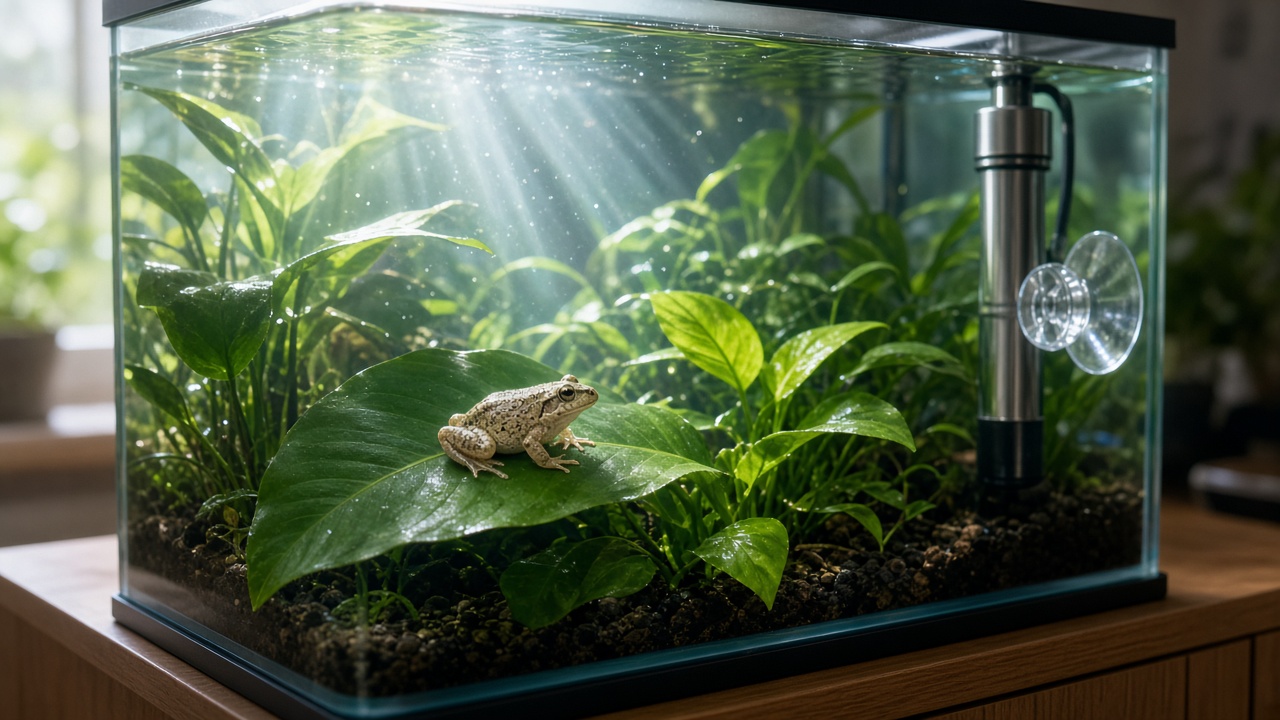
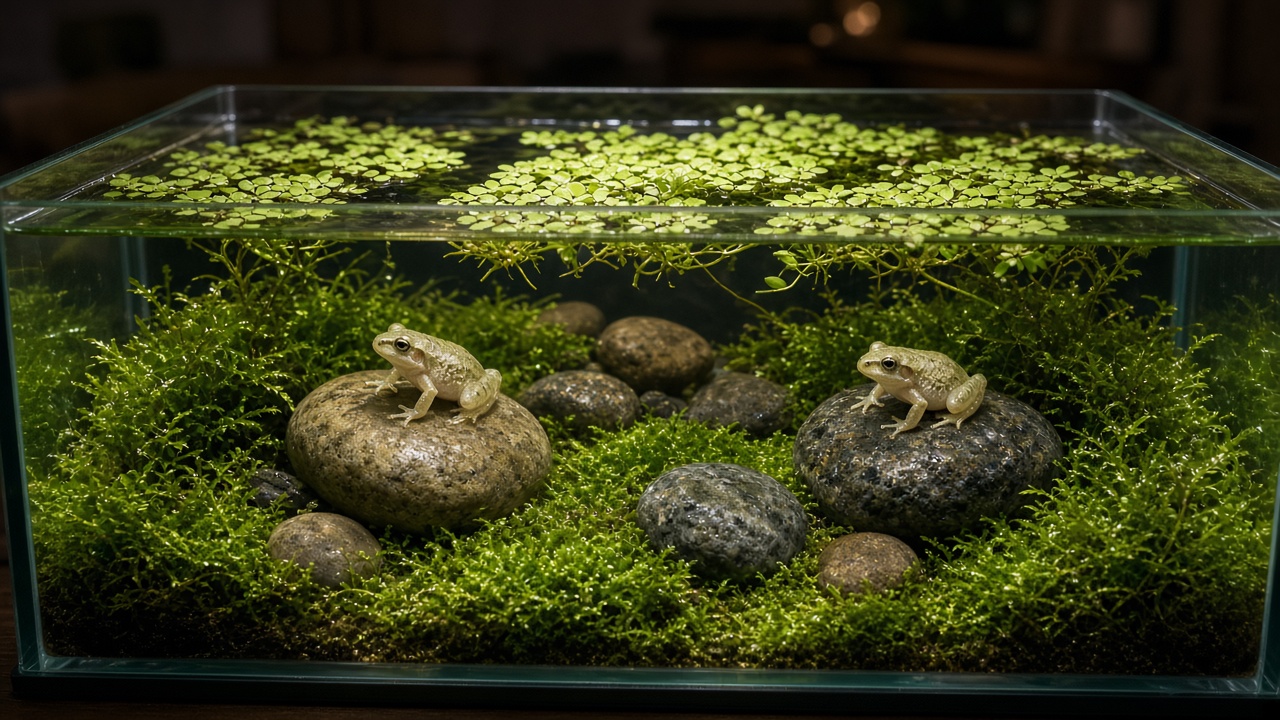
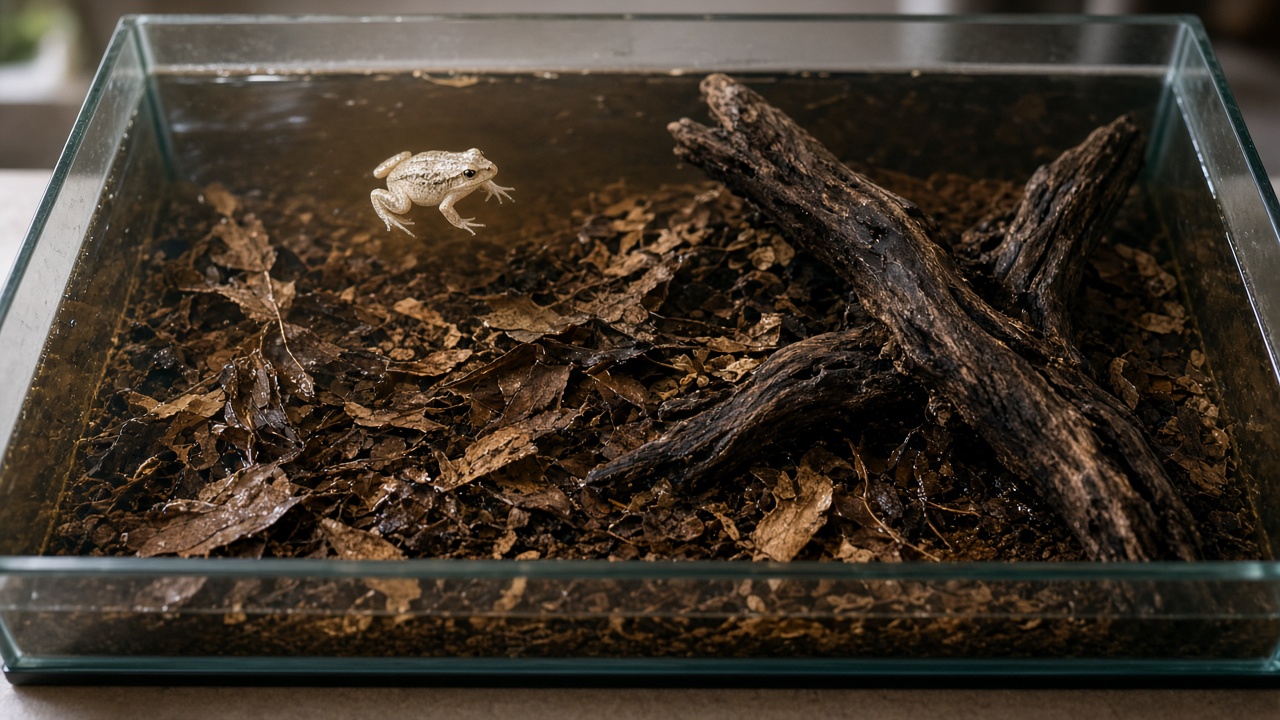
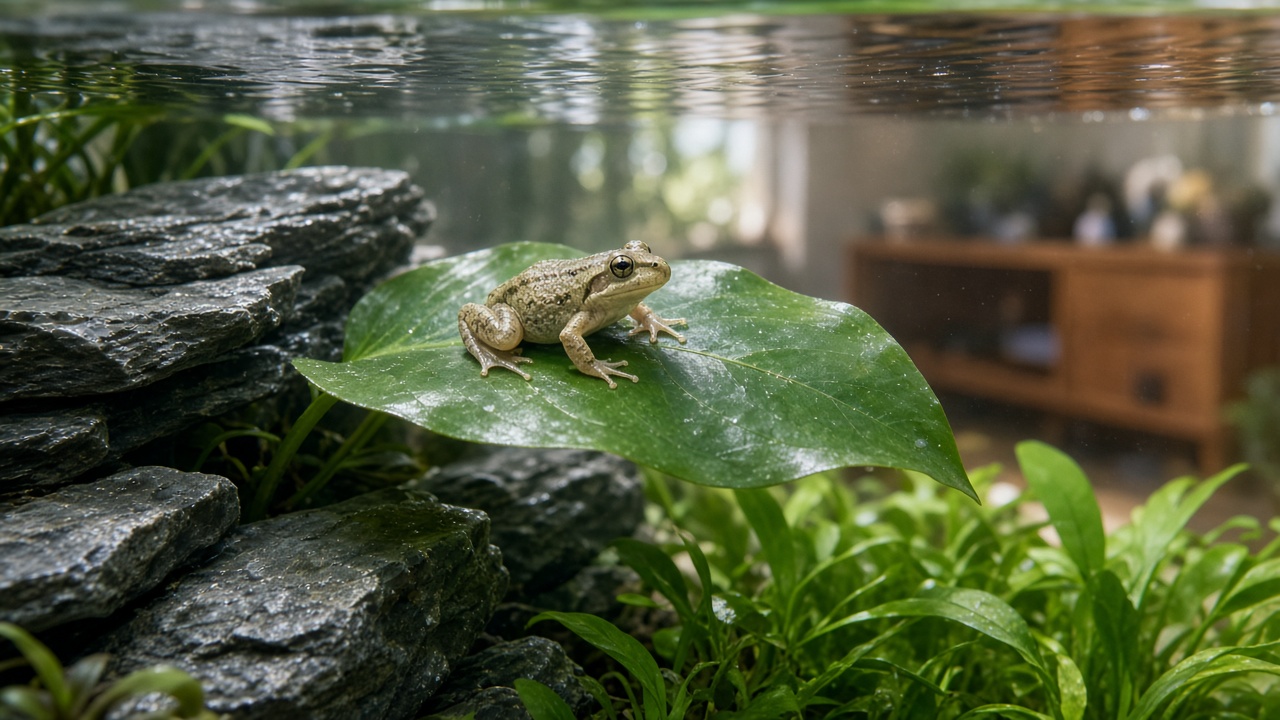
Quick answer: Feed adult African dwarf frogs small sinking carnivore foods every other day. Soft frog pellets plus thawed frozen treats work best. Target-feed so fish do not steal the meal.
Adult African dwarf frogs eat small sinking carnivore foods every one to two days, not floating flakes.
This page is a home-aquarium feeding guide for Hymenochirus frogs. Our research team compared maker labels and published care notes. We did not keep a feeding colony. We did not run lab nutrient assays. We did not observe wild frogs in Africa.
Selection rule: We include currently sold sinking frog or tadpole pellets and frozen foods with a published guaranteed analysis. We exclude floating flake diets, terrestrial insect menus, and DIY mixes with no label. We also skip foods marketed only for large predatory fish.
What African dwarf frogs actually eat
African dwarf frogs are fully aquatic carnivores. They hunt by smell and movement more than by sharp eyesight.
A Journal of Experimental Biology study on pipid frogs measured adult Hymenochirus boettgeri snout-vent lengths of 30.5 to 32.1 millimeters in its sample. That small mouth size limits bite size. Large pellets and thick worms are a poor match.
They need soft, protein-rich foods that sink to the bottom. Floating flakes leave the tank before frogs find them. Fast fish win that race every time.
Pellet labels in this guide sit in the low-40s to 50 percent minimum crude protein range. That matches a meat-heavy captive diet better than plant wafers.
Good diet building blocks look like this:
- Soft sinking frog or tadpole pellets as a base
- Thawed frozen bloodworms, brine shrimp, or mysis in rotation
- Occasional live blackworms for enrichment, if you can source them safely
- No seasoned human food and no wild-caught insects from yards
How often to feed adults and young frogs
Adults usually do well on a small meal every other day. Growing juveniles usually need a small daily meal.
HBH Frog Food & Tadpole Bites feeding directions say a small frog or tadpole may eat 2 to 4 pellets per day. The same maker page notes rapid growth is common with that food.
San Francisco Bay Brand’s Mini Bloodworms page says to feed only what can be consumed in three minutes. Remove leftovers. Never overfeed.
A simple adult schedule looks like this:
- Day 1: a few soft sinking pellets per frog
- Day 2: rest day
- Day 3: a small thawed frozen treat
- Day 4: rest day
- Day 5: pellets again
- Day 6: rest day
- Day 7: a different frozen item
Watch body shape, not the calendar alone. A round, heavy frog may need longer gaps. A thin frog may need daily portions for a short stretch.
Soft pellets versus frozen treats
Pellets give you a steady label and easy portion control. Frozen foods add variety and scent that frogs notice.
Zoo Med’s Aquatic Frog & Tadpole Food page lists minimum crude protein at 50.0 percent. The same label lists minimum crude fat at 16.0 percent and maximum moisture at 11.0 percent. Sizes listed are 2 ounces and 12 ounces.
Omega One’s Frog and Tadpole Pellets page lists minimum crude protein at 41 percent. Minimum crude fat is listed at 11 percent. Maximum crude fiber is listed at 2 percent. The package size listed is 1.2 ounces.
HBH Frog Food & Tadpole Bites list minimum crude protein at 45 percent and minimum crude fat at 19 percent. Maximum moisture is listed at 15 percent. The listed can size is 1.2 ounces.
San Francisco Bay Brand Mini Bloodworms list minimum crude protein at 3.5 percent as sold. Maximum moisture is listed at 94.5 percent. That wet number is normal for frozen foods. Dry-weight protein is much higher.
Caudata Culture’s nutritional values table, citing Bernard and Allen’s Nutritional Advisory Group handbook, lists bloodworms at 52.8 percent protein on a dry-weight basis. Fat is listed at 9.7 percent dry weight. That supports using bloodworms as a rich treat, not the only meal forever.
| Product | Form | Min. crude protein (label) | Min. crude fat (label) | Maker portion note |
|---|---|---|---|---|
| Zoo Med Aquatic Frog & Tadpole Food | Sinking micro pellets | 50.0% | 16.0% | High-protein diet for aquatic frogs and tadpoles |
| HBH Frog Food & Tadpole Bites | Soft sinking pellets | 45% | 19% | 2–4 pellets per day for a small frog or tadpole |
| Omega One Frog & Tadpole Pellets | Sinking pellets | 41% | 11% | Low-fiber formula; 1.2 oz size listed |
| San Francisco Bay Brand Mini Bloodworms | Frozen cubes | 3.5% (as sold) | 0.3% (as sold) | Feed what is eaten in about 3 minutes |
How to deliver food so frogs actually get it
Target feeding is the practical method in most home tanks. Frogs are slow. Fish are not.
Use blunt feeding tongs, a pipette, or a turkey baster. Place food an inch in front of each frog. Wait. Watch them find it before you walk away.
A shallow feeding dish on the sand can help. Pellets and thawed worms stay in one spot. That cuts waste and scavenger chaos.
If the tank has many midwater fish, feed frogs after lights dim. Many frogs become more active then. Midwater fish often settle.
Gentle filtration helps food stay put. Strong intakes pull pellets away. Our notes on a best aquarium filter for African dwarf frogs cover soft flow choices that protect slow feeders.
In community tanks, feed frogs first with tongs. Then feed fish at the far end. Dense plant carpets can hide pellets, so keep one clear feeding spot on the sand.
Foods and habits to skip
Skip floating flakes as a staple. Frogs rarely win that contest.
Skip dry freeze-dried worms as a daily diet. Many keepers report bloat risk when dry items rehydrate inside the frog. If you ever use a freeze-dried item, soak it fully first. Frozen thawed food is the safer default.
Skip large terrestrial insects. Mouth size and aquatic hunting style do not match crickets meant for tree frogs.
Skip copper medications and harsh chemicals in shared tanks. Frogs absorb water through skin. Always read labels before dosing any shared system.
Do not house these frogs with large predatory fish that will eat them. An Oscar fish care setup is a different scale of predator. Keep African dwarf frogs with peaceful, small tank mates instead.
Algae eaters change the cleanup crew, not the frog menu. A rubber lip plecostomus care guide is about wood and biofilm grazing. It does not replace target feeding for frogs.
Water quality, leftovers, and portion control
Uneaten meat fouls water fast. That is why short feeding windows matter.
San Francisco Bay Brand’s three-minute rule is a useful ceiling for frozen cubes. For pellets, stay near the maker’s 2 to 4 pellet range per small frog until you learn each animal’s pace.
Remove leftovers with a siphon or net after the meal. Check ammonia and nitrite if leftovers become a habit.
- Thaw frozen cubes in a little tank water first when you prefer rinsing juices
- Offer one frog’s portion at a time in community tanks
- Break oversized pellets for tiny frogs, as HBH’s page suggests
- Keep a simple log of which food each frog takes
Stable water supports appetite. Hungry frogs in dirty water often stop hunting.
Keep frozen cubes hard-frozen until use. San Francisco Bay Brand warns against microwaving or hot-water thawing. Store pellets sealed and dry. Wash tongs after bloodworm feedings.
Building a weekly rotation without guesswork
Variety beats a single favorite item. Pellets cover a labeled base. Frozen items add scent and texture.
Use the pattern below as a starting point, then adjust for each frog’s appetite and body shape.
A four-week starter pattern can look like this:
- Weeks 1–2: pellet days alternate with rest days
- Weeks 3–4: swap one rest day for a thawed treat twice weekly
- Keep bloodworms in the treat slot, not every meal
- Rotate brine shrimp or mysis on other treat days
If a frog ignores pellets, soak them briefly to soften. Place them at the snout. Repeat for a few sessions before you quit that brand.
If a frog gorges and looks swollen, pause food for a day. Restart with a smaller pellet count. Rich frozen foods can wait until shape looks normal again. Steady small meals beat rare giant feasts.
FAQ
What should I feed African dwarf frogs every day?
Most adults do better every other day than every day. Soft sinking frog pellets make a steady base. Add thawed frozen foods a few times each week for variety. Zoo Med’s label lists 50.0 percent minimum protein for its aquatic frog pellets, which fits a carnivore staple.
How many pellets does one African dwarf frog need?
HBH’s Frog Food & Tadpole Bites page says a small frog or tadpole may eat 2 to 4 pellets per day. Start low. Raise the count only if the frog finishes quickly and stays trim.
Are bloodworms safe for African dwarf frogs?
Thawed frozen bloodworms are a common treat. San Francisco Bay Brand Mini Bloodworms list aquatic amphibians among recommended users and call for a three-minute feeding window. Caudata Culture’s dry-weight table lists bloodworms at 52.8 percent protein, so treat them as rich, not endless.
Can African dwarf frogs eat fish flakes?
Floating flakes are a weak staple. Frogs are bottom hunters with limited eyesight. Sinking pellets and target-fed frozen foods match their habits better.
Do I need to target feed in a community tank?
Yes in most mixed tanks. Fish often take food first. Tongs or a pipette place meals where each frog can find them.
How big are adult African dwarf frogs, and why does size matter for diet?
A Journal of Experimental Biology pipid-feeding study reported Hymenochirus boettgeri adults at 30.5 to 32.1 millimeters snout-vent length in its sample. Small mouths need soft, small items, not large sticks or thick insects.
What foods should I avoid?
Avoid floating flake staples, dry freeze-dried worms as a daily diet, wild yard insects, and seasoned human leftovers. Skip tank mates that will eat the frogs, including large predators.