Quick answer: Wild bettas live in shallow, still, plant-heavy freshwater in Thailand and nearby countries. Recreate warm, calm, planted water at home. Do not copy a few centimeters of bare water in a cup.
Wild Betta splendens in the UF/IFAS Thai summary live in standing water averaging 5.0 cm deep. This page is a habitat brief from published field numbers; we did not visit Thai paddies, trap wild fish, or run tank trials.
Our research team compared those published numbers with current maker pages. The result is a habitat map, not a travel log.
What this page includes, and what it leaves out
We used one published Thai field summary plus maker-listed specs that map to habitat factors.
Our selection rule included published field numbers for wild Betta splendens.
We also included currently sold planted-tank products whose maker pages list a numeric spec that maps to a habitat factor.
Those factors were grain size, listed pH support, or a plant dose.
We used National Geographic only for size, wild lifespan, listed range countries, and a listed water temperature.
We left these items out on purpose:
- Other Betta species and peat-swamp endemics
- Farm-bottle volumes treated as if they were wild water
- Disease protocols and drug doses
- Any product whose maker page lists no numeric habitat spec
- Ranked “best tank” lists and price tiers
The University of Florida IFAS page also covers farm culture. We did not treat those farm numbers as wild habitat.
Where Betta splendens lives in the wild
Wild fish use still, shallow, plant-heavy freshwater, not open rivers.
The University of Florida IFAS page states that the betta is native to Southeast Asia. It lists standing waters, shallow ponds, rice paddy fields, and even puddles.
National Geographic’s betta page also names Thailand as the origin. It lists nearby countries as Malaysia, Indonesia, Vietnam, Laos, and Cambodia.
That page lists rice paddies, stagnant ponds, marshes, and slow-moving streams. UF/IFAS is a field summary for one Thai population, while National Geographic is a species overview.
Use both as labeled, and do not merge them into one range map. Both pages describe shallow, still, plant-heavy freshwater in a warm climate.
National Geographic’s page states that the species is listed as vulnerable by the International Union for the Conservation of Nature. It names urban wastewater, farm runoff, and habitat loss as threats, which is a wild-stock note rather than a claim about pet-store fish.
Measured water in one Thai population
One UF/IFAS Thai summary gives hard numbers for depth, pH, heat, oxygen, and crowding.
Those numbers come from the University of Florida IFAS page on Betta splendens and describe one wild population in Thailand, not every ditch in Asia.
UF/IFAS lists these water values:
- Mean pH: 5.47
- pH range: about 5.28 to 5.80
- Mean temperature: 29.9°C, about 86°F
- Temperature range: about 27.0 to 31.5°C
- Mean depth: 5.0 cm, or 2 inches
- Depth range: about 2.0 to 9.4 cm
- Mean dissolved oxygen: about 3.8 mg/L
- Dissolved oxygen range: 0.0 to about 7.4 mg/L
UF/IFAS also lists these crowding values:
- Mean density: 1.7 fish per square meter
- Density range: 0.5 to 4.8 fish per square meter
- Sex ratio: 1.4 females for each male
In the Waterpuppy Habitat Spec Map, our research team compared those density figures with simple tank math. At the UF/IFAS mean of 1.7 fish per square meter, one fish’s mean share of surface is 0.59 square meters.
Wild spacing is sparse, not packed, so a home tank should not add extra males to match that number.
National Geographic’s page lists a preferred temperature around 80°F. The UF/IFAS field range starts at about 27.0°C and averages 29.9°C, about 86°F, so treat 80°F as a separate published figure.
UF/IFAS also states that room air should stay at no less than 22°C, or 71.6°F, if a fish is kept in an unheated, unfiltered container. That line is a holding note, not a wild-water reading.
Plants, air, and how wild fish use space
Wild habitat is a plant edge with low oxygen, not a bare cup of deep water.
UF/IFAS describes heavy emergent vegetation, shallow water, low dissolved oxygen, high temperature, and an acidic pH. It also states that many labyrinth fishes must breathe at the surface.
The same page places the betta in a larger group of roughly 137 labyrinth fishes. It states that the genus Betta has over 73 species.
National Geographic’s page says the pet-store species has more than 70 relatives, so those two counts are close but not the same sentence.
National Geographic’s page states that hatchlings rely on gills, while adults gulp air with a labyrinth organ. That is why a lid still needs an air gap.
UF/IFAS states that in April and May, during the breeding season in Thailand, fish move to shallow water edges. Males build bubble nests that keep eggs at the surface in warm, low-pH, low-oxygen water.
National Geographic’s page states that eggs can take up to 48 hours to hatch, and that the male guards the nest.
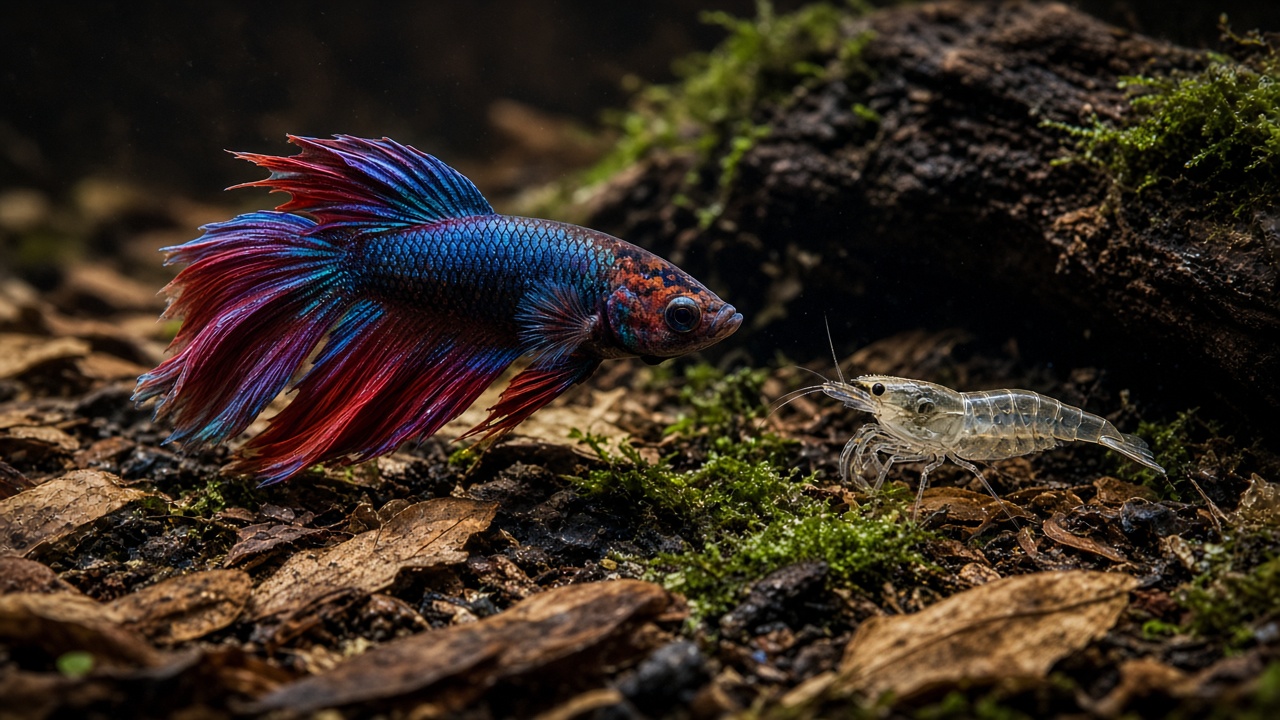
Wild color is not pet-store color, and UF/IFAS describes wild fish as dull brown or green.
National Geographic’s page describes wild fish as smaller, with shorter fins, in dull gray, green, olive, or brown. It lists wild size as 2 to 3 inches long.
Our research team compared that size with the UF/IFAS mean depth of 5.0 cm, or 2 inches. In that Thai summary, the water column is about as deep as the fish is long.
What a home tank should copy, and what it should not
Copy warmth, calm water, and plant cover, not a 5.0 cm puddle as a whole home.
A wild edge is wide and planted, so a cup that is 5.0 cm deep is not the same place.
Use the Waterpuppy Habitat Spec Map as a check, not as a recipe to shrink the tank:
- Copy the heat band near the UF/IFAS field range of about 27.0 to 31.5°C
- Copy still water, because UF/IFAS states that bettas prefer calm water
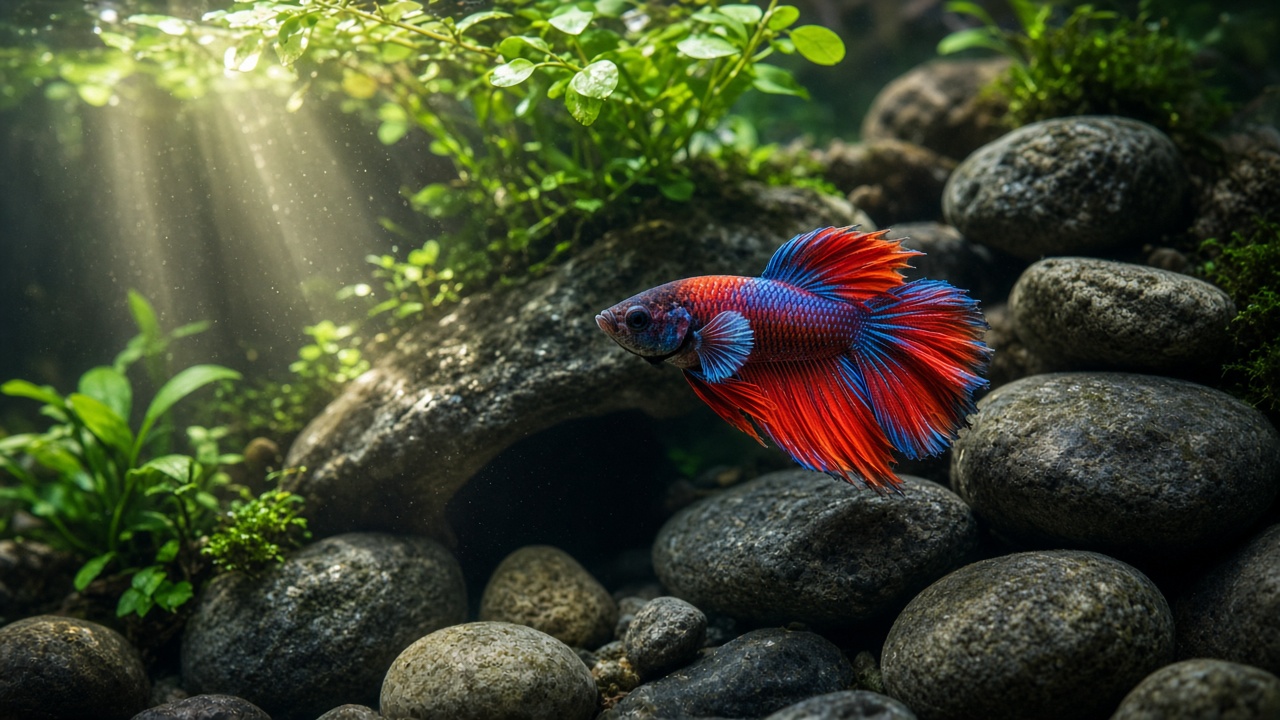
- Copy plant cover, because both source pages describe vegetation
- Copy an open surface so the fish can gulp air
- Do not copy the mean depth of 5.0 cm as the tank’s only water
- Do not copy the mean density by adding more males
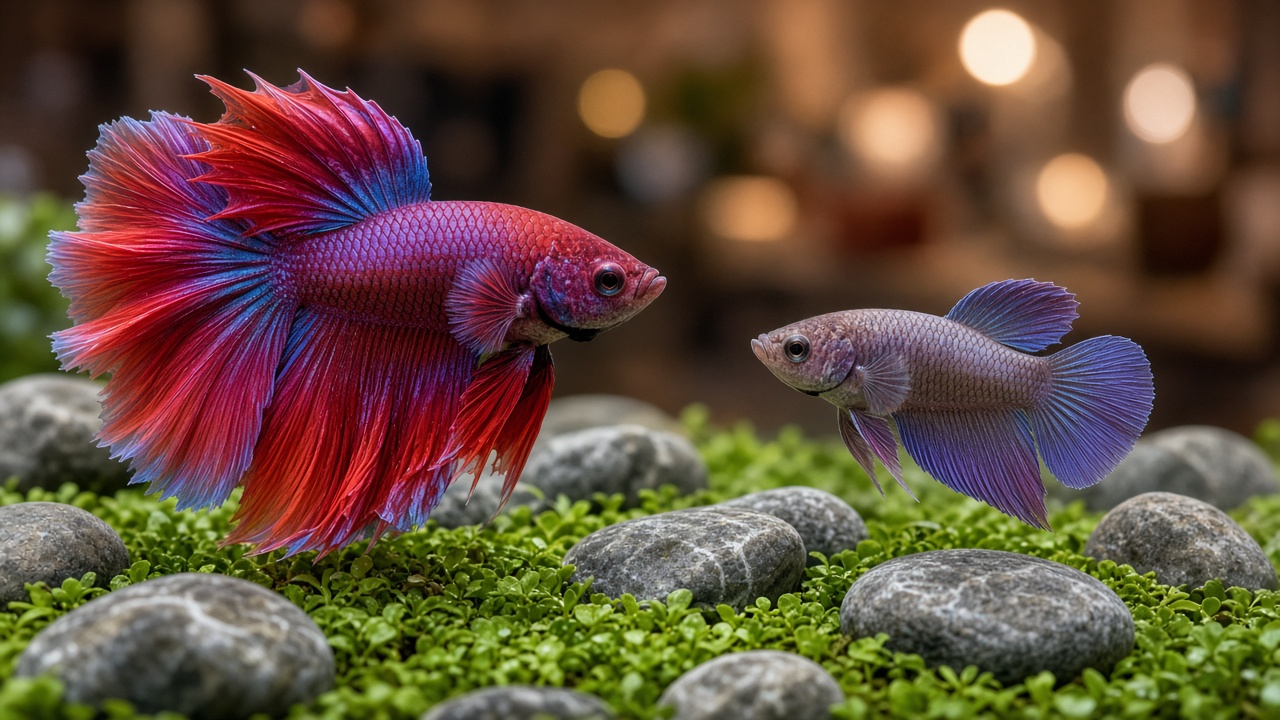
Males fight, and UF/IFAS describes fin flaring and biting when two males meet. National Geographic’s page says the same, so one male per tank is the home rule that follows from that behavior.
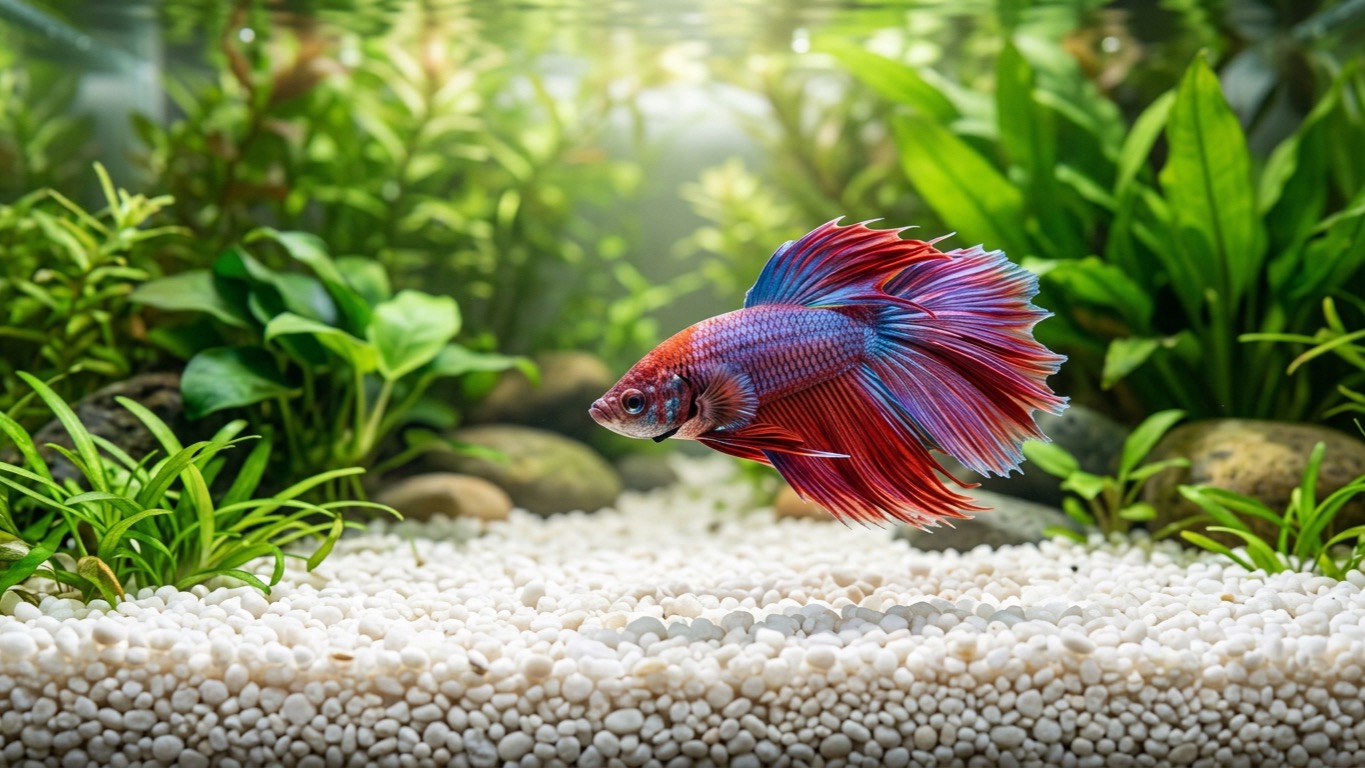
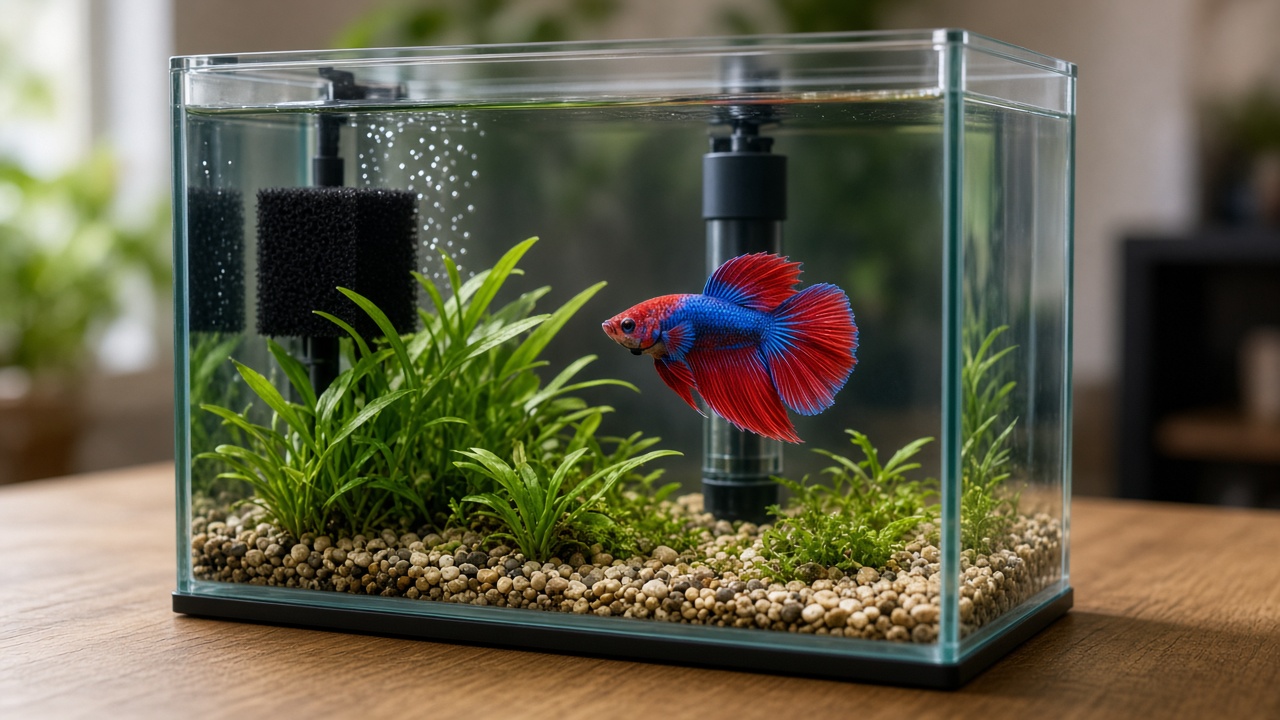
A planted tank is the closest home match to a vegetated edge.
Our setup steps live in how to set up a planted betta tank.
National Geographic’s page lists an average life span of 2 years in the wild and 2 to 5 years in captivity.
Home care details sit in how long do betta fish live.
Wild fish also rest in cover, and surface breathing does not mean the fish never settles. Rest timing is covered in do betta fish sleep.
UF/IFAS states that the modern betta is a product of almost 100 years of selective breeding. National Geographic’s page dates directed breeding to the 14th century A.D., so those two timelines are not the same claim.
Pet-store fish are not wild stock, but they still come from the same species’ habitat story.
Habitat-mapping products we compared
We compared five currently sold products whose maker pages list a numeric spec that maps to cover, soil, or plant dose.
This is not a ranked list, and there is no best-to-worst order, because our research team compared published specs only.
Fluval’s Stratum page states that Stratum substrates come from the foothills of Mount Aso. It lists support for a neutral to slightly acidic pH.
That listed band sits above the UF/IFAS field mean of pH 5.47. Fluval’s page does not print a numeric pH target.
Fluval Betta Stratum is listed at 1.76 lb / 0.8 kg, with a 1–3 mm granule size for Bettas. Fluval Bio-Stratum is listed as a 1–3 mm powder, and Fluval Stratum is listed as a 3–5 mm granule.
Seachem’s Flourish page lists a dose of 5 mL for each 250 L, or 60 US gallons, once or twice a week.
API’s Leaf Zone page lists a weekly dose of 5 ml per 10 US gallons, or 38 L. It lists 8 fl oz and 16 fl oz bottles.
Our research team compared those two published doses. API’s listed volume rate is six times Seachem’s listed volume rate.
That is a label difference, not a quality score, so use the dose on the bottle you buy.
Maker-listed attributes, with no prices and no ranks:
| Product | Maker-listed form | Numeric spec from the maker page | Habitat factor it maps to | Maker-listed use |
|---|---|---|---|---|
| Fluval Betta Stratum | Volcanic soil, 1.76 lb / 0.8 kg | 1–3 mm granules | Soft bed in a small planted tank | Small aquariums |
| Fluval Bio-Stratum | Volcanic soil with listed bacteria | 1–3 mm powder granules | Fine plant roots | Small tanks, or a top layer |
| Fluval Stratum | Volcanic soil | 3–5 mm granules | Deeper plant roots | Medium and large tanks |
| Seachem Flourish | Liquid plant supplement | 5 mL per 250 L (60 US gallons), 1–2 times a week | Micro-nutrients for plant cover | Planted freshwater tanks |
| API Leaf Zone | Liquid iron and potassium | 5 mL per 10 US gallons (38 L), weekly | Leaf color in planted cover | Freshwater planted tanks |
Seachem’s Flourish page also lists iron at 0.32% by weight and soluble potash at 0.37% by weight. It states that the listed phosphorus would add 0.0005 mg/L of phosphate at the recommended dose.
API’s Leaf Zone page names chelated iron and potassium as the leaf nutrients. It tells users to dose weekly with the cap on the bottle.
None of these products recreate a Thai paddy; they map to plant cover and a slightly acidic planted bed.
A home tank should not try to be a 5.0 cm puddle, a low-oxygen ditch, or a farm bottle. UF/IFAS lists dissolved oxygen as low as 0.0 mg/L in the field range, and that is a wild reading, not a home target.
Do not strip a filter to match the wild; match calm flow, and keep waste low.
Do not lower pH to 5.47 just because that was the field mean. Fluval’s Stratum page lists a milder “neutral to slightly acidic” band and does not print 5.47.
Do not add a second male to match the density range. The UF/IFAS mean is 1.7 fish per square meter, and that count still includes females.
Do not treat farm culture as habitat. UF/IFAS lists farm breeding in 3.78 to 18.90 liter containers and about 300 eggs per spawn. Those culture figures stayed out of the habitat map on purpose.
A planted, warm, calm tank with one male is the home reading of this brief.
FAQ
Do wild bettas live only in rice paddies?
No. The University of Florida IFAS page lists standing waters, shallow ponds, rice paddy fields, and puddles. National Geographic’s page adds marshes and slow-moving streams. Rice paddies are one common setting, not the only one.
How deep is wild betta water?
The UF/IFAS Thai summary lists a mean depth of 5.0 cm, or 2 inches. The listed range is about 2.0 to 9.4 cm. That is a field reading for one population, not a rule for every site.
What pH do wild bettas live in?
UF/IFAS lists a mean pH of 5.47, with a range of about 5.28 to 5.80, which is acidic. Fluval’s Stratum page lists “neutral to slightly acidic” support and does not print that field mean.
Can I keep a pet betta in water only 5 cm deep?
That depth matches the UF/IFAS field mean. It does not match a planted home tank with stable heat and waste control. Copy cover and warmth, not the puddle depth as the whole home.
Are wild bettas the same fish as pet-store bettas?
They are the same species, Betta splendens, and UF/IFAS describes wild fish as dull brown or green. National Geographic’s page lists wild size as 2 to 3 inches and notes shorter fins.
Do wild bettas live alone?
UF/IFAS lists a mean density of 1.7 fish per square meter and 1.4 females per male. That is a mixed, sparse population, not a pair of males. Males still fight when they meet.
How warm should the water be if I follow wild numbers?
UF/IFAS lists a field range of about 27.0 to 31.5°C, with a mean of 29.9°C, about 86°F. National Geographic’s page lists about 80°F, so use the field range as the tighter published band.