Quick answer: Keep Blue Dream shrimp as one blue Neocaridina line in mineral-locked water. Mix new water to about 6 °dGH, cycle the tank, then add shrimp. Do not mix other Neocaridina colors if you want the blue to hold.
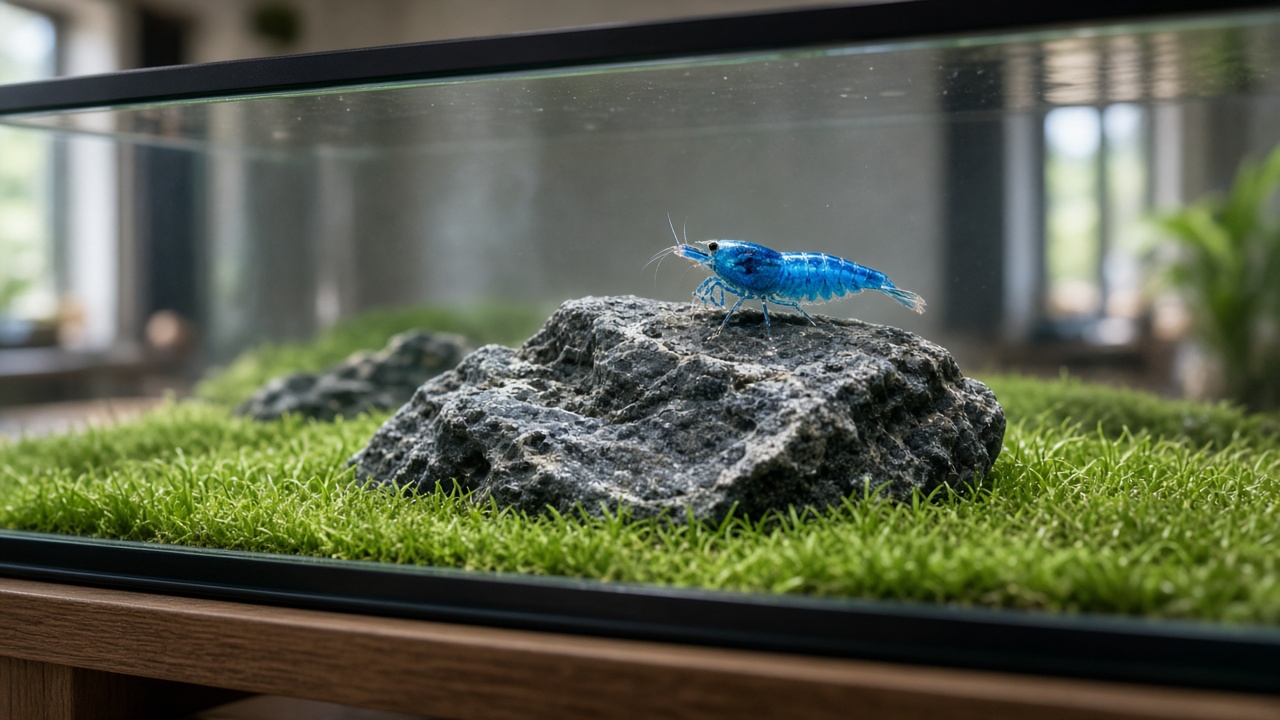
A Blue Dream shrimp is a blue Neocaridina davidi line that lives in water mixed to about 6 °dGH.
This page is a care, breeding, and grading brief from published maker specs. We did not run tanks, hatch eggs, or score live shrimp.
Our research team compared six current maker pages and used those printed numbers, not tank logs.
What this page covers, and what it leaves out
We only write single-color Blue Dream colonies that lock GH and KH before any shrimp go in.
That selection rule is the filter for this page, so mixed Neocaridina colors do not belong here. Caridina, Sulawesi shrimp, and fish-first community tanks stay off this page.
The path we keep is narrow:
- One blue Neocaridina line
- Remineralized RO water, or tap you already measured
- A cycle you can see on a liquid kit
- Then shrimp
- Then cull by opacity, not by shop grade talk
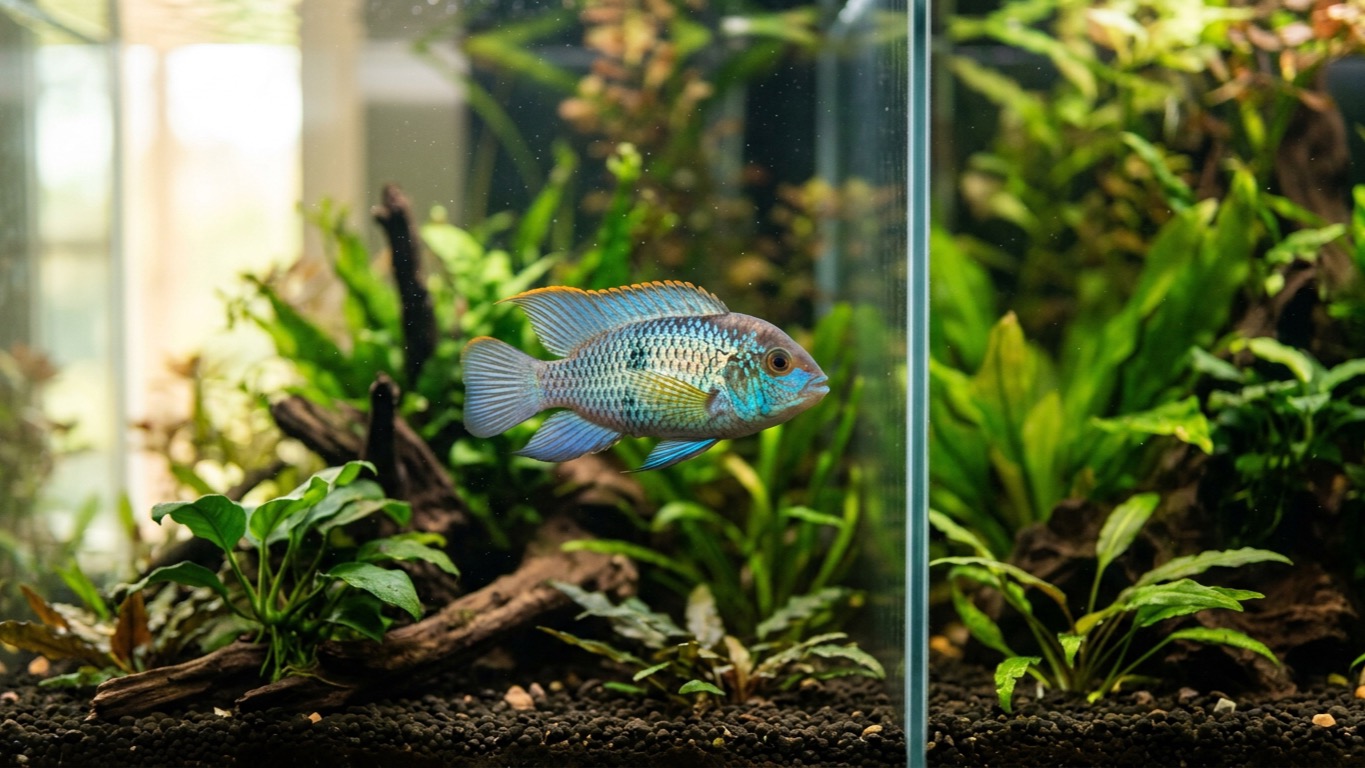
A shrimp tank is a mineral-lock problem. An electric blue acara tank is a volume problem, so do not use this page to size a cichlid.
The 6 °dGH lock Blue Dream shrimp need
SaltyShrimp’s mineral page is the hardness target this brief uses for Blue Dream water.
SaltyShrimp’s page for Shrimp Mineral GH/KH+ is made for shrimp from habitats with a neutral pH. The maker’s dose is plain:
- About 2 g, one level spoon, per 10 liters of RO, rain, or desalinated water
- Target about 6 °dGH
- Or a conductance of about 300 µS, plus or minus 50
- Mix outside the tank
- Pour undissolved grains in too
- Close the jar at once, because the salt takes up moisture
The same page states a GH to KH raise ratio of 1.0 to 0.5. At the printed 6 °dGH target, that ratio implies about 3 °dKH.
A 100 g jar is listed as enough for about 500 liters.
If your tap already sits near that GH, test first and skip the salt. Do not dose a mineral you have not measured against.
API’s General and Carbonate Hardness Test Kit page says to test weekly. The same page says GH and KH should match the animal’s natural habitat. It also says low KH can lead to rapid and wide pH shifts.
Hold this set before you add shrimp:
- GH near the mineral maker’s 6 °dGH target, if you used that salt
- KH in the 1.0 to 0.5 ratio SaltyShrimp printed
- Weekly GH and KH tests, as API’s page states
- No day-to-day swing you can see on the kit
We do not print a Blue Dream pH band or a temperature band. None of the six maker pages we compared list those species-specific ranges.
If GH moves after you add decor, the lock failed, so remove the thing that changed the water. Do not add shrimp to chase a moving number.
Tank order: cycle first, then shrimp
A cycle is a wait you can measure on a test kit, not a plant shopping list.
Use our shrimp tank setup brief for the full lock-then-plant order. This page only adds what a Blue Dream colony needs after that lock.
Treat new tap water before it touches the tank. Seachem’s Prime page states 1 capful (5 mL) per 200 liters (50 US gallons) of new water.
Each cap thread is about 1 mL, and the same page allows a double dose for high chloramine.
It allows a 5 times dose if ammonia or nitrite is above 2 ppm, and the bind lasts up to 48 hours.
Prime’s page says it will not impact pH, and a sulfur odor is normal.
A fill much smaller than 50 gallons still uses that printed math, so use the cap-thread note. Do not pour a full cap into a small tank.
Seachem’s Stability page says most tanks are cycled within 4 to 6 weeks, and that is the wait this brief uses.
The same page prints a dose plan:
- Day 1: 1 capful (5 mL) per 40 liters (10 US gallons)
- Then 1 capful per 80 liters (20 US gallons) daily for 7 days
- Turn UV or ozone off for those 7 days
- Later, 1 capful per 80 liters once a month or at each water change
The FAQ on that page says the bacteria should find a home within 24 hours. Stability’s page says aquatic species may go in during the 7-day dose.
Our selection rule is stricter, so we wait the 4 to 6 weeks Seachem names for a finished cycle.
Pick a filter that does not grind shrimp, and use our nano aquarium filter brief for intake and flow notes. This page does not rank filters.
Skip buffering plant soil you have not measured, copper treatments, and medications the label does not clear for invertebrates.
Do not use the shrimp as the ammonia source, because that is not a cycle. Add shrimp only after the 4 to 6 week window Seachem names, plus a week of matching GH and KH tests.
Food and mineral attributes we compared
We compared printed labels on six maker pages, not feeding trials. Two pages are foods and four are water tools, with no rank column and no price column.
| Product | Role | Printed number | Form | What the maker states |
|---|---|---|---|---|
| SaltyShrimp Shrimp Mineral GH/KH+ | Remineralizer | About 2 g per 10 L to about 6 °dGH | Powder salt; 100 g covers about 500 L | GH/KH rise 1.0/0.5 |
| Seachem Prime | Conditioner | 5 mL per 200 L (50 US gal) | Liquid | Bind up to 48 hours; no pH change |
| Seachem Stability | Cycle bacteria | 5 mL per 40 L on day 1 | Liquid; 7-day start plan | Most tanks cycle in 4 to 6 weeks |
| API General & Carbonate Hardness Test Kit | Hardness kit | Test weekly | Two bottles, two capped tubes | Low KH can swing pH |
| Fluval Bug Bites Shrimp Micro Granules | Daily food | 32.0% crude protein min; 1.5% calcium min | 0.25–1.0 mm granules; 30 g tub | Up to 32% black soldier fly larvae |
| Hikari Shrimp Cuisine | Daily food | 40.0% crude protein min | 1.2–1.4 mm sinking pellet; 10 g size | Made for Neocaridina and Caridina |
The WaterPuppy Spec Check compares those six labels and shows these gaps:
- Only SaltyShrimp prints a numeric GH target of about 6 °dGH
- Only Fluval Bug Bites prints a calcium minimum, at 1.5%
- Hikari’s page lists 40.0% crude protein minimum, 8.0 points above Fluval’s 32.0%
- Hikari also prints 6.0% crude fat minimum and 3.0% crude fiber maximum
- Fluval prints vitamin D3 at 600 IU/kg minimum
Hikari’s page calls Shrimp Cuisine a sinking daily diet and lists spirulina, seaweed, and alfalfa.
The same page states a safe form of copper in the formula. It also says the food promotes proper ecdysis, which is molting.
Fluval’s shrimp page says the formula is enriched with vitamin D and calcium. The same page names black soldier fly larvae and salmon as the first two ingredients.
Remove uneaten food, because Hikari’s page says to avoid over-feeding. We do not print a grams-per-shrimp ration, because neither food page gives that number.
Do not treat food copper as a water dose. Hikari’s copper line is on a food label, not a tank-treatment label.
Breeding a single blue line
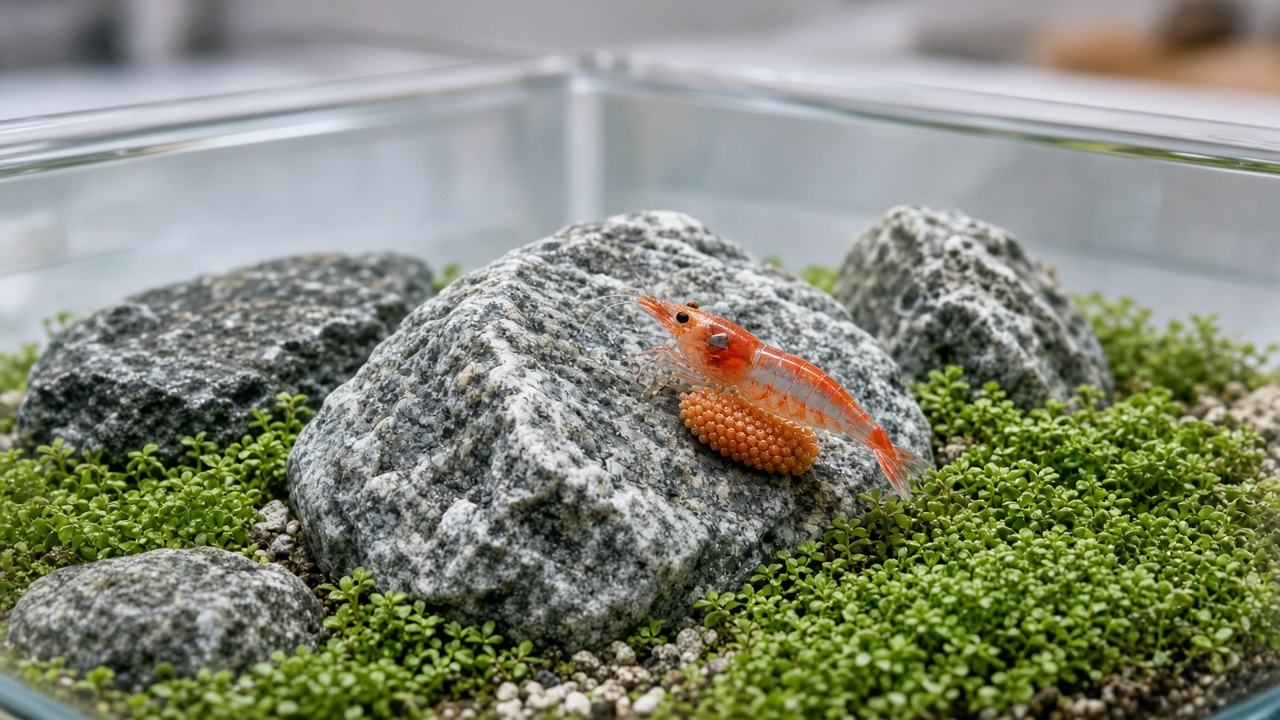
Breed only one blue line in the tank if you want Blue Dream young.
Blue Dream shrimp are Neocaridina davidi, the same species as other color lines. Other colors will mix, and young then drift toward brown or patchy.
None of the six maker pages print a clutch size or a berried-day count, so we do not invent those numbers.
What we do keep is a breeding rule:
- Start with one blue line only
- Lock GH near 6 °dGH with the SaltyShrimp math if you are on RO
- Finish the 4 to 6 week cycle Seachem names
- Keep a second tank for pale or off-color young
- Do not add red, yellow, or wild-type Neocaridina to the breeding tank
SaltyShrimp’s page says the salt is made for keeping and breeding shrimp. Fluval’s shrimp food page says calcium and vitamin D support the exoskeleton.
A berried female needs the same locked water as the rest of the colony. Do not chase a special breeding pH with acid bottles, because Prime’s page already says the conditioner will not impact pH.
If you want plants or moss for cover, add them after the lock holds. See the shrimp tank setup brief for that order.
Young shrimp need biofilm and leftover crumbs, and Fluval’s 0.25 to 1.0 mm granule is the smaller printed food. Keep the cull tank on the same mineral mix. Do not run a soft “baby water” that breaks the 6 °dGH lock.
Grading: keep, move, or stop
Grade Blue Dream shrimp by opacity and coverage, not by a shop’s price tag.
This is our cull rule, not a brand grade chart, and we did not score live shrimp.
Keep a shrimp in the breeding tank only if all three are true:
- The blue looks solid on the back, not milky
- The color runs onto the tail fan
- The legs are not mostly clear
Move a shrimp to the cull tank if any of these are true:
- Large clear windows on the body
- Brown or gray patches
- A red or yellow tint from a mixed line
Stop using an animal as a breeder if the next generation is paler than the parents. Add one new high-opacity male from a single-color seller, then keep the same cull rule.
Do not mix the cull tank back into the breeding tank. Culled shrimp can live in a display tank that is not your breeding line.
Males are often a bit paler than females, so do not cull a male only because he is less solid than a berried female. Cull him if he is patchy, brown, or clear.
We are a research desk, and this is a parameter and selection brief, not a diagnosis. Sick shrimp, failed molts, and sudden die-off stay off this page.
FAQ
Are Blue Dream shrimp the same species as cherry shrimp?
Yes. Blue Dream shrimp are a blue line of Neocaridina davidi, the same species as red cherry shrimp. That is why mixed-color tanks produce brown or patchy young. Keep one color line if you want the blue to hold.
What GH should I mix for Blue Dream shrimp?
SaltyShrimp’s Shrimp Mineral GH/KH+ page targets about 6 °dGH, or about 300 µS plus or minus 50. Use about 2 g of that salt per 10 liters of RO, rain, or desalinated water. If your tap already sits near that GH, test first and skip the salt.
How long do I wait before I add Blue Dream shrimp?
Seachem’s Stability page says most tanks cycle in 4 to 6 weeks, and that is the wait this page uses. The 7-day Stability dose is not the same as a finished cycle. Keep weekly GH and KH tests with the API kit while you wait.
Do I need a special food for Blue Dream shrimp?
You need a shrimp food with a printed analysis, not a secret blend. Fluval’s Bug Bites Shrimp Micro Granules page prints 32.0% crude protein minimum and 1.5% calcium minimum. Hikari’s Shrimp Cuisine page prints 40.0% crude protein minimum.
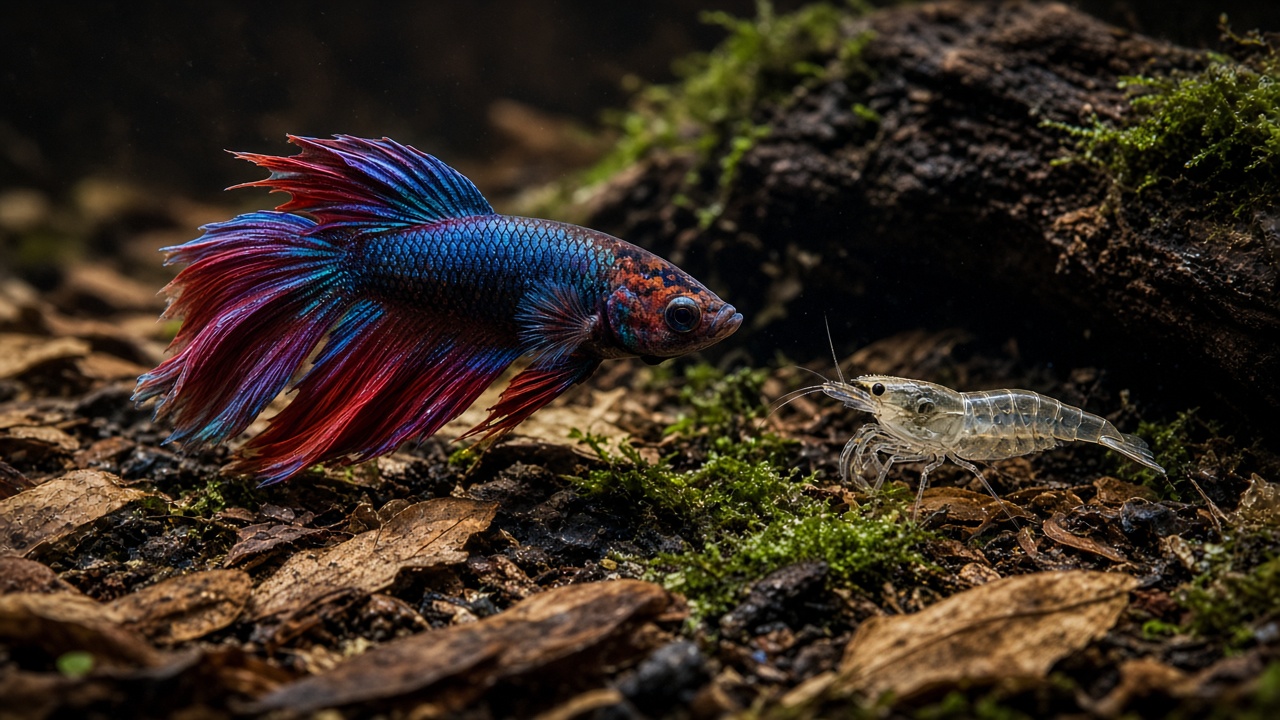
Can I keep Blue Dream shrimp with an electric blue acara?
No. This page is a shrimp mineral-lock brief, not a cichlid stocking brief. Use the electric blue acara tank size page for that fish. An acara tank is sized by swim volume, not by a 6 °dGH spoon mix.
Why did my KH drop after I added soil or wood?
Buffering soils and some woods change carbonate hardness. API’s hardness page says low KH lets pH shift fast. Re-lock the water with the SaltyShrimp 1.0 to 0.5 GH-to-KH ratio before you add shrimp.
How do I grade Blue Dream shrimp without a shop chart?
Use the keep-or-move rule on this page. Keep solid blue on the back, tail, and legs in the breeding tank. Move clear, brown, or mixed-tint shrimp out. We do not print prices or a numbered grade ladder.