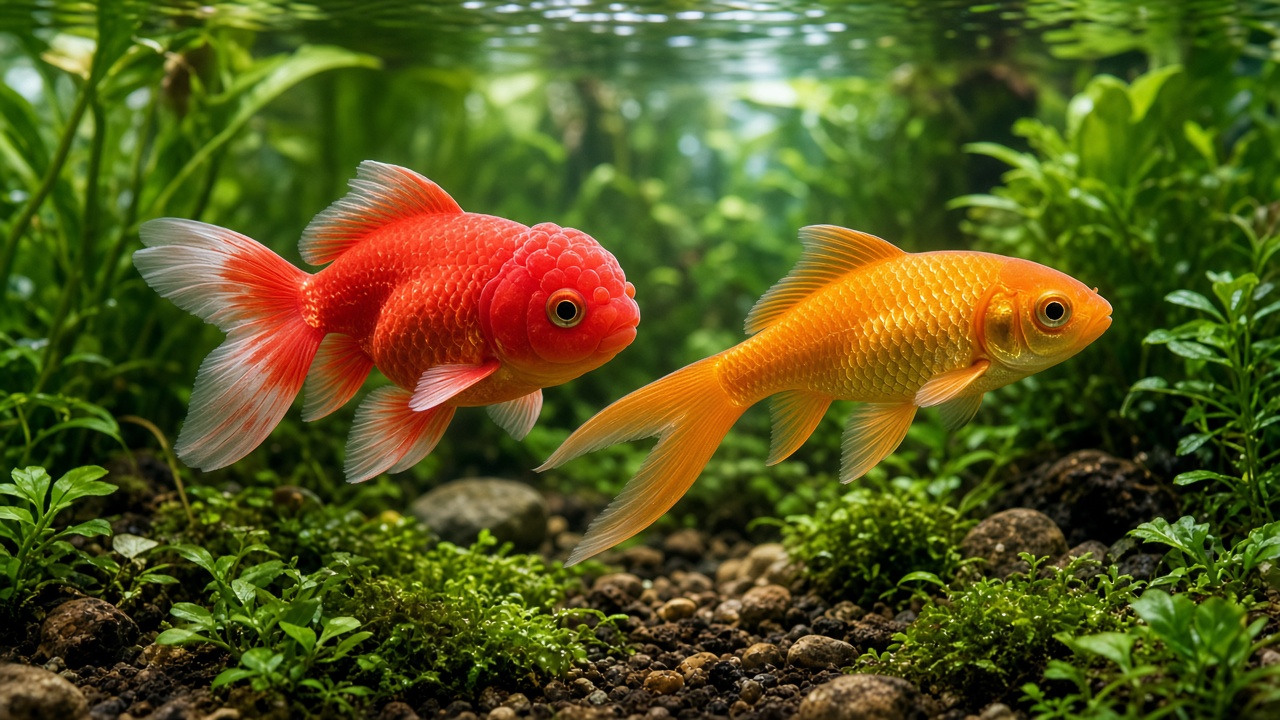
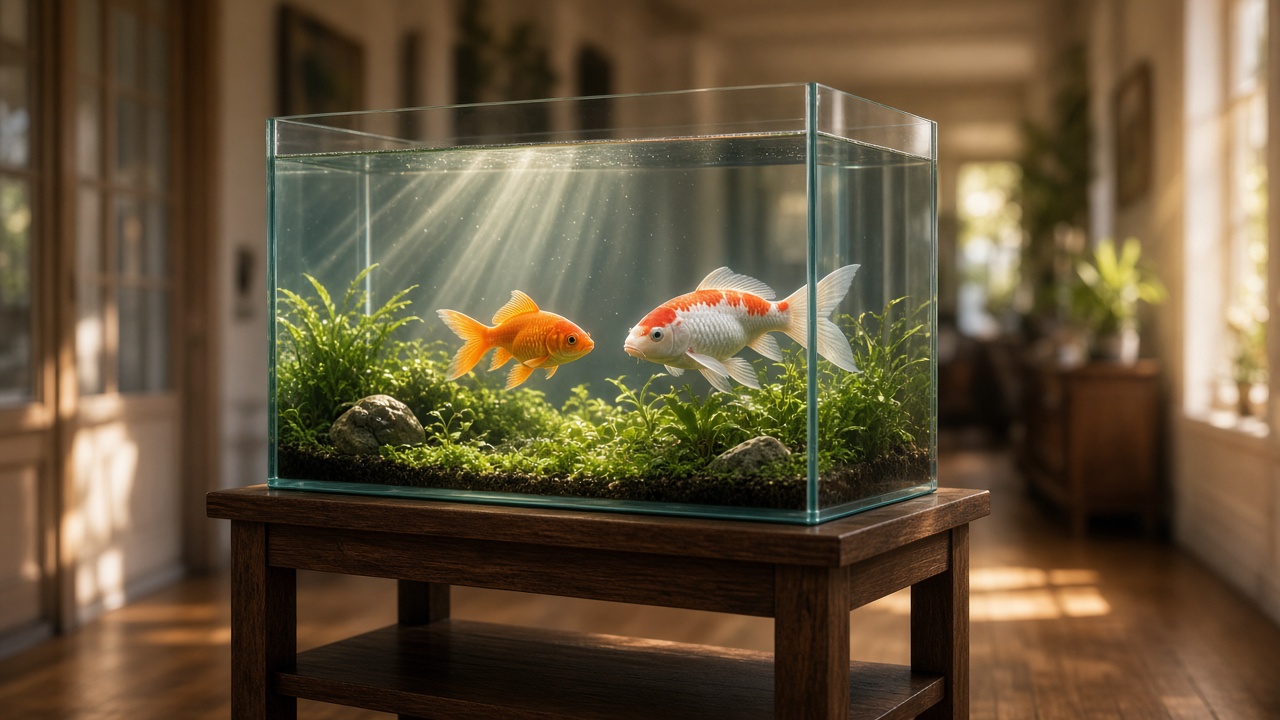
Quick answer: Keep one adult in a filtered tank of about 26 gallons or more. Use only smooth decor so the eye sacs do not tear. Feed a sinking goldfish food in short meals, and skip bowls and fast tankmates.
One adult bubble-eye goldfish needs a filtered indoor tank of at least 26 U.S. gallons with no sharp decor. This page compares published housing, decor, and diet specs;
What got into this article, and what did not
A number or product enters this page only if OATA, Aqueon, Hikari, Tetra, or Fluval printed it.
That is the selection rule, and it keeps this page on printed numbers. We cover indoor tanks for bubble-eye goldfish and other slow fancy goldfish. We leave out ponds, bowls, feeder tanks, and any food not labeled for goldfish.
Our research team analyzed four goldfish foods with printed nutrition lines. We compared those lines side by side.
The 26-gallon adult floor
Plan the tank for a grown goldfish, not for the two-inch fish in the bag.
OATA’s care sheet says an adult needs at least a 100 litre aquarium. That converts to about 26 U.S. gallons. Add about 13 U.S. gallons, or 50 litres, for each extra adult.
We call that converted OATA line the 26-Gallon Adult Floor, a unit change rather than a new study.
Aqueon’s goldfish care guide prints a lower fancy floor. The published housing lines in gallons are:
- OATA first adult: about 26 gallons, plus about 13 gallons per extra adult
- Aqueon adult fancy goldfish: 10 gallons per fish
- Aqueon adult common, comet, or shubunkin: 20 gallons per fish
The first adult on OATA’s sheet needs about 2.6 times the water Aqueon lists for one fancy adult. That is the largest housing split we found.
Aqueon’s guide says goldfish should never live in bowls, small aquariums, or any unfiltered container. OATA says a filter is always essential, whatever the tank size.
OATA also says aquarium goldfish commonly reach 25 cm, about 10 inches, so a 2-inch store fish is not the adult you are housing.
Stay inside both published floors this way:
- Start at or above the 26-Gallon Adult Floor for one bubble eye.
- Add about 13 gallons for each extra adult.
- Use a filter on every tank.
- Skip bowls and unfiltered jars.
OATA says a filter must always be used. Aqueon says the filter should be slightly over-sized because goldfish make a lot of waste. Aqueon also says to provide flow but avoid strong currents.
OATA says to rinse filter media in old tank water, not under the tap. Chlorine or chloramine in tap water can kill the bacteria in the media.
Water numbers that sit next to intact sacs
Keep ammonia and nitrite at zero, and keep the temperature steady.
Bubble-eye sacs tear on objects. They also suffer when water swings hard. Aqueon says rapid changes in temperature or chemistry can be fatal.
The Ornamental Aquatic Trade Association lists these water targets:
- Temperature: 4 to 25°C
- pH: 6.0 to 8.0
- Ammonia: 0 mg per litre
- Nitrite: 0 mg per litre
- Nitrate: no more than 20 mg per litre above normal tap water
- Hardness: 5 to 19°dH
Aqueon’s goldfish care guide lists a tighter comfort band for fancy fish:
- Fancy goldfish: 68° to 74°F
- Comets and shubunkins: 60° to 70°F
- Ideal pH: 7.0 to 8.4
Those lines overlap, but they are not the same: OATA’s 4°C floor is pond-cold, and Aqueon’s fancy band is room temperature.
OATA says a heater is not required unless the room is very cold. Aqueon says goldfish can also live in heated tanks. Both warn against sudden swings.
Aqueon also lists one tablespoon of aquarium or sea salt per 5 gallons as an optional health aid. That dose is on Aqueon’s page.
Published water-change sizes differ:
- OATA: a 25% partial change at least once every week
- Aqueon: 10% weekly, or 25% every 2 weeks
OATA’s weekly 25% change is 2.5 times Aqueon’s weekly 10% line, so pick one schedule and keep it.
OATA says to test water at least once a week, because goldfish are very dirty and can raise ammonia and nitrite fast.
If a fish fades or turns pale, start with a water test the same day. Color shift is not always old age. Our page on why goldfish turn white separates a slow fade from a sudden loss.
The sac-safe decor rule
If an ornament can snag a sleeve, it can tear an eye sac.
That is the Sac-Safe Decor Rule we use on this page. Aqueon’s goldfish care guide tells keepers to avoid decorations with sharp edges. It also names abrasive rocks.
Aqueon lists lava and tufa as rocks that may tear fins and eye sacs. It names bubble eyes, celestial eyes, moors, and telescopes in that same warning.
Aqueon also says goldfish like to forage in the substrate, so skip jagged or crushed glass gravel.
OATA says the tank should have gravel and, ideally, live plants. OATA also says goldfish can eat live plants, so ask a retailer which plants last.
Aqueon says larger goldfish will eat many live plants. It lists three possible exceptions:
- Cryptocorynes
- Java fern
- Anubias
OATA says plastic plants and simple ornaments, such as plant pots or model caves, can supply shelter if live plants fail.
A sac-safe shopping pass looks like this:
- Run a cloth over every ornament. If it catches, it stays out.
- Skip lava rock, tufa, and any castle with points.
- Use rounded gravel or smooth sand, not crushed glass.
- Prefer plastic plants or the three Aqueon plant names above.
- Leave open floor so a poor swimmer can turn.
Diet: sinking staples and published protein lines
Use a goldfish food with a printed analysis, and feed short meals.
OATA says goldfish need more carbohydrates than many other pet fish. Use a food made for goldfish, not a random tropical flake.
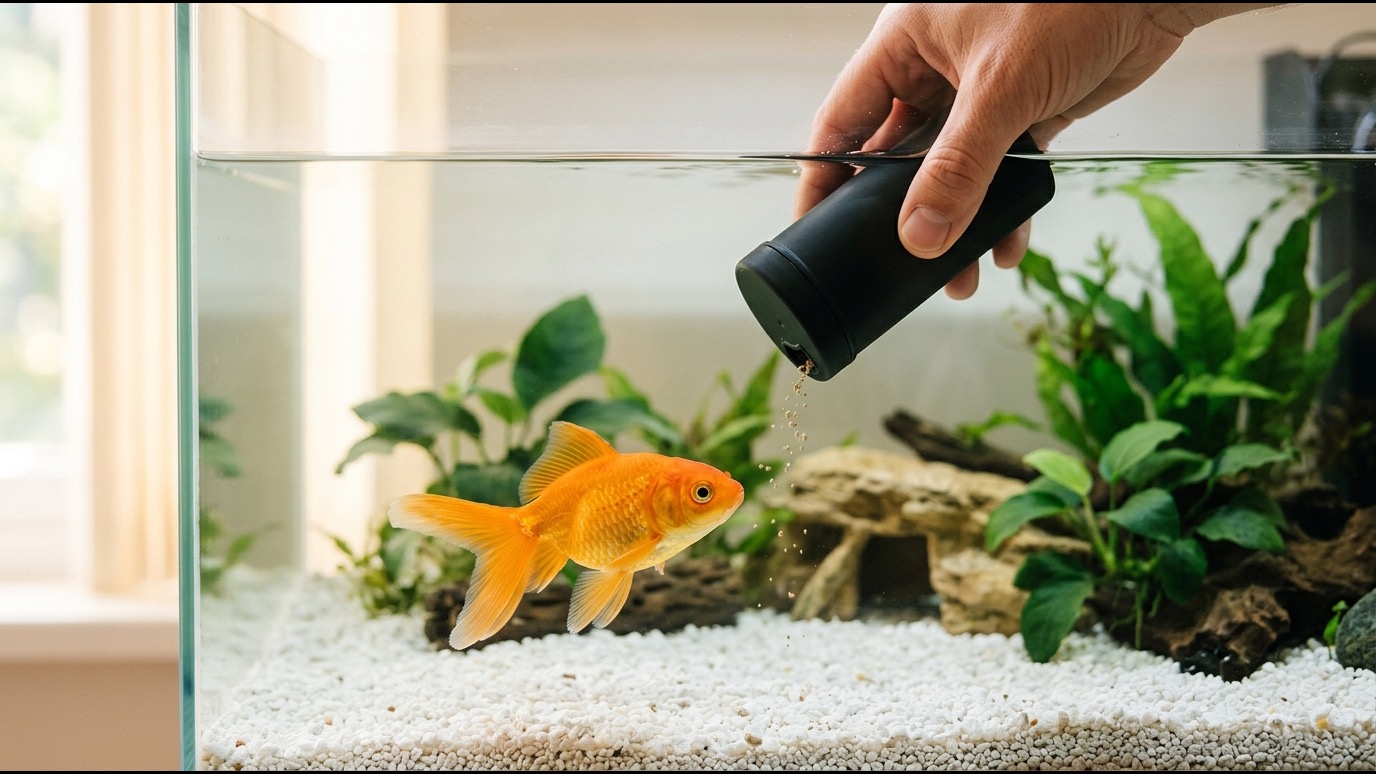
Aqueon says goldfish may gulp air on floating food and then float upside down. Aqueon says to soak flake food briefly and avoid floating pellets.
Our research team analyzed four goldfish foods with maker-printed nutrition lines. The protein spread was 13 points, from 32% on Hikari Goldfish Staple to 45% on Saki-Hikari Fancy Goldfish Color Enhancing.
| Product | Form | Protein (min) | Fat (min) | Phosphorus (min) | Moisture (max) |
|---|---|---|---|---|---|
| Hikari Goldfish Staple | Floating baby pellet | 32% | 4.0% | 0.7% | 10% |
| Saki-Hikari Fancy Goldfish Color Enhancing | Sinking | 45% | 7.0% | 1.8% | 10% |
| Tetra Select Goldfish Flakes | Flake | 42.0% | 11.0% | 0.9% | 6.5% |
| Fluval Bug Bites Goldfish Flakes | Flake | 33% | 8% | 0.8% | 6% |
Hikari’s page for Goldfish Staple calls it a floating baby pellet. It is aimed at goldfish and baby koi larger than 35 mm, or 1.5 inches. That same page lists it for non-fancy goldfish and koi fry, and it prints 2 to 4 feedings a day.
Saki-Hikari Fancy Goldfish Color Enhancing is the sinking fancy diet in this set. Hikari’s page lists 45% minimum crude protein and 1.8% minimum phosphorus.
That phosphorus line is 2.6 times the 0.7% minimum on Hikari Goldfish Staple. Hikari lists a 7.0 oz (200 g) bag and a 2.2 lb (1 kg) bag.
Tetra’s page for Select Goldfish Flakes prints 42.0% minimum crude protein and 300 mg/kg minimum vitamin C. Fluval’s page for Bug Bites Goldfish Flakes prints 33% minimum crude protein and 440 mg/kg minimum ascorbic acid. That vitamin C gap is 140 mg/kg.
Tetra lists package sizes of 1 oz, 2.2 oz, and 7.06 oz. Fluval lists the flake bag at 1.58 oz, or 45 g.
The feeding clocks we found do not match:
- OATA: what they can eat in a few minutes, once a day
- Aqueon: what they can consume in 2 to 3 minutes, once or twice a day
- Tetra Select Goldfish Flakes: two to three times daily, only what they can eat in three minutes
- Hikari Goldfish Staple and Saki-Hikari Fancy Goldfish Color Enhancing: 2 to 4 times daily, within a few minutes
A bubble eye eats slowly, and leftover food becomes ammonia. Stay inside those published windows this way:
- Use a goldfish flake or a sinking goldfish pellet, not a tropical mix.
- If the food floats, soak it first, as Aqueon’s guide states.
- Offer a pinch. Stop when the food is gone.
- Stay inside a two- to three-minute eating window.
- Start at one feeding a day if waste is climbing.
Tankmates that do not steal the meal
Keep bubble eyes with other slow fancy goldfish, not with comets.
OATA says goldfish can live alone or with others. It is not advised that comet goldfish live with fancy goldfish. Comets swim faster and often take the food.
OATA also reports fin-nipping of slower fancy fish. Aqueon says commons, comets, and shubunkins may become too rough for smaller fancy fish as they grow.
Aqueon says to skip fin nippers and boisterous fish. If the tank has no heater, tankmates must tolerate cooler water.
A roommate screen that follows those two pages:
- Other slow fancies only, such as another bubble eye or a celestial.
- No commons, comets, or shubunkins in the same tank.
- No tropical fish that need warmer water.
- No fin nippers.
OATA says to add fish slowly so filter bacteria can catch up. A second bubble eye still needs the extra 50 litres, about 13 gallons, on OATA’s sheet.
How long goldfish live depends more on tank size and water than on the eye sacs. OATA reports many lives of 6 to 8 years, and some of 20 years or more. Aqueon states that goldfish can live over 20 years in captivity.
FAQ
What is a bubble-eye goldfish?
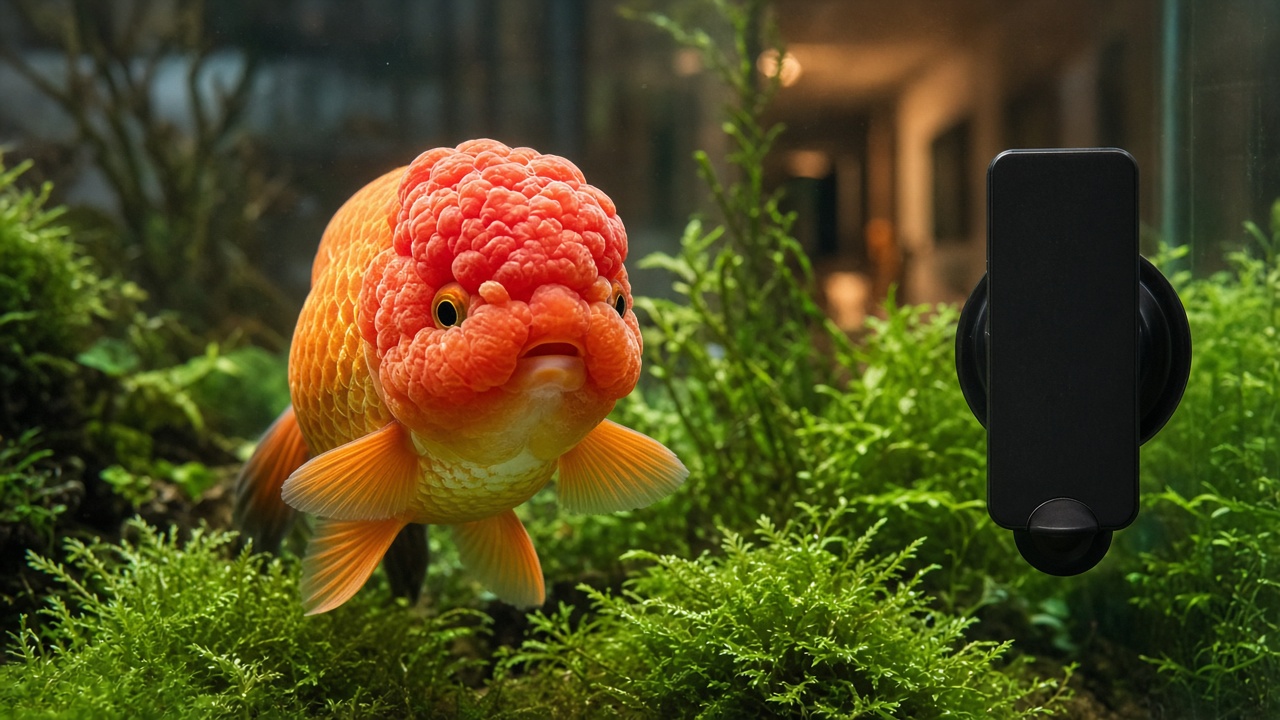
A bubble-eye goldfish is a fancy strain of Carassius auratus with fluid-filled sacs under its eyes. Aqueon names bubble eyes with celestial eyes, moors, and telescopes when it warns about torn eye sacs. OATA prints the same species name for goldfish as a group.
How big of a tank does one bubble-eye goldfish need?
OATA says at least 100 litres for one adult, about 26 U.S. gallons, plus 50 litres for each extra adult. Aqueon says 10 gallons per adult fancy goldfish. Both say a filter is required, and Aqueon says bowls are not housing.
What temperature should the tank be?
Aqueon lists 68° to 74°F for fancy goldfish. OATA lists 4 to 25°C for goldfish as a group. Hold the tank in Aqueon’s fancy band if you can, and avoid swings.
What should I feed a bubble-eye goldfish?
OATA says to use a goldfish flake or pellet, not a generic tropical food. Aqueon says to soak flakes and avoid floating pellets so the fish does not gulp air. Saki-Hikari Fancy Goldfish Color Enhancing is a sinking fancy diet with 45% minimum crude protein on Hikari’s page.
What decorations are safe for bubble-eye goldfish?
Aqueon says to avoid sharp edges and abrasive rocks such as lava and tufa. It names bubble-eye sacs in that warning. OATA allows plant pots, model caves, and plastic plants if live plants get eaten.
Can bubble-eye goldfish live with other goldfish?
Yes, with other slow fancy goldfish. OATA warns against housing comet goldfish with fancy goldfish because comets take the food and may nip fins. Aqueon says commons, comets, and shubunkins may become too boisterous for smaller fancies.
How often should I change the water?
OATA strongly recommends a 25% partial change at least once a week. Aqueon lists 10% each week or 25% every two weeks. Test ammonia and nitrite weekly either way, because OATA sets both readings at zero.