Quick answer: Goldfish eggs are tiny, sticky, and clear to pale yellow. Move them away from adults. Keep clean water near 68°F and expect a hatch in about three days.
Goldfish eggs are sticky, translucent spheres that hatch within three days when water is held near 20°C.
This page is a home-tank identification and hatch guide; we did not run hatch trials, strip brood stock, or keep a pond breeding line.
Selection rule: We cover common pet goldfish (Carassius auratus) eggs already laid in a home aquarium. We skip koi, hormone-forced commercial spawning, outdoor pond batches, and wild-caught fish.
Our research team analyzed published care sheets and current maker specs. The Keep-or-Cull Egg Rule below is how we chose what stayed in this guide.
What goldfish eggs look like
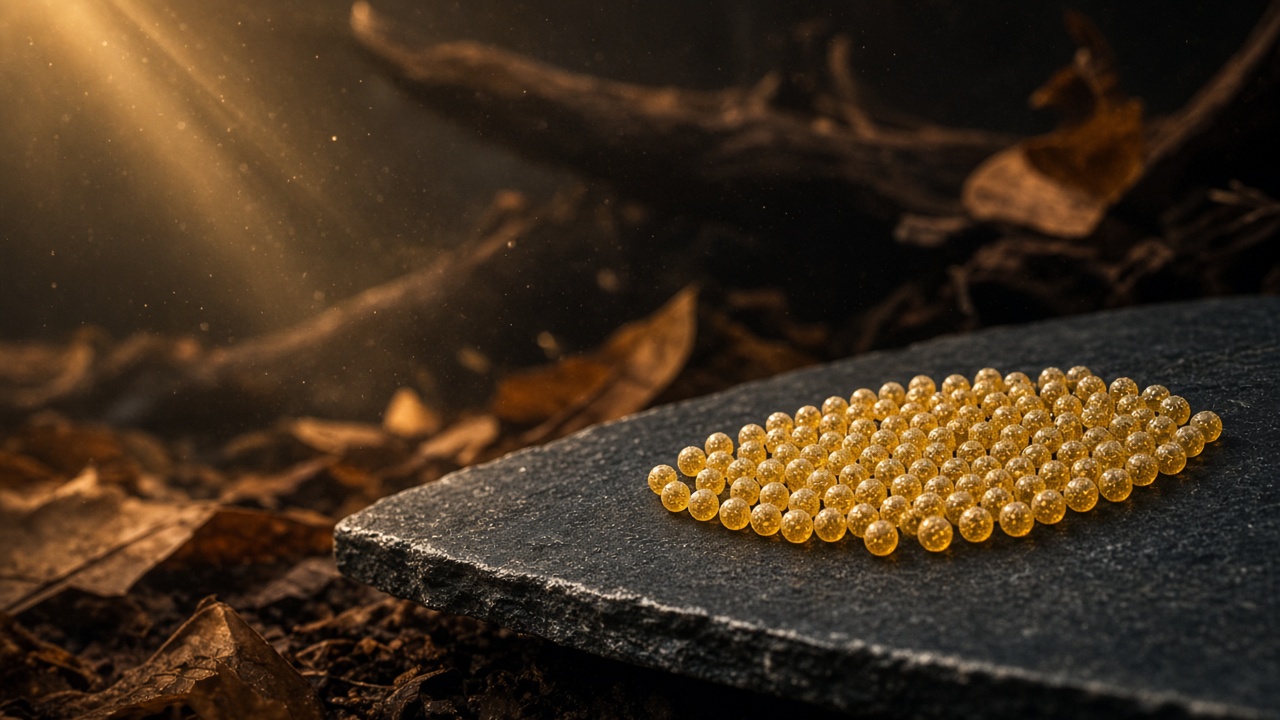
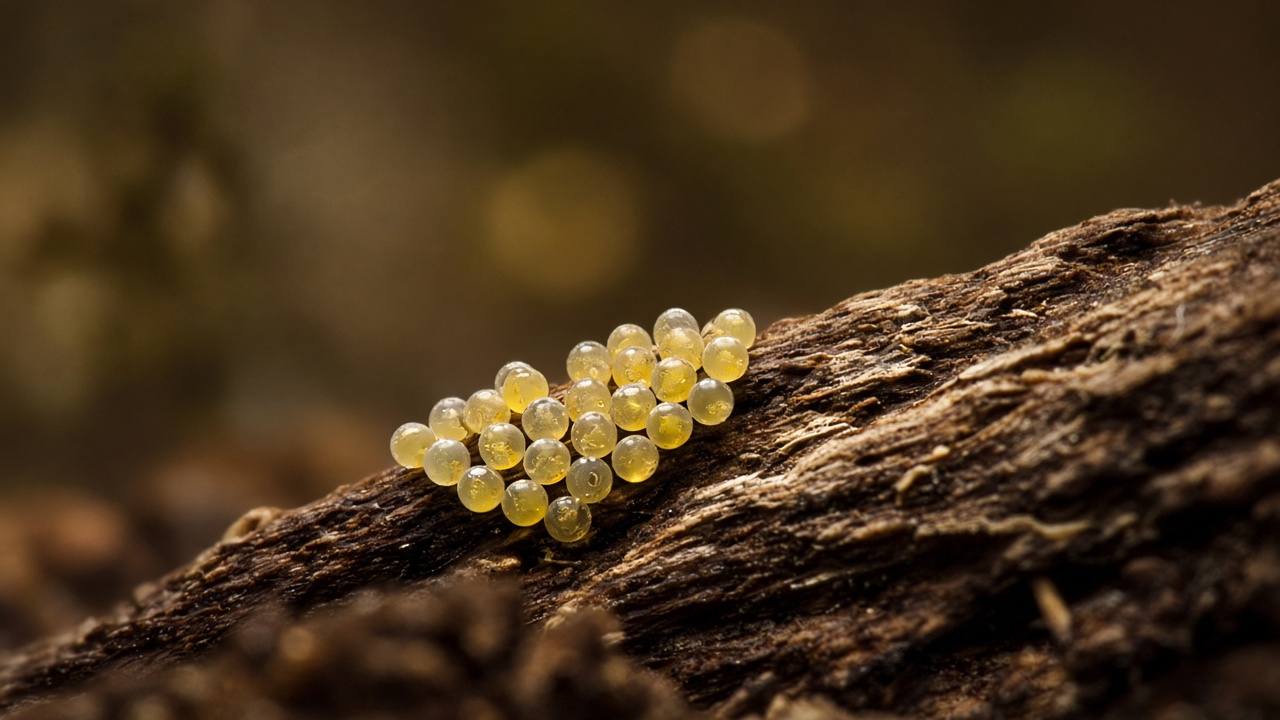
A real goldfish egg is a tiny sticky sphere, not a hard shell or a jelly string.
Fresh eggs cling to plants, yarn mops, filters, and glass, and they feel like wet beads.
Color starts clear, pale yellow, or light amber, and a dark pin-dot often shows as the eye forms. The Smithsonian Environmental Research Center’s NEMESIS page states that the male fertilizes scattered eggs and that those eggs adhere to vegetation.
Egg size is easy to miss in a busy tank. The same NEMESIS page states yolk-sac larvae are 3–5 mm at hatching, so the egg you see is smaller than that fry.
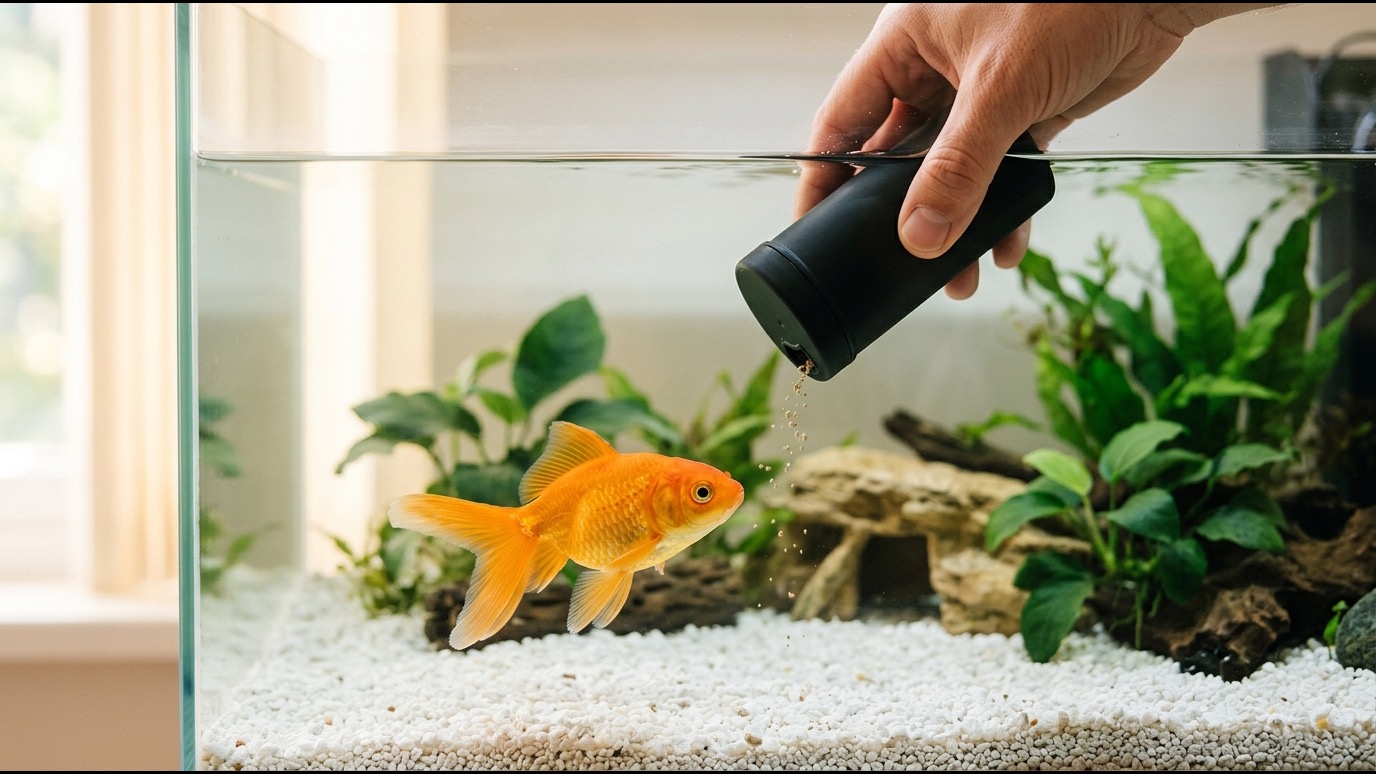
Adults eat eggs, and many fish that can live with goldfish will eat them too. If you want a hatch, move the egg-covered object the same day.
OATA’s goldfish care sheet states spawning is more likely with a 2:1 male-to-female ratio. It also states that a slow rise to about 20°C (68°F) can trigger spawning after a partial water change.
Males may show white tubercles on gill covers and pectoral fins in season, while females look deeper in the body. Snail eggs usually sit in a clear jelly patch, not as single sticky beads.
Fertile eggs versus white eggs
Keep clear or pale eggs with an eye spot, and remove chalk-white eggs that grow fuzz.
Use the Keep-or-Cull Egg Rule and check only these three things.
- Color: keep clear, pale yellow, or light amber eggs.
- Eye: keep eggs that show a dark pin-dot by day two or three.
- Fungus: cull eggs that turn chalk white or grow cotton threads.
Infertile eggs often go opaque white, and fungus can spread from those eggs to good ones. Lift white eggs with a clean pipette if you can do it without tearing the rest.
Do not wait for a perfect count. The Smithsonian NEMESIS page states fecundity varies from 2,000 to 400,000 eggs by size. It also states wild California females averaged 14,000 eggs each.
The NEMESIS page states eggs hatch in three to ten days. OATA’s care sheet states that after a spawn near 20°C (68°F), eggs hatch within three days, and cooler water slows the clock.
Newly hatched fry hang still at first. The NEMESIS page states they remain near the bottom, then swim more as they grow, and that juveniles start forming schools at about 10 mm.
How to hatch goldfish eggs in a home tank
Isolate the eggs, keep a gentle current, and hold stable clean water until fry swim.
A spare tank is safer than the display, and a clean plastic box with an air stone also works. Do not use a strong filter intake, because it will pull eggs and fry.
Follow this hatch order.
- Move the plant, mop, or decor that holds the eggs.
- Fill the hatch vessel with water from the parents’ tank.
- Add an air stone for a light ripple, not a storm.
- Keep the vessel out of direct sun and away from drafts.
- Remove chalk-white eggs each day if you can do it gently.
- Leave fry in place until they swim and the yolk is nearly gone.
OATA’s care sheet states goldfish do not tolerate large temperature swings. Place the hatch vessel in a quiet room, and match the parents’ temperature as you move eggs.
OATA also states a heater is not required unless the room is very cold. A small heater on a low setting can hold 68°F if the room drops at night.
The Smithsonian NEMESIS page states egg and larval development can take place at 16–29.5°C (61–85°F). Stay in the middle of that band.
Kordon’s Methylene Blue page states the dye treats fungus on fertile fish eggs. It also states methylene blue is removed by activated carbon and can stain silicone, so use it in a bare hatch vessel.
Kordon’s directions for eggs are exact.
- Remove carbon, and keep mechanical media if you need flow.
- Add 1 teaspoon of the 2.303% solution per 10 gallons.
- That dose produces 3 ppm.
- Only one application is needed for eggs.
- Keep treatment going for 3 days past the free-swimming stage.
Kordon’s 4 fl oz bottle (item 37344) treats 240 gallons at the listed rate. The page also states the product is not for food fish under US FDA rules.
After treatment, Kordon directs a partial or complete water change and fresh carbon, but do that only after the listed egg-and-fry window.
Water numbers a hatch tank must hit
Treat hatch water like a small goldfish tank, then test it every week.
OATA’s care sheet lists these guideline values for goldfish.
- Temperature: 4–25°C (39–77°F)
- pH: 6.0–8.0
- Ammonia: 0 mg per liter
- Nitrite: 0 mg per liter
- Nitrate: not more than 20 mg per liter above tap-water nitrate
- Hardness: 5–19 dH
OATA states even small amounts of ammonia and nitrite can stress goldfish. Fry have less room to recover, so test before you add eggs if you can.
OATA recommends a 25% partial water change and a water test at least once a week. Match new water to the hatch vessel’s temperature, and treat tap water before it touches eggs.
Seachem’s Prime page states one capful (5 mL) treats 200 L (50 US gallons) of new water, and each cap thread is about 1 mL. A 5-gallon hatch change needs about 0.5 mL, not a full cap.
Seachem also states Prime can be dosed every 24–48 hours and binds ammonia, nitrite, and nitrate for up to 48 hours. For an emergency with ammonia or nitrite above 2 ppm, the page allows up to 5 times the normal dose.
Do not skip the test after you dose. API’s Freshwater Master Test Kit page lists five checks: pH, high-range pH, ammonia, nitrite, and nitrate. The kit includes four test tubes and a color card, and API directs weekly tests.
OATA’s adult-tank rule still matters after fry grow. The care sheet calls for at least 100 liters (about 26 US gallons) for one adult. Add 50 liters (about 13 US gallons) per extra adult, and plan that space before you keep every fry.
Hatch-setup products compared by published specs
Pick gear by role and listed numbers, not by a rank list.
Our research team compared four current products from their maker pages. We kept items that do one hatch job, and we left out adult decor kits, pond treatments, and foods for grown goldfish.
| Product | Hatch role | Listed spec from the maker | How the maker says to use it |
|---|---|---|---|
| Kordon Methylene Blue | Egg fungus control | 2.303% solution; 4 fl oz treats 240 gallons | 1 teaspoon per 10 gallons (3 ppm), one dose for eggs |
| Hikari Tropical First Bites | First fry food | min. 48% crude protein; 10 g pack (art. 20095) | Up to four times daily; amount eaten in 1 minute |
| Seachem Prime | Tap-water prep | 5 mL per 50 US gallons of new water | Dose new water first; half dose if water is above 86°F |
| API Freshwater Master Test Kit | Weekly water check | Five tests: pH, high-range pH, ammonia, nitrite, nitrate | Follow the booklet; test weekly |
Kordon’s page warns the dye can harm nitrifying bacteria and plant growth, so it belongs in a bare hatch vessel. Hikari’s First Bites page states egg-layers should start this food just before the yolk sac is fully used.
Seachem’s page lists bottle sizes from 50 mL to 4 L. API’s page states most water problems are invisible, so keep the kit beside the hatch vessel.
What to feed after the eggs hatch
Wait on the yolk, then feed tiny meals many times a day.
Do not sprinkle food on the first wriggle. Hikari’s First Bites page states egg-layers use the yolk sac right after hatch. Start First Bites just before that sac is gone.
Hikari’s listed analysis includes these numbers.
- Crude protein: min. 48%
- Crude fat: min. 3%
- Crude fiber: max. 2%
- Moisture: max. 10%
- Ash: max. 18%
- Phosphorus: min. 1.3%
Hikari’s feeding rule is simple.
- Feed up to four times daily.
- Offer only what fry eat in one minute.
- Soak a pinch in tank water if you need the grains to sink.
Leftover dust fouls a small vessel fast. Siphon waste with air line, then replace that water with treated, matched water.
OATA’s adult feeding rule is one short meal a day that fish finish in a few minutes. Keep that rule for parents in the main tank.
As fry grow past the 10 mm schooling size on the NEMESIS page, move them to a larger filtered tank.
Color changes and tank mates as fry grow
Dark fry are normal, and later color shifts are a separate question from egg health.
Hatchlings often look brown or gray, and that is not a disease sign by itself. Many pet goldfish later turn orange, white, or mixed.
If an older fish later turns white or turns black, use those guides. Do not treat a color change as proof the hatch failed.
OATA’s care sheet lists color going darker or paler as a watch point, so pair that watch with a water test.
Keep fry away from adults until they are far larger than a mouth. OATA states goldfish eat their eggs and fry, and warns that fast comets can outcompete fancy fish for food.
OATA also states you must never release aquarium animals or plants into the wild, so extra fry go to other keepers, not to a creek.
OATA reports common aquarium lengths up to 25 cm (about 10 inches). Plan tank space for the fish you keep, not for the clutch size you counted on day one.
FAQ
How can I tell goldfish eggs from snail eggs?
Goldfish eggs are single sticky spheres on plants, mops, or glass. Snail eggs usually sit in a clear jelly patch. If only goldfish live in the tank, the beads are goldfish eggs.
How long do goldfish eggs take to hatch?
OATA’s care sheet states eggs hatch within three days after a spawn near 20°C (68°F). The Smithsonian NEMESIS page states a wider three-to-ten-day window.
What do fertile goldfish eggs look like after two days?
Fertile eggs stay clear or pale and often show a dark eye spot. Chalk-white eggs are usually infertile or fungal.
Do I have to use methylene blue on every clutch?
You do not need it on every clutch. Clean water and daily removal of white eggs can be enough. If you use Kordon Methylene Blue, add 1 teaspoon of the 2.303% solution per 10 gallons (3 ppm), once.
When should I start feeding goldfish fry?
Hikari’s First Bites page states egg-layers use the yolk first. Start that food just before the yolk sac is fully consumed. Feed up to four times a day.
Why did my eggs turn white overnight?
Many eggs are never fertilized. OATA notes goldfish eat eggs, which also damages clutches. White color plus cotton fuzz means fungus, so remove those eggs and check ammonia.
How many fry can one female produce?
The Smithsonian NEMESIS page states 2,000 to 400,000 eggs by female size, with a California wild average of 14,000. Keep only the fry you can house at OATA’s adult volumes.