Quick answer: Vampire shrimp need strong current, powdered foods aimed at their fans, and about twenty to thirty gallons of mature water. Keep copper out and give caves for daytime hiding and molting.
Give Atya gabonensis strong current, fan foods, and a mature twenty-gallon-plus tank.
We compared published care data on Atya gabonensis, also called African fan shrimp, African filter shrimp, or vampire shrimp. Our research team analyzed tank volume notes, temperature and pH bands, and filter-feeding behavior descriptions. Owners consistently report sand-sifting as a hunger warning when suspended foods never reach the fans.
Comparing published specs, adults can reach about fifteen centimeters or six inches. Care sheets commonly start near twenty gallons, with many keepers preferring about thirty gallons for stability and flow. Temperature notes often span about 74°F to 84°F, or about 23°C to 29°C. pH commonly sits near 6.5 to 7.8. This page covers tank size, flow and setup, filter feeding, water chemistry, tank mates, and molting safety.
Include a cycled tank with moderate to strong current, caves, and daily micro-foods in the flow. Leave out bare sterile cubes and copper medications. Skip drug protocols that belong with a veterinarian.
Scope board:
| Include | Leave | Skip |
|---|---|---|
| 20–30+ gal mature tanks | Tiny sterile nano boxes | Copper fish meds |
| Powerhead or strong return flow | Still water display only | Predatory crayfish |
| Powdered foods into current | Flake-only surface feeding | Land beaches they ignore |
| Caves for day hide and molts | Constant bright exposure | Breeding promises for beginners |
Plan twenty to thirty gallons so flow and food stay stable
Volume cushions chemistry and gives room for a current lane.
Many care guides set a floor near twenty gallons, while other husbandry sheets prefer about thirty gallons or more for large adults. Bigger water holds more suspended particles and tolerates filter feeders better than over-cleaned nanos. Fully aquatic shrimp need no land beach. Add them only after the nitrogen cycle is proven and microfauna have had time to build.
Tank board:
| Cue | Published direction |
|---|---|
| Common minimum | About 20 gal / ~75 L |
| Preferred class | About 30+ gal in many sheets |
| Adult size | Up to about 15 cm / 6 in |
| Maturity | Cycled; biofilm present |
| Lid | Secure; climbers escape |
Our research team analyzed size notes that treat six-inch adults as bulky invertebrates, not dwarf shrimp clones. Comparing published specs favors open swimming lanes plus sheltered perches in the flow. Owners consistently report better daytime sightings once caves feel safe. Skip tall columns that waste floor space. Measure filter turnover before the shrimp arrives.
Build moderate to strong current with caves and grip perches
Flow is the feeding station; hardscape is the daytime bedroom.
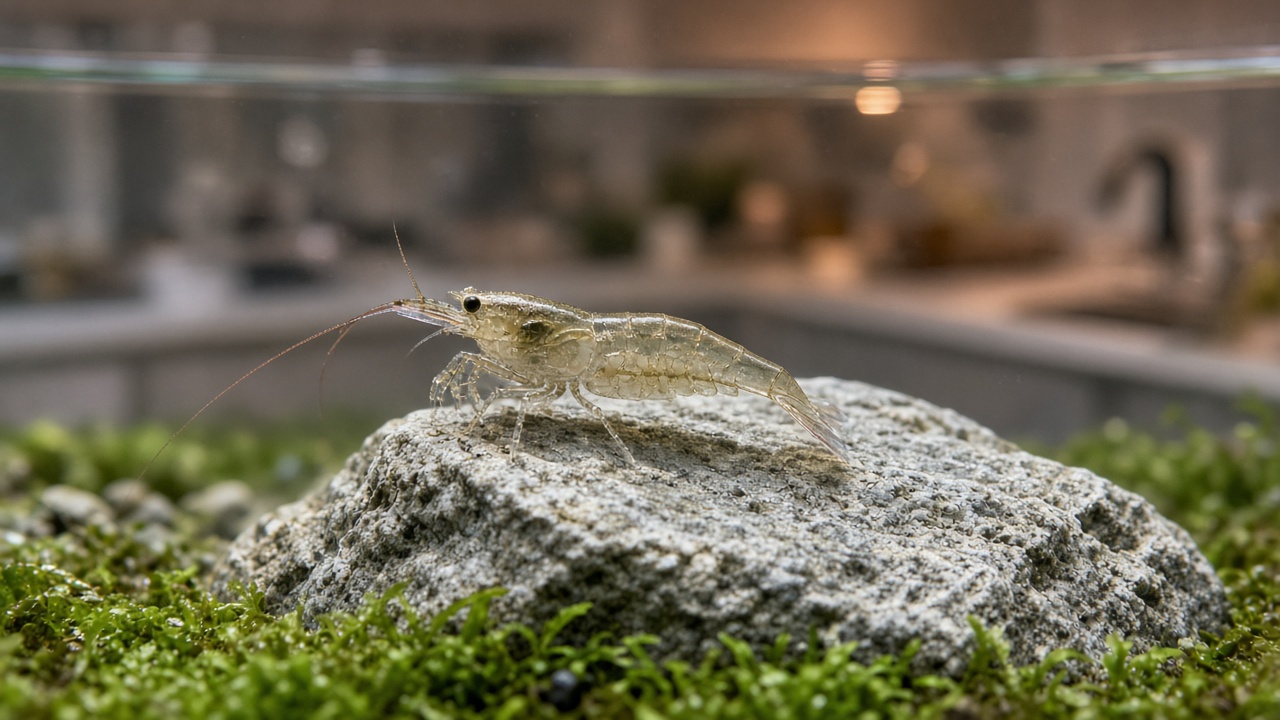
Wild shrimp sit in moving West African rivers with fans open. In aquaria, a strong filter return or powerhead creates a lane they can face. Place smooth wood, rock, or mesh perches in that current. Offer caves, dense plants, or driftwood tunnels for nocturnal retreat and molting cover. Dim corners reduce stress for a shy, mostly night-active animal.
Setup checklist:
- Mature tank with proven zero ammonia and nitrite
- Adjustable powerhead or strong filter return
- Perches aimed into the current
- Multiple caves larger than the adult body
- Secure lid and no copper décor coatings
Owners consistently report “vanished” shrimp that were resting in wood hollows. Our research team analyzed behavior notes that treat nocturnality as normal, not illness. Comparing published specs still expects oxygen-rich water beside the flow lane. Aim the outlet so fans catch food without sandblasting the gills. Edge case: dead spots need a second gentle circulation point so waste does not pile behind caves.
Filter-feed with powders aimed upstream into the fans
Fans strain particles; bottom wandering means hunger.
Vampire shrimp are omnivorous filter feeders that use feather-like claspers to catch drifting food. Spot-feed finely ground fish food, spirulina powder, phytoplankton products, or crushed fry foods into the current upstream of the perch. Mature tanks supply some plankton, yet most displays still need deliberate feeding. If the shrimp patrols and sifts sand, increase suspended foods immediately. Target feeding with a pipette or baster keeps food in the lane.
Feeding board:
| Method | Why it matters |
|---|---|
| Powder into current | Matches natural fan capture |
| Upstream placement | Particles pass through setae |
| Small frequent feeds | Fans work many times daily |
| Sand sifting | Hunger warning, not enrichment |
| Leftover cloud | Siphon before it fouls water |
Our research team analyzed starvation notes tied to crystal-clear tanks with nothing for fans to catch. Comparing published specs rejects “they’ll find scraps” as a plan. Owners consistently report fatter shrimp when powders hit the flow at lights-out. Rotate food types so nutrition is not one dusty brand only. Watch other fish that gulp the cloud before fans open.
Hold tropical shrimp bands and keep copper at zero
Stable water matters more than chasing exotic hardness trophies.
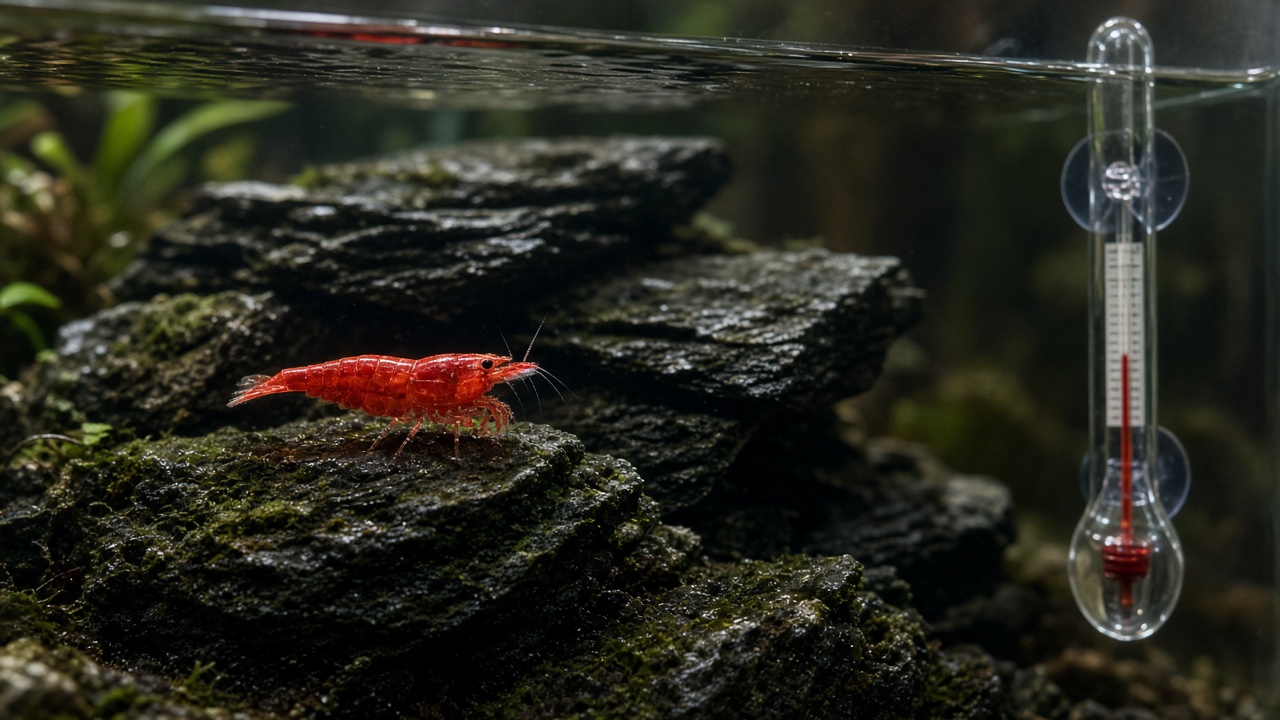
Published aquarium notes accept about 74°F to 84°F, with many keepers favoring the mid seventies to low eighties. pH near 6.5 to 7.8 covers common care sheets. Hardness notes in shrimp guides often sit near about 6 to 15 dGH. KH notes often span about 3 to 12 dKH. TDS is commonly discussed near about 150 to 300 ppm. Ammonia and nitrite must stay at zero; nitrate is often kept under about twenty ppm. Copper is deadly to shrimp.
Water board:
| Parameter | Common published band |
|---|---|
| Temperature | About 74–84°F (23–29°C) |
| pH | About 6.5–7.8 |
| GH / KH | Moderate shrimp-safe ranges |
| TDS theme | About 150–300 ppm in care notes |
| Copper | 0 — fatal risk |
| Nitrate | Often under ~20 ppm |
Weekly water changes with temperature-matched, dechlorinated water help many keepers. Remineralize reverse-osmosis water before it touches invertebrates. Test plant fertilizers for copper before dosing. Log color shifts; blue, brown, cream, and rusty tones can change with conditions. Stability beats monthly makeovers.
Choose peaceful tank mates that will not nip fans or eat molts
The name sounds fierce; the shrimp is gentle.
Compatible companions include calm community fish, bamboo shrimp, Amano shrimp, dwarf shrimp, and peaceful snails when parameters match. Avoid crayfish, large cichlids, aggressive loaches, and notorious shrimp hunters. Vampire shrimp will not bully tank mates, but they lose fights they never start. Feed enough suspended food so dwarf shrimp do not outcompete every cloud. Quarantine new livestock away from the display.
Mate rules:
- Peaceful midwater fish that ignore invertebrates
- Other filter feeders that share flow without crowding one perch
- No copper treatments shared with fish disease protocols
- Extra caves so molting shrimp are not exposed
- Watch fan-nipping during the first week
Owners consistently report success in calm community tanks with hiding spots. Our research team analyzed compatibility notes that stress molt vulnerability over daytime bravado. Comparing published specs treats predation and copper as the top risks. Skip “vampire” novelty pairings with predators. Rehome any fish that shreds setae.
Protect molts, color changes, and long-term viewing habits
Growth means soft shells; color can shift through the year.
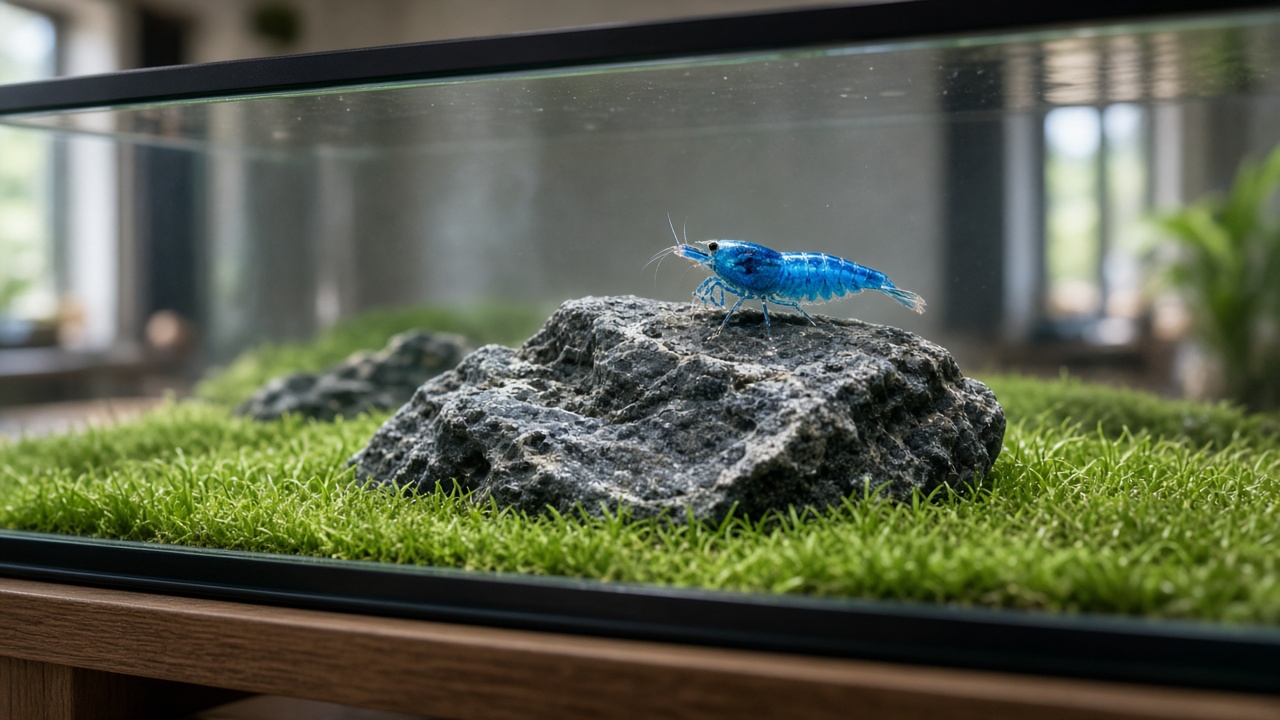
Shrimp hide more while preparing to molt and may eat the shed exoskeleton for minerals. Do not vacuum every shed the moment it appears if the shrimp is still nearby. Color can move among creamy white, rusty brown, deep blue, and other tones, sometimes more than once a year. Harder water is often linked to bluer looks in hobby notes, though individuals vary. Lifespan notes in care sheets commonly span several years when feeding and water stay solid.
Lifecycle checklist:
- Extra caves before you expect a molt
- Mineral-sensible water; avoid pure soft RO forever
- Dim nights for natural activity
- Patience when daytime hiding lasts weeks
- Vet help for unexplained lethargy after parameter crashes
Our research team analyzed captive notes that call breeding hard because larvae need complex salinity shifts. Comparing published specs treats home breeding as unrealistic for most keepers. Owners consistently report better day activity after months of predictable feeding. Enjoy filter-feeding behavior more than forced daytime posing. Keep the lid closed during exploration climbs.
FAQ
How big of a tank does a vampire shrimp need?
Care guides commonly start near twenty gallons, and many prefer about thirty gallons for large adults and stable flow. Bigger volumes hold more food particles for filter feeding. Tiny sterile tanks are a poor long-term home. Cycle fully before adding the shrimp. Plan caves and a current lane inside that footprint.
What do vampire shrimp eat?
They filter microscopic particles with fan-like claspers aimed into the current. Feed powdered foods, spirulina, phytoplankton products, or crushed fry foods upstream of the perch. Mature tanks help but rarely replace target feeding each day. Sand sifting is a hunger warning, not normal enrichment. Small, frequent clouds beat one heavy weekly dump that fouls water.
What water temperature and pH should I keep?
Published notes often span about 74°F to 84°F and pH about 6.5 to 7.8. Pick a stable point inside those bands rather than swinging weekly. Keep ammonia and nitrite at zero on every test. Avoid copper in medications and some fertilizers. Match water-change temperature to the tank every time you siphon.
Can vampire shrimp live with community fish?
Yes, when fish are peaceful and too mild to shred fans or hunt molting shrimp. Good themes include calm tetras, rasboras, and other gentle invertebrates that ignore setae. Skip crayfish and large cichlids entirely. Quarantine newcomers before they meet the display. Watch the first weeks for nipping at feeding time.
Why is my vampire shrimp always hiding?
Nocturnal resting in caves is normal, especially when new to the tank. Provide more cover and feed in the evening current so activity has a reason to rise. Check water quality before assuming disease or failure. Bright bare tanks increase hiding for shy adults. Patience over weeks beats constant cave demolition by nervous keepers.
Is copper safe if I only dose once?
No. Copper is widely described as deadly to shrimp even in brief exposures. Choose invertebrate-safe disease plans with a veterinarian when fish share the tank. Read fertilizer labels carefully for copper compounds before every dose. When in doubt, treat fish in a separate hospital tank. Prevention beats emergency transfers after a crash.
Will vampire shrimp breed in my home aquarium?
Captive breeding is rated hard because larvae typically need brackish or marine stages before returning to fresh water. Most hobby stock remains wild-caught or specialty-sourced. Focus on adult husbandry and stable flow instead. Do not buy shrimp solely to breed them. Protect wild populations with realistic expectations.
This guide is informational only and does not replace advice from a qualified veterinarian.