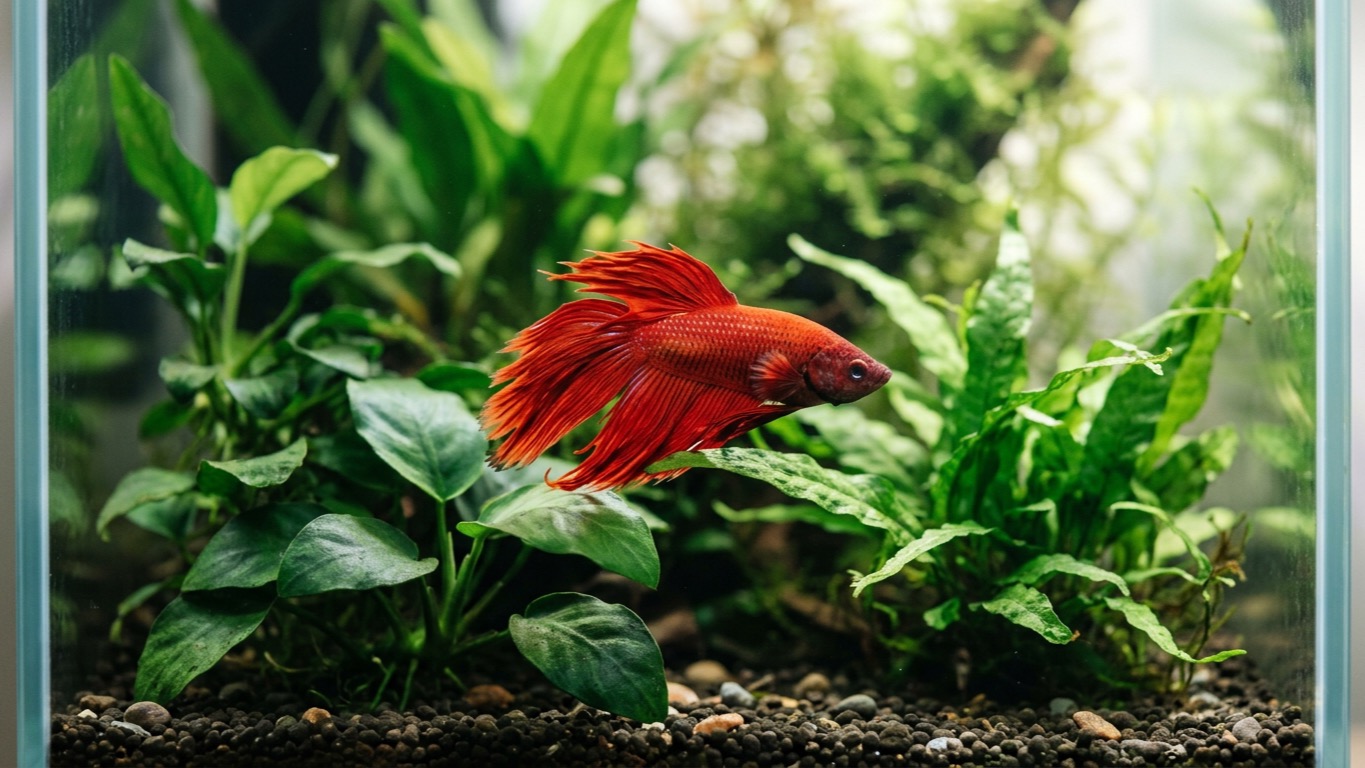
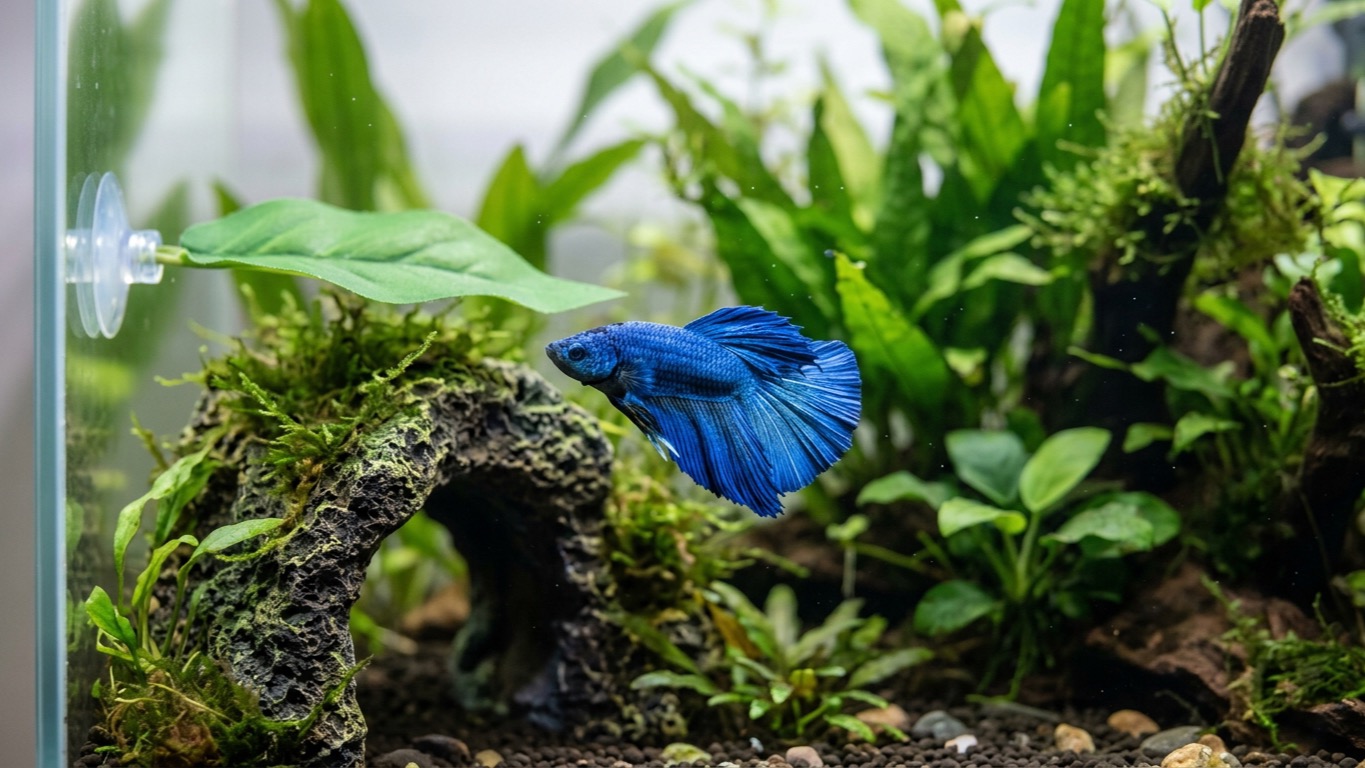
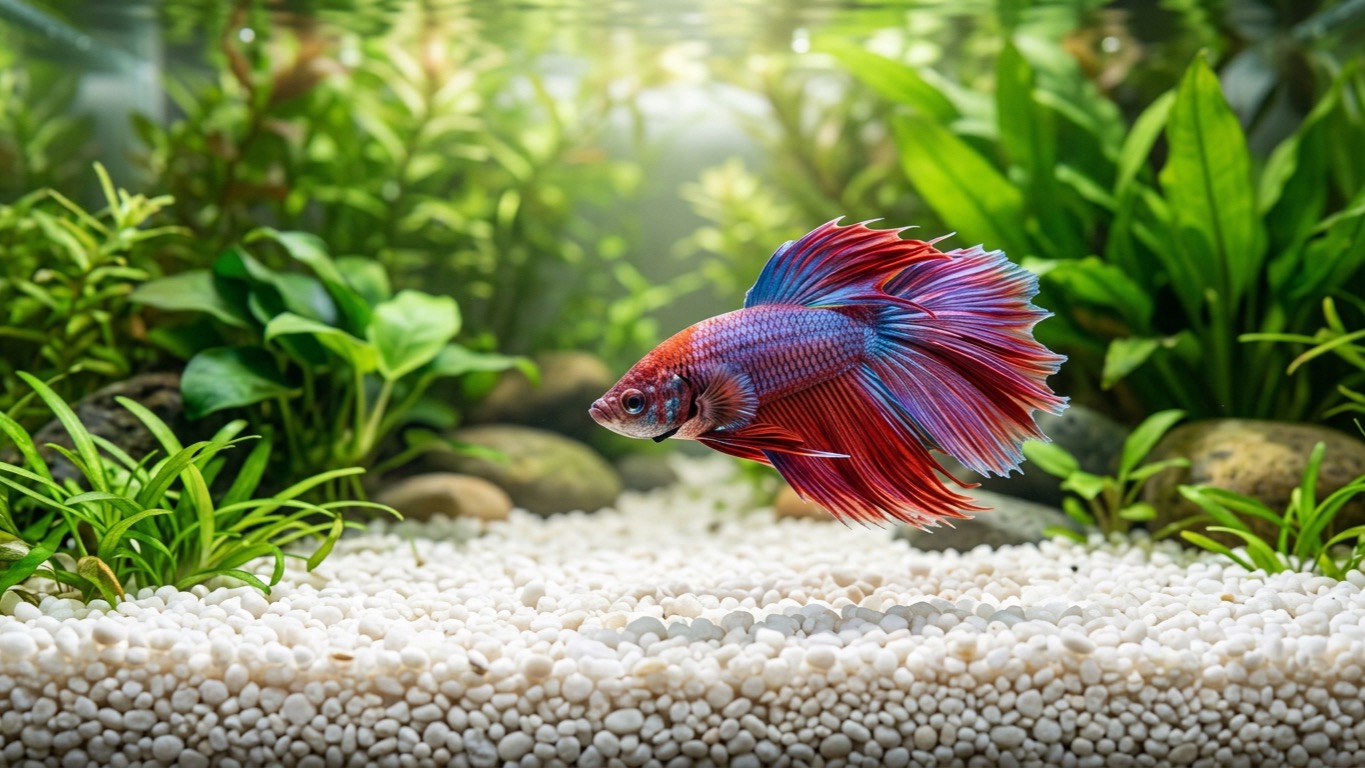
Quick answer: Plan for a 2-to-5-year life in a heated, filtered tank. Most published care pages cluster around 3 to 4 years. Cold bowls, dirty water, and extra males cut that range short.
A pet betta lives 2 to 5 years in captivity, according to National Geographic. This page is a desk review of published care ranges.
Our research team used one selection rule, the Published-Care Overlap Rule. A husbandry number becomes working advice only when two pages we read name an overlapping range. A single-source outlier stays in a caveat.
We compared published specs from National Geographic, two Aqueon care pages, and two betta-food maker pages. We left out medical plans, breeding programs, and any year-count that did not appear on those pages.
The published lifespan range, not the folklore range
Published care pages put a pet betta between 2 and 5 years, not a decade.
National Geographic lists 2 years in the wild and 2 to 5 years in captivity. That captive band is the cleanest one-line answer to the search query.
Aqueon’s lifespan article says bettas live about 2 to 4 years on average and calls 5 years old age. Aqueon’s Betta Care Guide lists an average of 3 to 4 years.
Our research team lined those three published ranges side by side. The overlap is 3 to 4 years under published care, while the full published band is still 2 to 5 years.
| Publisher | Published lifespan |
|---|---|
| National Geographic | 2 years in the wild; 2 to 5 years in captivity |
| Aqueon lifespan article | 2 to 4 years on average; 5 years as old age |
| Aqueon Betta Care Guide | 3 to 4 years on average |
National Geographic also lists adult size as 2 to 3 inches, and Aqueon’s pages do not print a different length.
You will see “10 years” on some hobby forums. None of the pages we read for this article print that number, so
Our editorial team notes that captive bettas have been bred for color and fins since the 14th century. Aqueon’s lifespan article says bettas rest a lot because those fins take work to hold up.
Wild fish face a shorter published clock. National Geographic’s 2-year wild figure sits beside pollution and habitat loss on the same page.
What shortens life first: heat, waste, and extra males
The same pages that print the 2-to-5-year range also print the shortcuts that cut it.
Cold water is the first cut, and National Geographic says bettas prefer water around 80°F. Colder water can make them lethargic, stop eating, or get sick more easily.
Aqueon’s two care pages do not print the same temperature band.
- Aqueon’s lifespan article: 76° to 81°F
- Aqueon’s Betta Care Guide: 76° to 85°F
- National Geographic: around 80°F
The overlap we will use is 76° to 81°F. That band sits inside both Aqueon pages and holds National Geographic’s 80°F point. The care guide’s extra 82° to 85°F is a single-page upper tail.
Dirty water is the second cut, and Aqueon’s lifespan article says to keep water clean and never use straight tap water. Tap water should be dechlorinated and checked for heavy metals.
Aqueon’s care guide then gives change sizes you can follow.
- Unfiltered containers: change 1/3 of the water every 3 to 4 days
- Filtered tanks: change 10% every week, or 25% every 2 weeks
- Never change all of the water at one time
- Change a filter cartridge at least once per month
A second male is the third cut. Aqueon’s lifespan article says not to add another betta, and our editorial team says owners should keep two males apart because fights can be violent. Aqueon’s care guide says males must be kept separately or in a partitioned container.
If you want tank mates, that same guide sets a floor of 15 gallons or larger for a peaceful community.
Tank volume, cycling, and the 48-hour setup note
Aqueon’s lifespan article says to use a tank of at least 5 gallons, with a heater and a filter.
That 5-gallon floor is the number we use for a single pet. Aqueon’s own care guide also lists smaller kits, including a 2.5-gallon BettaBow. Those kits sit on the same company site, but they do not overlap the 5-gallon floor, so the working minimum stays 5 gallons.
Larger water is easier to keep warm and clean. Aqueon’s care guide says larger habitats are more stable and easier to maintain. It also says bettas jump, so keep a lid on the tank.
Aqueon’s care guide says to set the container up at least 48 hours before you buy the fish. That is a wait, not a full nitrogen cycle. A cycle is the longer wait that grows waste-eating bacteria.
Read our page on how long to cycle a fish tank before you treat 48 hours as done.
Plants help in two published ways. Aqueon’s lifespan article says live plants help water quality and names Hornwort and Naja grass as plants that are gentle on fins. Soft rest spots matter because bettas spend a lot of energy holding those fins.
Our live plants for betta fish page covers which plants fit that job.
Sharp gravel can tear fins, and Aqueon’s lifespan article says to skip sharp decor. Our betta substrate page covers grain size and clean-up.
Food dose and protein on maker labels
Overfeeding shortens life by fouling water and by bloating the fish.
Aqueon’s lifespan article gives a simple pellet dose.
- Feed 2 to 4 pellets once or twice a day
- Offer fresh or freeze-dried food once or twice a week
- Feed an amount about the size of the fish’s eye
- Prefer protein over fat
Aqueon’s care guide sets time limits.
- Unfiltered containers: feed once a day, sparingly
- Filtered tanks: feed once or twice a day
- All food should be gone in 2 minutes or less
- Remove leftover food
Hikari UK’s page is more specific about pellet count by fish length.
- For a 1.5-inch betta: 5 to 10 pellets in the morning and 5 to 10 at night
- Add 5 pellets per 1/2 inch of growth
- Never feed more than 10 pellets in one sitting
- Keep feedings at least 2 hours apart
- Stop at least 2 hours before room lights go out
- Feed one pellet at a time
Aqueon prints 2 to 4 pellets once or twice a day. Hikari prints 5 to 10 pellets twice a day for a 1.5-inch fish.
The overlap we will use is small meals, one or two times a day, and you should stop if food remains. Hikari’s 3-times line is a single-page upper tail.
Label numbers from the two food pages:
- Hikari Betta Bio-Gold: crude protein minimum 38%; crude fat minimum 4.0%; ash maximum 12%; phosphorus minimum 0.7%
- Omega One Betta Buffet Pellets: crude protein minimum 42%; crude fat minimum 8%; ash maximum 8%; moisture maximum 8.5%
Both maker pages sit above 38% protein, which matches Aqueon’s “high in protein, not fat” line. Omega One’s 8% fat is double Hikari’s 4.0% minimum.
Bowls, community tanks, and other shortcuts that cost years
A bowl can hold a fish, but the pages we read do not treat it as a full life.
Aqueon’s lifespan article says tiny bowls and vases are not the ideal setup. It points keepers to at least 5 gallons with a heater and filter.
Aqueon’s care guide still discusses small unfiltered containers. It then raises the work to 1/3 water changes every 3 to 4 days and one sparse meal a day. Smaller water means more changes.
Aqueon’s care guide lists pH as 6.8 to 7.5. National Geographic does not print a pH band, so we treat 6.8 to 7.5 as a one-source range.
Community life has a published floor. Aqueon’s care guide says males can live in a peaceful 15-gallon or larger tank with calm fish. Aqueon’s lifespan article is more cautious and names ghost shrimp, snails, or African dwarf frogs.
Our editorial team says people sometimes hand bettas out as party favors because they can cost as little as two dollars. A cheap fish still needs the same heat, volume, and food dose.
Aqueon’s care guide says there are over 70 recognized species of Betta. National Geographic says Betta splendens has more than 70 relatives. Most store fish are still Betta splendens.
Age you cannot see at the store
You rarely buy a day-old fish, and the pages we read do not print a store age.
None of the six pages in our source list states how many months a cup fish has already lived. We will not invent that number. If a published range is 2 to 5 years, some of those years may already be gone.
Aqueon’s lifespan article says to pick a fish that is not discolored and does not have damaged fins. It also says to check that the other fish are not sick and that the tank is not dirty. Those are purchase checks, not an age test.
National Geographic lists diseases owners should watch: fin rot, dropsy, swim bladder disease, and velvet. We are a research desk and do not diagnose fish.
If your fish is already past 4 years, Aqueon’s lifespan article says 5 years is an achievement, and the published clock is short.
FAQ
These answers stay inside the published ranges we compared.
How long do betta fish live in a bowl?
Aqueon’s lifespan article says tiny bowls are not the ideal setup and points to at least 5 gallons with a heater and filter. Aqueon’s care guide still describes small unfiltered containers, then requires a 1/3 water change every 3 to 4 days. A bowl does not change National Geographic’s 2-to-5-year captive range, but it makes the short end more likely.
Can a betta live 10 years?
Not on the pages we read for this article. National Geographic stops at 5 years in captivity, and Aqueon’s lifespan article treats 5 years as old age. Aqueon’s care guide averages 3 to 4 years, and
Do male and female bettas live the same number of years?
The pages we compared do not split lifespan by sex. They do split housing: Aqueon and National Geographic both say two males should not share a tank. Fighting can end a male’s life early, which is a housing risk, not a published sex-specific year count.
How old is a store betta when I buy it?
Aqueon’s lifespan article only tells you to avoid damaged fins, discoloration, sick tankmates, and a dirty tank. Assume some of the 2-to-5-year published range has already passed.
What water temperature keeps a betta in the published range?
Use 76° to 81°F. That band overlaps Aqueon’s 76° to 81°F lifespan range and National Geographic’s 80°F note. Aqueon’s care guide prints 76° to 85°F, and we treat the extra degrees above 81°F as a one-page tail.
How much should I feed a betta each day?
Aqueon’s lifespan article says 2 to 4 pellets once or twice a day. Hikari UK says a 1.5-inch fish may take 5 to 10 pellets morning and night, with a cap of 10 pellets per feeding. Start on the Aqueon dose, and raise the count only if leftover food is gone within Aqueon’s 2-minute window.
Does cycling the tank change how long a betta lives?
Aqueon’s care guide says to set the tank up at least 48 hours before purchase, but that wait is not a full cycle. A cycle is the longer process that keeps waste from spiking after the fish moves in. Uncycled water is one way the short end of the 2-to-5-year range happens, so use our cycling guide for the wait itself.