Quick answer: Scrape what you can reach. Then follow a maker’s liquid-carbon dose and run the light on a timer. Do not add more hours of light, and skip algaecides in shrimp tanks.
Black beard algae is a dark brush growth you reduce with labeled liquid carbon, not by adding more light. This page is a spec-comparison guide to causes, removal, and prevention. We did not run tank trials, did not identify samples under a microscope, and did not apply any product to an aquarium.
Our research team compared six current maker pages, and only Seachem’s Flourish Excel page names black beard algae by that common name.
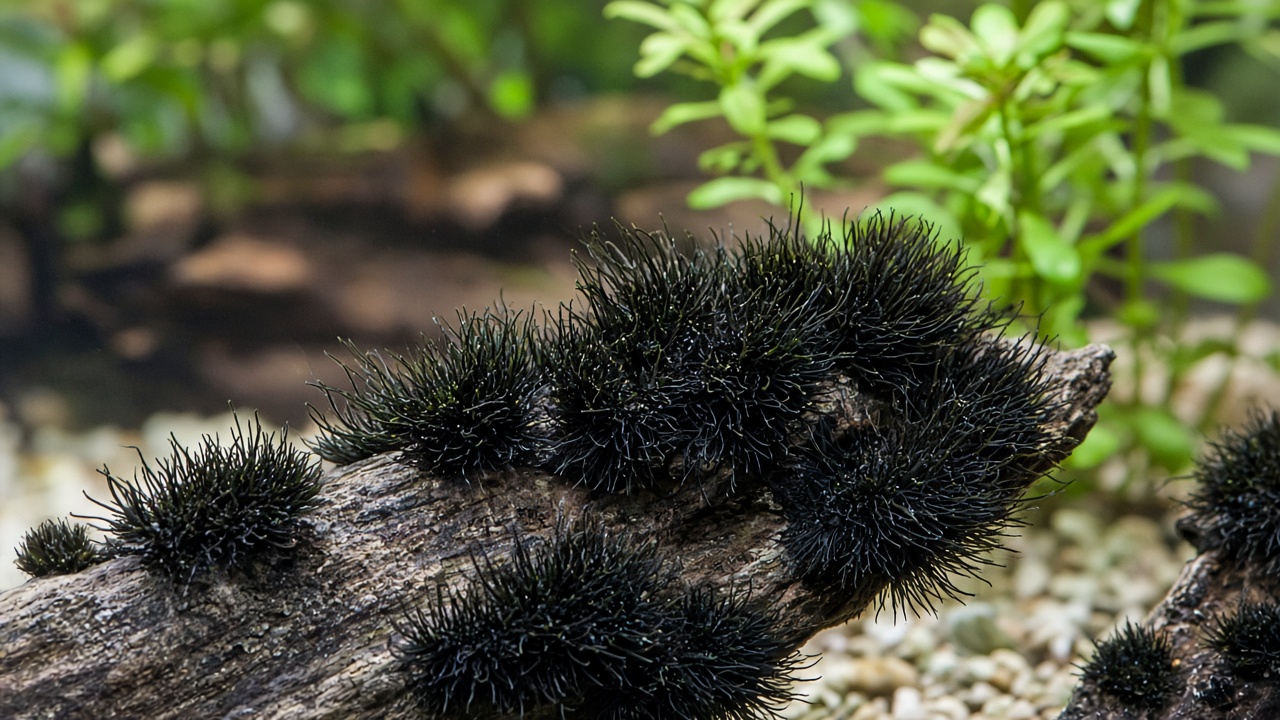
What black beard algae looks like
It is a dark, brush-like coating that holds onto hard surfaces.
It looks like a short beard on driftwood, filter rims, heater cords, and older leaves. The color is black or dark gray, and it does not wipe off like dust.
If the coating is brown and powdery, you may have diatoms instead. See our page on brown algae in a fish tank. Brown films often fade as a new tank settles, while black beard algae stays until carbon and waste change.
It prefers tired edges such as slow stems, damaged leaves, and wood in a strong outflow. A pulled tuft feels wiry, which is why scraping alone rarely ends it.
What usually sets it off
Unstable carbon and leftover waste give it a surface to hold.
Easy-Life’s EasyCarbo page states the carbon gap in plain terms. If carbon stays low for too long, plants stop competing well and then leak sugars and other nutrients that attract algae.
Seachem’s Flourish Excel page frames carbon as a plant need from CO2 gas or from a simple organic source, used alone or with injected CO2. API’s CO2 BOOSTER page also sells liquid carbon for daily plant use and says the product will not alter pH.
Those three carbon pages share one idea: plants need a steady carbon supply, and algae get a chance when that supply gaps.
Light still matters, but more hours is the wrong first move. Fluval’s Plant 3.0 Bluetooth LED, 32W page lists a programmable 24-hour light cycle, so use that clock.
Waste also matters, and Seachem’s PhosGuard page is a phosphate and silicate remover. Phosphate is not the only cause, but it is one leftover you can measure and bind.
None of the six maker pages print a black-beard-algae ppm cutoff, so our research team does not invent one.
What we included and what we left out
We only used products with a published number on a current maker page. That is the Number-on-the-Page Rule, and it decided every row in the table below.
We included a product only if all of these were true:
- The maker page was live and sold the item for freshwater use.
- The page listed a dose in mL, a media volume, or a wattage and PAR figure.
- We could quote that number without guessing.
We left out all of these:
- Algae-eating fish and shrimp, because they are livestock, not labeled doses.
- Bleach dips and peroxide, because they are not sold as aquarium carbon on these pages.
- Spot-syringe tricks that exceed a printed dose.
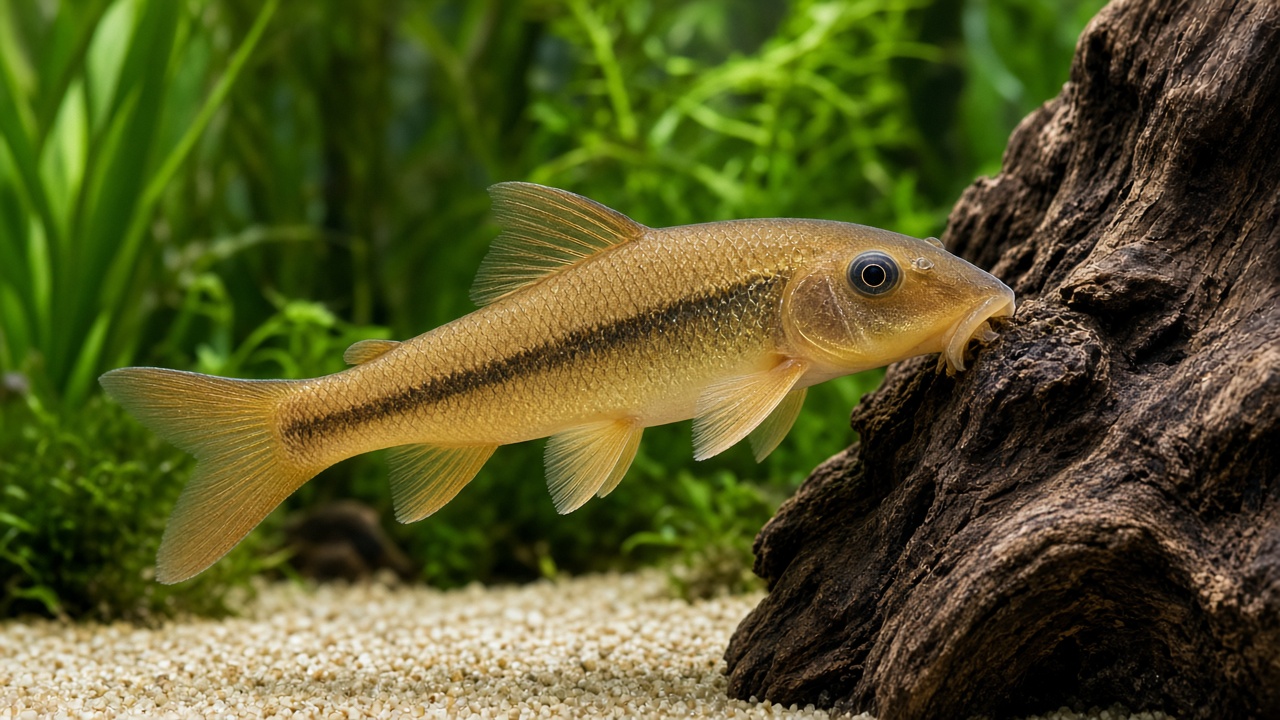
Some keepers still add a grazer after the water is stable, and that is a livestock choice, not a dose. Start with our 2026 algae-eating fish guide and the broader algae eater list.
Across the six maker pages, the printed schedules split this way:
- Three pages publish a daily carbon dose: Seachem Flourish Excel, API CO2 BOOSTER, and Easy-Life EasyCarbo.
- One page publishes a three-day algae-control interval: API ALGAEFIX.
- One page publishes a four-day phosphate check: Seachem PhosGuard.
- One page publishes a 24-hour light cycle: Fluval Plant 3.0 Bluetooth LED, 32W.
How to remove it without guessing doses
Pull loose tufts first, then follow the printed carbon and filter doses.
Use the Label-Timer-Filter Rule:
- Follow one carbon label. Do not stack two carbon bottles on day one.
- Put the light on a clock. Fluval’s 32W Plant 3.0 page lists a 24-hour cycle in its app.
- If phosphate stays high, use PhosGuard at the printed freshwater volume.
- Turn the filter outflow aside so tufts do not blow downstream.
- Pinch or scrape wood, glass, and dead leaf edges.
- Bag and discard the scrapings. Do not rinse them back in.
- Trim leaves that are more beard than leaf.
Then pick one carbon product and stay on its label. Seachem’s Flourish Excel page gives this schedule:
- After first use, or after a water change greater than 40 percent, use 5 mL (1 capful) per 10 US gallons (40 L).
- After that, use 5 mL per 50 US gallons (200 L) daily or every other day.
- Each cap thread is about 1 mL for smaller tanks.
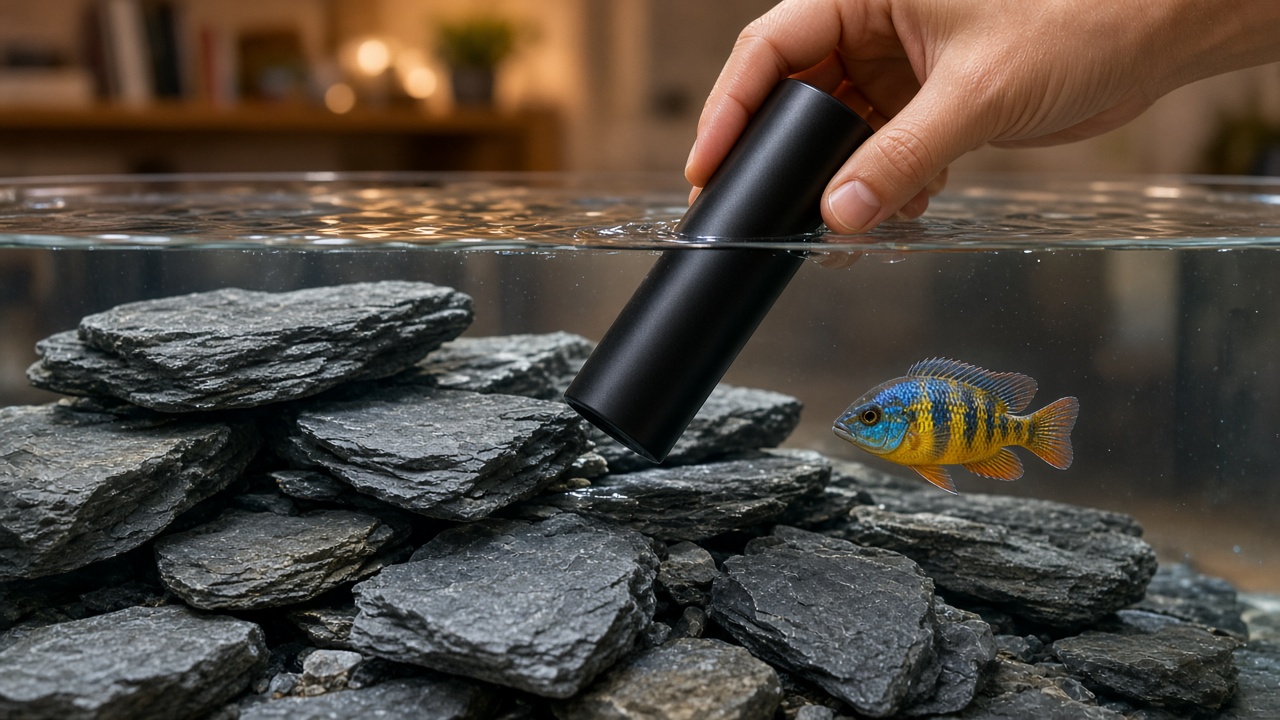
Seachem’s same page says Excel can stay available as a carbon source for up to 24 hours. Dose it during the day if you can. The page also says Excel is not an algicide and that Seachem does not market it as a spot treatment.
Seachem’s Flourish Excel page does say black beard algae “seems to be particularly affected” when Excel is dosed.
API’s CO2 BOOSTER page uses a simpler daily rule:
- Add 1 mL per 10 US gallons (38 L).
- Or add 5 mL per 50 US gallons (190 L).
- Dose once a day.
Easy-Life’s EasyCarbo page scales the daily dose by planting:
- Few plants: 1 mL per 100 L each day.
- Moderate planting: 1 mL per 50 L each day.
- Heavy planting: 1 mL per 25 L each day.
Easy-Life’s EasyCarbo page also prints 1 mL to 2 mL per 50 L each day. It says plants look better after about two weeks.
If you keep shrimp, crabs, or lobsters
Skip API ALGAEFIX if you keep shrimp, crabs, or lobsters.
API’s ALGAEFIX page says not to use it with those freshwater crustaceans. The same page names green water and string or hair algae, and it does not name black beard algae.
Stay with a carbon product whose page does not ban shrimp, and follow the printed mL. API’s CO2 BOOSTER page says the product is for freshwater fish and will not alter pH.
If you do not keep crustaceans
API ALGAEFIX is still an algae-control bottle, not a BBA-named bottle.
API’s ALGAEFIX page gives this schedule:
- Add 1 mL per 10 gallons (38 L).
- Or add 5 mL per 50 gallons (190 L).
- Repeat every three days until algae is controlled, then add one dose per week.
- Siphon or scrape dead algae.
API’s page repeats a do-not-overdose warning, and weekly use is the maintenance step.
If phosphate will not drop
Use Seachem PhosGuard at the freshwater volume, then test on day four.
Seachem’s PhosGuard page lists:
- 85 mL (1/3 cup) per 100 US gallons (400 L) of freshwater.
- Leave it in place for 4 days, then test.
- Replace the media if the reading has not dropped to about 0.02 mg/L.
Seachem’s PhosGuard page also lists a bound-phosphate figure of 0.87 mg/g for PhosGuard. Pre-wet the beads in a double volume of freshwater, and do not tumble them in a reactor.
That same page says over-treating is not recommended, and small ongoing amounts beat one huge dump.
How the products compare on the label
These six items differ by role, dose, and interval, not by a rank.
| Product | Maker-listed role | Stated amount | Repeat on the label | Maker note we can quote |
|---|---|---|---|---|
| Seachem Flourish Excel | Bioavailable organic carbon | 5 mL per 10 US gal after a >40% water change; then 5 mL per 50 US gal | Daily or every other day | Available up to 24 hours; not sold as an algicide |
| API CO2 BOOSTER | Liquid carbon for plants | 1 mL per 10 US gal (38 L) | Once a day | Will not alter pH |
| Easy-Life EasyCarbo | Liquid carbon for plants | 1 mL per 50 L for moderate planting | Every day | Plants look better after about two weeks |
| API ALGAEFIX | Algae control | 1 mL per 10 gal (38 L) | Every 3 days, then weekly | Not for shrimp, crabs, or lobsters |
| Seachem PhosGuard | Phosphate and silicate remover | 85 mL per 100 US gal freshwater | Recheck at 4 days | About 0.02 mg/L target; 0.87 mg/g PO4 bound |
| Fluval Plant 3.0 Bluetooth LED, 32W | Programmable planted-tank light | 32W; 168 LEDs; PAR 453 at 3 in | 24-hour cycle in the app | Fits 24–34 in tanks; PAR 107 at 12 in |
Fluval’s 32W bar is a fixture, not a bottle. The PAR figures on Fluval’s Plant 3.0 32W page show a strong surface reading, not a reason to run the bar all day.
Pick one carbon bottle and a timer. Add PhosGuard only if phosphate stays up after you clean. Add ALGAEFIX only if you have no crustaceans and you accept its named algae list.
How to keep it from coming back
Keep carbon on a schedule and keep the light on a clock.
Prevention is the same Label-Timer-Filter Rule run as a habit, so stay on the carbon interval you already chose.
- Excel: 5 mL per 50 US gallons daily or every other day after the first large dose.
- CO2 BOOSTER: 1 mL per 10 US gallons once a day.
- EasyCarbo: 1 mL per 50 L a day in a moderately planted tank.
Do not skip a week and then catch up with a double pour. Seachem’s Excel page warns that large doses can melt Vallisneria leaves. The same page says Anacharis is sensitive and should get Excel every other day, not daily.
Put the light on Fluval’s 24-hour cycle if you use that bar. Set a rise, a midday peak, a sunset, and a night.
- Siphon mulm from wood crotches and filter inlets.
- Bag dead leaves the day they brown.
- Recheck phosphate on PhosGuard’s 4-day mark if you installed that media.
If tufts return on one leaf, trim that leaf. Do not raise the light, and do not stack two carbon bottles on the same morning.
Grazing fish can pick at leftover fuzz, but they cannot replace a missed carbon day.
FAQ
Is black beard algae the same as brown algae?
They are not the same. Brown algae in a new tank is usually a soft film, while black beard algae is a dark, wiry brush. If the patch wipes away like dust, start with our brown algae page.
Does Seachem Flourish Excel kill black beard algae?
Seachem’s Flourish Excel page says black beard algae seems particularly affected when the product is dosed. The same page says Seachem does not make or market Excel as an algicide. Follow the 5 mL rules.
Can I use API ALGAEFIX in a shrimp tank?
You should not. API’s ALGAEFIX page says not to use it with freshwater crustaceans, including shrimp, crabs, and lobsters. Keep the 1 mL-per-10-gallon math for fish-only tanks, and use a carbon product in shrimp tanks.
How long before Easy-Life EasyCarbo shows a change?
Easy-Life’s EasyCarbo page says plants look better after about two weeks of daily use. Keep the daily mL through those two weeks, then look at new leaves.
Do I need a new light to stop it?
Not if you can already put the old light on a timer. Fluval’s Plant 3.0 32W page is here because it publishes a 24-hour cycle plus PAR numbers.
Will Seachem PhosGuard starve my plants?
Seachem’s PhosGuard page tells you to test at 4 days and to aim near 0.02 mg/L if the reading has not dropped. It also says over-treating is not recommended, so use 85 mL per 100 US gallons of freshwater, then test.
Can algae-eating fish finish the job alone?
They can graze leftover fuzz, but they cannot replace a carbon label or a light clock. Read the 2026 algae-eating fish guide and the algae eater list after the tank is on a printed schedule.