Quick answer: Buy a black betta as a color form of the common pet betta, not as a new species. Keep one fish in a heated, filtered tank of 5 gallons or more. Orchid and melano are shop labels for look, not a different care plan.
A black betta is a Betta splendens color form, not a species, and it needs a 5-gallon tank. This page is a shopper’s color-and-care brief from our research desk.
Our selection rule was simple: we covered orchid and melano, the two trade names U.S. listings use most. We also added products whose maker pages list protein, pellet size, or a weekly test note.
We left out “super black,” “black devil,” and “black ice” tags, and any food with no listed analysis.
What a black betta is
A black betta is a dark color form of Betta splendens, the same pet species sold in other colors.
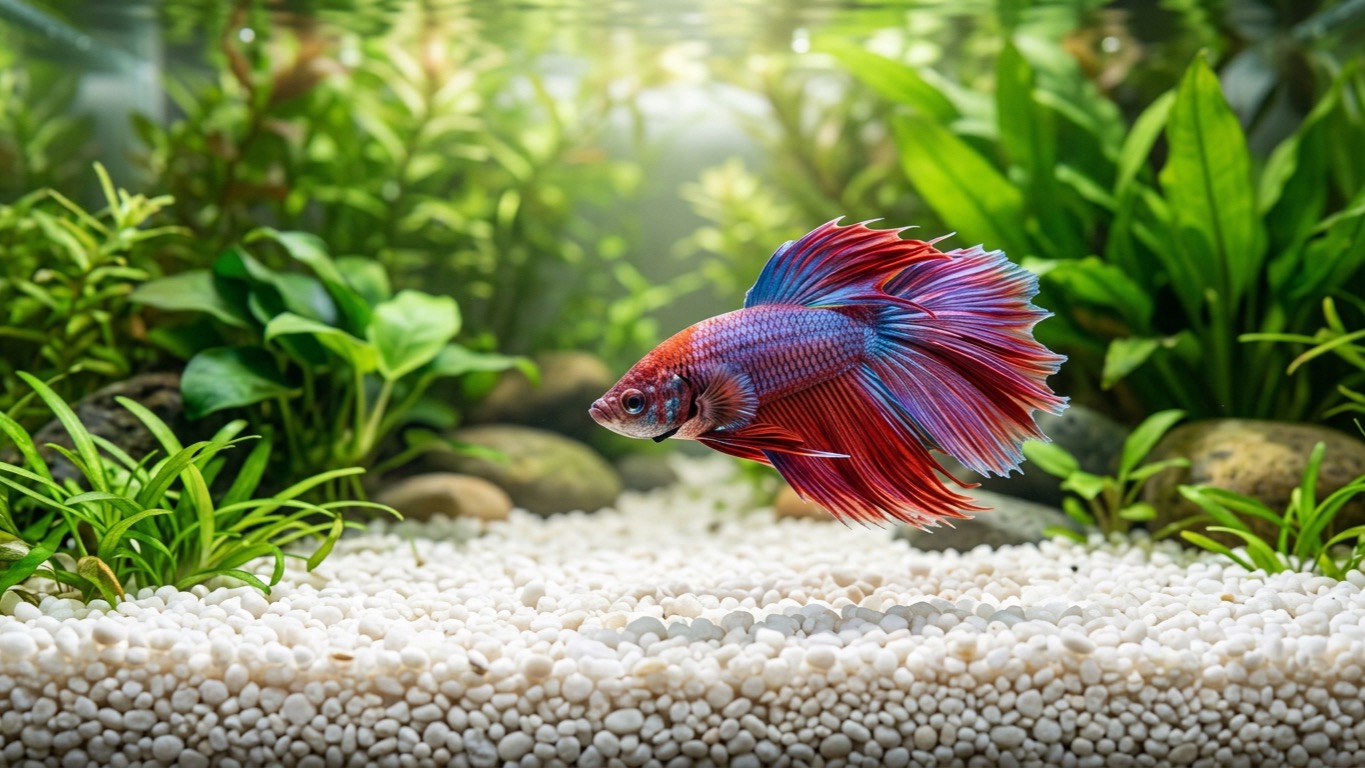
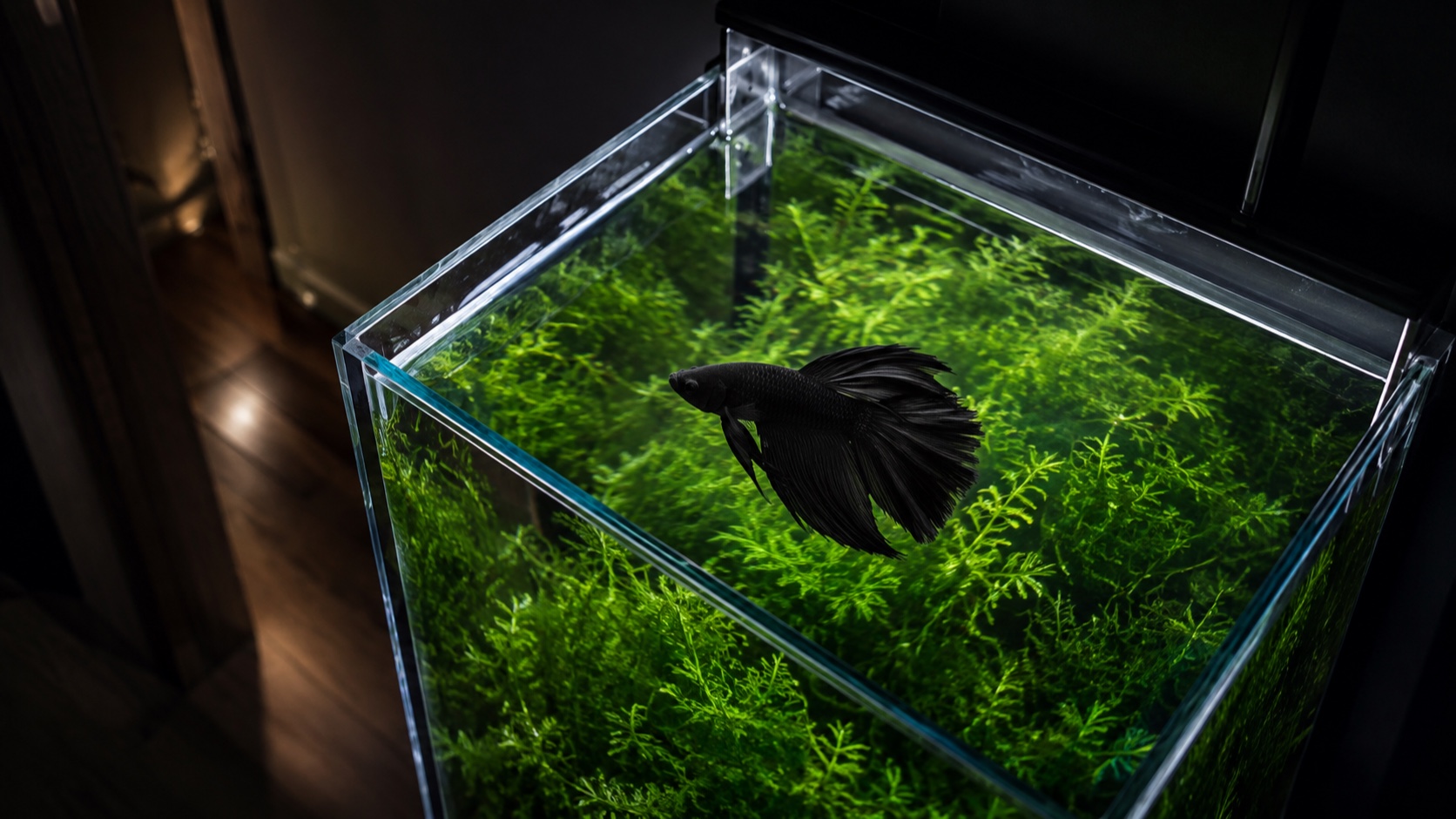
Pet shops sell black fish under many photo tags. The body can look matte, velvet, or slightly blue in bright light. That shine does not make the fish a new species.
The University of Illinois College of Veterinary Medicine page calls these fish Siamese fighting fish. It treats them as common household pets and does not split care by color. Dark fish follow the same housing rules as red or blue fish.
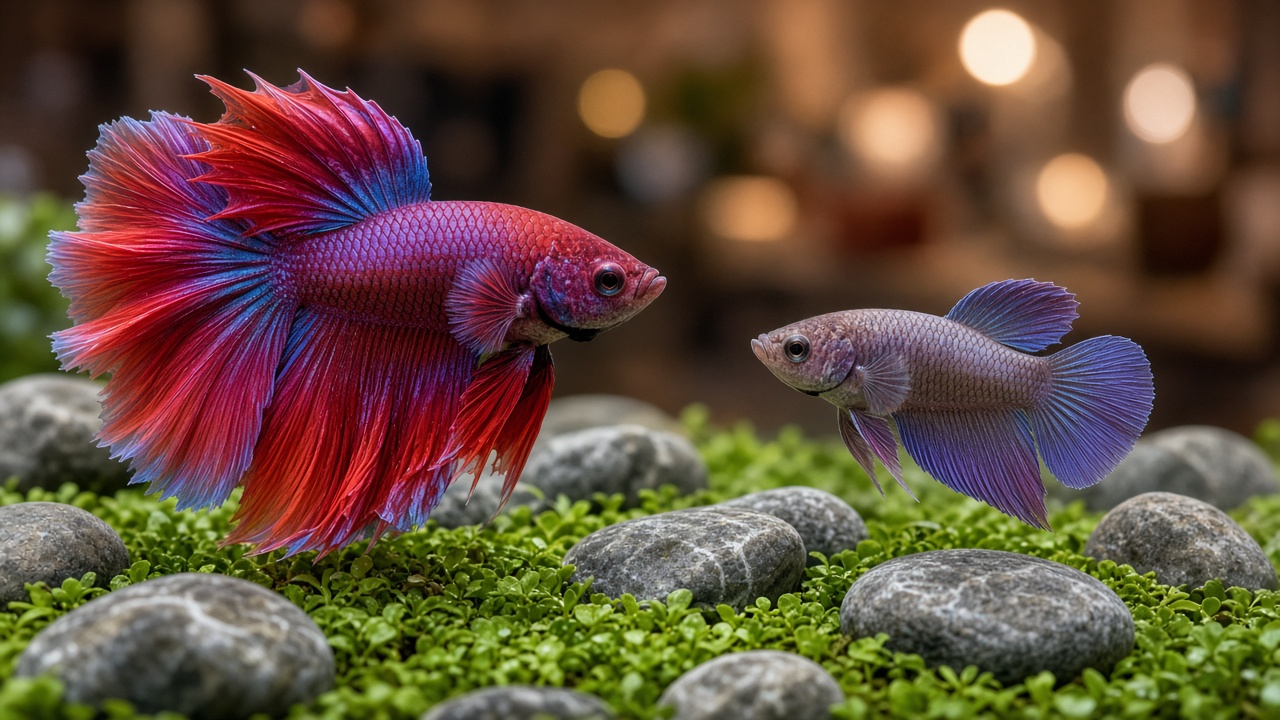
Many fish show a blue, green, or red wash when a lamp hits the scales. Ask the seller for a room-light photo, not only a spot-lamp shot.
Orchid and melano: a shopper’s naming rule
Orchid and melano are shop names for look, not official species names.
Sellers use “orchid” when a dark body shows steel, blue, or purple streaks in the fins. The same listing may also show a red wash on the fins or gill plate. That mix is a photo tag, not a lab result.
Sellers use “melano” when the black looks dense and matte, with little shine.
Our desk rule for this section is visual, not genetic. Near-black fish with colored fin streaks are often tagged orchid. Flat black fish with little shine are often tagged melano.
Skip any listing that promises a rare species. You are still buying Betta splendens.
Tank, heat, and filter
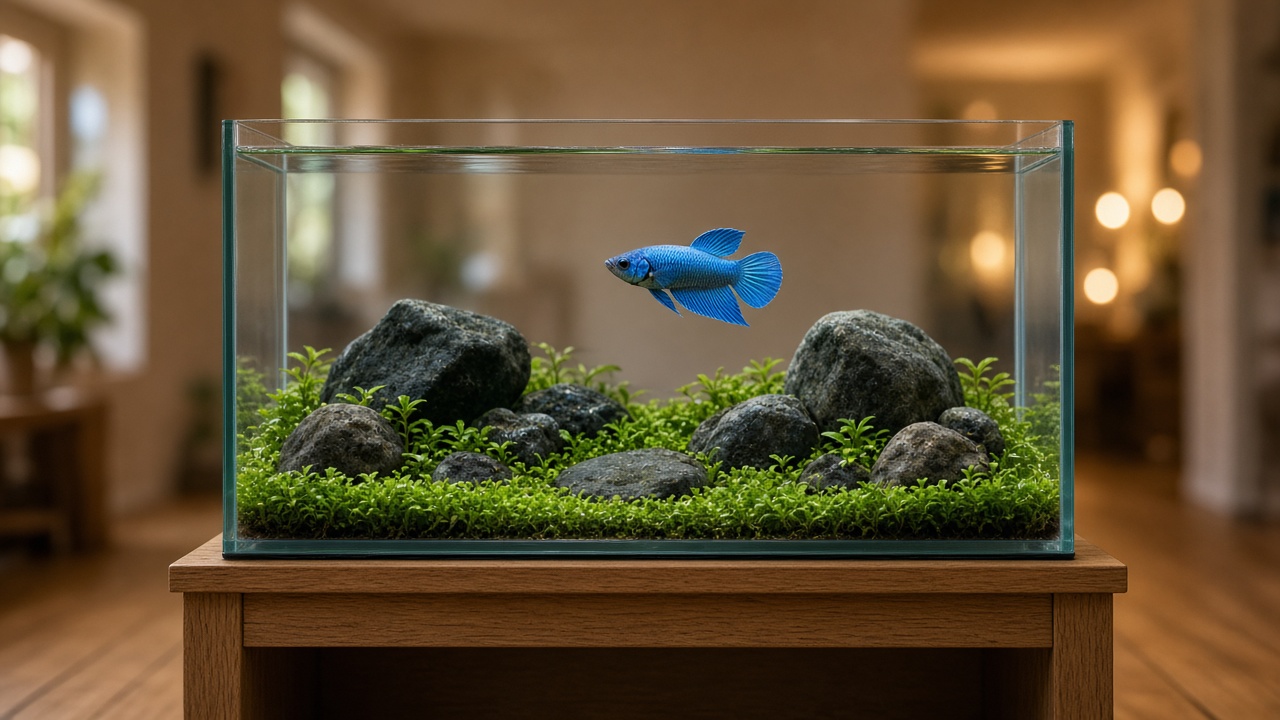
A black betta needs the same 5-gallon heated, filtered tank as any other pet betta.
The University of Illinois College of Veterinary Medicine page says bettas should not live in bowls. It says they should ideally be in a 5-gallon glass or plastic tank or larger. See our guide to what size tank a betta needs.
Set the tank up before you bring the fish home.
- Use a tank of 5 gallons or more, as the University of Illinois page states.
- Add a low-flow filter. That same page prefers low flow so fins are not pulled.
- Add a heater and a thermometer. Do not guess the water temperature.
- Use a dechlorinating product on tap water. The university page names chlorine, chloramine, and heavy metals as tap-water risks.
- Skip distilled water. That page says distilled water lacks minerals fish need.
- Leave open swim space. Decor should not push the fish to the glass.
Most homes sit cooler than that band, so the university page says an in-tank heater will be needed.
Live plants help a dark fish feel covered and break up sight lines. A planted betta tank setup keeps leaves soft and flow low. Plants are not food; the University of Illinois page says bettas are carnivores and cannot live off plant roots.
Daily food from maker labels
Compare maker labels for protein and portion size, and do not treat color as a diet change.
A black betta eats the same class of food as any other pet betta. The University of Illinois page says they eat insects and insect larvae and should get a balanced pelleted or flaked food daily. Offer only what the fish can eat in 3 to 5 minutes, with no leftovers.
Our research team compared published protein minima on three maker pages. That comparison is a 7-point spread on paper, not a ranking.
- Fluval Bug Bites Betta Micro Granules: 45.0% minimum crude protein
- Omega One Betta Buffet Pellet: 42% minimum crude protein
- Hikari Betta Bio-Gold: 38.0% minimum crude protein
Tetra’s Betta Flake Medley page does not publish a protein percentage. We still include that food because the maker page lists form and pack size.
| Product | Form on maker page | Crude protein min (if listed) | Other listed spec |
|---|---|---|---|
| Fluval Bug Bites Betta Micro Granules | Slow-sinking micro granules, 0.25–1.0 mm | 45.0% | 1.05 oz / 30 g; up to 40% black soldier fly larvae |
| Omega One Betta Buffet Pellet | Floating pellet | 42% | Fat min 8%; fiber max 2.0%; moisture max 8.5% |
| Hikari Betta Bio-Gold | Floating pellet | 38.0% | Fat min 4.0%; packs of 0.088 oz (2.5 g) and 0.70 oz (20 g) |
| Tetra Betta Flake Medley | Thin red flakes plus freeze-dried brine shrimp | Not listed on the Tetra page | 0.81 oz pack; product no. 16838 |
| API Freshwater Master Test Kit | Liquid reagent kit with four test tubes | Not a food | Weekly tests for ammonia, pH, high-range pH, nitrite, and nitrate |
Use the feeding line on the bag you actually open.
- Fluval’s Bug Bites Betta page: as much as the fish can eat in two minutes, two or three times daily
- Hikari Betta Bio-Gold, for a fish 1.5 to 1.75 inches from nose to tail base: three pellets, up to three times daily
- Same Hikari page: add 1 pellet per 1/4 inch of growth; never more than 5 pellets at one feeding
- Extra Hikari feedings: at least three hours apart, and at least three hours before the room goes dark
- University of Illinois page: a 3-to-5-minute eat-up window and no leftover food
Those published notes do not match on the clock. Follow the product in use, then stop when food remains. See how often you should feed a betta for a simple meal rhythm.
Treats stay small: the University of Illinois page names bloodworms or brine shrimp, live or freeze-dried, and says to give them in moderation.
Water tests and weekly care
Test weekly for the levels the API kit page names, then change water on a set day.
Color does not change waste chemistry. A black fish will fade or sit at the bottom if ammonia or nitrite rises, and you will not see that drift without a kit.
API Fishcare’s Freshwater Master Test Kit page says the kit measures ammonia, pH, high-range pH, nitrite, and nitrate, and says to test weekly. The kit includes four test tubes and a laminated color card. API’s page states that a pH of 7.0 is neutral, above 7.0 is alkaline, and below 7.0 is acidic.
The University of Illinois page does not print a target pH for bettas. It does say water quality is vital and that leftover food drives toxins. Keep the pH stable rather than chasing a number you cannot hold.
Do this each week.
- Test ammonia, nitrite, nitrate, and pH with the API Freshwater Master Test Kit.
- If the ammonia or nitrite color is not the card’s safe color, change water the same day at the same temperature.
- Vacuum leftover food and waste. The university page ties leftover food to poor water.
- Confirm the thermometer still reads 76°F to 81°F.
API’s page says most water problems are invisible, which is why the weekly test matters.
Plants and soft light help a dark fish show, but they do not replace heat or a filter.
Black pigment looks richer under a warm, even lamp than under a harsh white spot. Keep the heater in the 76°F to 81°F band first.
A planted tank gives rest spots and shade, and soft leaves beat plastic plants with sharp edges. The University of Illinois page says many store decorations have sharp edges that tear fins. Decor should never take up so much space that the fish is pushed to the edge.
If your black fish starts to show blue, red, or pale patches, check the tank before you blame the color name. Test the water and confirm 76°F to 81°F. Look for torn fins and leftover food.
Marble-type color shifts are common in shop talk.
We skipped ranked “best black betta” lists, price tiers, and breeding recipes. If the fish stops eating, starts listing, or shows torn fins, call a clinic that treats fish.
FAQ
Is a black betta a different species from a blue or red betta?
A black betta is a color form of Betta splendens, the same pet species sold in other colors. The University of Illinois College of Veterinary Medicine page discusses Siamese fighting fish as one household pet, not as separate species by color. Orchid and melano are shop labels for look and do not change the 5-gallon housing rule.
What is the difference between an orchid betta and a melano betta?
Shop listings use orchid for a dark body with steel or blue fin streaks, and melano for a denser matte black. Treat them as photo tags; care stays the same for both.
Do black bettas need a special food?
They need a daily betta pellet or flake, not a “black-only” diet. Three maker pages list these crude-protein minima:
- Fluval Bug Bites Betta Micro Granules: 45.0%
- Omega One Betta Buffet Pellet: 42%
- Hikari Betta Bio-Gold: 38.0%
Pick one staple and feed only what the fish finishes.
How often should I test the water in a black betta tank?
API Fishcare’s Freshwater Master Test Kit page says to test weekly for ammonia, pH, high-range pH, nitrite, and nitrate. A dark body can hide early fade, so the weekly test matters more than a glance at color. Change some water the same week, using conditioned water at the same temperature.
Why did my black betta show blue or red later?
Shop lights often hide a blue or red wash that shows up at home. Check ammonia, nitrite, and the 76°F to 81°F band first.