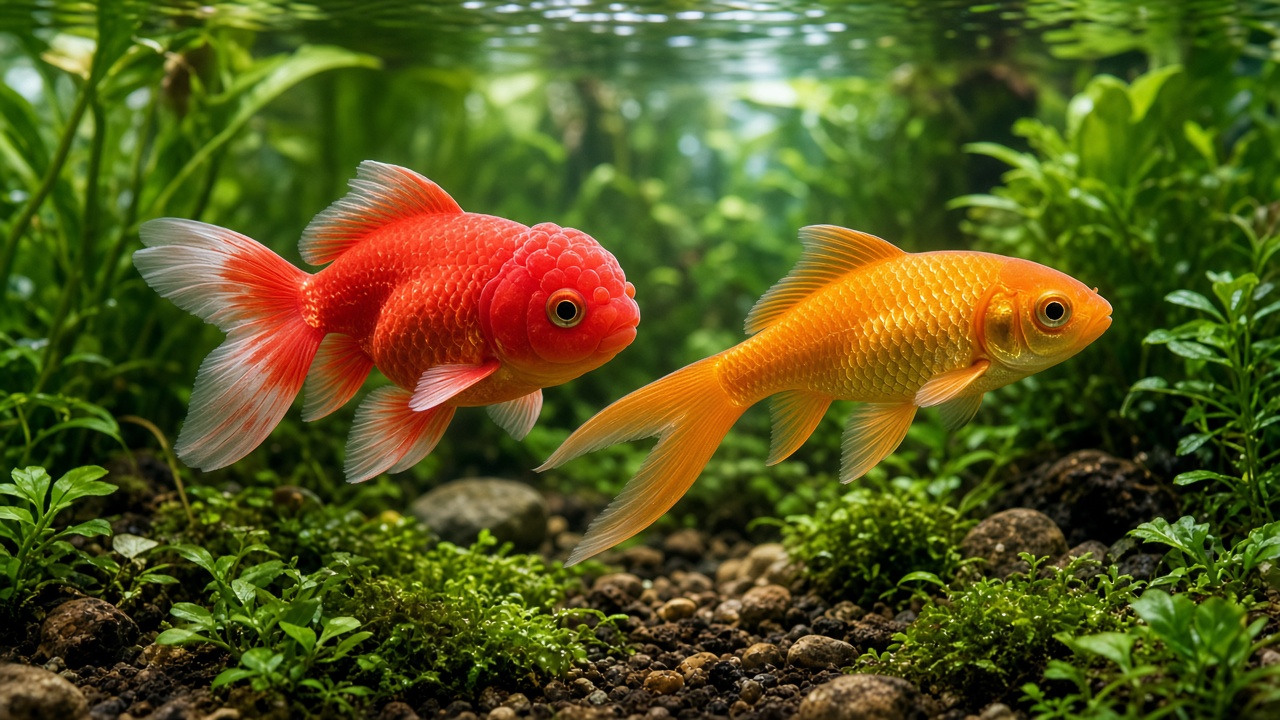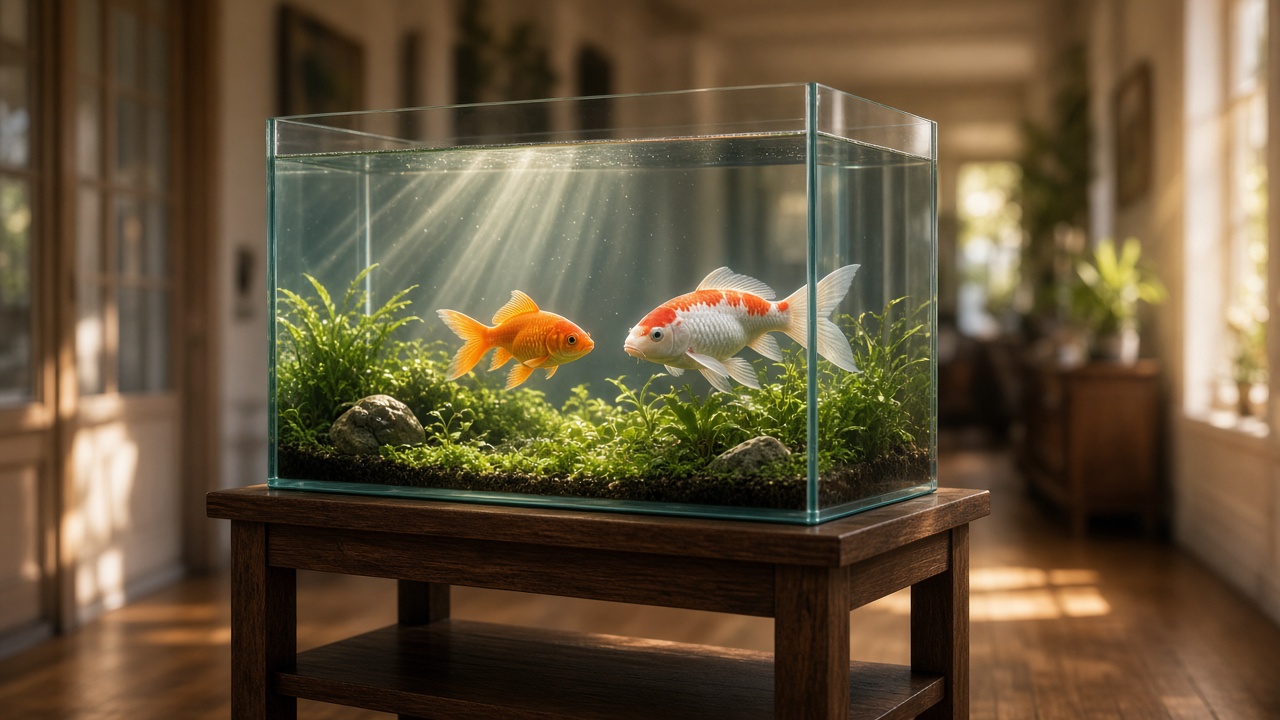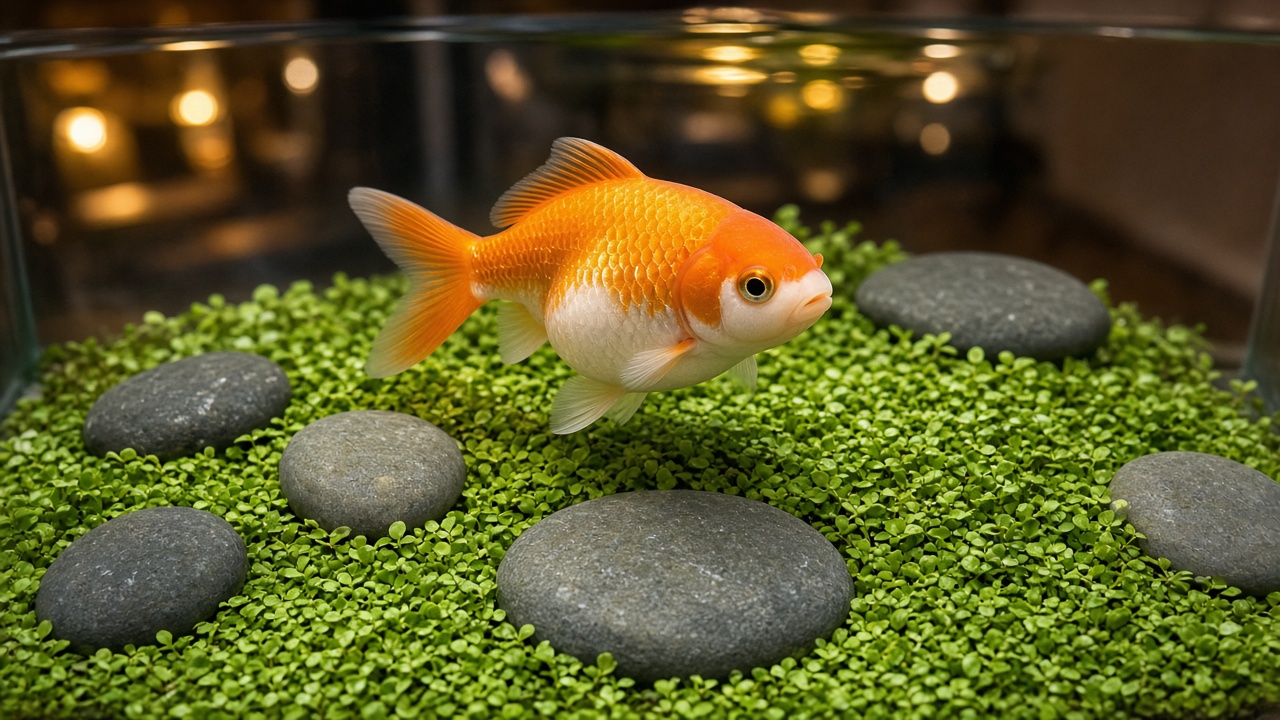
Quick answer: Goldfish do not get pregnant. A round belly usually means eggs or bloating, not live young. Test the water, watch her eat, and keep adults away from any eggs you want to save.
Goldfish cannot be pregnant; they lay eggs and never carry live young.
This page is a home-aquarium research brief for keepers who searched that phrase. Our research team compared published University of Florida IFAS circulars and current maker specs.
Selection rule: We cover only pet goldfish (Carassius auratus) with a swollen belly in a home tank. We skip pond hormone spawning, koi-only disease programs, and livebearer species such as guppies.
Goldfish are egg-layers, not livebearers
The takeaway is simple: a goldfish can hold eggs, but she cannot be pregnant.
University of Florida IFAS groups goldfish with minnows and carps. That family broadcasts eggs and sperm over gravel, plants, or wood, and it gives no parental care.
IFAS puts livebearers in a different family from goldfish. Guppies, mollies, platies, and swordtails carry eggs inside the female, and those young are born live.
That live birth is what people mean by “pregnant fish.” Goldfish never follow that pattern, even when the belly looks full.
The same IFAS circular says cultured goldfish in Florida are generally small. Most farm fish stay under 100 mm, or 4 inches, at sale.
A long-kept house goldfish can still look very round when she is holding eggs. Trade size from a farm is not the same as pet size.
IFAS also notes that freshwater tropical culture is Florida’s largest aquaculture segment. A 2021 farm survey reported $172,075,095 in tropical fish sales.
About 200 Florida producers raise over 800 varieties, and those farms supply about 95% of US ornamentals. Goldfish sit in the egg-scattering group, not the livebearer group.
So the search phrase “pregnant goldfish” names the wrong process. The belly can still need a clear home-tank plan.
The Waterpuppy Egg-or-Bloat Check
Use three visible checks before you assume the swelling is eggs.
Our research team built this check from IFAS breeding notes and maker care specs.
Do these checks in order:
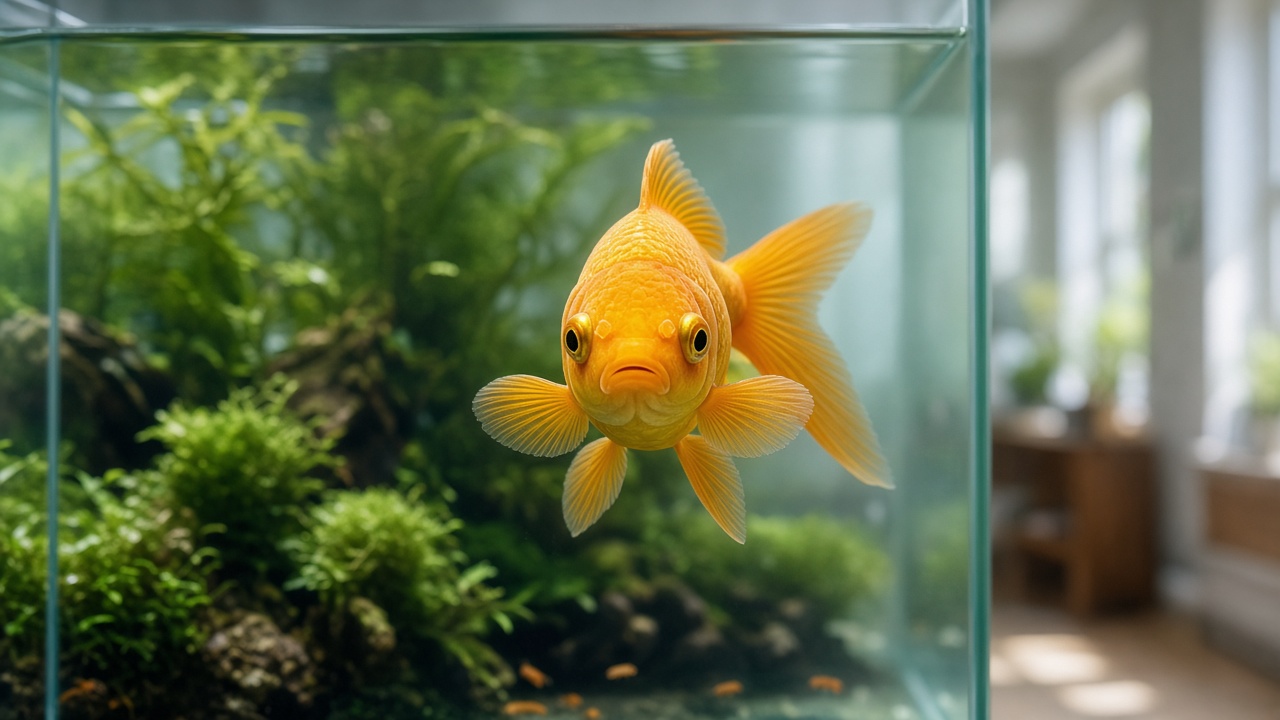
- Look down from above, because egg bulk often sits in the belly and can look uneven.
- Check the scales next: flat scales fit eggs or extra food, and standing scales do not.
- Watch one full feeding, since a female holding eggs often still eats.
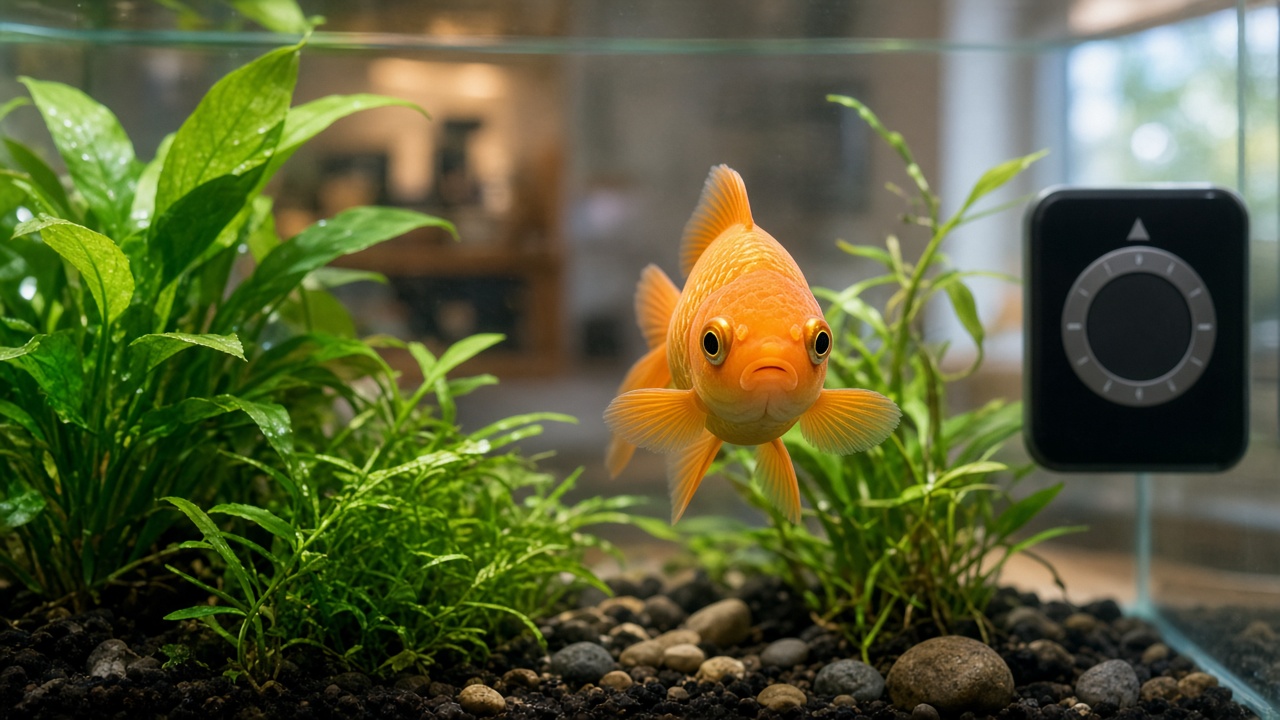
A fourth check is the water, not the fish, because bloating can come from waste as well as eggs. API’s Freshwater Master Test Kit page lists tests for ammonia, pH, high range pH, nitrite, and nitrate.
The same kit includes four test tubes, and the maker page says to test weekly. Bad water can puff a fish and cut appetite, so eggs do not excuse a skipped test.
If scales stand out, the fish lists, or she gasps, stop treating this as a spawn watch. Call an aquatic animal clinician for that fish, because this desk does not diagnose disease from a photo.
Color can shift when a fish is stressed or near a spawn, and pale patches are not proof of eggs. See our notes on why goldfish turn white if the body looks washed out.
What to do in the first 72 hours
The first three days are for water, food, and watching, not for guessing a due date.
Goldfish have no pregnancy term, and eggs stay until she scatters them. There is no countdown you can mark on a calendar.
Work this list once, then repeat the water test if the belly stays huge:
- Test ammonia, nitrite, nitrate, and both pH ranges with the API kit.
- Change water if any reading is off the card’s safe range.
- Dose new water with Seachem Prime at 1 capful, or 5 mL, per 50 US gallons.
- For a smaller change, Seachem says each cap thread is about 1 mL.
- Seachem says the binder can hold ammonia and nitrite up to 48 hours.
- Seachem also says you may use up to 5 times the normal dose in a nitrite emergency.
- Use a half dose if the water is above 86°F and chlorine or ammonia is low, per Seachem.
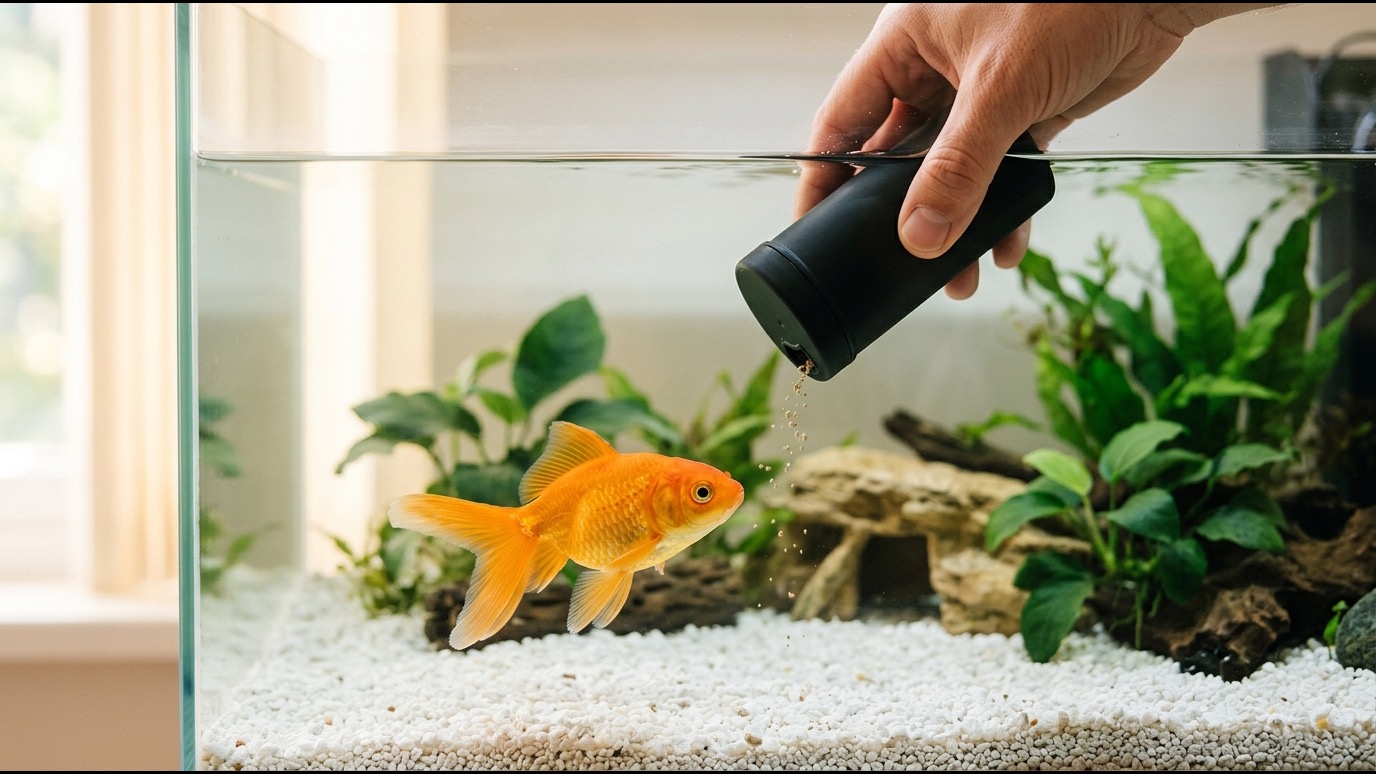
- Offer the usual goldfish food in small amounts, and do not dump extra flakes “for the babies.”
- Remove leftover food after a few minutes so waste does not add more bloat.
Hikari’s Wheat-Germ page says to feed 2 to 4 times daily. Do not exceed what the fish will eat in a few minutes, and remove uneaten food.
If water stays below 50°F or above 86°F, Hikari says to cut the amount. Cool or hot water slows how much a goldfish should take.
University of Florida IFAS says a typical aquarium or tropical fish feed holds 35% to 50% protein and about 10% moisture. Hikari Goldfish Wheat-Germ lists a minimum of 32% crude protein and 4% crude fat.
Fiber on that Hikari label is a maximum of 4%, and moisture is a maximum of 10%. Comparing those published specs, Hikari’s protein floor sits under the IFAS aquarium-feed range.
The fiber cap also sits under the 8% level IFAS calls low feeding value. We used that pair as a digestion-first daily diet, not as a medicine.
IFAS also says most dry fish pellets hold about 13% moisture or less. Those bags can sit at room temperature for at least 90 days from manufacture.
Old damp food is a poor choice for a bloated fish, so skip random home mixes that have no maker analysis.
If she stops eating for more than a day, or the belly grows while she weakens, get clinical help.
If you want the eggs to survive
Adult goldfish eat eggs, so plan for that or accept that few eggs will hatch.
IFAS says these minnows give no parental care, so eggs sit on plants and decor until something eats them. Other fish in the tank will do the same.
If you do not want fry, you can leave the tank alone. Clean leftover food, keep testing water, and wait for the swollen look to fade after she scatters eggs.
If you do want fry, move either the adults or the egg-covered objects. Do it as soon as you see sticky eggs on plants or decor.
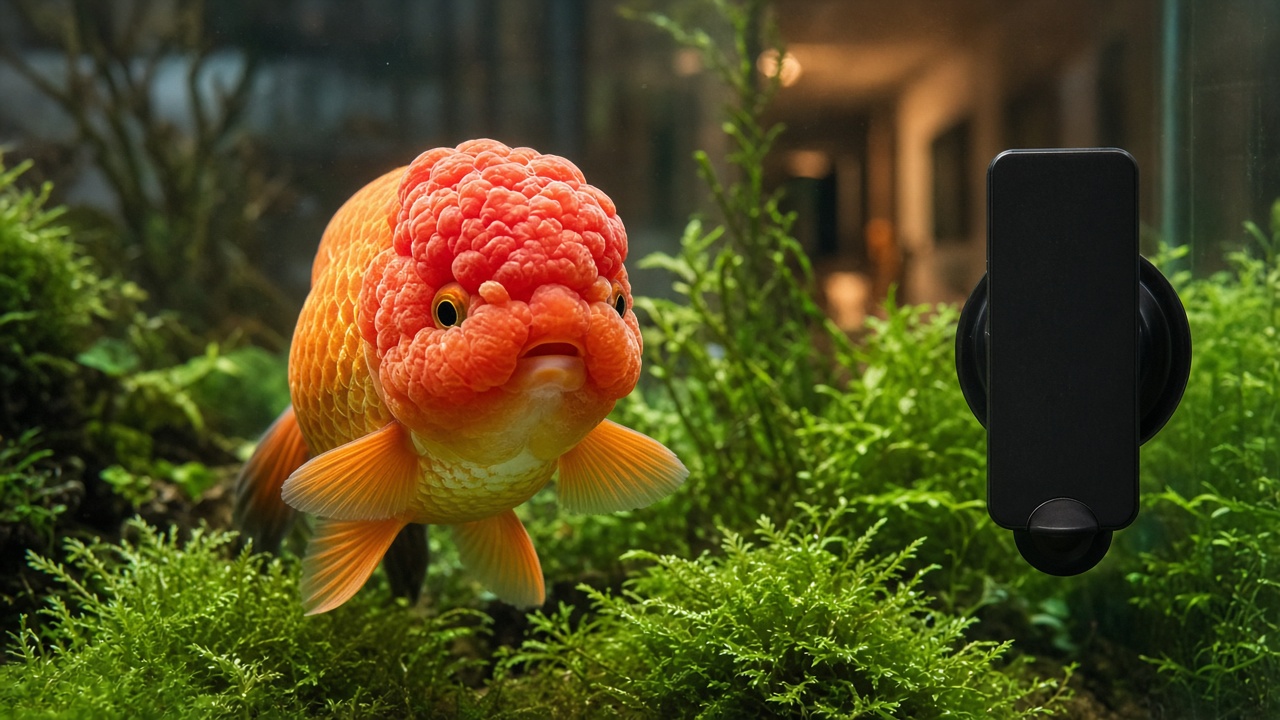
The Fluval Hang-On Breeding Box is built for eggs and fry, not for a full-size adult. Fluval’s page lists 0.3 US gallons, or 1.1 liters.
The box measures 6.5 inches long, 5 inches wide, and 4.75 inches high. It needs an air pump at about 1 liter per minute, and it fits frameless glass 0.25 to 0.4 inches thick.
Comparing that listed volume with an adult goldfish body, the box is a hatch space. It is not a hospital tank for a bloated adult.
Use a separate cycled tank for an adult you need to move. Keep the hang-on box for eggs or very small fry.
Do not add new tank mates during a spawn week. See what fish can live with goldfish before you restock.
Gear our research team compared
We compared four items keepers actually buy for water, food, and eggs.
We set a narrow rule for this table before any product went in. We included only products whose current maker pages list a dose, volume, test list, or guaranteed analysis.
We left out pond hormone kits, unlisted salt mixes, and any food without a maker analysis.
| Product | Maker-listed measure | Second listed spec | Role in a swollen-belly tank |
|---|---|---|---|
| API Freshwater Master Test Kit | Four test tubes; weekly checks | Ammonia, pH, high-range pH, nitrite, nitrate | First check when a belly looks round |
| Seachem Prime | 5 mL per 50 US gallons of new water | Binds ammonia and nitrite up to 48 hours | Treats tap water after a change |
| Hikari Goldfish Wheat-Germ | min. 32% crude protein; min. 4% fat | Feed 2 to 4 times daily; 100 g and 200 g sizes | Daily diet if she still eats |
| Fluval Hang-On Breeding Box | 0.3 US gal / 1.1 L | 6.5 in × 5 in × 4.75 in | Eggs or fry only, not an adult |
API’s page says the brand has made aquarium products for almost 60 years, and that history still does not replace a weekly test.
Seachem lists bottle sizes from 50 mL to 4 L. The dose does not change with bottle size, but the water volume does.
Hikari lists phosphorus at a minimum of 0.7%, and ash at a maximum of 12%. Those numbers sit on the same guaranteed-analysis block as the protein figure.
Fluval’s box includes a V-shape separator and two slit plates. Those parts are for fry, not for a thick-bodied adult.
Color shifts and tank mates during a spawn
Color change is a side clue, not proof of eggs.
Males may look rougher on the face or pectoral fins before a chase, and females look fuller. Dark or pale patches can still be water stress or age.
Our goldfish turning black brief covers dark spots that are not eggs. Use that page when color, not belly shape, is the main change.
Keep the group simple while a female is heavy, because fast chasers can batter a slow fancy goldfish against glass or decor.
IFAS notes that cultured goldfish sold from Florida farms are often under 4 inches. A short, round fancy still needs room to turn without being chased all day.
Do not add livebearers “so she has friends.” Those fish breed by a different rule, and they also add waste.
If you keep a community, feed so the goldfish is not hunting leftover eggs all day. Extra food then becomes the bloating problem you were trying to avoid.
FAQ
Can a goldfish be pregnant?
No: goldfish lay eggs, and University of Florida IFAS places them with egg-scattering minnows, not with livebearers. A swollen female is holding eggs or is bloated, and she is not carrying live young.
How long will she stay this round?
There is no pregnancy clock for a goldfish. Eggs stay until she scatters them or until another problem is in play. Watch appetite and scales each day, and repeat the water test if the belly does not change.
Are raised scales the same thing as eggs?
No: eggs sit inside a body that still has flat scales. Scales that stand out are a danger sign, not a spawn look. Get clinical help instead of waiting for a due date.
Should I put a swollen goldfish in a breeding box?
Not if she is an adult, because Fluval lists the Hang-On Breeding Box at 0.3 US gallons. That listed volume is for eggs or fry. Move an adult to a cycled tank if she needs space.
Will other goldfish eat the eggs?
Yes, and IFAS says these fish give no parental care. Adults eat eggs that stick to plants and decor. Move the eggs or the adults if you want fry.
What should I feed a goldfish that looks bloated?
Use a labeled goldfish diet in small, frequent meals, such as Hikari Wheat-Germ at 32% minimum protein. Hikari says to feed 2 to 4 times daily, and IFAS puts typical aquarium feeds at 35% to 50% protein. Do not add extra food “for pregnancy.”
Do baby goldfish come out gold?
No live babies come out at all, because the eggs hatch into fry. Color can change as they grow, and pale or dark shifts in adults belong in the white-color and black-color briefs linked above.