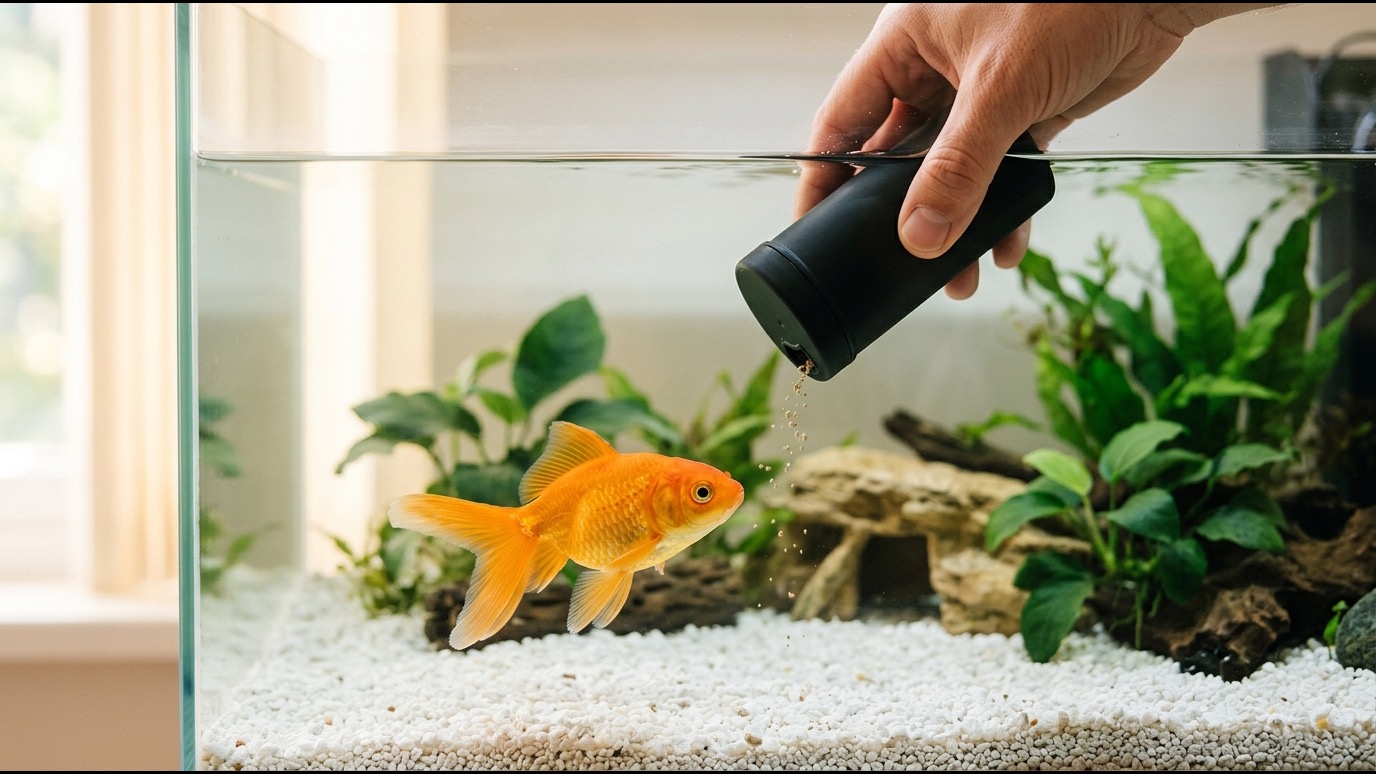
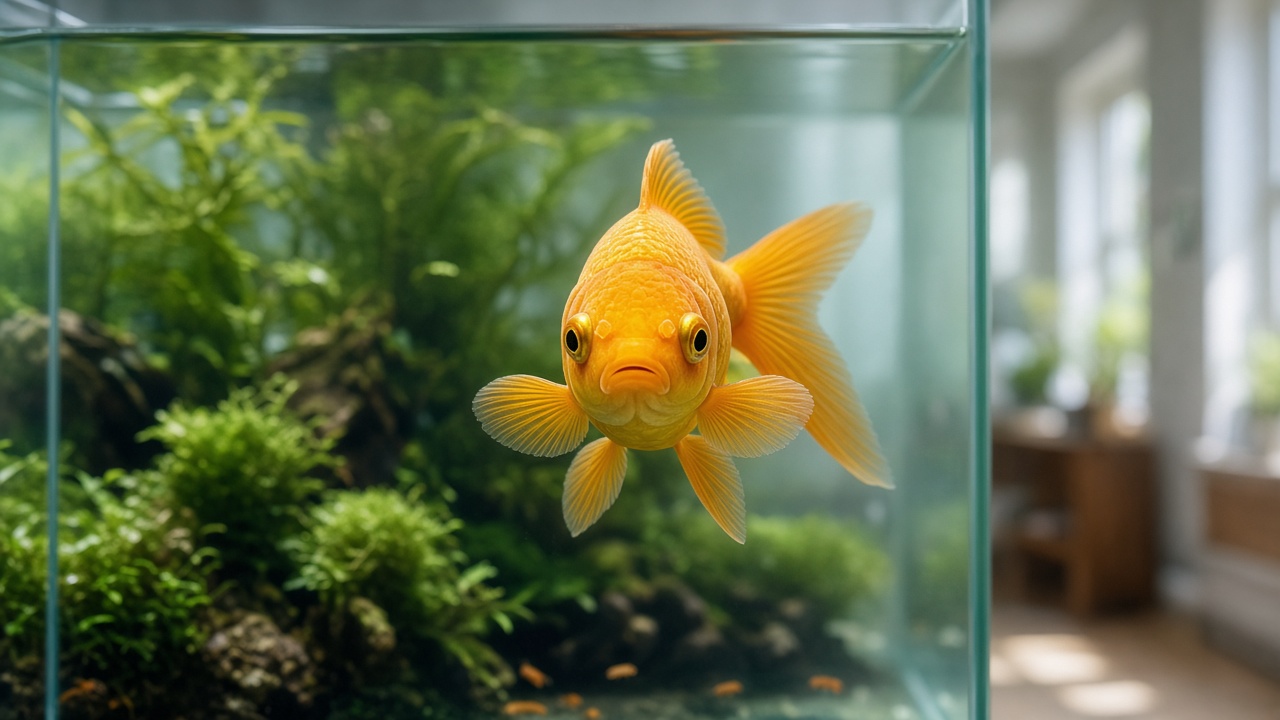
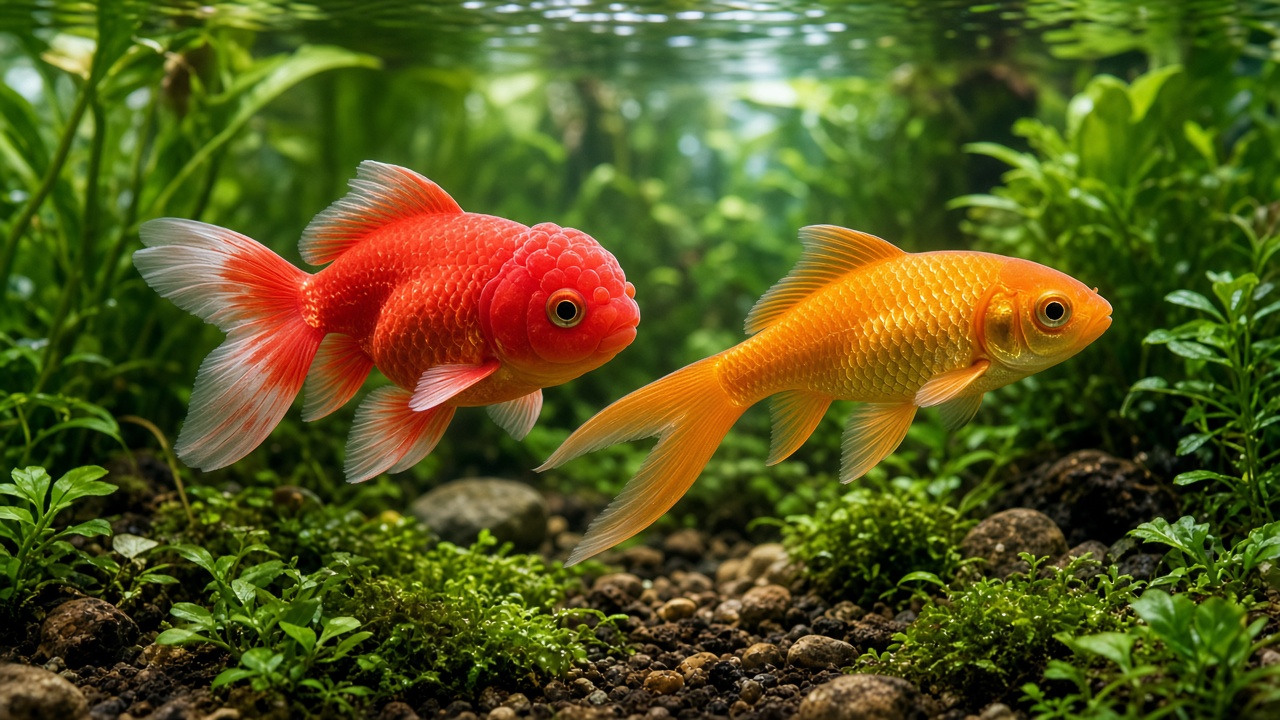
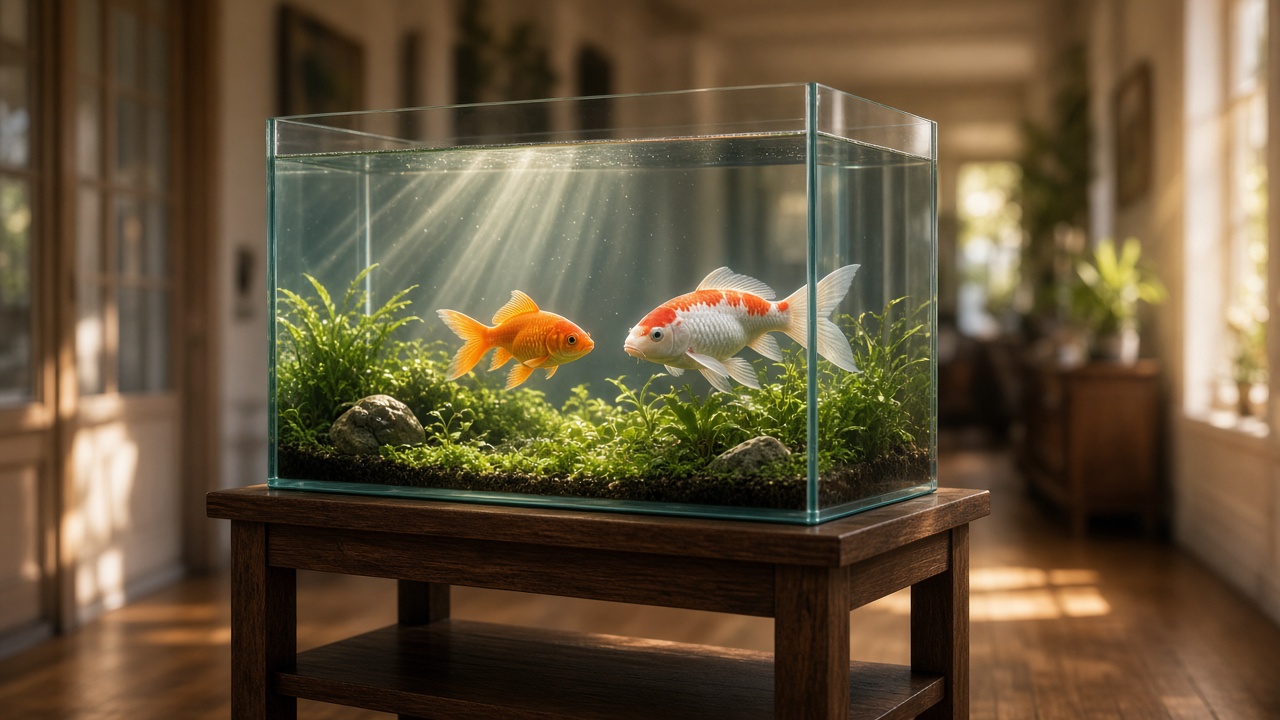
Quick answer: A telescope is a fancy goldfish with protruding eyes. Give it a large filtered tank, smooth décor, and only other slow fancy goldfish. Use a sinking goldfish pellet so it does not gulp air at the surface.
One adult telescope goldfish needs at least 100 liters of filtered tank water, plus 50 liters for each extra adult.
This page is a published-spec briefing on telescope eyes, tank size, and tank mates. We did not house telescopes, run water assays, or film feeding trials.
What got into this article, and what did not
We used one rule: a tank, roommate, or food enters only if a named maker or trade sheet prints the number.
That rule kept bowls, 10-gallon kits, outdoor ponds, and tropical community mixes out.
Our research team analyzed the Ornamental Aquatic Trade Association goldfish care sheet,’s goldfish care sheet, and four goldfish-food maker pages.
We cover indoor, filtered tanks that meet OATA’s adult volume floor. We cover only other slow fancy goldfish as tank mates, plus goldfish foods whose maker pages list protein and sink or float behavior.
What telescope eyes change in the tank
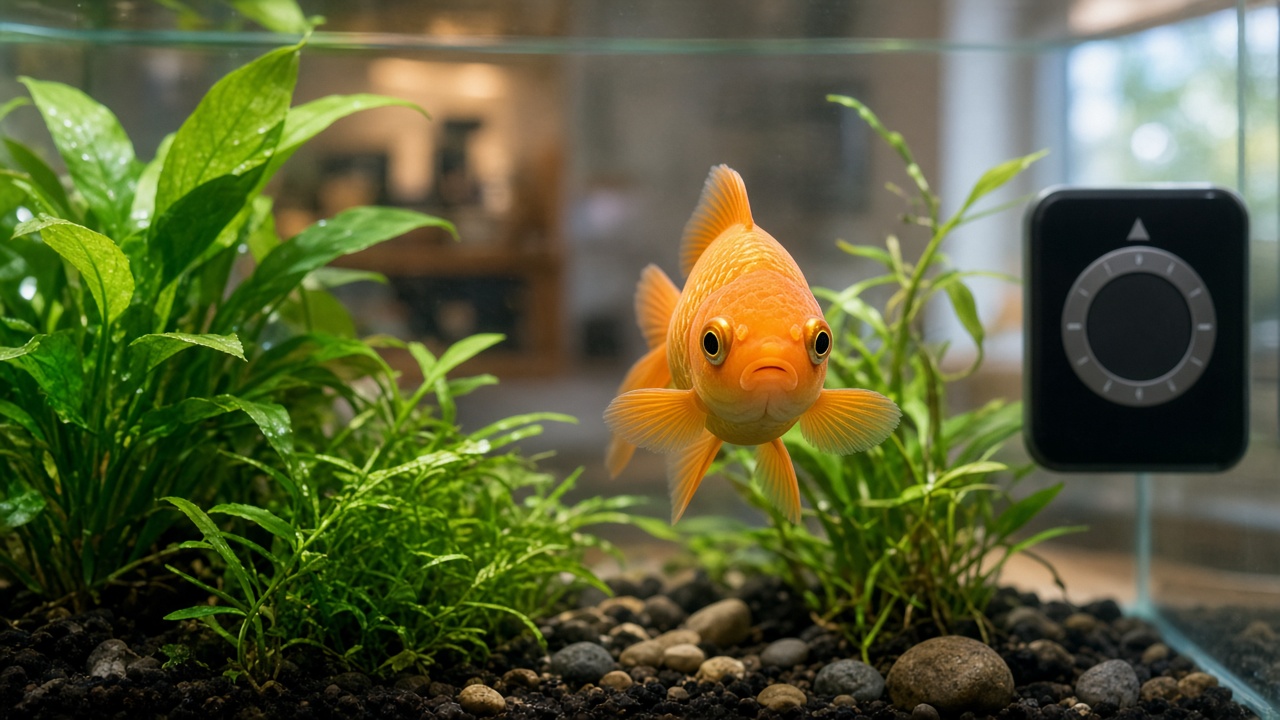
Protruding eyes make a telescope a poor judge of distance, so layout matters as much as gallons.
A telescope is still Carassius auratus. goldfish care sheet lists the Black Moor, the dark telescope form most shops sell.
Those eyes sit outside the skull, so the fish brushes gravel and décor while it hunts, and a sharp edge can tear an eye.
’s goldfish care sheet says goldfish are slow swimmers and like calm water. It also says the tank should not be crowded with décor.
Use this Soft-Path Tank Rule when you set the tank:
- Skip gravel small enough to swallow. care sheet says to avoid that size.
- Line the floor with 1 to 2 inches of sand or large, smooth pebbles. lists about 1.5 pounds of substrate per gallon. A 40-gallon tank then needs about 60 pounds.
- Use silk plants or soft live plants. names Anubias, Java fern, and hornwort.
- Skip pointed plastic plants and castles with tight holes.
OATA’s goldfish care sheet says live plants are ideal, and that goldfish may eat them. If plants fail, OATA lists plastic plants as the fallback.
Watch the eyes each week when you test water. Clouding or a film on one eye is a water flag, so test ammonia and nitrite the same day.
A Black Moor that fades toward orange or white is not always sick. Slow fade can be age or genetics, and our page on why goldfish turn white separates that fade from a sudden bleach.
Tank size: the 100-liter adult floor
OATA’s adult floor is larger than many starter kits, and that gap is the housing story for telescopes.
OATA’s goldfish care sheet says an adult goldfish needs at least a 100 litre aquarium. It adds 50 litres for each extra adult.
Our research team converted those figures with the U.S. gallon of 3.785 liters:
- One adult: 100 litres, about 26 U.S. gallons
- Two adults: 150 litres, about 40 U.S. gallons
- Three adults: 200 litres, about 53 U.S. gallons
We call that converted OATA line the Telescope 100-Liter Floor, a unit change, not a new study.
’s goldfish care sheet prints a lower starter line. It says one juvenile goldfish needs a 20-gallon habitat or larger.
Twenty U.S. gallons is about 76 liters. OATA’s adult floor is about 32 percent larger than that juvenile line.
also states a growth rule of at least 5 gallons per inch of body length. OATA says aquarium goldfish commonly reach 25 cm, about 10 inches.
Five gallons times 10 inches is 50 gallons for one long-bodied adult. Fancy telescopes are shorter than commons, but they still make a heavy waste load.
A 40-gallon rectangular tank holds about 151 liters. That volume covers OATA’s two-adult line.
OATA says to buy a tank that fits the adult, or be ready to upgrade.
Water numbers that keep gills and eyes safe
Ammonia or nitrite above zero is the fastest way to inflame gills and stress those exposed eyes.
OATA’s goldfish care sheet lists these targets:
- Temperature: 4 to 25°C, which is 39 to 77°F
- pH: 6.0 to 8.0
- Ammonia: 0 mg per litre
- Nitrite: 0 mg per litre
- Nitrate: no more than 20 mg per litre above normal tap water
- Hardness: 5 to 19°dH
’s goldfish care sheet lists a tighter home band:
- Temperature: 65 to 75°F
- pH: 6.5 to 7.5
- Temperature swing: no more than 2°F in 24 hours
Those bands overlap at room temperature. OATA’s 4°C floor is pond-cold, so a living-room telescope should sit in ’s 65 to 75°F band.
OATA says a heater is not required unless the room is very cold.
our research notes a filter should turn the tank over at least four times an hour. Its example is a 20-gallon tank with an 80-gallon-per-hour filter. A 40-gallon tank on that same rule needs at least 160 gallons per hour.
Published water-change sizes do not match:
- OATA: a 25% partial change at least once every week: no more than 10 to 25% every two to four weeks
This desk follows the larger OATA change, because OATA also calls goldfish “very dirty.” Test weekly either way. OATA sets ammonia and nitrite at zero.
our research notes to test weekly for at least two months after you add a fish or a new filter. If readings stay stable, it allows a drop to monthly tests, but OATA still asks for a weekly test.
OATA says to rinse filter media in old tank water, not tap water. Chlorine in tap water can kill the bacteria that eat ammonia. our research notes no hot water and no full media swap on one day.
Tank mates that do not steal food
A telescope loses a food race, so this page uses a tighter roommate rule than a generic goldfish list.
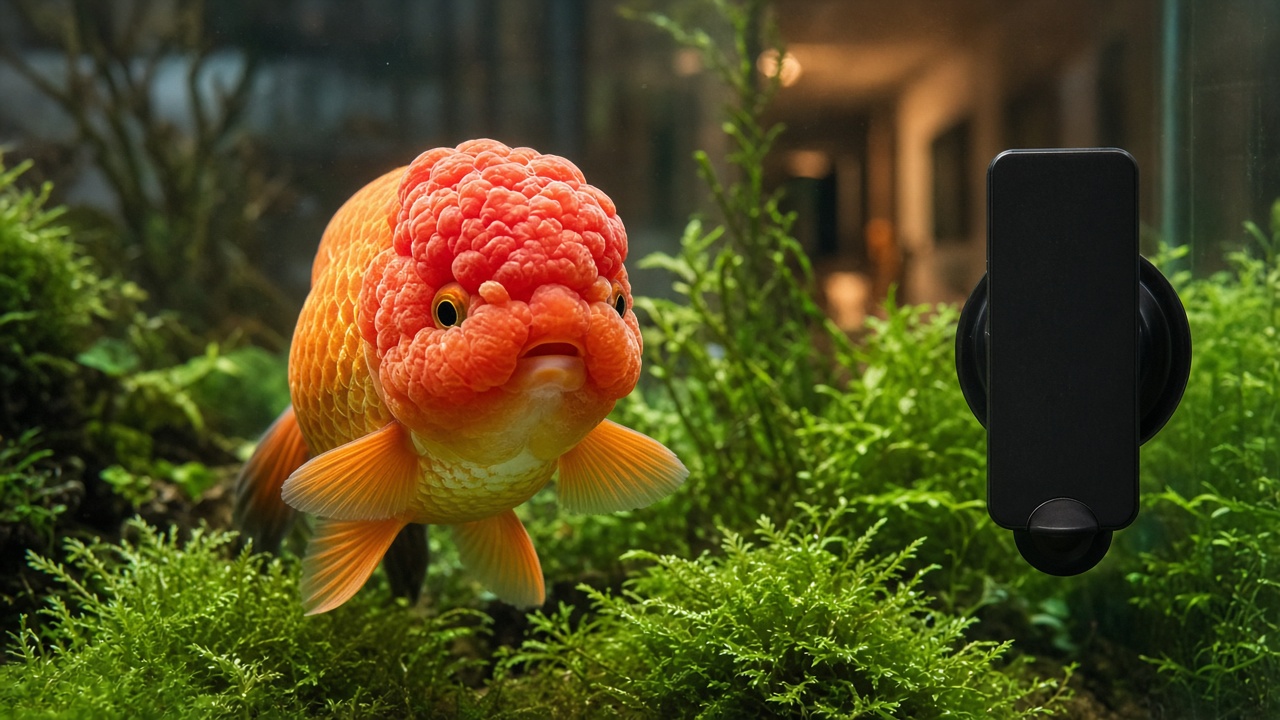
OATA’s goldfish care sheet says goldfish can live alone or with others, and it says not to keep comet goldfish with fancy goldfish.
Comets swim faster and often take the food. The same OATA sheet reports fin-nipping of slower fancy fish.
’s goldfish care sheet allows goldfish with other goldfish. It also names white cloud minnows and zebrafish as cold-water community options.
Our Telescope Roommate Rule is stricter than that community line. If a fish swims faster than a fancy goldfish, it stays off this page.
Safe roommates under that rule:
- Other telescope goldfish, including Black Moors
- Lionheads, ranchus, and orandas
- Other short-bodied fancy goldfish with the same slow pace
Fish this page leaves out:
- Commons, comets, and shubunkins
- White cloud minnows and zebrafish
- Barbs, tetras, and any tropical community mix
- Any fish sold as a “cleaner” with a rasping mouth
our research notes new tank mates change ammonia and nitrate. Add one fish at a time, then test water the same week.
OATA warns that stocking too fast causes “new tank syndrome,” when filter bacteria cannot keep ammonia and nitrite at zero.
If you want company, add a second fancy goldfish and add 50 litres, about 13 gallons, as OATA prints. Do not add a tropical fish to fill empty water.
Sinking foods we compared from maker pages
Sinking goldfish pellets cut surface gulping, which links to bloating and buoyancy problems.
OATA’s goldfish care sheet says goldfish need more carbohydrates than many other pet fish. Use a goldfish flake or pellet, not a generic tropical mix. Feed what they eat in a few minutes, once a day.
’s goldfish care sheet says to feed once a day, only what they finish in one to two minutes. It prefers sinking diets so goldfish swallow less air.
Hikari’s page for Sinking Goldfish Excel allows up to four feedings a day. Do not exceed what fish eat in a few minutes. Cut the ration when water sits below 50°F or above 86°F.
Those feeding clocks do not match, so drop back to OATA’s once-a-day line if leftover food remains.
Our research team compared four currently sold goldfish foods. We used only the maker pages for protein, fat, and sink or float behavior, and we did not score a winner.
| Product | Form | Protein on maker page | Fat on maker page | Sink or float |
|---|---|---|---|---|
| Hikari Lionhead | Sinking pellet | 46% minimum | 6% minimum | Sinks |
| Hikari Sinking Goldfish Excel | Sinking pellet | 40% minimum | 6.0% minimum | Sinks |
| New Life Spectrum Goldfish Regular | Regular pellet, 1 to 1.5 mm | 34% minimum | 8% minimum | Most pellets sink |
| Tetra Goldfish Flakes | Flakes | 42% | 11% | Floats long, then sinks slowly |
The protein spread on those four pages is 12 percentage points, from 34% to 46%.
Hikari’s Lionhead page lists 3.5 oz (100 g) and 12.3 oz (350 g) bags. It names fancy goldfish, including orandas and ranchus, as the daily-diet group.
Hikari’s Sinking Goldfish Excel page says the pellet suits goldfish above 3 cm, or 1.2 inches. It also lists 2.0% maximum fiber and a 3.8 oz (110 g) pack.
New Life Spectrum’s Goldfish page lists a 150 g jar and large pellets at 3 mm to 3.5 mm. Tetra’s Goldfish Flakes page lists 6.5% moisture and vitamin D3 at 2114 IU/kg.
A simple way to stay inside the printed feeding windows:
- Pick a goldfish food from the table, not a random tropical flake.
- Prefer a sinking pellet if the fish gulps at the surface.
- Offer a pinch, then stop when the food is gone.
- Stay inside a two-minute eating window on most days.
- Start at one feeding a day if nitrate is rising.
Leftover food becomes ammonia, the number OATA sets at zero.
FAQ
How big of a tank does one telescope goldfish need?
OATA’s goldfish care sheet says at least 100 litres for one adult, about 26 U.S. gallons. Add 50 litres, about 13 gallons, for each extra adult. junior line is 20 gallons for one juvenile, then more as the fish grows. This desk uses the OATA adult floor for a telescope you plan to keep.
Can a telescope goldfish live in a bowl?
No. OATA says a filter is always essential, and it sets the adult floor at 100 litres. our research notes goldfish make more waste than similarly sized fish and need strong filtration. A bowl cannot hold that volume or that filter.
What fish can live with a telescope goldfish?
Other slow fancy goldfish. OATA warns against comets with fancy goldfish, because comets take the food and may nip fins. allows white cloud minnows and zebrafish with goldfish in general. This page still leaves those faster fish out, because a telescope cannot win a food race.
How often should I feed a telescope goldfish?
OATA says once a day, only what they eat in a few minutes. our research notes once a day, in one to two minutes, and it prefers sinking food. Hikari’s Sinking Goldfish Excel page allows up to four small feedings. If waste rises, return to the OATA once-a-day line.
What water numbers should I hit?
OATA sets ammonia and nitrite at 0 mg per litre, and nitrate at no more than 20 mg per litre above tap water. lists 65 to 75°F and pH 6.5 to 7.5. Test every week, and change 25% of the water each week if you follow OATA’s sheet.
How long do telescope goldfish live?
’s goldfish care sheet lists 10 to 15 years for most goldfish, and 30 or more years with strong care. OATA reports many lives of 6 to 8 years, and some of 20 years or more. Housing and water set that clock, and our page on how long goldfish live compares those published clocks.
Do telescope goldfish need a heater?
OATA says a heater is not required unless the room is very cold. lists 65 to 75°F and a swing of no more than 2°F in 24 hours. If your room drops below that band at night, a heater with a thermostat keeps the swing inside ’s limit.