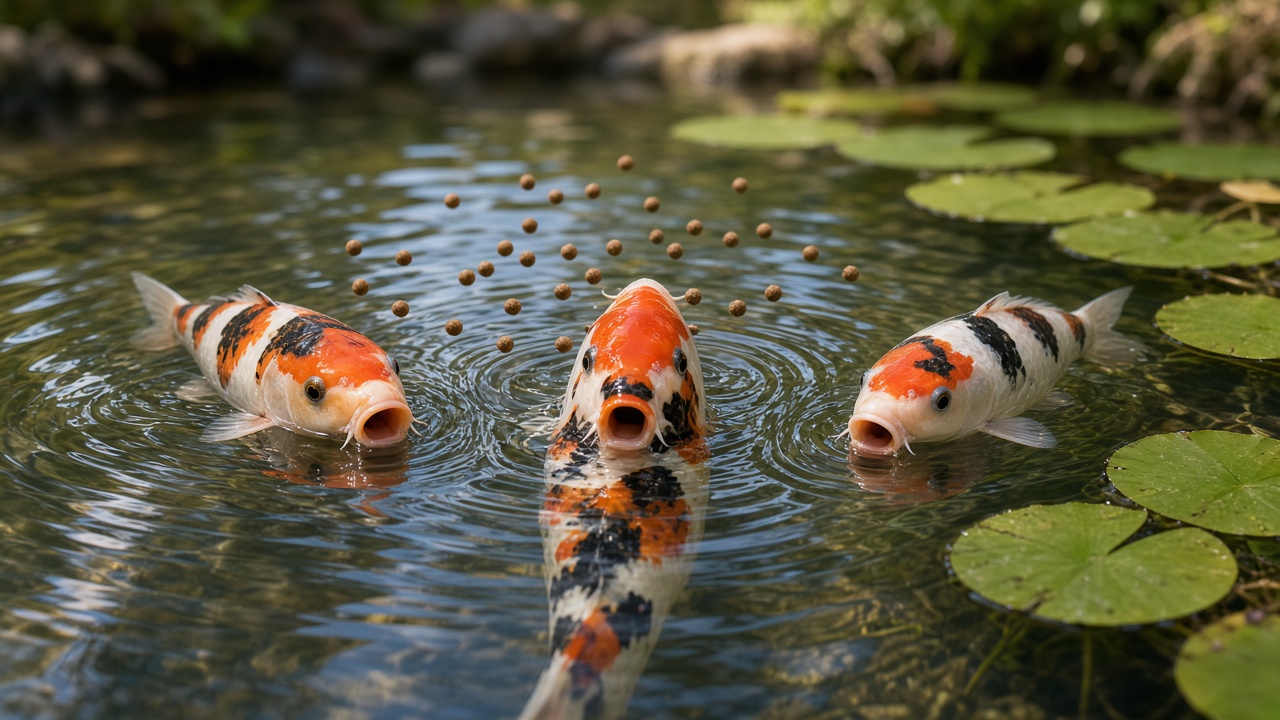
Quick answer: Keep butterfly koi in a smooth outdoor pond with screened intakes. Feed a floating koi pellet only in warm water, and stop when food is left after five minutes. Test ammonia and nitrite every week.
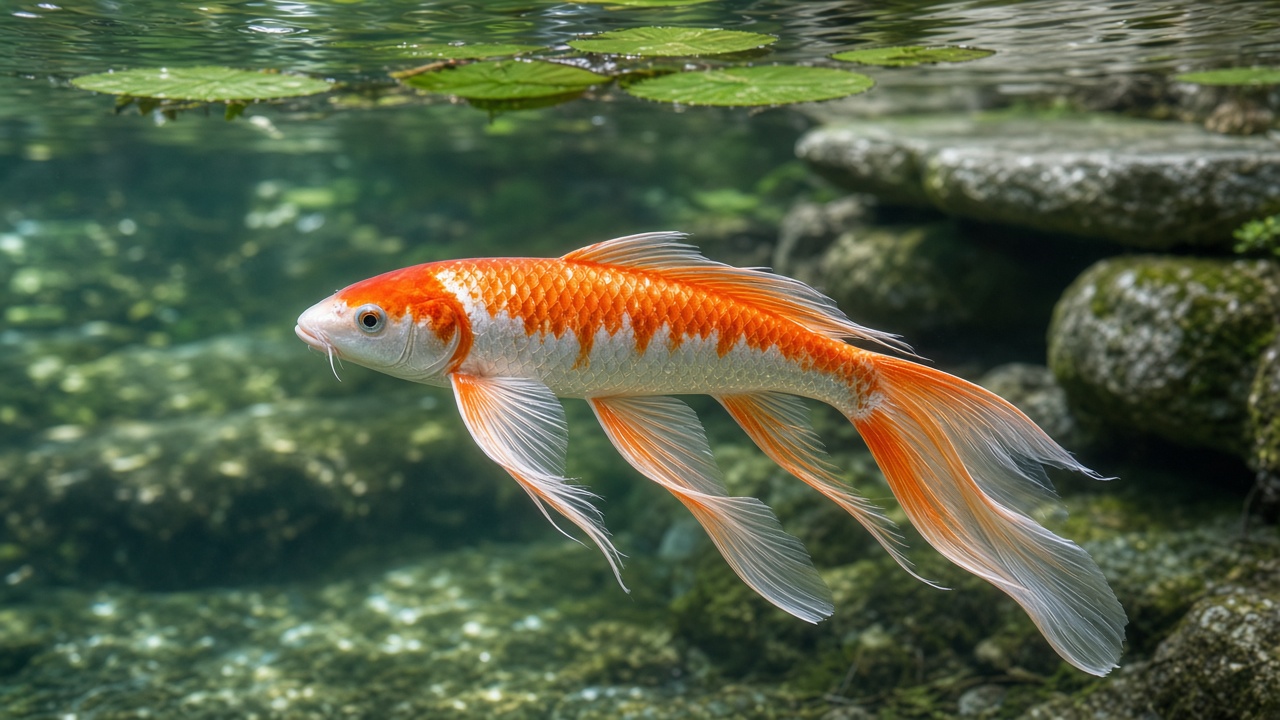
Butterfly koi are long-fin koi that need an outdoor pond, not a glass aquarium. This page is a spec-and-source care brief on fins, pond hardware, and feeding.
Our research team compared published specs from Hikari, Mazuri, API, Aquascape, and the Merck Veterinary Manual. The Fin-Safe Pond Rule below decided what got in.
The Fin-Safe Pond Rule decides every scenario and product on this page.
We included a setup or product only when all three points were true:
- It is for an outdoor pond, not a desktop tank.
- It is sold now as pond food, a pond test kit, or a pressurized pond filter.
- The maker’s own page lists a number we can quote.
We left out indoor-aquarium-only gear, show-class judging, drug protocols, and wild-carp biology. We also left out any inch or year claim that none of our six source pages print.
A butterfly koi still follows the same basic koi fish care plan as a short-fin koi, and the extra work is the fins.
What a butterfly koi is
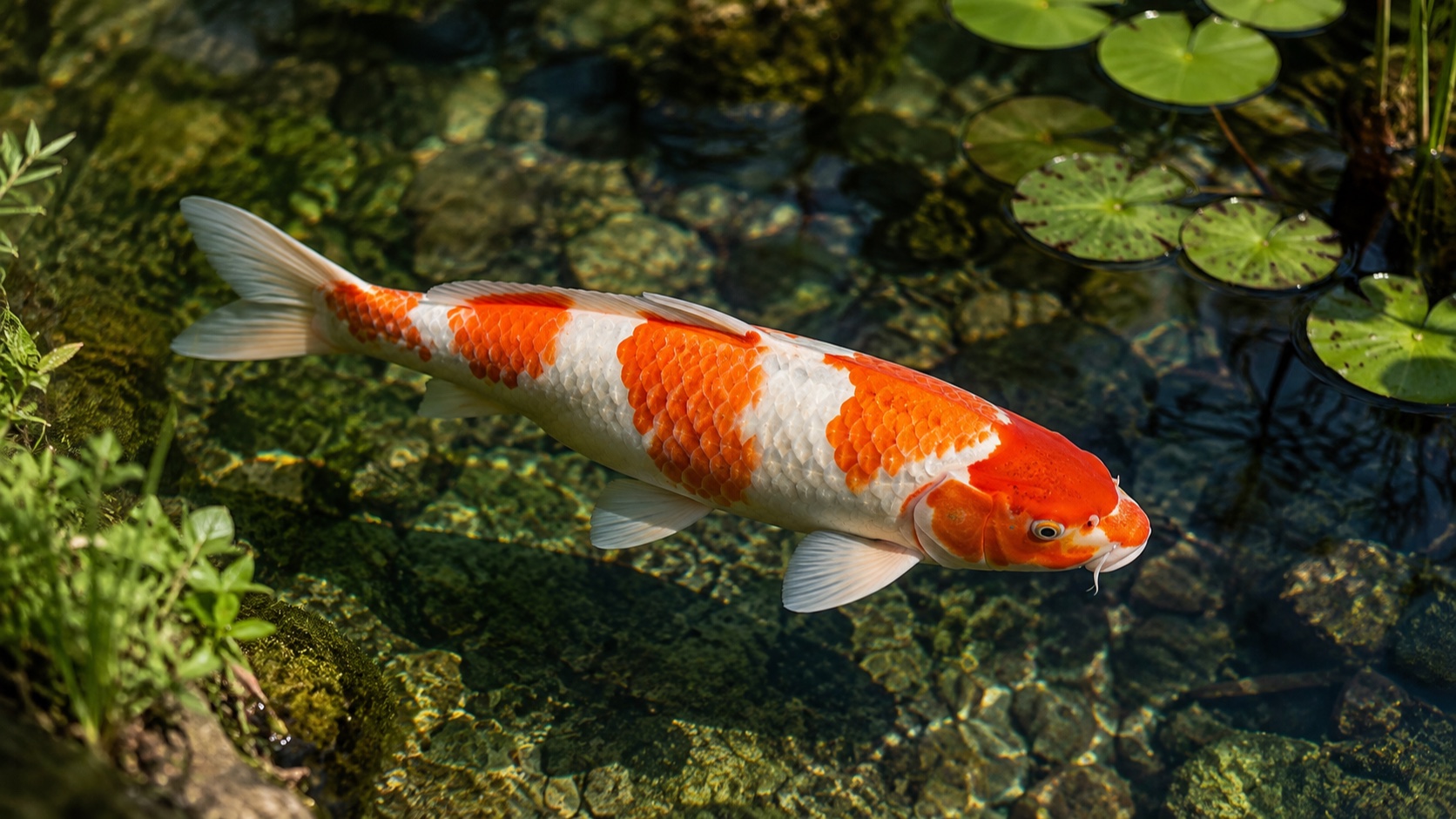
A butterfly koi is a long-fin koi, not a different indoor species.
The long fins are the trait you buy, and the body is still a pond carp. It still makes the same waste load as any other koi of that body size.
Those fins snag on sharp rock, open intakes, and stiff nets. That care gap is a hardware problem, not a separate diet species.
Do not stock by the bag size you see at the store. Stock by the adult body your pond and filter can hold. The food pages we used write feeding rules by temperature and minutes, not by a named inch target.
Pond setup that protects long fins
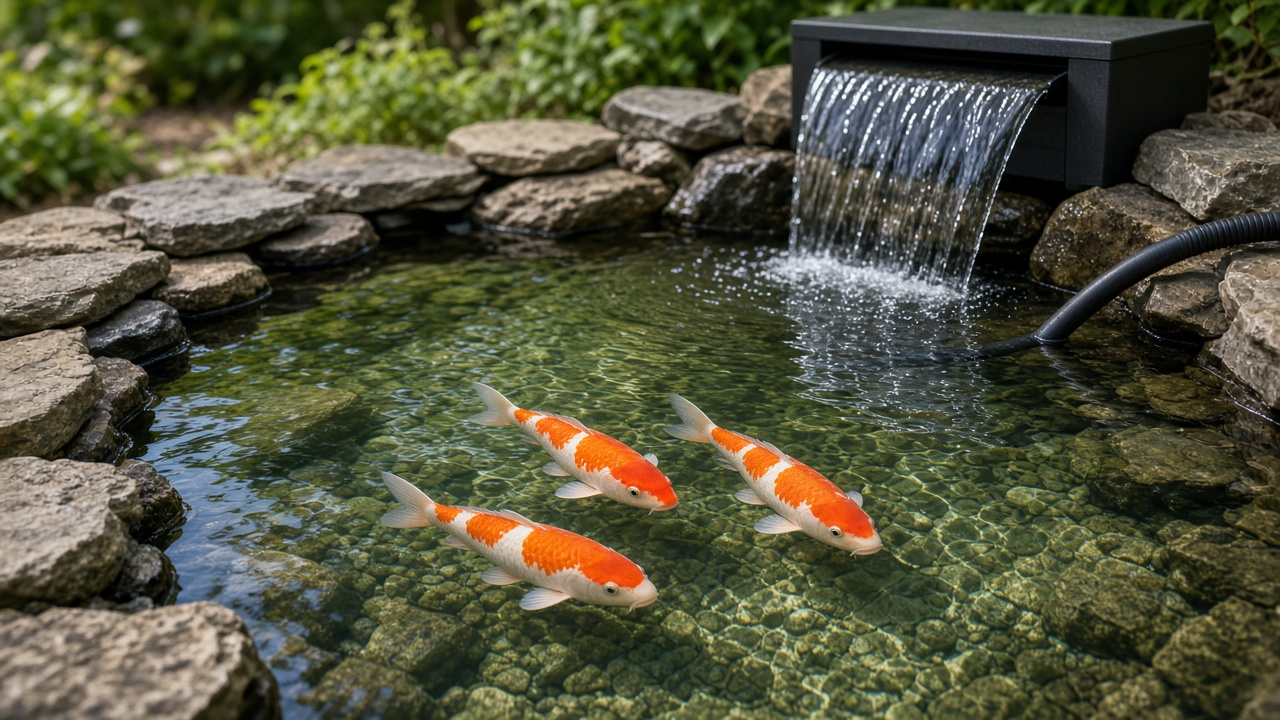
Long fins need smooth walls, screened intakes, and a filter sized to the pond.
Build the pond first, then buy the fish. An above-ground koi pond can work if the walls are smooth and every intake is screened.
Use this build list:
- Keep stone edges rounded. Skip jagged rock along swim lanes.
- Screen every pump and skimmer intake so a fin cannot enter the grate.
- Aim returns so fish can leave the current. Do not jet one wall all day.
- Use a soft, knotless net if you must catch a fish.
- Size the filter to the pond gallons on the maker page, not to a guess.
Aquascape’s UltraKlean page lists two pressurized filters with pond-size numbers. The UltraKlean 2000 (item 95053) lists 2,000 gallons, and the UltraKlean 3500 (item 95054) lists 3,500 gallons.
Those same rows list 2,700 GPH and 14 watts of UV on the 2000. They list 5,200 GPH and 28 watts of UV on the 3500.
Our research team compared those two packaged weights. The 2000 lists 17 lb, and the 3500 lists 22 lb, a 5 lb gap on the same line.
Aquascape’s page also lists a 20-foot cord on the 2000 and a body of 13 by 13 by 17 inches. It says the canister can be backwashed in less than five minutes.
A UV clarifier clears green water, and it does not replace a screened intake.
None of the six source pages we used prints a required pond depth in feet, so do not invent one. Make the pond deep enough that the fish can leave the surface, and keep the floor free of snag points.
Water numbers we used
The Merck Veterinary Manual’s freshwater table is the water target set we used.
The Merck Veterinary Manual says poor water quality is the most common cause of environmentally induced disease. It also says low dissolved oxygen and high ammonia are the two parameters most likely to kill fish.
Use these freshwater targets from that table:
- Dissolved oxygen: above 5 mg/L
- pH: 6.5 to 9.0
- Total ammonia nitrogen: 0 mg/L
- Nitrite: 0 mg/L
- Nitrate: under 20 mg/L
- Total alkalinity: above 100 mg/L as CaCO3
- Total chlorine and free chlorine: 0 mg/L
The Merck Veterinary Manual says oxygen under 5 mg/L is dangerous, and death may be seen at 4 mg/L or less. That same note lists freshwater saturation at 8.27 mg/L at 25°C (77°F) and sea level.
Use that 8.27 mg/L figure as a ceiling check, not as a pond promise.
The Merck Veterinary Manual also prints chlorine harm levels. Adverse effects can start at 0.02 mg/L, and death can occur at 0.04 mg/L.
Treat all tap water before it enters the pond.
API’s Pond Liquid Master Test Kit page is the test kit we compared. That page says the kit measures pH, ammonia, nitrite, and phosphate, and holds reagent for over 500 tests.
API’s page tells you to test weekly and includes six bottles of liquid reagent plus four test tubes. It does not measure dissolved oxygen or chlorine, so add those checks if your source water is municipal.
Food and gear compared from maker pages
Our research team compared published specs on five products sold now.
Read the table as a match tool, not a ranking. Pair food to temperature, the filter to pond gallons, and the test kit to a weekly habit.
| Product | Maker-listed role | Key listed number | Second listed spec | Form |
|---|---|---|---|---|
| Hikari Wheat-Germ Formula (floating) | Cool-water daily diet | min. 32% crude protein | Do not feed below 41°F | Floating pellet |
| Hikari Gold | Warm-water daily diet | min. 35% crude protein | Feed 2 to 4 times at 68–86°F | Floating pellet |
| Mazuri Koi Pond Nuggets | Complete floating diet | min. 33.00% crude protein | For fish 6 inches or longer | 3/16" extruded particle |
| API Pond Liquid Master Test Kit | Pond water test kit | Over 500 tests | pH, ammonia, nitrite, phosphate | Liquid reagents |
| Aquascape UltraKlean 2000 | Pressurized pond filter | 2,000 gal pond size | 14-watt UV; 2,700 GPH max | 13" × 13" × 17" canister |
Hikari’s Wheat-Germ Formula page lists 32% minimum crude protein, 4.0% minimum crude fat, and 0.7% minimum phosphorus on the floating formula.
Mazuri’s page for Koi Pond Nuggets (formula 5M78) lists 33.00% minimum crude protein and 2.50% minimum crude fat. Phosphorus is 0.90% minimum, and the diet is for fish six inches or longer.
Our research team lined those three protein floors up and found a 32%, 33.00%, and 35% spread. That is a 3-point gap across the three maker pages.
The phosphorus floors on those same pages are 0.7%, 0.90%, and 1.0%. Hikari Gold is the high phosphorus listing in this set.
Feed by the maker’s temperature band, not by the calendar.
Hikari’s Wheat-Germ Formula page gives these rules:
- At 64–86°F (18–30°C), feed 2 to 4 times per day.
- At 41–64°F (5–18°C), feed no more than twice daily.
- Below 41°F (5°C), do not feed.
- In every band, feed only what fish finish in 5 minutes.
- At 68–86°F (20–30°C), feed 2 to 4 times per day.
- At 59–68°F (15–20°C), feed no more than twice daily.
- Below 52°F (11°C), that page points you to Wheat-Germ.
Mazuri’s page says to feed only as much as fish will readily consume. Store the bag at 75°F (24°C) or colder, and use it within 1 year of the bag date.
Floating food helps you watch intake, but long fins still need you to stop at five minutes. Extra pellets rot and raise ammonia.
Size and lifespan
None of the six source pages we used lists a butterfly-koi inch or year count.
We will not invent an adult length or a lifespan in years. Those figures are common on other sites, and they are not on the six pages we read.
What those pages do give you is a load plan. Mazuri’s page starts its nugget at six inches, and Aquascape’s page starts its 2000 filter at 2,000 gallons.
Hikari’s pages start feeding at a temperature, not at a named age. Plan for a large outdoor fish with a long life if the water stays clean.
Plan the pond for the adult body, and do not add fish because a juvenile still looks small from the deck.
Weekly care
Feed by temperature, test weekly, and keep chlorine at zero.
Use this weekly list:
- Read pond temperature before the first feeding.
- If the water is below 41°F, skip food. Hikari’s Wheat-Germ page is the stop rule.
- If you are on Hikari Gold, switch off that diet at 52°F and use Wheat-Germ instead.
- Feed only what the fish finish in 5 minutes. Remove leftovers.
- Run the API kit weekly for pH, ammonia, nitrite, and phosphate.
- Keep ammonia and nitrite at 0 mg/L, matching the Merck Veterinary Manual table.
- Confirm chlorine is 0 mg/L on any new tap water.
- Walk the pond edge. Look for torn fins, open intakes, and sharp stone.
In summer, watch dawn behavior, because the Merck Veterinary Manual says pond oxygen swings through the day. Fish piping at the surface is a low-oxygen sign.
If ammonia rises, cut feeding first, then change water that you have dechlorinated. The Merck Veterinary Manual sets nitrate under 20 mg/L as the freshwater cap in that table.
FAQ
Can I keep butterfly koi in a standard indoor aquarium?
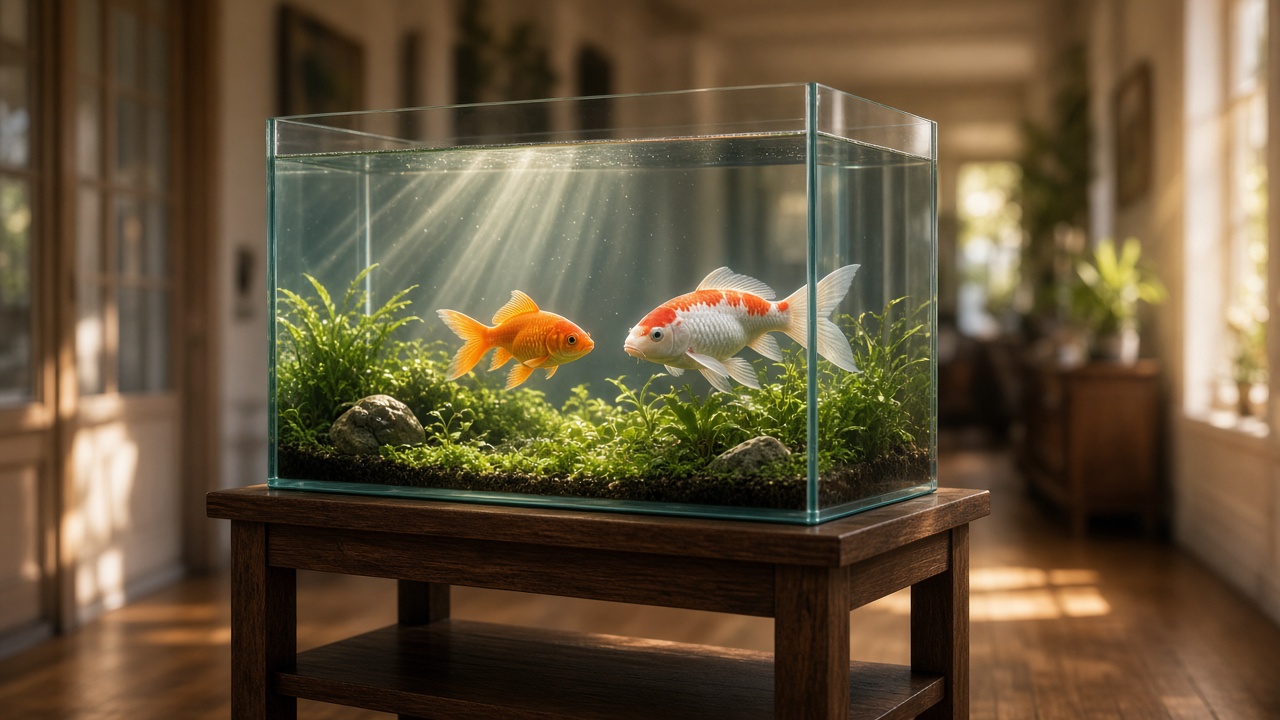
Butterfly koi are long-fin koi that need an outdoor pond, not a glass aquarium. Use a pond with smooth walls, including an above-ground pond, instead of a glass box.
What should I feed butterfly koi?
Mazuri’s Koi Pond Nuggets page lists 33.00% and starts that nugget at six inches.
How often should I test the pond?
API’s Pond Liquid Master Test Kit page says to test weekly. That kit covers pH, ammonia, nitrite, and phosphate, with reagent for over 500 tests. Add oxygen and chlorine checks from the Merck Veterinary Manual targets when you use tap water or see gasping.
What size filter do I need?
Match the pond gallons to the filter’s own pond-size row. Aquascape’s UltraKlean 2000 row lists 2,000 gallons, 2,700 GPH, and 14 watts of UV.
The UltraKlean 3500 row lists 3,500 gallons, 5,200 GPH, and 28 watts, so do not pick by brand rank.
Do long fins change the water targets?
The Merck Veterinary Manual freshwater table is the same for pond fish in this brief. Keep ammonia and nitrite at 0 mg/L, nitrate under 20 mg/L, and dissolved oxygen above 5 mg/L.
The fins change hardware, not those numbers.
Can I mix butterfly koi with short-fin koi?
Yes, if the pond is already sized for the adult bodies and the intakes are screened. Waste load follows body size, not fin length, so keep the same weekly test habit after any new fish go in.