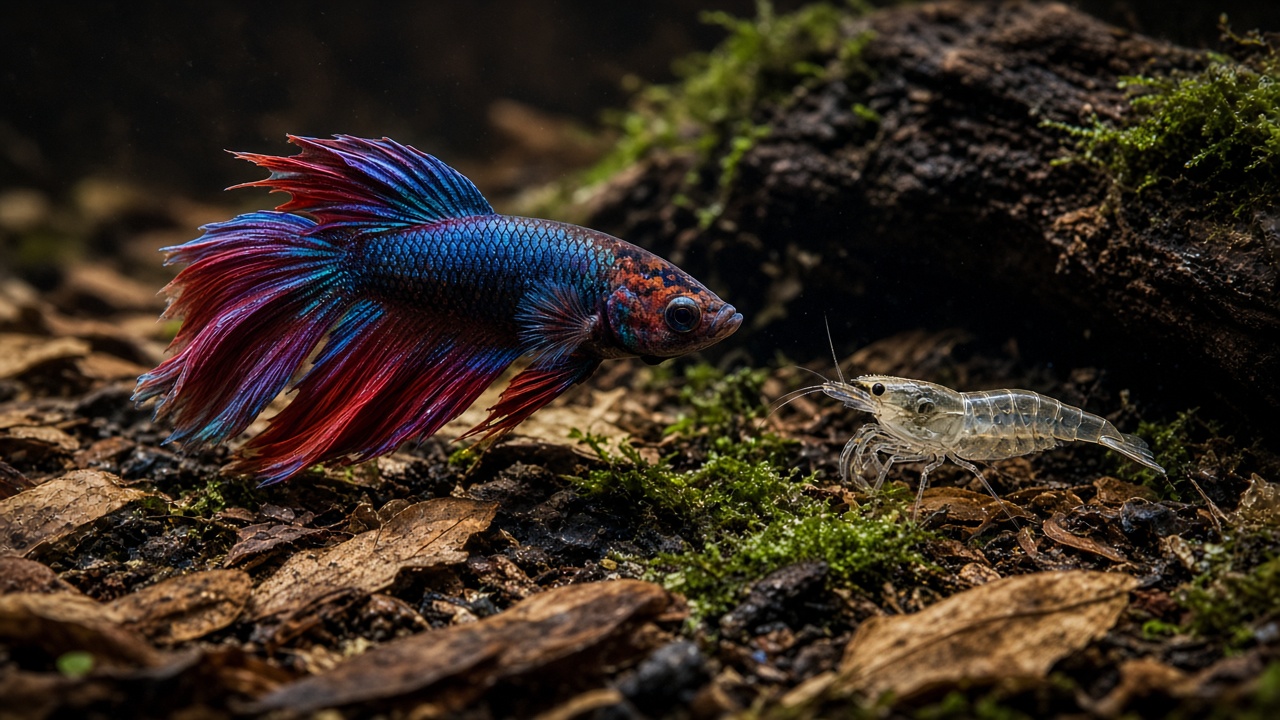
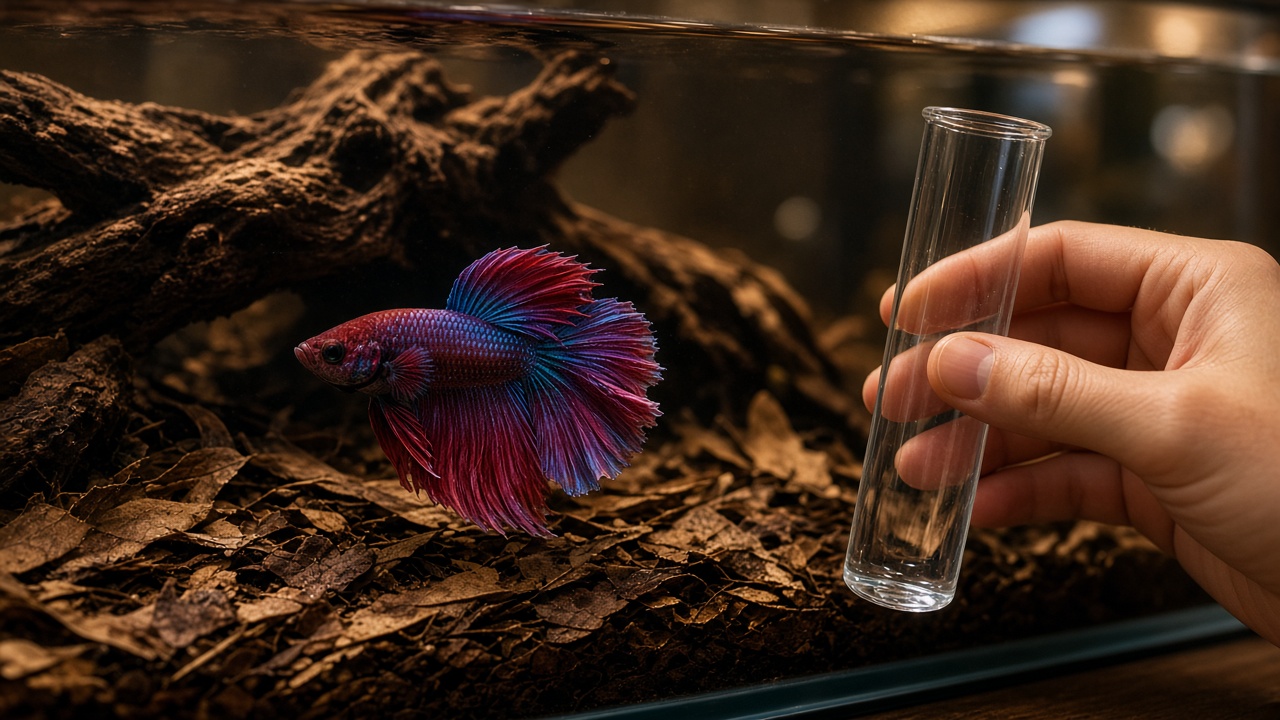
Quick answer: Keep one elephant ear betta in a heated, filtered tank of 5 gallons or more. Use gentle flow, smooth décor, and a high-protein daily pellet or flake. Test water weekly and skip bowls.
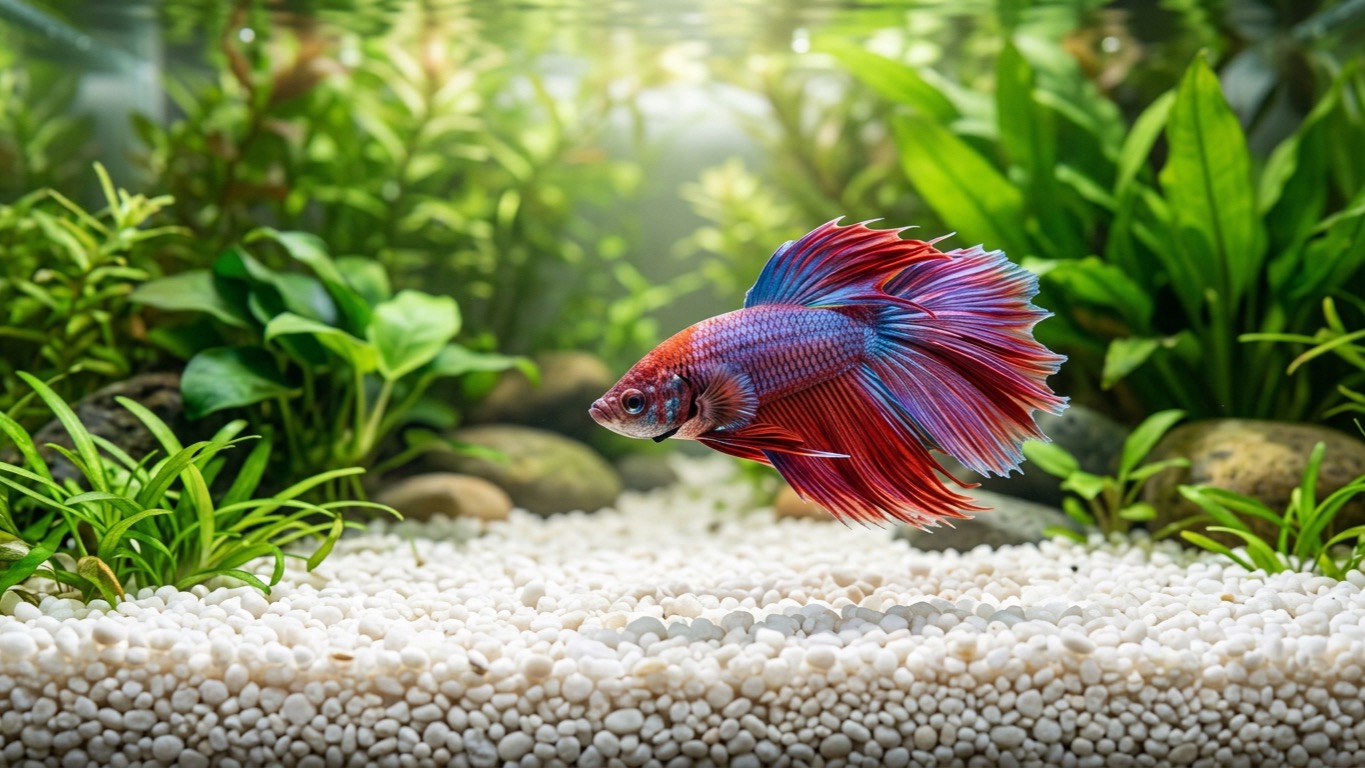
An elephant ear betta is a Betta splendens with extra-large pectoral fins and needs a heated, filtered tank of 5 gallons or more.
This page is a spec-comparison care brief from Waterpuppy.
Our research team analyzed five current maker pages for listed numbers. Fluval Bug Bites Betta Flakes list 46% minimum crude protein. Hikari Betta Bio-Gold lists 38% on that same label field.
How we chose what to cover
Only one adult male and products with a quoted maker number make this page.
A product or setup enters this guide when it serves one adult elephant ear male. The maker page must also list a number we can quote.
We cover heated, filtered tanks of 5 gallons or larger. We left out breeding pairs, female groups, wild-caught stock, and unheated bowl kits.
We also left out price tiers and ranked lists, so the table below compares listed attributes only.
What an elephant ear betta is
Those oversized pectoral fins are the trait that changes tank design, not a separate species.
An elephant ear betta, also sold as a dumbo ear betta, is still Betta splendens. Breeders select for pectoral fins that flare wider than a standard veil or halfmoon.
The body stays small, but the drag does not, because extra fin area costs more energy and snags on rough décor.
Treat the fins as a load the fish must carry all day. That is the Elephant Ear Fin-Load Rule we use here.
- If the pectorals look wider than the body, keep flow low.
- If the fins look wider than the body, use only smooth rest spots.
- If the fins look wider than the body, give a lid and a short path to air.
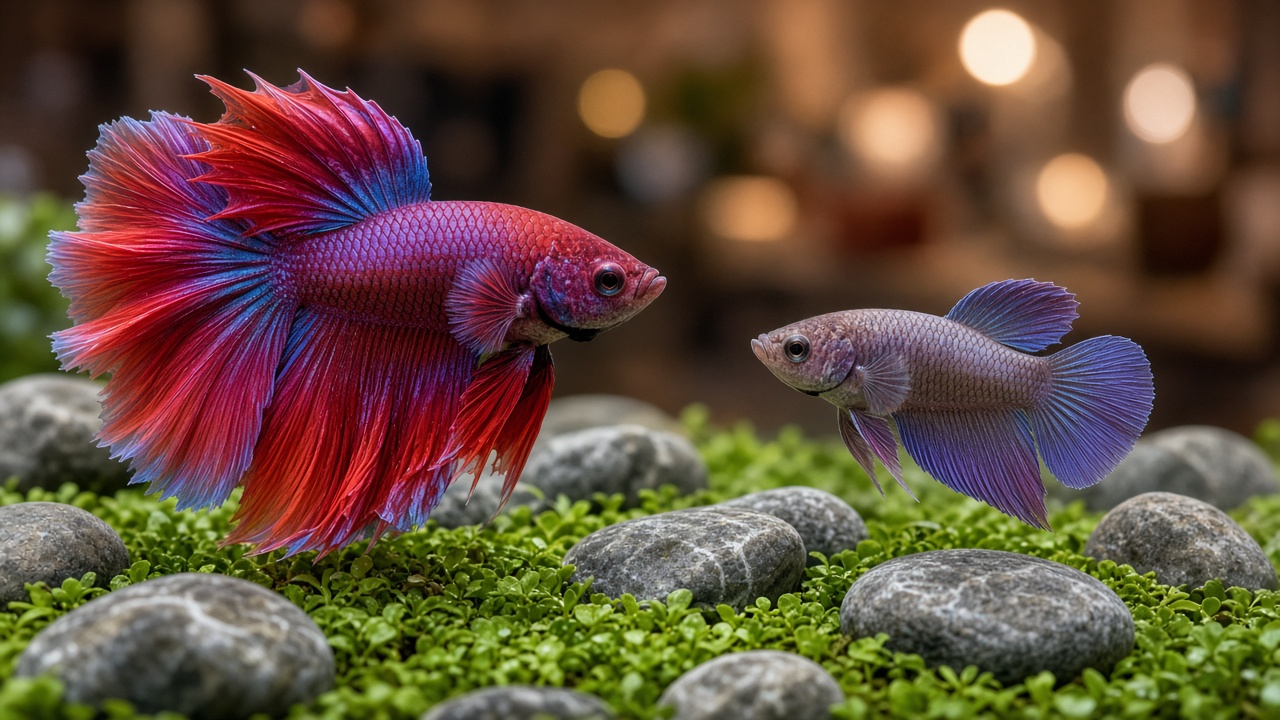
Males flare those fins at other males, so do not house two males together. A female may still nip the long edges, even when the pair looks calm.
This is not a wild-type care sheet, but a husbandry brief for the farmed “ear” trait.
The tank that fits extra-large fins
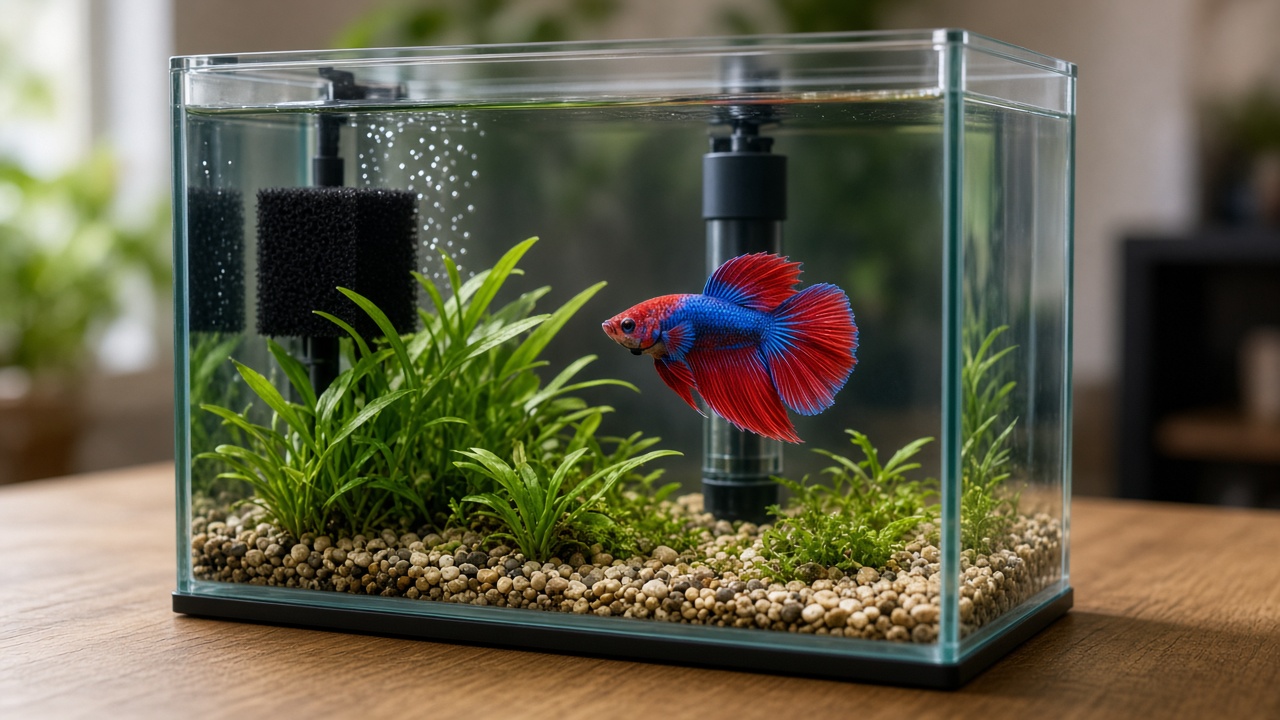
A 5-gallon heated, filtered tank is the floor, and more water is easier to keep stable.
The MSD Veterinary Manual states that 1 gallon of water weighs 8.3 lb (3.8 kg). A 10-gallon fill is about 83 pounds of water before gravel and glass.
Aqueon’s Aquarium Starter Kit with SmartClean Filtration lists 10-gallon and 20-gallon sizes. The same kit page lists a 50W preset heater held at 78 degrees, which matches a tropical betta better than room air.
Aqueon’s kit page also lists package dimensions of 14 x 23.75 x 16.5. Confirm that footprint on the box before you buy a stand.
Use this layout rule:
- Pick a tank that is long, not tall.
- Keep an open path to the surface, because bettas gulp air.
- Use a tight lid, because bettas jump.
- Aim filter output at glass, not at the fish.
- Add two rest ledges near the surface.
Smooth silk or live plants work well for rest spots, so skip sharp plastic plants and gravel with jagged edges.
The MSD Veterinary Manual lists gravel at 1 pound per 1 gallon of water, and you should rinse it first because dust clogs filters.
Skip bowls, because small unheated cups swing in temperature and waste, and that swing is harder on heavy fins than on short-finned fish.
For a longer view of adult age, see our page on how long betta fish live.
Water, heat, and weekly tests
Warm, stable water matters more than chasing a perfect pH number.
Aqueon’s SmartClean kit page sets its included heater at a constant 78 degrees. Use that printed target as your setpoint, not a wide daily swing.
Our do betta fish need a heater page covers why room air is not enough. Elephant ear stock still needs that same heat load.
The MSD Veterinary Manual says beneficial bacteria usually develop on their own in 4 to 6 weeks. Do not add the fish on day one of a new tank.
The same manual says poor water quality is the most common cause of environment-related fish disease, so test the water before you add the fish.
API’s Freshwater Master Test Kit page says the kit measures six aquarium levels. Those listed levels are ammonia, pH, high range pH, nitrite, and nitrate.
API’s page also says the kit includes four test tubes and a laminated color card. The same page says to test weekly.
Use this weekly list:
- Read temperature on a separate thermometer, not only the heater dial.
- Run the API ammonia test.
- Run the API nitrite test.
- Run the API nitrate test.
- Run the API pH test.
- Change water if any reading is off the safe band on the card.
API’s page states that a pH of 7.0 is neutral, with higher readings alkaline and lower readings acidic. Hold a steady value near your tap instead of chasing a new number each week.
The MSD Veterinary Manual says city tap water often holds chlorine or chloramine. Both are toxic to fish and to filter bacteria, so treat every new gallon.
Keep lights on a day and night cycle rather than leaving them on. The MSD Veterinary Manual says lights left on 24 hours a day, 7 days a week stress fish.
Elephant ear fish also rest after lights go out, and do betta fish sleep covers that rest timing.
Feeding from maker labels
Feed a small, high-protein daily diet, then remove leftover food before it sours the water.
Our research team compared three foods still listed as sold on maker pages. We compared only printed guaranteed analysis and printed feeding lines.
| Product | Form | Listed pack or size | Crude protein (min) | Crude fat (min) | Maker feeding line |
|---|---|---|---|---|---|
| Hikari Betta Bio-Gold | Floating pellet | 0.7 oz (20 g); also 2.5 g and 5 g | 38% | 4.0% | 5 to 10 pellets up to 3 times daily |
| Fluval Bug Bites Betta Flakes | Flake | 0.63 oz / 18 g | 46% | 7.5% | As much as the fish can eat in 2 minutes, 2 or 3 times daily |
| Aqueon Nutrinsect Betta Pellets | Pellet | 1.41 oz | Not listed on the maker page | Not listed on the maker page | 2 to 3 times a day; finish in 2 minutes |
| Aqueon SmartClean LED Kit | 10- or 20-gallon kit | 50W heater; 78°F preset | Not a food | Not a food | Includes a food sample; fish sold separately |
| API Freshwater Master Test Kit | Liquid test kit | 4 test tubes | Not a food | Not a food | Test weekly |
- Crude fiber max. 3.0%
- Moisture max. 10%
- Ash max. 12%
- Phosphorus min. 0.7%
Fluval’s Bug Bites Betta Flakes page lists these label caps:
- Crude fiber max. 1.2%
- Moisture max. 6%
- Ash max. 7.5%
- Vitamin A min. 25,000 IU/kg
- Omega-3 fatty acids min. 2.0%
- Omega-6 fatty acids min. 2.2%
- Ascorbic acid min. 440 mg/kg
That 8-point protein gap (46% versus 38%) is a label gap, not a ranking. Fluval also lists a much lower moisture cap, 6% versus Hikari’s 10%.
Aqueon’s Nutrinsect Betta Pellets page does not print protein or fat, but it does print a clear feeding rule.
- Feed two to three times a day.
- Offer only what the fish finishes in two minutes.
- Remove leftovers about five minutes later.
The same Aqueon page calls the formula 100% fish-free. Protein sources listed there include:
- dried mealworms
- dried black soldier fly larvae
- algae
- freshwater shrimp
- dried bloodworms
Hikari’s page says a betta may take up to 5 days to accept a new food. Switch slowly when you change staples, and keep the old food on hand.
The MSD Veterinary Manual says dried foods should be kept on hand for no more than 2 months. Fluval’s flake page says to use a container within 6 months for best nutrition.
Follow the shorter of those two windows if the bag is already open. The MSD Veterinary Manual also gives a body-weight rate:
- Maintenance diets: 1% to 2% of body weight per day
- Growth diets: 3% to 5% of body weight per day
For a small adult body, that rate is a pinch, not a pile, because overfeeding dirties water quickly and frays those long fins.
Use this feeding list:
- Offer one pellet or a few flake bits at a time.
- Watch the fish swallow each piece.
- Stop when the 2-minute window ends.
- Net out leftovers.
- Skip a meal if waste is rising.
Skip live feeders as a staple diet. The MSD Veterinary Manual notes that live foods can carry parasites or disease.
Daily checks that protect fins
Most fin tears start as a water or décor problem, not a mystery illness.
Check these items once a day:
- Temperature holds near 78°F on the thermometer.
- The fish reaches the surface without fighting the current.
- Both “ears” look even, not shredded.
- No white film sits on the fins.
- The fish eats within the 2-minute window.
If a fin edge splits, first look at décor and flow. Then test ammonia and nitrite with the API kit before you add a remedy.
Do a partial water change with treated water, and match the new water to tank temperature. The MSD Veterinary Manual says to float a new-fish bag for about 20 to 30 minutes.
Use that same slow temperature match on change water, and do not add tank mates that nip long fins.
Skip tiger barbs and most tetras with a pecking habit, because a single snail is a safer extra than a second betta.
If the fish stops eating, test the water first, then call a fish-experienced clinic, because we are a research desk, not a clinic.
FAQ
How big is an elephant ear betta?
The body is in the same range as other farmed Betta splendens. The pectoral fins make the fish look larger than it is. Plan tank space for the fin span, not only the body length.
Can two elephant ear bettas share a tank?
No for two adult males, because they will flare and fight. A male and a female is a breeding setup, not a community. This guide does not cover breeding, so keep one fish per tank.
Do elephant ear bettas need a heater?
Yes, they need a heater in a normal room. Aqueon’s own 10- and 20-gallon SmartClean kit ships a 50W heater preset to 78 degrees. Room air is not a plan, and our heater guide covers the full case.
How often should I feed one?
Hikari’s page allows 5 to 10 pellets up to 3 times daily. Fluval’s flake page allows two or three daily feedings inside a 2-minute eat window. Aqueon Nutrinsect uses the same 2-minute, two-to-three-times rule, so pick one staple and stay inside that printed line.
Why do the big fins tear so easily?
The pectorals have more edge to snag, and strong filter flow folds that edge. Rough plants cut it, and dirty water lets the tear worsen. Lower the flow, swap sharp décor, and test with the API kit before you add a remedy.
How long can an elephant ear betta live?
Lifespan tracks the same care as other fancy bettas: warm water, low waste, and a real tank. Our how long do betta fish live page covers the age range and what shortens it. Heavy fins do not add years on their own.
Do elephant ear bettas sleep?
They rest, but they do not close eyelids the way a mammal does. Still water and a night-off light help that rest hold. Our do betta fish sleep page explains the rest signs, and a fish that hangs in current all night is tired, not “active.”